-
AAPL
213.43 (+0.29%)
-
BARC-LN
1205.7 (-1.46%)
-
NKE
94.05 (+0.39%)
-
CVX
152.67 (-1.00%)
-
CRM
230.27 (-2.34%)
-
INTC
30.5 (-0.87%)
-
DIS
100.16 (-0.67%)
-
DOW
55.79 (-0.82%)
Sunday shows round-up: the Tory election defeat inquest begins
Jonathan Reynolds on Reform: ‘Now…they will get the scrutiny they deserve’
On Sky News this morning, Trevor Phillips pointed out that Labour had the smallest vote share of any election-winning party – and asked the business and trade secretary Jonathan Reynolds if it was sustainable that votes for smaller parties like Reform and the Greens did not translate into seats.
Reynolds argued that Labour’s successful campaign under this electoral system gave them a legitimate mandate to govern, and claimed that smaller parties were given ‘far less scrutiny’ because they’re not seen as ‘parties of government’. Reynolds also implied that many people who voted for Reform don’t really know their policies.
Tom Baldwin, Keir Starmer’s biographer, also said that the article Labour aides are reading right now is The Death of Deliverism about how Joe Biden’s achievements did not translate into support – which they see as a warning.
Suella Braverman: ‘I have looked at the Reform party’
Over on GB News, Camilla Tominey pressed Suella Braverman on whether she would consider defecting to the Reform party, after Braverman conceded that the Tories had failed to provide ‘hope’ to voters. Despite dodging the question several times, Braverman did not dispute that Reform had ‘outconservatived’ the Conservatives, before eventually admitting that she had ‘looked at the Reform party because I have been listening to what they are saying’.
'I have looked at the Reform Party…'
— GB News (@GBNEWS) July 7, 2024
Former Home Secretary, @SuellaBraverman, is pressed and accused of dodging @CamillaTominey's questions on whether she wants to join Nigel Farage at Reform UK. pic.twitter.com/TwSRm3hAn6
Victoria Atkins: ‘The country is…instinctively conservative’
The former Health Secretary (and likely leadership candidate) had her own take on the general election: support for Labour, she said, is ‘spread very thinly, a little bit like margarine’. She suggested that the country’s values were ‘instinctively conservative’, and that the Tories needed to deliver on policies that reflect that.
Robert Jenrick: ‘Migration was at the heart of it’
Former Immigration Minister Robert Jenrick agreed with Atkins that it was the failure to deliver on promises that caused the Conservatives’ heavy defeat. He argued that the inability to tackle immigration was the most important factor, saying his party did not ‘do whatever it takes’ to make progress on the issue.
Jenrick pointed out that in two thirds of the constituencies the Conservatives lost, the margin of defeat was smaller than the Reform vote. Neither Jenrick nor Atkins would comment on whether they will run for the Conservative leadership.
Ed Davey: ‘We’re going to be constructive opposition’
Laura Kuenssberg asked Liberal Democrats leader Ed Davey how his party would deal with the new Labour government, having criticised the Conservatives during their campaign. Davey said that the Lib Dems would urge the government to make progress on the issues around which his party campaigned: health and care, the cost of living, and the sewage scandal. Davey said the Lib Dems had already called for an emergency budget on health and care, and wanted to draw attention to the issue of unpaid family carers.
Reform Chairman Richard Tice: ‘I think genuinely we do become the real opposition’
Back on GB News, Camilla Tominey asked Richard Tice if he was happy with Reform’s four million votes, after Nigel Farage had suggested in an interview he hoped for six million. The Reform chairman said that voter turnout was low, but that his party’s vote share was ‘a real shock to the establishment’. Tice argued that the Tories were ‘completely split asunder’ and were not a cohesive force. He claimed that his party had ‘the policies that…will save this country’.
Andy Burnham: ‘commit early to the Northern Powerhouse’
Manchester Mayor Andy Burnham pointed out that the city’s economic growth has been faster than the national average, and told the new Prime Minister to deliver on Tory commitments that were never enacted. Burnham suggested that beginning work on the new railway between Manchester and Liverpool would lead to people in the north sticking with Labour for the next parliamentary term, and said Manchester was also ready to be part of building the 1.5 million homes Labour plan to build this term.
The end of Macronism
The second round of French elections this weekend will not mark the end of Macron as president, nor will it be the end of his MPs in the National Assembly. But the radical centrist movement that carried him to power – on a neither left-nor-right mantra – is no more.
What happens now? Macron’s potential successors are deeply divided. Edouard Philippe, former prime minister, Bruno Le Maire, a finance minister and Gérald Darmanin, the interior minister, all want to rebuild from the centre-right. Gabriel Attal, the prime minister, wants to anchor it on the centre-left. All of them seem to have turned the page on Macron already.
All of these backroom deals and electoral pacts may prove to be too clever by half
But none of them incorporate Macron’s vision any longer. None are capable of provoking the left and the right (like Macron did) in order to rule from the centre. Without Macron’s tactical skills or an ideological underpinning, there is not much there to hold the party together once its founder leaves the political scene. It was a party built around, and for, one man: Macron himself.
This is not the end, at least not just yet. A poll by Harris Interactive interviewing over 3,300 people the past two days suggests that Macron’s Ensemble could take 110 to 135 seats, coming third after the Rassemblement National (RN) with 190 and 220 seats and the left New Popular Front (NPF) with a group of 159 to 183 MPs. This is thanks to tactical voting.
Centrists have been mobilised by the need to prevent the far-right from winning an outright majority – so they can now hope for a more respectable outcome, instead of the abysmal 90 seats predicted early this week. They are starting to make electoral pacts, so as not to split the anti-RN vote. From those 308 candidates of the left-wing NFP group, 130 have withdrawn to give centrists a chance of winning against a leading far-right candidate.
But there are fierce debates within the anti-RN blocks about who should get together with whom. Attal faces opposition from within his own ranks about doing any kind of pact with Jean-Luc Mélenchon’s La France Insoumise (LFO). At the end of the day, Macron has offered a compromise: his party will support the LFI in the elections (to thwart RN) but would not include them in a new government.
Politicians pacts are one thing, but will voters follow their logic? It depends on how much they agree with the ultimate goal of blocking the RN from power. Will LFI accept such a lame offer? They may not be as powerful in the left alliance as they were under the Nupes agreement, but they still have more MPs in the race than the Socialists, and can withdraw their support for the new government formation. This will be a loyalty test for the NFP, and for the Socialists in particular.
This whole week has been devoted to thwarting Marine Le Pen’s party from coming to power. With some success: there are now 409 two-way, 89 three-way, and two four-way elections. But none of the parties seem to be bothered about the voters. About 10 million voters chose the RN in the first round, many of them voting for the first time. Have any of the parties addressed those voters?
It’s far from clear where votes from the eliminated parties will go. What will Les Républicains voters do? There has been no recommendation from the party to its supporters of how to vote. Would they not be compelled to vote RN, if the alternative was a candidate from the left? What is a centrist voter to do after Macron’s zigzag course of neither denying support to the LFI nor engaging them in government? Are they to forget LFI’s violent language against their government during the pension – or the immigration reform – and now vote for an LFI candidate to prevent the RN from getting that seat? Or do they just stay at home?
All of these backroom deals and electoral pacts may prove to be too clever by half. There is no clear line: just an alliance of circumstances with only one goal – to stop RN winning a majority. This may succeed. But Emmanuel Macron’s movement has already ended up the loser.
This article was first published in the EuroIntelligence morning briefing. For a trial subscription click here.
Watch more on SpectatorTV:
Can Wes Streeting and Alan Milburn fix the ‘broken’ NHS?
For years, Wes Streeting has spoken about the need for NHS reform but it was never clear if he had an agenda, or this was just verbal positioning. The NHS has more staff (1.4 million) than many countries have people. Plans to reform it need to be laid out carefully, taking years to design and to implement. Getting results by Year Five of a Starmer government would mean serious action at the very start. So far, with Streeting, that is precisely what we have got.
We are barely 48 hours into a Labour government, but on health the omens are as better than they have been for quite some time
Within hours of becoming Health Secretary, he declared that ‘from today, the policy of this department is that the NHS is broken’. Not since John Reid’s declaration that the immigration department was not ‘fit for purpose’ has a minister signalled such intent to reform. None of this Tory pom-pom waving, no blue vans with ‘NH-yes’ written on them (Andrew Lansley) no wearing NHS badges to work (Jeremy Hunt). The Tories were never trusted on health so positioned themselves as NHS fans – and, as a result, poured money into a failing, unreformed system. Labour is more trusted on health, and Streeting seems determined to convert that trust into action.
The return of Alan Milburn as an adviser to Streeting, as reported today, is significant. In truth, Milburn, now 66, has always been close to Streeting (who is a Blairite) and no one is in a better place than Milburn to offer advice on how reform works in practice. Well, perhaps one other person: Simon Stevens, the recently-departed NHS chief executive who worked with Milburn when he was an adviser in No. 10 and is now in the Lords. Enlisting Stevens as an adviser would make a formidable reforming team (albeit one that would have to be assembled when Amanda Pritchard has been ousted as NHS chief executive, which looks likely).
I interviewed Milburn several times when he was in power, both for the Scotsman and The Spectator, and he spoke more radically about health reform than any Conservative later dared to do.
‘The Tory health policy, such as it is, is about backing doctors and nurses. But in the end, as I found out as health secretary, you are there to represent patients.’ Mr Cameron, I say, rejects this idea of a conflict and says doctors should be trusted to guard the interests of patients. ‘Yes, I’m familiar with that argument,’ he sighs. ‘It’s the one that failed Labour in the 1980s. We’d be on the side of the doctors, the teachers, the local authority staff. Problem is, there are more citizens than public-sector workers….The public want control in their lives, and they are usually ahead of politicians. The question is which party will satisfy this demand. And I’m in no doubt that the answer is Labour.’‘
Milburn didn’t say this because he is a closet Tory. He’s a former communist who once ran a hard-left book shop called Days of Hope (nicknamed Haze of Dope). His radicalism converted into a belief that Labour needs to take radical steps to help and empower ordinary people. And that means recognising the conflict of interest between the producers and users of public services – and siding a Labour government with the users. In NHS terms, this is the ‘purchaser-provider split’. Milburn always suspected that the patrician Tories are more likely to side with the providers: the few rather than the many. So his is, very much, a left-wing view. He regards it as the radical centre.
‘We haven’t got a health policy,’ Tony Blair told Milburn when he made him health minister days after the 1997 victory. ‘Your job is to get us one.’ Blair messed about with Frank Dobson for ages before realising he had no more time to waste. As Health Secretary, Milburn wanted to move towards more of a decentralised, continental model with a variety of providers to an NHS system. He wanted to encourage US health firms to set up in the UK seeing this as a long-term change, but was thwarted by Gordon Brown. Now, it seems, Milburn could be back in business.
At first, Milburn’s main mission was to get NHS funding up above the European average – but that was 20 years ago. Now, the UK has one of the highest rates of health spending in the developed world.
Ironically, cash is less of an issue after 14 years of Tories than it was when Gordon Brown was begrudging the extra spend. The money is there, but is failing to deliver into results because what Streeting says is true: the NHS system is broken.
'When we were last in office, we worked hand in hand with NHS staff to deliver the shortest waits and highest patient satisfaction in history,' he said in his opening speech. 'We did it before, and together, we will do it again.' But it’s how they did it before that matters: they used market-based reform to an extent that no Tory government since dared to do.
Even if Streeting does share the Blair/Milburn vision, he’d be unwise to talk in producers vs provider terms as it’s needlessly antagonistic to the BMA which will, I suspect, do its best to destroy him before Christmas. But if Starmer takes a Blair-era 'what’s best is what works' approach and thinks he needs to show NHS results within five years, then his best policy is to encourage Streeting to get the best-quality advice he can and move full speed ahead. We are barely 48 hours into a Labour government, but on health the omens are as better than they have been for quite some time.
Watch more on Spectator TV:
The complete guide to Labour’s cabinet
Keir Starmer has appointed his cabinet, but who are the men and women who will be running Britain? The Spectator‘s writers, including Katy Balls, Kate Andrews and James Heale give the run down on Labour’s top team:
Chancellor: Rachel Reeves
Kate Andrews: It is not strictly true to say that the government is out of money. Rachel Reeves is entering a Treasury that is taxing and spending at record levels. But the new Chancellor still has some very difficult choices to make, as it becomes increasingly clear that spending commitments have far-exceeded what the country can currently afford.
Reeves is expected to play hardball with her colleagues who want to turn on the spending taps. Having started her career as an economist at the Bank of England, the Leeds West and Pudsey MP has deliberately branded herself as someone who doesn’t bend the rules. She remains committed to getting debt falling as a percentage of GDP in the medium term and promises not to borrow more money for day-to-day spending.
The young chess champion says she learned how to balance books with her mother at the kitchen table. Now she’s the first woman to be doing so at the highest level in the Treasury. In her speech after being appointed Chancellor this weekend, Reeves described the opportunity as ‘the honour of my life’. Speaking to Katy Balls in the magazine this week, she described her approach to the job as ‘smashing glass ceilings and urinals’.
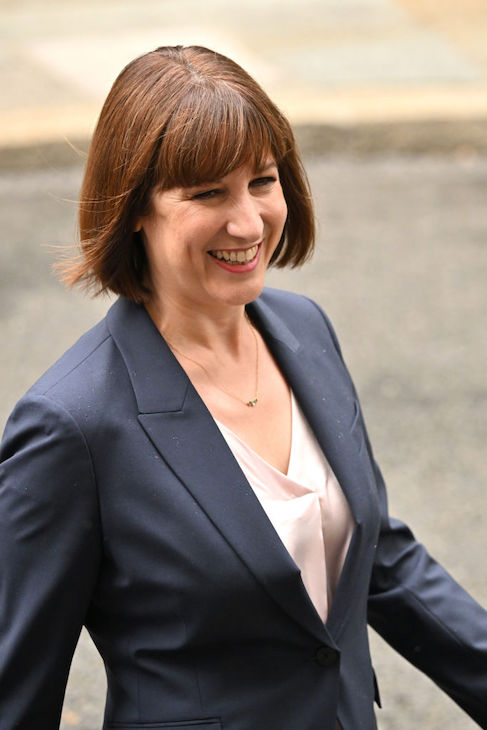
Two of Reeves’s favourite buzzwords, so far, are stability and growth. Whenever asked about the dire state of the public finances, Reeves pivots to plans to grow the economy. It’s a promise of Labour’s that will be tested in the coming weeks – even before Reeves delivers her first fiscal event – as Labour gears up to announce a housing and planning overhaul to kickstart growth. Still, even if some growth is achieved, the new Chancellor has a big task on her hands to make the numbers add up – not least because of the outstanding questions over some Labour pledges (to keep the NHS long-term workforce plan, for example) which have not been costed but are expected to cost huge sums.
‘I’ll make sure that the sums always add up, bring that stability back so that businesses can plan with confidence for the future’ she told Katy Balls. ‘I think the investors like what they hear from me.’ Reeves passed her first test with the markets on Friday morning, with practically no market reaction to the new Labour government (the ideal outcome). That was largely thanks to a Labour government already being priced in by investors, and (relative) confidence that Labour wouldn’t rock the boat. But in order to tackle the UK’s dire financial state, at some point, some gambles will need to be made.
Foreign Secretary: David Lammy
Katy Balls: Despite rumours that he might be moved aside to make way for a more experienced politician, David Lammy is Keir Starmer’s Foreign Secretary. There’s a challenging in tray, with war in Europe, conflict in the Middle East, tensions with China and a potential Donald Trump return. It’s the latter that might be the most awkward given Lammy once described the former US President as a ‘neo-Nazi sympathising sociopath’.
Lammy will need to work with allies for peace in the Middle East while avoiding internal party tensions emerging over Israel/Palestine. His party is committed to recognition of the Palestinian state. On China, one of the big questions awaiting a Starmer government is whether to restrict Beijing’s ability to sell electric cars in the UK – and limit any diplomatic strain as a result. Labour’s big foreign policy aim is to re-centre UK foreign policy back to Europe – unlocking rewards on trade and security as a result. On 18 July, the UK government will have a key opportunity to do this as it hosts the 47-nation European Political Community at Blenheim Palace. But he must contend with several European allies moving to the right. The biggest question is what does Starmer do about support for Ukraine if Trump enters the White House and significantly reduces funding or pushes for a compromise deal.
Home Secretary: Yvette Cooper
Ian Acheson: Yvette Cooper has two enormous challenges that can’t wait for a honeymoon. The first is making her Border Command, the latest iteration in a long line of failed initiatives on controlling illegal migration, actually deliver. The second is restoring the status and importance of community policing in neighbourhoods marooned in criminal impunity with demoralised cops leaving in droves. Both require agility and energy from a Home Office with neither. Her formidable toughness needs to be turned inward. This is a hot seat on fire.
Chancellor of the Duchy of Lancaster: Pat McFadden
Jawad Iqbal: Pat McFadden, the new Chancellor of the Duchy of Lancaster, has been described as the most powerful Labour politician most people have never heard of. His new job is one of the most senior in the cabinet, overseeing a department that is basically the engine room of government. His role is to ensure that the machinery of government in Downing Street – including the key cabinet committees where many decisions are made – is working efficiently. McFadden has been rewarded for his role in helping mastermind Labour’s election victory, and is also valued for his wide-ranging political experience as a veteran of the Tony Blair era. He is also one of the few members of the new cabinet that has experience serving in government – under Gordon Brown he was parliamentary under-secretary at the Cabinet Office and later minister in the business department.
Defence Secretary: John Healey
Katy Balls: John Healey’s first challenge in defence will come within the first week of a Labour government. On Tuesday, the new Defence Secretary will head to Washington for the Nato summit where the could face a mixed reception. The UK’s allies will look at Labour’s defence spending policy as a downgrade from that of the previous UK government. To great fanfare, Rishi Sunak announced on a visit to Poland that he would boost UK defence spending to 2.5 per cent of GDP by 2030. Labour’s policy is to boost defence spending to 2.5 per cent of GDP ‘as soon as resources allow’. They plan a defence review early on which ought to flesh out when that is.
The bigger picture is Healey – an experienced figure, respected on all sides – must deal with a depleted military which, in the words of a former defence secretary, has been ‘hollowed out and underfunded’ in recent years. He will be under pressure to replenish stockpiles, grow the army and boost morale. Labour has promised a new Armed Forces commissioner to focus on improving service life.
Justice Secretary: Shabana Mahmood
David Shipley: In a cabinet full of hard jobs, Shabana Mahmood arguably has the most difficult. The entire justice system is broken; the prisons are full; and even those inmates they can house often end up more addicted to drugs and more likely to reoffend after their time inside. Similarly, probation is a disaster, with a staffing crisis and soaring recall rates. Even the courts aren’t functioning; cases often takes years to come to trial, with rising times for suspects on remand putting further pressure on the prison system. The Justice Secretary needs to recognise the interplay between these parts of her brief and move quickly to avert catastrophe.
Health Secretary: Wes Streeting
Isabel Hardman: Health is one of the key policy areas for Labour and will form part of the evidence that Starmer will offer to voters when he tries to persuade them to give him a second term. Streeting’s first task is to deal with the industrial action in the NHS: talks are starting next week with the BMA junior doctors committee. He has a long-term aim to change the balance of funding in the NHS so that it is more focused on primary, preventive and community care rather than acute needs. This is a huge change and one ministers have previously paid lip service to. He also needs to work out what to do about social care, and about mental health reform, with long-overdue changes to the Mental Health Act due in the first King’s Speech. The first big challenge will be in the winter. The NHS starts planning for each winter crisis about a year ahead, but this year will be particularly difficult given the lasting impact of the industrial action and the fact that the health service is running hot right now in the traditionally quieter summer period.
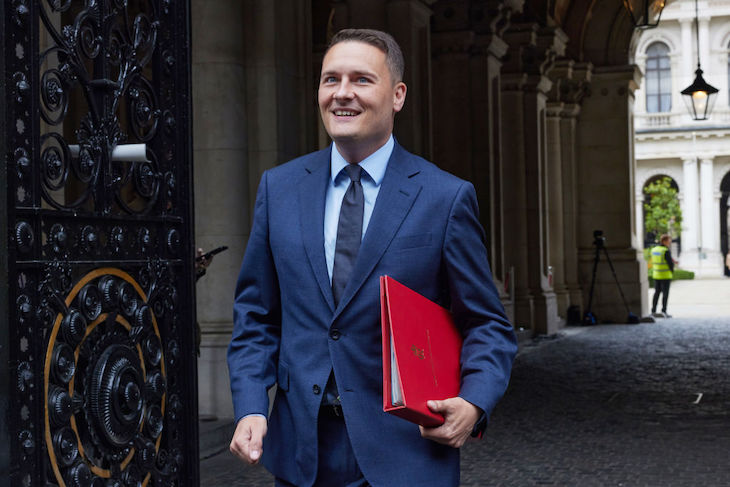
Environment Secretary: Steve Reed
James Heale: Labour’s gains on Thursday night included impressive results in rural areas, which disproportionately swung to a party which has traditionally struggled in the countryside. The new Environment Secretary is Steve Reed, 60, who takes up the brief he has been shadowing since September. The main political challenge facing him is getting to grips with the sewage crisis which the opposition parties exploited to great effect against the Conservatives. Behind the scenes, he will also need to address the technical issues facing Britain’s agricultural supply chain, to try and improve food security. Updating Defra’s regulatory and governance framework will be critical too, especially given the party’s promises made on planning. Reed himself is a London MP. He previously held the shadow justice brief from 2021 until 2023, having made his name as leader of Lambeth Founcil prior to entering parliament at a by-election in 2012.
Science Secretary: Peter Kyle
Katy Balls: Peter Kyle now leads the ministry of science, a department created under Rishi Sunak. His key challenges will be grappling with Big Tech and the rise of Artificial Intelligence. He will need to balance efforts to ‘supercharge’ the UK tech sector and encourage investment with UK regulation aimed at taming the wild west. There could be a stakeholder clash with the Department for Digital, Culture, Media & Sport (DCMS) when it comes to copyright demands from creatives and the growth of AI. Starmer believes AI could be used in public health as well as other industries, but this could face a union backlash if it appears to threaten jobs.
Education Secretary: Bridget Phillipson
James Heale: Bridget Phillipson arrives at the Department for Education with a full inbox to sort. Top of the list is recruiting the extra 6,500 teachers which Labour have promised, with schools now facing a recruitment and retainment crisis. Phillipson will be expected to decide teachers’ pay for the forthcoming academic year within a matter of weeks, with the prospect of yet more industrial action being mooted. She will also have to deal with the fallout from the RAAC – reinforced autoclaved aerated concrete – scandal involving school buildings and the teething problems of the Conservatives’ enhanced childcare rollout. Longer term, there is the perennial problem of further education, amid dire warnings about the state of university finances. Labour now represents every constituency with a Russell Group university in England, potentially boosting its prominence in government decision making. But Phillipson – a widely-tipped future Labour leader – could have her career made or broken by the success or failure of her party’s flagship policy to impose VAT on school fees.
Energy Secretary: Ed Miliband
Ross Clark: Ed Miliband has one of the more challenging tasks ahead of him: fulfilling Labour’s promise to decarbonise Britain’s national grid by 2030 – a target which many people, from GMB boss Gary Smith to Jim Ratcliffe, founder of Ineos and a new Labour supporter, have warned can’t be done. Miliband hasn’t just vowed to decarbonise the grid; he has promised to lower consumer bills, too. While the Ofgem price cap has been on a steady downward trajectory over the past year, that is expected to change this autumn, giving the new climate change secretary a headache. He is also going to have his work cut out persuading developers to build the vast increase in wind and solar farms which are part of Labour’s plan – when the last government held an auction for offshore wind last September it did not received a single bid. Miliband may find himself having to increase green energy subsidies – which will itself put upwards pressure on energy bills. He also intends to bring about a return to onshore turbines – which face running into heavy opposition, especially when local residents realise how much they have grown since they were last built inland in England.
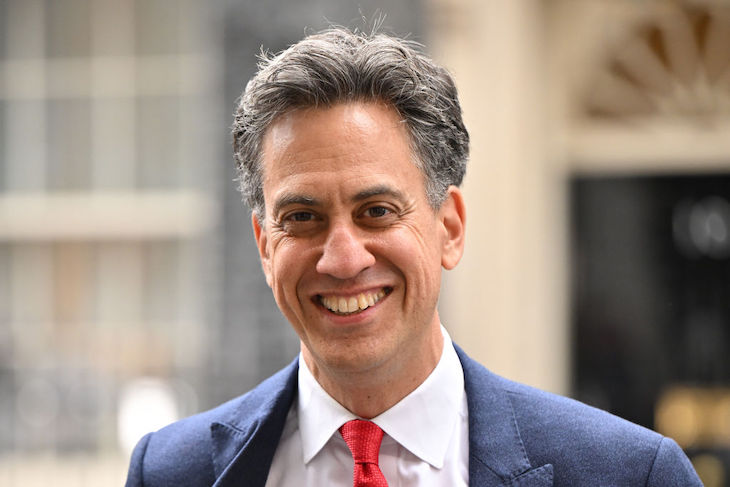
Business Secretary: Jonathan Reynolds
Matthew Lynn: Smooth, diplomatic, and with few apparent aspirations to lead his party, Jonathan Reynolds will be quite a contrast to his immediate predecessor as Business Secretary, the pugnacious Kemi Badenoch. But he will also be just as crucial to the success of the Starmer government. Reynolds will face plenty of early challenges. He will need to decide whether to allow the Royal Mail to be taken over by the Czech tycoon Daniel Kretinsky, despite the reservations of the unions. He will also need to decide whether to help out Tata Steel as it closes furnaces in Wales. And, if Thames Water runs out of money, he will have to choose whether to take it into state ownership, as the party members would like, or keep private money involved, as the Treasury would prefer.
Transport Secretary: Louise Haigh
Ross Clark: First elected in 2015, red-haired Louise Haigh has not been an MP for a governing party before, but she has won praise from former policing minister Nick Hurd, who described her as the best shadow minister he had encountered in government. She faces what, for a Labour minister, will be an extremely agreeable task: overseeing the re-nationalisation of the railways. In contrast to previous nationalisations, this one comes with relatively low risk: it won’t cost oodles of public money because it will be effected by taking franchises back into public hands only when they expire – which, utilising break clauses, can be achieved within the current parliament. However, renationalisation will present one difficulty: it will bring Haigh closer to the firing line when, as seems inevitable, bolshie rail unions next decide to strike. The SNP’s renationalisation of the industry has done nothing to dent the unions’ appetite for industrial act. Another perennial headache for Haigh will be potholes, which seem to have the ability to consume almost limitless quantities of public money. Rishi Sunak’s £2.5 billion potholes fund seemed to be swallowed up without even touching the sides.
Culture Secretary: Lisa Nandy
Matthew Lesh: Labour have always been fully supportive of the Online Safety Act. Lisa Nandy will now have a lot of powers to set categories of priority illegal content and content that is harmful to children, along with directing Ofcom in how they carry out various responsibilities. This could mean even more pressure for removals on digital platforms. Labour’s manifesto also contains a vague commitment to bring forward provisions to the Act to keep people safe. Could this mean a return of the ‘legal but harmful’ sections, that would have required social media sites to remove content that ministers decide is wrong but otherwise legal? Labour opposed the removal of these sections from the bill during the parliamentary debate.
Work and Pensions Secretary: Liz Kendall
Michael Simmons: Liz Kendall shortly moves into the DWP’s Caxton House offices as Work and Pensions Secretary and has one of the biggest in trays of any minister in Starmer’s new cabinet. The tax rises that Sunak tried to scare voters with are inevitable, economists say, in no small part because of the burgeoning benefits bill: forecast to surge during this parliament with nearly 1,000 Britons signed off sick every single day. Kendall will have to make drastic reforms – which many of Labour’s voters will find unpalatable – if she’s to get the 5.6 million on out-of-work benefits number down and avoid not just an economic tragedy but a human one too. What’s more she’ll be bearing the brunt of the pressure on Labour to abolish George Osborne’s two child benefit cap – something Labour’s manifesto writers felt was impossible to fund.
Northern Ireland Secretary: Hilary Benn
Andrew McQuillan: Hilary Benn – who during the Brexit era lent his name to the Act which bounced the Johnson Government into accepting a sub-optimal deal from the EU – now has a chance to undo some of the damage. As Northern Ireland Secretary, patching up the Windsor Framework and removing some of the barriers to pan-UK trade will get top billing, something which will likely see the whole of the UK align closer with the EU. He is likely to be sucked very quickly into the quagmire of identity games which passes for politics in Northern Ireland. He will win some brownie points for getting rid of the Conservatives’ controversial Troubles legacy legislation. But on the question of a referendum regarding Irish unification, Benn will likely disappoint Sinn Fein et al; he has reiterated the Starmer line that it is not ‘on the horizon’ anytime soon.
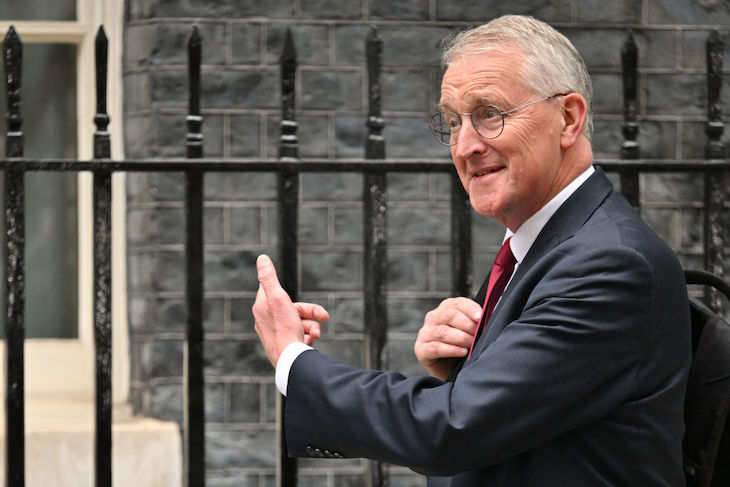
Welsh Secretary: Jo Stevens
James Heale: Jo Stevens, 57, takes up the Welsh Secretary brief which she twice shadowed in opposition. Labour had an excellent set of results in Wales – winning 27 out of the 32 seats there – in spite of Vaughan Gething’s woes in the Senedd. Stevens will be a key link between Gething and Starmer. A passionate pro-European, Stevens has sat for Cardiff constituencies since 2015, having previously worked as a lawyer at Thompsons Solicitors – a firm with longstanding links to the trade union movement. She also chairs the parliamentary group for GMB: one of Labour’s most important unions.
Scotland Secretary: Ian Murray
Lucy Dunn: Ian Murray has been made Scotland Secretary after holding the shadow cabinet role for since 2015. For eight years the only Scottish Labour MP in Westminster, Murray will now have to adjust to the influx of over 30 colleagues from the north of the border – and the cabinet secretary is known to be a little wary about the extra competition. Murray will have work to do in repairing relations between Holyrood and Westminster, fulfilling Labour’s manifesto promise of directing more money to Scotland and improving devolution to ‘push power out of Holyrood’ to better support local government. With a Scottish election just two years away, Murray will have to ensure Labour lives up to its promise that it’ll ‘maximise Scotland’s influence’ if his party’s MSPs want a decent shot at pushing out the SNP.
How Marine Le Pen rebranded herself
Marine Le Pen was called a ‘bitch’ this week and threatened with sexual violence. It’s what passes for rap music these days in France. The threats won’t unduly concern Le Pen. She’s experienced worse. When she was eight, far-left extremists tried to kill her and her family with five kilos of dynamite. The Le Pens survived, but their Paris apartment didn’t.
Say what you like about the leader of the National Rally, and many do, but Marine Le Pen is a tough cookie. She was assaulted on the campaign trail during the 2017 presidential election, a minor setback compared to her subsequent disastrous performance in the television debate with Emmanuel Macron.
Fundamentally she is still the same Marine Le Pen as the one who became party leader in 2011
She was written off. Fini. Kaput. The End. ‘Marine Le Pen has no future so what next for the French right?’ was a typical headline of the time. That was in The Spectator, and written by the same writer scribbling these lines. Oh well, we all make mistakes. If you’re reading, Madame Le Pen, I apologise.
So here we are seven years later, and it is not Le Pen who is lost and humiliated; it is Emmanuel Macron. She, on the other hand, may be hours away from seeing her party become the most dominant force in the National Assembly. What a role model for women! Practically Hollywood-esque!
Of course, there will be no movie, no Time magazine front cover, no honorary degrees and no foreign honours, such as the Knight Grand Cross of the Order of the Netherlands Lion, one of 22 foreign gongs awarded to Angela Merkel during her time as chancellor of Germany. Le Pen didn’t even make Forbes’s recent list of the 100 most powerful women in the world. Barbie did, but then she doesn’t have what some like to call ‘problematical’ views.
Le Pen’s views were not a problem for the 13 million voters who endorsed her in the 2022 presidential election, or the 10.6 million who cast their ballot for the National Rally and their allies in the first round of the legislative elections last Sunday.
They endorse Le Pen’s view that immigration is out of control and a threat to the social cohesion of France, that Islamic extremism is a blight, and that the Republic is weak in confronting drug cartels and gangsters. They also endorse her view that France has ceded too much sovereignty to the European Union, and what Le Pen describes as her ‘economic patriotism’ to reindustrialise the country.
Le Pen’s éminence grise is Renaud Labaye, who is more important to her than Jordan Bardella, the 28-year-old president of the National Rally and the party’s poster boy. Labaye prefers the shadows to the limelight. A practising Catholic and the son of a military doctor, the 39-year-old is the most influential of Le Pen’s inner circle, known as ‘Horaces’ – a right-wing think-tank composed of civil servants and businessmen named after the Horatii brothers of Roman legend.
The Horaces rallied to Le Pen after her 2017 debate debacle, an experience that left her profoundly dispirited. When she finally re-emerged in 2018 to declare that she was ‘committed to a profound reform of the National Front’, she and the Horaces embarked upon their quest to make the party electable.
First, the Horaces rebranded the party, changing its name to the National Rally. Then they began rebranding Le Pen. It was a two-fold strategy. First, they wanted to soften Le Pen’s image with the general public, making her more ‘mumsy’. She gave interviews in which she discussed her enthusiasm for gardening and her love of cats. The harder part was to make her more ideologically palatable to the upper echelons of society, and this was where Renaud Labaye has been invaluable.
Labaye, whose sartorial style is described as ‘très British’, comes from an ‘elite’ background and was a civil servant in Paris before joining the National Rally. He inhabits their world. Le Pen, on the other hand, the granddaughter of a fisherman and the daughter of a paratrooper, has always harboured a visceral loathing for the conservative bourgeoisie, perhaps attributable to an inferiority complex.
Labaye has helped Le Pen lose this complex, and the results have been dramatic. In last week’s first round, the RN finally broke through the cordon sanitaire that had been in place for decades: 31 per cent of retirees voted for the party (up from 12 per cent in the 2022 election); 32 per cent of women (up from 17 per cent); 32 per cent of the most affluent (compared to 15 per cent in 2022); and among senior civil servants the party doubled its score in two years from 11 per cent to 22 per cent.
Some things haven’t changed, however. On Thursday, Le Pen was interviewed by CNN and she replied to all Christiane Amanpour’s questions in French. She is, by her own admission, someone who speaks English ‘very badly.’ That’s part of her appeal to her core voters. She may have worked on her image a little in recent years, but fundamentally she is still the same Marine Le Pen as the one who became party leader in 2011. She is not for turning.
Emma Raducanu’s critics need to pipe down
Those taking a pop at tennis star Emma Raducanu for her last-minute decision to withdraw from a mixed-doubles match alongside Andy Murray – effectively ending his Wimbledon career – are out of order. It is not Raducanu’s fault that her pulling out of the match, scheduled for Saturday evening, brings the curtain down on Murray’s illustrious career at Wimbledon. The British tennis star is worried about a potential problem with her wrist (understandable given her injury record since winning the 2021 US Open), and decided to prioritise her upcoming match in the women’s singles.
It is unfair of Murray’s mother, Judy, to describe Raducanu’s move as ‘astonishing’
It is perfectly normal for tennis stars to focus on the singles competition over the doubles and mixed doubles. It is unfair of Murray’s mother, Judy, to describe Raducanu’s move as ‘astonishing’. It is only fair to wonder whether Judy would feel the same way if Murray, a two-time singles champion at Wimbledon and former world No , had opted to focus on the singles at Wimbledon at the height of his career.
Raducanu blamed ‘some stiffness’ in her right wrist for her decision to pull out of the match. Those raising eyebrows at this explanation need to remember that she missed Wimbledon last year after having surgery on both wrists.
‘I have decided to make the very tough decision to withdraw from the mixed doubles,’ she said. ‘I’m disappointed as I was really looking forward to playing with Andy but I’ve got to take care.’
That surely is the critical point. Raducanu has been plagued by injuries but is looking back to her best at Wimbledon this year. She moved into the fourth round of the women’s singles with a dominant two-set win over Greek ninth seed Maria Sakkari on Friday. Her decision will also have been influenced – and rightly so – by this weekend’s schedule. Playing the mixed-doubles with Murray would have meant playing in the fourth match of the day on Court One: that guarantees a long day of preparation and a match potentially running late into the evening. This plays havoc with crucial recovery time ahead of the next time she hits the courts. She should not be subject to criticism for prioritising her fitness ahead of a crucial singles match.
Why else has Raducanu withdrawing late in the day caused such a furore? For a number of reasons, none of which are her fault. Murray is playing at SW19 for the last time. The three-time major champion is due to retire later this year, with the Paris 2024 Olympic Games set to be his final event. He was forced to pull out of the singles on Monday with a back injury, before losing alongside his brother Jamie in the first round of the men’s doubles. He admitted it was proving ‘too tough’ for him to continue. Playing in the mixed doubles alongside Raducanu was meant to be something of a celebratory climax to Murray’s Wimbledon career. Under tournament rules, he is not permitted to find a replacement partner because the draw had already been made, so Murray and Raducanu were replaced by an alternate pairing.
One feels for Murray, of course, and he is understandably said to be ‘absolutely devastated’ at the news. It is also a blow to the spectators looking forward to a fun mixed-doubled match featuring two of British tennis’s greatest stars and prize draws. It would certainly have made for a fitting and glorious finale to Murray’s Wimbledon career. That is not Raducanu’s problem though: she is an elite athlete in a highly competitive and ruthless sport. She must be able to do what she feels is right for her in order to maximise her chances of winning Wimbledon. There is no room for sentimentality in tennis or any other elite sport, and it is not Raducanu’s role in life to form part of a tribute act to Murray, however much she likes and respects him. He of all people would surely understand the ruthless single- mindedness required to rise to the top in tennis or any other sport. Murray is at the end of a glorious career; Raducanu is just starting hers. She is well within her rights to focus solely on the singles competition, and not take any undue risks with her fitness given her past record with injuries. After all, she is at Wimbledon to win the tournament. Her critics need to pipe down.
The troubling truth about Keir Starmer
‘A politics that treads more lightly on all our lives.’ That’s what Keir Starmer – remarkably, our new Prime Minister – promised a weary nation as he was vying for their vote. Perhaps fittingly, he ended up with a victory that is incredibly light on voters – a huge majority on a lower vote share than any victorious party in the postwar era. Clearly, while Brits had grown tired of the Tory soap opera, they’re switching off from Starmer already.
Keir Starmer is an empty vessel – a man for whom principles are fine until they interfere with getting elected
Like so much Starmer says, that quote – and his insistence on the steps of No.10 that he’ll lead ‘a government unburdened by doctrine’ – is not all it seems. Because if you actually look at what he hopes to achieve in government, you see a programme that will intrude very heavily indeed on all our lives: dictating what we can and cannot say, further crippling our living standards, even shaking up the constitution of the nation in which we all live and call home. The paucity of his day-to-day, tax-and-spend economic ambitions lies in stark contrast with the deranged arrogance of his cultural, environmental and constitutional ambitions.
Yes, Keir Starmer is an empty vessel – a man for whom principles are fine until they interfere with getting elected, or getting him out of a testy radio interview with Nick Ferrari. But the empty vessel has to be filled with something. And it’s abundantly clear that it will be filled with divisive wokeism, greenism and all the other terrible ideas that have very suddenly become inviolable orthodoxies among our cultural elites.
His planned Race Equality Act has barely been mentioned at all this election campaign – and yet, if passed, it could be among the most consequential pieces of legislation in this parliament. It will give ethnic-minority Brits the ‘full right to equal pay’, even though paying someone less because of their race is obviously already illegal. In truth, the bill would smuggle in equality of outcome under the banner of equality of opportunity. It could turbocharge a culture of racial grievance-mongering, in which we agonise about disparate outcomes between groups, while ignoring class-based solutions that would raise everyone up – and while ignoring areas in which minorities actually out-perform white Brits. Of which there are many.
Now, the gender issue has been discussed over this election campaign – due to the Labour frontbench’s seemingly eternal, stammering inability to admit in public that a woman cannot have a meat and two veg. But the idea that Starmer has ‘moderated’ on trans is nonsense. It’s all there in the manifesto: loosening gender-recognition processes, and thus imperilling women’s spaces, and banning ‘trans conversion therapy’ – a euphemism for banning therapy that doesn’t reflexively ‘affirm’ a patient’s belief that they were ‘born in the wrong body’. Given we now know, from the Cass Review, that the majority of gender-confused kids grow out of it and are often just in the process of coming to terms with being gay or bisexual, this ban on ‘trans conversion therapy’ amounts to the institutionalisation of gay conversion therapy – ‘fixing’ gay kids because they don’t fit in.
If you wish to raise your voice in complaint against this, or just refuse to go along with the fiction that a man can become a woman at his say-so, I’d watch out: Starmer intends to beef up laws around ‘transphobic’ hate crime laws, itself a euphemism for clamping down on gender-critical speech. If you think that the prospect of someone having their collar felt or being dragged through the courts after they misgendered someone is far-fetched, this has actually already happened under existing legislation. Believers in biological reality, be on your guard.
Those clinging to the vain hope that Labour – alleged party of the working class – will provide some relief from the cost-of-living crisis will be among the most bitterly disappointed. As we all know, Labour is now the parliamentary wing of the metropolitan elite and they are worshippers at the shrine of Net Zero. Despite reining in his £28 billion-a-year green investment pledge, Starmer is still committed to ‘zero-carbon electricity’ by 2030 and banning new oil and gas licences in the North Sea. Whatever magical thinking Labour is captured by, the simple fact is you cannot raise living standards while ditching cheap and reliable energy in favour of expensive and unreliable renewables.
I know what you’re thinking. Starmer is hardly a conviction politician
Then there’s Labour’s plans for the constitution. Lurking in the background of this new administration is Gordon Brown’s proposals to accelerate devolution, replace the House of Lords with a new ‘Assembly of the Nations and Regions’, hand more power to the Supreme Court and introduce new ‘social rights’ to secure a minimum standard of healthcare or education. As many learned critics have pointed out, this would corrode British sovereignty – even handing the power to Holyrood to enter into international treaties – and turn political questions over public services into legal ones, to be battled out in the courts by activist lawyers. While Starmer says this is all on hold for now – he is currently ennobling people so they can serve in his cabinet – it’s one to look out for if he squeaks a second term.
I know what you’re thinking. Starmer is hardly a conviction politician. As far as I can tell, his only guiding principle up to now has been wanting to be Prime Minister. Is he really going to wake up each morning, desperate to reshape Britain in his image? Isn’t he too sensible, cautious, boring for all that? But the quest for a ‘legacy’ beckons, and Starmer has simply outsourced it. After Covid and the BLM protests, he set up a task force to come up with his Race Equality Act. Ed Miliband – our new energy security and Net Zero secretary – is calling the shots on climate. Starmer still seems to be taking his cue on gender matters from Stonewall. And he both commissioned and fully endorsed the proposals by Gordon Brown, who is doubling down on devolution, desperate to ignore the terrible governance and separatism his New Labour reforms unleashed.
Britain might be about to find out that a man who believes in nothing can be a very dangerous thing.
Après Macron, le déluge
France is voting after three weeks of campaigning, backstabbing, attacks on more than 50 politicians so far, some light rioting, promises by the left to reverse the laws of fiscal gravity, worried bond-traders, ranting Trots, green-religionist raving – and, coming up tonight, the decimation of president Macron’s Ensemble group in the National Assembly, and with it his hopes of using the final three years of his presidency to implement his unfulfilled vision of France.
The disorder of France has been exclusively provoked by Macron through his dissolution of the National Assembly on 9 June, after the president’s repudiation in the European Parliament elections. French voters joined Germans, Italians, Dutch and others in a revolt against the political order. In France, it was directed against Macron personally.
Macron advocated wider and deeper EU ties. He was crushed by the rampant Rassemblement National, the National Rally, the one-time neo-fascist Le Pen political dynasty, née National Front, headed by Marine Le Pen, daughter of the notorious Jean-Marie Le Pen.
Marine Le Pen has cleaned up her party of most of the overt racists, abandoned her plan to withdraw from the euro and even cut links with German AfD politicians she considers too right wing. She is still, however, often called a fascist, because she wants to stop migrants, wants immigrants in France to integrate, still doesn’t much like Brussels and is frankly a provincial, who attended none of the right schools. The French establishment dress left but are basically snobs.
Macron panicked after being defeated by this plouc (the derogative expression for a peasant). In a wild bet to reestablish his authority, he dismissed the Assembly elected only two years earlier to seek a new mandate. But he’s not going to get it. He lost the first round of elections for the new Assemblée last Sunday when his party finished third, behind both Rassemblement and the left/ultra-left alliance styled as the New Popular Front. The culminating round of this drama ends this evening at 8 p.m. here in France, 7 p.m. in the UK.
Unless he has a cunning plan beyond the comprehension of mere mortals, Macron has committed the greatest blunder of the Fifth Republic. Whatever provoked the president to throw away his cohort of deputies, jeopardise the credibility and credit of France on the eve of the Olympic Games this month and cut down his bright new prime minister Gabriel Attal? It seems proof that the man who thinks he’s the smartest in the room, usually isn’t.
Brenda Maddox, Nora Barnacle’s biographer, used to say the hidden explanation in the drama of great men might lie with the wife. Brigitte Macron has played an obscure but possibly crucial role in all of this. She is being compared in Paris salons to Lady Macbeth: ‘Madam MacMacron’.
Even from within his own court there are rumblings. The Elysée has started leaking. The courtiers are cornered. It’s sauve qui peut – every man for himself.
‘When historians look at this they will only have one word: complete disaster!’ says the editorial director of Le Figaro. ‘He had almost everything: the Élysée, and three years ahead of him; a majority, relative, certainly, but a majority all the same; a party in order; a narrow but surprisingly solid electoral base; an indisputable authority.’ All now gone.
It’s hard to see any good coming from this election, or even a definitive result after the votes are counted. At least in Britain last week you had a result, no matter that it was predictable. Here in France there are multiple evident scenarios and all of them are troubling. A smooth transition of power is not a likely scenario.
Four directions are possible when the votes are counted this evening. We will know the results almost immediately. (Another contrast to Britain.) In all of them Macron loses his presidential plurality in the Assembly, for his demoralised group to become a besieged minority, outnumbered on the left and right.
Macron is certain that he is the best of all possible presidents
The most probable scenario is that the Rassemblement National and its allies will fail to secure an absolute majority. This will be hailed by Macron as a victory against extremism. The so-called Republican barrage will have succeeded.
But it will be a Pyrrhic victory. Even deprived of an absolute majority, the RN will probably still be the largest party and no possible credible cohabitation seems conceivable between the surviving Macronists and the left, except perhaps in the imagination of Emmanuel Macron. Amidst political chaos, riots would seem inevitable as there are plenty of antifa types just looking for a punch-up with the police.
The events could provoke a financial infarction in the bond market for a country crushed by a €3trn debt. The aftershocks will shake Brussels, Berlin, London and beyond.
Second case: RN does somehow win an absolute majority, and attempts to form a government, but is immediately submerged by an insurrection led by the so-called ‘black bloc’ of the hard-left, with a contiguous mutiny of students, nuttier unions, some civil servants and the banlieus, and sabotaged by Macron himself.
The RN offers essentially a socialist economic programme, a tough approach on migrants and a new attitude to Brussels, prioritising French not community interests. It stops well short of Frexit or leaving the euro. It’s stopped talking about nationalising the motorways.
Yet even moderated, the RN would struggle with the victory it’s wished for. Even though RN prime minister designate Jordan Bardella has tiptoed back on some of the party’s wilder financial promises, his para-socialist economic policy is going to be impossible to afford, and the country practically impossible to govern with Macron obstructing everything, as Mitterrand did to Chirac, between 1986-88.
Then there are the practical difficulties. Who would be the ministers? Have they a clue what they are doing? There are few convincing figures. Bardella seems to have emotional intelligence with his 1.9 million TikTok followers but can he master political dossiers? He wasn’t a brilliant student. Can he overcome the powerful French civil service blob, to implement serious policies on immigration? Would the lawyers or Macron or Europe let him? The RN would lucky to fail to achieve an absolute majority. It might be better off to bide its time.
The third scenario is worse still. The left comprising the Socialist party, communist party, the EELV greens and Jean-Luc Mélenchon’s ultra-left La France Insoumise, infested with Trots, extremists, woo-woo Greens, Islamists, superannuated comrades, Antifa activists, Israel haters, America haters, Nato haters, and wokistes, achieves the majority and the reins of government, in cohabitation with the president.
Incredibly, its optimistic militants imagine that they might do this by striking a shadowy deal behind closed doors with the remnants of Macron’s caucus. And Macron isn’t excluding a deal with the left. This manoeuvre might be constitutional but would certain to be seen by RN voters as practically a coup.
Under a left government including influential ultras, French credit enters the danger zone. One hundred billion or much more of social spending could quickly be added to the projected 5.5 per cent national deficit as prices on food and fuel freeze, the pension age is lowered for all and the minimum wage increased. All that has been missing from the offer is free ice cream.
Will bond markets buy this? Can businesses survive it? Will voters? The catastrophe could be epic. France will be coronated sick man of Europe, capital will be in flight, police mutinous, the Army alarmed, yellow jackets redux on the ronds-points, and when students return from the long vacation, campuses will be occupied for Palestine… all the optics of a failed state.
Final sinister possibility: with the Olympics imminent, and France enveloped in a miasma of tear gas, a desperate, cornered Macron declares a ‘state of emergency’ and seizes absolute power for himself under Article 16 of the Constitution.
Will bond markets buy this? Can businesses survive it? Will voters?
I am not climbing the thinnest of limbs to suggest this. I am certain he has thought of this himself – confirmed by his denial. Unfortunately this looks, constitutionally, to be one of the final ways for Macron to reassert the authority, which he desperately lacks, and which at the moment looks not merely battered, but beaten to a bloody pulp.
Yet Macron is certain that he is the best of all possible presidents, in the best of any possible France, and seems still utterly without awareness that he is the author of this debacle and widely despised.
I’m looking for grounds for optimism but finding none. The word from inside the Elysée is that Macron’s temperament has become worse than ever, holding forth interminably to his demoralised advisors. Much as he has spoken to everyone else in France, since 1997.
Perhaps others are more cheerful. Some of my English friends in France insist I am too excitable. James Tidmarsh, a smart British lawyer and astute observer based in Paris, tells me that if the RN is checked tonight, there might not be much rioting, since the left will have won. I disagree. Under the malign leadership of Jean-Luc Mélenchon, a Gallic Jeremy Corbyn, the ultra-left will attempt to seize the driver’s seat, in an unholy alliance with the cornered president, and behave worse than ever.
What did this magnificent country, its delightful people, its musical language, its culture, its magnificent buildings, countryside, and fabulous health care, do to deserve this?
Compare with the equally perturbed situation in Washington. Joe Biden also considers himself uniquely qualified for his job, with a wife who loves being first lady, posing for magazines and appearing with her husband on hustings. But Biden’s cerebral problems are those of age, whereas Macron’s are a product of what is something else: an exceptional narcisism, exhibited in a weird performative streak honed by his marriage to his former drama teacher, 24 years his senior, who seems less interested in public visibility than private influence.
A smart French psychiatrist told me he suspects something is pathological about the president’s personality. And his personality is linked inextricably with his wife. There’s a ‘real partnership’ with Brigitte, I am told. When the real story of his schoolboy romance with her finally clarifies, if it does, we may better understand the Macron era and the events now unfolding.
The President’s hubris and refusal to listen has led France to loathe him
All kinds of unpredictable consequences can arise from any of the scenarios I have outlined including colossal surprises such as a presidential tantrum and resignation, temporary rule by the Constitutional Council of superannuated politicians, more elections or even as Macron has himself suggested, in his most deranged statement of his presidency, civil war. Shots fired? Not impossible, especially in the suburbs of the big cities, at the start of a long hot summer, the traditional rioting season.
Macron has been putting butter on my own tartines for some time now and I have grown grateful to him as a muse but I have not changed my initial assessment that there is something not right about his personality. Google the ten or so characteristics of narcissistic personality disorder and he ticks every box.
The president’s hubris and refusal to listen has led France to loathe him. Every move he makes, every step he takes, is increasingly bizarre. From posing in a boxing gym with bulging biceps as Rocky Balboa, to a strolling insouciantly last week through the streets of the tony seaside resort of Le Touquet in a stylishly-cut leather jacket and aviator sunglasses, cosplaying Tom Cruise. Look at Mr. Cool!
It would be a miracle if his presidency tonight is not again decisively rejected by voters. His own candidates have excised his image from their campaign literature.
Macron recently promised to swim in the River Seine before the Olympic Games begin to prove the water is safe. A promise unfulfilled because at the moment the river is dangerously contaminated. If he still dares take a plouff, it would be a perfect metaphor for a presidency that is literally dans la mouise.
The thrill of the Pamplona bull run
The first time my friend Rob and I experienced Pamplona’s San Fermin festival was in 2017. Held every year from 6-14 July in the northern Spanish city, it’s most famous for its bull runs, or encierros: at 8 a.m., on eight consecutive mornings, the six bulls destined for that evening’s bullfight, as well as six docile oxen to guide them, run for almost a kilometre through Pamplona’s oldest quarters, accompanied by thousands of thrill-seeking human participants known as mozos.
Rob and I have now run with the bulls of Pamplona four times – once that first year, once in 2018 and twice at last year’s festival (it was cancelled in 2020 and 2021 because of Covid). Next week we’ll be meeting in Pamplona again, to run our fifth and sixth encierros. If our girlfriends ever join us for San Fermin, which so far they haven’t, their reaction to how much we discuss our runs – tactics beforehand, minute analysis afterwards, starting at 8.05 a.m. over the best pint in the world – will probably be incredulity quickly followed by boredom.
But there’s a lot to talk about, because several factors make it extremely difficult to run the world’s best-known encierros. Some of these are inherent to the tradition of bull-running itself, which started in Spain in the Middle Ages, as an offshoot of farmers herding their cattle from the countryside into town for bullfights or markets; others, though, are unique to Pamplona’s annual fiesta, during which more than a million visitors descend on the city for the 24-hour street parties, bullfights and bull runs, live music, fireworks and parades.
The bovine protagonists of most encierros, including Pamplona’s, aren’t the kind of bulls you’d encounter in a British field: they are toros bravos, a species reared specifically for the bullring on vast, wild plains called dehesas. They are much more powerful and aggressive than any other species of bull, and despite weighing half a ton when they’re ready for the ring (at four years old), can run at astonishing speed.
It usually takes the bulls between two and two-and-a-half minutes to complete Pamplona’s 848-metre course, although the fastest encierro on record (7 July, 1975) was over in just 1 minute and 50 seconds. An analogy might help here, because describing their speed as one sees it on the street is impossible (nor is it captured by the YouTube videos). The world record for 800 metres, held by Kenya’s David Rudisha, is 1:40; if Rudisha continued that pace over the extra 48 metres, he’d run the Pamplona course in 1 minute and 46 seconds – just four seconds quicker than the fastest ever encierro and only about 30 seconds quicker than an average one. This means that even if you were the only runner on the streets, you’d have to be a world-class sprinter to complete the course alongside or just in front of the bulls, which is why no-one even attempts to do so.
Instead, you pick a specific stretch and try to run as close to the bulls as possible, for as long as possible, as they pass through it. The route consists of six different sections, each with its own challenges. So far, like many beginners, Rob and I have stuck to the town hall square, the encierro’s widest stretch, fenced in by specially-placed wooden barriers on each side. In 2023, for the first time, we stuck to the routes we’d planned the night before: out of the square, turning left onto another relatively spacious street, running for a few seconds in the vicinity of the bulls as they stormed through that middle section.
This year we’re planning to tackle Calle Estafeta, the route’s most popular section. Long and narrow, with a slight incline, it offers the best chance of a run right in front of the pack. But Estafeta starts with a notorious 90-degree turn nicknamed ‘Dead Man’s Curve’, where the bulls sometimes fall and separate from the rest of the herd – and a loose, panicky, distracted bull is much more dangerous than one running with its brothers. There’s also no wooden fence to slip under if you need to escape, just boarded-up bars and shops on either side.
The danger – and difficulty – of running any part of the Pamplona course comes not just from the speed and ferocity of the bulls, but from the number of runners packed onto the narrow streets, all of them fuelled by fear and adrenaline. On average there are about 2,000 participants, which creates a problem you wouldn’t have on the quieter bull runs of Cuéllar or San Sebastian de los Reyes (both of which hold their fiestas at the end of August).Falling is almost inevitable and once one person falls, several more will trip over them, so pile-ups litter the course. Any encierro veteran will tell you that if you fall down, stay down. Under no circumstances are you supposed to get up: a human being on their knees is the ideal target for a toro bravo running at 25 kph. You’re advised instead to curl up in a foetal position and wait until someone taps you, to tell you everything’s safely hurtled past. Though the mortality rate is very low (16 fatalities since 1910), there are always minor injuries and often hospitalisations.
Four rockets explode above Pamplona’s rooftops during the encierro, to inform runners of the bulls’ progress: one when the doors of their pen have been opened, a second when all six, plus the oxen, are out on the street, and a third and fourth when they enter the bullring and corrals, respectively, to signal that the run is over. Because runners have to be on the course by half past seven, the 30-minute wait for that first one to go off, at precisely the moment when the town hall bells clang eight, becomes a vital element of the whole experience. Our memories of the runs themselves are hazy, and for me they seem to happen in total silence, even though there is constant noise from the hundreds of spectators who watch from balconies; but we always remember, with hard-edged clarity, the bells and bangs of the first two rockets – then the jumpy countdown until the herd rushes into our section. It is partly for the challenge of holding our nerve, for the drama and tension of the wait, that we keep going back.
My day in Le Pen land
At first glance, for the visitor driving by, Guingamp in northwest Brittany looks idyllic. It is a typically lovely stone-built French small town, it has a sweet river running through the middle, it has pretty ramparts and a ducal chateau and riverbank gardens, with agreeable new fountains in the centre. It even has a decent-sized supermarket open on Sunday.
In Guingamp, on a dead Sunday afternoon, I somehow felt more uneasy than I did in war-torn Ukraine
At least it did last Sunday, the first French election day, when I paid a visit. The difference for me is that – unlike most trippers – I didn’t breeze on after a peek at the historic watermills. I lingered. Because Guingamp is not just another dainty French town, it is highly representative of several things: of the way Brittany (traditionally left wing) has slowly shifted to the right. And of a provincial France which, however nice it may appear, feels itself left behind, even abandoned, and always ignored by Paris.
That said, and ironically, Paris has not entirely ignored Guingamp. So striking is the town’s slow but inexorable shift towards the discontented right, that most Parisian of newspapers, Le Monde, actually sent a journalist here in 2023, to check out the mutinous locals, like a vicomte inspecting the peasantry in about 1788.
However, I didn’t want to rely on Le Monde’s perspective, I wanted to see for myself. So I parked my car by the Hotel de Ville, and started walking. The first place I visited was Bar des Sports, the bustling bar-tabac, the equivalent of the biggest pub in a British town (plus newsagent, tobacconist and café). In many French towns these are the places to hang out, for gossip, a beer, a croque monsieur, and the chance to buy lottery tickets. Quite a few people were buying lottery tickets.
The barwoman was jolly and covered in tatts. Grannies were eating ‘steack cheddar + frites’ [sic] and sipping cheap wine, as kids ran around. Half the people were in tracksuits. A 60-year-old man in a World of Warcraft T-shirt and big metal necklaces was amiably shouting at his friends.
Everything was made of plastic, yet it was a fun place to hang out, and it all felt a long way from the Macroniste opulence of Belle Ile and the Breton coast, where I had come from. It was notable that everyone zealously ignored the TVs when they showed the election, then a few people perked up as the channel switched to that weird French horseracing with anorexic chariots.
The more I explored Guingamp the stranger it got. It was like someone had taken 10,000 people from a rough place in northern England, dropped them in Verona, and forced them all to talk French. It also, as I explored, got steadily more depressing, even as I admired the essential beauty of the town.
In the main square I saw drunk parents, with their young kids. I saw a couple of homeless people, the first I’d seen in eight days of touring Brittany. I passed the beautiful half-timbered houses near the venerable church, turned a corner, and found a car with four 20-somethings taking hard drugs. My educated guess is that they were shooting heroin. They ignored me, either because I was so obviously a stranger, or because they were already too stoned to care.
A lot of premises were shuttered for good, including the fake Irish pub. This also surprised me, elsewhere in Brittany I’d been marvelling at how much better French town centres are faring compared to Britain; not here. That said, one or two places were doing business. The Souk d’Alep was open, as was the Turkish barbers right next to it. A few metres further on I found something that looked like a betting shop. A man inside was screaming in Arabic at his friend via his smartphone. It was a discordant noise in a town which – away from the Bar des Sports – was deeply quiet, almost desolate.
I soon began to feel slightly and weirdly menaced – something I have maybe never felt in a European town in daylight. And I am quite robust: last month I spent two weeks in Odessa and, from my hotel balcony, I filmed Putin’s drones attacking the port. In Guingamp, on a dead Sunday afternoon, I somehow felt more uneasy than I did in war-torn Ukraine – perhaps because the ambience of stifled anger and sad small-town tension was more unexpected, and so jarring.
The shouty political graffiti didn’t help. Elsewhere in Brittany I’d been looking for signs of the election and found barely any (just one poster in remote Ile de Sein). Here it was everywhere. La France Insoumise posters – ads for the far left – were slathered on otherwise vacant shop fronts. Most of these had been ripped away. On one shopfront someone had added more graffiti: Vous avez Zemour, nous on l’amour (you have Zemmour, we have love).
I saw the same bitter dispute slapped all over the clever metal bridge that follows the river through Guingamp. There were lots of small witty posters which visually turned jars of Nutella into jars of ‘Bardella’ (Jordan Bardella is the parliamentary leader of Le Pen’s RN). The text implied that ‘Bardella’ is a brown paste of merde. However, every single one of these posters had been ripped to shreds.
Right at the end of the riverside parade I saw ‘Fuck BZH’ scrawled over a Breton language sign. BZH is short for Breizh which means ‘Brittany’ or the ‘Breton language’, in Breton. I wondered if it was French people expressing their contempt for the Breton tongue. If so it was surely unnecessary. France has so successfully exterminated the Breton language that, despite the pious claims that 200,000 speak Breton, the language has gone functionally extinct – no one speaks it naturally. However, I later learned that the graffito might have been done by angry football supporters. Guingamp has a surprisingly successful football team.
It was a good lesson. You cannot draw firm conclusions from one day in one town, so I shall not try. But you can form an impression. And if I had to use one word to describe my impressions of Guingamp on election day it would be this: Brexity.
My day done, I got in my car and I headed to St Malo, which oozed prosperity and seemed not-at-all-ignored. As I downed half a dozen Cancale oysters by the English Channel the first results of the elections came through. As those shredded posters suggested, Guingamp and its constituency (4e circonscription des Cotes d’Armor) is seriously divided, it split three ways between left, right and centre. But there was nonetheless a clear first place – and it went to Noel Lued. He’s the candidate for Rassemblement National, the party of Marine Le Pen.
Watch more on Spectator TV:
Keir Starmer is leaning on experienced ministerial hands
Keir Starmer waited for the football to finish before announcing his latest tranche of ministerial appointments. A few of them are confirmations of the roles held by shadow ministers in opposition: Matthew Pennycook is housing minister, Jim McMahon is in the same department as local government minister, and Dan Jarvis remains in the Home Office brief. Other announcements involve moves: Ellie Reeves has gone from justice to the Cabinet Office. Then there’s a new/old face: Douglas Alexander, back as an MP and tipped during the campaign to take over as foreign secretary from David Lammy. That didn’t happen and Alexander is instead a minister of state in the Business and Trade department. And a surprise: Jacqui Smith will be an education minister, meaning the ex-MP will be in the Lords.
Starmer is leaning very heavily on experienced hands here, trying to avoid the impression that this government is stuffed full of people who only know opposition. Smith is best known for being a former Labour home secretary, but she also had two spells in the education department, describing it as the best experience she had in government. Education Secretary Bridget Phillipson, who was elected as Smith lost her seat in the 2010 election, has had a very different experience of parliamentary life, and now she has a junior colleague who knows very well how to get a department to work.
Starmer made very clear in his press conference earlier that he was focused on delivery and would be monitoring departments through his ‘mission delivery boards’, which he will chair, to ensure they are getting on with their jobs. It seems he will be bringing in other experienced figures to help with the delivery too: there are a lot more appointments to go.
Labour should be wary of Macron’s cooing
French president Emmanuel Macron has phoned Sir Keir Starmer to congratulate him on his appointment as prime minister. Macron’s Twitter account records that he was ‘pleased with our first discussion’, adding: ‘We will continue the work begun with the UK for our bilateral cooperation, for peace and security in Europe, for the climate and for AI.’ But the British Prime Minister should beware Macron bearing gifts.
As is the custom, the British prime minister will have received similar calls from a host of foreign heads of state and government. But Emmanuel Macron is different. The European and French general elections have taken a serious toll of his reputation domestically and internationally. Sunday’s second round voting is now unlikely to give Marine Le Pen’s Rassemblement National an outright majority. Nor will it for any of the three parliamentary blocs. In this most hung of parliaments, the president will stretch every sinew to assemble a fragile, baroque ‘rainbow’ coalition, that excludes the RN, to carry on governing. Given the opprobrium with which he is held domestically, not least among erstwhile Macronists, his profile will perforce be very low. That leaves only international affairs to make Macron great again.
Much of the Foreign Office still clings to Macron’s internationalism and EU expansionism
In truth, his standing among world leaders is little better. But a fresh new Labour government has no experience of this. Much of the Foreign Office still clings to Macron’s internationalism and EU expansionism. The new Foreign Secretary David Lammy recently sketched his international outlook in Foreign Affairs: ‘The Case for Progressive Realism’. Behind this oxymoron lies a plan to bolster foreign and security links with France through the 2010 Lancaster House agreements as an entry point to closer relations with Brussels. Lammy showed his hand in claiming Labour wants a wide-ranging ‘security pact’ with the EU. He will be expecting Macron’s seven-year Brexit-infused bitterness and petulance towards Britain to evaporate in the face of an EU-compatible Labour administration. Labour have insisted they will not return the UK to the EU fold. But Macron has other designs.
Most observers regard his only constancy over these last seven years to be his EU mission. Brexit deeply attacked that. Hence the need to prove its failure. In a leaked letter former Macronist prime minister Jean Castex called on the President of the EU Commission on 21 November 2021 to ‘punish’ the UK during the fisheries dispute. It was ‘indispensable to show clearly to European public opinion… that leaving the Union is more damaging than staying in it.’ But facts are stubborn. The British economy continues to outperform the French one, let alone Germany’s. What better opportunity now than the sight of a fresh new British government immediately and openly signalling the error of Brexit by wishing to draw much closer to the EU.
An amusing diplomatic legacy of the Conservative administration is set for 18 July. The British Prime Minister will host the French President for the European Political Community at Blenheim Palace, along with some 50 European leaders. Seat of the Dukes of Marlborough, the Palace was a gift from Queen Anne to John Churchill, first Duke of Marlborough for his military triumph against the French at the 1704 Battle of Blenheim.
Macron will doubtless find the contrivance amusing. But that was the Conservatives. He will be on manoeuvres now with Labour. The EPC is a Macron creation from 2022 to draw continent-wide non-EU members into the EU bosom, with the UK specifically mentioned in the president’s founding speech. With Labour Macron will adopt a different approach.
The great British military strategist Sir Basil Liddell Hart’s influential work Strategy: The Indirect Approach opens with a quote from the legendary 500 BC Chinese military strategist Sun Tzu’s Art of War: ‘All warfare is based on deception. Hence, when able to attack, we must seem unable; when using our forces, we must seem inactive; when we are near, we must make the enemy believe we are away; when far away, we must make him believe we are near. Hold out baits to entice the enemy. Feign disorder, and crush him.’ Macron’s enemy is of course Brexit.
There are obvious advantages to a European continent-wide body to develop collective policies on security, immigration, energy. Even Liz Truss agreed so. But Starmer and Lammy should beware the indirect Macronist approach when seeking closer Franco-British relations. There is much to be gained from an improved atmosphere with Paris. But Starmer and Lammy should wait until Macron has left the battlefield in 2027, or even retired wounded before.
What ‘tough decisions’ does Starmer have in mind?
How long will Keir Starmer’s honeymoon last? The Prime Minister is basking in election glory after leading his party to a landslide victory. This morning, he chaired his first cabinet – after appointing his team on Friday afternoon. Starmer used the first meeting to tell his new ministers what he expected from them, making clear that he expects high standards in terms of delivery and behaviour. He also repeated past comments that his will be a mission-led government – with mission delivery boards that he will personally chair.
Starmer’s team are keen to keep up a sense of momentum so the Prime Minister will use the next few days to visit all four nations in the United Kingdom, meet with the metro mayors (including Tory mayor Ben Houchen) to discuss regional growth and then jet to Washington on Tuesday for Nato. He is also expected to make further front bench appointments this afternoon, with former Tory MP Nick Boles tipped for a role advising on planning rules.
To update voters so far on his work, Starmer held a press conference complete with Q&A. He used his initial speech to talk of the mandate he had been given by the public – even his vote share is unusually small for the size of majority. During the election campaign, Starmer was repeatedly accused of holding back information over his plans from the public for fear of a voter backlash. Today he suggested that is going to have to make ‘tough decisions’ and ‘make them early’. He said he would do so with ‘a raw honesty’ – the implication being that this was missing under the Tories.
However, he said this was not a ‘prelude’ to announcing a tax rise that was not in the manifesto. Instead, the comments are likely to refer to the public sector. Starmer’s most important mission is – as he says repeatedly – growth. But he faces two immediate challenges elsewhere. First, prisons. There is a clear prisoner place shortage at the moment. As I first reported, Starmer’s Chief of Staff Sue Gray has prisons at the top of her government risk register (since described by the FT as ‘Sue’s sh– list’).
Starmer’s team know that a leader is rarely more powerful than after a big win
The new Justice Secretary Shabana Mahmood attacked the Tories for opting to release many prisoners early to deal with the problem. Labour has committed to building new prisons – but this will take time. In the Q&A, Starmer was asked about his decision to appoint James Timpson – the businessman who has been active in prisoner reform – as his new prisons minister. Timpson previously said only a third of people in prison should be there.
Starmer said his government would have to be clear about ‘the way we use prisons’ as there is an issue on reoffending, where too many people are locked back up after being released. This suggests a potential conversation on the the wisdom of jail time for first time offenders or low level crime. Starmer said prisons were an area where other parts of the system were not working at present. Either way, there is tricky immediate decision for Starmer’s government on the current overcrowding and how they choose to deal with that. Worries over overcrowding were one of the reasons Sunak opted for an election sooner rather than later.
Then there’s the NHS. Last night, Health Secretary Wes Streeting told civil servants in his new department that the NHS is ‘broken’. Asked about these comments, Starmer said his government would have to take tough decisions early – but not on tax. As Isabel writes here, reforming the NHS will not be easy and will likely mean tricky conversations with the unions asking for more pay, discussions with NHS England about prioritisation and a mature conversation on social care.
Starmer’s team know that a leader is rarely more powerful than after a big win. It means there is an incentive to take some tricky decisions now – while his stock is high and his party are obedient.
Will James Timpson be a radical prisons minister?
The most interesting and unexpected appointment in Keir Starmer’s government is that of James Timpson, the CEO of Timpson, who is now becoming prisons minister. He’s respected across the political spectrum for his work not just in his family-owned key-cutting chain but for his work finding jobs for ex-prisoners. He started off hiring them after visiting a prison, says he ‘got carried away’ to the extent where one in nine of Timpson’s staff are ex-offenders. He has worked hard to encourage other employers to do more.
His work in the field led him to believe that many people are being wrongfully imprisoned. He has been appointed as the UK has a full-blown prisons crisis, with the system close to 100 per cent capacity and early releases being authorised simply to make room. Yet the forecasts are for thousands more prisoners to be sent to non-existent cells. Make no mistake: this is one of the potential summer crises that the Tories had been worried about.
As chair of the Prisons Reforms Trust, Timpson has very clear and (by UK standards) quite radical views, which he shared in a Channel Four interview four months ago.
I would just look at the evidence. Let me give you an example in Holland… they’ve shut half their prisons. Not because people are less naughty in Holland, it’s because they’ve got a different way of sentencing which is community sentencing. People can stay at home, keep their jobs, keep their homes, keep reading their kids bedtime stories, and it means they’re far less likely to commit crime again.
He also has very firm opinions about how many prisoners are simply in the wrong place.
We have 85,000 people in prison, it’s going to go up to 100,000 pretty soon. A third of them should definitely be there. There’s another third, in the middle, which probably shouldn’t be there but they need some other kind of state support. A lot of them have lots of mental health issues. They’ve been in and out of prison all their lives. And there’s another third, and there’s a large proportion of women, where prison is a disaster for them. Because it just puts them back in the offending cycle.
So the new prisons minister thinks that only a third should ‘definitely’ be there, a third who ‘probably shouldn’t’ – and a third for whom the custodial sentence was a ‘disaster.’ I’m not pointing this out to say that he’s wrong: I agree that it’s best to be guided by the evidence. But all of this points to a massive reform coming. It seems unlikely that Timpson give up his job running his family company unless he was given assurances that he would be able to implement these reforms.
Katy Balls and I have just discussed this on a recording of SpectatorTV (coming out soon) and she pointed out how this liberal vision clashes with that of Shabana Mahmood, who has been confirmed as justice secretary. The below is from Mahmood’s recent interview with Katy:
‘Prisons are overcrowded, we just don’t have enough places,’ she says. ‘This country hasn’t built enough prison places for a long time and certainly not for the last 14 years.’ Labour would remedy this, she says, by building more prisons and locking more people up. ‘If you break our rules, you do have to be punished. Prison has a place.’
I once presented a Spectator Parliamentarian award to Theresa May, home secretary, and Ken Clarke, justice secretary. ‘I lock ’em up and you let ’em out’, she joked to him – except, as ever with May, she wasn’t really joking. Views differ, within parties, about what to do with prisoners. And what to do with sentencing. Let’s go back to Timpson’s Channel Four interview:
We’re addicted to sentencing. We’re addicted to punishment. So many of the people who are in prison in my view shouldn’t be there. A lot should, but a lot shouldn’t. And they’re there for far too long: far, far too long, and that’s getting worse and worse. I meet people in prison regularly who are serving sentences longer than they’ve ever been alive for already. This is common sense being ignored, evidence being ignored, because there is this sentiment around ‘punish and punish’.
A rather different message to the one published in Labour’s manifesto: ‘Victims must have faith that justice will be delivered, and criminals will be punished.’
So what will happen now? Final word to the soon-to-be-Lord Timpson.
We need a government that’s brave. We need a government that’s prepared to take the politics out of sentencing. And we need to have a government that is prepared to accept that we can’t afford to build £4-6 billion worth of prisons to house more people.
Is this the politically naive businessman talking? He has more experience than most, not just through the think tanks and agencies he has been involved with but through his brother Edward, a Tory minister.
It may be that he accepts that locking up crooks does work for others insofar as it reduces crime - even if custodial sentences may not have the best effects for the criminal. The above chart showing a rise in prisoner numbers is matched by a chart showing a decline in crime. Timpson has many other thoughts on prisons, including whether they should be judged by how many inmates are employed upon release. So it is not necessarily the case that he is out to repeat the (fairly disastrous) 2006 Italian experiment and set a third of prisoners free. A studies into that found that each prison-year served prevented between 14 and 46 crimes reported to the police. So a prisons minister may favour early release, but a Home Secretary would need to factor in the likely effect on crime.
We can say that Timpson will have some idea of the difficulty of political reform and seems in no doubt about the urgency on the almost-overflowing prisons. We will likely know fairly soon if a radical prisons overhaul will be the first surprise of the Starmer government.
Failed SNP candidates slam party for election loss
Oh dear. The SNP faced a gruelling general election result this week, losing 38 seats to end up on just nine as voters north of the border overwhelmingly backed Sir Keir Starmer’s Labour lot. A number of parliamentarians lost their seats in nationalist exodus and some of the party’s failed candidates aren’t taking things well.
In Falkirk, SNP hopeful Toni Giugliano – who recorded a rather, um, bizarre song for his election campaign – lost to Labour’s Euan Stainbank in a constituency that hasn’t voted red since 2010. Taking to Facebook to blast the outcome, Giugliano hit out at his party’s poor result and, er, the nationalist MSP for his area, writing:
Voters have sent a the SNP a very clear message to get its house in order. I agree with John Swinney that we must heal our relationship with voters – and Falkirk is the place to start. An MSP found to have breached rules on parliamentary expenses must never again be protected – quite the opposite, they must be removed from office.
That’s Michael Matheson – the MSP caught up in the £11,000 iPad scandal – warned. Talk about tough love…
Continuing on, the failed candidate raged:
Proposals to cut school hours and the closure of community centres by an SNP administration severely damaged our campaign. It’s extraordinary that the local SNP administration failed to support my campaign and instead publicly attacked me days before the election for siding with parents. They should consider their opinion.
Oo er. It comes after ousted SNP man Stewart McDonald has taken to the pages of the Scotsman to lament the result in an article entitled ‘SNP’s independence mission has been given a hard pause by voters’. You can say that again…
‘There must also be a deeper reckoning within the SNP about where next for the party and for independence,’ the ex-MP wrote, launched a veiled attack on party HQ:
Even with the caveat that Labour’s comeback is numerically shallow and inflated by an unfair voting system, the truth is that we have stayed over time from our hard-earned reputation for good governance and being the natural vehicle for people’s aspirations… We need to come to terms with the fact that yesterday’s strategies will not win tomorrow’s battles.
Ouch. Talk about trouble in paradise…
Labour should ignore the Lib Dems on social care
Politics is a goldfish bowl, and not in the sense that it’s small and everyone is watching you intensely. It’s more that the inhabitants of the bowl have a three-second memory. That’s the only explanation for the Liberal Democrats saying they will use their 71 MPs to push Labour for cross-party talks on social care.
Care and the health service was one of the key themes of Ed Davey’s campaign, so it’s not a surprise that his party is briefing that social care will be an early focus. And there is a crisis in social care that we’ve known about for 20 years and that is seriously hampering the ability of the NHS to treat patients in a timely and dignified fashion.
The problem is that we have been here before on cross-party talks so many times. In 2009, the Tories suggested they would back then Labour health secretary Andy Burnham’s care reforms – before dropping their support because an election was coming, and branding the plan they had pretended to support a ‘death tax’. They then had their own go, or at least their own go at delaying the issue by setting up the Dilnot Commission, which they then legislated on and delayed repeatedly due to affordability and the discovery that local authorities were not ready to implement it.
Even goldfish don’t need reminding of Theresa May’s social care pitch in the 2017 election – and the damage it did to her campaign. After that, there was once again talk of cross-party talks on social care, with Liberal Democrats like the excellent former care minister Norman Lamb and Labour’s Liz Kendall – at the time a backbencher – pressing for them. At the time, I remember speaking to allies of Jeremy Hunt, then the health secretary, who thought it was very nice that there were cross party talks being offered, but who pointed out that ultimately these always fail. Their argument? One of the reasons we have political parties is that they are groups of people who agree with each other on policies and disagree with the guys in the other camp. The Tories, Labour and Lib Dems all have fundamentally different views on private wealth and the role of the state: two things that are very much central to social care reform. So they are never going to agree on a solution.
Labour has a big enough majority now that it doesn’t need cross-party social care talks. It also has 20 years’ worth of royal commissions and ‘oven ready’ social care reform plans that it doesn’t need another time-consuming review on what to do: we know the options, and someone just needs to choose between them.
It will burn political capital if it gets going with full scale reform of social care, but that’s what the early days of a government are about: one of Tony Blair’s regrets is that he didn’t get going with this kind of big reform until his second term, when governing was a much more gelatinous process. The Lib Dems could help ease the passage of social care legislation, but offering to be part of talks isn’t actually that helpful. Keir Starmer just needs to get on with it.
Keir Starmer appoints lawyer who represented Gerry Adams
Since becoming leader of the Labour party, Keir Starmer has faced plenty of scrutiny about his career as a human rights lawyer – and in particular the more unpleasant individuals he represented during his time at the bar. Starmer has, for example, represented in court the preacher Abu Qatada in his battle to avoid being deported to Jordan.
For his part, Starmer has always defended himself by pointing out that he was simply doing the job of a lawyer – which is often representing people you don’t agree with. Still, you’d think the new PM would be keen to keep this particular row out of the spotlight. Starmer’s decision to appoint Richard Hermer KC as attorney general may just do the opposite though.
Only last year, Hermer was representing none other but Gerry Adams, in a claim brought against Adams and the Provisional IRA by victims of bombings in London and Manchester (Adams has consistently denied being a member of the IRA).
In a court case last year, Hermer argued that part of the case against Adams and the Provisional IRA ought to be struck out, as the PIRA was an ‘unincorporated association’ which was ‘incapable in law of being sued.’
Hermer is controversial for other reasons as well. The lawyer advised the Labour party last year on the Tory government’s anti-boycott, divestment and sanctions Bill – which prevented public bodies from supporting the BDS movement. Hermer wrote that the Bill would ‘stifle free speech’ and ‘profoundly detrimental impact on the United Kingdom’s ability to protect and promote human rights overseas.’
The lawyer was then cited in parliament by the Tory MP Simon Clarke, who asked the House:
Mr Hermer has previously authored a chapter in a book called “Corporate complicity in Israel’s occupation: evidence from the London session of the Russell Tribunal on Palestine”, which is edited by some extremely interesting people – I fear that they are interesting in the most negative sense. Is this really the calibre of individual who should be advising the official Opposition?
It certainly seems like a brave appointment from the new PM…
What will David Lammy’s ‘gear shift’ mean?
Next summer, David Lammy will celebrate 25 years as a Member of Parliament. At 51, he has just been appointed Foreign Secretary after three years shadowing the role. Despite rare and valuable ministerial experience, he is an unlikely candidate for Britain’s chief diplomat.
His first pronouncements as foreign secretary stress change: ‘a reset on Europe, a reset on our relationships with the global south, and a reset on climate’. We will have not only resets but ‘gear shifts’, whatever that might mean: ‘gear shifts on European security and on global security, given all the problems that we’re seeing in the Middle East’. It is very Starmerist to treat change as a destination rather than a journey.
His overriding priority, as he falls in line with the mantra of the new administration, is growth. ‘I want to centre our foreign policy on British growth.’ His levers in this area are limited: trade agreements are the preserve of Jonathan Reynolds at Business and Trade, while the new chancellor, Rachel Reeves, will hold the reins on ‘securonomics’. But he may feel that a box has been ticked by saying it.
Lammy has always been a politician driven by an outspoken sense of what he sees as right and wrong, a strange blend of progressive activism and a Christian faith from his time as a chorister at Peterborough Cathedral. He blamed the 2011 London riots partly on a lack of discipline in families which stemmed from parents no longer smacking their children, and earlier this year told an audience at the Hudson Institute in Washington DC that he was ‘a good Christian boy’ and a ‘small-c conservative’.
He comes to his new role with a track record of intemperate remarks that reflect a moralising view of the world, veering into the undiplomatic and the absurd. In 2013, he accused the BBC’s coverage of the papal election of ‘silly innuendo about the race of the next Pope’ when it talked about black and white smoke; in 2016, he claimed that ‘one million Indians died’ during the second world war fighting for ‘the European project’. Then there was his now-infamous Mastermind performance.
Lammy has not held back on personal criticism. In 2017, he described Marine Le Pen, then a candidate for the French presidency, as a ‘fascist’; he called President Donald Trump ‘a racist KKK and Nazi sympathiser’; in 2022, he hailed Emmanuel Macron’s second victory over Le Pen as ‘a victory for democracy and cooperation over nationalism and intolerance’. No doubt he felt the moral force of all of these statements keenly, but the internet never forgets.
In May I suggested that Lammy’s remarks about a potentially resurgent Trump were particularly hazardous. The new foreign secretary has spent much time and effort building bridges in Washington recently, and his supporters claim he has charmed the Republican candidate’s cercle. Perhaps. But we know that Donald Trump is not a man who easily forgets a grievance, and already the US media is discovering Lammy’s oratorical history.
In terms of policy, Lammy was not idle as shadow foreign secretary: he wrote an earnest pamphlet for the Fabian Society in May 2023 entitled ‘Britain Reconnected’, and recently in Foreign Affairs he penned an essay called ‘The case for progressive realism’.
He seems to think he can accomplish a great deal simply by not being his predecessors
‘Progressive realism’ is either an apparent paradox cleverly resolved or an indulgent example of what Boris Johnson called ‘cakeism’. I suspect it to be the latter. Lammy claimed that ‘European security will be the Labour party’s foreign policy priority’ and wants to see a wide-ranging ‘security pact’ between the UK and the European Union. That represents one of his resets-cum-gear shifts, though achieving it without diminishing our commitment to Nato will not be easy.
In addition, the Foreign Secretary has written of wanting to ‘revitalise the faltering international system’, and of reforming the United Nations, the World Bank and the International Monetary Fund. The World Bank should focus more on helping developing countries create clean energy infrastructure, while the IMF should be a counterweight to Chinese influence and encourage alignment with Western values in education, healthcare and governance. This would be in line with his desired reset on climate and the global south.
What concrete actions will give effect to these? He seems to think he can accomplish a great deal simply by not being his predecessors, but as foreign secretary he must deal with the global community, which will not be cornering an anxious fatted calf at the mere arrival of a Labour government. Having painted the United Kingdom as toothless, isolated and irrelevant for years, Lammy must now arrest that apparent trend, and reverse it.
What does he bring to next week’s Nato summit in Washington and the subsequent meeting of the European Political Community at Blenheim Palace, other than eagerness? There will be no return to the EU, even to the single market or the customs union: Starmer has said Britain will not be a ‘rule-taker’. Defence spending will rise to 2.5 per cent of GDP but only “‘as soon as we can’ (the Tories had said 2030). Support to Ukraine will be maintained (Starmer and Zelensky have already spoken). There will be an ‘audit’ of our relationship with China, and recognition of a Palestinian state but without a time commitment.
David Lammy is beset by a careless intellectual conflation shared by several colleagues. He is incapable of distinguishing between process and outcome. Resetting relationships, shifting gears, auditing policy, holding reviews: all of these are mechanisms to achieve policy goals. What are the goals? 2021’s Integrated Review was imperfect but it expressed objectives: establishing a global lead in science and technology, developing domestic resilience, using international institutions to underpin free trade and openness.
Labour’s share of the vote only increased by 1.7 per cent but it carries a heavy burden of expectation. The electorate has been encouraged to expect change for the better, and scepticism has been waved away. David Lammy’s Foreign Office will find that the clock is ticking, whether he likes it or not.
Joe Biden’s ABC interview won’t help his doomed campaign
Like a father confessor, ABC News’s George Stephanopoulos tried everything to jolt President Joe Biden out of his complacency. He pleaded with him. He queried him. He exhorted him. Nothing worked. Throughout the interview, if that’s what it was, Biden rebuffed his entreaties as though they couldn’t be more outlandish.
Down in the polls? Not a bit of it. Democratic lawmakers preparing to ask him to step down? Never happening. And so on. He clearly couldn’t grasp that his presidency isn’t in trouble; it’s cratering.
Even the Almighty that Biden regularly invoked wouldn’t be able to resurrect his shambles of a presidency
Whether Biden is suffering from cognitive issues may be an open question, but he appears to have developed a severe case of Ruth Bader Ginsburg syndrome. Like the former Supreme Court justice, Biden is clinging to his post in the delusion that he can outlast his foes. The most he could say about Donald J. Trump, who is on course to Jdislodge him from the White House in a crushing defeat, is that he’s a liar. Big deal. If anything, Biden seems to regard the real obstacle to a second term as a nasty press corps. He was about one second away from announcing that the media is the enemy of the people and decrying the nattering nabobs of negativism. With his cloistered inner circle and clear repugnance for the media, Biden, you could even say, seems to be taking on Nixonian characteristics.
When Stephanopoulos asked him whether he wasn’t as vain as Trump in pursuing another term at the age of eighty-one-years-old, Biden scoffed. He couldn’t even process the notion that he possessed anything in common with Trump. Instead, he claimed that his crowd in Wisconsin today showed that he could rally the nation against the 45th President. Stephanopoulos was incredulous. No one draws bigger crowds than Trump. ‘I don’t think you want to go there, Mr. President,’ Stephanopoulos admonished him. Asked how he would feel if Trump were elected, Biden explained, ‘I’ll feel, as long as I gave it my all, and I did as good a job as I know I can do, that’s what this is about.’ Gulp. What happened to the much-ballyhooed crusade for democracy and freedom and liberty?
The interview will do little to calm fluttering Democratic pulses. On Capitol Hill, Senator Mark Warner is trying to convene a group of his fellow legislators to visit and convince Biden to exit the race. Presumably, he will redouble his efforts now that Biden has offered a fresh reminder that he’s living in a political la-la land. Even the Almighty that he regularly invoked wouldn’t be able to resurrect his shambles of a presidency.
The only observer amid the wreckage that I have been able to discover who remains bullish on Biden is Curt Mills, the executive director of the American Conservative. In his view, the idea that Biden is on the ropes is preposterous – merely a ‘media narrative’. If the Biden White House is looking for fresh blood it might sign on Mills as a kind of in-house critic. He temerariously explained to me that ‘Biden is now the perceived underdog, but America loves an underdog. Being the favourite in the race is tricky terrain. Trump is savvy – and must manage Republican overconfidence.’ So far, Trump, who has kept mum for the most part as Biden thrashes around, appears to be doing an excellent job of doing just that.
What did the Tories do with power?
Fourteen years of Tory-led government is over. The second-longest period of dominance by one party since the war is done. For the left, that means relief and joy. For many on the right, there is a sense of frustration, a sense of waste: power has been squandered and little about the country feels more conservative, or even more successful than it did a decade ago. Much of it, bluntly, feels worse.
Much of their legacy will be swept away by the stroke of a statutory instrument or a line in the next budget
In some ways, this analysis is unfair. There have been some successes in the last 14 years of government. Education in the country has been transformed with the extension of academies, the rollout of free schools and rigorous new qualifications. In England, especially, children score better than ever in international education comparisons.
Crime has fallen to an all-time low, both according to police records and surveys which aim to capture unreported incidents. Unemployment has, despite the economic challenges of the period, remained under control, while Universal Credit has seen major changes to the benefits system. The country has made huge strides in reducing CO2 emissions with relatively limited economic cost. For all of the grumbling, the outgoing government has gradually got things done.
On top of that, of course, is Brexit. The desire to leave the European Union was something that had bubbled through British politics for decades. In 2016, the Conservatives gave voice to Brexit through the referendum and, eventually, enacted it. This has been a huge constitutional change, perhaps bigger than anything else that the governments of the last 14 years have done, yet Britain didn’t achieve the renewal once promised. Taken together, Conservative achievements seems incoherent and underwhelming.
Through the last 14 years, the Conservatives have lacked a sense of vision to pull together a convincing programme. The attentions of the party have flitted back and forth, with no real sense of the country it has been creating. Its successes have been marred by the major misses – stagnating wages and poor growth, the vast rise in immigration, and the fraying of the public sector while the tax burden has continued to increase.
For so much of their tenure, the Conservatives have pirouetted and pivoted around issues. They failed to find ways of getting more out of the state for less, instead letting government become both more expensive and worse. Successive governments struggled to undo blocks to growth, and struggled to match rhetoric and achievement. They talked down some of their successes (such as the environment) while drawing attention to their failures, such as immigration.
Those defending the Tory governments are quick to blame circumstances. The first five years in power were in partnership with the Lib Dems, and many of the second five years were occupied by Brexit. This last parliamentary term was, of course, buffeted by the twin black swan events of Covid and a war in Europe. Governments, however, don’t get to choose their circumstances, only to rise to them. Covid, Brexit and sharing power with the Lib Dems perhaps made things harder, but not impossible. The mark of great leadership is doing the best with what you have, not waiting for the perfect pitch.
Part of these failings come from the Conservatives’ inability to hold a line. While the Brexit vote might have been intended to salve festering disagreements over Europe, it instead inflamed them. From 2016-19, the party fell into fighting itself more than the opposition. Internal polarisation made it hard to coalesce around any other policy. Loyalty became elevated over competence, playing to the gallery above execution. The party got sucked into governing through headlines and polling rather than delivery.
The sort of flexibility that had once been the saving grace of the party became a millstone. Through 14 years, the party has tied itself up in chasing audiences without delivering. Austerity never delivered the lean, effective state the heirs of Thatcherism hoped for, and then the money never came for the sort of Neo-Macmillanism flirted with by May and Johnson. Instead, we have ended with bulging state spending, a public sphere slipping into chaos.
This all seems to come down to a lack of vision Macmillan wanted to turn away from socialism and usher the nation towards general prosperity. Thatcher, to break apart the post-war consensus. Blair wanted to remould the state and the country, with a mix of constitutional and economic changes. David Cameron aimed to be prime minister because he thought he’d be good at it. His successors have barely managed a better argument.
The Tories have failed to make a mark. They have not embedded any of the big systemic changes that other governments managed. Instead, much of their legacy will be swept away by the stroke of a statutory instrument or a line in the next budget. A party that too often governed for polling and headlines will be swept away as yesterday’s news. It is unclear now when, or even if, the right will have another decade in power. To regain power, they will need to find a vision of how to use it.