-
AAPL
213.43 (+0.29%)
-
BARC-LN
1205.7 (-1.46%)
-
NKE
94.05 (+0.39%)
-
CVX
152.67 (-1.00%)
-
CRM
230.27 (-2.34%)
-
INTC
30.5 (-0.87%)
-
DIS
100.16 (-0.67%)
-
DOW
55.79 (-0.82%)
Did 100 Labour activists scare off 400k Democrat voters?
Was it Labour wot lost it? It was less than a month ago, as Kamala Harris appeared to be riding high, that dozens of bright-eyed British Starmtroopers began descending on America. In a now-infamous LinkedIn post, Sofia Patel, Labour’s head of operations, urged others to join them in North Carolina, Nevada, Pennsylvania and Virginia. ‘I have nearly 100 Labour party staff (current and former) going to the US in the next few weeks,’ she boasted. ‘Let’s show the Democrats how to win elections!’
Fast forward three weeks and we know what happened next. The Trump campaign reacted in its usually understated way, threatening lawsuits, firing off bombastic threats and channelling the revolutionary spirit of Yorktown. ‘When representatives of the British government previously sought to go door-to-door in America, it did not end well for them,’ screamed one such press release.
Having almost torched the Special Relationship, Labour might have thought that sending in the overseas division of Keir Starmer’s barmy army would be worth it in the event of a Harris victory. Yet with Trump now winning both the popular vote and the White House, the gamble clearly backfired. Indeed it is worth asking the question: did Labour’s additional boots on the ground actually hinder the Harris campaign?
Mr S has done some number-crunching and it does not make for happy reading. Compared with 2020, the Democrats lost votes in each of the four battleground states where Labour staffers were billeted. Some 187,000 fewer Virginians and 155,000 fewer Pennsylvanians voted for the Democrats this time around. Nevada dropped 56,000 blue voters while in North Carolina the Dems only shed 297 votes. Perhaps less Keirleaders were sent there eh?
Indeed, everywhere that Labour sent its activists, Trump made huge gains. He won an extra 28,000 in Nevada, 38,000 more in Virginia, 77,000 in Pennsylvania and a whopping 117,000 in North Carolina. Republicans might decry foreign election interference but with those numbers they ought to be begging Starmer to send his legions again in four years' time.
Talk about showing the Democrats how to win elections...
The interest rate cut is good news for Labour
The Bank of England has announced its rate cut of 0.25 percentage points, reducing the base rate from 5 per cent to 4.75 per cent. The decision, voted 8-1 by the Monetary Policy Committee, is the second rate cut to be announced by Threadneedle Street since the inflation crisis began.
Markets were expecting a rate cut today, after the Bank held rates in September. The BoE has been clear that bringing down the base rate will be a slow and steady process, as the Committee continues to assess the impact of lower rates on the economy and potential inflationary effects. This ‘gradual approach’ was reconfirmed today in the MPC’s minutes, as inflation is expected to rise slightly above target by the end of the year, to around 2.5 per cent.
Still, it was not certain that there would be a cut. Market response to Rachel Reeves’s first Budget – and plans to increase borrowing – has not been smooth and UK borrowing costs are currently higher than they were ahead of the Budget.
It’s worth noting how current borrowing costs compare to what was forecast by the Office for Budget Responsibility alongside the Budget last week. The OBR estimated that the Budget would keep both rates and gilt yields 0.25 percentage points higher across its forecast compared to the March Budget. Yet since the Budget, five-year gilt yields have risen to 4.3 per cent – more than half a percentage point higher than the OBR’s forecast. If that forecast turns out to be wrong over the medium-term, and investors conclude that they need a greater return when lending to Britain, Reeves looks set to lose a lot of fiscal headroom. The Chancellor could end up having to pay billions more in debt servicing costs – just to pay for money borrowed.
Still, today’s rate cut and report is good news for the government overall, which has been facing warnings that unsteady reactions to the Budget could mean rates remain higher for longer than previously anticipated. It’s still possible the reaction to the Budget will slow rate cuts over a longer period of time, especially if gilt yields don’t show signs of reducing or if inflation meaningfully ramps up again: the Bank also notes that decisions made in the Budget, including the ‘rise in the cap on single bus fares from £2 to £3 and the introduction of VAT on private school fees from January, and the increase in Vehicle Excise Duty from April’ will all contribute to an uptick in inflation from the start of next year – and the Bank has revised its forecast for inflation in the fourth quarter up from 2.2 per cent to 2.7 per cent.
But for a Bank that was reported to be on ‘high alert’ after the Budget, its first round of assessments seems to be that the situation is calm (enough) to push forward with a rate reduction. That’s a good indication to the markets, and a sigh of relief for Labour.
Of course, many economic factors remain out of the government’s control, including elections overseas. There are outstanding questions about the true intentions behind President-elect Donald Trump’s economic agenda – currently including drastic tariffs – which could run the risk of derailing the Bank’s plans to keep reducing the rate. Of course, there are plenty of reasons to be sceptical that Trump will really push ahead with 20 per cent tariffs on imported goods (not least because of the pain it would cause American consumers). Regardless, the Bank will be watching like a hawk.
Mike Amesbury due in court as Reform eyes seat
It’s never too long before Labour’s woes are back in the news. Now suspended MP Mike Amesbury has been summonsed to court to face an assault charge – after some rather shocking CCTV footage emerged a fortnight ago. The video appears to show the then-Labour politician speaking to a man at the side of a road, before throwing a punch at his victim. It was later reported that the bust-up had been the culmination of an ongoing dispute over the temporary closure of the Sutton Weaver swing bridge, and that frustration over cuts to the winter fuel payment also came up before the alleged assault took place. Talk about fighting for what you believe in, eh?
In a statement, the Head of the Crown Prosecution Service’s Special Crime Division announced: ‘Following a review of the evidence provided by Cheshire Police, we have authorised a charge of common assault against Mike Amesbury MP, 55. The charge follows an alleged assault in Frodsham, Cheshire, on Saturday, 26 October 2024.’ For its part, a Cheshire Police spokesperson added:
Mike Amesbury MP, of Frodsham, Cheshire, has been summonsed to court to face the charge of section 39 assault. The 55-year-old is set to appear in magistrates’ court at a later date. The charge relates to reports of an assault on a 45-year-old man on Main Street, Frodsham, which was reported to police at 2.48am on Saturday 26 October.
Sir Keir Starmer suspended the Runcorn and Helsby MP from the party on 27 October after details of the incident emerged. A suspension of at least 10 sitting days triggers a recall petition, meaning the area looks likely to face a by-election. While Starmer’s army took 53 per cent of the vote share in the July poll, Reform UK pipped the Tories to second place with 18 per cent and Nigel Farage’s lot are eyeing up the constituency with interest. Could the party be in with a chance of securing a sixth Westminster seat? Stay tuned…
Will these celebs really leave the US over Trump?
Despite receiving the backing of a whole host of A-listers, including Beyoncé and Taylor Swift, Democratic candidate Kamala Harris still managed to lose the 2024 US election. Donald Trump will soon return to the White House – but he may not be the only one preparing a big move. Over the course of the campaign, a number of top celebs claimed they would up and leave the States if Trump emerged victorious, while film star George Clooney even affirmed he would ‘get out of politics and go back to television’ if The Donald got in. So who might be considering a change of scene, and will they go through with it now the reds have won?
Cher
The ‘Goddess of Pop’ confessed to the Guardian last year that her upset at Trump’s first presidency was such that she had suffered health issues as a result, insisting she ‘almost got an ulcer the last time’. Golly. Lamenting the possibility of a Republican win in this year’s poll, the singer : ‘If he gets in, who knows? This time I will leave.’ Mr S isn’t convinced, however. In 2015, Cher expressed similar sentiments, announcing that ‘if [Trump] were to be elected, I’m moving to Jupiter’. Almost a decade later and the American actress still resides in California. All talk, no action…
Amy Schumer
The first time Trump ran to be President, Schumer was adamant in an interview with the BBC that if the Republican choice won, ‘my act will change, because I will need to learn to speak Spanish – because I will move to Spain or somewhere’. Yet, rather curiously, Schumer did not in fact permanently move away from the States during Trump’s first presidency. The American comedian has not yet broken her silence on The Donald’s second victory, but Mr S can’t wait to hear about which European country she will threaten to relocate to now.
The Trump-Schumer dislike certainly appears mutual. The then-president himself hit out at the comedian’s US senator cousin in 2017 after he gave an emotional speech about the US travel ban on certain Muslim-majority countries, with Trump dubbing him ‘Fake Tears Chuck’. It seems rather fitting that he’s related to ‘Fake Threats Amy’, eh?
Whoopi Goldberg
The US TV personality has quite the history of suggesting she would leave Trump’s America. Back in 2016, Goldberg said about the prospect of a Republican victory: ‘Maybe it’s time for me to move, you know. I can afford to go.’ Yet Goldberg stayed put. Will she finally make the move now? Perhaps some more goading from Trump might do the trick. Earlier in the year the now president-elect shared a meme suggesting the TV star might relocate to Canada if he won. ‘Canada doesn’t want you Whoopi,’ he sneered. ‘NOBODY DOES!!!’. Ouch.
America Ferrera
After it became clear the Republican candidate had won the race for the White House, an insider told the Mirror that the Ugly Betty star is said to be ‘sick that Donald Trump is president again’. ‘She is devastated that Kamala lost,’ the source said, adding: ‘She thought the country she lived in was better than that.’ Ferrera, who also appeared in the recent hit movie ‘Barbie’, is said to be looking to relocate to the UK as a result. Will she up and move? Watch this space…
Tommy Lee
The Mötley Crüe drummer has previously flirted with the idea of jetting off elsewhere in the event of a Trump win. In 2020, Lee told the Big Issue: ‘Dude, I swear to God if [Trump wins] then I’m coming over to visit the UK – I’m out of here. I’ll go back to my motherland, go back to Greece and get a house on one of the islands.’ Lee stuck around throughout the Biden presidency, but will he honour his pledge to move away now Trump is returning to the White House? Mr S wouldn’t be so sure…
Bruce Springsteen
About the prospect of The Donald being re-elected, Springsteen didn’t hold back in 2020, telling Australia’s Daily Telegraph that he would move down under from New Jersey if the Republican candidate saw success. ‘If Trump is re-elected, if by some happenstance he should be, I’ll see you on the next plane,’ Springsteen promised. So should Oz prepare to welcome the hit country singer anytime soon? Stay tuned.
Minnie Driver
The American-British actress lived in Los Angeles for almost 30 years before deciding on making the transatlantic trip to settle in London. While Driver has hinted she could move back stateside at some point, the actress was adamant in a Times interview this year: ‘If I lived in a red state, no – I couldn’t.’ Will the actress stick to her word? Or, like with her celebrity colleagues, is this just another empty promise?
Did lockdown make children overweight?
Every year, the government weighs and measures children in Reception (ages 4-5) and Year 6 (ages 10-11). The National Child Measurement Programme isn’t always popular with parents but it gives us priceless public health information on hundreds of thousands of children. With such a robust data set, it gives us the ability to look at how children change over time and test some of the theories that get thrown around about childhood growth and obesity.
During the summer, a report from the Food Foundation claimed that the average height of five year olds was falling and had been since 2013. Gordon Brown thundered that this was down to ‘food bank Britain’ and experts previously ascribed this to government austerity in the 2010s.
But is this actually true? This is what the government data shows:
Except for the blip during the pandemic, when data collection was obviously difficult, there’s very little change in the average height, and perhaps even a small increase for boys. If the issue was poverty and malnutrition, it might be masked by the average – so let’s take a look at the most deprived 10 per cent:
If anything, the upwards trend is more marked, suggesting that the poorest five year olds have got slightly taller in the last 15 years. The effect is even stronger when we look at older children:
Although poorer boys are still typically shorter than their wealthier counterparts, in 2023-24 the average 11 year old boys in the most deprived cohort were taller than the least deprived boys five years earlier.
Turning to obesity though, the data does support the commentary from experts, or at least in part. Something really is going badly wrong with the health of our children:
This isn't just a story of children with a bit of extra weight. Obesity, defined by a body mass index over 30, is not a bit of puppy fat – it’s a severe health risk. And while the levels of obesity in younger children have remained relatively stable, there’s a striking increase by the time children reach Year 6. The pandemic – and reduced exercise from lockdown – had a marked effect, but if we ignore that, there’s a clear upward trend in year 6 obesity – which started long before Covid.
For all the government grandstanding on public health in the last few years, the efforts to curb childhood obesity appear to be failing. Experts hailed the sugar tax as a key weapon in the battle of the bulge – but since it was introduced in 2018, Year 6 obesity has, if anything, accelerated. Its main effect seems to be boosting tax revenue.
One thing to keep an eye on for future years is the Reception cohort. There's been a tick up in obesity in the last year. This may just be statistical noise, but it’s worth noting that these children are among the first born during the pandemic. This upheaval in their first few months of life may have affected them but we’ll need more data to see if this is a trend with lasting effects.
Drilling further into the data gives us more cause for concern. In Dickens’s day, the poor were malnourished but now obesity is a disease of deprivation. The most deprived children in society – those who need help the most – are the ones most likely to suffer from obesity. These graphs show stark disparities: children from the poorest backgrounds are more than twice as likely to be obese as their wealthier peers. This isn’t a small gap – it’s a chasm, and it’s widening.
The stakes here are high – not just for these children now, but for their future health. Childhood obesity may do more than simply establish unhealthy habits, it can lead to changes at a cellular level. Recent epigenetic research – examining how external factors influence gene expression – suggests that childhood obesity can accelerate biological ageing and increase the risk of conditions like diabetes later in life. These may be locked in even if weight is later lost.
If the government is serious about tackling childhood health issues, it must base its policies on the evidence in front of it, not on assumptions or vibes. The data from the National Child Measurement Programme reveals clear trends: childhood obesity is rising, particularly among the most deprived, while average height is steady or increasing among the poorest children. These insights challenge some lazy narratives and point to complex underlying causes that won’t be solved by quick fixes like the sugar tax or calls for more PE lessons.
If policy-makers want to make real progress, they need to focus on the factors that the data identifies as most urgent – and commit to solutions grounded in research and rigorous evaluation, not just well-meaning intentions.
Finally: a Democrat autopsy from a Republican consultant
Republicans have, very foolishly, engaged in “autopsies” after recent election losses. This election, it’s the Democrats’ turn! The Democrats will engage in a circular firing squad for the next couple of years, with all factions doing their best to gain the upper hand by giving their rivals the shiv in the jailhouse shower. Allow me, a Republican political consultant without a dog in this fight, to answer the pressing question: who will Democrats blame for the campaign that inconceivably allowed the bad Orange Man to win and the obviously superior Kamala and Clooney and Oprah to fail?
First, let’s start with the obvious — black voters. The people at DNC HQ will be furious that black voters did not obey instructions and vote 95 percent for Democrats. It’s outrageous, really, when you think of all the great things white liberals have done for black people: BLM yard signs, volunteering once a year at a soup kitchen and promising young black men that Kamala would help them open weed stores. Yet even though the Democratic Party freed the slaves (young Democrats believe this), soooooo many black people voted for Trump. Shockingly ungrateful.
Second, brown voters. After everything Democrats have done for the brown people, their thanklessness stings even worse. All Democratic leaders religiously say “black and brown” in all their talking points, and Democrats have even opened the border to appease and accommodate Hispanics (who swung by fourteen points to Trump). Appallingly, Hispanic voters, who are legal American citizens, don’t want open borders! White liberal women have generously hired brown people to do their landscaping, clean their houses and raise their children — and despite all that, Hispanics have the nerve to vote for Trump and other Republicans. Even more ungrateful!
Third, Joe and Jill Biden. Joe and Jill held on too long. Imagine how much better Kamala would have done if the voters had the benefit of another two months to hear her not say anything coherent. Oh, well… this one is hard to defend.
Fourth, The Obamas. Can’t be them. They are royalty in the Democratic Party, so nope, not their fault.
Fifth, the antisemites. Democrats chose the goofball governor instead of the Jewish governor as their vice presidential candidate. And the reason was obvious to everyone: Governor Shapiro was too short. Will anyone acknowledge a different explanation? Perhaps there is a war inside the Democratic Party: the new ascendant, antisemite racists in the Democratic Party have overpowered the old, pro-Israel guard? “From the river to the sea,” say the protesters; few know which river or sea they are talking about.
Sixth, the voters. No arguing this one; the voters are clearly at fault. Despite Barack Obama’s instructive lectures, the voters have once again disappointed Democrats. Voters obviously displayed no appreciation for the party that graced them with high prices, unaffordable housing, looters going unpunished, men dominating women’s sports, wars and rumors of wars all over the globe, a border invasion, 70,000 new IRS agents or the Democrat thought police. As Dick Tuck famously said while assessing an election he lost, “The people have spoken, the bastards.”
Finally, the real reason Democrats lost: Americans are not left-wing radical extremist lunatics and the Democrats are.
This is going to be a tough one, but maybe, possibly, conceivably… could this election disaster be the Democrats’ own fault? Most Americans know that God created humans in two distinct gender flavors, crime needs to be punished for civilization to flourish, we should make things in our country, not China, we can’t be involved in wars all over the globe, we are not a racist country, and, as Hank Williams Jr. famously said: “We say grace, and we say ma’am, if you ain’t into that, we don’t give a damn.”
Nah. If they really want to “save democracy,” Democrats must blame the voters again. That sounds about right.
Downing Street’s Diwali debacle
Twelve months ago, it was Rishi Sunak who was lighting a candle outside No. 10. So with a new regime installed in office, Mr S wondered how Keir Starmer would go about marking the Hindu festival. Sadly it seems that Starmer’s reverse Midas touch has struck again. For Steerpike hears that last week’s big bash in Downing Street proved something of a disappointment, with attendees complaining of menu choices not quite befitting Diwali’s normal traditions…
Mr S would remind readers that strict observers of Diwali – the Hindu ‘festival of lights’ – do not consume alcohol during the occasion, while the majority of Hindu communities will only eat vegetarian food. Yet, in a rather odd move, it has emerged that No. 10 staff served, er, alcohol and meat at their Diwali shindig. Mr S’s spies have informed Steerpike that attending guests were rather displeased to find that beer, wine and lamb kebabs were all on offer at the event. Perhaps the bottles were merely left over from all those trade union pow-wows?
There is a special irony in that Diwali is supposed to symbolise the ‘victory of light over darkness, good over evil, and knowledge over ignorance’. At the event, both Health Secretary Wes Streeting and Pensions Secretary Liz Kendall insisted their party want to create closer links with the British Indian community. Overlooking Hindu sensitivities seems a rather odd way of going about it…
No. 10 declined to comment. Forget lamb kebabs – might be wanting the humble pie for this one, eh?
Labour minister refuses to deny Trump has ‘Nazi sympathies’
The US election has been and gone and Donald Trump emerged victorious, with the former president set to re-enter the White House. The government sent Pat McFadden onto the airwaves today to field questions about the new president-elect – but the Labour MP became rather curiously tongue-tied on the matter of Trump’s politics…
Quizzed by LBC’s Nick Ferrari this morning, McFadden was asked whether he believes Trump has ‘KKK sympathies or Nazi sympathies’.
PM: I think the relationship between Britain and America is really important and I’m confident…
NF: That wasn’t the question though was it, Pat?
PM: No I know. I don’t want to get into…
NF: So you think he might?
PM: Look, what I think is important is the friendship between these two countries.
It’s hardly a direct answer. Ferrari pushed back, pressing the politician for a second and even third time on the matter.
NF: We will move on, but for the third time I will ask you: do you think he has Nazi or KKK sympathies, Pat McFadden? Third time of asking.
PM: I congratulate him on his win and we look forward to working with him.
So much for honest government, eh? It follows past comments made by Foreign Secretary David Lammy, who has made a number of rather odd statements about Trump – including calling the president-elect a ‘neo-Nazi sympathising sociopath’. Charming!
But Lammy isn’t the only Labour MP to have attacked Trump before. As Mr S noted, a number of Sir Keir’s Cabinet have hit out at the US politician in the past – which may present some issues with rebuilding that ‘special relationship’ in the future…
Germany’s traffic-light coalition was doomed from the start
Germany’s ruling traffic-light coalition – which has looked shaky since it was formed three years ago – has finally collapsed. Chancellor Olaf Scholz said he had no trust in his finance minister Christian Lindner, who leads the Free Democrats. Scholz’s decision to act against Lindner follows months of disagreements between Scholz’s Social Democratic Party (SPD), the Free Democrats and the Greens over budget policy and the country’s economic direction. A vote of confidence, which could pave the way for early elections, will take place early next year. As the ruling coalition has been busy tearing itself apart, Alternative for Germany (AfD) has been making headway, gaining support in several federal states.
It was a disagreement that was impossible to reconcile
The FDP has always been the ideological odd-one-out in the three-party coalition. Lindner’s party is keen on public spending cuts and lower taxes, while Scholz wanted to increase spending and suspend the constitutionally enshrined spending limit. Scholz’s SPD also sought to bolster a Ukraine support package by €3 billion (£2.5 billion) to €15 billion (£12.5 billion) and initiate a programme to save jobs in the car industry. But Lindner and Scholz didn’t see eye-to-eye on these issues.
It was a disagreement that was impossible to reconcile. Scholz’s dismissal of Lindner was inevitable. A parliamentary confidence vote in his government will be held on 15 January, which could trigger snap elections at the end of March if Scholz and his government do not receive a majority in parliament. Holding a parliamentary confidence vote is a way for a federal government in Germany to effectively call federal elections earlier than planned, as Gerhard Schröder, the last Social Democratic chancellor, did in 2005. But doing so is a big risk for Scholz.
Back then, Schröder ultimately lost to Angela Merkel and the Christian Democratic Union (CDU) in the federal elections. As things stand, history could repeat itself, since the CDU, under the leadership of Friedrich Merz, is far ahead in the polls. Scholz is expected to ask Merz for support in passing the budget and boosting military spending, which could further increase Merz’s strong position if the conservative leader responds wisely.
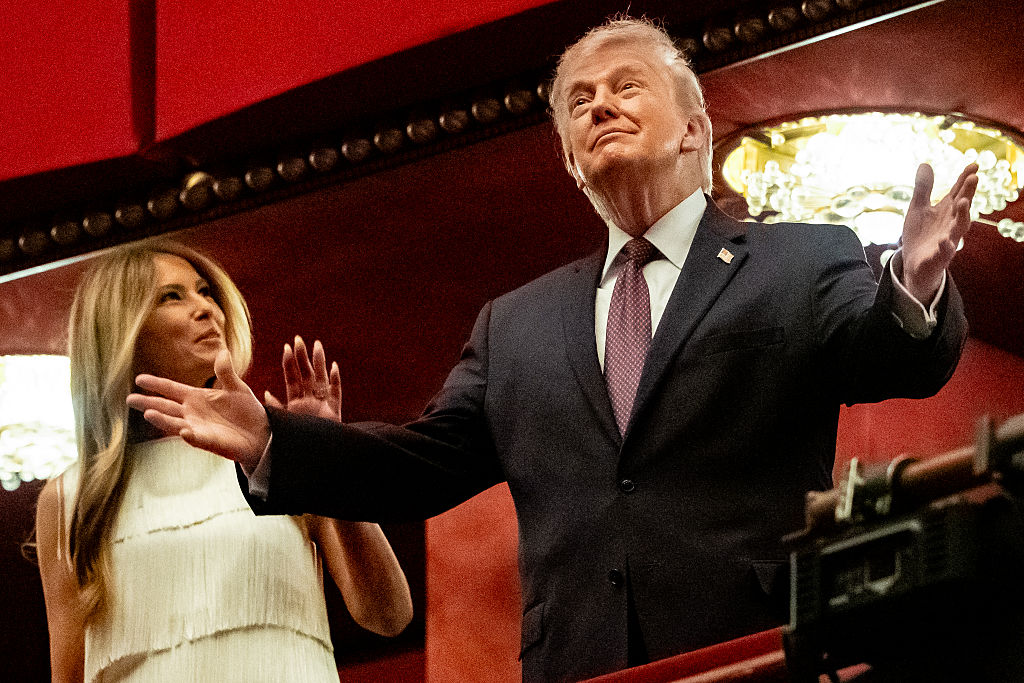
The ‘traffic-light coalition’ has never been anything more than a dysfunctional alliance; the ideological differences between the Social Democrats and Greens on one side, and the Free Democrats on the other, were impossible to ignore. Lindner, a fiscal hawk, believes in lowering public spending, while the other two parties favour increasing the public budget through tax rises.
The largest economy in Europe has struggled for the past 18 months, suffering from a 0.3 per cent economic contraction in 2023, with the International Monetary Fund predicting zero growth for 2024 and only 0.8 per cent growth for 2025. Meanwhile, the ruling parties could not agree on measures to revitalise the economy. Germany’s economic model has previously relied on cheap gas from Russia and still remains largely dependent on exports, recording an export quota of 47.9 per cent of GDP in 2023. Consequently, Germany’s economy is highly susceptible to international turmoil or trade disputes, particularly with China and the United States.
While Germany’s economy is expected to recover in the years after 2025, the short-term future looks rather bleak. The mainstream parties are paying the price. In three state elections in September, the SPD, FDP, and Greens all suffered significant losses, while the AfD and the newly-formed Sahra Wagenknecht Alliance (BSW) made gains, with the AfD even winning the election in the state of Thuringia.
As if Wednesday wasn’t tumultuous enough, it was also announced that negotiations between the ruling CDU, SPD, and the BSW in the state of Saxony had collapsed. The BSW insisted on including a strong statement for peace and against the war in Ukraine as part of a potential coalition manifesto. Without such a statement, there is effectively no mathematical possibility of forming a state government that has the backing of the majority in the parliament in Dresden without involving either the AfD or the far-left The Left (LINKE). All mainstream parties have so far refused to form coalitions with the AfD on the state level.
The federal elections were scheduled for September 2025. Support for the AfD will only continue to grow until then. SPD leaders have already confirmed that Scholz would once again be the party’s candidate for the chancellor’s office, but it appears his days leading the government in Berlin are numbered.
What Marine Le Pen can learn from Donald Trump
The reaction of Marine Le Pen and her party to the stunning triumph of Donald Trump was curiously flat. Emmanuel Macron tweeted his congratulations to the 47th President of the United States early on Wednesday morning, an hour before there was any reaction from Le Pen, the woman who had once been proud to liken herself to a Gallic Trump. When it came, Le Pen’s message was tepid. She wished him ‘every success’, and added: ‘This new political era should contribute to the strengthening of bilateral relations and the pursuit of constructive dialogue and cooperation on the international stage.’
Le Pen has distanced herself from Trump for a while now
Contrast her message with that of another so-called European populist, Geert Wilders, who could barely contain himself: ‘Patriots are winning elections all over the world,’ exclaimed the Dutchman. ‘The liberal-leftish woke driven nihilists are full of disbelief and hate and unfit to give the people what they truly want: freedom and their own nation first.’
Le Pen’s No. 2, Jordan Bardella, who appears to move more to the centre with every passing day, also seemed underwhelmed by Trump’s triumph. ‘For us, the French and Europeans, this American election should be a wake-up call,’ he declared on X. Bardella went on to list what the focus should be now: ‘Proactive and pragmatic energy policy, protection of our interests and identities, European preference in defence, the fight against unfair international competition, support for our industry, agriculture and digital technology.’
It was an extraordinary declaration, one that could have come from the lips of the arch Europhile himself, President Macron.
The reaction of Éric Zemmour, on the other hand, echoed that of Wilders. ‘I wish all the best to the Americans who have chosen civilization over wokeism, decline and the deconstruction of their identity,’ said Zemmour, the leader of the right-wing Reconquest party.
Le Pen has distanced herself from Trump for a while now, unlike those heady days of 2016 when she saw herself as belonging to a triumvirate of anti-system mavericks: herself, Trump, and Nigel Farage.
She reacted to Trump’s election in 2016 with glee. ‘The American people gave themselves a president they chose, not one that an installed system wanted them to validate,’ she said. ‘The angry American people have given the elites a lesson in freedom… like in Great Britain with the Brexit and like what will happen in France in 2017.’
That year was the presidential election, and although Le Pen reached the second round – replicating the feat of her father, Jean-Marie, in 2002 – Marine was comfortably beaten by Emmanuel Macron in the run-off.
She underwent a substantial makeover after that defeat, emerging in 2018 with a softer image – the gardener and the cat breeder – and the head of a party that had changed its name from the National Front to the National Rally.
In response, Le Pen’s father wrote her an open letter, warning her it would be a mistake to become too mainstream. ‘You lead a party… which the powers-that-be vilify but which has embodied the hope of the French people,’ he told her.
Desist from trying to make the party more mainstream, said Jean-Marie Le Pen. ‘Claiming to be de-demonising today is moreover a tactical error, at a time when the people, tired of being deceived by revolutionary elites, are freeing themselves from the tutelage of political correctness, in America, Austria and elsewhere in Europe.’
Marine Le Pen deployed her strategy of ‘de-demonisation’ shortly after she replaced her father as head of the party in 2011. It has been successful in the sense that she has increased the party’s MPs from two in 2012 to 126 in this summer’s parliamentary elections.
She exerts a rigid control over what those MPs say and even how they dress, in what is known as the ‘policy of the tie’. In parliament she expects jackets and ties for the gents and chic blouses for the ladies. ‘The National Rally looks at what the mainstream codes are and adopts them,’ explained the political scientist Jean-Yves Camus in a recent interview. ‘It’s a strategy that undoubtedly smoothes out the party’s image.’
These mainstream codes now extend to being influenced by how the Paris political and media elite regard parties, such as the AfD, and figures like Donald Trump. Le Pen severed ties with the former earlier this year, and she now takes a cooler attitude to the American president – all in the ravenous pursuit of respectability.
But Le Pen is playing a dangerous game. Her appeal for millions of working-class voters is that she is perceived as being outside the system that in 2016 she so despised. If this perception changes, and Le Pen is seen to move too far to the centre, she will alienate her core electorate who will stay home in the 2027 presidential election, nursing their sense of betrayal.
Ultimately, the difference between Marine Le Pen and Donald Trump is that she cares what people think about her, and he doesn’t. She craves respectability; he doesn’t give a hoot what the mainstream media think. The Trump rhetoric of 2024 has changed little from that of 2016; Le Pen’s has changed a great deal. She now sounds like every other mainstream French politician.
Over the years Le Pen has been called many things – from ‘fascist’ to ‘racist’ to ‘anti-Semite’; none of which are true. What is harder to dismiss, however, is the mockery from her father during an interview with the Times in 2012.
‘I’m a man of the people,’ explained Jean-Marie Le Pen. ‘I come from a family of farmers and fishermen… my daughter, whatever she may say, is a petite bourgeoise.’
The key to Trump’s success is his immutability. No makeover, no rebrand, no surrender to the chattering classes. He remains outside the system. Le Pen now has one foot inside the system. It may make her palatable to polite society, but it won’t boost the popularity of the ‘petite bourgeoise’ among the people who matter – the men and women who look to her as the antidote to the elite.
I voted for Kamala Harris – but I’m not surprised she lost
In the end, I voted for Kamala Harris, but I always knew she was destined to lose. After all, if Harris was having trouble convincing me – a mixed-race gay Northern Californian – to get behind her, her chances were worrisomely slim. And the Harris campaign – rushed and reckless, relying on the same tired playbook that failed Hillary Clinton in 2016 – appears to have lost the vast American middle in spectacular fashion.
Harris had plenty more to offer – if only she hadn’t been so afraid to let it loose
The biggest problem for Harris is that she wasted every opportunity to make herself seem interesting. Here is a woman born to immigrants, educated at both Howard, among the most prominent of America’s historically black universities, and California’s public higher education system; a big-city prosecutor with a nifty millennial, multi-racial family who somehow managed to still appear banal and out of touch. A woman overflowing with #intersectionality – with stakes in endless communities, yet never seeming to truly belong to any. A candidate whose race and gender were her most crucial selling points, even as her campaign – along with Harris’s celebrity proxies and media surrogates – refused to engage with what her race and gender might actually mean.
I waited for a reason to make Harris my own, but found it hard to find one. Her campaign – mired in cowardice and timidity – continually danced around her most unique selling points without ever really hitting the dance floor. This is why Harris performed so poorly among crucial voting blocs like black and Jewish voters who will inevitably be blamed for her loss.
Rather than authentically engaging with race and class and gender and religion, Harris stuck to a well-edited script of middle-class modesty that never quite worked with her sleek suits and multiple Vogue covers. Her campaign may have tried to play her as ‘moving beyond’ identity politics, but her real mistake was that voters never learned what all of these identities actually meant to Harris.
Rather than speak openly about her distinct racial heritage, her immigrant parents, her marriage to a white man – any attempt to pierce Harris’s racial veil was shut down and silenced.
I wanted to hear Harris talk about her mixed-race family – not her fake tenure flipping French fries at McDonald’s. Trump directly challenged Harris’s racial bona fides – crudely and with vulgarity. But instead of bravely taking Trump on – perhaps her own version of Obama’s now legendary “More Perfect Union” speech in 2008 – Harris merely dismissed her rival, insisting such talk was just ‘the same old show’ as a plaintive mainstream media looked on.
The same thing happened for Harris with gender – and with Jews. Harris is 60 and childless, another American anomaly which the Trump–Vance campaign tried to weaponise against her. JD Vance was clearly churlish when bemoaning ‘childless cat ladies’. But he offered Harris an opportunity to open up about not having children, how this has shaped her worldview and what it might mean for the increasing number of other Americans like her.
Harris stuck to a well-edited script of middle-class modesty
Instead, Harris clapped back with charges of misogyny while talking up a parentage to stepchildren who were nearly grown when she married their father. All around were quaking gasps of lame ‘how dare he’ when Harris should have been brave and vulnerable and told us how she feels not having kids of her own. Aren’t feelings, after all, what progressives care about most?
The same thing with Jews and Israel and Judaism. My mum is Jewish, my dad African-American – another Harris-world similarity. She and me and we are not like most American Jewish families – particularly at a moment when Jewish families are enduring unimaginable levels of antisemitism.
As she and Biden dithered over their support for Israel, Jews needed to clearly hear what being part of a Jewish family has meant for Harris. We Jews needed to know how, and why, she is – even if by marriage – one of us. Instead, the Harris campaign sent out husband Douglas Emhoff as the nation’s top Jew, while approving deep dives into her journey through the Black Church.
Ultimately, Harris’s entire campaign these last five months has felt contrived and expedient, rather than profound and personal. When the numbers come up showing that many Black and Jewish voters backed Trump, they’re bound to be blamed for failing to deliver Harris the White House. But the blame is all on Harris. Voting for an end to Trumpism may have been enough for folks like me to check ‘Harris’ at the ballot box, but most people needed more. Harris had plenty more to offer – if only she hadn’t been so afraid to let it all loose.
What does Trump’s win mean for America’s allies – and its enemies?
When Donald Trump won his first-ever election in 2016, the world woke up the next morning in a collective state of shock and disbelief. Washington’s allies in Europe were caught completely unprepared; all of a sudden, they had to contend with a leader who relished needling them for all kinds of sins, real and perceived. America’s allies like Japan and South Korea, whose defence policies depend almost entirely on a stable alliance with the United States, were now forced to deal with a man who threatened to use those alliances as leverage to extract greater defence spending in Tokyo and Seoul. Latin America didn’t know what to believe, and frankly neither did many Americans.
Trump should schedule a phone call with Putin relatively early
Nobody is shocked this time around. Or at least they shouldn’t be. Unlike in 2016, when foreign governments failed to do their homework, US allies and partners spent the year before the US presidential election trying to reconnect with Trump’s inner circle. Japan, South Korea, Germany and others all sent delegations, quietly, to Washington, D.C., New York and Florida to hobnob with Trump and his closest advisers because they understood Trump 2.0 was a very realistic possibility. That possibility has become reality in what is arguably the most impressive political comeback in US political history.
It has only been 20 hours or so since Trump was declared the winner, yet a lot of ink has already been spilled about what the returning president may do over his next four years. Israeli Prime Minister Benjamin Netanyahu’s government is cautiously optimistic that a second Trump administration will essentially provide Israel free rein to go after its enemies in Gaza and Lebanon. Ukraine is obviously terrified at what’s in store given Trump’s loud proclamations that the nearly three-year-long war is a waste of US taxpayer money (Ukrainian President Volodymyr Zelensky wrote a congratulatory tweet to Trump as soon as the race was called, hoping for good times ahead).
Much less attention, however, is devoted to what Trump’s foreign policy priorities should actually be during a second term. This, rather than what Trump could do, is the more important subject. The first 100 days will be a pivotal moment for Trump to make his mark and chip away at some of the big problems that impact international security and America’s own role in the world. His kitchen cabinet and incoming security team will be whispering in his ear about what to prioritise and what to discard, but if I were in the room with him, I’d focus on three major lines of effort.
First, Trump should de-prioritise the Middle East in US grand strategy. There are approximately 43,000 US military personnel deployed in the region, an increase from the usual 30,000 courtesy of the 7 October 2023 Hamas attacks on Israel. Since then, the region has been a cauldron of violence and unpredictability. US policy has been – and remains – entirely contradictory and counterproductive, with US diplomats jetting to various regional capitals to work on ceasefire agreements in Gaza and Lebanon at the same time Washington continues to send offensive weapons systems to Israel. Netanyahu has happily taken the weapons but largely spurned the diplomatic efforts. Whenever rumours of a deal are close, the cautiously sunny optimism disappears shortly thereafter.
Trump won’t ban weapons sales to Israel, of course. And even if he did, such a move would cause a huge amount of consternation on Capitol Hill, which remains staunchly committed to defending Israel and aiding its war effort. Yet what he can do, and what would be far more popular, is bring US military forces back to their pre-7 October level. He should also finally give the order to withdraw the roughly 2,500 US troops who remain stuck in Iraq and Syria carrying on with a counter-Isis mission that local actors are capable of fulfilling themselves. The last thing Trump needs early in his presidency is to wake up one morning and find out that a drone launched from an Iranian-backed militia struck a small US base and killed three or four Americans.
Second, Trump must translate his campaign rhetoric about the war in Ukraine into concrete action. That means getting tough with Zelensky and Vladimir Putin alike. Trump should schedule a phone call with Putin relatively early (despite the shock and dismay the Washington, D.C. commentariat will feel with such a thing) and tell him in no uncertain terms that US–Russia relations are unlikely to get much better as long as the war continues. Putin won’t like this and may doubt Trump’s sincerity, but if Trump is serious about negotiating a peace settlement, he can’t afford to give away any leverage he currently possesses over Moscow. In turn, Trump needs to be just as honest and forthright with Zelensky, whose ultimate objective for the war – a full Russian withdrawal from all occupied Ukrainian territory – remains as naive as it is unachievable. The message: if you want the US to keep supporting you, Volodymyr, you can no longer ignore the realities on the ground, which are trending to Russia’s advantage.
Third, Trump should solidify communication with China. Despite the systemic rivalry between the two superpowers, the US–China relationship is the most important on the planet. The interdependence is such that a full breach would be too economically catastrophic to both sides. So-called de-risking will continue, particularly in industries deemed strategic, but an outright decoupling is out of the question. Nobody would win in such an arrangement. Just as important, Washington and Beijing have to find a way to institutionalise communication channels across the board, from the very top to the working levels. This will take a considerable amount of legwork on the part of both countries and might not even be possible; China, for example, has a habit of shutting down normal discussions to penalise the US for policies it disagrees with. But Trump, who got along with Chinese President Xi Jinping during his first term (until Covid-19 hit, that is) should at least make the effort. War, either by mishap, miscalculation or choice, is too unfathomable to even contemplate.
None of these recommendations will get Trump in the history books. But they will go a significant way towards clearing some of the mess he will find on his desk in the Oval Office.
The slippery business of catching a snake
Dante’s Beach, Ravenna
It is strange how events elide and create a pattern whose significance remains elusive. I had just returned from a raid under the cover of the night on a huge field near our house a mile from the sea. I had about 50kg of ripe tomatoes in plastic bags in the back of my battered old seven-seater Land Rover Defender and was wondering if, as an impoverished father of six, I could use the Thomist defence: ‘It is not theft, properly speaking, to take secretly and use another’s property in a case of extreme need: because that which he takes for the support of his life becomes his own property by reason of that need’ (Aquinas, Summa Theologica).
‘Not until you flog the Defender you can’t,’ I heard the chorus of faces in the ancient gallery chant. But then as I parked outside our house, I saw through the windscreen the most amazing shooting star to the north, which obviously settled the matter in my favour. Don’t ask me why but take it from me: that shooting star was the work of God and not of the Devil. And it was a gigantic thumbs-up splashed across the night sky.
Paolo’s big idea is that artists have been, if not actually possessed by Satan, most definitely piloted by him
As luck would have it, the next day my old friend Paolo, who currently manifests as a poet and art historian, presented his degree thesis at the Accademia di Belle Arti in Ravenna on L’Estetica di Lucifero (The Aesthetics of Lucifer). In Italy, anyone can listen to such presentations and there were about 30 there, mostly young women, to hear his highly seductive and instructive romp through the history of Satan and how he has been depicted in words and pictures since the year dot.
Paolo’s big idea is that artists since the French Revolution have been, if not actually possessed by Satan, most definitely piloted by him, and as a result art is ugly and the only antidote is beauty – to achieve it, however, will require mass exorcism.
The rot began with Milton in 1667 with his depiction of Lucifer in Paradise Lost as a heroic fallen angel and was compounded by Byron’s transformation of Lucifer in the early 19th century into a heroic fallen human. Byron – let us not forget – had the most serious love affair of his life right here in Ravenna with the married Teresa Guiccioli shortly before his death. All is lost by the time we get to the 20th century, via Baudelaire et al., and Picasso’s ‘Les Demoiselles d’Avignon’ (1907), which depicts – says Paolo – nothing short of a Satanic ritual. Satan, in a word, has become God, and art an empty commodity like Warhol’s ‘Brillo Box (Soap Pads)’ (1964). Just look how ugly it all is.
Needless to say, Paolo – who has luxurious jet black hair tied in a bun and who that afternoon wore a knee-length purple silk scarf and a strategically unbuttoned shirt – was awarded the equivalent of a starred first on the spot. Bravo! Dante, who is buried just round the corner and wrote The Divine Comedy wandering round here after being banished from Florence, is a hard act to follow. But Paolo is a worthy pupil and has at least found hell on Earth, perhaps even heaven, in the shape of our nudist beach.
To resuscitate poetry from its comatose state he makes it visual. That means, for example, displaying poetry on walls, like graffiti, and in computer situations. Also on human flesh. So Paolo wanders the local nudist beach in search of bodies. And he does so naked, equipped with the tools of his trade.
Me, I hate that the nudists have stolen the best bit of our beach by occupying it and refusing to leave. That said, Paolo’s bodypainting poetry, as he calls it, is a pretty cool idea. It involves an intense conversation between him and his (usually female) prey from which emerges the poem that gets written on their body. He posts photos of the results on his website Poetry Everywhere.
Be all this as it may, what about the snake? Who sent the snake into our house the very next day? And what does it mean?
My wife Carla, who became a devout Catholic only after meeting me perhaps to defend herself from me, listens to the Catholic radio station, Radio Maria, whose editor, Padre Livio, talks non-stop about the Devil as the ‘astuta serpe’ (cunning snake).
Snakes, for us believers, are tricky. This particular snake was about 25 inches long and as black as night and just outside the ground-floor bedroom of Giovanni Maria, who is 12. It then disappeared behind his desk. No doubt it was a baby whip snake, not a venomous viper, which we have in the nearby forest by the sea, but they grow up to two metres long and are exceptionally aggressive. With intense effort we moved everything in Giovanni Maria’s bedroom, including his gigantic wardrobe, in an attempt to find the snake. With gloved hands, we even checked inside shoes. In vain. So the astuta serpe remains on the loose in our house. I pray that it has crossed to the other side like in Harry Potter on Platform 9¾ at King’s Cross.
Carla, who thinks she knows me inside out, said: ‘Are you sure you actually saw a snake?’ It is a question that depresses me in that it questions my sanity. But would it be better if I had seen the snake, or I had not?
My run-in with Greta Thunderpants
The anger management counsellor stormed through the door and shouted at me to turn the heating up. Hello to you too, I thought, but I was polite because I realise we are going to get difficult customers doing B&B in West Cork, where tourists come from all over the world.
At first, however, I didn’t know that this woman storming round my house was a psychotherapist. I just thought she was spectacularly rude. She was wearing a woolly hat and big coat, even though it was a typically mild West Cork autumn day, about 17°C.
She got right in my face as she declared the house too cold at 11 a.m., having demanded at the last minute to check in four hours early. ‘What’s your heating system?’ she barked, eyeing the brand new radiators in the hallway.
‘Er, actually it’s Swiss, with very efficient insulated piping…’ but she yelled: ‘OIL?’ And she pronounced it in a way that made clear she was appalled on an environmental level.
She had long brown hair, and was in her forties, or possibly her thirties; it was impossible to tell with the woolly hat. She said she was visiting her sister down the road and had been told there was no room for her to stay there.
She was so obnoxious I decided there had been some sort of row at the family home and she had been told to check into a hotel. No doubt she had submitted a list of complaints to her sister, as she was doing here, within seconds of her arrival.
After lodging her environmental objections to the way my house was heated, she complained that she could not find anywhere to have a series of beauty treatments. ‘I want my hair done, my nails done and a massage – in the same appointment!’ she barked.
But that was in hand, she said, because she had demanded a local hairdresser accommodate her. She was marching about the hallway looking for the heating controls, so I told her to wait and I went out to the boiler room, fired it up, and came back to find her still pacing up and down.
I now felt it likely that this ghastly woman was in her thirties because she had to be a millennial to have the gall and stupidity to demand all-day heating at full blast while complaining about oil.
These snowflakes are the environmental problem: they are the big consumers, with their love of luxury and buying stuff online, and they are the weaklings, the ones who aren’t hardy enough to put on a jumper and not have the heating on all day in 17°C, at the first whiff of a winter breeze.
Imagine, if you will, how the puny, vegan Just Stop Oil demonstrators would fare if we all said: ‘Fine, you’re right. We will stop oil. And obviously because we can’t produce enough energy from wind or solar, and we’ve fired up all the coal-fired power stations we have to bridge the gap, we’re just going to bring in new laws to limit everyone to a few hours heat a day.’
Imagine them squealing and shivering. Off this climate warrior stormed upstairs in front of me as I tried to show her to her room, and as I opened the door to reveal the immaculately finished guest bedroom with its new en suite, fluffy towels, luxury linens and complimentary tea and coffee, she stormed round the room barking: ‘What about the wifi code?! What about if I want this radiator turned up?! I can’t be cold!’
I left Greta Thunderpants to settle in and was in the kitchen ten minutes later when she stormed in there, having flung open the hallway door which shuts off the main house from the backstage areas.
‘I have a BIG ask! Fine, if you can’t do it,’ she said, with a face that made clear it would not be fine. ‘I want to do ALL my washing!’ Of course she did. ‘No problem,’ I said, in the name of avoiding bad reviews, and I showed her to the washing machine.
She harrumphed and asked where the drier was. Amazing how these climate activists don’t mind wasting water and electricity on the most profligate appliances.
I said I didn’t have one, but she could use the radiators, which were blasting out heat. She said this wouldn’t be acceptable and she would have to find a garage with a public drying machine.
I felt like asking if she would like me to order her a helicopter or private jet to get her there, but I buttoned my lip.
The next morning she informed me by message on the booking site, while in her room, that she would not be checking out on time as she was ‘on a Zoom call’. When she did leave, she threw open the door with a bang and stormed off, her thumping angry footsteps battering the hallway floor.
As she screeched down the drive, I found everything in her room – the duvet, ornamental throws, wet towels – all strewn across the floor. Rubbish had been thrown vaguely at the bin but not into it. Furniture was, inexplicably, pulled out from the walls. The whole room was pretty much trashed.
It was only then that I looked her up. She was, her website claimed, a world-leading expert in compulsive behaviour, anger, stress, anxiety and relationship problems. She could transform negative unhealthy patterns of relating to people into joyful and meaningful ones. Perhaps she just chooses not to.
Bridge | 9 November 2024
The only end play I have ever understood is the throw in. I know when to use it. I know how to use it. And I can see it quite early in the play. But that’s it. I still don’t know how to spot (never mind execute) a squeeze, despite being told 100 times to ‘run all your trumps and leave an entry to both hands’. I never quite dare to run all my trumps. And then there is the mysterious ‘Dummy Reversal’ which came up while I was watching my teammates, Thor Erik Hoftaniska and Thomas Charlsen on BBO, playing for Norway in the World Bridge Games, identified and explained by the commentators.
E/W put on a lot of pressure, but 5♥ seemed more than playable when dummy went down.
Hoffa ruffed the Spade lead and played a top Heart and another to dummy, discovering the very annoying trump break. It was time for a small Club from dummy and the King was taken by the Ace and a small Club returned towards the Jack. West didn’t want to give declarer the whole suit, so he followed with the ♣8, and East could ruff dummy’s ♣J and continue forcing declarer. South ruffed again and played another Club to West’s ♣9, who naturally forced the South hand yet again.
Thor Erik had no more trumps in hand, and the Clubs were not yet set up, but something else had happened: dummy was out of black cards! Declarer went to dummy with a Diamond to draw the remaining trump, and when Diamonds turned out to be 3-3, he had his 11 tricks on a classic – albeit unplanned – ‘Reverse Dummy’ play!
The problem with Dawn Butler
We hear a lot about white supremacy these days. But for some reason we rarely hear about black supremacy. I wonder why? There’s a lot more of it around.
For Butler, describing someone as white or as trying to be white is clearly a great insult
While it is vanishingly difficult to find an overt white supremacist in British public life, it is extremely easy to identify their black counterparts.
As exhibit A I would present the Labour MP Dawn Butler. I have written about her once before, in 2020, when Ms Butler was in a car that was stopped by police. At the time I speculated that the coppers may have pulled the vehicle over in the hope of reclaiming the whirlpool bath that Butler had treated herself to at taxpayers’ expense a few years before. But it was not to be. The incident simply gave Butler the chance to tour the television studios claiming, with great originality, that the British police are ‘institutionally racist’.
Butler was back in the news this past week because of her response to the election of Kemi Badenoch as Conservative party leader. Some naive Tories imagine that Badenoch’s appointment is somehow going to snooker the furthest fringes of the Labour attack machine. They could not be more wrong. Those fringes are populated by people who will call anyone anything they want, however nonsensically. Erstwhile restraints like consistency, honesty or sanity do not hinder them. In 2022 the charmless Labour MP Rupa Huq attacked Kwasi Kwarteng (then, briefly, chancellor of the Exchequer) as ‘superficially black’.
Inevitably, after the news of Badenoch’s victory, it was Butler’s turn again. She retweeted a post describing the Tory leader as ‘white supremacy in blackface’ and ‘the most prominent member of white supremacy’s black collaborator class’. While this is something that most people will rightly regard as utterly crackers, there are a few things worth noting about it.
First is the apparent view that a surprising number of people on the ‘progressive’ side of politics hold, which is that a person’s politics should not be decided by their intellect but by characteristics over which they have no say. These ‘progressives’ take it as axiomatic that anyone who is not white must always vote for the political left, as should anyone from a sexual minority. Also anyone who is unfortunate enough to be born white and heterosexual but is willing to provide temporary proof that they are not, at present, an active member of the KKK.
This is an unfortunate misunderstanding of the left. But it is not evidence of malice per se. Butler on the other hand now exhibits something different. Because for her, describing someone as white or as trying to be white is clearly a great insult. Butler does not seem to believe that skin colour should not matter. She apparently believes it should matter a great deal – and that her skin colour makes her superior. We have her own words to go on.
Last month, to kick off another ‘black history month’, Butler posted a video online that was bonkers even by her standards. It was a sort of vainglorious rap video. I have watched it quite a number of times and still cannot believe it. If you too don’t believe what I am about to relate, you will just have to go online and watch it for yourself.
At the beginning of the number, Butler chants: ‘You wanted to see me broken?/ Head bowed and tears in my eyes?/ More fool you, you didn’t realise/ That my strength is powered by your lies.’ Quite who the ‘You’ is in this is not made clear but you can make the reasonable assumption that they are white. She goes on: ‘You are the wrong one./ The violent one./ The weird one./ Whereas I, I am the chosen one./ Because I am of the first ones.’ I will give us all a brief moment to recover from that – but only to reflect on those last two lines. There used to be a moratorium in public life on allowing people to go around proclaiming themselves ‘the chosen one’. It is widely regarded as a sign of mental sickness. In Jerusalem it is known as ‘Jerusalem syndrome’ and sees a number of people confined each year. But what to make of that follow-on claim – ‘I am of the first ones’? For elucidation we must, I fear, once again, return to the verse of Dawn Butler.
‘You see this skin I’m in?/ This beautiful mahogany brown?/ The skin you don’t like, I believe./ So why you try so hard to achieve/ By burning yourself in the sun? /For me there’s no need / Because I am the chosen one./ For I am of the first ones.’
To conclude Butler says: ‘You, my friend, don’t matter.’ Then there’s yet more stuff about being the chosen one and the first one, before she reaches the searing insight: ‘You created a structure/ That made you seem great./ When the simple reality is/ It is all fake.’
Enough. It is time to come to some conclusions about Butler’s work. If a white MP made a video describing themselves as the chosen one because they have ‘white skin’ unlike all these ‘loser’ black people, then I think it would be fair to say that their career would be over pretty sharpish. The grandiosity would be laughed at, but the white supremacy would be the death knell.
Yet what Butler has been displaying for some time, like a number of others on the Labour left, is the exact black counterpart to that. Butler does not appear to think she is the equal to her fellow countrymen. She seemingly believes she is superior to them if they are not of her skin colour.
There is a term for that. The one I mentioned at the start. Perhaps we should start using it more often.
Did I deny my son a shot at the Premier League?
When my youngest son Charlie was seven he was talent-spotted by a QPR scout who saw him playing football in the park and invited to try out for the junior academy. I struggled to take this seriously – he still couldn’t ride a bicycle – but duly turned up at a ‘sports academy’ in Willesden, a secondary school, where the trials were held. To my astonishment, a QPR coach told me Charlie had potential and offered to enrol him in a programme that involved spending two hours every Wednesday evening at this school. This wasn’t the junior academy, but a level below. Charlie was keen and after talking it over with Caroline we decided to give it a whirl.
Some of the kids couldn’t cope and would burst into tears – driving their fathers round the bend
Within a few weeks of him starting, I began to get cold feet. This school in Willesden wasn’t easy to get to on public transport and was an hour’s drive from our house in Acton. Then there was the fact that Charlie’s odds of becoming a professional footballer were vanishingly small. According to Richard Allen, former head of talent identification at the Football Association, less than 0.5 per cent of the players signed by professional teams under the age of nine end up playing for the first team – and Charlie was a long way from being signed. Finally, there were the other dads.
The coaching took place inside a wire cage and the dads would cling to the outside, screaming at their sons. They knew this was a gladiatorial arena in which only a handful, if any, would make it to the next round and they wanted their lads to be among them. This wasn’t run-of-the-mill encouragement, but blood-curdling threats. I got the impression that many of these men had fantasised about being professional footballers themselves and were vicariously pursuing their dreams through their offspring. Some of the little scraps, barely bigger than toddlers, couldn’t cope with the pressure and would burst into tears, driving their fathers round the bend. Afterwards, you saw them being dragged towards the car park, repeatedly told how ‘shit’ they were. And in case you think this is an example of ‘toxic masculinity’, some of the boys were accompanied by their mothers and they were far, far worse.
I don’t believe in mollycoddling children, but even I found this a bit much. The reason the parents cared so much wasn’t just because of their own thwarted ambitions. They also had dollar signs in their eyes. To be fair, they may not have been thinking of the jewellery and cars their children would buy them – they wanted them to do well. For many, it was a bit like buying their kids premium bonds. The odds were poor, but this was their one chance of hitting the big time.
And it was that, above all, that persuaded me to withdraw. Unlike most of these other children, Charlie would have all sorts of opportunities in his life. This wasn’t his ‘one shot’. Why, then, get his hopes up when it would almost certainly end in disappointment? Even if he was signed by QPR, the odds of him walking out at Loftus Road were 200 to one. During that winnowing process, he would be spending most of his time playing football instead of studying and, when he was spat out, he might have no GCSEs or A-levels to fall back on. I know from conversations with ex-cons that prisons are full of young men who’d been enrolled in football academies and, when they didn’t make it, turned to crime. Indeed, the first team at Wormwood Scrubs is said to be better than QPR’s.
So, I pulled Charlie out after four weeks and have never regretted it. Until last month, that is, when something happened that gave me pause. During my son’s brief career as a QPR recruit, he befriended another seven year-old – Botan Ameen – who was tapped up at the same time. I became friendly with his dad and, because he lived nearby, we would take it in turns to drive the boys. But unlike me, Botan’s dad stuck with it and, in due course, his son signed for QPR. He was let go last year aged 16 – so wasn’t among the 0.5 per cent – but picked up by Swindon Town, a club in the fourth tier. And on 8 October he made his first team debut in a cup game against Bristol Rovers and scored a goal, helping them to victory.
I know what’s going to happen next. Botan, who has already played for the Iraqi under-20s team, is going to become the highest scorer in League Two next season, then get bought by QPR and score the goal that seals their promotion to the Premier League in 2026. After we’ve finished celebrating in the stands, Charlie will turn to me with an accusatory look and say: ‘That could have been me, Dad.’
The Battle for Britain | 9 November 2024
How to buy a house that isn’t on the market
There are many, mutually reinforcing causes of the property crisis: it is too easy to borrow; there are too many people; there aren’t enough houses; what houses do exist are in the wrong place; and many houses have the wrong people living in them. Solutions exist to all of these, some of which involve building and some of which don’t.
In south-east England it is not uncommon to find people living in
£1 million homes who are skint
Today we are going to focus on the fifth problem. Too many people are living in houses which are too big for them. In south-east England it is not uncommon to find people living in £1 million homes who are otherwise skint. I know someone who lives on a long road of four-bedroom houses where they are the only household of more than two. This is daft.
The problem is psychological not structural. Intriguingly, one financial adviser tells me that there is an ironclad behavioural pattern among retirees: unless you downsize before the age of 72, you will never do it unless driven by highly adverse financial or medical circumstances. It isn’t clear why this is – perhaps, once you reach 72 or so, you are reluctant to risk the inconvenience and cost of moving, only to have to repeat the procedure four years later. If this is true, it would be comparatively easy to nudge people into early downsizing by offering a limited-window, stamp-duty holiday to downsizers aged, say, 60 to 72.
But there is another psychological approach which could increase liquidity in the property market. You simply redefine what it means for a house to be ‘on the market’.
Writing in the Telegraph, Tristan Rutherford explained how, on returning to the UK, he was unable to find a suitable house in Lichfield. So, following the example of Alan Sugar, he wrote to the owners of 25 suitable homes that were not for sale. Five wrote back, expressing an interest. Three included an invitation for a tour. He duly found his home.
This finding fascinates me. None of these 25 homes was ‘on the market’. But five people were willing to sell when given an offer. Logically, this makes no sense. But I suspect it isn’t logical – it’s psychological.
I’ve therefore been carrying out an experiment. Whenever speaking to an audience of 200 people or so, I ask the audience to raise their hands if their house is on the market. I then ask if anyone would consider selling if presented with a reasonable offer. Every time I have tried this, more than four times as many people respond to the second question as the first. I even got the same result in Canada.
What is going on here? Why are people more reluctant to ‘put their house on the market’ than they are to sell? Is it that people hate estate agents even more than they hate moving house? Plausible, but I don’t think that’s it. I suspect that once you see your house as being for sale, you enter a state of limbo where you no longer derive any pleasure from your ownership of your home.
If someone offers to buy your house, however, you bypass any uncertainty or fear of rejection. It’s a bit like dating: you wouldn’t go on Tinder if you’re happily married, but if Jessica Chastain/George Clooney invited you out for a drink, you might rethink your living arrangements a bit.
The solution to this is surprisingly easy. Government simply mandates that all homes are for sale all the time. There is no obligation to sell – you could simply quote a ridiculously high price. A website called chimnie.co.uk gives a glimpse of what this might look like. It would be a disaster if we applied the same principle to dating – it would lead to massive promiscuity and family breakdown. But in all other markets, we call promiscuity ‘liquidity’, and it’s exactly what families need.
Dear Mary: How can we get our messy little boys excused from formal lunches?
Q. To my surprise I have been asked to give a eulogy at the funeral of someone I knew only quite well. I accepted more out of embarrassment than for any other reason but I will feel rather bogus delivering this encomium when there will be much closer friends present who may rightly be annoyed by my taking on this commission. Advice, Mary? – Name and address withheld
A. Your name, which has not actually been withheld from Dear Mary, suggests you may have been chosen for status reasons. A funeral is not a time to be mean-spirited however, and the key thing to remember about a eulogy is that it is not about you. You should figure minimally in your address (no doubt you are well practised in this). Research – by talking to others who knew the subject well – is mandatory. It is vital to get the facts right because mistakes will discredit the whole. You can name the suppliers of material to foster their sense of inclusion.
Q. My sister is involved with a very grand older man in his sixties. He insists that our sons, aged two and four, sit at the table with us in the formal dining room for lunch as he himself learnt table manners this way as a small boy. This is nerve-racking as the children make a terrific mess on the white linen tablecloths and so the whole table has to be changed. How can we politely ask for them to be excused?
– F.E.H., Taunton
A. Bring some large linen table napkins with you. Lay one down in front of each son. These will vastly restrict the area of spillages and can be removed at the end of lunch, leaving the main tablecloth intact.
Q. A friend, who is spoilt and eccentric, is also very good company. She has moved to a fabulous central apartment in Lisbon and invited two of us to stay. Our reservation is that she has no palate whatsoever and will have no interest in going out to restaurants which, for us, would be a major factor in visiting Lisbon. (She has been known to turn up to dinner parties and refuse the food because she has had a sandwich at home.) It would be frustrating to be near to brilliant restaurants but have to eat sandwiches instead. What should we do?
– Name and address withheld
A. If your friend is indeed eccentric she may not think it odd when you declare that, by a remarkable coincidence, both of your cleaners in England are Portuguese with sons who own restaurants in Lisbon. You have promised you would patronise these while staying in the city. Say: ‘This will give you a bit of breathing space from us while we nip out and eat in them.’