-
AAPL
213.43 (+0.29%)
-
BARC-LN
1205.7 (-1.46%)
-
NKE
94.05 (+0.39%)
-
CVX
152.67 (-1.00%)
-
CRM
230.27 (-2.34%)
-
INTC
30.5 (-0.87%)
-
DIS
100.16 (-0.67%)
-
DOW
55.79 (-0.82%)
Why there will be no Christmas truce in Ukraine
On Christmas Eve 1914, British and German soldiers laid down their arms and crossed trenches to exchange gifts, bury the fallen and even play football – a brief, poignant truce amid the horrors of the first world war. This week, Hungary’s Viktor Orban has tried to emulate that spirit of goodwill by proposing a symbolic Christmas ceasefire and a prisoner exchange between Russia and Ukraine. He called Vladimir Putin, talked to him for an hour, and then teamed up with the Kremlin to pin the blame on Volodymyr Zelensky for rejecting a Christmas truce. So, what really happened?
A ceasefire is the last thing Putin wants right now
A heated exchange started after Zelensky slammed Orban for discussing the war with Putin behind Ukraine’s back. He tagged the Hungarian PM on X and said: ‘We all hope that [Orban] at least won’t call Assad in Moscow to listen to his hour-long lectures as well.’ The Ukrainian President, in a restrained, diplomatic tone, has repeatedly criticised world leaders for dialling Moscow to serve their own agendas – leaders such as Germany’s Olaf Scholz, who called Putin last month to bolster his peacemaker image ahead of February’s elections. As for Orban, Zelensky didn’t mince words; Ukrainians see him as Putin’s ally for obstructing EU aid for Kyiv, and there’s no pretending otherwise.
The Hungarian PM took offence, firing back that Zelensky had ‘clearly rejected’ a Christmas truce, leaving out Putin’s response to this proposal. The Kremlin quickly issued a statement also shifting the blame on to Ukraine. But Zelensky couldn’t reject something he wasn’t aware of. Dmytro Lytvyn, his adviser, said the Hungarian side did not discuss anything with Kyiv. ‘As always, Ukraine hasn’t authorised Hungary to represent it in any way,’ Lytvyn said, ‘We need real peace, not PR stunts, and solid security guarantees, not empty talk.’ He added that Ukraine is holding talks for a major prisoner exchange by the year’s end and that Orban has not been part of it.
A ceasefire is the last thing Putin wants right now. Up to 2,000 Russian soldiers a day are being injured or killed trying to push Ukrainians out of the Kursk region and capture as much land as possible before Donald Trump takes office. The sacrifice is paying off: Russian troops seized five times more territory last month (280 square miles) than the whole of last year, so why would he stop them?
The fate of Pokrovsk, the city in the Donetsk region that gave the world the melody from ‘Carol of the Bells’, is hanging by a thread. Pokrovsk’s gas supply was cut off yesterday, and Ukraine’s largest steel producer has halted operations at its coal plant as Russian forces approach (they are now just two miles away). A decade ago, Ukraine lost 80 per cent of its coal deposits when Moscow occupied parts of the Donetsk and Luhansk regions, making Pokrovsk a main source of coking coal. When the city falls, Ukraine’s steel production will be halved, severely affecting its weapons manufacturing.
Russia will cease fighting and enter negotiations only if Kyiv accepts the ‘situation on the ground’ and Putin’s terms outlined in June, according to Russia’s foreign ministry. Zelensky is asked to withdraw his troops from four Ukrainian regions that Putin couldn’t even capture entirely, and abandon any plans to join Nato. All western sanctions must be lifted. Until these conditions are met – or until Trump finds a way to force Putin into talks – the fighting in the trenches and Russian missile attacks against war-weary Ukrainian civilians will continue, even as the rest of the world sings carols. Orban is right only about one thing: these are, without a doubt, the most dangerous weeks of the war.
Bombing Syria in 2013 would not have toppled Assad
In hindsight, did the US, UK and France fail to seize the chance to topple President Bashar al-Assad in 2013?
This is the question that convinced Wes Streeting, the health secretary, to attack his colleague, Ed Miliband, the energy secretary and former Labour leader. Miliband orchestrated the vote that threw out the proposal by David Cameron’s government to join the US and France in airstrikes against Damascus in retaliation for chemical atrocities on the Syrian people.
Streeting concluded that if Labour in opposition had supported the vote for airstrikes, Assad’s regime would have fallen, thus bringing relief and liberation for the Syrian population.
Speaking on BBC’s Question Time on Thursday, Streeting said: ‘With insight, I think we can say, looking back on the events of 2013, that the hesitation of this country and the United States created a vacuum that Russia moved into and kept Assad in power for much longer.’
Moscow seized its chance and outplayed Washington
The conclusion might have some merit were it not for the fact that Russia, with military and political muscle, had created such a long-lasting footprint in Damascus that even a series of US-led airstrikes to destroy the regime’s chemical weapons sites would not have persuaded, let alone forced, Assad to seek refuge in Moscow, as he has now done 11 years later.
Moreover, when President Obama drew up his ‘red line’, declaring that proof of chemical attacks by Assad would lead to comprehensive airstrikes on Syrian weapons facilities, he did not have regime-change in mind.
Airstrikes have played a crucial role in many wars in the last two decades. But no one, apart from a few dreaming air chiefs, believe that dictators can be toppled by bombing raids, without troops on the ground to follow through.
Miliband, conscious of these arguments at the time, has rejected his cabinet colleague’s suggestion that a golden opportunity was lost to get rid of Assad. Sadly, Miliband is right. It’s too simplistic to believe that Assad would have run at the first fall of bombs.
Nevertheless, history shows that it was Russia, not the United States, which seized the golden opportunity in 2013. Sergey Lavrov, the wiliest of Russian foreign ministers, stepped in and declared in an almost off-the-cuff manner that Moscow would ensure that Syria gave up all of its chemical weapons. So, no need for bombing.
It was a masterstroke.
Obama had made a firm commitment to launch airstrikes after clear evidence of Syrian regime sarin nerve agent strikes on rebels and civilians in Ghouta, a suburb to the east of Damascus in August, 2013, killing 1,400 people.
The US military objective was not to strike at the regime as such but to destroy as much of the chemical stocks as possible and to deter Damascus from turning to these weapons in the future.
The failure of the Cameron government to persuade the Miliband-led Opposition and 30 Tory MPs to back Britain’s involvement in the planned air raids was a big setback for Obama. But it wasn’t terminal. His red line still stood and the US could have gone ahead with France.
However, the Lavrov intervention which took place while he was standing next to John Kerry, US secretary of state, at a press conference in London, miraculously removed the Obama red line at a stroke.
Kerry grabbed the Russian offer and within a remarkably short time (less than 12 months), 97 per cent of Assad’s 1,300 tonnes of chemicals and poisons had been destroyed. Assad survived and Moscow congratulated itself on a diplomatic coup. The US played a vital role in the destruction programme, but Obama had blinked and looked weak.
The outcome was, on the surface, a triumph. But it wasn’t to last long. Assad had kept back enough hidden chemical stocks and started using feared helicopter-launched barrel bombs filled with chemicals as the civil war spread.
In April, 2018, with Donald Trump in the White House, the US, UK and France carried out airstrikes on suspected Syrian chemical facilities. Again, Assad survived.
The lesson learned is not, as Streeting is suggesting, that an opportunity was missed to overthrow Assad in 2013, but that any sign of weakness when dealing with regimes such as Assad’s will be ruthlessly exploited.
Moscow seized its chance when it detected a wavering Obama and as a result outplayed Washington. Moscow was helped by the decision of the UK parliament to opt out of joining the US in airstrikes. For that decision, Miliband has to accept some responsibility.
What’s preventing a repeat of the Senate twink scandal?
Gay-PMG
Grüezi from Switzerland, friends. A Cockburn spy was recently hoping to enjoy a quiet lunch at an Irish pub in Zurich’s Old Town when he was sat next to a large group of somewhat intoxicated KPMG Switzerland employees. It was quite the liquid lunch, with beers and wine flowing for hours and one staffer suggesting a round of shots, a move that was quickly rejected from the already too-far-gone group. One American employee of the firm was waxing lyrical about KPMG’s alleged hopelessly bigoted management. The employee was making a video for the company’s LinkedIn page to celebrate Pride Month but was told a shot of him in a full-blown make-out session with another man was too much for the family-friendly page; he was asked to remove it before getting approval to post the video. You can watch the actual clip that went up for Pride Month here.
In a separate incident, the employee was told he could only have a Pride flag next to his pronouns in his email signature during Pride Month. The employee was furious and escalated the incident to management and even called in the firm’s DEI manager to go after the anti-flag homophobe. “They fucked with the wrong person,” the employee slurred to his colleagues. Another KPMG staff member summed up the incidents: “You can be gay, but not too gay!”
What’s preventing a repeat of the Senate twink scandal?
It’s the most wonderful time of the year: Cockburn’s gossip column is marking the one-year anniversary of one of its finest editions. A year ago this week, in these virtual pages, your dogged correspondent had the grave duty of informing you of the sordid acts taking place in Room 216 of the Hart Senate Building, the scene of the Kavanaugh hearings. Two men had filmed themselves in flagrante delicto — and their footage was making the rounds in DC gay circles. Shortly after Cockburn’s missive, the Daily Caller published a censored version of the video, nonetheless clearly depicting the man we now know as “the Senate twink” bottoming on Senator Amy Klobuchar’s desk. (Justice for Mayor Pete!)
The story set Washington ablaze in a manner that does justice to Cockburn’s namesake from the War of 1812. The twink in question, Aidan Maese-Czeropski, was relieved of his post as a legislative aide for elderly Maryland senator Ben Cardin and vanished into the aether. (Earlier in the week, he had caused a minor commotion after yelling “free Palestine” at Representative Max Miller, a Jewish Republican.) An investigation was carried out into the tryst, with the US Capitol Police determining that what had unfolded constituted a “breach of congressional policy” rather than a crime.
So, one year on, what’s to stop gregarious and concupiscent Hill staffers from following in the footsteps of Maese-Czeropski and his mystery man and repeating the act? Not much, it appears: you can still do as he did, book a high-profile room in the name of your member and rut away to your Hart’s content. “Honestly, screwing me in my representative’s office would present much more of a challenge,” a Democratic staffer drily observed to Cockburn this week.
For the sake of cleanliness in the Capitol, Cockburn sincerely hopes that the trans activists currently taking issue with Nancy Mace’s bathroom crusade aren’t tempted to make their protests even more X-rated…
The twisting fates of Cox and Weiner
Anthony Weiner and T.J. Cox are both disgraced former Democratic members of Congress, forever united in having unfortunate last names.
In recent days, Weiner and Cox have seen their paths differ, however. Weiner, ever a glutton for punishment, is back in the game: the former mayoral candidate-turned-convicted sex offender is reportedly eyeing a campaign for New York City Council. Hey, he certainly has the name recognition.
Cox, a former California congressman, meanwhile pled guilty to two counts of fraud and will pay millions of dollars in restitution. “Prosecutors,” the Associated Press reported, “said Cox stole more than $1.7 million in diverted client payments and company loans and investments. They also alleged Cox created false records and a fraudulent loan guarantee in order to secure a $1.5 million construction loan through a sports nonprofit for improvements at Granite Park, a sports complex in Fresno.”
While Cox may yet avoid the prison time Weiner served, it’s still a disappointing finish for the once-promising Democrat. Perhaps Cox should be reaching out to Weiner for a tip on how to handle life inside…
Sleigh queen
Cockburn braved the rain Tuesday to jingle down to the National Press Club for a joint Christmas party hosted by polling firm JLPartners and the Daily Mail. The affair was decidedly less outré than the Mail’s NYC rager; attendees found the proceedings punctuated by a brief presentation from the British polling firm, as co-founder James Johnson walked through how their model had resulted in the most accurate prediction of the 2024 election. In attendance: Boris Ephsteyn, Jason Miller, Politico’s Natalie Allison, the Times of London’s Alistair Dawber, NBC News’s Katherine Doyle, the Independent’s Andrew Feinberg, the Hill’s Julia Manchester and Sarakshi Rai, Semafor’s Shelby Talcott and a healthy complement from the Mail itself, including Rob Crilly, new US editor-in-chief Katie Davies, Emily Goodin, Matt London, Wills Robinson, Nikki Schwab and Charlie Spiering.
On Wednesday, Cockburn again headed out in the drizzle, first to the British Embassy for some Christmas drinks in their on-site pub, Bar 3100. He sipped Coronas and rubbed shoulders with embassy staff and hacks from the Times, the Hill, Politico and Sky News. Then it was off across town to the Willard for a very glitzy soirée, the Newsmax Christmas party. Spotted: Roma Daravi, Jessie Jane Duff, Hogan Ridley, Haley Gillman, Dr. Sebastian Gorka, Nathan Klein, Marc Lotter, Keitha Paleski, Chris Plante, Valeria Riccioli, Chris Ruddy, Kelly Sadler, Matt and Mercedes Schlapp, Tony Shaffer, Joe Simpson and Greta van Susteren.
Then Thursday night took him to an event at, sigh, Mission Navy Yard, for a joint party hosted by Matthew Foldi’s Washington Reporter and the Manhattan Institute. Guests enjoyed a free bar and Mexican food. Cockburn saw: Jesse Arm, Joe and Mallory Ballard, Nick Ballas, Doug, Katie and baby Arthur Blair, the Free Beacon’s Meghan Blonder, Willy Chertman, Blayne Clegg and Newsmax’s Marisela Ramirez, the Free Beacon’s Jessica Costescu, Matthew Foldi and Olivia Coleman, Paul Foldi and Bonnie Glick, Aaron Harison, Melanie Meyers, Renu Mukherjee, Tom Mulkeen, Vikram Prasad, Trump campaign social media savant Greg Price, Reihan Salam, Ilya Shapiro and Ryan Young.
Sign up here to get Cockburn’s weekly gossip column in your inbox on Fridays.
How long will Macron’s latest prime minister last?
Emmanuel Macron has appointed the veteran centrist Francois Bayrou as his fourth prime minister of the year.
First elected as an MP in 1986, Bayrou served as the Minister for Education in the 1990s under both the Socialist government of president Francois Mitterrand and the centre-right Jacques Chirac. In 2007 he launched a Centrist party, Mouvement démocrate (MoDem), which rallied to Macron’s support in the 2017 presidential election, even though early on in the campaign Bayrou described Macron as the candidate of the ‘forces of wealth’.
Bayrou already has the left against him and Le Pen is prowling in the background
The 73-year-old Bayrou was announced at lunchtime on Friday after a ‘tense’ meeting earlier in the morning with Macron at the Elysee. Whatever was said between the two men appeared to have ended Bayrou’s chance of becoming PM, but according to reports the president had a change of heart after Bayou stormed out of the Elysee, and reopened negotiations.
Bayrou replaces Michel Barnier as premier, a man with whom he has much in common. Not only are the men of the same generation, they have a similar centrist outlook and, significantly, are open-minded when it comes to talking to Marine Le Pen’s National Rally.
Barnier’s failing was that he didn’t talk enough to Le Pen, prompting her party to join the left-wing coalition last week in passing a vote of no confidence in his government.
Contrary to media speculation, Le Pen’s decision to bring down Barnier has not dented her popularity. On the contrary, a poll this week in Le Figaro had her as the front runner in the 2027 presidential campaign. The popularity of Macron, on the other hand, continues to fall and he is now down to 21 per cent, the lowest approval rating since he came to office in 2017.
The shenanigans this week won’t have endeared Macron to the French. On Tuesday he promised that a new prime minister would be named by Thursday at the latest. Thursday came and went, and late in the day the Elysee said the name would now be known on Friday morning. It was eventually revealed shortly before one o’clock.
But there is a feeling that Macron has strung out this week as long as possible to remind the French who is boss. ‘He likes to remain at the centre of the game for as long as possible,’ said Boris Vallaud, the parliamentary chief of the Socialist party.
Speaking before Bayrou’s nomination, Vallaud advised the president against nominating him because it ‘would run the risk of worsening the political and institutional crisis that he himself has created.’
Speaking after Bayrou’s nomination, Mathilde Panot of the hard-left La France Insoumise said her party would table a vote of no confidence in the new PM as soon as possible.
Le Pen was also quick to respond to Bayrou’s appointment. ‘Mindful of the imperative need to protect the French, we are asking him to undertake what his predecessor was unwilling to do: listen to and hear the opposition in order to construct a reasonable and considered budget’, she wrote in a social media post. ‘Any other policy that would simply be an extension of Macronism, twice rejected at the ballot box, could only lead to deadlock and failure.’
Three months ago, Barnier stood on the steps of Matignon, the prime minister’s official residence, alongside his predecessor Gabriel Attal. Today Barnier has taken Attal’s place, handing over the baton to the next man brave enough to accept the most unenviable job in France.
How long will Bayrou last? Not long, in all likelihood. He already has the left against him and Le Pen is prowling in the background, ready to pounce if she judges Bayrou to be just the latest puppet of the president.
Bayrou must first name a government and then try and get next year’s budget passed as soon as possible. Time is not on his side. This morning the governor of the Bank of France, François Villeroy de Galhau, appeared on breakfast TV. It was a bleak interview in which he laid bare the economic malaise inflicting the country. ‘There is a risk of France gradually sinking,’ he said. ‘France, which was among the leaders in Europe, is slipping towards the bottom of the pack.’
He urged the new prime minister not to abandon the aim of returning to a 3 per cent budget deficit by 2029 (it is currently 6.2 per cent), and he said the 2025 budget must take a ‘significant step’ towards restoring public accounts.
Bonne chance, Monsieur Bayrou.
The Spectator’s Christmas reception, in pictures
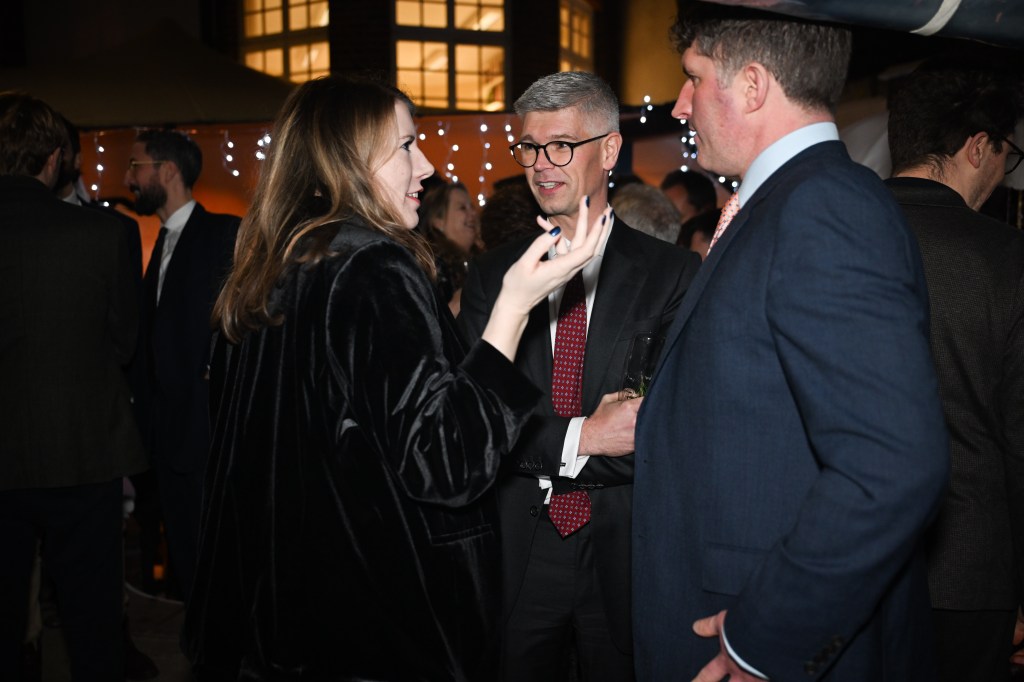
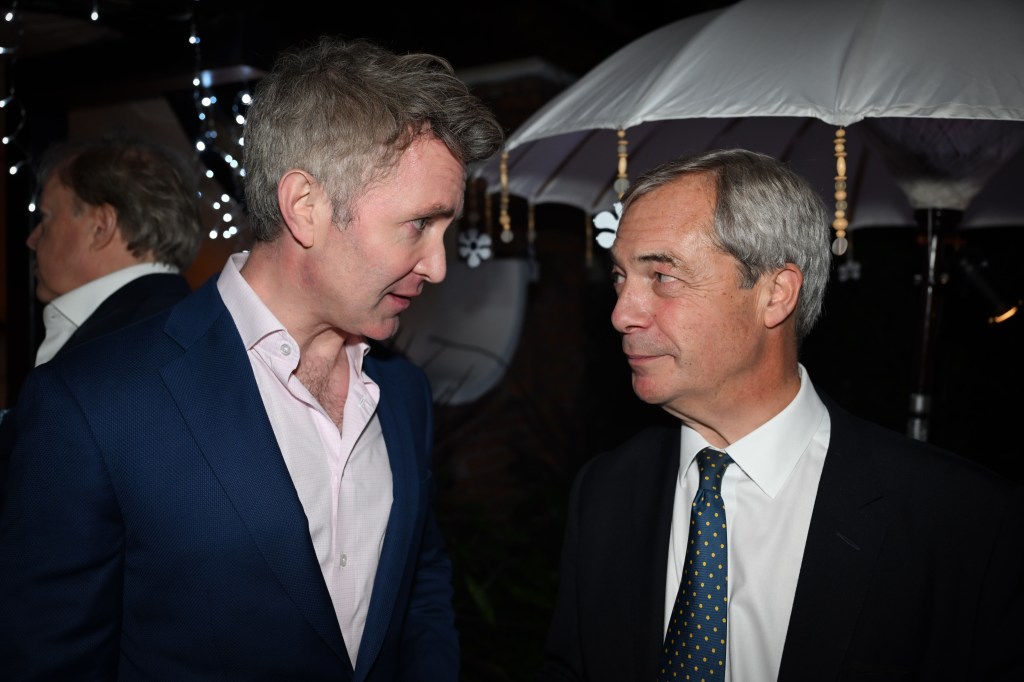
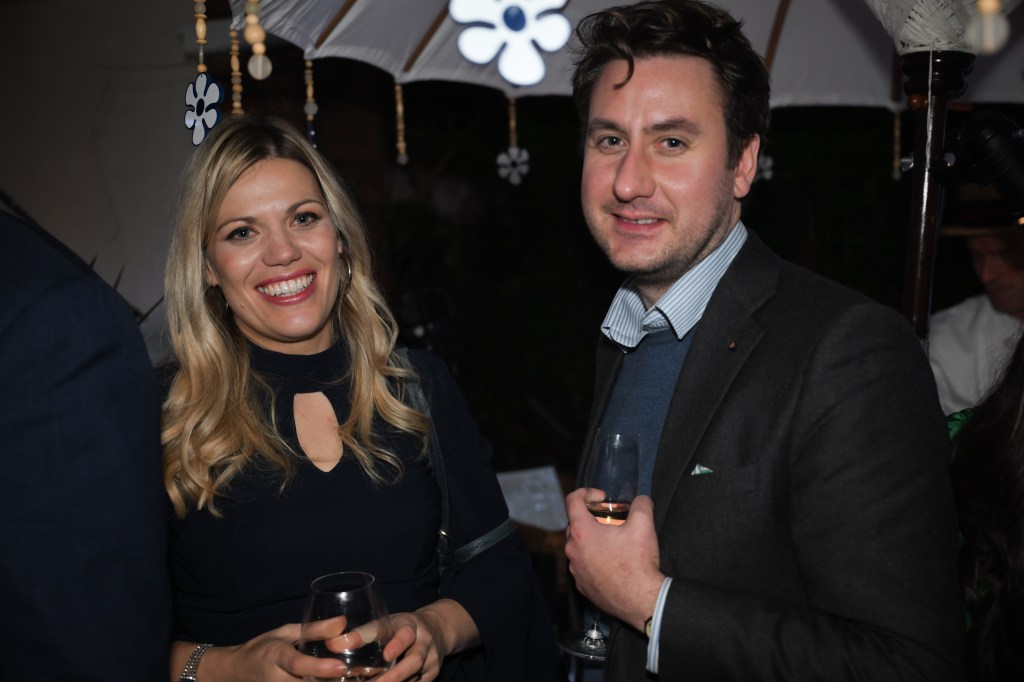
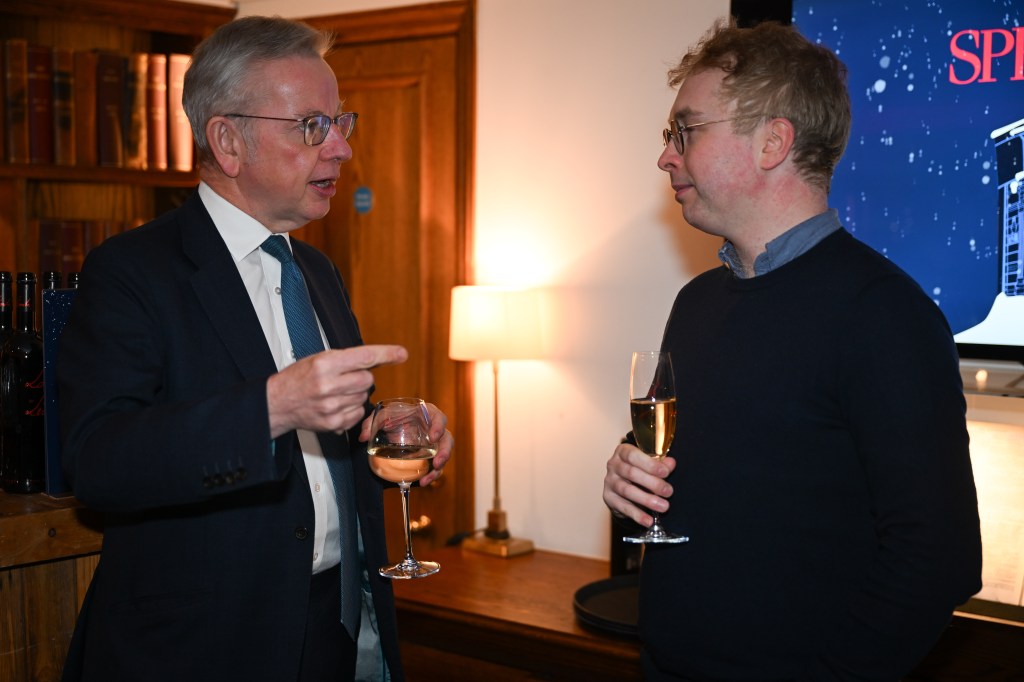
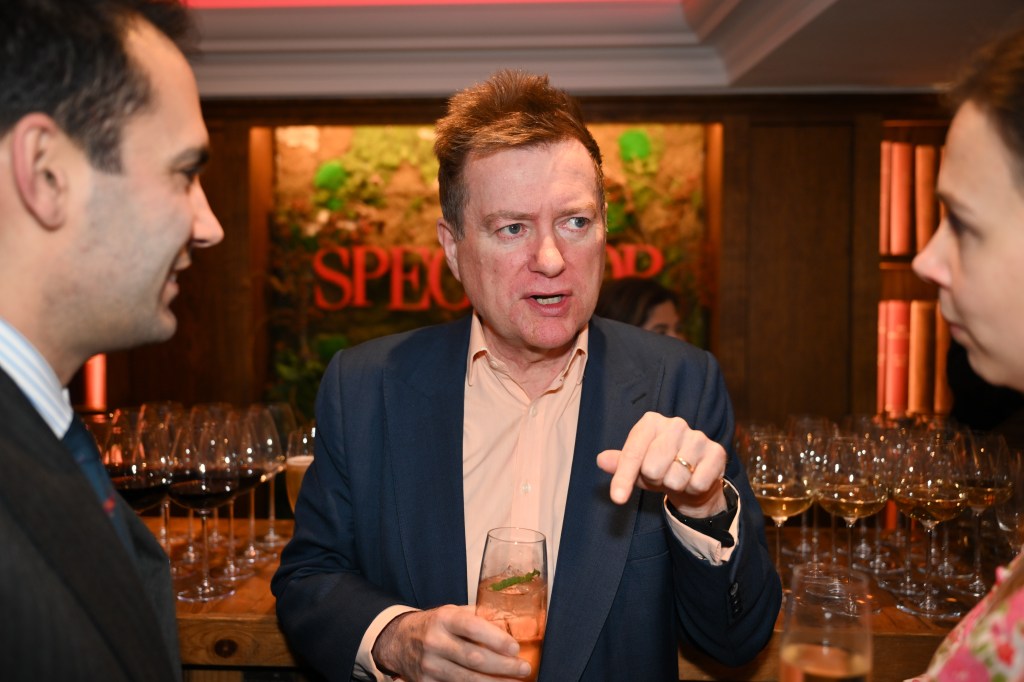
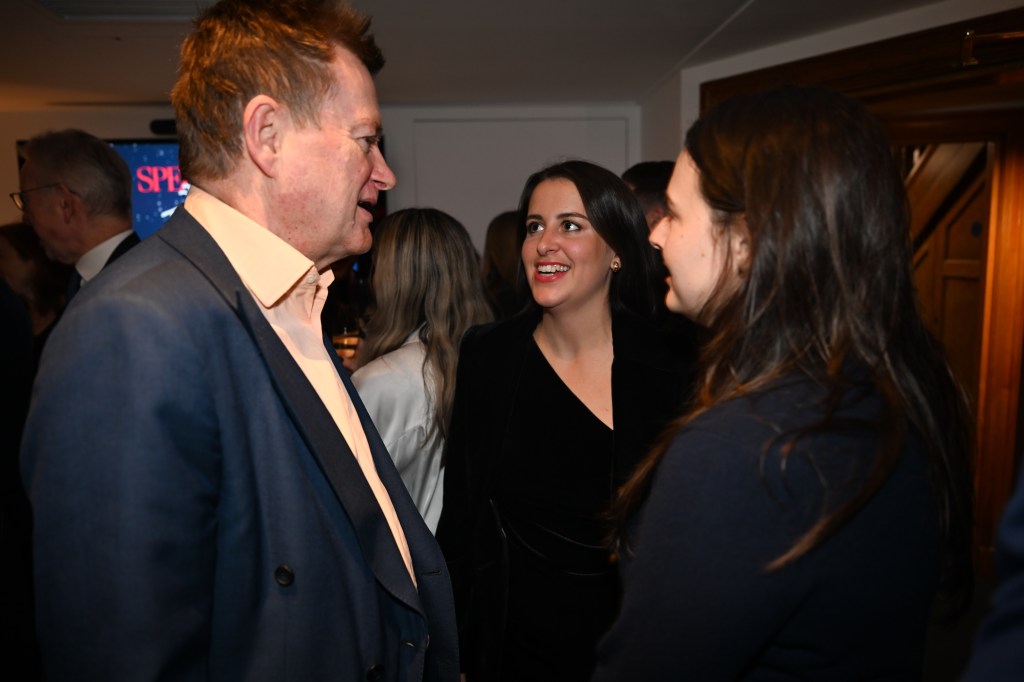
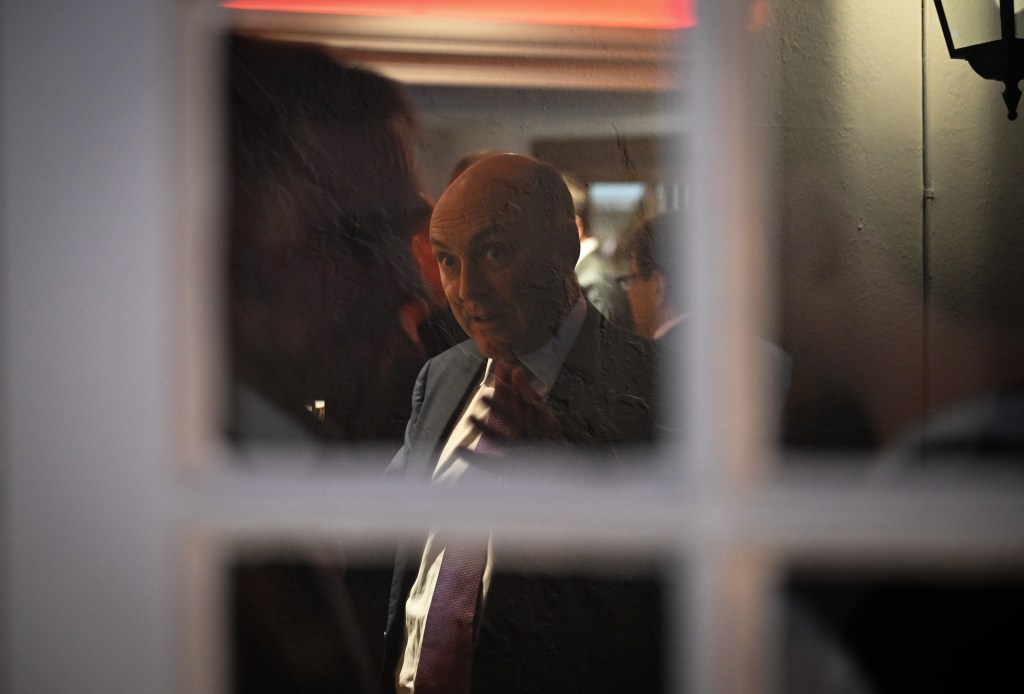
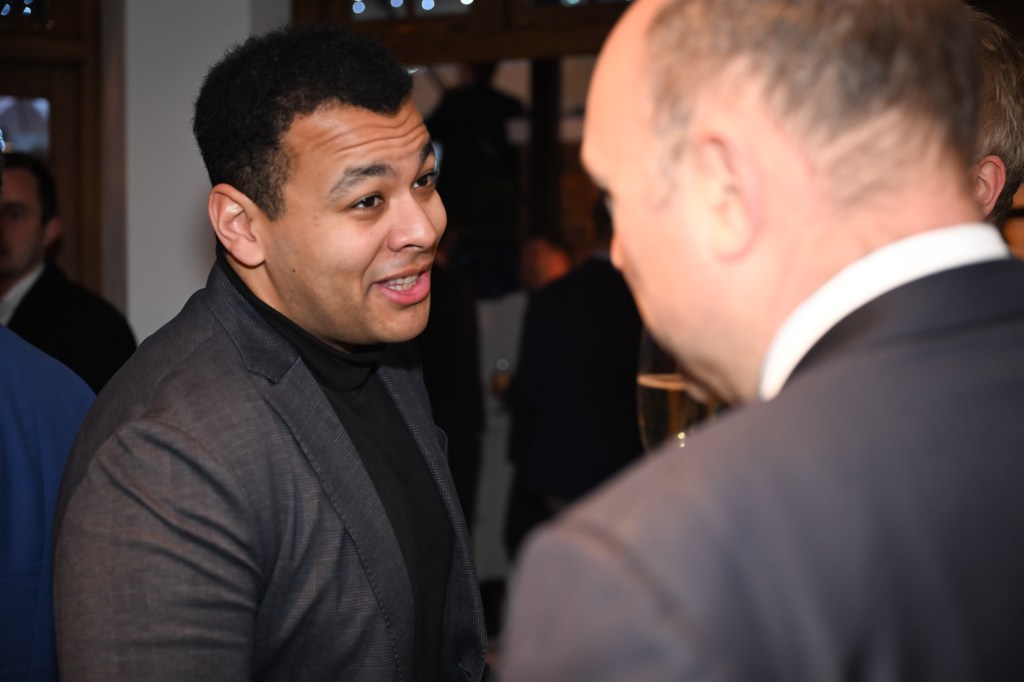
The festive season is well and truly upon us and The Spectator celebrated with a Christmas reception that took place this week. From Labour cabinet ministers to Reform’s Nigel Farage, the great and the good of Westminster descended upon Old Queen Street. After a pretty eventful year in politics, parliamentarians, pundits and professionals were able to let off some steam and enjoy the festivities. Have a look at the photos here…









Gukesh’s championship win is a triumph for Indian chess
Eighteen-year old Gukesh Dommaraju, from India, has become the youngest ever world chess champion – after defeating defending champion, China’s Ding Liren, in Singapore yesterday.
There is an adorable clip online in which an 11-year old Gukesh, smiling shyly, states his ambition to become the youngest world champion. Bold as that goal was, at the age of 18 he has accomplished it with time to spare, since Garry Kasparov and Magnus Carlsen were both 22 years old when they won the title.
The fourteenth and final game of the match saw an extraordinary turn of events. Up until that point, the scores were tied, with two wins apiece and nine draws. After four hours of play, Gukesh held an advantage, but most commentators anticipated that Ding would hold the line and secure a draw. That would have steered the match into a rapid tiebreak, in which Ding’s greater experience was expected to give him the edge. But in that nervy final game, certainly exhausted by a match which had run well into its third week, Ding suffered an uncharacteristic lapse. He offered an exchange of rooks, a move which looked benign, but which allowed an alert Gukesh to trade bishops as well. The resulting endgame left Ding in a hopeless position. He resigned a couple of moves later.
A world championship match is an immense effort, that takes place over weeks and involves assembling a team months in advance to prepare. That strain is one of the reasons Magnus Carlsen, who had held the title since 2013 and won five championships, announced in 2023 that he no longer wished to defend his title. It also perhaps contributed to Ding’s slump in form after his win last year, which meant Gukesh had arrived as the heavy favourite for this year’s championship.
Ding himself admitted that he was worried about ‘losing very badly’. To his immense credit, he tore up that script by taking the lead in the first game, and despite falling behind in game 11, fought back to level the score in game 12. When the match was over, Gukesh graciously acknowledged that Ding’s fighting spirit had been an inspiration to him.
Evident alongside Gukesh’s humility was his enviable determination to win. This was a richly deserved victory. He showed creativity in the opening, brisk and challenging play in the middlegame, and persistence in the endgame. Ding defended resourcefully, but the consistent pressure took its toll and Gukesh’s breakthrough in the final game was no accident.
Gukesh’s victory also symbolises a national triumph: Indian chess has seen a magnificent blossoming of talent in recent years. Gukesh has blazed ahead, but his compatriots Erigaisi and Praggnanandhaa, both just a little older, have also taken their place in the world elite. The most recent chess Olympiad in September, an international team competition, was dominated by Indian teams who won gold medals in both the open and women’s sections. They achieved that result even without the participation of former world champion Viswanathan Anand, who at 55 years old is now semi-retired as a player.
Anand has had a colossal influence on the development of chess in India. He became a grandmaster as far back as 1988, and his successes have been an inspiration to generations of players. Gukesh, like Anand, comes from Chennai, the same city in which Carlsen wrested the title from Anand in 2013. At the conclusion of his match with Ding, Gukesh recollected being present as a seven-year old, watching Anand and Carlsen play, and dreaming of bringing the title back to India. Anand’s support and patronage has undoubtedly helped Gukesh in his campaign to become world champion.
One hopes that Ding, unburdened by the title, will be revitalised, and that Gukesh, still a teenager, has much further to go. ‘Becoming the world champion doesn’t mean that I’m the best player in the world… obviously there’s Magnus’ – acknowledged Gukesh after the match, who is currently the world number five in the international rating list. For now, 34-year old Carlsen remains the world number one, but he recently noted the possibility of being overtaken: ‘One or more of the kids are probably going to surpass me in the next couple years in the classical format.’ After achieving a monumental goal, it can sometimes be hard to know what to strive for. At least for Gukesh, that won’t be a problem.
Graham Linehan: I’m leaving Britain
To the world of comedy, where it transpires that renowned gender critical activist Graham Linehan is looking for pastures new. The Irish comedian – who worked on Father Ted and The IT Crowd – took to X/Twitter this week to announce he is leaving Britain to move to America after claiming ‘freedom of speech is in bad shape at the moment’ in the UK.
In a video released on Elon Musk’s social media site, Linehan discussed his attempts to dismantle gender ideology and how he received ‘no support’ from his colleagues in the industry in the process. ‘As a result,’ he admitted, ‘I haven’t worked in five years.’ But it’s not all doom and gloom. Linehan announced he has written three episodes of a new sitcom, which he will work on in Arizona in a new production company – alongside non other than actor Rob Schneider and GB News presenter Andrew Doyle. Talk about a turnaround!
Describing the concept as ‘pretty damn good’, Linehan – who was banned from performing in Edinburgh’s Leith Arches last year over his gender critical views – revealed that his new show is ‘not anti-woke comedy’, adding: ‘I think that would be as dead an end as the woke movement itself is.’
Linehan has previously discussed how dramatically his life changed when he began speaking out about his views on the trans issue, with Debbie Hayton writing last year for The Spectator that ‘jobs began falling away’ for the comedy writer. ‘Accused by his opponents of transphobia, he has found himself out of work and out of his marriage,’ she noted.
The Irish comedian has hinted that his new Arizona show with Doyle and Schneider has ‘two years to try’ to make an impact. It certainly sounds like it’ll be quite the treat. Stay tuned…
What Ed Miliband got right on Syria
It’s not every day I spring to the defence of Ed Miliband, Secretary for Environment, Net Zero and all the rest of it. But for him to be taken to task for not backing the bombing of Syria back in 2013, as Wes Streeting cautiously does today, is actually to criticise him for his most statesmanlike act during his entire period as Leader of the Opposition.
Miliband was given a rough ride by Nick Robinson on the BBC Today programme about it: would he be able to look the relatives of the unfortunate people murdered in the dictator’s prison in the eye and say that he does not regret not bombing Assad’s forces? To which he stoutly, and honourably, replied that he doesn’t. And good for him.
No one in 2013 was under the smallest illusion about the nature of the Assad government
It would, he said, have been irresponsible to have put British troops ‘in harm’s way’ in that conflict, particularly when there was no obvious exit strategy. ‘This is not,’ he said with masterly understatement, ‘an area of easy answers.’ As to the notion that simply bombing Assad after using chemical weapons against his own people would lead to his overthrow, well the US did bomb Syria and that didn’t happen.
Let’s remind ourselves of the reasons why attacking Syrian forces would have been a bad idea. The chief of them is that before attacking a regime we should be mindful of what might replace it. And what the alternative to the Assad regime was at the time was a coalition of forces, only a minority of whom were paid-up democrats, with a significant part of the rest being paid-up Islamists. The jihadist groups operating in, say, Idlib, should have told us exactly what might lie in store for Syria if Assad had indeed been overthrown.
The second, related issue is that the Islamic State (IS) was still in situ in Syria at this time, in Raqqa, and the Syrian forces, backed by Russia and Iran, were the most likely alliance to overthrow it. Before you say it, I do realise that the former president played a very ugly game with the leaders of IS, using them as well as attacking them, but in this situation we’re talking about the least worst option and that was Assad and his coalition. Bombing his forces would not have assisted the fight against Islamic State, which took control of Mosul swiftly and unexpectedly in 2011, catching our intelligence services on the hop. A bit like the latest takeover by HTS, then.
The third is that the example of Iraq – which Ed Miliband correctly invokes – and of Libya should have given the Tory government pause before it embarked on a bombing spree. The displacement of Saddam Hussein and Muammar Gadaffi did rid the world of two unpleasant despots but it replaced their repressive regimes with anarchic orders in which the respectable middle classes and minorities such as Christians suffered catastrophically. We have not yet been forgiven for Iraq, by the way. The ignoble but prudent strategy in these cases is the one outlined in Hilaire Belloc’s cautionary verse about Jim, Who Ran away from his Nurse and was Eaten by a Lion: ‘always keep a hold of nurse, for fear of finding something worse.’ In this case Bashar al Assad was a known horror, not an unknown one.
Any humane person will recoil at the present revelations of the atrocities carried out in Syrian prisons by the regime, though as Ed Miliband pointed out, no one in 2013 was under the smallest illusion about the nature of the Assad government. But human rights abuses do not of themselves justify military intervention by the British government. Ed Miliband was right and responsible in that vote in 2013 and David Cameron was wrong and irresponsible. Let’s admit that, shall we? And let’s hope that the Islamist HTS government will turn out differently.
Prince Andrew’s Chinese ‘spy’ blunder is no surprise
It is fair to say that Prince Andrew has always had poor taste in friends. Notoriously, and reputation-shreddingly, he consorted with Jeffrey Epstein long after the latter’s disgrace. There is a rogue’s gallery of potentates and sheikhs who have been only too happy to provide what one royal biographer euphemistically called “alternative sources of income” for the not-so-grand old Duke of York. Yet today’s news that an alleged Chinese spy, who has now been banned from Britain, had close personal and financial links to Andrew is still, even by the standards of his previous behaviour, something of a marmalade-dropper.
Yet again Andrew’s judgement has been tested and found lacking
The facts are both predictable and outlandish. Andrew has openly been looking around for money in places high and low since he was forced to step down as a working (read: publicly funded) member of the royal family after his disastrous 2019 Newsnight interview. He subsequently befriended an apparently plausible Chinese businessman. Although they were, on paper, an unlikely match – the one, a former Falklands pilot turned international disgrace, and the other a member of the Chinese Communist Party moonlighting as a spy for his country’s United Front Work Department – they bonded sufficiently swiftly for the businessman to be invited to Andrew’s birthday party in 2021 and onto the royal estate at Windsor, which includes the duke’s home of Royal Lodge.
In advance of these playdates, Andrew’s senior adviser Dominic Hampshire wrote to the duke’s new friend to stress the privilege of his situation. He reminded him that: “I also hope that it is clear to you where you sit with my principal and indeed his family. You should never underestimate the strength of that relationship…outside of his closest internal confidants, you sit at the very top of a tree that many, many people would like to be on.”
Yet there was also a cloak-and-dagger element; the same letter referred to how “we have found a way to carefully remove those people who we don’t completely trust. Under your guidance, we found a way to get the relevant people unnoticed in and out of the house in Windsor.”
There could be little doubt that Andrew’s latest ill-advised friend had a great deal of influence over him. Unfortunately, this influence was not dictated by warm fellowship, but by cold-hearted realpolitik.
One briefing document in the businessman’s possession suggested that it was: “Really important to not set ‘too high’ expectations – he is in a ‘desperate’ situation and will grab onto anything.”
How desperate this situation was soon became clear; the businessman was authorised to act on Andrew’s behalf to go out and find investors for something called the Eurasia Fund. As one judge observed, tartly, while expelling the alleged spy from the country, “It is obvious that the pressures on the duke could make him vulnerable to the misuse of that sort of influence.”
This doomed friendship may have had its origins in “covert and clandestine” elements, but yet again Andrew’s judgement has been tested and found lacking.
The duke’s finances remain fascinatingly opaque. Why, for instance, did the oligarch Timur Kulibayev pay £15 million for the duke’s home of Sunninghill Park in Berkshire, a punchy £3 million over the asking price? Why was Epstein suspiciously keen to pay Andrew’s ex-wife Sarah Ferguson’s debts?
Now that the king has withdrawn public and private funding from the duke, how is Andrew managing to bankroll the maintenance and security costs that Royal Lodge requires – believed to run into millions per annum – without any obvious means of support, let alone anything so vulgar as a job?
These are questions that the world would like answered. Unfortunately, without another helpfully explanatory Newsnight interview, they remain shadowy and mysterious, just like the duke himself. One thing, however, is clear. Like a better-bred Billy Bunter, forever boasting of the imminent arrival of his mythical postal order, Andrew has spent years in a Micawber-ish belief that ‘something will come up’ before too long. Because he is a member of the royal family, and a brother of the king, something usually does. Today’s news confirms, however, that its provenance remains deeply suspicious and reputationally humiliating.
GDP decline is not only Labour’s fault
Is the government going to create a recession out of thin air? This morning’s GDP figures from the Office of National Statistics are dire, showing that the economy contracted by 0.1 percent in October, following a similar fall in September.
We are still a long way from a recession being officially called – that would only happen after two quarters of negative growth. Despite today’s figures, the economy still managed to grow by 0.1 per cent in the three months to October, so it wouldn’t be until next spring at the earliest that we could officially fall into recession. Nevertheless, it is remarkable how quickly that confidence has crumbled. A week after Labour came to power in July, the ONS published growth figures showing that the economy had expanded by a strong 0.9 per cent in the three months to May. It seemed that a corner had finally been turned, and that Labour would be the lucky inheritor of much better economic times.
Just five months on, the sudden acceleration in growth seems to have been snuffed out. This is especially true in the production sector of the economy. While the service sector was flat in both September and October, manufacturing has had a truly miserable month, plunging by 0.6 per cent, with construction falling by 0.4 per cent. Britain’s industrial decline continues to be alarming – since 2022, mining and quarrying is down 29 per cent. So much for the predicted onshoring of manufacturing which was supposed to occur as a result of the pandemic, which showed up the perils of long supply chains.
No, manufacturing continues to drift overseas, and it is not hard to see why. Britain was revealed last month to have the highest industrial energy prices of any country for which the International Energy Agency (ISA) supplies data. The blast furnaces at Port Talbot are gone, car-manufacturing has been squashed partly because of the Zero Emission Vehicle (ZEV) mandate, which demands increasing proportions of vehicles are electric-only. Car-makers have had to restrict sales of petrol and diesel vehicles – and Stellantis last week announced the closure of the Vauxhall factory at Luton, which it blamed partly on the ZEV.
Industrial decline cannot be laid entirely at the door of the present government – clearly the ZEV and other net zero rules pre-dated Starmer’s arrival at No. 10. But what this government has done is add a serious burden on service industries (as well as manufacturing ones) in the form of the rise in employers’ national insurance (NI) contributions. The effect is especially pernicious at the lower end of the earnings range – thanks to the salary threshold at which employers’ NI becomes due falling from £9,200 to £5,000. If you employ a part-time worker on £10,000 a year – as many service industries do – the cost to the employer will rise by £600 a year. Employers have been warning of just how serious this is for them, and how it will lead to job losses, or to fewer jobs being created. We must wait until April 2025 figures are released to see the impact of this measure.
Labour cabinet splits over Assad
Another day, another Labour drama. It now transpires that Sir Keir Starmer’s army is in turmoil over a previous Labour party’s response to Bashar al-Assad’s regime – with one current Cabinet Secretary taking a pop at another. Talk about trouble in paradise, eh?
Appearing on BBC Question Time, Health Secretary Wes Streeting remarked that ‘if the West had acted faster, Assad would have been gone’. He went on:
With hindsight, I think we can say, looking back on the events of 2013, that the hesitation of this country and the United States created a vacuum that Russia moved into and kept Assad in power for much longer.
How curious – particularly given some of Streeting’s colleagues were, er, on the opposition frontbenches at that time. In retaliation, Net Zero Secretary Ed Miliband has hit back, slamming the Health Secretary’s take to fume:
We know that President Trump bombed Syria in 2017 and 2018. Clearly, that didn’t produce the fall of President Assad’s regime. So when people say that somehow if we bombed President Assad in 2013, he would have toppled over, frankly, it’s just wrong.
Oh dear. Mr S would remind readers that when Miliband was leader of the opposition, he voted against taking action on Assad after the Syrian dictator was found to be using chemical weapons. Even today, the Net Zero Secretary says he does not regret his decision – telling the Today show that there had been ‘no clear plan’ at the time and he had not wanted to put British troops in ‘harm’s way’. That view’s aged well, eh?
If this is what Starmer’s army is like just five months into government, whatever state will they be in after five years?
Three bets for tomorrow’s cards
GABORIOT was my fancy for last weekend’s Boylesports Becher Chase until the weather intervened and the Aintree meeting was cancelled. Joint trainers Oliver Greenall and Josh Guerriero have, however, wasted little time in finding their eight-year-old gelding a new target in the form of a big handicap tomorrow.
I am going to stay loyal to Gaboriot when he contests the bet365 Handicap Chase (Doncaster, 2.05 p.m.) over three miles because I think he remains leniently treated off an official mark of 128. I was impressed with his seasonal debut when third in the BoyleSports Grand Sefton Chase over Aintree’s Grand National fences. That was over a totally inadequate distance of two miles and five furlongs because I imagine he will be at his best over a trip a whole mile further, given he has winning form over four miles.
Tomorrow’s 15-runner contest for a first prize of just over £26,000 looks to be even more competitive than the Becher would have been and so odds of 5-1 or less are not over-generous. However, I think connections both expect him to win and need him to win – if he is going to contest some of the big staying handicaps, including the Grand National itself, later in the season, then he will need a much higher official rating.
Forward Plan and Does He Know are among the dangers at the front of the market but don’t be surprised if Straw Fan Jack outruns his odds of around 25-1. His seasonal debut in a red-hot running of the Paddy Power Gold Cup last month was disappointing but he ran some good races last season, notably when third at the Cheltenham Festival in the TrustATrader Plate Handicap Chase. However, on balance, I will stay at just the one bet in the race: 1 point each way Gaboriot at 5-1 with bet365, Ladbrokes, Coral or BetVictor, all paying four places.
I have already suggested one bet in the Nyetimber December Gold Cup Handicap Chase (Cheltenham 1.50 p.m.) and Madara could go off favourite and at approaching half the 8-1 price that I put him up last week. Expect him to be ridden more prominently than he was in the Paddy Power Gold Cup now that he has showed the trip of two and a half miles holds no fears.
However, I think there is another good bet in the same race at the odds in the form of Alan King’s GRANDEUR D’AME. At first glance, it was hard to work up enthusiasm for his chances as he runs off the same official rating of 136 as he did in last year’s race when he was comfortably beaten into fourth place.
However, both the horse and his trainer are in much better form that 12 months ago. After winning on his seasonal debut at Chepstow in October, which has turned out to be really strong form, this eight-year-old gelding was put away for this race because he goes well fresh. ‘I think he’s a better horse now,’ said the trainer in his Racing Post Weekender column this week. ‘He’s certainly working like one and he’s in a good place at present.’
Back Grandeur d’Ame one point each way at 9-1 with bet65, paying four places. Fugitif is well handicapped and might just repeat his win in this race a year ago but he would ideally like the ground to be softer whereas, in fact, it is drying out all the time.
I will put up one more bet for tomorrow this time in the BetMGM Mares’ Handicap Hurdle (Cheltenham, 3.35 p.m.), with 13 runners due to take their chances in a race run over a distance of just over two and a half miles.
Earlier in the week, in-form jockey Ben Jones had been booked to ride ENDLESS ESCAPE for Dorset handler Ben Clarke. However, it looks like he then received a better offer in the form of Georgi Girl for joint trainers Philip Hobbs and Johnson White so he has switched horses. Already a winner this season and with four wins from just 11 starts, Georgi Girl clearly has a big chance of landing the spoils.
However, at double the odds, I prefer to back Endless Escape, who clearly needed her seasonal debut at Ascot over an inadequate trip. She ran on well from the second last that day to be beaten just over 12 lengths in fifth place and this longer trip is much more what she needs.
Furthermore, she has strong form in the book at Cheltenham from late last season. With Harry Kimber now booked for the ride, back Endless Escape 1 point each way at 12-1 with bet365, William Hill or Paddy Power, all paying four places.
Pending:
1 point way Madara at 8-1 for the December Gold Cup, paying ¼ odds, 4 places.
1 point way Grandeur d’Ame at 9-1 for the December Gold Cup, paying 1/5th odds, 4 places.
1 point way Gaboriot at 5-1 for the bet365 Handicap Chase, paying 1/5th odds, 4 places.
1 point way Endless Escape at 12-1 for the BetMGM Mares’ Handicap Hurdle, paying 1/5th odds, 4 places.
1 point each way Monbeg Genius at 20-1 for the Welsh Grand National, paying ¼ odds, 4 places.
Last weekend: quits
1 point each way Gaboriot at 10-1 for the Becher Chase, paying ¼ odds, 4 places. Meeting and bet cancelled.
1 point each way Iron Bridge at 15-2 for the Becher Chase, paying 1/5th odds, 5 places. Meeting and bet cancelled.
2024-5 jump season running total: – 15.3 points.
2024 flat season: + 41.4 points on all tips.
2023-4 jump season: + 42.01 points on all tips.
2023 flat season: – 48.22 points on all tips.
2022-3 jump season: + 54.3 points on all tips.
Economy shrinks in blow for Rachel Reeves
Another day, another piece of bad news for the chancellor. The economy shrank in October for the second month in a row. Figures from the Office for National Statistics (ONS) show a 0.1 per cent drop despite speculation that the economy would return to growth following a fall in September. The ONS said pubs, restaurants and retail were among the sectors to report ‘weak’ months. Responding to the news, Rachel Reeves described the figure as ‘disappointing’ – but insisted the government has put in policies that will ‘deliver long-term economic growth’.
However, this has not stopped the political attacks this morning. Shadow chancellor Mel Stride has described the fall in growth as evidence of the ‘stark impact of the chancellor’s decisions and continually talking down the economy’. Business figures are also pointing the finger, with KPMG’s chief economist Yael Selfin citing to ‘uncertainty ahead of the Budget on 30 October’ as a reason businesses and consumers held back on spending. That raises the question of whether November will see an improvement in the GDP figures, given the Budget saw Reeves raise taxes on businesses.
Keir Starmer and Reeves have said that growth is the key aim of this government, so today's figures make for worrying reading. It comes as the Prime Minister has traded talking about going for the ‘fastest growth in the G7’ for ‘raising living standards’ – in a sign that ministers are aware of the difficulties they face getting the economy growing. The question is whether this is a temporary blip or a more long-term trend. Reeves will hope changes to planning rules and a push for investment (including from China and the Gulf States) will lead to long-term growth. But it's clear the negative mood music from the government after the election has had a detrimental effect.
Efforts to pitch Labour's comfortable election win as evidence the UK is a safe port of stability in uncertain times have been overshadowed by dire warnings over the Tories' so-called fiscal black hole. The tax-raising measures (to the tune of £40 billion) in the Budget mean a range of companies say they will slow spending and hiring. The risk is this now impacts consumer confidence too. Add to this a tight spending review and the return of Donald Trump across the pond (who will likely demand countries spend more on defence) and Reeves faces an unenviable task in the coming year.
Katy speaks to James Heale and Isabel Hardman about the latest economic news on this episode of Coffee House Shots:
The surprisingly recent invention of Friday the 13th
For anyone who is even a little superstitious (and superstition sometimes feels more like an unavoidable burden than a conscious choice) the arrival of yet another Friday the 13th sends a little chill down the spine.
Yet whatever its psychological effects, Friday the 13th is not one of the ancient unlucky days. There used to be many days in the year, which varied according to region, when it was considered unlucky to do anything because it would inevitably end badly – Epiphany (6 January) in some parts of England, 29 December in others, and even St Martin’s Day (11 November). But these traditions were tied to a day in the calendar rather than a specific day of the week.
Since the 17th century, the number 13 has been regarded as unlucky
Sunday, of course, has always been an unlucky day for having fun – there are countless folktales about the devil carrying off people who played cards or dice, or went swimming or footballing on Sundays, especially if they did so when the rest of the parish was in church. But this was a taboo that clearly emerged from a Sabbatarian interpretation of the Ten Commandments rather than folklore.
Friday has a long history as an unlucky day. ‘And on a Friday fell all this mischance’, declares the Nun’s Priest in Chaucer’s Canterbury Tales, having described a sequence of unfortunate events. The unluckiness of Friday may also originate from religious taboos. In the Middle Ages, Friday was a day of penance, when flesh was not to be consumed. Good Friday was an especially unlucky day, particularly for washing – but, again, this was probably to do with religious taboos rather than the day of the week. The idea that a Friday that falls on the 13th day of the month is particularly unlucky is a recent arrival, first referenced in the magazine Notes and Queries in 1913.
Nevertheless, the invention of Friday the 13th makes a degree of folkloric sense. Since the 17th century, the number 13 has been regarded as unlucky – mainly for its negative biblical associations, for Judas betrayed Jesus while at a meal of 13 people. The idea that it was unlucky for 13 people to sit down at a table seems to have come first, along with the belief that a fourteenth guest should always be invited on the spur of the moment in order to avert this. Later, in the 19th century, came the avoidance of the number 13 in the numbering of hotel rooms and houses. Friday the 13th, therefore, is a piece of twentieth-century composite folklore that combines two traditions of infelicity that originally developed independently of one another – an unlucky number, and an unlucky day.
Like many modern inventions in folklore, however, Friday the 13th has developed its own origin legend that is part of the folklore itself. This is the oft-repeated story that Friday the 13th became unlucky because King Philippe IV of France ordered the arrest of the Knights Templar on Friday 13 October 1307. There is no evidence that this day was regarded as especially unlucky at the time, however, and even if the idea was passed down orally, it does not make a great deal of sense. The Knights Templar, as major landowners, enjoyed little popularity among ordinary people in medieval Europe. So there is no good reason for people to have thought the dissolution of the Templars was a particularly unfortunate event. And it was only in the 18th century that the Templars began to attract widespread historical interest, as well as the eccentric theories that have attended their memory ever since.
Folklore, however, has a tendency to thumb its nose at history. Historical basis be damned, Friday the 13th has quickly established itself as a vibrant superstition, even spilling over into cinematic horror. And folklore is, after all, the lore the folk actually observe – regardless of where it comes from. The superstitious aura of Friday the 13th now outshines that of any other unlucky days in the calendar – few now fear the devil carrying them off for Sunday recreations.
It seems when it comes to unlucky days, Friday the 13th conveniently meets all our needs.
France’s defence spending debacle will infuriate Donald Trump
Donald Trump is right that some of Nato’s European members are essentially freeloaders. That these countries are holding talks about increasing the alliance’s target for defence spending to 3 per cent of GDP at its annual summit next June comes too little, too late. Countries like Germany and France have consistently underspent on defence, leaving Europe reliant on the United States as an ultimate guarantor of the continent’s security. When he takes office in January, Trump won’t stand for this. The political chaos in France is unlikely to reassure the president elect that Europe has got its act together when it comes to defence spending. The fall of Michel Barnier’s short-lived government comes at a dreadful time.
The fall of Michel Barnier’s short-lived government comes at a dreadful time
The National Assembly’s vote of no confidence in Barnier last week meant not only the prime minister’s resignation but also the rejection of his proposed budget for 2025, which included €40 billion (£33 billion) of spending cuts and €20 billion (£17 billion) of tax increases. This was part of an attempt to address France’s long-standing deficit, a dizzying 6.2 per cent of GDP this year, and restore some rigour and discipline to the country’s finances. Now, that plan is in tatters.
As a stop gap, the Council of Ministers, France’s cabinet which is led by the prime minister but chaired by the President of the Republic, has approved a “special law”. This will roll the current year’s budget over into 2025 and avoid a shutdown of the government. But it is minimalist in the extreme: it allows the continuing collection of taxes, state borrowing by the Agence France Trésor and the ongoing operation of social security. Yet it prevents new, additional taxation and freezes planned investments. The legislature must approve or reject it, but it is unamendable. The National Assembly will examine the proposal on Monday and the Senate two days later. Even if it goes ahead, France’s defence projects – and Europe’s security – will suffer.
The Budget debacle means that €25.7 billion (£22 billion) in commitment authorisations for France’s armed forces is unlikely, for now, to go ahead. The Ministry of the Armed Forces and Veterans cannot recruit additional personnel nor proceed with new procurement or spending programmes; and the €3.3 billion (£2.7 billion) increase contained in minister Sébastien Lecornu’s seven-year military planning law looks to be on hold.
This is not just a temporary delay, though that is worrying enough. The French Navy plans to build a new aircraft carrier, dubbed the Porte-avions de nouvelle génération, to replace the ageing Charles de Gaulle, as well as acquiring the first of five new frigates, the Frégate de Défense et d’Intervention, and upgrading 120 Panhard VBL light armoured vehicles. The political upheaval in Paris does not bode well for these vital projects.
The defence industry cannot stand still in any country. Skills need to be maintained and supply chains kept active. A few months’ delay will not be fatal, but any longer paralysis before the agreement of a new budget risks significantly degrading France’s capabilities.
France isn’t the only country in Europe that has failed to take its defence commitments seriously. The United Kingdom has said it will increase its defence spending to 2.5 per cent of GDP, but the Prime Minister doggedly refuses to set a timescale for the additional resources and refers to the ongoing Strategic Defence Review (the scope of which does not include the spending increase). In any event, most sensible commentators now agree that 2.5 per cent will only allow the Ministry of Defence to make good the gaps in our commitments rather than represent a new bonanza of expenditure and recruitment. Put simply, it isnt enough.
In Germany, which has for decades underspent on defence and rendered its Bundeswehr functionally near-useless, there is another governmental crisis. The “traffic light coalition” of the SPD, the Greens and the FDP has come apart at the seams and new elections for the Bundestag are expected on 23 February 2025. This uncertainty means there will be stasis for at least another two months, and then there will be negotiations to create a new government from the ensuing complexion of the 21st Bundestag.
Donald Trump will be inaugurated on 20 January 2025. He is already impatient to seize the levers of executive control. Meanwhile, his Nato allies are in disarray, plagued by delay and indecision. For a continent which needs to be presenting an image of decisive action and setting its own house in order, it could hardly be worse.
Somehow, Europe’s leaders must get a grip. We cannot drift at the mercy of events. We need direction, planning and certainty, and the United States needs to see Europe in control of its own future. That message must be heard in Paris, in Berlin and in London.
What al-Jolani’s past can reveal about Syria’s future
In late February 2012 I was travelling through Syria’s Idleb province. I stayed for a few days in a town called Binnish, not far from the province’s capital. It was, at that time, under the tentative control of the newly hatched insurgency against the regime of Bashar Assad.
The young host of the place I was staying – I’ll call him ‘D’ – was connected to the fledgling structures of what at that time was widely known as the ‘Free Syrian Army’. But through a cousin of his he also had links to another group of fighters just getting organised in the town. These men were a little older than the FSA members, and were more obviously Sunni Islamist in their appearance and their orientation. D told me at the time that ‘this thing [the civil war] started in Idleb, and it will end in Idleb too’. It seemed an absurdly self important statement at the time. Assad’s army were still in control of the greater part of the province. The insurgents had just a few rifles to put up against the dictator’s military machine.
HTS in Idleb did not go in for the mad excesses of their rival jihadis in the Islamic State
As it turns out, though, D was right. Not just in his general sentiment that the insurgency would be victorious. But in his precise prediction that the Islamist circles organising in Binnish at that time, who were a very early iteration of what would eventually become Hayat Tahrir al Sham (HTS), would be the ones to bring victory. Because, of course, contrary to all predictions, it was from the province of Idleb, long forgotten by the world, that the Syrian Sunni Islamist insurgency erupted in late November to make its final triumphant run through Syria’s cities to Damascus.
As a result of that bold move, HTS leader Ahmed Sharaa/Abu Mohammed al-Jolani is now the de facto ruler in the Syrian capital. Western media and governments are weighing his every utterance in an effort to understand what may lie in Syria’s future. Has he moderated? Is he still a jihadi? Are there hopes for more representative government in Syria?
But there is a better way than textual analysis of al-Jolani’s every sentence to try and grasp what may now lie ahead. In the period between 2017 and 2024 al-Jolani and his movement were the de facto rulers of Idleb province. So close observation of how they governed there is likely to yield more clues to the direction of events now than parsing of the PR-savvy al-Jolani’s statements over the last week.
What does HTS’s governance record tell us? Before looking into this, it is perhaps important to give a nod to the man who made HTS governance in Idleb possible in the first place, and who in so doing turns out to have achieved a strategic masterstroke. The one who deserves credit for this is not al-Jolani, but Turkish president Recep Tayepp Erdogan.
It was Erdogan’s stubborn refusal to ever pull the plug on the seemingly defeated insurgency, and his determination to maintain a tiny corner in north west Syria for it, which was the necessary condition for everything which has now followed. Western governments saw the Turkish leader’s decision as a bizarre refusal to accept an obvious reality. Russia and the Assad regime, meanwhile, were happy to take advantage of it. Insurgents in other parts of the country who refused ‘reconciliation’ with the regime were bussed up to the small Turkish enclave in the north west. It became a convenient dumping ground for the irreconcilables. Moscow and Assad assumed that these men would live on in obscurity and irrelevance. Instead, this incubator was where HTS erupted from in late November.
So, what can be learned from HTS’s seven year experiment at governance in Idleb? An Israeli researcher, Alex Grinberg has made a close study of the record in work soon to be published by a Jerusalem think tank. What did he find?
Firstly, what’s important is what is not there. HTS in Idleb did not go in for the mad excesses of their rival jihadis in the Islamic State (IS) organisation. There was no enslavement of non-Muslim women (that’s actually not quite true. A few slaves of the IS, still held by families who made their way into Idleb after the Islamic State’s fall, have been found. But the institution of slavery was not officially approved by HTS). There was no cannibalism, no effort at the mass slaughter of perceived devil worshippers. None of the lurid insanity associated with the name of IS.
On the other hand, what was established was a repressive, authoritarian statelet ruled in accordance with Islamic Sharia law. Women were required to wear the hijab, music and alcohol was banned. No opposition was permitted to the edicts of HTS. Non Muslims and women were not allowed to be present in the representative bodies established. Al-Jolani, the organisation’s leader, was essentially the de facto dictator of the province. In his prisons, incarceration without trial and the practice of torture were routine.
There is every reason to believe that the system developed by al-Jolani’s ‘Syrian Salvation Government’ in Idleb will now be installed throughout the country, or at least in those parts of the country he controls (30 per cent of Syria remains in the hands of the Syrian Kurdish forces). This week he even appointed his ‘prime minister’ from those days, Mohammed al-Bashir, as the interim prime minister in Damascus.
In terms of the ideas that underlie HTS’s administration in Idleb, the organisation’s highest religious authority is Abd al-Rahim Atoun. Atoun’s attitudes toward governance may be gleaned from the fact that in September 2021 he delivered a lecture in Idleb entitled ‘Jihad and Resistance in the Islamic World: the Taliban as a Model’.
Elsewhere, in reference to the 7 October attacks of last year, Atoun said that ‘what the mujahideen are doing for the sake of Allah Almighty in the Battle of the Flood of Al-Aqsa is the greatest act of Islam in this era, and it is a blessed jihad to repel aggression and defend religion’. Atoun compares HTS’s march from Idleb to Damascus to the 7 October attacks, and requests ‘the Almighty to disgrace the Jews, suppress them, and curse them and those who support and back them against the mujahideen’.
Atoun is the highest religious authority of HTS and may therefore be considered al-Jolani’s guide in these matters. This organisation, and this outlook, is what D was referring to as the force that would both start and end the Syrian civil war in Idleb – as in fact happened. This is the force that, thanks to Erdogan’s impressive strategic foresight, incubated over seven years in the province.
As has been widely reported, the government of Israel has been engaged in recent days in preventing the emergent Islamist regime in Damascus from possessing any but the most rudimentary military capacity. Some have questioned the motivation for this action. In this regard, it may safely be assumed that what the civilian researcher (and former IDF military intelligence officer) Alex Grinberg knows, the government of Israel also knows. What HTS started and finished in Idleb is now in Damascus. Israel’s decision to disarm it as far as is possible is likely to yet be considered prescient.
Watch more on SpectatorTV:
There’s no such thing as a neutral centrist
Does religion matter in politics today? It certainly does, at least if you pose as someone who is neutral, as the BBC presenters do, or from the centre ground, or if you’re an avowed secularist.
On BBC Radio 4 yesterday morning, Conservative MP Danny Kruger was asked how his stance on the Assisted Dying Bill was informed by his Christian beliefs. He said that it was, but hastened to add that many public Christians are in favour of the Bill, while many atheists oppose it.
The MP for East Wiltshire has been questioned about the link between his faith and his politics before, and he will be asked again. It seems that those who profess to be neutral distrust any religious connection of this kind. This mentality has been especially on show in regards to the Assisted Dying Bill, with Charlie Falconer previously questioning whether his Labour colleague Shabana Mahmood should speak on the matter, on account of her ‘religious reasons’.
"My intention… is to ensure if the bill passes, then it's as safe as possible."
— BBC Radio 4 Today (@BBCr4today) December 12, 2024
@Emmabarnett asks Conservative MP Danny Kruger how difficult it will be to work on the Assisted Dying Bill committee, having voted against it. #R4Today
But there is a fundamental error at the heart of those who cast such judgements. Those who employ the argument that ‘it’s just because of your religion’, do so with the assumption that secular or centrist positions are unbiased and neutral. Yet all viewpoints are biased. One’s point of view is by definition subjective.
All values emerge and exist in a culture that spawned them, not least the ones that most abide to today. Secular humanism sprang from a Christian civilisation in Europe that had already sanctified the concepts of equality and individuality.
There is a fundamental error at the heart of those who cast such judgements
As the late Larry Siedentrop wrote in Inventing the Individual: The Origins of Western Liberalism, it was Christianity that created the rare notion of the individual, instilling ‘the firm belief that to be human means being a rational and moral agent…It puts a premium on conscience rather than the blind following of rules.’ Following the codes of the tribe has been the norm and rule of societies in space and time. Even in a society as progressive as Ancient Athens, Socrates was put to death for questioning its morality and traditions.
As with individuality, another ideal beloved of humanists and secularists, equality, stems from Christianity. This was similarly a concept alien to the slave-owning Greeks, Romans and most cultures. The concept of all men being equal in the eyes of God motivated the first Protestants to rebel against the corrupt Papacy, and for ensuing low-church movements such as the Puritans, Levellers and Diggers to turn their religion into a quasi-political movement that called for strict egalitarianism.
It’s from Christianity that the Enlightenment later emerged, conspicuously with Immanuel Kant’s doctrine of the Categorical Imperative, the unconditional and absolute moral law obliging everyone always to be truthful and do the right thing to others. This is why the later German philosopher Friedrich Nietzsche so deplored Kant: he saw the ‘categorical imperative’ as ‘love thy neighbour as thyself’ dressed up in fancy words. Nietzsche also despised socialism for a similar reason, seeing it as a secularised version of Christianity, perpetuating its talk of justice, equality, kindness and promise of a better life to come. Progress, another tenet of the Enlightenment, was merely Providence reinvented.
Just as secularism and its principles emerged from Christianity, the much-cherished ‘centre’ is not what it believes itself to be. ‘Centrist’ positions change depending what, where and when ‘the centre’ is defined – against which happens to be ‘left’ or ‘right’. The ‘centre’ in Britain today would be be regarded as ‘liberal-left; twenty years ago, and highly radical going back a few decades more. The people many speak of as the epitome of the ‘centrist dad’, Alastair Campbell and Rory Stewart, barely fit that description at all: one was the architect of New Labour; the other is an ethereal, liberal Tory.
No-one can be objectively centre. The centre always shifts and impartiality is ultimately impossible. The BBC’s Verify account was founded on the misapprehension that there can exist guardians of truth who mystically exist outside reality, people who can look upon society with detached forensic rigour. Verify’s very creation prompts Juvenal’s old practical question, ‘Who guards the guards?’; its protracted existence begs the philosophical question: ‘Who are you to pronounce what is true?’ Since its inception, BBC Verify has been caught out making many verifiable errors of its own. Such is the peril forever present of those who profess to be the Olympian custodians of truth.
This is not to say that we should altogether jettison the ideas of neutrality and objectivity. They are still ideals, like the abolition of crime, that are worth pursuing, even though they are similarly never absolutely attainable. We should take a judicial approach to truth, of reaching conclusions that are ‘beyond all reasonable doubt.’ But let’s forego the idea that secularism or centrism are neutral standpoints, or that the ‘centre’ even exists. All of our opinions are personal, and few of them are original.
Stuff the turkey: try capon or partridge for Christmas
‘It was a Turkey! He never could have stood upon his legs, that bird. He would have snapped ’em short off in a minute, like sticks of sealing-wax.’ (A Christmas Carol.)
And there is exactly the problem with festive fowl. In most cases, we get turkey. And usually we get it far too big, which leads to all the problems of using the thing up over the course of a week. It may have been fine for Bob Cratchit’s large family but for most people, the mammoth turkey isn’t the way to go. A turkey is a fine bird (one of the trinity of actually useful things, with potatoes and tomatoes, to come out of the European discovery of America) – but it’s not the only option. There are other pre-turkey traditions and some new ones worth thinking about for the Christmas season – I mean, over 12 whole days you can’t eat turkey every day. Consider these:
Capon
Strictly, capon is a castrated cockerel – which, like other eunuchs, runs to fat and is less active than your normal rooster. It’s a very traditional bird for the Christmas table, especially in Tuscany and Spain; France is famous for it. But the spoilsport regulators in the UK don’t allow for castration, so instead poultry producers are simply raising roosters or cockerel slowly. Emma Wilkinson of Herb Fed says her Christmas roosters take twice as long to rear as standard chickens, and the result is a much larger bird – it can run to 12lb – with a tender, flavoursome flesh, less dry than turkey. Given a choice between turkey and capon, I’d go for the latter.

Goose
Well, you know about goose, don’t you? The flesh is darker and more flavoursome than turkey and there is, moreover, far less of it. You’ll get two lunches out of a goose, but what you also get is quantities of very good fat for roasting potatoes. The great thing about geese is that they’re sufficiently bolshie to make it far more difficult to have battery geese than battery chicken or turkey so they’ll probably be free range. They also give you the chance to get away from the turkey stuffing: chef Darina Allen recommends a stuffing made from cooking apples and potatoes (sweat 1lb of chopped onions in butter, add 1lb of chopped cooking apples and cook until fluffy; finally add 2lb of floury potatoes, cooked in their skins, peeled and mashed) and serving either with apple sauce or a compote of quince. Yum. Pipers Farm does a very good goose.
Boar
Remember the ‘Boar’s Head Carol’? That tells us something, no? Sourcing genuinely wild boar is tricky in Britain, but it is possible. Otherwise opt for European boar where the animal is hunted in forests: think Obelix. In her cookbook, Constance Spry gives a recipe for boar’s head which would be the pride of any sideboard but would take an age to do; a roasting joint is easier. Wild boar is gamey and dark and much lower in fat than normal pork – i.e. no crackling. But if you marinate a roasting joint in olive oil overnight, sear it in hot fat to brown the flesh, then wrap strips of streaky bacon round it with string and cook slowly (the Wild Meat Company suggests wrapping it in tinfoil, roasting at 180°C for 20 minutes per pound, and removing the foil half an hour before the end), the flesh will be moist, not dry. It would be very good with red cabbage.
Venison
This is the king of meats and a traditional dish over the Christmas season (it doesn’t have to be the centrepiece for Christmas Day, which really isn’t the time to try out a wholly new recipe). As with wild boar, though, it is very low in fat so needs a casing of bacon and a good smear of fat. For a haunch on the bone, allow 15-20 minutes of cooking time per pound, plus resting time. Most people marinade before cooking, usually in a mixture of red wine, olive oil and herbs and a few juniper berries. We should all be eating more venison; managing, viz, culling deer is the single most effective way to preserve woodland and forest habitat. So you can look your vegan friends in the eye when you serve this, perhaps with redcurrant or rowan sauce. (Or you could cheat and buy a nice but pricey venison wellington from Fortnum and Mason.) The Knepp estate regularly replenishes the venison in a range of cuts available from its online shop.
Partridge
If there’s just one or two of you for Christmas, too few for a big bird, you can still feast – on partridge. I serve it on Twelfth Night, with a halved poached pear on the side, just for fun. English grey-legged partridge has a better flavour than red, but it’s now endangered because of habitat loss, so most suppliers offer red-leg birds, including Castle Game. It’s a little bird and easy to roast plainly, for no more than 15-20 minutes at 200°C to stop it drying out. The obvious solution is to wrap it in streaky bacon to keep the breast moist, but that can mean the skin remains pale, so consider browning it by frying very briefly in butter before wrapping the bacon. Darina Allen recommends putting a vine leaf around the bird before the bacon if you have any, but it’s fine without. Serve with bread sauce and maybe straw potatoes, but roast spuds are fine too.

Six-bird roast
We’ve all heard of a three-bird roast – usually duck, pheasant and turkey – but how about twice as many birds? Fortnum and Mason probably has the ultimate bragging rights with this wildly expensive (£300!) but rather fabulous assembly of turkey, chicken, duck, guinea fowl, pheasant and partridge. It’s practically medieval in its layering and the home cook would be mad even to think of making it themselves – but if money is no object, it would be a memorable centrepiece.
Where posh kids go to pull
This week, in honour of its 70th anniversary, the Feathers Association released photos of youths aged 14 to 16 at its annual Christmas charity ball. Among them, a young David Cameron is pictured poutingly draped around Laura Stanley. The Queen’s son, Tom Parker Bowles, stands with his black tie askew, laughing at the camera with all the exuberance of youth. In private homage to the Feathers Ball, this week I too dug out the picture I have of myself before my first Feathers Ball in 1997. It is categorically not for public consumption. Standing in the Kensington townhouse of a school friend before we left for the ball, I am wearing a mini-dress and platform shoes. My expression is one of awkwardness but also, I think now, of foreboding. In that photo, I stand at the threshold of girlhood and adolescence. Luckily, we never know these things at the time.
David Cameron, Tamara Beckwith and Tom Parker Bowles are pictured partying at the high-society Feathers Ball in never-before-seen photographs https://t.co/UTKlVd0DYx pic.twitter.com/Cq27BLvQDn
— Tatler (@Tatlermagazine) December 11, 2024
As a London day-school girl at an all-girls school, the Feathers was the ticket. At school, we spoke of nothing else but who might be there, what we would wear and, crucially, how much Archers and lemonade we could drink before tumbling out of whatever Volvo estate someone’s dad happened to be driving to drop us off. But as day-school girls, we knew we were working at a disadvantage once we got there. The girls with the real advantage were those at boarding schools – Downe House, St Mary’s Ascot, Benenden, Tudor Hall – because they already had ‘socials’, or dances, with their brother schools. They therefore held the trump card: access to boys. You might get lucky as a day-school girl and have a brother who would introduce you to his friends, but this was rare. Every single stop was pulled out to ensure we might be invited to dance in a circle of boys, with all the desperate anxiety of a Mitford novel: male cousins called upon, parents’ godsons sought out, vague familial acquaintances renewed, doors slammed in angst in the run-up.
Whether or not the organising committee was aware of it, the only – nay, the crucial – aim of the Feathers was to ‘pull’ as many boys as you could between the hours of 7 and 10 p.m. before we all had to line up to be collected in the line of dads’ taxis. On this premise alone, the Feathers Association must have raised millions for its youth community projects. ‘Pulling’, a singularly unattractive expression, was the term used in the Nineties for snogging. I wonder if it sprang from the vigorous ladette culture of the time, or maybe it originated from the more practical roots of a room full of sexed-up teenagers literally pulling themselves towards one another. In this regard, the Feathers never disappointed, even with no alcohol on offer.
Once inside the Ministry of Sound nightclub where the Feathers of my era were held, we moved quickly as a group or in pairs, identifying the Debs’ delights of our generation. Gone were the dance cards of my grandmother’s day, replaced with lipstick marks on our arms to record our totals, appended with an E or an R for either Eton or Radley. Marianne Dashwood would have been appalled by our methods, but we were, I suppose, all searching desperately for a John Willoughby.
It being the late Nineties and the era of the young princes William and Harry at Eton, the fevered anticipation was that you might hit the jackpot and end up ‘pulling’ either one or both. One friend recalls agreeing to kiss a boy under a banquette on the basis that he knew Prince William; another admits that she showed her nipple to someone after he agreed to introduce her to Prince Harry. Were the Middleton sisters there, engaging in the same Faustian bargains? I like to think so. Maybe the Feathers is where Samantha Cameron first brushed up against Dave, or where Boris no doubt seduced many; the beauty lies not in the sordid realities but in the conjecture, only on offer at the best parties.
I look back now at the photograph of myself before I had first been ‘Feathered’ as an important record. Freed from the chaperoned Scottish reels I had previously been sent to, with grandmothers sitting like dowagers on chairs during an Eightsome Reel, the Feathers represented a thrilling foray into adulthood. The whole thing teetered on the vulnerable border between the socially acceptable and the sexually illicit. No other party since has offered quite the same promise. Now a mother myself, I cast my mind’s eye ahead to when my own daughters might go to the Feathers. When the time comes, I’ll be keeping a close eye on the lipstick marks on their arms.
My Desert Island Discs
Withnail and I’s Uncle Monty found it crushing to realise that he was never going to be given the part of Hamlet – ‘I shall never play the Dane!’ – for many of us, an equal disappointment is realising, sooner or later, that we’ll probably die uninvited onto Desert Island Discs. This programme has run almost unchanged since 1942 and is the nearest thing – after a knighthood or a CBE – to a nod of recognition from the Establishment, a sign you’ve finally arrived. I imagine most people in public life occasionally ponder the eight discs they’d take should the call from Radio 4 ever come, or which luxury or book (along with Shakespeare and the Bible) would go into their knapsack. At the age of 55 and in relative obscurity, I’ve given up hope, so – cue seagulls and that ‘By the Sleepy Lagoon’ music – my castaway this week is myself.
A piece of music which gives you such a sustained jolt of energy you feel there must be something demonic in it
The art of putting together a Desert Island Discs list, especially if you’re actually on the programme, is to combine classical and modern. Too many classical pieces make you seem pompous, while a surfeit of pop gives the impression you’re frivolous and never give life a thought. Balanced between these extremes is my first disc, which would have to be by the Beatles. I’m tempted by ‘Here Comes the Sun’ (obviously good for those island mornings and great for karaoke) but instead I’ve plumped for ‘A Day in the Life’ from Sergeant Pepper. There are jauntier songs by the Fab Four, and sadder songs, and catchier songs. But there are few quite so haunting, and it has two melodies in it, one by Lennon and one by McCartney, both of them at their best. The orchestra’s powerful 40-second crescendo and that final piano chord would echo out over the ocean at dawn or dusk.
I’d have to take some Bowie too. Though the first decent pop album I ever bought was Hunky Dory – with ‘Changes’, ‘Life on Mars’ and ‘Andy Warhol’ still a feast – I’ve settled on ‘Ashes to Ashes’, whose weirdness will remind me of watching Top of the Pops, and Bowie in his clown make-up, with my older sister in 1980. It was the summer holidays, I was ten years old and feeling the full excitement of a teenage life still distant but getting closer every day.
The third record would be something by Seal. He’s criminally underrated, a songwriter for the ages, and I used to sing ‘Kiss from a Rose’ to my daughter when she was a baby. In Rostov-on-Don, Russia, when she was a few years older, I’d listen to his ‘Waiting for You’ – a perfect upbeat anthem – while walking to her house before the sun rose to pick her up and take her on the tram to school. So that’s the one I’ll choose. Another memory to keep me company on my desert island.
The fourth record would be my chance to plug, on Radio 4, the Hungarian jazz singer Veronika Harcsa, almost unknown on these shores. I discovered Harcsa’s music – poignant, catchy, each track a little delight – at a tricky time in life, and finding her songs felt like the karmic swing. There are a number of classic Hungarian poems that, with her music partner Bálint Gyémánt, she’s set to jazz – ‘Kihajolni veszélyes’ and ‘Nyár’ are both knockouts – but instead I’ll take one of her English pieces, ‘You Don’t Know It’s You’ – a melancholic swoon of a piece, which makes you think of cloudy afternoons and smoke-filled cafes.
Now for the classical. First off would have to be ‘Kommt, ihr Töchter, helft mir klagen’ from Bach’s St Matthew Passion (John Gardiner version), as for me it’s the most beautiful piece of music ever written – like hearing the heavens open up and shed their light from beyond (and just when you think it’s reached its peak and can’t get more overwhelming, you realise it hasn’t even got going).
Then Shostakovich, my favourite composer of the lot. I discovered his music properly when I’d just moved to Estonia in 1996 and was lucky enough, in those pre-digital days, to find a tape of his Fifth Symphony in a Tallinn bookshop. I’d listen to the spooky strings opening as I crunched through the early morning snow to work. But these days, I probably know the Fifth a bit too well. Instead, it would be a toss-up between the Tenth Symphony – his eerie work about Stalin – or his Cello Concerto No. 1, a piece of music which gives you such a sustained jolt of energy you feel there must be something demonic in it. I must choose, mustn’t I? The Tenth, let it be.
Because if it’s energy I’m after, I can take Beethoven’s Kreutzer Sonata, preferably performed by Patricia Kopatchinskaja on violin. Just watch her play it – both thrilling, agitating and exhausting. This too is a devilish piece of music (as Tolstoy noticed, writing his famous novella about sexual obsession based on it), and one that never disappoints.
My last disc had better be Benjamin Britten’s Cello Symphony, Op.68. It’s a piece stuffed with melodies and moments that get you in the entrails and is – in my imagination at least – the most perfect representation of a brainstorm, how you pass through it and, finally, come out of it again. It will make me think of Suffolk – Britten and I, decades apart, attended the same school there – and many other places too.
Of course, whatever tracks I take with me, I’ll end up longing for those I haven’t. Jamiroquai, Suede, certain songs by Stephen Sondheim or the Stones have come close to making the grade here. I’ll just have to let my memory do the job.
My book now. I’ve toyed with the idea of taking Peter Nadas’s A Book of Memories – a Proustian account of Hungary after the war. But I suppose it’ll have to be War and Peace. It’s a bit of a cliché but was the most properly mind-blowing reading experience I’ve ever had. I didn’t get the chance to read it slowly enough first time round (who does?) and snowy 19th-century Moscow, Pierre Bezukhov and the Battle of Borodino will carry me away from my desert island like no other novel could.
And finally my luxury? Easy – Johnson’s Baby Lotion (chapped lips, dry skin). I’m not allowed to say brand names on the BBC? Better just call it ‘liquid moisturiser’ then. Thank you, Robin, for being my castaway today. I wonder – have others fantasised about their own track list – or is it just me, on a peculiar desert island of my own?