-
AAPL
213.43 (+0.29%)
-
BARC-LN
1205.7 (-1.46%)
-
NKE
94.05 (+0.39%)
-
CVX
152.67 (-1.00%)
-
CRM
230.27 (-2.34%)
-
INTC
30.5 (-0.87%)
-
DIS
100.16 (-0.67%)
-
DOW
55.79 (-0.82%)
What happened to ‘growth, growth, growth’?
This is hardly how 2024 was supposed to end for Labour. Free from the shackles of ‘14 years of Tory misrule’, the economy was supposed to take off. ‘Growth, growth, growth,’ Keir Starmer told us, a little unconvincingly, were going to be the government’s three main priorities. Indeed, Britain was going to tear away as the fastest-growing economy in the G7 – although he never offered us any explanation as to why this would be the case, still less which of his policies was going to achieve it.
This morning’s revised GDP figures from the Office for National Statistics (ONS) reaffirm just how big a failure the government’s economic policies have so far proven to be. The figures show zero growth in the third quarter, while GDP per head shrank by 0.2 per cent. Figures for October show that the economy contracted by 0.1 per cent, and there is little to suggest that the news will be better for the last two months of the year.
Nor, to judge by a CBI survey this morning, are things going to look up in the first three months of 2025. There are still three months to go before the rise in employers’ National Insurance comes into effect, but already it appears to be having a serious effect on the outlook for employment. The survey shows that large majorities of businesses are expecting headcount to fall rather than rise. In consumer services, which employ a lot of part-time workers, the retraction is expected to be especially acute, with a net balance of 49 per cent of businesses expecting employment levels to fall. This should not be too surprising, given that the lowering of the threshold for employers’ National Insurance alone has added £600 to the cost of employing a part-time worker on £10,000 a year.
But it gets worse. A majority of 24 per cent of businesses are expecting overall business levels to fall, according to the CBI. Yet there are few signs of falling business volumes leading to lower prices. On the contrary, a majority of 20 per cent of firms expect to be raising prices in the next three months. In consumer services it is 42 per cent.
From what had been a promising recovery in the spring, Starmer and Rachel Reeves look as if they may well have conjured a recession out of thin air. At least the Conservatives had the excuse of Covid followed by the invasion of Ukraine for the inflation-ridden horror show of their latter years in office. But what excuse does Labour have for returning the economy to stagnation or worse? There is no global crisis or factors beyond the party’s control. It has simply talked the economy down, threatened every tax rise under the sun – and then enacted a few of them. As for its measures supposed to promote growth – which so far have been largely limited to planning reforms – they are rather missing the point: there are many reasons other than the planning system for why housebuilding is delayed. The promised ‘green jobs’ are nowhere to be seen – although dirty old manufacturing jobs very much are leaving our shores.
But employers’ National Insurance is already looking like the biggest disaster of a policy. Ironically, Reeves had intended cuts to pensions tax relief to do most of the heavy lifting in the Budget, but seems to have pulled back when she realised that, thanks to how some public sector pension schemes are constructed, the change would mean a tax charge appearing on the pay slips of senior public sector workers. That she shied away from that and chose instead to try to raise money through a ‘jobs tax’ (an expression previously used by Reeves herself) just shows how warped her priorities are. Her focus, and that of the government as a whole, is on promoting the short-term interests of public sector workers at the expense of economic growth.
How much trouble is Rachel Reeves in?
Christmas may be two days away but there is little reason for cheer in 11 Downing Street. The Chancellor faces another wave of bad economic news this morning. Revised figures from the Office for National Statistics (ONS) show there was no growth in the last quarter, between July and September. The update comes as the Confederation of British Industry (CBI) raises alarm over the prospects for the UK economy next year. The CBI’s latest growth indicator states that expectations in the private sector are at their lowest point since Liz Truss’s mini-budget in 2022.
In response to the figures, Rachel Reeves has warned there are no easy fixes:
The challenge we face to fix our economy and properly fund our public finances after 15 years of neglect is huge. But this is only fuelling our fire to deliver for working people. The Budget and our Plan for Change will deliver sustainable long-term growth, putting more money in people’s pockets through increased investment and relentless reform.
Concerns are being raised that the UK could be on course for a recession – with a technical recession defined as two consecutive quarters of negative growth. The shadow business secretary Andrew Griffith has accused Rachel Reeves of ‘killing businesses and jobs’ with her ‘tax-raising spree and trash-talking her economic inheritance’, warning ‘if there is a recession – and based on these CBI expectations that seems increasingly likely – it will be one made in Downing Street’.
Even if Reeves manages to avoid this, the UK economy looks set for a bumpy ride. On the release of the report, the CBI's Alpesh Paleja warned the UK is on course for ‘the worst of all worlds’ as ‘firms expect to reduce both output and hiring, and price growth expectations are getting firmer’. The CBI has pointed the finger of blame at the Chancellor's Budget, which raised additional taxes to the tune of £40 billion – as ‘exacerbating an already tepid demand environment’.
So, what are Reeves's options? The Chancellor will hope that changes on planning rules and capital spending will help the UK's prospects in the medium term. Yet of all of Keir Starmer’s cabinet, Reeves may have had the roughest start to government – and there is little to suggest it will get any better anytime soon. Not only does the economic outlook look difficult, Reeves’s colleagues have raised concerns with a number of her decisions. The first major decision to axe the winter fuel allowance isolated parts of the left. The announcement last week that there would be no compensation for the WASPI women despite previous supportive comments has served to further antagonise unhappy MPs. Reeves is also facing a backlash from the charity sector over the effect of her employer national insurance rise on the sector.
But perhaps Reeves’s biggest problem is that MPs in the centre of the party are starting to question her judgment. When it comes to Starmer's clunky start to government, initial blame was pointed at Sue Gray, who subsequently left her role as Chief of Staff and was last week announced as a new Labour peer. But the decisions that could really hamper Starmer next year as he tries to reset his premiership are the economic ones. There have been reports over the weekend (so far denied) that Starmer's new chief of staff Morgan McSweeney is considering a joint No. 10/11 economic unit that would give Downing Street greater influence on the Treasury.
Now the job of a Chancellor often involves making unpopular decisions that disappoint both voters and colleagues. Going into the new year, Reeves may have to do more of this as negotiations for the spending review get underway. She has already said that she doesn’t plan to repeat this year’s Budget and go back with a begging bowl asking for more tax or opting for more borrowing. To avoid that, Reeves ultimately needs economic growth – yet despite her naming growth as her priority, it is proving very difficult to come by.
Mandelson is the wrong man, at the wrong time
Donald Trump’s campaign manager Chris LaCivita hardly minced his words on hearing that Peter Mandelson had been appointed as the British ambassador to the United States. Mandelson is an ‘absolute moron’, he said. While one might have chosen an alternative rhetorical style, there is no denying that Mandelson’s appointment at this particular moment in history is deeply problematic – it is emblematic of an out-of-touch Labour party incapable of deviating from the ideological misfortunes that have made it unpopular in such short order. The Starmer government’s decision to send this Blair disciple to Washington is extraordinary, at a time when a Trump administration poised for lift off.
To add insult to injury, Mandelson has openly insulted Trump on numerous occasions, calling him everything from a ‘danger to the world’ to a ‘little short of a white nationalist and racist’. For a man who is meant to represent the UK’s interests in Washington, these kinds of remarks are diplomatically catastrophic.
Mandelson’s appointment as ambassador to the United States is a misguided diplomatic misstep
The Trump administration is known to be unpredictable, but it’s hard to imagine it would warmly welcome a figure who has shown such disdain and disrespect for the president. Even though Mandelson has attempted to backpedal on his comments, the Trump team is already keenly aware of the offences. No disingenuous efforts can erase the fact that Mandelson has spent years publicly lambasting Trump’s leadership – a mortal sin for the role that Lord M is about to assume.
If anyone doubts this, recall the fate of former UK Ambassador to the US Kim Darroch, whose awkward emails were published in 2019, describing the Trump administration as ‘dysfunctional’, ‘inept’, and ‘divided’. Darroch also questioned whether the Trump White House ‘will ever look competent’ and characterised Trump’s policy on sensitive issues like Iran as ‘incoherent’ and ‘chaotic’.
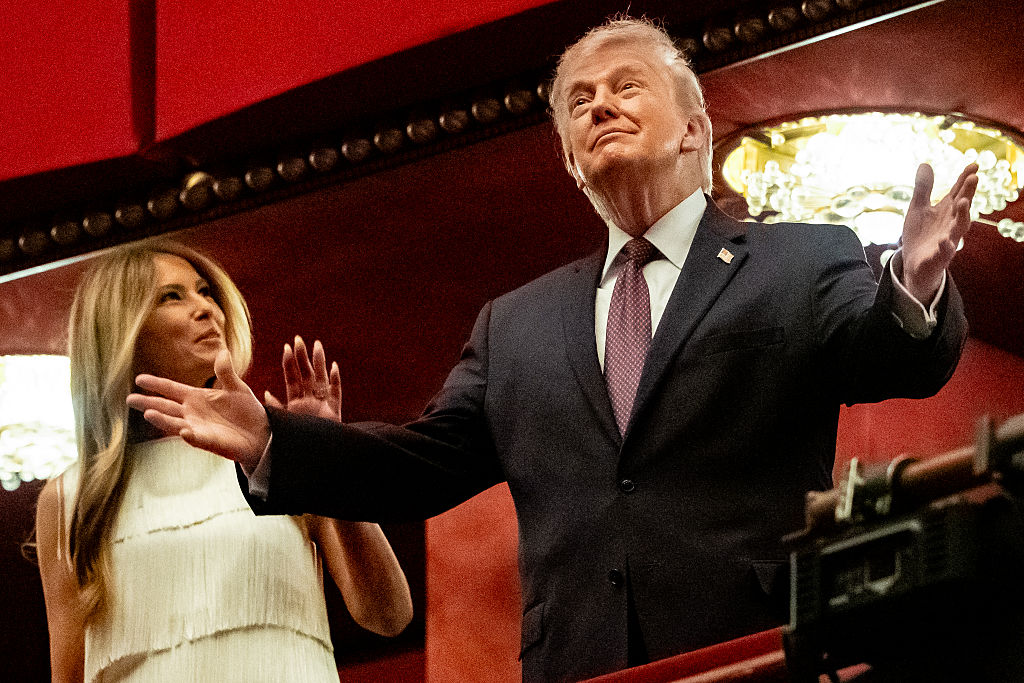
These leaked communications led to a diplomatic row between the UK and US. President Trump responded by affirming that his administration would no longer work with the ambassador. As a result of the controversy, Darroch resigned from his position, stating that it had become ‘impossible’ for him to continue in his role. This is an excruciating precedent for Mandelson, before he has even set foot in Washington.
Mandelson is a seasoned political professional, there is no denying that. He has a long track record of political manouevering, both in Britain and Brussels. As a former EU commissioner, he built a reputation as a skilled negotiator, an operator who understands how to play the game.
But for all of Mandelson’s expertise in the world of political backrooms, his ideological beliefs and undisciplined comments make him impossibly-suited to hold respect and engage productively in Trump’s America. An avowed anti-Brexiteer, a passionate proponent of the European Union and its globalist agenda, Mandelson’s views are diametrically opposed to Trump’s country-first philosophy. While Trump enthusiastically championed Brexit as a victory for national sovereignty, Mandelson views it as a grave error. Mandelson’s worldview is anathema to Trump and his crowd.
In Mandelson’s world, organisations like the EU play a central role. In Trump’s world, it is maverick entrepreneurs like Elon Musk and Vivek Ramaswamy or fellow disruptors like Nigel Farage or Javier Milei who command the political limelight. Musk and Farage are the new ‘golden boys’ in this new world order. Mired in multilateralism, Mandelson will likely be an untrusted outsider.
This tension between these two visions is at the heart of why Mandelson’s appointment is so misconceived. His appointment reeks of progressive tone-deafness, the belief that the same old political players – the Blairite elite – can continue to pull the strings, even as the political landscape has shifted tectonically. Thank heaven for Nigel Farage for he, rather than Starmer’s ambassador may well be the force that prevents the UK’s estrangement from a new Trumpian consensus both at home and abroad.
In short, Mandelson’s appointment as ambassador to the United States is not only a misguided diplomatic misstep; it is a direct confrontation with the realities of a post-Brexit, post-Trump world. It signals that the Labour-led British government is still clinging to the tired vision that has already been soundly rejected by large swathes of the electorate. It’s hard to imagine that Trump’s America – with its own disdain for the globalist elites – will be accommodating of the ‘Prince of Darkness’.
Whether reality has sunk in for Mandelson and Starmer, the world has moved on. The days of Blairite technocrats calling the shots are over. If this Labour government wants to build a meaningful relationship with the United States in the years to come, it needs a different kind of ambassador – one who can operate in Trump’s world, not one that’s still living in Tony Blair’s.
Should AI be allowed to train itself off this column?
If you’re a writer, should AI companies be allowed to use your work to train their models without your permission? This is a matter of concern for many writers – as it is for artists, musicians, and anyone whose work is being harvested by the industry and spewed out as AI glop. It’s not just that it’s a bit galling to think that our work is being ripped off for free: it’s that, in the medium to long term, these large language models, if they can, will put writers out of jobs. (It’s Christmas – feel free to make the obvious jokes in the comments.)
At present, AI companies have shown few scruples in hoovering up any number of copyright works – be they books, paintings, or pieces of music – and using them to train their generative models. They do this – apparently on the basis that it’s better to ask forgiveness than permission – without offering any compensation to the people who made or hold rights in those works. Then they sell the product that their computers mulch out of all these inputs at considerable profit.
Lots of people, me included, think that that is wrong. We think that writers and artists are there to do more than simply provide training data for someone else’s money machine. We think that those of us who might be happy to supply training data to generative AI should be asked our permission first. And we think it’s a basic principle that a baker doesn’t get to make and sell cakes without paying the miller for flour and the farmer for butter and eggs.
The government, sensing a showdown brewing, has launched an online consultation ahead of putting its proposals on the issue before parliament. I urge anyone who relies on copyright for some or all of their living – that is, writers, journalists, publishers, artists, and so on – to take the time to fill the questionnaire in. It can be found at https://www.gov.uk/government/consultations/copyright-and-artificial-intelligence, and the consultation closes on 25 February, so you have two months.
You might need those two months. The consultation includes more than 50 questions – many of which invite a small essay – spread out over 17 different sections. It took me well over an hour to fill out – and that was at a gallop. Some of the questions are repetitive; some are somewhat leading; many ask the respondent to be more familiar than most can be expected to be with the ins and outs of the technical requirements of large language models or the vagaries of existing copyright exceptions.
‘What are the implications of the use of synthetic data to train AI models and how could this develop over time?’ one asks. ‘Does the current approach to liability in AI-generated outputs allow effective enforcement of copyright?’ asks another. ‘What steps can the government take to encourage AI developers to train their models in the UK and in accordance with UK law to ensure that the rights of right holders are respected?’ was a third, wordy to the point of incoherence and yoking two quite unconnected issues in a single sentence.
You feel a bit of a thickie answering ‘dunno’ so often – but does a writer now have to be an expert in IP law to be entitled to a view on whether someone else should be allowed to use their work without asking? This seems to be of a piece with the basic plan: to put the burden on writers and artists to contribute considerable unpaid labour before the protection of their intellectual property rights can be considered. I don’t think it’s too much to see it as an attempt to bore people into not bothering to respond.
It is clear that the government’s broadly preferred outcome is ‘opt-out’; i.e., unless you specifically refuse permission, big tech companies can use your work without either consulting you or paying you a red cent. That would be a big win for the goliaths of the tech world, and its attraction is obvious to a government desperate to attract them to our Silicon Roundabouts and Silicon Fens. But if it goes through – and this is why I think it should be a topic of interest to more than just those directly affected – it will be a pretty big shift in the way we think about property rights.
I don’t claim to have a position of absolute certainty on this when it comes to calls on the margins. Copyright in language and images is a complex area of law and of moral inquiry. Enforcing copyright too aggressively can be stifling to creativity just as failing to enforce it can be. Parody, quotation, allusion, and sampling in music: all these things exist in a realm of six-of-one-and-half-a-dozen-of-the-other.
Clearly, training an AI model on a chunk of text is not quite the same thing as republishing a copyright work directly for profit – which is what copyright laws were originally intended to prevent. I expect you could make the case, and some people will attempt to, that it’s more like allowing a computer to borrow a library book than printing a fresh copy, or that the contributions of any individual work to a generative AI’s output will be too tiny to deserve protection. You can complain, if you’re a tech bro, that it’s difficult and fiddly to clear rights with individual copyright holders, and that it will be too expensive to compensate them at the scale required. (These two objections feel a bit less convincing and can be filed, I think, under ‘Your problem’.)
Writers and artists should not have to master and explain the technical details of enforcement
But you can also counter that the computer does make a copy of the work in question in its own memory banks, and that in doing so to millions of works, and recombining them at scale for profit, it infringes the rights of those individual creators. And a million tiny infringements add up to one big one. You could point out, too, that though it doesn’t pose the direct short-term threat to a creator’s profit that, say, pirating a book or record does, it lays the groundwork for an existential threat in the medium term. You’re using the artist’s work to train a machine to do something very like what the artist does, so you can compete at a huge advantage in the marketplace with that very artist.
This is, certainly, a topic that deserves a very thorough and well-informed discussion – and in which legal, technical, and political expertise at a high level is required. But the drafting of complex law and technical regulations wants to be downstream of, and informed by, the basic moral intuition that the labourer is worthy of his hire. Writers and artists should not have to master and explain the technical details of enforcement, or get into the weeds of what the robots.txt protocol can and can’t do. Rather, we’d like to be able to say, simply: ‘No tech company should train AI models on copyright material without express permission, and it’s the job of lawmakers, rather than copyright holders, to ensure that they don’t.’ Put it this way: there aren’t very many other sorts of property rights that operate on an ‘opt-out’ rather than an ‘opt-in’ basis.
The winners and losers in the fight to keep the government open
As the clock ticked down late Friday night, the US House and Senate finally passed a stopgap funding bill to keep the government operating for another two months. The passage came after two failed attempts by Republican House speaker Mike Johnson to push through earlier versions of the bill. Any additional delays would have led to a temporary shutdown of some non-essential government functions. Essential functions, like the military, would have continued to operate.
What can we learn from this shambolic, last-minute process?
First, the good news. The first two bills failed because they contained a trainload of pork, a steaming pile of non-essential provisions that rank-and-file Republicans refused to support. When conservative Republicans and their public supporters discovered those provisions, they revolted. Top Republican lawmakers had already approved the bills, but they couldn’t convince their colleagues to go along. After so many Republicans rejected the bills, the Democrats chose not to save them. They, too, voted “no,” even though most were pleased with the first two bills.
Why did House Democrats back away? For three good reasons. First, they could say, quite plausibly, “we had a deal and the other side broke it.” Second, they believed the government shutdown would be blamed on the Republicans, as all previous shutdowns had been. Third, they knew their finger-pointing would be aided by the mainstream media.
The Democrats’ calculations were partly correct, but not entirely. The media landscape has shifted dramatically. It’s no longer confined to the three major networks and the New York Times and Washington Post. They are still powerful voices, but their influence is fading. It has almost disappeared among Republicans, who pay more attention to the hundreds of bloggers and conservative podcasts who push back. It was this “new media” that exposed the special-interest pork inside the “must-pass” bills and fueled public opposition on the right.
In the past, it would have been hard to find the controversial provisions in the brief period between the bill’s presentation and the congressional vote. That, too, has changed, thanks to artificial intelligence (to find what’s in the bill) and blogs and social media to expose the newly-found secrets.
The principal tools were Elon Musk’s Grok AI chatbot, which found the pork hidden throughout the lengthy bills, and his related platform for free speech, X, which allowed users to broadcast their outrage at what they found. The presence of X was vital. Throughout the Biden years, the administration had used its leverage over compliant social media to suppress information. This time, Musk and millions of users used open media for transparency.
These new tools, together with conservative lawmakers, changed the game for these last-minute bills. Those are usually the perfect vehicles for special-interest provisions. Opponents know it’s risky to defeat the entire bill and shut down the government, even temporarily. They know, too, that there’s little time to see what’s inside the bills. As Nancy Pelosi once said about the mammoth Obamacare bill, “We have to pass the bill so that you can find out what is in it.” What she said in 2009 is less accurate in 2024, now that thousands of independent eyes are scanning the bills, using AI tools and blasting the results online. That’s exactly what they did to sink the first two bills.
Important as the new tools are, they won’t solve the underlying problem. The fundamental problem is how Congress operates, or, rather, fails to operate. That problem is far larger than the fight over this year’s must-pass bill. It’s a recurrent problem: Christmastime, Christmas-tree bills decorated with expensive ornaments, meant to be hidden from the public.
Bills like that are sent to the floor each year because Congress fails to perform its essential job of passing regular authorization and appropriation bills. Those “regular” bills should fund each government function and agency separately. They ought to arrive on the floor after hearings by specific committees, such as Agriculture, and detailed funding measures passed by the Appropriations Committee. That process has been broken for years, leading to these emergency “Continuing Resolutions” (CRs) and omnibus bills to keep the doors open. These hurried, patchwork bills typically arrive as government funding is about to expire and Congress is rushing to adjourn for the holidays. It’s an annual train wreck, and it needs to stop.
Congress doesn’t have much to do — it has offloaded most real legislation to the regulatory agencies — but does need to perform its essential functions of overseeing government agencies and funding them to perform specific tasks. That is Congress’s main job, and it hasn’t performed it for years. The regular appropriations process has broken down. That’s why we have these thousand-page CRs and omnibus spending bills, shoved onto the floor when cingressmen are eager to return home for the holidays. Amid this rush, detailed oversight is nearly impossible and mischief nearly inevitable.
Congressional leaders and well-connected lobbyists take full advantage of the circumstances. They know these CRs are urgently needed, so they keep the details hidden until the last minute. Then they release the final product, filling hundreds of pages with technical language and giving outsiders little time to discover what’s hidden within. In this case, the outsiders are not only taxpayers but ordinary members of Congress, who weren’t involved in the secret negotiations. The powerful leaders and lobbyists figure everyone will fall in line to avoid a government shutdown. They are usually right.
Not this year. Donald Trump opposed the initial bill, a position voiced by his principal budget-cutters, Elon Musk and Vivek Ramaswamy, with help from a lesser-known name, Russell Vought, who will head the Office of Management and Budget. Vought headed OMB during the first Trump administration and knows where all the financial bodies are buried.
They were joined by “back-bench” Republicans who finally saw all the pork and didn’t like it, some because of their principles, others because their own special projects were not included. They voted “no,” supported by hundreds of bloggers and podcasters who scanned the bill for trouble and found plenty of it.
Democrats, thinking (rightly) that Republicans had reneged on their bargain, voted “no,” too. They hoped to shift all the public opprobrium onto the Republicans, a tactic that usually worked, and especially onto Trump, whose opposition was visible.
The final bill passed only after two larger, pork-laden bills failed. The final, slimmed-down bill funds the government for a couple of months, includes some crucial funding for disaster relief, and cut out the special-interest provisions packed into earlier versions.
Although the effort to saddle Trump with a government shutdown failed, the final bill was only a partial victory for the incoming administration. Its passage contains two troubling messages for the new team. The first is that the slimmed-down bill does not raise the debt ceiling, as earlier versions had. That’s bad news for Trump, who will need to raise that ceiling sometime in 2025.
The prospect of raising the debt celing has flipped the old political alignments. Democrats have long favored ending the debt-ceiling provision entirely. Republicans have long favored keeping it to restrain spending. Now, their positions are reversed. Why? Because Democrats know Trump will need to raise the limit and can demand some concessions in return for their votes. That’s why House Democrats wanted that provision removed from the CR and got that concession in return for their votes. Trump himself complained about the absence of that provision in the final bill.
Second, almost three dozen Republicans refused to approve the final bill, despite Trump and his aides urging them to vote for it. In fact, the bill got more “yes” votes from House Democrats than from Republicans, a recurrent feature of Speaker Mike Johnson’s “must-pass” bills. That, too, is bad news for the incoming administration.
Currently, House Republicans have only a single-vote majority. The margin will increase slightly this spring after special elections to replace members who joined the Trump administration. Those elections are in secure Republican districts. Even with those new members, the Republicans will have only a tiny majority.
That narrow margin gives enormous negotiating leverage to both recalcitrant Republicans and Democrats, whom the speaker (and the president) will need to pass bills. The problem is that those two groups have fundamentally conflicting goals. The most recalcitrant Republicans are “small-government” types on the right. Cut, cut, cut. They are opposed by “big-government” Democrats on the left. Spend, spend, spend.
That split, together with the Republicans’ tiny margin in the House, spells trouble for the incoming Trump administration. So does the fact that so many Republicans refused to vote for a final bill Trump supported, albeit reluctantly. (He wanted the debt ceiling included.)
The whole process shows what a thankless job the House speaker has, and it casts an ominous shadow across the incoming Trump administration. The obvious conclusion is that the White House will have to rely on Executive Orders, not on laws passed by a dysfunctional Congress. That’s no way to run a railroad.
Is this Emmanuel Macron’s last Christmas as president?
Emmanuel Macron will deliver his traditional New Year’s Eve message to France next week, an event that one imagines is testing the skills of his speech writers. What to say after a year of unmitigated disaster? What is there for the French to look forward to 2025 other than more uncertainty, more insecurity and more economic woe?
On Friday, the National Institute for Statistics and Economic Studies (INSEE) announced that France’s public debt has risen again. It now stands at €3.3 trillion (£2.7 trillion) at end of the third quarter of 2024, equating to 113.7 per cent of GDP.
There are signs that the pressure is getting to Macron
Macron was in a similar pickle twelve months ago. On that occasion, the President had to put a gloss on a 2023 that had seen massive street protests against the government’s pension reform, followed by a wave of nationwide rioting after police shot dead a youth in a stolen car. Then, in October an Islamist murdered a teacher at his school in Arras, the second such incident in three years.
In his 2023 New Year’s Eve address, Macron promised the people that the coming year would provide a fresh start, what he called ‘a year of determination, choices, recovery, pride’. He listed the Paris Olympics and the reopening of Notre-Dame cathedral – five years after it was ravaged by fire – as reasons for the French to be cheerful. The year, Macron predicted, would be one ‘of hope’.
In a sense he was right. There is a hope among the French as 2024 draws to a close: a hope that their president will soon resign. A poll at the end of November found that in the event the government collapsed 63 per cent of people believed Macron should hand in his notice.
The government fell a week later but Macron insists he will see out the remaining thirty months of his mandate. It was the second time in six months that he dismissed calls for his resignation; the first was in June when he reiterated his determination to stay in office whatever the outcome of the upcoming parliamentary elections.
The outcome was a disaster for Macron. His centrist alliance was beaten into third place by the left-wing coalition and Marine Le Pen’s National Rally. But Macron remains at the Elysee, although he cuts an increasingly isolated figure. His adversaries charge him with being a president in a deep state of denial about the quagmire into which he has led the country.
There are signs that the pressure is getting to Macron. On a flying visit to the island of Mayotte in the Indian Ocean, days after it was devastated by a cyclone, Macron lost his cool in front of an angry crowd. He snapped at them, saying that they should be ‘happy to be in France, because if it wasn’t France you’d be 10,000 times even more in the shit’.
His remarks caused consternation across the political spectrum. Macron responded by accusing Le Pen’s National Rally of inciting the crowd. ‘I have never seen such a low argument in such serious circumstances,’ retorted Le Pen, who said she was ‘staggered’ by Macron’s inability to empathise with his people.
For months, the left have been calling for Macron’s resignation, a demand that has intensified since the collapse of Michel Barnier’s government. ‘Macronism is a zombie, it’s time to get rid of it’, said one MP Aurélien Saintoul recently. ‘When we talked about impeaching the President this summer, everyone was laughing. Today, the facts are proving us right.’ Significantly, a few respected centrists have also stated in public that Macron should quit for the good of the country.
Marine Le Pen has not called for Macron’s head, but in an interview last week she stated her belief that the President ‘is finished, or almost’. For that reason she is ‘preparing for an early presidential election’.
So is Jean-Luc Melenchon, the leader of the left-wing coalition, who allied with Le Pen’s National Rally to topple Barnier. Melenchon claimed on Friday that the new government won’t survive to see the spring. He and Le Pen believe that a presidential election in 2025 will work to their advantage as they are best positioned to exploit the political chaos created by Macron.
Barnier’s successor is Francois Bayrou who, according to a poll in a Sunday newspaper, is the most unpopular prime minister in modern times. That’s some achievement, given he’s only been in the job since 13 December. Bayrou is trying to be as upbeat as he can, promising to unveil his government before Christmas. As if there aren’t enough turkeys already at this time of year.
The curious history of the Christmas cracker
Those who still make a habit of the Sunday roast are faced with a challenge come Christmas: how to make sure the big meal doesn’t disappoint. What if the turkey is a let-down given everyone so loves the topside of beef? It would take a real Grinch to sniff at the festive spread – we serve it not because turkey would be anyone’s death row meal but because, as I have written before, there is virtue in tradition for its own sake. And truth be told, there is little reason to fear disappointment when pigs in blankets are close at hand. But there is one other trick up the Christmas dinner host’s sleeve – something that if served at any other occasion of the year would prompt raised eyebrows and being led away gently on suspicion of imbibing too much red wine. It is the best part of Christmas dinner. It is the cracker.
I love a Christmas cracker. For one thing, they act as essential tablescaping; one sight of them and you know this is no ordinary meal. Even without bone china, holly and pine cones, a cracker-laden table looks the part.
They were invented by a Londoner in 1847, as twists of paper to house the bon-bons he sold, and he later added a ‘crackle’ element inspired by the sound of a log on the fire
As a form of organised fun they are quite inspired. The crossing of arms and linking of hands evokes the covenant of holy matrimony. The moment of the crack itself is full of excitement. The jokes provide entertainment, the hats silliness. And the gifts: oh the wonderfully useless, plasticky gifts! I feel real envy eyeing up others’ prizes, even though I’m no more likely to use the dodgy spirit-level my brother has bagged than the miniature nail cutters that I’ve acquired. This year I’ve got everything crossed for a compass.
You may end up with nothing at all. Rules between families differ. Some hold that fairness lies in each person keeping the contents of their own cracker. Others decide that they who end up with the larger end keep the contents. I am fanatically for the latter. There’s no better way of teaching kids that life ain’t fair and shattering our contemporary ‘everyone’s a winner’ derangement.
People don’t realise that they are very much a British thing. Outside of these isles, the realms and a few other parts of the Commonwealth, crackers are almost unheard of. They were invented by a Londoner, Tom Smith, in 1847, as twists of paper to house the bon-bons he sold (a precursor to the traditional sweet-wrapper). Dreaming up new innovations to maintain healthy sales, he decided to insert love messages into the wrappers of the sweets, and then added a ‘crackle’ element inspired by the sound of a log on the fire (which gave the product its onomatopoeic name too). They grew bigger in size and the sweet was eventually replaced by a little trinket. Tom’s son Walter added the paper hats to stay ahead of rival cracker manufacturers that had begun to spring up realising the Smiths were on to a good thing.
I wonder how long they will last. They’ve already been de-glittered and de-plasticked. Last year one of the UK’s largest catering suppliers announced it would offer its customers ‘crackless’ crackers with the non-recyclable silver fulminate strips removed. Instead, an enclosed note would encourage users to ‘make some noise’ as they pull. This was in order ‘to make every Christmas a celebration of responsibility’. Now one of the country’s commercial waste management firms is urging us to abandon crackers altogether to save on paper waste. Wrapping paper has come under similar scrutiny (as one former friend asks: ‘Does the present really need to be a surprise?’). Among all the problems humanity faces, one wouldn’t have thought the Christmas cracker ranked highly, but something so frivolous and fun might not be long for our peculiar world.
If even as committed an environmentalist as the King still believes in crackers, though, there is hope yet. This year his Highgrove estate is selling a handsome box of them featuring bee-saving flower seeds and wooden honey drizzlers, soap bars and garden twine – and a proper explosive ‘snap’.
Meanwhile Harrods of course insists on being as absurd as possible and so has £700 crackers, with six gifts ranging from an Aspinal leather card holder and a Le Creuset corkscrew to Oud room fragrance (of course it does). Count me out. The more expensive the cracker the more pressure there is for the hat to look good and for the gift to be used again after Boxing Day, both of which are guaranteed impossibilities. And besides, personally I don’t want sensible gifts on Christmas afternoon when I’m focused on getting drunk. I’d probably mistake the L’Occitane mini shower gel for brandy butter and try to eat it. The only luxury exception I might make is Hotel Chocolat’s two-foot ‘Rather Large’ cracker. It’s £44.95 but does include 40 chocolates, 12 paper hats, 12 jokes and is likely to involve a mildly entertaining tug of war hopefully ending with someone face-planting into the pudding.
Very British. Cracking good fun. What’s not to love?
The surprising truth about the West’s Christian revival
When weeping Parisians watched Notre Dame, the city’s beloved 800-year-old cathedral, being consumed by a devastating fire in 2019, it served as a sad symbol of the decimation of churchgoing itself in France. Ever since revolutionaries began decapitating priests and nuns in the 1790s, a precipitous decline in Catholic faith has been underway in the country. The ‘Last Supper’ debacle of last summer’s Olympic opening ceremony only served to cement the country’s famously secular reputation.
In 2023, the number of people attending Church of England services increased by 5 per cent
However, against all odds, the bells of Notre Dame will be ringing out again in time for Christmas Day. A remarkable reconstruction project has seen a transformed cathedral rise from the ashes. Its stained glass windows and original stones now glow luminously after centuries of grime were removed, and the building will be packed with worshippers over the festive season. Perhaps, if God exists, he enjoys surprising us.
An even more remarkable story seems to be unfolding within France’s Catholic church itself. Over 7,000 adults were baptised during the 2024 Easter vigil, a rise of 32 per cent on the previous year. It was the largest intake of adult converts in France in living memory, and notably included many young people – over a third of the converts were aged 18-25. The trend looks set to continue into next year.
At Easter, I wrote an article for The Spectator titled ‘A Christian revival is underway in Britain’, which was widely shared online. I noted that an increasing number of secular influencers such as Tom Holland, Jordan Peterson and Joe Rogan were persuading their audiences to reconsider the value of Christianity. Many who read the article were also encouraged by several recent conversion stories – former atheist Ayaan Hirsi Ali, comedian Russell Brand, and author Paul Kingsnorth have all been public about coming to faith.
I argued that these were all early signs of a ‘turning of the tide’ against the materialist story of reality that currently dominates the godless West. However, many critics accused me of naive over-confidence. My evidence was purely anecdotal. A few high-profile converts and social media influencers were hardly likely to make a dent in the terminal decline of Christianity in the UK.
At first glance, their scepticism is justified. According to the most recent UK census, less than half of people now identify as ‘Christian’, and the unremitting downward trend in Anglican churchgoing has been noted for years on end. Except for last year.
In 2023, the number of people attending Church of England services actually increased by 5 per cent to almost a million regular worshippers. Admittedly, attendance remains lower than pre-Covid figures, but this post-pandemic bounce back is still a noteworthy contrast to the relentless decline of the previous 50 years.
In fact, the past year has yielded numerous data points that indicate the optimistic thesis of my book and podcast ‘The Surprising Rebirth Of Belief in God’ may not be wishful thinking after all.
Alongside the recent upturn for Catholics in France and Anglicans in the UK, is the remarkable growth of the Eastern Orthodox Church, especially in the USA. The denomination has always been relatively small in America, largely composed of expatriate communities. Yet, a recent survey by the Orthodox Studies Institute showed a 62 per cent increase in baptisms and chrismations, where new members are welcomed into the church, between 2021-2023 compared to the previous three years.
Orthodox priest Father Andrew Stephen Damick, says that these figures reflect countless stories he has heard of new converts entering the church. Asked whether the astonishing influx reflects a new evangelistic strategy, he laughingly responds: “The Orthodox Church has done nothing to bring these people in.” He quotes a colleague who insists: “We haven’t changed anything to make this happen. It’s just happening.”
So where exactly are all these new converts and attendees coming from?
Again, my hunch is that a ‘meaning crisis’ has been brewing in the West for a long time. The loss of the Christian story as an overarching narrative has led to the rise of ‘expressive individualism’ – a term coined by philosopher Charles Taylor for the vast variety of stories individuals now choose to live their lives by.
Christian leaders have noticed something happening in their churches and in the wider culture
However in recent years these stories have increasingly bumped up against each other in our never-ending culture wars. Now, a generation of millennials and Gen Zs, exhausted by the demands of constant self-invention, are looking for a better story to make sense of their life.
Encouraged by a set of prominent video and podcast hosts, the search for a story is leading some of them back to church. Some of these converts are doubtless ex-evangelicals choosing to swap tribes, but Orthodox and Catholic churches can also thank hugely influential YouTubers like Jonathan Pageau and Bishop Robert Barron for an uptick of genuinely new believers in their congregations.
Again, recent research seems to bear out the hypothesis that a younger generation are looking for meaning in the Christian story once more.
The Bible Society in England and Wales has been uncovering evidence suggestive of a new ‘openness’ to faith among many groups of the population. The proportion of non-Christians who now appear ‘warm’ to spirituality and the value of scripture has increased notably in recent years. Rhiannon McAleer, head of research at Bible Society, has given these seekers the avatars of ‘Stoic Steve’ and ‘Meditation Millie’ – young, intelligent and successful, they nevertheless feel disillusioned by the materialist culture around them. Seeking guidance from a variety of sources, some have become aware of the Bible’s cultural importance and are increasingly turning to the ancient wisdom of scripture as a guide to life.
A surge in Bible sales during 2024 seems to support the findings of McAleer’s research. While the general book market remained flat, sales of the Bible rose by an astonishing 22 per cent in the USA.
Perhaps most surprising of all is the fact that Gen Z (born 1997-2012), the generation least likely to be found in church, are nevertheless the most receptive to spirituality. They have been dubbed ‘the open generation’. You only have to look on TikTok to see how this openness is often expressed. From ‘Manifesting’ to ‘WitchTok’, there are all kinds of esoteric supernatural beliefs being practised.
However, for a generation that isn’t carrying the religious baggage of its parents and grandparents, there is also a remarkable openness to Christianity.
Three-quarters of non-Christian students say that, if asked, they would accept an invitation to church. That’s according to Fusion, a Christian student organisation that surveyed thousands of students across UK campuses. Roscoe Crawley helped to compile the research. He says that Fusion’s staff teams have been encountering ‘unprecedented’ numbers of students coming to faith and beginning to attend church in the past two years.
Which leads us to another unexpected trend. Young men are starting to become more religious than women.
The typical gender split in most congregations has always been one third male to two thirds female. However, the New York Times reported in September that, for the first time, more Gen Z men are now attending church than their female counterparts in the USA. The same phenomenon has since been recorded in Australia, where 39 per cent of Gen Z men now identify as Christian compared to 28 per cent of women. This demographic flip has never been seen before, yet it mirrors recent findings in Finland which showed a more than doubling of young men in churches between 2011-2019. Likewise, the boom in Orthodox parishes is being led by young male converts. Many anglo-catholic, evangelical and charismatic churches are seeing the same thing.
Young men are starting to become more religious than women
Anglican minister Glen Scrivener told me of an encounter with one such millennial male who turned up ‘out of the blue’ at his church. The young man explained that he had become convinced that Christianity was the bedrock of British culture. He had decided to purchase a Bible (the King James Version) and try out his local church.
“So how long have you been on the ‘Tom Holland train’?” asked Glen.
The man looked confused. ‘What’s Spiderman got to do with it?’
The bewildered response was evidence that neither Tom Holland (the historian not the Marvel actor) nor any individual influencer is single-handledly responsible for the new appreciation of Christianity. Holland’s thesis that The West owes its moral foundations to Christianity is fast becoming a widespread belief.
Naturally, if there is a rebirth underway then it will throw up all kinds of complications. I’ve no doubt that a reaction against ‘woke’ identity-politics is among the factors involved in this trend, especially among young men who are growing more conservative than young women. The same forces that put Donald Trump back in the White House, may also be responsible for sending men back to church.
Likewise, there are those who want to bring back ‘cultural Christianity’ for a political agenda. Writer Carolyn Morris-Collier pithily summarises the danger, writing:
“There’s a difference between Christianity and Christendom. While Tom Holland’s book Dominion makes a convincing case that Western values are rooted in Christian foundations, the reverse is not true. Christianity does not depend on Western civilisation—and is indeed flowering throughout the Global South.”
Whatever the political dimension of this rebirth, churches who wish to receive a new wave of meaning seekers will need to find a way of transcending the usual political fault lines and offering something more substantive than a cultural Christianity co-opted for a conservative revival.
It will be some years before we know for sure whether a coming revival is underway. Big-picture transitions tend to emerge over decades. But what can’t be denied is that something is happening. Many Christian leaders have noticed something happening in their churches and in the wider culture. There had been a change in the atmosphere. It had become easier to have conversations about faith. New visitors were walking into their buildings. In particular, young men have been showing up, often looking for a stability, identity and rule of life that isn’t on offer in the wider world.
Significantly, many of the church leaders I have heard from reported unprecedented numbers attending their Easter weekend services. While a ‘revival’ may still be some way off, I feel confident enough to predict that we will also hear about unprecedented numbers of people attending carol services this Christmas. Notre Dame isn’t the only ancient church with a story of rebirth to tell. How many will follow in years to come?
Justin Brierley’s ‘Surprising Rebirth Of Belief In God’ is also a podcast
Come all ye unfaithful: why do we still go to carol services at Christmas?
This year, Christmas carol services are expected to draw their largest congregations since the pandemic. As numbers attending carol services swell, one central London church has appealed to its regular congregation to donate 12,000 mince pies to give away. Even in the wake of shocking revelations of religious abuse in recent years, those who rarely engage with faith may still find themselves stepping into cathedrals and parish churches this Christmas season. But why will we go? What are we looking for?
Can all this sentimentalised longing really be good for us?
The sights and sounds of Christmas stir emotions of altruism and goodwill, of warmth and cosiness, of well-being and belonging. The imagination flickers with images of toasted teacakes dripping in butter and slippers warming by a crackling fire. The German language even has a word for that special sense of ‘cosy’ we associate with home: gemütlichkeit.
There’s another emotion woven into the fabric of the Christmas season too: nostalgia. Nostalgia is about longing – equal parts warmth and wistfulness, a bittersweet longing for a past that seems familiar and yet just beyond our reach. The Welsh have a version of nostalgia they call hiraeth: yearning for a time or place that may never be again – and perhaps never truly was.
But can all this sentimentalised longing really be good for us? Back in the 17th century, a Swiss medical student named Johannes Hofer coined the term ‘nostalgia’ by combining the Greek words ‘nostos’ (homecoming) and ‘algos’ (pain). He was describing symptoms of fevered insomnia and melancholia he’d noticed among soldiers fighting far from home. Since then psychologists and psychiatrists have consistently viewed nostalgia as a dysfunctional emotion – a way of evading the challenges of the present by cocooning ourselves in romanticised versions of the past.
And what better example than the magic of Christmas? With its frosted shop windows, flickering candles, a miser frightened into being nice to the deserving poor, and a baby crying in a manger, it’s sentimental nostalgia on steroids: exhibit number 1.
But it turns out this overly negative view of nostalgia doesn’t hold up. Recent research shows that while it is indeed bittersweet and can slide into unhealthy escapism, for most of us, it’s a positive and rewarding emotion. We experience nostalgia often – and occasionally actively seek it out.
Nostalgia can be a powerful motivator, too, fuelling our determination to confront and surmount the challenges that come our way. Much like Odysseus, whose yearning for home empowered him to overcome the obstacles the gods had strewn in his way, nostalgia can buttress our determination and forge resilience too.
So, why do we come to church at Christmas? Perhaps because, consciously or unconsciously, we want to experience everything nostalgia and the other emotions of the season have to offer. Because we long for a better world, a better version of ourselves. We crave the hope that, for just one hour at least, despite everything, life might still make sense. And why shouldn’t we?
So in the spirit of the season, let me press a little further into the world of longing and desire. C.S Lewis, the author of the Christmassy children’s classic ‘The Lion, the Witch and Wardrobe’ often explored themes of longing and desire, as they played a pivotal role in his own journey to faith. Lewis was intrigued by a type of longing distinct from nostalgia, yet equally resonant during the Christmas season. It’s captured by the German word sehnsucht – an intense, almost inconsolable ache for something we can’t fully grasp, but instinctively sense is there. For Lewis this longing was more than an emotion; it was a clue. In his journey from atheism he came to believe it was a pointer to the Divine, intricately woven into the human soul – a homing signal from another world.
The great atheist philosopher Friedrich Nietzsche – he of ‘God is dead, and we have killed him!’ – also sensed this ‘pull’ from another world and warned of its dangers. As a lover of great music and beauty himself, Nietzsche understood how profoundly they stir the human spirit, making it painfully difficult to bid the transcendent its final farewell.
“At a certain place in Beethoven’s Ninth Symphony,” he wrote, “[a person] might feel that he is floating above the earth in a starry dome, with the dream of immortality in his heart; all the stars seem to glimmer around him, and the earth seems to sink ever deeper downwards. If he becomes aware of his condition, he may feel a deep stab in his heart and sigh for the man who will lead back to him the lost beloved, be she called religion or metaphysics. In such moments, his intellectual character is put to the test.”
Why do we come to church at Christmas?
So enjoy the experience, says Nietzsche, but stay on your guard – especially during a Christmas carol service. In a godless world of blind materialism, you are longing for a home that neither does nor can exist. No angel appeared. No baby in a manger. There is no Jesus born ‘to save his people from their sins’. There’s just you. And your sins. So get over it.
But Lewis couldn’t get over it. Rather, encouraged by Tolkien, he decided to press on into it before finally realising:
“The beauty, the memory of our own past, are good images of what we really desire; but if they are mistaken for the thing itself, they turn into dumb idols, breaking the hearts of their worshippers. For they are not the thing itself; they are only the scent of a flower we have not found, the echo of a tune we have not heard, news from a country we have never yet visited.”
Nietzsche would have dismissed Lewis’s intellectual journey as a surrender of autonomy and strength. But for Lewis it was a triumph of joy: a logical worldview that united powerful emotions with the rigour of his formidable intellect. After years of searching, he had finally found his spiritual home.
So if you attend a carol service this year, be on your guard. Remember the swirling emotions of gemütlichkeit, nostalgia and sehnsucht – all up to their old tricks again. Unless, of course, we were to let down our defences just one more time, engage our intellect and see where it takes us. Like Lewis, we may even find ourselves taking first hesitant steps toward faith. And that, as Lewis’ Aslan might remind us, would be ‘deep magic’.
Keir Starmer, the Christmas Grinch
If someone were to read the runes, this first Labour Christmas would not augur well. Not only have we had Keir Starmer’s excruciating ‘illuminations countdown’ in Downing Street – a joyless event if ever there was one – but also the cut-price Christmas Tree in Trafalgar Square – perhaps the mangiest conifer the Norwegians, in their gratitude, have ever been able to dump on us. A Hampshire priest has been savaged for telling children that Santa Claus doesn’t exist and now, we’re informed, Gen Z have declared an outright hostility to turkey and trimmings. Just when you thought things couldn’t get any worse, a hoohah has sprung up about the BBC ban on the playing of Sir Starmer and the Granny Harmers’ anti-Labour song ‘Freezing This Christmas’, which has lyrics like:
And she told me that she doesn’t get out of bed till midday,
Because she didn’t want to turn the heating on.
Each time I remember, I’ve paid taxes all my life,
I cry as I wonder: Will I make it?
Will my wife?
‘Merry Christmas, Keir,’ goes the last line. ‘I hope you can sleep at night.’
Ironically, it all started like a fairytale for Labour and their supporters. In his victory speech, Starmer eulogised that ‘a weight has been lifted, a burden finally removed from the shoulders of this great nation. And now we can look forward. Walk into the morning, the sunlight of hope, pale at first but getting stronger through the day, shining once again etc. etc.’
Among the media class, there was rejoicing. Pundits like Mariella Frostrup spoke of the new government looking like ‘grown-ups unified and in charge.’ Andrew Marr gushed that ‘for the first time in many of our lives…Britain looks like a little haven of peace and stability,’ while Treasury Minister Darren Jones simply announced that ‘the adults are back in the room.’
Now Labour are all at sea, the burden’s back again, and the sunlight has vanished. Those ‘adults’ turned out to be, in the words of ‘someone close to Tony Blair’, ‘a bunch of librarians and academics in charge of a government.’
Where did the festive magic go? As we approach Christmas and steam full tilt into the Bleak Midwinter, it’s worth enumerating the gifts Santa Starmer and his band of merry elves have doled out to us. The good children – public sector workers and probable Labour voters – have been handed their stockings, some of which are bulging with goodies. For some train drivers, a pay increase to £81,000 for a four-day week; for junior doctors, a 22 per cent rise over the next two years. Naughty little Rachel Reeves fibbed a bit on her CV, but Santa darn well likes her and she stays right on his lap.
The bad children, meanwhile, have been grabbed by the collar and, from Santa’s Grotto, sent home howling. People with pension schemes, owners of small or large businesses, parents who send their children to even the lowliest private school, those who rent out properties or own land and grow our food – a good dose of cod liver oil and reduced pocket-money for them all!
They’re not the only ones, either. Those with a tiny amount of shares or precious metals to sell had already seen, under the Tories, the allowance for capital gains tax halve from £6,000 to £3,000. Now Reeves has almost doubled the lower tax-rate too, from 10 per cent to 18 per cent. Better forget any asset-liquidation, however poor you are, till 2029.
Then there are tenants hoping to buy council houses. Angela Rayner (who bought her own council home in 2007) has sent a wrecking ball through their dreams, proposing to raise the threshold on occupancy from three years to ten, and to slash maximum discounts to as little as £16,000, depending on the borough. Rural voters face the threat of higher council tax bills next year, as the same Ms. Rayner reportedly diverts funds into towns and cities. The promised fattened turkey has become the scrawniest of broiler hens.
As an early Christmas gift to the grandparents, Labour gave us the Assisted Dying Bill. Soon, the elderly will no longer have to burden the state with their medical expenses, claims for free bus-passes or tedious complaints about the winter heating allowance. As Scrooge puts it in A Christmas Carol: ‘If they would rather die, they had better do it, and decrease the surplus population.’ The rest of us, before we get there, got 1p off a pint of beer – something of little interest even to confirmed dipsomaniacs or darts players, but eliciting whoops of happiness from Labour MPs.
So ubiquitous is that £22 billion black hole it’s now taken on a life of its own
Gone is that seasonal splendour Scrooge’s nephew spoke so eloquently of in the same book, the sense of Christmas as ‘a good time; a kind, forgiving, charitable, pleasant time; …when men and women seem by one consent to open their shut-up hearts freely, and to think of people below them as if they really were fellow-passengers to the grave, and not another race of creatures bound on other journeys.’ Instead, Labour seems more like the Grinch, out to steal our happiness and optimism, and impose on us a reality as dull as most of the cabinet:
‘And they’re hanging their stockings!’ he snarled with a sneer,
Tomorrow is Christmas! It’s practically here!
Then he growled, with his Grinch fingers nervously drumming
I MUST find a way to stop Christmas from coming!
Of course, Labour would have you believe they are not the Grinch at all. The Grinch is that dastardly ‘£22 billion black hole’ left to them by the Conservatives. This has become such a trope from Labour – the ‘Black Hole Government’– you now tense for it in every ministerial speech and sense an entire nation groaning along with you when Keir/Rachel/Angela finally refers to it; convincing no one, like an elderly relative blaming their flatulence on the family chihuahua. So ubiquitous is that £22 billion black hole it’s now taken on a life of its own and become a kind of supporting character in the ongoing Starmer-drama – a ghastly, pesky Pimpernel popping up hither and thither, laughing maniacally as it flings its firecrackers and makes its getaway, thwarting all their noblest plans. It is Holmes’s Moriarty, Harry Potter’s Voldemort. Get ready to hear about it a lot more in 2025 and remember: Keir Starmer and his cohorts would be doing truly wonderful things for us if that ‘£22 billion black hole’ – such a shock to Labour, forcing them against their will to break all their pre-election promises – hadn’t reared its ugly head.
“‘Bah,’ said Scrooge. ‘Humbug.’” Or, as Keir himself once put it with raised eyebrows of his opponents: ‘They actually believe what comes out of their mouths.’
Meanwhile, a Merry Christmas to all readers. A pint of beer at my local’s gone down to £5.16 and, before the black hole swallows me, I intend to take full advantage.
What’s up with Jim Carrey?
You may, or may not, be planning on seeing the third film in the Sonic the Hedgehog franchise when it is released this Christmas, but whether or not your taste for CGI pugnacious animals encompasses this latest cash-in for the Nintendo character, the presence of Jim Carrey should provide some distraction. Carrey is playing the villainous Dr. Robotnik for the third time, and has been offering some amusingly candid comments in interviews about his decision to return to the role. He announced that he came back to this film’s universe for two reasons, “first of all, I get to play a genius, which is a bit of a stretch” and “I bought a lot of stuff, and I need the money, frankly.”
Many actors have taken on similarly demeaning roles, especially in the new glut of superhero and comic-book content, and few have been quite so candid about their financial reasons for their decisions. Yet Carrey, now sixty-two, is one of the more unusual actors in Hollywood. Since he broke through in 1994 with Ace Ventura: Pet Detective, he initially had a Robin Williams-esque trajectory, in which he moved from full-on comic roles as Ace Ventura and the imbecilic Lloyd in Dumb and Dumber to acclaimed dramatic parts in the much-loved likes of The Truman Show, Eternal Sunshine of the Spotless Mind and, especially, Man on the Moon, in which Carrey did not so much embody the late comedian Andy Kaufman as disappear into his persona and soul onscreen, to both entertaining and disturbing effect.
Audiences may have expected, as with Williams, that Carrey would soon move into elder statesman territory, and that Oscars and other awards would subsequently follow. Certainly, his fine, subtle work in Eternal Sunshine deserved greater recognition from the Academy than it received, and his astonishingly versatile performance as the conman Steven Jay Russell in the black comedy I Love You Philip Morris remains a career highpoint. Just as the commercially unsuccessful but oddly fascinating The Cable Guy indicated that Carrey’s unique style of humor is most effective when the darkness is allowed free rein, his performance as Russell — a closeted homosexual who becomes a serial prison escapee — was both hilarious and chilling, suggesting that he was releasing something primal on screen.
Yet since then, Carrey’s career has taken a dive. His semi-autobiographical Showtime series Kidding aside, you would struggle to find any particularly interesting or challenging work on his résumé since I Love You Philip Morris, and Carrey has been relatively open about his lack of interest in acting, preferring a career in painting instead. He released a brief documentary I Needed Color in 2017, which led some to wonder if this was some kind of elaborate performance art spoof, but apparently his interest in painting is deeply held and sincere.
Instead, he has explored other, more esoteric territory when it comes to blurring the boundaries between Jim Carrey the performer and Jim Carrey the “real’ person. The documentary Jim & Andy: The Great Beyond delved into the extent of his preparations to play Kaufman, and suggested that, if anything, the actor had gone so far into the Method that while Kaufman’s friends and family were delighted to be reunited with the late comedian once again, those around Carrey were mystified as to where he had disappeared to. And a semi-autobiographical 2020 novel, Memoirs and Misinformation, which he co-wrote with Dana Vachon, played around with ideas of the self, celebrity and split personae. It attracted warm, if faintly bemused, reviews, and seemed to suggest that Carrey was making peace with being one of the more unusual figures in contemporary Hollywood.
His lucrative, if artistically unfulfilling, commitments to Sonic the Hedgehog might, therefore, be viewed as some strange piece of metatextual art, the sort of thing that Kaufman might have done if he had lived. Alternatively, actors need to make a living, and an undemanding role in a special effects-driven blockbuster will allow him the freedom to pursue other, more interesting projects in the future, or simply to retire. Yet it’s hard not to feel that, now that Carrey has shown the world how interesting an actor he can be, he has retreated deep into an unchallenging comfort zone. Let us hope that something sufficiently interesting emerges in the near future, so that he can extricate himself from it.
Reform aim to overtake Tory membership in five weeks
It’s been a pretty good year for Nigel Farage. At the beginning of 2024, he was out of politics and fresh out of the jungle, having returned from I’m A Celeb… with no imminent plans of a comeback. Now, fast forward 12 months, he is an MP, party leader and beating Keir Starmer as a more popular choice of PM. Oh, and his bestie is back in the White House too. It might be a difficult act to top all that in 2025.
Still, those eager beavers in Reform UK are nevertheless doing their damnedest to make life miserable for Kemi Badenoch and the Tories. Fresh from their Mayfair Xmas bash on Wednesday, staff have now pulled together a ‘live membership tracker’ to publicise their ever increasing number of card carrying activists.
Currently, Reform UK claim more than 118,000 members, having hit the six figure mark at the end of November. The Tories currently have 131,680 activists, based on turnout in the last leadership contest. On current trends, Reform looks likely to overtake that figure by the end of January. The aim is to turn the countdown into a bit of a spectacle – and further demonstrate their credentials as ‘the real opposition’, in Farage’s words.
Reform’s 100,000th member got a free pint with Lee Anderson. Mr S wonders what the 131,681st member will win…
The crisis gripping France’s Le Monde newspaper
Once one of France’s most respected publications, Le Monde is in crisis. Its newsroom is gripped by a climate of fear, where only left-wing and woke views are tolerated, and dissenters whisper their frustrations in the shadows. Once a beacon of intellectual rigour and fearless reporting, an investigation by its rival Le Figaro paints a damning picture of a newspaper strangled by ideological conformity and toxic cancel culture. ‘People are afraid; it’s an omerta,’ admits one anonymous journalist. The glory days of Le Monde are gone, replaced by a paper which appears to be more concerned with parroting the ideological consensus than holding power to account.
Le Figaro’s investigation reveals a newsroom gripped by ideological rigidity, internal strife, and a culture of self-censorship. Examples abound: its recent coverage of the Israel-Palestine conflict has been accused of omitting critical context and crossing the line into anti-Israel bias. Reports on sensitive domestic issues, such as immigration, have similarly been criticised for framing debates through a narrow ideological lens. This is no longer a place of fearless inquiry, but one where aligning with the dominant ideology has become a survival strategy.
Adding to the turmoil is a generational clash within the newsroom
Founded in 1944 in the ashes of the second world war, Le Monde established itself as a cornerstone of French democracy, embodying the principles of a free press. Over the decades, it earned a reputation for fearless investigative journalism, taking on powerful figures and exposing scandals. Its close relationship with the New York Times reflects its once-global stature, with the two papers frequently collaborating and sharing journalistic ideals. Both were synonymous with rigorous, high-quality reporting and used to set the standard for investigative journalism on either side of the Atlantic.
Le Monde‘s reporting on the Clearstream affair (2001–2004), a political and financial scandal that implicated senior officials, demonstrated its willingness to challenge the French establishment. Similarly, its 2012 revelations about Nicolas Sarkozy’s alleged campaign financing by Libyan leader Muammar Gaddafi showcased the paper’s determination to hold even the president accountable. Over the decades, it became synonymous with investigative journalism of the highest order. Yet, as it marks its 80th anniversary, that reputation has cracked under the weight of ideological dogma and internal discord. The paper now primarily belongs to left-leaning business magnates Xavier Niel, Matthieu Pigasse, and the late Pierre Bergé. Their influence, coupled with significant government subsidies, have destroyed the paper’s commitment to balanced reporting.
The paper recently moved into spanking new offices near Gare d’Austerlitz with views of the Seine. The newsroom’s physical transformation offers a stark metaphor for its internal culture, where even senior management have no private offices. Transparency and equality were the stated goals of this open-plan design, but in practice, the layout has amplified tension. Journalists describe an oppressive environment where fear of being overheard stifles debate. This story resonates personally: a friend who works as an editor within the Le Monde group has spoken to me of the increasingly toxic atmosphere over the past few years. He describes a newsroom shifting further left, where journalists feel they cannot afford to challenge the dominant ideology, tied down by mortgages and financial pressures that enforce conformity. One journalist describes a culture of ‘detachment’, where individuals hide their real views, fearful of deviating from the dominant ideology or expressing dissenting views. The only view which is entirely acceptable is left wing and woke.
The tension reached boiling point with the newspaper’s coverage of the Israel-Palestine conflict. For decades, Le Monde has leaned towards a pro-Palestinian editorial line, but recently its coverage has been accused of crossing the line into anti-Israel bias. One incident highlights the controversy: a feature wall in the newsroom is plastered with images from Gaza, including caricatures that critics say verge on anti-Semitism. Anonymous journalists interviewed by Le Figaro expressed discomfort, describing it as ‘garbage’ and questioning its place in a professional newsroom.
At the heart of the storm is Benjamin Barthe, deputy foreign editor, whose wife’s pro-Palestinian social media posts have raised eyebrows. Critics argue that such associations highlight deeper issues in the newsroom’s leadership, where editorial decisions appear influenced by personal biases rather than journalistic objectivity. Barthe’s colleagues accuse him of being unduly influenced, although he denies this. The newspaper’s refusal to publicly address the matter has only deepened internal divisions, with some accusing management of double standards. ‘When it’s a woman, her husband’s influence is assumed,’ one journalist observed. ‘But a man? Apparently not.’
Le Monde’s financial model underscores its compromised independence. Le Monde is a beneficiary of French press subsidies, receiving €2.3 million (£1.9 million) from the government in 2023. These subsidies are part of a broader system where the French government provides over €1 billion (£823 million) annually to support the press. This financial dependency has dulled Le Monde’s once-feared investigative edge, transforming it into a state-subsidized echo chamber. The paper no longer challenges state narratives or tackles politically sensitive topics.
Adding to the turmoil is a generational clash within the newsroom. Younger staffers, steeped in ‘woke’ ideologies, are increasingly at odds with older journalists who lament the erosion of pluralism. This divide was laid bare in the wake of the 7 October Hamas attacks. Le Monde’s editorial choices – from its reluctance to use the term ‘terrorism’ for Hamas to its handling of subsequent controversies – alienated readers and led to subscription cancellations.
Dominique Reynié, director of the think tank Fondapol, offers a scathing assessment of the paper: ‘Le Monde can no longer pretend to be the journal of reference; it’s an usurped formula.’ His remarks reflect a broader disillusionment, with readers and media critics pointing to repeated failures in providing balanced reporting. Le Monde’s silence on controversial stories, coupled with an ideological straitjacket, has alienated its audience. ‘This is a newspaper that promotes an ideological line and silences opposing views.’ His critique echoes widely, with many lamenting the decline of a once-great paper into an echo chamber of supposed moral superiority.
What has happened at Le Monde will strike a chord in the UK and US, where ideological conformity has similarly poisoned once-revered newsrooms. The collapse of editorial pluralism highlights a crisis in legacy media, unable to uphold their historic mission of ‘All the news that’s fit to print’, the slogan of its long-time collaborator, the New York Times. At Le Monde this ethos no longer applies. The paper’s editorial choices and ideological rigidity reflect anything but a commitment to balanced and comprehensive reporting.
Tyson Fury was robbed in Riyadh
Watching Tyson Fury get robbed last night in Riyadh, I realised on balance that I am in favour of Saudi Arabia’s often ludicrous-seeming recent efforts at sports-washing. Why not? Sure, staging ultra-high profile boxing matches like this in a nation with no boxing heritage whatsoever is obviously a shameless effort at changing negative perceptions, but it’s also an attempt to integrate with the outside world.
Ultimately, integration is a good and civilising thing, not least because it means abiding by different, and in this case better, rules. It’s no coincidence, for example, that it became possible at the start of this year to buy booze in the kingdom. Likewise, it would be impossible for anyone familiar with Saudi Arabia before 2018 to witness the luminously beautiful, unmarried Rosie Huntington-Whitely sitting ringside with her stupendously glossy hair displayed over her shoulders for all the world to see without considering how far the nation has come in a relatively short time. Tourists – with the exception of religious pilgrims – weren’t even allowed into Saudi Arabia until 2019.
Boxing is a murky business – always has been and presumably always will be
Anyway, I digress. Tyson Fury was robbed by three human judges and a gimmicky AI judge when they decided unanimously he had been defeated for a second time over twelve admittedly close rounds by the smaller Ukrainian fighter and reigning world champion Alexander Usyk.
Yes, the big man from Morecambe might have landed fewer punches – which according to the AI judge was the case – but there wasn’t much in it and Fury’s were certainly the heavier and better-aimed blows. Usyk darted in and out bravely to land his hits, and by doing so, cause mini-tsunamis to explode frequently across his opponent’s copious belly and back fat. But as the contest wore on it was clear that Fury, with his more disciplined fight plan for this second contest, was dominating.
Fury might not have looked as fast either on his feet or with his fists as he had previously – for example, in his last two fights against Deontay Wilder in 2020 and 2021 – but still he was able to breach Usyk’s defences with regularity and to snap his head back with pleasingly stiff jabs and hurtful upper-cuts. By the end, it was the Ukrainian who looked to be hanging on most desperately in the hope of making it to the final bell.
But then the verdict, and for Fury the heartbreak. His likeable manager Frank Warren got into the ring to flash his hammerhead eyes and announce he thought the decision was ‘nuts’. Usyk, too, seemed surprised. Asked if he agreed with the judges’ scores, he evaded the question by saying he was only an athlete and therefore in no position to know.
Both men have long been a credit to boxing. Yes, Fury has said some things – particularly about Christianity and homosexuals – that have caused outbreaks of panicked pearl-clutching in places like the BBC, but surely he must be cut some slack on the basis he left school at eleven and was raised a gypsy. On the whole, he has navigated the piranha-tank of elite-level boxing with a pleasing openness and lack of guile, trying always to entertain out of the ring as much as he has in it.
Usyk, too, seems every inch a comic book superhero: an emissary from a nation going through hell sent to restore pride and glory by defeating all who stand in his way – which is exactly what he has done, with considerable charm and eccentricity. His professional record is astonishing, and has led to observations that he has ‘completed boxing’.
‘I can more’, he said last night in his delightfully broken English, shortly after dedicating his win to the mothers of Ukraine. Presumably, that will mean pocketing another $100 million-odd to give Saudi Arabia’s international reputation one more 60-degree spin by fighting Daniel ‘Dynamite’ Dubois, the young chap from Greenwich who recently poleaxed fellow Brit Anthony Joshua. Nice work, if you can get it.
Fury, perhaps, shouldn’t feel too aggrieved. He was soundly thrashed in Riyadh in 2023 when he boxed the mixed martial artist Francis Ngannou and yet, ludicrously, was given the decision by the judges. Had the decision gone the other way, the result would have been quite possibly the greatest upset in the history of sport – Ngannou having never competed in a boxing match – and it’s likely Fury’s two matches against Usyk would never have transpired.
Anyway, boxing is a murky business – always has been and presumably always will be – and, once you accept that, it is possible even perversely to start to enjoy it. Saudi Arabia is getting what it wants, and so, too, are the fans. If you can ignore the stuff the kingdom would like you to ignore – which is the whole point – then it’s all tremendous fun. Ultimately, as they like to say in the hurt business, that’s all she wrote.
What my GB News incest row critics fail to understand
The overwhelming response to my defence of incest on GB News has been one of disgust: I’ve been called a pervert thousands of times over. It’s water off a duck’s back to me.
What is extraordinary is the absence of decent arguments against my liberal position. If reproductive and non-reproductive incest are so bad, why do people resort to personal attacks as opposed to moral arguments? There are two reasons: our evolution has predisposed us to viscerally reject incest; and the moral arguments against incest come unstuck because they risk dreadful consequences.
After stonewalling me at dinner last night, my mum gave the same response to the same question
I fear that the main objection mounted against reproductive incest could ultimately lead to dreadful outcomes, such as state enforced eugenics and even the sterilisation of disabled people.
When the social psychologist Jonathan Haidt asked focus groups about a hypothetical brother and sister who had doubly protected sex on holiday, he found their response to simply be that it was wrong, even if they couldn’t explain why. After stonewalling me at dinner last night, my mum gave the same response to the same question. This intuition is rooted in our evolution which has predisposed us to be this way; it seems likely that those who didn’t have a disgust response to incest may have died out at a greater rate if their children were more susceptible to genetic disorders.
But we must be honest that our objection to incest is not rooted in some moral truth; it’s a biological quirk. During my appearance on GB News, the hosts Andrew Pierce and Miriam Cates argued that reproductive incestuous marriage is unacceptable because of the risk of ‘unnecessary genetic deformation’. The debate was in response to an attempt by a Conservative MP to seek a ban on cousin marriage. But if this ban is aimed at reducing the risk of birth defects in the children of those born into such relationships, then must we also crack down on over-40s from reproducing given that they have too appear to have a heightened risk of having children with birth defects? Few would say that should be the case, so we should be wary of accepting a moral argument which requires it as the next logical step.
'Individuals should be free to marry and have children with whoever they want…'
— GB News (@GBNEWS) December 19, 2024
Writer, Charles Amos, joins GB News to describe why he believes individuals should be free to form a relationship with anyone, including incestuous relationships with cousins or siblings. pic.twitter.com/vxXv7Xnfli
There’s also another point to make about the children of those born into incestuous relationships: even if these babies are born with birth defects, it seems implausible to say that the harm they may have suffered is worse than if such relationships were banned and they didn’t exist at all. Surely existence with a birth defect is better for them than nonexistence? Cates cannot talk about most of the children of incest having ‘disadvantages’ and propose getting rid of those by banning incest, because, in so doing she stops the specific children of such incest from a specific sperm and specific egg from ever existing. This means that they can never benefit from the elimination of the disadvantages.
What I think Pierce and Cates are getting at is that it is morally better for children as a class to be without birth defects even if no particular child in that group has their interests improved by it, as banning incest ensures the creation of different people.
But if the freedom to procreate can be restricted to improve the genetic stock of the population, despite no one being harmed by incest, we risk treading a dangerous path. It might not be long before some suggest that disabled people with inheritable diseases be sterilised. Why not go further, these people might say, and plan the reproduction of the population to ensure future children can have the best lives possible? A person who has rallied against incest can’t cry freedom if they oppose such arguments because they’ve already denied this value in banning incest.
My concerns here aren’t hypothetical. In the United States, the Supreme Court verdict in Buck v Bell in 1927 upheld a state’s right to stop some people from reproducing; as a result, 70,000 people were forcefully sterilised. This is the potential conclusion of the reasoning employed by some of my critics. This is wrong, hence, the moral reasoning supporting the incest ban is too.
Why is it wrong though? The deep problem with compulsory eugenics is that it denies the moral fact that each individual exists for his own sake; he does not exist to serve the higher purpose of creating a fuller world of better people. Yet this is being implicitly denied by those against incest. They’d rather children of cousins or siblings didn’t exist to enjoy their lives because, their very existence does not help advance this better world. But why? So children can have higher scores on maths tests, run faster in sports races, or not age as poorly in their twilight years? Fine things, I admit, but promoting them does not warrant breaking up marriages because the potential children of them might bring down the average height or total quantity of such things.
Defending incest may be disgusting, but as F.A. Hayek, himself third-cousin-married, once wrote: ‘Freedom necessarily means that many things will be done which we do not like.’ Underneath some of the opposition to incest appears in my mind to be an unspoken support for compulsory eugenics; these people are likely to be oblivious to its presence, but there it lurks nevertheless. In a liberal society, the individual must be free to pursue their own good in their own way including to marry and have children with whoever they want; a future full of better people be damned. Politicians should accept this wisdom and stay out of the love lives of the people – after all, it’s none of their damned business.
Lucy Letby and the killer nurse I worked with
Most of those commenting on the guilt or innocence of Lucy Letby – the nurse who is serving 15 whole-life jail terms for murdering seven babies and attempting to murder seven others – don’t know what it’s like to work alongside a killer nurse. I do. Benjamin Geen, whom I worked with at Horton General Hospital in Banbury, Oxfordshire, took the lives of at least two patients during his time there.
Something in the nature of our interest in murderers has a habit of making us forget logic
Geen’s case has, like Letby’s, become popular with conspiracy theorists. Public fascination has been far greater with Letby. But the two cases share an attraction for those convinced that they have hit upon the ‘truth’. Living through Geen’s case made me realise, however, that ill-chosen fascinations can give rise to foggy judgements.
When I first met Geen in 2003, he was a cheerful young nurse just starting his career, and I was a junior doctor in the same emergency department. I remember the jokes about how patients stopped breathing on Geen’s shifts; these were gags often led by Geen himself, whose irrepressible cheer could be grating. Some young people are like that, and there is always someone whose shifts seem to coincide with more than the normal number of cardiorespiratory arrests. Given a random distribution of events, there always will be.
The problem was that, in Geen’s case, the events weren’t random. Geen drugged people because he relished the drama and heroism of resuscitation, and some did not survive. Between December 2003 and February 2004, 18 people treated in the hospital’s accident and emergency department suffered respiratory arrests or depressions while Geen was alone with them. Oxford Crown Court, where Geen was subsequently convicted of two murders and multiple counts of grievous bodily harm, heard that he was motivated by a ‘thrill-seeking’ temperament.
How did I miss the signs? Medics often have a habit of engaging in dark humour, but my memories of Geen, more than most, are tinged with it because he was, himself, so good humoured. Even in retrospect, I cannot think of him as alien; I remember him as being much like the rest of us. Had I known him only from reading about the case, I do not think I would view him in this way. I believe I missed the signs for the same reason we all did; except, in retrospect, they weren’t there.
Seeing the attention paid to Lucy Letby, and remembering Geen, makes me feel our interest in these matters inclines us to error. Working with Geen, and, indeed, liking him – he appeared to be a good nurse, and I still think of him as Ben – means that he remains human to me, in a way that those we know through their celebrity do not. But, oddly, that makes me more willing to believe in his guilt. Public commentary has suggested that Geen, like Letby, has been the victim of statistical blunders and legal incompetence, of the sort of complex chain of error beloved of TV dramas or conspiracy theories. Real people, though, are less likely to be caught up in such wild concatenations of misfortune than to simply have hidden flaws. We all do, and some people have flaws that are monstrous.
When the deaths in my department became suspicious, the pattern of events and the duty roster implicated Geen. The police were called in. When Geen arrived at work on 9 February 2004, he had a syringe in his pocket. Seeing the police officers waiting for him, he pushed the plunger down and emptied its contents into the fabric of his fleece. Vecuronium, an anaesthetic agent found in the blood of victims, was later discovered on his clothes. It was a chemical that had no place being in the pocket of a nurse arriving for duty.
Early in my medical career, I entertained the idea of injecting myself with heroin. I had a fever and sore throat. Looking in my medical bag for painkillers, it was all there was. I came close to taking the drug. Later, I wondered if Ben, buoyed by having helped resuscitate someone, failed to resist the urge to misuse the drugs he had access to, and use them to enjoy the same thrill again of bringing a patient back to life. Stepping impulsively across the border of normality can be easier than stepping back; experiences, as well as drugs, can be addictive. One honourable reason for an interest in murderers may be that we become more human when we recognise our own worst traits in the lives of others. Study monsters, and perhaps we are less likely to become monstrous; gazing into the abyss may make us less likely to fall.
We can also be motivated by another honourable concern: the fear that an innocent person is being punished for a crime they didn’t commit. Mistakes do happen; there are many stories of people spending years behind bars when they have done nothing wrong. But in Geen’s case, the idea that he is innocent seems fanciful. In 2009, the Court of Appeal said that the evidence against him was overwhelming; three applications for appeal to the Criminal Case Review Commission have been rejected.
Yet still Geen’s defenders insist, as they do in Letby’s case, that a miscarriage of justice has occurred. What is obvious, though, is that much of the public interest in Letby, as with Geen, is not motivated by the thoughtful doubts or educated questions that arise from serious engagement. By far the bulk of discussion has something of the easy appeal of gossip. Journalists and politicians and those who pass these days for public intellectuals set bad examples when they dive in without fully reading up on a subject; flitting from one trending issue to the next, they parade, with all the glamour of celebrity, a type of thoughtless, opinionated confidence.
It’s odd, of course, to find that a colleague is a killer, and to be swept into the whirlwind that comes when a nurse kills your patients. It is striking, too, that, in the years since Geen was jailed in 2006 for at least 30 years, commentary about his case has ranged from the mistaken and misconceived to the frankly unhinged. The attention his murders garnered is minuscule compared to Letby. Mass murder has a morbid allure that is hideously increased when a pretty young nurse kills babies. But the reality is that morbid fascinations rarely invite our better thoughts.
How did I miss the signs?
Geen was convicted of two killings, but some involved in the case speculate that the true figure could be much higher. We may never know: a few alleged victims of Geen were cremated before suspicions were raised. But there are other commentators, who have no direct connection to the case, who think the real number of Geen’s victims is zero, and that he is the innocent victim of flawed statistics, bad science, and hospital cover-ups. What do they base these assumptions on? As someone who worked alongside Geen and struggled to come to terms with the reality that he was a murderer, I understand that it’s hard to believe that nurses are capable of taking lives, rather than saving them. But I have learnt that the sort of commentary that surrounds such cases is often motivated by hunches, intuition, or misinformed speculation, and less often by the evidence.
Something in the nature of our interest in murderers has a habit of making us forget logic. News, said Evelyn Waugh, is ‘what a chap who doesn’t care much about anything wants to read.’ It is interesting, of course, to pay some attention to the affairs of the day. But it is wise as well to monitor the nature of one’s motives, and sensible to remember that shallow interests yield shallow insights. Forming strong opinions about Lucy Letby seems as profitable as finding reasons to dislike Meghan Markle. Keeping a beady eye on human affairs is part of life, but it is a mistake not to be on guard against one’s own prurience. Geen was guilty of the crimes he committed. I do not believe that the debate about his guilt, or the even more profligate discussion of Letby’s, is driven by objective concerns over the evidence.
The EU can detect weakness in its dealings with Keir Starmer
Labour’s election promise to respect Brexit and at the same time reset our relations with the EU was easy to make. Keir Starmer must have realised that riding both these horses at the same time might be troublesome, but with an election to win he doubtless hoped for the best.
If so, he has been quickly disabused. Following tentative approaches to Brussels, it is clear that the Prime Minister faces a bleak choice: either come back with not much to show, or agree to a return of Euro-control over large swathes of UK life which the electorate will see for precisely for what it is; in name, if not in substance: the abandonment of much of Brexit.
Starmer has two choices: stall, or give in
The difficulty is that each side wants what the other is highly unlikely to give. The PM is desperate to woo UK business by easing bureaucracy on imports and exports, particularly of food and plants. Rational, perhaps: both EU and UK regulations are reputable and each side could simply agree to accept the other’s certification.
But the present situation gives Europe a nice bit of de facto protectionism and an opportunity for pressure on the UK (not to mention devilment in Northern Ireland). Why give that up? So, too, with migration: Starmer may want an agreement for the return of small boat migrants, but Europe is perfectly happy for its unwanted entrants to end up as our problem, and sees no reason to help us.
Europe for its part wishes the current temporary arrangement on fishing, highly favourable to EU boats but due for phase-out, to be made permanent. It wants Britain to readmit complete EU control once again over food safety and some environmental matters, abandoning its power to legislate independently and returning ultimate control to the EU court of justice. It also seeks extensive rights to live and work here for Europeans under 30. Even the Labour party’s extraordinarily glib publicity machine would be hard put to portray a concession on any of these points as anything other than a betrayal of Brexit and a de facto return to free movement.
Europe’s hardball stance here is understandable. It senses that Labour is not very united, and that Starmer’s administration is weak: not electorally weak (at least for the moment), but rather indolent, pusillanimous and likely to concede a fair amount for a quiet life and the odd headline about defusing tensions. The EU Commission also knows perfectly well that most Labour MPs and a large majority of the cabinet are at bottom Brexit-sceptics if not overt Rejoiners. As and when negotiations start next year, there is no doubt that the Eurocrats will have been briefed carefully on how to dominate the conversation and keep our people on the back foot.
Faced with this, Starmer has two choices: stall, or give in. His best chance of salvaging something is to do the former. There are some areas where there is a decent chance of agreement and little likelihood of pushback: for example, dry-as-dust matters like mutual recognition of professional qualifications. So too some elements of security and police cooperation through such organisations as Europol and access to European databases.
And, of course, Brussels might well be attracted by an offer to move closer on defence and national security. Europe is painfully aware that the US is demanding, quite understandably, that it contribute more to its own defence. Its forward planners also know that the EU will have to play a part in any peace arrangement in Ukraine: UK participation as a defence hard hitter would be invaluable.
Agreement here, with some vague commitment to future dialogue, could well attract Starmer. He would gain something; he would avoid serious further unpopularity at home; and he could plausibly sell Labour as a party seeking sensible working relations with Brussels.
On the other hand, it is by no means impossible that Starmer takes a higher risk strategy and make a raft of concessions: on fishing, say, possibly on food standards and perhaps even a limited degree of youth free movement. He could still put himself forward as a peacemaker who had nevertheless guarded Britain’s corner. This might be tempting; it would inwardly please a good number in his party and, after all, Labour does not have to fight an election until 2029.
But not only would this be very bad for the country; the ultimate hazard for Labour would be substantial. There is a limit to how far a Labour party with a so-far dismal performance in office can continue to rely on high-sounding words to convince an electorate that increasingly regards Starmer with a mixture of scepticism and outright contempt.
Starmer, who is far from stupid, must be beginning to realise this now. This provides us with the best hope that next year he will see discretion as the better part of valour and come back with something, but nothing very earth-shattering, from Brussels.
How to save the parish church
Parish churches are in trouble: about fifty churches close every year, according to a report from Civitas. The review, published last month, strongly echoes the case of the Save the Parish campaign: the Church of England’s leadership has failed to support local parishes, diverting funding to more modern-sounding initiatives.
About twenty years ago some bright clerical manager types said that the parish is not good at reaching ‘the networks of contemporary life’, so new looser types of church should be set up. The vague assumption was that these would resemble the amorphous evangelical mega-churches like Holy Trinity Brompton. But no new model has really emerged, and traditionalists are understandably disgruntled. Let’s go back to square one and re-affirm the parish, they say.
I largely agree. It’s taken me a long time to admit it, but I see the parish church as an extremely good thing. It’s hard to express the appeal, because the good stuff (community, authentic and lively worship) is mixed up with a lot of tedium and disappointment. One has to stick with it, show up, allow the slow enchantment to work. And then one’s prejudice against what is little and local (parochial) fades, and one realises, as if falling in love with the seemingly plain girl next door (or boy, sorry), that this is the authentic face of gently joyful human community.
In fact, my position on the parish is a bit more complicated. I also think that we must develop forms of Christian culture that are bigger than the parish. For example, a collection of parishes could join up and perform a Passion Play in the town centre, or organise an arts festival. Youth clubs must sometimes pool resources, so that a teenager has the chance of meeting more than three potential girlfriends or boyfriends. We must exceed the parish in order to save it.
But the fact remains that parish churches can only be saved from closure if people turn up to worship. On one level, there is nothing more to say. But the Civitas report has a few ideas worth pondering. One of these is that village churches should expand their graveyards, so that more plots can be sold.
I have an idea of a different sort. Non-Christian locals should be encouraged to use the space. This already happens in various ways: the church serving as a nursery or occasionally serving as a local cinema or whatever. Churches should step this up by saying that on one evening each week the church is a secular meeting space for the local community. It could be called Notch (not-church). Non-Christian locals would begin to feel that they had a stake in the building. People would lose their vague sense that it is not their space. A few might try going on Sunday morning.
If this secular slot were in place, then a local church could be more bullish about asking local people for funding. ‘I’m afraid I’m not religious’ would no longer be a valid excuse for the local multimilionaire who likes looking at the scenic church spire but has never contributed a penny to its upkeep. Even at Christmas, despite spending about ten grand on his precious family’s bourgeois feasting. Despite which, I hope that he has a merry one – and that you do too.
Why homeschooling rates have doubled
Schools are a relatively new phenomena in human history. In Britain, they expanded in the 19th century and early 20th century in step with industrialisation and urbanisation, but in many places in the world, what little education the young receive occurs at home.
The assumption most share, not unreasonably, is that where there are schools to attend, parents should send their children to them so they can avail themselves of the opportunities for academic learning, for socialisation and working through what they might do after they leave with the rest of their lives.
Covid gave an enormous boost to homeschooling
The number of children being home-schooled in the last hundred years in Britain has been relatively low and stable, restricted in the main to parents who want a particular style of religious education for their children (evangelical Christianity, for example) or where there are personal difficulties deterring the young attending school.
We might be surprised, then, to learn that the numbers being educated at home have doubled in the last year, with over 65,000 children transferring to home-schooling. It’s caught the attention of Dame Rachel de Souza, the Children’s Commissioner for England, who in an earlier incarnation had been one of Britain’s most effective and respected head teachers. ‘I think it’s shocking to see how many have been home educated because I know so many of them are not doing it because they want to’, she said: ‘I’m deeply, deeply concerned. I think this is forced home education.’
A concern is that those being home-schooled are disproportionately children with special education needs, those with behavioural problems at risk of being excluded, and those from the poorest backgrounds. De Souza thinks that, unlike cases where parents have made a conscious choice and are investing enormous personal time and energy into providing proper schooling, many are being home-schooled because their experience at school is inadequate. Increasingly, self-motivated students are finding that AI technology is able to give them as good if not better informed and more personalised teaching and assessment than at school. ‘My daughter is making more progress on her physics A-level using AI than she is in chemistry and maths classes at her sixth form college’, a father told me last month.
Many home-schooling parents are passionate advocates of the educational value over traditional schooling, though evidence is not conclusive about the overall impact, still less so the effect on young people’s social and emotional development. Some home-educating parents I know compensate by organising regular social events and activities with other home-schooled children, and enrolling them in cultural and sporting groups. But my sense is that only a minority benefit in this way.
Covid gave an enormous boost in Britain and worldwide to home-schooling. Many children and families found they liked the experience, and determined to maintain it. I can see the trend only continuing in the future, facilitated by AI and digital technologies which are improving by the week.
The education system is partly to blame for this loss of confidence in the efficacy of schools. Ask any head or teacher in a state school how their own performance, and that of their students is assessed, and they will reply by test and exams results. These are a sufficient, but not a necessary condition for a good school. Arts, sport, character-building activities and joy have all been sacrificed over the years on the altar of exam success, ignoring that the fact that employers want to see breadth and social skills, teamwork and creativity, from those they will be employing.
Add to this the 20 per cent of young people who are reported to be ‘persistently absent’ from school, who find it boring, irrelevant or unpleasant because of intimidation from other pupils. It is a serious issue for Education Secretary Bridget Phillipson to tackle. Schools have to be more stimulating, challenging and indeed happy places for our young people.
Remember that it was a technological revolution, industrialisation, that ended home-schooling originally. It could be another technological revolution, AI, that could spell the end of schooling for all. Is the writing on the wall?
How the Magdeburg Christmas market attack will change Germany
More than 200 people were injured and at least five lost their lives after a man ploughed a car into crowds at a Christmas market in the German city of Magdeburg last night. Among those who were indiscriminately murdered was a small child.
Like many Germans, I felt a deep, burning anger rising in me when I heard about the incident. It immediately brought back sickening memories of the 2016 Christmas market attack in Berlin in which 13 people were killed and dozens injured. My sister worked very closely nearby that day. I remember texting ‘Are you okay?’ with a shaky hand and waiting agonising minutes before her reply finally came. It was sheer luck that she and her colleagues had decided not to go to the Christmas market that day.
Like many Germans, I felt a deep, burning anger rising in me when I heard about the incident
The incident shocked Germany deeply. Back then, the perpetrator was an unsuccessful asylum seeker from Tunisia who’d entered Germany during the refugee crisis of 2015. Isis claimed responsibility. Horst Seehofer, State Premier of Bavaria at the time and a vocal critic of then-chancellor Angela Merkel’s decision to allow around one million asylum seekers into the country largely unchecked, demanded a rethink of Germany’s immigration policy. Surveys indicated that a majority of the population agreed.
Yesterday’s attack was different. The alleged perpetrator is a 50-year-old man from Saudi Arabia who successfully claimed asylum and worked as a psychiatrist in a German hospital. On his social media platform and in various interviews, including with the Frankfurter Allgemeine Zeitung, a well-respected daily newspaper, he presented himself as ‘the most aggressive critic of Islam in history.’ Given the erratic and aggressive posts on his account on X, in which he claims that Germany seeks to ‘islamise Europe’, the motive appears to be complex.
But that won’t diminish the strength of feeling about the attack in Germany. The mayor of Magdeburg, Simone Borris, blinked back tears when she told journalists that she ‘could never have imagined that the city of Magdeburg might be affected by such an incident, how close terror is to us.’ That is how many will feel. Magdeburg isn’t Berlin. The attack could have happened anywhere, at any Christmas market across the country.
Regardless of the specific motivations of the perpetrator, the psychological effect of his act of terror will be profound. Christmas markets are important cultural and social institutions in Germany, visited by millions each year. An attack on them feels personal to anyone who’s ever gone to one because it could have been them in the wrong place at the wrong time.
In 2016, only 11 per cent of people said in a poll that they’d now avoid Christmas markets. But when I visited one in Berlin a few days after the attack – mostly out of a spirit of defiance, since the festive spirit had decidedly drained from public spaces – it was a sorry sight. Some stalls had been boarded up. Heavily-armed police patrolled, grimly looking every visitor up and down for signs of further danger. I’d never seen a Christmas market so devoid of people and joy.
This year, I had planned to visit several German Christmas markets over the next few days to catch up with family and friends. Now I’m asking each one of them if they are still happy to go. It’s one thing making that decision for myself, but there is no getting away from the fact that the life of a small child was ended yesterday by a brutal and indiscriminate attack. Most people will now ask themselves whether the glass of mulled wine with friends is worth the risk to them and their family.
Such intense emotions will inevitably have a political impact. Heiko Teggatz, chairman of the federal police trade union, told the German daily Die Welt: ‘The times are over for making everything a taboo, for generous immigration policy, for very liberal security policy. Germany is increasingly turning into a playground of such lunatics.’
Alice Weidel, leader of the anti-immigration party Alternative für Deutschland (AfD), asked on X: ‘When will this lunacy end?’ The AfD is currently riding high in the polls. Close to a fifth of the electorate appear set to vote for it putting it in second place behind the conservative CDU/CSU which is also promising a U-turn on immigration and asylum ahead of the upcoming snap elections.
Yesterday’s attack is bound to shape the election campaign
Yesterday’s attack is bound to shape the election campaign. Feelings have been riding high for months with immigration and asylum consistently ranking as the top concern of German voters in polls. Shortly after three people were stabbed to death by a Syrian asylum seeker in the town of Solingen in August, a survey indicated that over three-quarters of Germans favoured a ‘fundamentally different asylum policy so that fewer people come here.’
The complexities of the motives behind yesterday’s attack won’t change the fact that people are angry and that this anger will find its political expression. The impact is also likely to go beyond Germany. On social media, words like ‘Magdeburg’, ‘Germany’ and ‘Angela Merkel’ began to trend as people woke up to the terrible news. Having endorsed the AfD in recent days, Elon Musk immediately weighed into the debate, calling Chancellor Olaf Scholz an ‘incompetent fool’ who ‘should resign immediately.’
German politicians need to think carefully about how they acknowledge the strength of feeling on an issue they have too long brushed aside. It will backfire if the discussions on the Christmas market attack once again revolve around new safety measures, as they did after the Solingen stabbings when politicians squabbled about the exact length of blades people should be allowed to carry in public.
It also won’t do to point out that the alleged attacker appears to have been an anti-Islamist. His public utterances suggest that he may have harboured extremist views, and according to reports in the German media, the authorities were warned by people who claimed that he had expressed his intention to ‘kill random German citizens’.
The mainstream parties need to begin to acknowledge the security implications of a system that is hopelessly overwhelmed to deal with the large numbers of people claiming asylum in Germany – currently, that’s 3.5 million or 4 per cent of the population. If this debate isn’t picked up in earnest by the political mainstream, the AfD will retain its monopoly on people’s frustrations.
As far as my Christmas market outings go, most of my relatives and friends have confirmed that they want to stick to our plans. It won’t be the same with a heavy police presence and constant watchfulness hanging over our heads, but that’s not the point. Whatever motivated the perpetrator to do what he did, his actions were an attack on an intrinsic Western institution. Shock and anger over this must never be allowed to determine the way we live.