-
AAPL
213.43 (+0.29%)
-
BARC-LN
1205.7 (-1.46%)
-
NKE
94.05 (+0.39%)
-
CVX
152.67 (-1.00%)
-
CRM
230.27 (-2.34%)
-
INTC
30.5 (-0.87%)
-
DIS
100.16 (-0.67%)
-
DOW
55.79 (-0.82%)
Why Iran wants a deal with Trump
For Iran, the re-election of Donald Trump in November 2024 was its worst nightmare. Waking up the morning after the US election, Tehran feared President Trump’s unpredictability – and remembered the hard line he’d taken on Iran in the past and his killing of the Islamic Revolutionary Guard Corps (IRGC) Quds force commander Qassem Soleimani in 2020. With Iran already reeling from losing a chunk of its proxy network in 2024, and with its air defences and missiles degraded by Israel, it was in a uniquely vulnerable position.
All of this forced a recalibration. Iran’s tactic changed from rebuffing to killing President Trump with kindness. Tehran decided to weaponise diplomacy to mollify an American president it both feared and loathed – without sacrificing its grand strategy of pushing the United States out of the Middle East and eradicating the State of Israel. Five months later, the result of this recalibration is nuclear negotiations with the man who ordered the elimination of Soleimani.
Iran’s tactic changed from rebuffing to killing President Trump with kindness
Supreme Leader Ayatollah Khamenei has been laying the groundwork for a deal himself. In April, he invoked Shiite history to justify an agreement. He cited Imam Hassan’s peace treaty with Muawiyah in 661 CE – when the grandson of the Prophet Muhammad gave up the Caliphate in return for the safety of his followers. This treaty has often been used by Iran’s leaders as an example of a tactical compromise with an enemy.
This was a change, as during the first Trump administration, Khamenei leaned in on the example of Imam Hossein, whose martyrdom and resistance against enemies the supreme leader said warranted an uncompromising stance to American pressure. It was this which undergirded his rejection of President Trump’s offers at engagement during his first term.
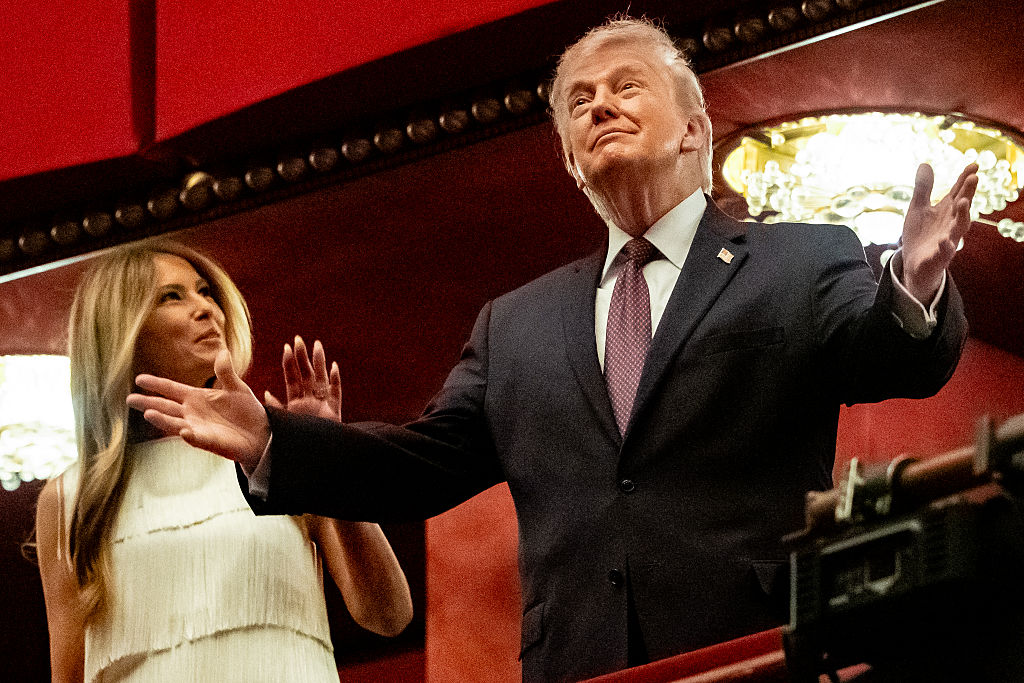
Throughout the last nuclear negotiations with the Biden administration that collapsed, Khamenei downplayed the talks. He focused on building a resistance economy and deepening relations with China and Russia. Now, although Khamenei recently likened the current impasse over enrichment with the second Trump administration to the unsuccessful talks held from 2021-2022 under President Biden, he has been more vocal in setting the stage for a potential deal than he was previously.
The shift in Tehran has filtered down from Khamenei. Rasoul Sanaeirad, an IRGC commander, said ‘the IRGC supports the team negotiating with America’.
The deputy coordinator for the IRGC’s Quds force has also said, ‘It was Trump who wrote a letter requesting negotiations with the Islamic Republic. The Islamic Republic responded positively to this request.’ These interventions are notable, given Trump authorised the killing of the IRGC’s mainstay Soleimani.
The Islamic Republic’s media ecosystem has also been endorsing the talks. Javan, a daily newspaper linked to the IRGC, has been spinning the negotiations as a win for Iran, which it has portrayed as dominating the process. The paper has even backed US investment in Iran if its economic interests are met.
This more positive outlook in Iran towards negotiations has extended to Friday prayer sermons. In 2019, the firebrand hardline cleric Ahmad Khatami said President Trump should die frustrated in his ambitions to negotiate. Yet in an April sermon, he said, ‘accepting indirect negotiations with the US aligns with a Quranic verse stating that if the other side proposes talks, one should not refuse.’
This growing elite consensus in favour of the negotiations can also be seen in the public positioning of Mohammad Bagheri, the chief of staff of Iran’s armed forces. Bagheri, who has traditionally been a hardened military figure, sceptical of negotiations with the West, now supports indirect negotiations.
Saeed Jalili, a staunch hardline representative of Khamenei on the Supreme National Security Council (SNSC), has been unusually muted in his criticism of nuclear negotiations. In 2022, reports circulated that he wrote a letter to the supreme leader calling for Iran’s withdrawal from the Joint Comprehensive Plan of Action (JCPOA) and the enrichment of uranium to 90 per cent, which is weapons-grade.
The composition of the SNSC itself has changed. Masoud Pezeshkian is now president of Iran, after Ebrahim Raisi, known as the ‘hanging judge’, died in a plane crash. Pezeshkian, who is more invested in a nuclear agreement than his predecessor, is chairman of the SNSC. There has also been a change of foreign ministers, with Abbas Araghchi more adept at the art of negotiation. While Khamenei remains in charge of all strategic decisions, his willingness to allow a softer face like Pezeshkian to win the presidency demonstrates the importance of this diplomatic charm offensive.
But behind Iran’s rhetoric lies a darker reality. There has been no real effort to moderate the Islamic Republic. Instead, Tehran is using the negotiations as a shield to avoid economic sanctions and military strikes at a historic weak point. Already the Iranian currency has strengthened as the negotiations continue. The longer the process lasts, the better for Iran’s leaders.
The Islamic Republic’s red lines for a deal have not altered either since 2015. It wants a time-limited agreement which allows Iran to have a domestic uranium enrichment programme; it wants to retain its nuclear facilities; and it wants no substantive constraints on its military industrial base, including its missile and drone programmes. And it doesn’t want to give up its network of terror proxies and partners.
All of this in return for sanctions relief would allow Iran to rebuild its regional and military power. It would also mean it retains its nuclear infrastructure so it has the option of producing a nuclear weapon in the future. This is, in essence, an Iranian attempt to lure the United States into agreeing to a repackaged JCPOA with minor modifications.
Iran is engaging in all sorts of ploys to achieve that end. It is even hawking outlandish investment opportunities to American companies. Tehran’s sympathisers have also been playing on the public desire of some American officials and personalities to visit Iran by counselling the regime to offer them high-level meetings or the prospect of President Trump winning the Nobel Peace Prize by dangling in front of the US a deal which fundamentally offers the same concessions it gave to President Obama.
All the while, some Iranian officials have been trying to create the bizarre impression that they are born-again Trump supporters by co-opting some of the Maga movement’s language and thinking. The Islamic Republic has even been temporarily downplaying its anti-Americanism. In 2024, unnamed Iranian officials told the New York Times that the ‘America First’ agenda appealed to them as it would give Tehran breathing room and space for its grand strategy.
Already Iran’s foreign minister is trying to curry favour with President Trump by dubbing the Democrats, with whom he previously worked and banked on, as the ‘Failed Biden Team’. He hopes that this will lead Republicans to support a JCPOA 2.0 – which would further the Islamic Republic’s interests. Officials in Tehran hope a JCPOA 2.0 would be more durable if it is agreed by a Republican president. But Republican lawmakers have signalled that will be unacceptable.
Some Iranian officials have been trying to create the bizarre impression that they are born-again Trump supporters
Some Iranian officials have also been floating the idea of establishing a Persian Gulf nuclear consortium in the form of a joint venture with the Saudi and Emirati governments, which would involve potential American investment. This is likely designed to appeal to President Trump’s business instincts to persuade the US government to drop its demand for zero enrichment in Iran. But the reality is this is not a new proposal. Iranian officials have been hyping a variation of this nuclear consortium idea for years.
The Islamic Republic may also offer more inspections or lengthier sunset clauses to get the US to retreat on a more important demand for zero enrichment. But this would preserve the logic of the JCPOA.
To improve the mood around the talks, Iran has been pushing its allies in the region – such as the Houthis – to agree to tactical ceasefires with the Trump administration to buy time to rearm. This allows Tehran to create the illusion it is deescalating during the nuclear negotiations – when in fact it is merely a tactical pause to survive, restock, and wait out the Trump administration.
The negotiations have been zigzagging in terms of tenor and tone. As the Trump administration has become more vocal in insisting on zero enrichment, the Islamic Republic’s diplomats have become more downcast. They are trying to influence President Trump to embrace a version of the very Obama deal with Iran he rightfully repudiated in his first term in part because it allowed Iran to enrich uranium.
Press reports suggest both sides are trying to conclude a framework agreement to buy time to iron out details for a final deal. But this carries risks, including the Iranians exploiting the process to avert the invocation of the UN snapback sanctions mechanism which expires in October and erode ideal conditions for Israel and/or the US to conduct a military strike on Iran’s nuclear program. Along the way, Iran may agree to nothing concrete and try to insert vague or conditional language in the framework to placate the Trump administration and keep them at the table while dragging its feet later in the negotiations over details, disclaiming any American understandings.
There has been a clear shift in Iran’s establishment towards supporting negotiations. But this is a cynical and tactical move designed to bolster an unrepentant regime, which feels deeply exposed at home and abroad, hawking a revamped JCPOA as a lifeline. In the end, however, the maximum Tehran is prepared to give still is nowhere near the minimum President Trump is prepared to accept.
Why did the Met arrest a Jewish man for mocking Hezbollah?
It’s the 21st century and Jews are being arrested for making fun of fascists. The Telegraph has revealed that last September a Jewish protester was nabbed and detained by cops in London for the speech crime of mocking the then leader of Hezbollah, Hasan Nasrallah.
The man – who wishes to remain anonymous, which is wise in these febrile, anti-Semitic times — was holding a placard featuring a cartoon of Nasrallah with a pager and the words ‘beep, beep, beep’. It was clearly a reference to Israel’s pagers operation against Hezbollah’s top dogs, which some beautifully call ‘Operation Grim Beeper’. Nasrallah was alive at the time this fella held aloft his blasphemous banner, but it’s obvious what the guy was saying: tick tock, Hasan, your time is coming.
Worst of all, there’s the galling fact that a Jew was interrogated for mocking Jew haters
I hope I don’t get a knock on the door from the Met for saying this, but that is one funny placard. How deliciously wicked to taunt a cartoon Nasrallah with the ‘beep, beep’ of those thousands of Trojan Horse pagers that Israel used to decimate his cruel and racist movement. That placard deserved prizes, not police investigation.
The Met saw it differently. They hauled the man in for questioning. They repeatedly asked him if he believed his placard would cause offence to demonstrators who are ‘clearly pro-Hezbollah and anti-Israel’. I hope he replied: ‘Yes! That’s the entire point, you dimwits.’
Everything about this case is properly psycho. We’re now expected to consider the feelings of people who support Hezbollah? A proscribed organisation? Maybe soon people will be accused of Hezbollahphobia if they dare to diss that neo-fascist militia.
You know what I find offensive? The thought of people in Britain supporting this self-styled ‘Army of God’ that is openly anti-Semitic and which dreams of expelling the ‘cancerous’ Jews from Israel and sending them ‘back to Germany or wherever they came from’.
If you cheer such an eliminationist group, such a vile Jew-hating outfit, then it is the duty of every good Brit to offend you. To mock you and ridicule you and say ‘beep, beep’ to piss you off. That the Met, in this case, took the opposite view and sought to ringfence Hezbollah fanboys from offence is chilling.
Then there are the staggering double standards. I’ve seen anti-Israel agitators freely prance in the streets with the most sick-making banners. I’ve seen placards calling Jews ‘Christ killers’ and comparing the Jewish nation to the Nazis. I’ve seen the Star of David tangled with the Nazi swastika – the grossest libel that depicts Jews as the heirs to the monsters who once murdered them.
How many of these people had their collars felt? How many were interrogated for causing offence? If London is a city in which you can mock Jews but not Jew haters, in which you can defame Israel but not make fun of its anti-Semitic enemies, then I fear our capital is even more lost than we thought.
But worst of all, there’s the galling fact that a Jew was interrogated for mocking Jew haters. That a Jewish man was arrested for making fun of a movement that views his kind as an inferior species. To my mind this is as repulsive as arresting a black person for criticising the KKK. What was the Met thinking? This is too serious to let it blow over. Heads must roll over this humiliation of a British Jew.
What a moral test this will be for the left. They are currently manning the barricades for Kneecap after one of its members was charged with a terror offence for allegedly waving the Hezbollah flag. Will they likewise speak up for a Jew arrested for criticising Hezbollah? Many home truths are about to land, and with a mighty bang.
We need to get serious about free speech. The state’s meddling in the liberty to utter is out of control. To grill a man for caricaturing violent anti-Semites is a new low for our regime of censorship. Sense and freedom must be urgently restored.
Britain has wronged the Chagossians again
I could not resist rushing to the High Court to witness the eleventh-hour challenge to the deal to give away the Chagos archipelago to Mauritius, brought by two valiant Chagossian women. Outside, their supporters chanted ‘Chagossians British’ and waved their passports. Inside, it was a legal massacre, with the government’s lawyers insisting that the Foreign Secretary’s power to make treaties is not reviewable by the courts, that David Lammy had ‘broad powers of discretion’ to make what deals he liked with Mauritius and that there had been no promise to consult with the Chagossians on its terms, which meant no promise had been broken.
If a succession of foreign secretaries had tried engaging with the Chagossians, the islands could have stayed British
As the judge reeled off the grounds for overturning the injunction that had paused the deal overnight, it became brutally obvious that by not consulting them on the deal in any meaningful way and saying it didn’t have to, Britain was doing a second great wrong to British Chagossians. This is, of course, after the disgraceful act of evicting them from their homes with one suitcase each and then gassing their dogs over 50 years ago. The Labour government, led by a human rights lawyer – propelled by arguments from another famous British human rights lawyer, Philippe Sands, who was retained as counsel by Mauritius until this year – was betraying British citizens (which a large number of Chagossians are). It was ceding their home of many generations and its near-pristine marine environment to another power that has also treated them abominably. The hypocrisy was breathtaking.
At a press conference, Sir Keir Starmer said that there was ‘no alternative’ to his eye-wateringly expensive £30 billion, 99-year deal if Britain was to retain control of the vital military base at Diego Garcia. Honestly, I’m not sure that is true. The base was not threatened in any meaningful way by anyone. The British government could anyway have made a case for retaining the archipelago based on environmental justice and the rights of the Chagossians as an indigenous people – arguments now accepted by the Indigenous Peoples Mechanisms of the UN itself. It never tried.
My involvement with the Chagos Islands is as a mere bystander who helped the last Labour government to find a donor when it wanted to create the largest marine reserve in the world around the archipelago in 2010. I have listened since as it has been argued in the International Court of Justice (ICJ) and in its marine tribunal that the decolonisation of the Chagos was not properly concluded in the 1960s because the Chagos, though 1,300 miles from Mauritius, was in the same jurisdiction. Therefore, the arguments ran, Britain’s occupation has been illegal.
It seems that this is right, but under international law, the decolonisation argument is made about the rights of nations, not peoples. There is a more recent legal view that the Chagossians are an indigenous people with their own rights to self-determination.
If the UK had wanted to retain control – if not sovereignty, safeguard the base at Diego Garcia, and quieten the rancour in the Indian Ocean about its continued occupation – which has stopped African nations joining an alliance against the occupation of Ukraine – it had options. It could have gone back to the court citing the advice of ICJ Judge Gaja who suggested the UK ‘revisit the issue and in particular take into account the will of the Chagossians who were expelled… and of their descendants.’ Or ICJ Judge Isawara, who said, ‘a separation or split… is not contrary to the principle of territorial integrity as long as it is based on the free and genuine will of the people concerned.’
In other words, if a succession of foreign secretaries had tried engaging with the Chagossians – 90 per cent of whom in a recent poll opposed the islands being given to Mauritius – the islands could have stayed British.
A sizeable proportion of all Chagossians, thought to be around 5,000, reside in UK, some 5,000 in Mauritius, with another 500 in the Seychelles. Thanks to parliament granting all Chagossians British passports and waiving immigration charges a few years ago, the number of British Chagossians has been rising – an ongoing problem if they have no right to visit their former homeland or their ancestors’ graves. While Britain will give Mauritius a £40 million trust fund for the benefit of Chagossians, this is presumably only for those Chagossians in Mauritius who toe the government line. British Chagossians will get nothing and find their homeland belongs to another colonial power. The right to replace some of the 4,000 Filipinos who run the American base will go to Mauritians.
The deal also says remarkably little about the archipelago’s marine environment, an unbroken coral reef of five atolls and more than 50 islands that is unique and which remains one of the world’s largest fully no-take protected areas. NGOs hope Mauritius will create a new, lawful marine protected area (MPA) as large as the contested British one, but this will be in a separate written instrument yet to be agreed.
Mauritius’s plans are more credible than they were – thanks to a conference with the Zoological Society of London in Mauritius last year – but they depend entirely on external funding from foundations and international donors. It is unclear whether Britain will have any say over how much of the £30 billion it pays over the next 99 years will go to conservation. Mauritius’s record on marine conservation and fisheries management is poor. Its expectations that it will make money from conservation appear unrealistic. Will it keep the MPA going when it is already deeply in debt and tuna licensing would bring instant returns?
These are the questions oarliament must now consider. Chief among them is cost and whether a deal has to be done at all. Is there another way? ‘That ship has sailed,’ Philippe Sands told me at a recent meeting with MPs. He may be right, or it may be that the ship still lies at anchor and could be sent out to defend these bejewelled and teeming seas at the hoist of a flag.
Why ‘woke’ is now just a right-wing fetish
There’s been a late entry in the competition for most cretinous misunderstanding of international trade policy. For anyone who’s been distracted by the ongoing meltdown of the global order, this week Britain finally signed a deal with the EU. The deal is sane and sensible enough to be slighty disappointing all round, which has not stopped the post-truth peanut gallery from freaking out.
For the Brexit fundamentalists, any form of deal, indeed the whole business of international diplomacy, is now for cucks and simps. If we were real patriots, we’d be marching through Normandy with the muskets out and banners flying to force the French to buy our sausages.
There is no place for grown-up politics in the febrile imagination of the terminally anti-woke.
For former MEP Dan Hannan, this relatively inoffensive deal means that ‘Britain will become the EU’s gimp, trussed up in black leather and zips, with a ball-gag in its mouth.’ Let’s linger for a moment on that uncomfortably specific image. It is, of course, an unhinged thing for an adult politician to say in public, let alone one who actually had a major role in the Brexit negotiations.
There’s something increasingly pathetic about the bravado of the pre-cancelled
I am uninterested in policing what Hannan or any other consenting adults want to do with rubber and floggers in their free time, nor do I wish to insult innocent kinksters by comparing them to members of the House of Lords. But the thrill of imagined victimhood shines a bit of a blacklight on the past ten years of culture war.
‘Imagined’ is the important word there. Correct me if I’m wrong, but the thing about people who wear gimp masks and ball gags is that they are usually doing it on purpose, for fun. It’s pretend oppression with pretend weapons specially designed not to do anyone permanent damage. Actual kidnappers tend not to shop at Ann Summers and nor do police officers – at least not professionally.
Hannan seems to be among that rarefied slice of society who still think this is all some sort of racy game – the people who are still bleating about treachery while the rest of us have to get on with trying to repair our lives and undo some of the damage.
There’s been a vibe shift, you see. Going postal over ‘Brexit betrayal’ is a painfully mid-2010s mood. But it’s taking some people a while to adjust. Months after the official ‘end of woke’, a certain sort of public thinker still seems to be salivating over a funhouse-mirror version of, well, me and my friends. Stuck on a train with last week’s issue of The Spectator, I found myself flipping through page after page describing the wickedness of the woke. It’s almost like they miss us.
Woke people have long been press-ganged into being part of this tedious public roleplay. Even in my personal life, friends of friends will respond to my rainbow hair by flashing their predictable opinions and waiting for me to tell them how very, very bad they’ve been. I don’t want to yuck anyone’s yum, but the ignorance has become insulting – because from where I’m sitting, the people most gluttonous for pretend punishment aren’t the ones with their material safety on the line.
Actually, for some reason, I have a track record of total strangers trying to recruit me into acts of punishment, and the one common factor was that they had more power than me and felt vaguely weird about it. This started with the manager at the cafe I worked in in my late teens, whose persistent back issues could apparently only be solved by having one or more of his petite employees walk up and down his spine in big boots.
There is a time and a place for persecution fantasies, and it is not in an average workplace, let alone in policymaking. Among my fellow leftists, when call-outs and cancellations do happen, I’ve always considered sadism the distinguishing factor: if you’re actually enjoying hurting another person, your motives are suspect and you should probably stop. But I can’t help thinking that political masochism is just as much a part of discursive chaos – and wondering if there’s a safe word for those of us recruited into the fantasy without consent.
There’s something increasingly pathetic about the bravado of the pre-cancelled – those who live in panting expectation of their own martyrdom at the hands of conniving wokesters whose sole purpose is to punish you personally for failing some notional purity test.
There’s a long queue of eager martyrs who are apparently still anxious to be burnt inside this straw man, and it’s getting tiresome. If you’re prepared to pay for the column inches, I can probably be persuaded to describe your moral, personal and aesthetic defects in depth, but it’s not my favourite way to spend my one wild and precious life. Besides, I’m burdened by the one thing that always ruins the fun in this sort of shadow power-play: namely, sincerity.
I discovered this one night in 2012, when I agreed to assist a professional dominatrix friend at the sort of club where men are expected to enter on their knees. There was a long line of prospective victims waiting to be disciplined, and my job was crowd control: I was supposed to fill time by telling them precisely why they were disgusting and deserved to be punished, then send them in to Mistress Lash, who had a much harder job.
After five minutes, I definitively discovered that cruelty doesn’t come naturally to me. I soon ran out of insults, especially because the gentlemen all seemed so sweet and polite that it was hard to stay cross with them.
Casting about for material, I started asking them if they had ever voted Tory, what their position was on abortion rights, and how they felt about wealth redistribution. This was South London, not Chipping Norton, so I was surprised to find that they were all conservatives, apart from one shy Green party member in snazzy sock-garters and not much else, who had voted Lib Dem tactically in a swing seat. And the prospect of actually having to be accountable for their actions seemed to spoil the game for everyone. Well, almost everyone.
I will always treasure the memory of a gentleman in his fifties with steel-gray hair and rubber underpants who seemed to have something to get off his chest. ‘And you?’ I asked, doing my best impression of Brian Blessed in I, Claudius. ‘Have you ever voted Conservative?’ ‘Once.’ I had to bend down to hear him. “Just once. I’ve never told anyone this, but… Margaret Thatcher’s first government. I thought, because she was a strong woman…’
The poor man seemed genuinely contrite. ‘I was so wrong. Perhaps – perhaps I could be punished for it?’ I patted him on the head, and called out to Mistress Lash that I was sending in a likely one.
Wherever that man is now, I hope he’s found a little peace. For the rest of us, playtime is over. The lights are up and the music is off and everyone’s going back to their lives, where adults are required to negotiate in the shadow of actual violence. Not the fun kind. The kind where your trans friends get assaulted in bathrooms.
Anyone competent enough to engage responsibly in sex or politics knows that it stops being a game the moment anyone might actually get hurt – and to pretend otherwise is despicable. I won’t tell you exactly how despicable. Someone might get overexcited.
Israel is at risk of becoming a global pariah
For years, Israel has been compared – sometimes unjustly – to South Africa. This comparison stems from the concept of apartheid. In South Africa, racial segregation was between whites and blacks; in Israel, it’s the discrimination against Palestinians in the West Bank and Gaza.
Today, however, the validity of the comparison between Israel and South Africa is even more relevant in another aspect: the international isolation and economic sanctions that were imposed on the white minority regime in Pretoria, which ultimately brought about its downfall, are a warning of the future Israel could face.
A mix of stubbornness, rigidity, and dogmatism is at the root of Trump’s fatigue with Netanyahu
Israel is steadily heading down this path. For years, the international community has considered imposing economic and military sanctions on Israel due to the construction of Jewish settlements in the West Bank and the moves to deprive Palestinians of their basic rights. But aside from strong declarations of intent, the steps taken so far to actually impose any sanctions have been small and negligible: short-term embargoes on certain weapon components and efforts to brand the exports of Israeli companies operating in the occupied territories. Israeli governments have, historically, not been particularly alarmed and operated under the assumption that, as the saying goes, ‘the dogs bark and the caravan moves on’.
However, this week marked a significant shift. The governments of Canada, the UK, and France issued an unprecedentedly harsh warning. They threatened action against Israel unless the fighting in Gaza stops and more humanitarian aid is allowed in. Within a day, the first sanction was imposed. On Tuesday, British Foreign Secretary David Lammy announced that the UK had decided to suspend trade talks with Israel.
Even more alarming and dangerous for the Jewish state is the trend emerging in US President Donald Trump’s attitude towards Israeli Prime Minister Benjamin Netanyahu and his government. The Washington Post reported this week that senior officials in the American administration warned that they would ‘abandon’ Israel if it does not stop the war and allow humanitarian aid in for Gaza’s starving population. US Ambassador to Israel Mike Huckabee responded to the report with a single word: ‘Nonsense.’
Be that as it may, there are too many signs indicating that Trump –who is shaping a new world order through so-called ‘commercial diplomacy’ and has little tolerance for conflicts – is fed up with Netanyahu’s evasiveness and entrenchment.
The most prominent sign of this is the series of commercial and military agreements Trump recently signed with Saudi Arabia, Qatar, and the United Arab Emirates during his visit there last week. Their scale – worth about $1 trillion (£740 billion) – is unprecedented and staggering.
The package includes a $600 billion (£444 billion) commercial deal with Saudi Arabia and another $142 billion (£105 billion) in US arms sales to the kingdom. A similar commercial deal worth $243 billion (£180 billion) was signed with Qatar, in addition to the purchase of advanced Boeing aircraft for $96 billion (£71 billion). The UAE will fund the establishment of an innovation centre and scientific databases for the development of artificial intelligence with an investment of $14.5 billion (£10.7 billion).
Through this, the Trump administration is abandoning the traditional approaches that have governed international relations since the end of the second world war – even after the collapse of Soviet communism and its satellites in Eastern and Central Europe. Those approaches focused on traditional diplomacy and security concepts as a way to resolve crises and promote national interests.
It seems Trump has lost patience with the military involvement policies of his predecessors – using force in global conflicts to project American power and influence. Instead, he is promoting an approach of reinforcing and preserving the US as a superpower through commercial doctrine. In fact, the changes Trump is implementing are not reform, adjustment, or deviation – they are a revolution that will impact the world even after he leaves the White House.
His dramatic meeting in Saudi Arabia with Syrian president Ahmed Al-Sharaa clearly illustrates his approach in the Middle East. More than a decade ago, Al-Sharaa was imprisoned by the US in Iraq, and until he seized power in Damascus five months ago, he was considered the leader of a jihadist terrorist organisation. One can only imagine that if Hamas leader Yahya Sinwar in Gaza were still alive, Trump might not have hesitated to meet with him as well.
Trump’s willingness to ignore Al-Sharaa’s terrorist past, to turn a blind eye to terror organisations in Pakistan (to the dismay of Indian Prime Minister Narendra Modi), and to approve direct talks between his envoys and Hamas, stems from his view of the economic potential of war-torn and crisis-stricken nations. In his eyes, Pakistan, Syria, and even Gaza have opportunities to emerge from crises, poverty, backwardness, and destruction.
But Trump is also impatient, has a short attention span, and quickly loses interest. If he sees that his international business counterparts are not keeping up with his pace, he becomes tired and cuts off contact with them.
Ukraine and its president Volodymyr Zelensky are a prime example. Although Trump seeks to end wars globally and establish peace and stability – possibly with the chance to win a Nobel Peace Prize in mind – he is unwilling to waste his time with foot-dragging leaders.
It appears that a mix of stubbornness, rigidity, and dogmatism is at the root of Trump’s fatigue with Netanyahu and his growing estrangement from him. Trump and his aides are signalling a message: if Netanyahu doesn’t join the global initiatives and the new Middle East they are building, that’s his problem. He will be left alone with his own blinding isolation and that of Israel under his leadership.
Netanyahu has always claimed to understand economics. But ironically, at a time when the White House is occupied by a president championing a commercial doctrine, Netanyahu is fleeing from the opportunity and is pulling Israel into unprecedented decline. Instead of aligning with the economic powerhouses of Saudi Arabia and the Emirates, Netanyahu – thanks to his corruption trials and his obsession with clinging to power – is dragging Israel into international isolation, turning it into a pariah state akin to South Africa. Once a country considered the region’s top security power, Israel is becoming a secondary player, increasingly irrelevant in Trump’s game and on the global stage.
Former prime minister Ehud Barak once warned of a ‘diplomatic tsunami’ facing messianic Israel seeking to annex the Palestinian territories. Netanyahu, he said, ‘was pushing Israel into a corner from which the old South Africa’s deterioration began’. The waves of this tsunami are now lapping at Israel’s shores.
How to stop secondary schools becoming misery traps
‘Transition’ is a word much bandied about in education circles. No, this is not about gender. Rather, when school staff talk about transition they mean that pivotal moment between primary and secondary school. This is the moment when a child moves from a small (average roll number of 280 pupils) and familiar place, probably within walking distance of their home, where they were the oldest and most important cohort; to a site often with five times as many pupils, where, aged 11, they are once again the pip-squeaks, braving strange new faces and routines, after most likely having travelled a long way from home (up to 8 miles in rural areas).
This step change is proving more challenging than anyone had previously suspected. According to a large national study commissioned by ImpactEd Group, as many as one in four secondary school pupils report feeling ‘disengaged’ from their secondary school. Many vote with their feet: the proportion of persistently absent students – one in four – continues to alarm government and head teachers.
Young people need help to navigate relationships in secondary school
Yet even those who do attend school seem uneasy. Students on free school meals feel excluded. One in three secondary school heads have received reports of bullying. And as many as one in three teenage girls feel unsafe in school.
How do we prevent secondary schools from morphing into a dark place that pupils find divisive and downright dangerous – and then avoid? Parents are key, according to Scott Caizley, Policy Lead for Education at the City of London.
We can’t leave schools to carry the burden of re-engaging pupils. We have to foster stronger partnerships with parents and carers to ensure children and young people see secondary school not as an optional space to pass time, but as an essential part of their development.
Two years ago, the City of London Corporation commissioned our charity, The Parenting Circle, to develop a parental engagement toolkit, for use in their 17 primary and secondary schools. Inviting local businesses into school to explain to children (and their parents) which skills they sought when recruiting; ensuring that communication was free of jargon; knowing local community activities and venues, the toolkit included plenty of suggestions for drawing in parents and carers.
It also conveyed some hard truths. Parents are key to their children’s behaviour in school, not just their attendance. Peer relationships, found and fostered in school, take on huge significance in adolescence, but they have grown fraught because young people are modelling the destructive behaviour they find online and – sadly – at home.
One in four young people have been exposed to domestic abuse at home: this not only affects their physical and mental health long-term, it risks compromising their own relationships, with many continuing the cycle of violence they grew up with. 12 per cent of children live in a home where parental conflict leads to one of the parents in real distress. Polling of UK adults in 2024 suggested that 85 per cent have viewed pornography. Out of these, many are likely to be parents, and most are likely to have watched online, where pornography is more violent and practices such as slapping, strangulation and biting now routine.
Against this background, is it any wonder that relationships in secondary schools have become so hostile that 45 per cent of boys believe that teenage girls ‘expect’ sex to be aggressive? Or that more than one in four pupils in receipt of free school meals are frequently bullied?
We can buck this trend. Not by relying on PSHE, which has been mandatory in schools since 2020 but is unpopular with students who find it lame (and their parents who find it woke). Nor by palming off this tricky task on teachers, mandating annual showings of the Netflix drama Adolescence. No, healthy relationships are too crucial to leave to amateurs.
‘We need to get the experts to deliver life lessons, including emotional intelligence, negotiation skills, internet awareness, conflict resolution,’ Julia Margo, Director of the Fair Hearing charity, said.
And we need to do this through evidence-based programmes, where the benefit is clear. Organisations like the Civil Mediation Council, For Baby’s Sake, and St Giles Trust have developed effective programmes that have broken abusive behavioural patterns. But far too few schools are taking them up.
Young people need help to navigate relationships in secondary school. Without this, they will continue to find the classroom toxic, the cafeteria scary, the playground hostile. So they will keep away. Time to call in the experts.
France is waking up to the threat of the Muslim Brotherhood
Emmanuel Macron assembled some of his top ministers at the Élysée on Wednesday. Their purpose was to devise a strategy to counter the growing expansion in France of the Muslim Brotherhood.
The nebulous organisation, formed in Egypt in 1928, has as its aim a global caliphate and it is in Europe where it is enjoying its greatest success. In many Middle Eastern countries, including Saudi Arabia, the UAE, Jordan and Egypt, the Muslim Brotherhood is proscribed.
The French report describes Britain as an ‘outpost’ for the Middle Eastern branch of the Muslim Brotherhood
The Brotherhood’s influence in France was detailed in a 73-page report that was declassified this week by Bruno Retailleau, the Minister of the Interior, who has long warned about their infiltration into all walks of French life.
The report’s authors, an ambassador and a senior prefect, carried out extensive research in France but also elsewhere in Europe. Among their interviewees were academics and Muslim leaders at national and local level.
The report disclosed that 7 per cent of the 2,800 Muslim places of worship in France have links to the Brotherhood; this represents around 91,000 regular worshippers.
The organisation also has a strong presence in cultural and sporting associations. But most troubling is its influence in schools. This is perhaps not a surprise. A 2021 survey reported that 65 per cent of Muslim secondary school pupils in France attached more importance to the laws of Islam than the laws of the Republic.
Although that poll caused much comment in France, little was done to try and arrest what the French call the ‘re-Islamisation’ of their Muslim population. Will this latest report spur the Republic into taking concrete action?
According to reports, Macron has expressed his concern about the ‘seriousness of the facts’, and has instructed his government to present a raft of new proposals to combat the Muslim Brotherhood at the start of next month.
An Élysée spokesman said the president recognised the Muslim Brotherhood was a ‘threat to national cohesion’, and that it was imperative to ‘inform the general public and local elected representatives about the threat and how it works.’
One area of concern is social media, which the report says is used by the Muslim Brotherhood to ‘question what the Republic stands for in terms of laïcité [secularism], in particular to try and demonstrate that the state is Islamophobic.’
The report places particular emphasis on the Brotherhood’s strategy of Islamophobia, ‘and its corollary, victimisation’; it has proved a very effective method of winning the hearts and minds of impressionable young Muslims on social media.
This strategy was highlighted by Retailleau in London last month when he addressed the Policy Exchange in a talk entitled ‘The Islamist challenge: how should free societies now respond?’
Political Islamism, warned the Interior Minister, ‘has taken up the great victim narrative to present European Muslims as the new scapegoats, the new damned of the earth’. He defined Islamophobia as a strategy to ‘paralyse consciences and paralyse wills.’
Arguably, nowhere in Europe has this strategy been more successful than in Britain. The French report describes Britain as an ‘outpost’ for the Middle Eastern branch of the Brotherhood, and there is growing concern in France at what is happening across the Channel.
Alexander del Valle, who was a French national defence advisor in the late 1990s, warned last year that several northern towns and cities in England ‘have become Islamic bastions, encouraged by Muslim Brotherhood propaganda.’
This is an extraordinary, not to mention alarming, state of affairs given that Britain conducted its own investigation into the Muslim Brotherhood a decade ago. Commissioned by the then-Prime Minister David Cameron, the review was headed by Sir John Jenkins, Britain’s former ambassador to Saudi Arabia, but his findings were largely ignored. As Sir John wrote in Coffee House earlier this year: ‘Successive British governments have seemed to believe that if only we ignore Islamism or pay attention only when a bomb goes off on the Tube or someone is horribly murdered… then everyone will get along nicely and everything will be fine. It won’t.’
The work of the Muslim Brotherhood in Britain is made easier by the fact that ‘Islamophobia’ has become an article of faith for the many in the establishment. The Labour government is expected to soon tighten the definition of what constitutes ‘Islamophobia’ based on a 2019 report by an All-Party Parliamentary Group. They said Islamophobia is ‘rooted in racism and is a type of racism that targets expressions of Muslimness or perceived Muslimness.’
The Muslim Brotherhood in Europe does not use violence; soft power is far more effective. Local politics as well has been a particularly successful way for them to plant roots across Europe.
One of the reasons why Bruno Retailleau declassified this report is to draw the public’s attention to the Muslim Brotherhood ahead of the 2026 local elections in France. ‘There’s a risk next year that they’ll be running in local elections with the rhetoric: “If you take us on, we’ll bring in a bunch of votes”,’ he said in a recent interview.
The declassification of the report, and this week’s meeting at the Élysée, has dominated the print and broadcast news in France. The Muslim Brotherhood will not enjoy having such a harsh light shone on it. Fortunately for the organisation, it is still able to operate in the shadows in Britain.
Brussels is dropping a bureaucratic bombshell on Europe
Brussels makes one thing better than anywhere else: regulation. Reporting duties, due diligence checks, ESG disclosures, and endless frameworks for climate and labour compliance – if it can be mandated, Brussels has a directive for it. Now Brussels has outdone itself with a directive that makes companies legally liable for the behaviour of every entity in their global supply chain. It’s due to come into force in 2027. The law has triggered a rare backlash. This week, Emmanuel Macron has called for it to be taken ‘off the table’. Germany’s Chancellor Friedrich Merz has also demanded its repeal. But it seems even the bloc’s two most powerful governments can’t stop this from going through.
Even the bloc’s two most powerful governments can’t stop this from going through
On paper, the EU is committed to reducing regulation. In 2024, the former Italian prime minister Mario Draghi delivered a report calling for the EU to reduce obstacles for businesses and to have leaner regulation. Ursula von der Leyen stood beside him nodding when he presented the report.
But on this supply chain regulation the bureaucracy is doubling down. The new directive is part of the EU’s push to make businesses morally responsible. It forces companies to account not only for their own practices, but for the environmental and human rights records of every link in their supply chain. A business could be held liable for the actions of a subcontractor on the other side of the world, something no American or Chinese competitor is subject to. It’s a gift to compliance lawyers and a slow death sentence for exporters.
Ursula von der Leyen has staked her Commission’s legacy on this kind of regulation. The rules are part of a broader project that aims to make the EU a global standard-setter. Backing down now would mean admitting the agenda she has championed is unworkable. This is why the EU is pushing through a directive so economically damaging that even the French and the Germans are sounding the alarm.
This is the quiet crisis at the heart of the EU. Even the most powerful countries no longer control the rules. France and Germany helped create the EU’s regulatory machinery. Now they’re stuck inside it, unable to turn it off or even slow it down. The US economy has grown more than 40 per cent since 2008, while the EU limps along at half that pace, shackled by its own rules and regulations. The commissioners in Brussels talk about dynamism. What they produce is paperwork.
Meanwhile, Keir Starmer is walking right back into this trap. Labour’s plan to realign with the EU’s regulatory framework is couched in the language of diplomacy. Yet as Martin Howe KC noted in his analysis for The Spectator this week, Starmer isn’t just realigning, he’s surrendering control over entire sectors, from agriculture to energy. The UK will be required to follow EU law, interpreted by EU judges, with no vote and no voice. What the PM sees as a return to reason means dragging British companies back into the red tape that even France and Germany are trying to escape. This is why Starmer’s ‘reset’ is so naive. Labour still treats the EU as if it is the only adult in the room – technocratic, sensible, measured. When in reality, its ‘sensible’ regulations are sheer madness.
Starmer is free to pick and choose which areas of EU regulation Britain engages with, at least for now. Britain is no longer bound by EU law. But everything coming from Starmer suggests he has a general, almost devotional, belief that European regulation is better. Alignment is portrayed not just as a pragmatic choice, but a moral one.
Meanwhile in Europe the cost of regulation is piling up. Growth is stagnant. Industry is hollowing out. The French press is full of business leaders complaining about the ‘regulatory frenzy’. Le Figaro counts 13,000 new EU rules since 2019. That works out to ten new rules per day. The directive on supply chains is just the tip of the iceberg. From farming to tech to energy, Brussels is issuing orders that national governments can no longer stop.
This is no longer a union of sovereign equals. The Commission proposes, the parliament postures, and the member states fall in line. France and Germany can moan, but they can’t unpick what Brussels and the European bureaucracy conjure up. They’re legally required to implement the directive into national law. Refusing would put them in breach of EU treaties and expose them to infringement proceedings before the European Court of Justice. The lesson here is that once you’ve signed up, there’s no going back. You don’t get to revise the regulations. You just comply.
Britain got out and was unshackled from this process. Brexit meant that British governments could decide how to regulate British companies. Starmer, in his eagerness to prove his grown-up credentials, is giving that away. Deal by deal, framework by framework. The logic of his approach, of constant alignment, will lead him there. And unlike France and Germany, he won’t even have a seat at the table.
Being inside the EU doesn’t mean you have control. It means you’re subject to decisions you can’t undo. Labour should pay attention to what even Macron and Merz are complaining about. Before Starmer continues down the path of ‘resetting the relationship’, he might want to ask whether the relationship is worth resetting. Because from where I’m standing, Brussels looks less like a partner and more like a constraint.
Illegal gold mining is blighting Peru
It was gold that brought the Spanish conquistadors to Peru in the 1500s. More than 500 years on and the precious metal is still causing problems. Gold mining came into sharp focus at the end of April when 13 miners were found, naked, bound and gagged, at the bottom of a mine in Pataz which had been taken by an armed gang. Some bore signs of torture and there was evidence they had been executed. The main suspect behind the attacks was arrested last week.
Peru’s illegal gold rush has become increasingly bloody in recent years. Some 39 workers at the Pataz mine have been killed in the past three years, according to the Peruvian mining company Poderosa, which was the victim of the recent attacks. Criminal groups are vying for control over a resource which represents big business. Illegal gold mining has become one of the most profitable and violent criminal enterprises in Peru, at times outstripping even the cocaine trade. Peru exported more than $15 billion of gold last year. As much as 40 per cent of it is estimated to have come from illegal sources. Illegal mining has been further incentivised by the soaring price of gold.
As the profits have increased so too has the violence. Gangs are armed with military-grade weaponry. In late 2023, an armed group stormed a mine in the north of the country, killing nine workers and injuring 15. In January last year a group of more than 100 armed men ambushed a police convoy, freeing four members of an illegal mining gang. In the days before the recent massacre, police rescued 50 workers, including the security guards which mining firms are now required to hire, from another mine in Pataz. According to local reports, more than 200 mining tunnels have been seized by the groups.
The Madre de Dios region, which borders Brazil and Bolivia, is often described as the epicentre of illegal mining in the country. But such activities have spread across huge parts of the country including Pataz and the northern border with Ecuador.
As well as large, well-equipped organised crime groups, illegal mining is also carried out by smaller, artisanal miners. Local people are often driven to mining because of a lack of economic opportunities. They work in makeshift camps and lack knowledge of best environmental practices. Some organisations have also claimed that some of the workers, including children, are trafficked and forced to work in modern slavery conditions. Illegally mined gold is then often able to enter the global market mixed with legal gold, making it difficult to trace.
The violence is not the only consequence of illegal and unregulated mining activities. South America, and more specifically the Amazon Rainforest, is one of the most important regions on the planet for biodiversity. Miners clear trees for informal landing strips, and release mercury and other contaminants into the water. This reduces the amount of light getting into rivers, causing problems for marine life which need light to hunt for food, and can also poison fish directly.
The photos of the slain miners have shocked the Andean nation
Illegal mining also dovetails with other forms of illegality. The same perpetrators also smuggle drugs. Cases of human trafficking and prostitution have also been linked to the growth of illegal mining. Much of the mining also takes place on indigenous land, with communities threatened if they try to defend it.
The interim president, Dina Boluarte, has been criticised for inaction and has resurrected an anti-terrorism bill to try to stem the tide. In response to the latest incident, the government has pledged new security deployments in Pataz, but questions remain about their long-term impact. The problems are also more deeply rooted than the current president’s term. Corruption is an issue. Some officials have been accused of colluding with the criminal enterprises. Policing what are often remote areas, thick with jungle, is also challenging.
A major operation called Operation Mercury was launched in Madre de Dios in 2019. Some 1,500 military police were mobilised to dismantle illegal mines. The operation notched some notable successes – including a significant decline in deforestation – but illegal mining ultimately relocated elsewhere or has since resumed. Attempts to formalise the industry have also fallen foul of red tape or a lack of political will.
The photos of the slain miners, numbered and wrapped in plastic, as well as videos showing the executions, have shocked the Andean nation. Violence of all kinds has been escalating in Peru. Parts of the capital Lima have been under a state of emergency since March. Beleaguered Peruvians will hope that the latest attack may finally galvanise effective action.
In defence of seagulls
We Brits used to rub along pretty well with seagulls. Their distinctive call conjured memories of happy days out at the seaside and it was strangely hypnotic to watch them circle above the waters as we breathed in the salty air. But now they’re in danger of becoming public enemy number one as the tabloids pump out scare stories about our feathered friends.
Only this week, the Daily Star called them ‘flying scumbags’, the Daily Mail described them as ‘feathered thugs’, and the Sun labelled them ‘dive-bombing muggers’. Meanwhile, the Daily Express warned that an ‘apocalyptic swarm’ of 3,000 seagulls had ‘invaded a UK town’. The Daily Star raised the stakes to Jurassic levels, terrifying readers with a story about seagulls ‘the size of pterodactyls’ that are ‘terrorising’ a British village.
The Daily Star called gulls ‘flying scumbags’
I’ve never seen a seagull the size of a dinosaur, but I know it is incredibly annoying when they rip open bin bags and dive-bomb you when you’re trying to relax over an al fresco lunch. Around three quarters of the UK’s herring gull population now lives in urban areas: a YouGov survey in 2022 found that more than half of those asked had a negative view of seagulls. A separate study found that more people supported culls than opposed them.
But before we demonise seagulls, we should consider the part we may have played in all this. Overfishing has depleted the fish stocks that they historically relied on for food. Is this why they’re forced to come and bother us for our grub? When they attack us as we eat our fish and chips, they’re only claiming the food stolen from their waters.
Coastal development has also disrupted their nesting sites. As we build more homes and other properties, gulls are forced to move inland to urban areas in search of sustenance and shelter. Rising sea levels and sea temperatures, which have been linked to climate change, may also have disrupted their nesting sites and the availability of food.
It’s typical human arrogance to muck about with nature and then clutch our pearls when it turns out that there may be consequences. When seagulls flock to our towns and cities to harass us for food, they serve as a warning sign that something’s gone wrong. Yet we treat this warning as something to eradicate, rather than listen to.
When things are going well, seagulls play a vital part in the ecosystem because their scavenger nature helps to control the populations of smaller creatures. They also help with nutrient cycling, which boosts the health of marine and coastal environments and reduces the spread of disease. But as their numbers fall, this negatively affects biodiversity, which has a knock-on effect on us all.
Tabloid stories about ‘dangerous’ animals never consider the part that humanity plays in nature’s problems. Every summer we get scare stories about ‘dangerous’ sharks, but while humans kill around 100 million sharks every year, sharks kill very few of us – just seven people worldwide in 2024.
Last summer, the Guardian asked whether cows were ‘the UK’s most dangerous animals’ and the Daily Star described them as ‘mooing killers’. But every year, cows kill around five humans in the UK while humans kill around 2.8 million cows. In recent months, we’ve also had warnings that rats and dangerous dogs are going to be the death of us, but most of us are still standing.
Now it’s the turn of seagulls to face the wrath of the media, and the hysteria is reliably free of self-reflection. Look, I’ve had food whipped out of my hand by a seagull many times. I know it’s annoying and can even be terrifying. But that distinctive call of the seagull that once charmed us should now be heard more as a warning sign. It’s up to us whether we listen or not.
Great football writers are different
Brian Glanville, who died this week at the age of 93, was a unique voice in the crowded and often hysterical field of football writing and a uniquely important one. His historical reach was unparalleled. He published his first book (a ghosted autobiography of Arenal striker Cliff Bastin) at the age of 16 and attended 13 World Cups, starting with the 1958 tournament in Sweden.
His lean, elegant, novelistic style, informed by his parallel career as a fiction writer, could be found nowhere else in the UK. As Patrick Barclay put it, ‘most football writers fall into two categories: those who have been influenced by Brian Glanville and those who should have been’.
Glanville was simply different. For one thing, he was, to not put too fine a point on it, a ‘toff’. In an industry dominated by tough, plain-speaking and working-class journalists, that stuck out like a top hat at a miner’s gala.
This was important for me, as a rather serious and sensitive (opera loving!) middle class teenager in the gritty urban environment of the west of Scotland. Football culture, dominated by Celtic and Rangers, tended to be on the rough side and it was tempting to head to the genteel environs of the cricket or rugby club. Perhaps football wasn’t for the likes of me?
Glanville gave me the confidence that it absolutely was. Football was for everyone. And not only could we go, we could go with our heads held high. Glanville saw no need to disguise his old Carthusian background, literary leanings or broad cultural knowledge. He just loved the game so he went along, and wrote about it, in his own graceful, witty and opinionated way.
He wasn’t a snob. In fact, he may have been the victim of snobbery. Glanville almost never appeared on TV due, I strongly suspect, to a weird reverse class prejudice. He just didn’t fit the profile. I saw him appear just once, on a Scottish sports panel discussion hosted by Archie McPherson. A froideur pervaded the set every time he spoke in that languorous plummy drawl. The host and other panellists seemed to regard him as if he had come from another planet.
Yet, whereas other gifted sport writers like McIlvanny, Arlott and Cardus were reluctant to work for tabloids, Glanville happily wrote for the Sunday Times and the People, though in the latter he acknowledged that ‘literary illusions were not encouraged’.
He appreciated good writing wherever it was to be found. He admired fanzines, including, I was ego-strokingly thrilled to discover, Scotland’s The Absolute Game (‘refreshingly abrasive’ he called it) where I had my very first published piece. And this despite a weekly column (‘Bruno Glanvilla’) that lampooned him mercilessly.
He clearly adored language. In an essay for Prospect magazine, Glanville expressed a desire for an idiom that could be read ‘by intellectuals without shame and by the working man without labour’. He said no one in the UK had cracked this tough nut, but Glanville surely came closest. Influenced by such omnivorous polymaths as Runyon and Lardner, he utterly rejected the false dichotomy of sports and ‘serious’ writing.
He was also searingly honest and unafraid to take unfashionable positions
Having lived in Italy and written for Corriere dello Sport for many years, he recognised this as a particularly British conceit. Of Italy he wrote ‘readers are treated as literate, while the English tabloids have seldom ceased to treat their readers as morons’. He would roll his eyes at the fuss made over Nick Hornby’s supposedly ground-breaking ‘serious’ football book Fever Pitch. He slipped a quote by Keats into a match report once.
Certain of his phrases have stayed with me – I’ve quoted his ‘bloated incubus’ to describe the FIFA’s ever expanding World Cup several times. I also loved his description of Geoff Hurst’s ‘it’s all over now’ strike in the 120th minute of the 1966 World Cup final with Germany as a ‘terrible’ (in the true sense of the word) ’left-footer’. There are many, many more.
He was also searingly honest and unafraid to take unfashionable positions. He spent most of his career railing against the iniquities of FIFA president’s Havelange and Blatter, and the vacillations and compromises of the perfidious FA. He wasn’t much impressed with women’s football, and had little time for David Beckham, lamenting the day he overtook Bobby Moore’s record of England caps for an outfield player.
This honesty cost him, though. For all his love of continental football writing, he described as ‘craven’ the behaviour of his hero the Italian journalist Gianni Brera – ‘a whole man whose subject happens to be sport’ – when he refused to involve himself in the Lobo-Solti bribery scandal that Glanville had covered extensively for the Sunday Times. The two men exchanged ‘bitter words’ and never reconciled. He hated cheats and cowards.
It may even have prematurely ended his career. Glanville stopped writing some years ago, and appears to have simply withdrawn from the arena. Frailty perhaps, or was there no longer a place for his particular directness? It’s certainly hard to think of a warm welcome being offered in a Premier League press conference for a man who described the division (repeatedly) as the ‘greed is good league’.
And yet, who could seriously deny this important and perfectly expressed (very Glanville) truth?
The cheapening of the Chelsea Flower Show
‘I have died and gone to heaven,’ the gentle-faced, fortysomething American beside me murmured into her phone. I turned and stared. Too late I remembered the instructions repeated in childhood not to stand with one’s mouth open. But I couldn’t help myself. In the glorious sun at Chelsea Flower Show, I – unlike my neighbour – felt like I had died and gone to hell.
Tuesday morning at Chelsea Flower Show is among life’s rare treats. At least, it used to be. The whoosh of excitement crossing Royal Hospital Road, where policemen marshalled crowds; the magnetic pull towards the show gardens, where the eye was dazzled by loveliness; inside the Great Pavilion, a visual assault like medieval millefleur tapestries in which every inch of dark meadow is studded with petals and leaves and bursting buds. The scent was distinctive, too: grass underfoot and showy roses. Even beyond the dawn of the phone age, older women continued to wield notebooks. Their husbands all seemed to merge, alike in their straw hats of apparently uncontrived wonkiness.
In the air was more than the smell of flowers. Sometimes, looking around, it was like watching hounds first detect a scent, noses just beginning to twitch, as these knowledgeable men and women sallied forth on Chelsea’s first day, reserved for members of the Royal Horticultural Society. Every year was much the same, delivering its treats, the same gardeners’ adrenaline rush, the same deep satisfaction at witnessing something of supreme quality undertaken seemingly for the sheer love of it.
Until Tuesday 20 May 2025 when, for me, the Flower Show castles in the air I had built over three decades of visits came crashing down. Very occasionally life delivers a disappointment so overwhelming it leaves you both defeated and staggering. For me, Tuesday was one of those moments.
A brief backtrack. As a child I had a recurring dream that I was a gardener in Louis XIV’s new gardens at Versailles. The first plant I bought myself for the garden plot my parents gave me when I was seven or eight was the small, clump-forming alpine perennial oxalis adenophylla, whose pink-flushed, trumpet-shaped flowers still seem to me lovely against its glaucous little leaves that look like decorations on old-fashioned bathing caps. In my twenties, I wrote a gardening page for House & Garden and later a biography of gardening doyenne Vita Sackville-West. I lost my wedding ring in the herbaceous border beyond my study windows, somewhere, I suspect, below a tangle of campanula lactiflora – ‘Loddon Anna’ – that I haven’t the heart to lift. Does this put you in the picture? For 30 years I’ve loved Chelsea. On Tuesday morning, not a bit of me anticipated anything but delight.
The new Chelsea is like the nastiest possible day at Bicester Village
Once upon a time, Chelsea was described as resembling a vicarage tea party. That description hasn’t quite rung true for decades. But what changed this year (or had I simply failed to notice it before, because previous year’s show gardens were less dreary?) is that the new Chelsea is like the nastiest possible day at Bicester Village. The scent in the air is not roses but acquisitiveness.
In the Great Pavilion, I could have bought the bronze-leafed rodgersia I’ve meant to plant for several seasons or, if I didn’t find them so unappealing, potted calla lilies in a range of more or less synthetic-looking colours. But outside the Pavilion was where the action really was. And what was on offer there? Secateurs and dibbers? Possibly. But if so they were lost among the stalls selling handbags and bespoke mirrors and ‘long-lasting premium doormats’ and cashmere knitwear and quilted bedcovers (no, these weren’t variants on cloches, they were for bedrooms not borders) and rocking horses and pepper mills in the shape of chess pieces. Be still, my twitching spade hand. There was even something for those who decided not to blow the budget on a glasshouse but buy a pair of earrings instead: a Boodles concession. Hurrah! At last, Chelsea Flower Show has caught up with the times. On your next visit, sod the garden and think about your own appearance instead. You won’t be alone. Many of my fellow visitors appeared to be in Chelsea Flower Show fancy dress – floral-themed I grant you – with peculiar hats that prevented them from seeing the ugliness around them.
I looked again at the RHS website and the Chelsea ticket page, curious to see how the RHS now pitches the world’s greatest flower show to punters. Chelsea, it tells us, ‘is filled with amazing garden designs, gorgeous flower displays and exclusive shopping’. Horticultural excellence, then, is no longer enough or even the point.
I telephoned a friend, a prominent and highly respected garden designer. I asked her: am I mad? Have I missed the point? Am I being stuffy? ‘I’ve stopped going to Chelsea,’ she told me.
DoGE should make ending the opioid crisis its legacy
As President Donald Trump trots the globe shopping for a new Air Force One and takes long-distance phone calls in a quest to end the “bloodbath” in Ukraine, a clear and present – and costly, in more ways than one – danger persists on his own country’s soil. A new, first-of-its-kind study from Avalere Health has found the annual average cost of each opioid use disorder (OUD) case in the US “is approximately $695,000 across all stakeholders analyzed.”
Per the report’s executive summary:
The costs to the federal government, state/local government, private businesses, and society are driven by lost productivity for employers ($438 billion), employees ($248 billion), and households ($73 billion). Health insurance and uninsured costs were $111 billion, criminal justice costs are $52 billion, and other substance use treatment costs are $12 billion.
The economic impact is the least of it. In the Ohio Capital Journal, Rodney Coates reports, “In 2021, more than 107,000 Americans died from overdoses – the most ever recorded – and nearly seven out of 10 deaths involved fentanyl or similar synthetic opioids. In 2022, fentanyl was killing an average of 200 people each day. And while fentanyl deaths declined slightly in 2023, nearly 75,000 Americans still died from synthetic opioids that year. In March of that year – the most recent for which full-year data on overdose deaths is available – the then-secretary of homeland security declared fentanyl to be ‘the single greatest challenge we face as a country.’”
As Elon Musk’s last official day heading the Department of Government Efficiency (DoGE) has come and gone (May 20 was his pre-ordained final day as senior advisor), the cost-cutting agency’s prominence has faded from headlines. Yet what a legacy ending billions of dollars in funding toward the tragic trend that is opioid abuse would be for the agency.
What has caused the OUD crisis? The answer, not surprisingly, is complex. It seemingly began, however, with over-prescription of painkillers in the 1990s, and according to a Council on Foreign Relations report released in March:
Since 2000, more than one million people in the United States have died of drug overdoses, the majority of which were due to opioids. Fentanyl and other synthetic opioids have been driving the crisis in recent years, with the Covid-19 pandemic exacerbating the public’s abuse of the drug. The crisis has also become a major US foreign policy issue, with most supply coming from China and Mexico.
The Trump administration has kept the crisis top of mind. During his first term as president, Trump passed an initiative “to stop opioid abuse and reduce drug supply and demand” with $6 billion allocated toward the battle. In February of this year, his administration imposed “duties to address the synthetic opioid supply chain in the People’s Republic of China,” acknowledging, “Synthetic opioid overdose is the leading cause of death for people aged 18 to 45 in the United States.”
Trump has labeled the flow of contraband drugs like fentanyl to the United States through illicit distribution networks “a national emergency.” His February order declared, “A Nation without borders is not a nation at all. I will not stand by and allow our sovereignty to be eroded, our laws to be trampled, our citizens to be endangered, or our borders to be disrespected anymore.”
The Avalere Health study concludes that, “Case counts, mortality, and the associated costs of OUD are increasing over time and remain a key issue for governments, policymakers, public-health professionals, and healthcare providers. Similar to the distribution of OUD case rates by state, the states with the highest cost per capita to state and local governments are clustered around New Hampshire, West Virginia, and Nevada.”
To lower economic and social costs of OUD, the researchers recommend a “multi-pronged approach,” including “a variety of federal and state policies” to increase behavioral therapy plus long-acting injectable (LAI) buprenorphine.
Of course, the most straightforward solution is to stem the tide of opioids and to decrease access; but for the more than 6 million Americans reported to have an opioid use disorder, there is no time for negotiations or long-distance phone calls. The cost to everyone is much too great.
Will the Democrats learn anything from the Biden decline cover-up?
As Jake Tapper and Alex Thompson kicked off the promo tour for Original Sin, their explosive new book exposing the far-reaching cover-up of Joe Biden’s decline during his final years in the White House, some tragic news broke regarding the former president’s health. Biden had been diagnosed with an aggressive form of prostate cancer that has already spread to his bones.
The revelation naturally generated sympathy. But it also gave rise to an argument that often accompanies tragedy in the lives of the powerful: that tough questions about their record should be shelved out of respect. David Axelrod, normally a clear-eyed analyst of the Democratic party’s weaknesses, said last weekend that commentary about Biden’s mental acuity “should be more muted and set aside for now as he’s struggling through this.”
That sentiment, well-meaning as it may be, is unconvincing as an argument. If anything, questions around Biden’s insistence that he should have remained in the race and faced Donald Trump in the 2024 election to serve another four years in office are even more urgent considering the news that he’s been suffering from an aggressive cancer that has already metastasized.
It is more urgent still in the light of the fact that our gerontocracy extends beyond the White House and into the halls of Congress. Three House Democrats have died in office just this year, the latest being Gerry Connolly of Virginia. Six have died in the last 13 months. Historically, such events prompt the chattering classes to demand a moratorium on criticism of Congress for its increasingly ancient demographics. On the contrary: what better time to point out that our elected leaders are too old than when its members are dropping like flies?
Set aside how much Biden and his inner circle knew about his own diagnosis (They claim the cancer was only just found, but their track record for health transparency rivals FDR’s). We owe much to our public servants, but deferential coverage when they find themselves on the business end of debilitating illness is not one of them. Biden was, for four years in the last decade, the most powerful person on the planet. His decisions, like the decisions made by any president, cost and saved lives. They shaped the future of the country and the world.
Tapper and Thompson’s book puts those decisions in stark relief. While the “original sin” of the title refers to Biden’s disastrous choice to run for re-election, which set off a chain of events that catapulted Trump back to the White House, an overlooked bombshell of the book is how it shows Biden’s slouch toward infirmity affecting his presidency.
Tapper and Thompson report that the former president’s top aides – or the Politburo, as they were derisively known – insisted that up until his departure from office, his age never derailed his decision-making. The problems, they insist, were limited to his ability to communicate with the public – an obscenely low bar, given how crucial it is for a president to be able to communicate with the world.
But Tapper and Thompson report on countless examples where Biden’s infirmity worsened his performance. “We have members of Congress talking about his inability to do his job,” Tapper told me in an interview this week.
In 2023, Senator Mark Warner, a Democrat who backed Biden, feared that an administration plan to release inmates from the Guantanamo Bay prison to Oman in the wake of the October 7 attack would put the country at risk.
“He has a conversation with Biden,” Tapper said of Warner. “He doesn’t think Biden has any idea what’s going on. He doesn’t understand this discussion.”
In another incident as far back as 2021, Biden was supposed to encourage the House Democratic Caucus to back a piece of legislation, Tapper recounted. “He doesn’t do it. They bring him back again to do it; he doesn’t do it again.”
Other more significant failures have been pinned on Biden’s decline. Many Democrats attribute his deferential handling of Benjamin Netanyahu as he carried out a brutal campaign in Gaza to an antiquated view of Israel. His catastrophic management of the US southern border is pinned, in Original Sin, on an inability to handle the job of being president.
Take this bit of a reporting on an encounter between Biden and Senator Michael Bennett of Colorado at a White House immigration event in June 2024. “Biden has that horrifying glitch moment where you can’t really even understand what he’s doing,” Tapper recounted. “He does that thing, just like as a tool, he whispers when he wants to emphasize something. But this isn’t that. This is like some sort of glitch, and neurologists we talked to said this looked like a neurological event. Bennett leaves that event at the White House thinking, ‘Well, this is why our immigration policy is such a mess. The president cannot manage the portfolio. He’s not able to manage these competing interests and direct people as to what to do.’”
Perhaps the greatest indictment of Biden in the last year of his presidency – one that lays waste to the farcical claim from his supporters that he could have served another four years in office – is that by the time of his 2024 campaign, his schedule had shrunk to a six-hour day, 10 a.m. to 4 p.m., the waking hours of a particularly lethargic infant.
There isn’t public evidence of a case where Biden missed the 2 a.m. call, but does anyone –Biden dead-enders included – feel comfortable with a president who can’t be roused to take it when it comes?
“We can’t have this as a country,” Tapper noted. “We have such a powerful executive branch, and at this stage, such an un-coequal legislative branch and such weak political parties. We’re really racing towards a very dangerous situation. What if there had been that 2 a.m. phone call for Joe Biden?”
Democrats have spent the week complaining that coverage of Biden’s age is irrelevant; old news; offensive. It is an argument often advanced, but exclusively by partisans eager to shield their preferred political candidate from scrutiny. In doing so, they are repeating the same sins as Biden’s inner circle, covering their ears and ushering in the threat to democracy they claimed to be so worried about. At the last election, this ensured four more years of Trump. In 2028, Democrats shouldn’t be surprised if the same strategy bears the same result.
Katharine Birbalsingh is right about our worship of victimhood
One of the main accusations levelled at the trans movement is that the tidal wave of youngsters claiming to be gender dysphoric in recent years is a form of social contagion, especially among rich, progressive households.
Katharine Birbalsingh, the former government social mobility tsar and head of Michaela Community School in northwest London, seems to agree that it can be understood as a social phenomenon. And she has her own particular theory. ‘Our society is such that victimhood is admired’, she told the Standard yesterday, and one reason a disproportionate number of those drawn to the trans movement are ‘white and privileged’ is that it offers them ‘a victimhood narrative to embrace’, one denied them on account of their wealth and skin colour.
There can be little doubt that victimhood has an inherent appeal today
There can be little doubt that victimhood has an inherent appeal today. A victim culture has long been observed in western society, one which respects and admires those who deem themselves downtrodden, oppressed and wronged, and a society which accords higher moral worth and value to the opinions of the victim. Both today’s trans and anti-racism movement are imbued with a victimhood narrative. The entire nexus of wokery is underpinned by grievance. And that was its chief attraction from the outset.
A decade ago, woke was visited upon a society that had already sanctified victimhood. This shift was made clear in the 1990s, a decade which began with a new therapeutic sensibility and ended with the post-Diana consensus that we should unload all our sorrows in public. The 1990s also saw that foretaste of wokery, ‘Political Correctness’, with its fixation with righting historical wrongs imposed on women and people of colour, an obsession already starting to grate with conservatives.
In that decade we first witnessed how victimhood, with its necessary association with the underprivileged and oppressed, came to be appropriated. Sinn Fein’s reinvention of itself as the party of peace and reconciliation in Northern Ireland was partly realised by consciously aligning itself with the ANC and its universally-approved crusade. In entertainment Sacha Baron Cohen’s comic creation ‘Ali G’ reflected a real-life demographic: the white or Asian child who wishes to be black because that identity confers the status of a rebel at odds with an oppressive system.
A genuinely unjust system in the postwar era gave birth to the civil rights movement in the United States and women’s liberation worldwide. Both sought to redress injustice and remove impediments for certain sections of society. But the sense of righteousness that fuelled those revolutions in the Sixties soon descended into self-righteousness and self-pity in the narcissistic and disappointed decade that followed. Many foresaw the consequences of a shift from breaking down the barriers of discrimination to morbidly obsessing about them. As Michael Wharton, under the well-known Fleet Street byline ‘Peter Simple’, wrote in the Daily Telegraph in 1972, about the mania for ‘racial discrimination’ and ‘sexual discrimination’: ‘What would our society be like if this process reached its ultimate though fortunately unattainable conclusion, in which every single person saw himself as a victim of discrimination by some other person?’
The postwar settlement’s collectivist spirit also sowed the seeds for our victim culture. It nurtured the widespread belief that the lowly plight of the subject or citizen was not automatically his or her fault, but rather that of ‘society’ or ‘the system’. The result was a passive mindset. Hyper-liberalism can be understood as the end of the long decline in the belief in individual agency, with a resultant descent into introspection, envy and resentment.
The evidence of victimhood’s saturation and ultimate triumph today can be observed in the man who purports to be the arch-enemy of woke: Donald Trump. This narcissist portrays himself as a victim, or the spokesman for victims, to such an extent that he now implausibly speaks of white South Africans as victims of ‘genocide’.
If Donald Trump can be seduced by victimhood, with all the social and political advantages it confers, then there’s no reason why teenagers shouldn’t also want to jump on the bandwagon.
Putin orders new offensive
‘You want a ceasefire? I want your death,’ said Russia’s chief propagandist Vladimir Soloviev during prime time television, the camera zooming in on his face. His message was aimed at both Ukrainians and Europeans urging the Kremlin to stop the war. Soloviev, alongside a chorus of other Kremlin loyalists and military experts, has lately been gloating about how Vladimir Putin weathered western pressure and secured Donald Trump on his side. There will be no peace, they say, until Ukraine capitulates to Russian demands.
Putin, as if to prove the point, announced yesterday that he had ordered the military to begin creating a ‘security buffer zone’ along the Ukrainian border – which is not quite the peace process Trump has been calling for. The zone would stretch along Russia’s Kursk, Bryansk and Belgorod regions, meaning Putin’s troops would have to break into Ukraine from the north, seizing parts of the Kyiv, Sumy and Kharkiv regions. The border, already penetrated by constant raids from both sides, will soon become the front line of a fresh invasion as Putin seeks to seize more Ukrainian land. ‘Our armed forces are currently solving this problem,’ he said after returning from Russia’s Kursk region, recently liberated from Ukrainians.
The Russian President is longing for a breakthrough on the battlefield, but his troops are bogged down in the Donetsk region, unable to deliver a single win to make Kyiv more obedient during negotiations. He’s used this strategy before. The infamous first Minsk deal was signed after Ukraine suffered a catastrophic defeat at Ilovaisk in August 2014, where hundreds of Ukrainian soldiers were slaughtered while retreating through a so-called humanitarian corridor arranged by Putin.
This time, the Russian President needs something just as big and traumatic for Ukrainians to live through. But since the fall of Avdiivka in February last year, Russian forces haven’t managed to capture a single major city. Yesterday, Putin promoted Colonel General Andrey Mordvichev, who was awarded the Hero of Russia for the occupation of Avdiivka, to Commander-in-Chief of Russia’s Ground Forces. His job now will be to replicate that success elsewhere, where Ukraine’s defences haven’t been heavily sealed with mine fields, trenches and drones.
Ukraine braces for the looming attack. Nearly 56,000 people have been evacuated from the Sumy region, while in Kharkiv more than a hundred residents are fleeing daily. Ukrainian soldiers warn of Russian forces massing near the border, with small sabotage units probing for weak spots. Ukraine’s overstretched and exhausted army will struggle to defend such a wide front. Kyiv’s best hope of averting a disaster is to secure a ceasefire, something Volodymyr Zelensky has been pushing for in recent months.
Ukrainians who once dared to hope for peace now see more war as inevitable
But with Trump walking away from the talks, urging Russia and Ukraine to negotiate directly without mediators, and his refusal to impose new sanctions on Moscow, a Russian offensive looks all but inevitable. The Kremlin keeps inventing one excuse after another for the ceasefire delay, with the latest being that Zelensky and his government supposedly lack the legitimacy to sign a peace deal. This week, Sergey Lavrov, Russia’s foreign minister, called for elections in Ukraine before the agreement is signed – otherwise, Moscow reserves the right to refuse to recognise its outcome. And break it, too.
Lavrov also dismissed the Vatican as a venue for the next round of talks, calling it ‘not exactly elegant’. He argued that hosting a meeting between representatives of two Orthodox countries at a Catholic venue would be ‘uncomfortable’ for the Vatican itself, despite Pope Leo XIV’s offer to host and Trump publicly supporting the idea. Moscow also opposes having any US or European representatives at the table. That leaves Putin’s lead negotiator, Vladimir Medinsky, free to threaten the Ukrainian side with more war and deaths unless they concede to absurd terms: withdrawal from four regions that Russia hasn’t fully captured, shrinking Ukraine’s one-million-strong army to 50,000 soldiers, and even giving Moscow a veto over future western arms shipments to Ukraine.
Ukrainians who once dared to hope for peace now see more war as inevitable, unless Ukraine’s allies abandon their recent empty sanctions threats and come up with real ones to force Russia to accept a ceasefire. Unless that happens – and US Senator Lindsey Graham stops bragging about the largest US sanctions package against Russia and finally pushes it through the Senate – thousands more will die soon.
Britain is enjoying another Brexit dividend
Has there ever been a day when Brexit seemed such a good idea? The story of Brexit began to change on ‘Liberation Day’ on 2 April when Donald Trump announced a 10 per cent tariff on imports from the UK and a 20 per cent tariff on those from the EU. No longer was it possible for anyone to argue there were no tangible benefits from leaving the EU: here was one of them staring us in the face. Following that, all proposed tariffs were suspended for 90 days to allow negotiations. Since then, though, the story has changed dramatically – and in Britain’s favour. Thanks to the trade deal announced by Trump and Keir Starmer a fortnight ago, some tariffs on UK imports will be dropped altogether. Now comes the bombshell that Trump is proposing that EU imports be subject to a whacking 50 per cent tariff from early June.
The President’s threats may never materialise, of course. We know his method by now. The 50 per cent tariff is a negotiating gambit. He hopes that it will jolt the EU into ceding more ground than it evidently has done already. In a post on Truth Social, he describes the EU ‘being very difficult to deal with’. It is very likely that there will be some movement before the deadline. In the meantime, however, Britain looks to be in a dream position. It sits metaphorically mid-Atlantic, with trade deals with both the EU and the US. There is now a strong incentive for companies which export to both the US and the EU to set up shop in Britain – assuming they are not dissuaded by the EU regulations which will now apply here, thanks to Starmer’s ‘reset’ in relations with the EU.
Question is, however, how does the EU now react to Britain’s advantage? Just as we know how Trump operates, we know how the EU works, too. It is hard to imagine that it will sit by and tolerate Britain enjoying a privileged position of being able to trade relatively freely with both the US and itself. Even now, its negotiators will be dreaming up ways to compromise Britain’s advantage. They will be working out ways to punish businesses which seek to move operations to Britain. They will be exploring ways in which Britain’s reset can be used against us. Starmer’s concession to allow the European Court of Justice the role of arbitrator in trade disputes between the EU and the UK is no doubt going to help it.
It is hard to award Keir Starmer too much credit for putting Britain in its new-found privileged position – it seems a little accidental how it has happened, although the Prime Minister perhaps does deserve praise for not falling for Trump’s verbal bait. Other potential Labour leaders would no doubt have skewered any chance of doing a trade deal with the US. Nor is it certain that the government will take full advantage of the situation; simultaneously it seems determined to drive investment away through excessive taxes and employment law. Moreover, there is still a chance – though a diminishing one – that the EU will succeed in negotiating an 11th hour deal which stops the punitive 50 per cent tariffs ever coming into effect. But for the moment there will be many UK businesses who, possibly for the first time, are grateful to be outside the EU.
Kim Jong Un is mad about a boat
Kim Jong Un is not a happy man. Only a month after he unveiled North Korea’s first 5,000-ton destroyer, another similar warship was seriously damaged as it was launched yesterday.
North Korean state media issued an unusually lengthy report following the destroyer’s failed launch, mentioning how the ship’s hull had been damaged, the ‘launch slide of the stern detached’, and damage to the warship’s bottom had ‘destroyed the [vessel’s] balance’. The exact causes of the accident remain unknown, but the warship would have required expertise to launch successfully.
Some of the engineers and scientists involved in the crash will – at the bare minimum – be out of work soon
In his response, Kim Jong Un lambasted the incident as a ‘criminal act caused by absolute carelessness [and] irresponsibility’ of ‘relevant officials’, whom he vowed to hold accountable for their crimes. Kim then set a deadline of June for the warship to be repaired. Some of the engineers and scientists involved, whether from the North Korean Munitions Industry Department or the Mechanical Institute of the State Academy of Sciences, will – at the bare minimum – be out of work soon.
The entire incident is embarrassing for Kim Jong Un, who personally witnessed the failed launch. While North Korea’s naval forces outnumber South Korea’s, Pyongyang’s fleet is largely outdated and less technologically advanced. The gap between the two has widened since the North sunk a South Korean corvette, ROKS Cheonan, in 2010, and Seoul upgraded its fleet in response.
On the domestic front, this is by no means the first time that North Korea has admitted that its projects, military or otherwise, have gone awry. In January 2021, during the state’s Covid lockdown, Kim Jong Un announced that his five-year economic plan had failed ‘in almost every sector’. In May 2023, state media acknowledged a botched attempt to place a military reconnaissance satellite into orbit. And in May 2024, hours after Pyongyang had notified Seoul and Tokyo of its intention to place another satellite into orbit, state media admitted that the newly-developed rocket engine carrying the satellite had exploded mid-flight.
Such openness towards failure may seem unusual for a regime premised around lying and deception. But admitting mistakes is part of Kim Jong Un’s strategy to portray North Korea as a ‘normal’ state to domestic audiences and to highlight the importance for North Koreans to act in line with the regime’s diktats or else face the consequences. Such rare moments of honesty also signals to international audiences that North Korea will not be deterred by setbacks.
And if you think these admissions will stop the North Korean regime from continuing to modernise its military, then think again. Pyongyang is set on responding to the joint military exercises conducted by Washington and Seoul, such as those which took place earlier this month. North Korea has long derided these exercises as ‘war games’.
For Kim Jong Un, strengthening the country’s navy is not solely about projecting power against North Korea’s ‘primary foe’ of South Korea or its ‘hostile’ enemy of the United States. Pyongyang’s desire to develop its navy is also inextricably tied with the hermit kingdom’s concern with status, domestically and internationally. It is not surprising that Kim chastised officials responsible for building the now-damaged destroyer for having harmed the country’s ‘dignity and self-respect’. After all, a strong navy is essential for any great power, irrespective of its actual capabilities. Earlier this year, Kim Jong Un said that bolstering North Korea’s naval forces was a ‘sacred cause’ and an ‘important starting point of the journey towards building an advanced maritime power’.
The fact that the Supreme Leader stated how the destroyer’s restoration is ‘not merely a practical issue but a political issue’ underscores how Pyongyang is determined to improve the sophistication of its military. At the end of April this year, a beaming Kim Jong Un, accompanied by his increasingly-visible daughter Kim Ju-ae, oversaw the launch of a new 5,000-ton guided-missile destroyer, the Choe Hyon. State media claimed the warship will enter operation in 2026, and be equipped with the ‘most powerful weapons’, which likely include short-range tactical nuclear missiles. Strengthening the country’s naval capabilities therefore forms a key part of Kim’s ultimate goal, namely, international recognition of North Korea as a de facto nuclear state.
Whilst admitting failure is embarrassing for the Kim regime, we should not be surprised if similar instances arise in the future. Despite this week’s mishap, Pyongyang will not change its military modernisation strategy. What doesn’t kill you makes you stronger – and it is about time that the West took the threat of a nuclear North Korea more seriously.
The EU could pay a high price for not settling with Trump
The deals have been settled. The exceptions have been made. And supply chains have started to return to normal, while the stock market has recovered its losses. We may have thought the ‘tariff wars’ were over. But President Trump has today resumed hostilities, threatening a fresh round of levies on the European Union. It seems the bloc is about to pay a very high price for not settling with Trump earlier.
The EU is paying the price for failing to get a deal across the line while it still could
The President was typically blunt. On his social media channel, he laid into the EU’s obstinacy over trade. ‘The European Union, which was formed for the primary purpose of taking advantage of the United States on TRADE, has been very difficult to deal with,’ he thundered. The bloc’s, ‘powerful Trade Barriers, Vat Taxes, ridiculous Corporate Penalties, Non-Monetary Trade Barriers, Monetary Manipulations, unfair and unjustified lawsuits against Americans Companies, and more, have led to a Trade Deficit with the U.S. of more than $250,000,000 a year, a number which is totally unacceptable.’ From the start of June, EU goods sold in the US will face levies of 50 per cent.
European stocks plunged on the news, with Germany’s DAX falling by 2.2 per cent and France’s CAC-40 by 2.6 per cent. There is no surprise about that. The EU has a trade surplus with the US of €198 billion a year and many of the continent’s major exporters will now face big barriers exporting to their largest single market. It was one thing when the whole world faced American tariffs. But the situation has changed. The UK has negotiated a trade deal, so British goods will be down to just 10 per cent. China has reached an agreement with the US that brings tariffs down to 30 per cent – which should be manageable given how competitive it is on costs. Canada and Mexico are largely exempt, and Japan is expected to wrap up a deal very soon. The EU will be the only major bloc facing major tariffs in the American market.
The EU is paying the price for failing to get a deal across the line while it still could. Over the last few days, it offered a few minor concessions on imports of lobster from Maine, but that was about it. It refused to budge on agriculture, or cars, and even at the end of April it was still threatening Apple and Meta with huge fines as if everything was carrying on as normal. It complacently assumed it was in the clear and that President Trump was all bluster.
That has proved a fatal miscalculation. The American market will be open to goods from the UK, China, Canada, and probably soon Japan as well. But EU companies will face punitive levies. A Range Rover will face 10 per cent tariffs, but a BMW 50 per cent. Scottish or Canadian whisky will face modest levies, but cognac will be very highly taxed. And Ireland’s pharmaceutical industry, selling billions of dollars of medicines into the US market from offshore manufacturing hubs, could be wiped out. And the EU will only have itself to blame.
Israel should not listen to Keir Starmer
Benjamin Netanyahu should not be Prime Minister of Israel. It is a stain on Israel’s political system that after the massacre of 7 October, the man whose entire selling point to voters was that he alone could keep Israel secure has been able to remain in power through a deal with extremist Israeli politicians.
But none of that changes the fact that Netanyahu’s response to this week’s appalling statement by the leaders of France, Canada and the UK was entirely correct.
To recap: earlier this week: Emmanuel Macron, Mark Carney and Keir Starmer issued a demand to Israel: do what we say or face ‘concrete actions…we will not hesitate to take further action, including targeted sanctions.’ Halt the ‘egregious’ expansion of military operations in Gaza, they ordered, or be treated as the villain of the piece.
No wonder Hamas then thanked them, because (as I wrote here earlier this week) the three supposed allies of Israel were doing Hamas’s bidding. As Hamas put it: ‘The Islamic Resistance Movement (Hamas) welcomes the joint statement issued by the leaders of the United Kingdom, France, and Canada. Hamas considers this stance an important step in the right direction…’
In response, last night Netanyahu let rip.
By issuing their demand – replete with a threat of sanctions against Israel, against Israel, not Hamas – these three leaders effectively said they want Hamas to remain in power. They want Israel to stand down and accept that Hamas’s army of mass murderers will survive, rebuild and repeat the 7 October massacre again and again and again because that’s what Hamas has vowed to do. I say to President Macron, Prime Minister Carney and Prime Minister Starmer: When mass murderers, rapists, baby killers and kidnappers thank you, you’re on the wrong side of justice. You’re on the wrong side of humanity and you’re on the wrong side of history.
Netanyahu may be a deeply flawed prime minister but every word of his response is correct. The démarche from the three leaders is a straightforward demand that Israel allow Hamas to regroup, with nothing in return for Israel. Stop fighting, Israel: wave the white flag.
It wasn’t Netanyahu who picked this fight. It was Starmer, Macron and Carney who went on the offensive, threatening sanctions on Israel (with the UK also suspending trade talks). When Israel is treated as some sort of colonial outpost by three western leaders and is ordered to wave the white flag to terrorists, any leader would respond as Netanyahu did.
Starmer has stood and watched as Jew hate has become normalised
While Starmer, Macron and Carney called for Hamas to release the hostages, they targeted none of their ire at Qatar. Qatar has such powerful links to Hamas that last week it was able to instruct the terrorist organisation to release Israeli-American hostage Eden Alexander immediately (as part of a side deal to coincide with President Trump’s trip to the Middle East) and he was then released within hours.
All of which begs a question: why is Starmer doing this? I have no idea, nor do I care, what he actually thinks. What matters is that he is another example of how politicians without principles are the most dangerous of all. Starmer issued a statement yesterday after the murder of two Israeli Embassy staff in Washington, telling us that ‘as always, I stand in solidarity with the Jewish community’, later adding that “anti-Semitism is pure hatred and we must confront it wherever it emerges’. Fine words, but pure drivel.
Starmer has stood and watched as Jew hate has become normalised on the streets of Britain, with support for intifada and ‘resistance’ trumpeted alongside praise for Hamas and Hezbollah on the regular hate marches. At a march in Manchester just days after 7 October, for example, an enormous banner reading ‘Manchester supports Palestinian resistance’ was not merely permitted, it was the centrepiece – with police standing alongside to ensure those holding it could march freely.
Politics is about numbers, and for Starmer and his party there is one set of numbers which count above all in this context. There are 37 constituencies with a Muslim population over 20 per cent, and in a further 73 seats the Muslim population is between 10 and 20 per cent. At last year’s election, Labour’s vote fell by over 14 per cent from 2019 in those constituencies where the Muslim population was above 15 per cent. The votes went to the so-called ‘Gaza independents’, with wins in Leicester South, Blackburn, Birmingham Perry Barr and Dewsbury and Batley. But it is not just those four victories that concern Labour. Their overall support shows that candidates running on their appeal to Muslims can secure enough votes in such seats to pose a real threat to Labour. Health Secretary Wes Streeting only held on in Ilford North by 528 votes, for example, from British-Palestinian independent candidate Leanne Mohamad; in Bethnal Green Rushanara Ali clung on narrowly; and in Birmingham Yardley Jess Phillips only just scraped home by 693 votes.
This is what drives Starmer’s inaction against open anti-Semitism in Britain, and it is why he has become increasingly publicly hostile to Israel. Expediency is the driving force – and if that means siding with Hamas over Israel, so be it.