-
AAPL
213.43 (+0.29%)
-
BARC-LN
1205.7 (-1.46%)
-
NKE
94.05 (+0.39%)
-
CVX
152.67 (-1.00%)
-
CRM
230.27 (-2.34%)
-
INTC
30.5 (-0.87%)
-
DIS
100.16 (-0.67%)
-
DOW
55.79 (-0.82%)
Portrait of the week: Epping protests, votes at 16 and Ozzy Osbourne dies
Home
Six people were arrested during a protest by 1,000 outside the Bell hotel in Epping, Essex, which houses asylum seekers; an asylum seeker had earlier been charged with sexual assaults in the town. The Conservative leader of the council said: ‘It’s a powder keg now.’ The number of migrants arriving in England in small boats in the seven days to 21 July was 1,030. The Lionesses, the England women’s football team, decided not to take the knee before winning their semi-final Euro game, after a player, Jess Carter, had been inundated with racist abuse on social media during the tournament. The Chief Constable of Northumbria Police ordered the removal of Pride rainbows and transgender livery from police cars after a judge ruled it was unlawful for her force to have taken part in uniform in a Pride march last year.
At the next general election, 16-year-olds will be able to vote, the government said. Diane Abbott had the Labour whip removed again, pending an investigation into an interview she gave to James Naughtie, in which she said: ‘It’s silly to try and claim that racism which is about skin colour is the same as other types of racism.’ Sir Keir Starmer, the Prime Minister, earlier suspended the Labour whip from four MPs – Rachael Maskell, Neil Duncan-Jordan, Brian Leishman and Chris Hinchliff – who were accused by government sources of ‘persistent knobheadery’ and were among 47 who voted against the welfare bill. Sir James Cleverly became shadow housing secretary in a reshuffle. Hospital consultants were told by the British Medical Association to charge £6,000 for being on call this weekend when resident (junior) doctors are on strike.

The government announced it would abolish Ofwat in response to a 464-page report by the Independent Water Commission headed by Sir Jon Cunliffe, who said that water bills would rise by 30 per cent over five years. Government borrowing jumped to £20.7 billion last month, £6.6 billion higher than in June last year. British manufacturers’ sales fell by £14.5 billion last year to £452 billion. Unemployment for the three months to May rose to 4.7 per cent, from 4.6 per cent in the three months to April. Brewdog was to close ten of its 71 bars in the UK. The train operator c2c, which runs services between Fenchurch Street and Shoeburyness, was nationalised. Britain and Germany agreed to create a direct rail link between London and Berlin under the so-called Treaty of Kensington signed at the Victoria and Albert Museum. Andrew Saint, the former editor of the monumental Survey of London, died aged 78. Ozzy Osbourne, the frontman of Black Sabbath, died aged 76. Sir Roger Norrington, the conductor, died aged 91.
Abroad
Britain signed a statement with 26 other countries saying: ‘The war in Gaza must end now.’ It declared: ‘The Israeli government’s aid delivery model is dangerous, fuels instability and deprives Gazans of human dignity’, adding: ‘The hostages cruelly held captive by Hamas… continue to suffer terribly.’ Israel launched a ground and air assault on Deir al-Balah in Gaza. The UN World Food Programme said a food convoy in northern Gaza ‘encountered massive crowds of hungry civilians which came under gunfire’, after crossing the border from Israel. At least 80 died, according to the Hamas-run ministry of health. (Journalists are not allowed into Gaza.) Israel said it ‘deeply regrets’ a strike on Gaza’s only Catholic church, Holy Family, which killed three people.
Israel struck the Syrian defence ministry in Damascus in actions to defend Druze in the south of Syria. Bedouin fighters retreated from Suweida to surrounding villages and Syrian government forces guarded the road into the city, where Druze had been killed by government and Bedouin forces. The number of Druze and Bedouin deaths exceeded 1,100. China began work on the world’s largest hydroelectric dam, on the Yarlung Tsangpo river in Tibet.
A Ukrainian drone attack on Russia caused Moscow’s four major airports to be temporarily closed. A Bangladeshi air force training jet crashed into a school in Dhaka, killing 19. In elections, Japan’s ruling coalition lost its majority in the upper house as well as the lower. President Donald Trump sued the Wall Street Journal and its owners, including Rupert Murdoch, for at least $10 billion, over its report that his name was on a lewd birthday note for Jeffrey Epstein in 2003 that contained a reference to secrets they shared. Connie Francis, whose hits included ‘Lipstick on Your Collar’, died aged 87. CSH
The nostalgic joy of Frinton-on-Sea
For the recent heatwave, it was my mission to escape our little Wiltshire cottage, where it hit 35°C. It has one of those very poor structural designs unique to Britain that, like plastic conservatories or the Tube, is useless in hot weather. First, we went to stay with friends in Frinton-on-Sea with our English bulldog, who was born in nearby Clacton and is shamelessly happy to be back among his people. Some years ago I lived in Colonial Williamsburg, Virginia, a living museum of America’s pre-revolutionary settler history. Frinton doesn’t go quite that far – there are no ersatz yeomen milking doleful cows – but to visit is to enter a time warp back to the mid-1930s. It’s the sort of place where Hercule Poirot might solve a crime while en vacances.
The town’s heyday was the first half of the 20th century, when society notables including Churchill and Edward VII came to enjoy the solemn whimsy of ornate villas (Dutch gables, gothic crenellations and French balconies to the owner’s taste), the pristine golf course and the elegant lawn tennis club. Most famous of all are the beach huts, a long, neat row on stilts, which contain so many people’s early memories. My grandmother lived near Colchester and every summer my mother courageously carted her six children (and, on two occasions, a cat in a basket) from Wales, across the London Underground and out to Essex for a week. Encounters with childhood nostalgia can be disappointing. The den from primary school has been tarmacked over. A favourite climbing tree has blown down. Caramac bars have been discontinued. Frinton, though, is just as I remember it. The sweet shop, the greensward, the wooden groynes covered in seaweed. The big sky and murky sea. Second homes and holiday lets are rare. Deep consideration is given to what innovations might lower the tone, and most things are rejected. There is now one pub, which opened 25 years ago, and one fish and chip shop that started in 1992. Huts have been painted cheerful pastel colours instead of the original dark brown. Other than that, Frinton is unchanged.
Is the town an example of stout local pride or stick-in-the-mud nimbyism? With its mad but lovely housing stock and proximity to London, it might have become England’s answer to East Hampton were the local council and residents not so resistant to change. As it is, you can’t even sell ice creams on the seafront. I like it. Tucked into Nigel Farage’s constituency, Frinton embodies the ‘good old days’ that so many Reform-minded people want to get back to, because those days simply never left them.
Two days later, via London where I record the Telegraph’s Daily T podcast with Tim Stanley, we head west to my parents’ house in [redacted] Pembrokeshire. The small coastal town is another delight, the secret of which makes locals and lifelong holidaymakers cry when they see it featured in Sunday supplement ‘best places to stay’ lists in case it attracts the kind of hordes who block up Cornish lanes with their enormous Range Rovers.
Costa del Cymru is a balmy 30°C and plays host to an unwelcome shoal of jellyfish who park up in the bay and a raucously fun farm wedding above the golf course. By day we swim, sandcastle, and siesta in front of the cricket and tennis. In the afternoons we loll in the garden and, in lieu of a children’s paddling pool, have great results with a washing up bowl and the lovely sensation of sticking your finger up a gushing hosepipe. At night we are treated to lobster – proudly potted by Dad – white wine and the blissful sensation of snuggling down under a duvet against the slight chill. It’s a deeper sleep than we’ve had in weeks.
At the end of the stay, Mum and I try on some hats for my sister’s impending wedding, then we play a tedious game of suitcase Tetris before travelling home in heavy rain. I drive and my husband works. It makes me think of how robust the constitutions of cabinet ministers must be, seeing as they do most of their box work from the back of a car and aren’t sick.
We arrive home to a dead lawn and the creepers of wisteria climbing into our bedroom windows like The Day of the Triffids. I check my weather apps – variable and unsettled; ho hum – and get back to work on my latest novel, which is about the shenanigans of randy young farmers in the countryside. That night I lie awake on top of the sheets in the humid darkness, sure I can ever so faintly hear the crash of waves and the cry of gulls. There is no refreshing waft of breeze, neither easterly nor westerly.
The best deer deterrent? Radio 4
Behind the latest push for recognition of a Palestinian state – even though there is no agreement of what it is that might be recognised – is a sort of impersonation of the story of Israel. Palestinian activists want their own Balfour Declaration. President Macron wants France and Britain to come up with their own Sykes-Picot agreement, but pro-Palestinian. You might think that the clamour would have been shamed into silence by the massacres and hostage-taking committed by Hamas on 7 October 2023. On the contrary, these have somehow empowered the mimicry in wilder and more horrible ways. The genocide, we are now told, is being committed not by Hamas, but by Israel’s response. The ‘concentration camps’ are being set up by Israel in Gaza. And back here in Britain, where it might seem to the unprejudiced observer that anti-Semitism is now almost literally running riot, it is ‘Islamophobia’ which is being defined as an enemy so great that only one of our many religions must be protected by law, despite the cost to free speech. ‘Zionists’, by which is now meant Jews (note this change of nomenclature between the Hamas Charter of 1988 and that of 2017), are painted as the murderous classes, so Britain must be ‘de-zionised’. Does David Lammy realise where his new rhetoric is leading him and his party?
One reason why nothing gets done in this country is that bureaucratic power lies in delay. A business or a private individual needs to get on because his time is his money: the bureaucracy’s time is our money, so it has all the time in the world. This is an acute problem in relation to payouts for infected blood, the Post Office scandal etc. A faithful reader, Keith Miles, has an idea. Reverse the process, he says. Force the civil service to pay out £1 million to each acknowledged victim within three months unless it can be proved in that time that the money is not owed. Then the boot will be on the other foot.
On Monday, the House of Lords agreed that the bill to remove all hereditary peers from the House of Lords ‘do now pass’. The thing will not be complete until the Commons has considered amendments in September, but the death sentence has now been pronounced on the practice of more than 700 years. One or two speeches noted the melancholy historical significance of the change. The House is becoming a rump, though admittedly a large one. But I was interested by a rather more basic point made by the departing Earl of Caithness. When he had first taken his seat 50 years ago, he said, the daily allowance for attending the Lords was £4.73, which is £105.14 in current values. After Labour got rid of most hereditaries and brought in more of its own appointments at the turn of this century, the allowances ‘increased hugely’, the maximum daily allowance going up by 50 per cent. Today, peers can claim an allowance of £371 a day. As many of us have complained, Labour is jettisoning the hereditaries without reforming the Lords on a new basis, but I think we can be perfectly confident that, as it becomes predominant there, the allowances will rise higher still.
The Nationwide, by far the country’s biggest building society, is trying to be like a bank, and its customers are unhappy. Its chief executive, Dame Debbie Crosbie, earns £7 million a year and board candidates proposed by its members never get chosen. I suspect the members’ fears are well founded. In the market town near us, all the high-street banks have closed, but the Nationwide branch continues. I go there from time to time because my mother is now too frail to manage the journey and so I transact her Nationwide account for her. My visits have impressed me with the social utility of the place. Almost every customer is either old or, like me, acting on behalf of the old. There is a lot of fiddling with spectacles and hearing aids and struggling with forgotten passwords. Old ladies try to sort out their late husband’s financial affairs or transfer money to their daughter in New Zealand. Everything moves slowly. The staff are completely patient and, unlike the computer, very rarely say no. I can see why Dame Debbie might feel she has bigger fish to fry. And I agree with the members who therefore suspect her. What is a building society building by paying £7 million to anyone?
In the early 1970s, I used to stay with a schoolfriend whose parents lived in Old Church Street, Chelsea. In the same street was the rectory of Chelsea Old Church which was, believe it or not, occupied by the rector, and parish children could play in its two-acre garden. Not long afterwards, the Church Commissioners sold it off. Now it is offered for sale by its non-dom owner who is fleeing the Reeves-Starmer Terror. The reported price is £250 million. I sometimes wonder if anything has done more than house prices to damage our social fabric.
Although for professional reasons I feel I must sometimes listen to the Today programme, I almost never listen to anything else on Radio 4. This is a wrench for me since it was the staple of my parents and my boyhood but, like so many, I cannot stand being preached at. However, I keep in touch with the station because my wife has erected a sort of alarm to keep deer out of our garden. As the fallow or roe jump in, they trigger a burst of whatever is playing on Radio 4. My sister’s partner uses the same contraption in their garden, but he tunes the alarm to Radio 2 and has much less success in frightening off the marauders. I wonder why. When I go past the alarm myself, setting it off, I do notice that most snatches of dialogue are, even now, conducted in the tones of educated men and women. Perhaps the deer are more in awe of voices ‘born to command’ than of popular songs.
How private equity ruined Britain
What has happened to Britain’s rivers isn’t a mistake. The fact that serious pollution is up 60 per cent on the year, or that only one in seven rivers can be called ecologically healthy, is the result of corporate tactics. It is effluent from the murky world of private equity.
Some 2.5 million people in the UK now work for a business that is ultimately owned by private equity. Since the 2008 financial crisis, Britain has become a prime target for takeovers, driven by low company valuations, favourable exchange rates and a pliable regulatory environment. Everything from Bella Italia to the Blackpool Tower, Travelodge to Legoland, the AA to Zizzi, has been owned by private equity. Today, it claims to make around £7 in every £100 generated for the British economy. In the first half of last year, 60 per cent of the total invested in UK firms via private equity was from abroad.
Many will see this as a success story: British ingenuity attracting international money. Those who worry about foreign investment are seen as misguided and a little jingoistic. The emphasis should be on the investment, rather than worrying that our high streets and infrastructure have been sold off to foreign buyers looking for a good deal.
The reply to these free marketeers can be seen floating down our rivers and in the balance sheets of our creaking water companies. Back in 1991, water firms had a debt-to-equity ratio of 4 per cent. Today it’s around 70 per cent, with some firms having neared 95 per cent. Where did that money go? Clearly not enough of it has been funnelled into infrastructure.
Take Thames Water, which serves a quarter of all British households. In 2006, the utility was bought by a consortium led by the Australian private equity firm the Mac-quarie Group. Over the next 11 years, Thames Water’s debts grew from £3.2 billion to £10 billion, while £2.8 billion was paid out in dividends. Macquarie borrowed against the value of the business – reservoirs, treatments works, even future cash flow – to pay out even more to shareholders.
Thames Water’s parent company became enmeshed in a complex web of intercompany loans and shell structures in places like the Cayman Islands. During the period of Macquarie’s ownership, the company paid just £100,000 in corporation tax. Thames Water is now so heavily indebted, its infrastructure so degraded, that there are serious discussions about renationalisation.
In 1991, water firms had a debt-to-equity ratio of 4 per cent. Today it’s 70 per cent. Where did the money go?
Macquarie defends its behaviour, arguing that they did invest in infrastructure and that Thames Water was never publicly criticised by Ofwat during its tenure. To which one might reply, so much the worse for the regulator. Perhaps that’s why Labour announced this week that they will scrap Ofwat.
As it happens, Macquarie also owned the Hampshire ferry company Wightlink, which under its control saw borrowing increase to pay shareholders, with corresponding timetable reductions, the near doubling of ticket prices and a lack of investment in ferry upgrades. It’s almost as if Macquarie has a strategy.
Of course, not all private equity works in this way. Some companies really do improve the target firms. Pret A Manger is an obvious example, where Bridgepoint helped Pret expand to hundreds of locations before selling it for five times the purchase price, giving every employee £1,000 in the process.
But plenty of people within the world of high finance have expressed concern about some of the practices of private equity. Luke Johnson, the former chairman of Gail’s and former owner of the Ivy, said that in private equity, ‘attention is not directed towards the common wealth, but enriching the management, buyout partners and their institutional backers. That is the nature of the game. To argue otherwise is bogus’.
The former CEO of one of the largest institutional investors in the US, Theresa Whitmarsh, says she was told by one private equity founder that the industry is ‘a zero-sum game, a blood sport’.
This is because growing a business is much harder than squeezing one. If you don’t plan on holding on to a company for the long term, making money can be devilishly simple. First, identify an undervalued business, one that may have struggled but has hard assets that could be flogged on. Then take out loans of up to 80 or 90 per cent of the value of the target company’s assets. Crucially, load the target company with that debt and make them pay the cost of their own acquisition. Next, send in your partners, who will either try to juice the company’s income or slash spending, all while charging fees for these services.
Within the first two years of a public-to-private equity takeover, around 13 per cent of the workforce tends to be laid off. Expert negotiators are brought in to bid down suppliers and assets are sold. There is a laser-like focus on shifting the balance sheet: spend less, earn more, cash in what you can. Never mind the fact that a lack of investment will create problems down the line, that staff turnover rises as wages are squeezed and suppliers abandon the company. Such problems are for the next owner to discover.
Private equity is reaching ever deeper into British life. Take the village of Little-bredy in Dorset. It was recently acquired wholesale by a firm called Belport, which bought all 32 properties in the village from Sir Philip Williams, whose family had owned it for seven generations. One resident who had lived in Littlebredy for 21 years was evicted to make way for an office, while part of the village has been closed to public access. Belport insists that rumours of a mass eviction in January are incorrect. But no one is quite sure what they plan on doing with the estate. Perhaps the village will be turned into a private members’ club like Soho Farmhouse, or maybe it’ll become a high-end holiday park or wedding venue. When private equity comes to town, every asset is sweated for all its worth.
It’s strange to see an English village bought up in the name of shareholder value. But things get much stranger when we look at unloved parts of the British state. The number of children’s care homes that are operated by private equity has more than doubled over the past five years. Many of the larger operators have profits in the tens of millions of pounds and margins sit at more than 20 per cent. According to the Local Government Association, children’s care homes are charging the taxpayer as much as an annual £3.2 million per child – and fees are growing well above inflation. Meanwhile, many local authorities are themselves close to bankruptcy as they scrabble to pay for these services. An independent review into the sector recently found that ‘there are few indicators to suggest that high prices are leading to better quality homes for children’.
In many private equity-run care homes, everything is cut to within an inch of what regulations allow
Local councils are legally bound to ensure that children with serious disabilities and those without parents are looked after. Most of the time, councils meet these obligations by outsourcing. That means costs can be locked in for the length of the contracts, which makes cash flow easier for local authorities to manage. But it also gives civil servants plausible deniability. When something goes wrong, they can point to the private company and shift the blame. And the likelihood of something going wrong is much higher with private equity, because the portfolio companies are highly leveraged. For every £1 in debt these children’s homes are, there’s just 5p of cash flow for debt servicing. For non-private-equity homes, that figure is around 40p.
This is exactly how private equity is supposed to work – spare cash is a form of inefficiency. So instead that money is redeployed or used to pay shareholders. The problems come with economic uncertainty, when rates spike or credit availability shrinks.
It’s a pattern we see repeated again and again. Southern Cross, a care group for the elderly, collapsed in 2011. Its previous owners, Blackstone, the largest private equity firm in the world, had performed a classic industry trick: sell off the properties, then lease them back and pocket the difference. (Morrisons’ new owners are currently using this sale and leaseback strategy having said during the buyout that they wouldn’t.) Meanwhile, Blackstone expanded the group through debt finance. When the 2008 crash came, social care budgets were squeezed and Southern Cross was unable to repay its debts. Blackstone had already cashed out, making £500 million in the process, while 31,000 residents were thrown into limbo. The group was broken up and sold off, with councils footing the bill for higher operating fees and transition costs.
In many private-equity-run care homes, everything is cut to within an inch of what regulations allow. Workers are kept on minimum wage or brought in from agencies, and the staff-to-residents ratio is kept as low as is permitted. Food is purchased in bulk and for the lowest possible price while maintenance on buildings is deferred. A study in the United States found that care homes owned by private equity have a mortality rate 10 per cent higher than those managed by medical professionals.
Private equity firms tend to have large and diverse portfolios, meaning that expertise doesn’t necessarily translate across the different companies they own. Knowing how to run an efficient biscuit factory doesn’t mean you know how to run an efficient chain of veterinary clinics. The one thing that all businesses have to worry about is tax, meaning this tends to be what private equity firms actually focus on. One study found that up to 40 per cent of the savings brought by private equity come from tweaking tax arrangements. The large amounts of debt often helps. Target companies offset the cost of servicing debts against their tax bill. Gatwick Airport didn’t pay a penny in corporation tax for the six years it was owned by private equity, because its buyout loans were tax deductible.
Selling a company isn’t always even necessary to make a profit. When Toys ‘R’ Us filed for bankruptcy, it emerged that the private equity firms which bought it still ended up in the black. They’d charged Toys ‘R’ Us fees that more than recouped the relatively small amount of capital they’d put up for the acquisition. The staff, meanwhile, saw their pension contributions disappear.
Most of the money for acquisitions is paid by institutional investors like pension funds. Repayments to these limited partners are fixed, but the upsides for private equity can be huge. The irony, of course, is that pensions are supposed to create stability for workers. Yet these savings are being used to acquire companies and often cut costs, sometimes even dismantling pension pots.
Take the Yorkshire mattress manufacturer Silentnight. In the late 2000s, the family-run firm was facing cash-flow problems. It found salvation in HIG Europe, an affiliate of the Miami-based private equity firm HIG Capital. This gave Silentnight a line of credit, allowing the company to weather the effects of the 2008 recession. That was, until HIG suddenly removed it, demanding the debt be repaid. Within days, Silentnight went into administration and was snapped up by HIG.
It’s a classic example of what’s known as loan-to-own. In the process, the private equity firm jettisoned the company’s hefty pensions obligations. Instead, the state-run emergency Pension Protection Fund had to pick up the tab, suddenly making Silentnight an attractive, solvent company once again. The regulator twice accused HIG of engineering an unnecessary insolvency in order to shift pensions on to the public purse. Eventually, after more than a decade, HIG settled for £25 million but did not accept any liability. Staff pensions had been cut by a third, the equivalent of £50 million. HIG was still quids in. Perversely, the state-run Pension Protection Fund is a major investor in private equity firms, some of whom have been accused of offshoring profits to avoid tax.
No one could object to genuine investment, but this type of business practice gives capitalism a bad name. In Britain’s desperation for foreign money, we’ve invited in a whole class of savvy corporate raiders who know how to loot UK Plc – and get away with it. The result is that we’ve been left, quite literally, in the shit.
Why has the world turned on the Waltz King?
On 17 June 1872, Johann Strauss II conducted the biggest concert of his life. The city was Boston, USA, and the promoters provided Strauss with an orchestra and a chorus numbering more than 20,000. One hundred assistant conductors were placed at his disposal, and a cannon shot cued The Blue Danube – the only way of silencing the expectant crowds. Estimates vary, but the audience was reckoned to number between 50,000 and 100,000; in all, there must have been a minimum of 70,000 people present. This month’s Oasis reunion only played to 80,000.
The result, in an age before modern amplification, was much as you might expect. ‘A fearful racket that I shall never forget as long as I live,’ was Strauss’s own description. Still, the point stands. Johann Strauss II was famous; very famous. A Europe-wide newspaper poll, conducted in 1890, named Strauss as the third most popular individual in Europe – pipped to the top slot only by Queen Victoria and (in second place) Otto von Bismarck. Strauss died in 1899, before the era of recorded music, but within his lifetime sheet music for The Blue Danube sold upwards of one million copies.
That’s platinum disc territory, and in the 21st century, the phenomenon endures. The perma-tanned Dutch violinist André Rieu, whose classical pops orchestra is named after Strauss, has picked up some 500 platinum discs while his live shows – built around Strauss’s music – play across the world to stadium-size audiences. His 2018 tour outgrossed Elton John, globally. Again, this is old news. I’m not here to tell you that Johann Strauss’s waltzes, polkas and operetta hits were the pop music of their day: that people loved them, and continue to love them, is a matter of record.
So why – in 2025, the 200th anniversary of his birth – is there a Strauss-shaped hole in the programmes of our major orchestras and opera companies? Classical music is obsessed with anniversaries and Strauss is proven box office, so where are the festivals, the rediscoveries, the operetta revivals? The Proms has a single Saturday morning concert; the Grange Festival staged Die Fledermaus – and in the UK, that’s basically it. In Britain, at least, it seems that the people who decide what classical music we should hear have rather fallen out of love with this most accessible of 19th-century masters.
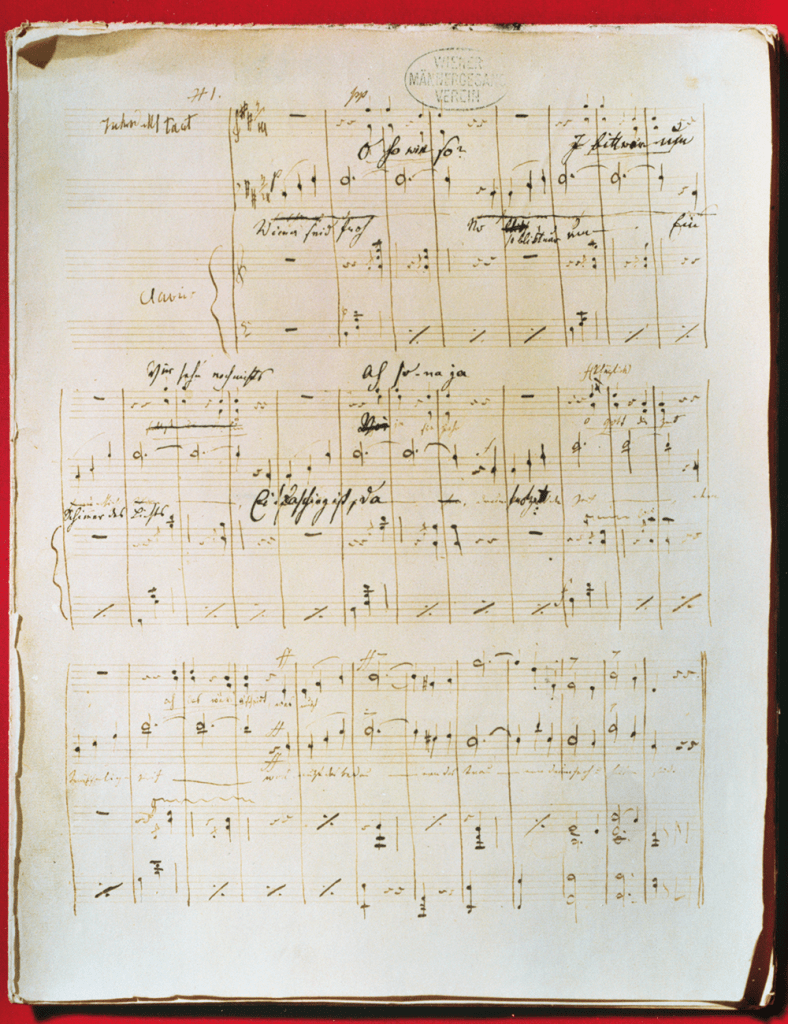
If that’s the case, they’re swimming against the tide of history and the judgment of genius. The deepest divide in late 19th- century European music – a culture war of generation-defining bitterness – was between the devotees of Wagner and Brahms. Yet both composers revered Strauss. For Wagner, Strauss was ‘the most musical man in Europe’. He hired a private orchestra so that he could conduct Strauss waltzes as a birthday treat, and licensed the Strauss orchestra to première excerpts from Tristan und Isolde in Vienna at a time when the city’s ultra-conservative musical establishment refused all contact with Wagner’s ‘music of the future’.
Both Wagner and Brahms revered Strauss. For Wagner, he was ‘the most musical man in Europe’
Brahms, meanwhile, was practically a fanboy, comparing Strauss to Mozart. When Strauss’s stepdaughter asked him for an autograph, Brahms scribbled the opening of The Blue Danube and wrote ‘Unfortunately not by Johannes Brahms’. For several generations afterwards, to be a progressive force in European music was to admire Johann Strauss. Gustav Mahler put Die Fledermaus on the stage of the Vienna Court Opera, and there’s hardly a Mahler symphony that doesn’t, at some point, swing into waltz time, or pause to squeeze the sadness and sweetness of life out of the succulent close harmonies – the yearning, Italianate thirds and sixths – that were Strauss’s hallmark. Mahler’s disciples, the arch-modernists Schoenberg, Berg and Webern, made exquisite pared-down arrangements of the Emperor Waltz, the Treasure Waltz and Wine, Women and Song.
It wasn’t just a German thing, either. In Paris, Ravel’s La Valse portrayed the 19th century dancing to its doom, but Ravel had only love for the composer he called ‘the great Strauss, not Richard, the other one – Johann’. A distinction needed to be made. The Bavarian Richard Strauss was no relation to Johann but in 1911 he’d woven a garland of waltzes into the score of Der Rosenkavalier. The opera was set in the 18th century, but that didn’t matter. Like Stanley Kubrick (five decades later, in 2001: A Space Odyssey), Richard perceived that Johann’s music embodied an entire civilisation.
We live in an aesthetic climate that favours the arduous over the graceful and privileges the grim over the joyous
I could say more: of the eminent conductors (from Henry Wood to Christian Thielemann) who’ve adored Strauss; of his legacy in popular music, from the Gershwins’ admiring tribute ‘By Strauss’ (‘It laughs, it sings! The world is in rhyme/ Swinging in three-quarter time’) to the way the long, poetic introductions and codas of Strauss’s greatest waltzes anticipate contemporary DJ sets – building and shaping a collective mood, as well as providing a beat for dancing. Most startling of all is the knowledge that, having outlawed the works of Mendelssohn and Mahler, Goebbels suppressed evidence of Strauss’s Jewish ancestry. Cancelling Johann Strauss was a step too far even for the Third Reich.
Still, here we are, in a Strauss-deprived classical music world. Why? Perhaps the televising of the Vienna Philharmonic’s annual New Year’s Day concert has normalised the idea that Strauss is a purely seasonal treat. Most British orchestras programme a solitary Viennese evening in early January – typically under-rehearsed and delegated to a novice conductor, though artists who shortchange this music pass sentence on themselves. As with Mozart or Haydn, the superficial simplicity of Strauss’s inspiration is a mirror that reveals a conductor’s soul. Furtwängler’s Emperor Waltz has a monumental inner logic; Karajan’s Blue Danube shimmers with sensuous richness. Carlos Kleiber made the Thousand and One Nights waltz sound like a long, warm smile.
And then there’s our old friend snobbery. Rieu may be a factor there; likewise the high-kitsch framing of the annual New Year broadcast from Vienna. Euro-camp dance routines and crowds of Belgian retirees are just not cool. The tastemakers of the classical world say they want diverse audiences – but not that kind of diversity, and classical music social media foams with disdain on the morning of New Year’s Day. It’s embarrassing to witness. True, any creator as prolific as Strauss will have off days and arid patches (even Bach was no exception). But any truly musical listener should be able to discern the fundamental artistic quality of Strauss’s finest work. Brahms heard it; Wagner heard it. It shouldn’t be this hard.
We live in an aesthetic climate that favours the arduous over the graceful, and privileges the grim over the joyous (though no one with ears to hear can miss the ever-present melancholy that offsets Strauss’s sweetness). In the meantime, it’s hard not to feel that we’re missing out on something life-enhancing – and god knows, we could use it. Strauss can (and does) flourish even without elite orchestras and big-name maestros, but the pleasure that comes from hearing genius exploring its own lighter side shouldn’t be confined to the first of January. Until the 1980s, Viennese nights used to be a regular (and best-selling) feature of the Proms, and there is a vast untapped repertoire to explore.
Imagine an inventively programmed evening of Strauss rarities and favourites performed by, say, Ivan Fischer and the Budapest Festival Orchestra (who played an exquisite sequence of Strauss waltzes in the 2014 Proms), or John Wilson and the Sinfonia of London (who delivered an exhilarating Fledermaus overture as recently as 2021). Preconceptions and prejudices would evaporate like mist on the Prater. Hope springs eternal. There’s another Strauss anniversary in 2029: a second chance to celebrate some of the most perfect popular music ever created. And to join Brahms, Wagner, Mahler, Schoenberg, Webern, Ravel, Gershwin, Richard Strauss, Furtwängler, Karajan, Kleiber and (yes) André Rieu – plus millions of music-lovers across continents and centuries – in grateful homage to the Waltz King.
Beguiling grot, TfL surrealism and Insta-art: contemporary art roundup
Last month, I got the train down to Margate to interview the Egyptian-Armenian artist Anna Boghiguian (b. 1946), whose exhibition The Sunken Boat: A glimpse into past histories was about to open at the Turner Contemporary. Long story short, the conversation did not go well: Anna reacted to my questions with some irritation, swatting them away like low-flying bluebottles. I got flustered, she got bored, and eventually so did I. We wrapped things up around the 20-minute mark and I ran away to stare into the abyss.
It was a shame, because the show was, for the most part, really good. A political scientist by training, Boghiguian makes installation art that examines how the complex historical, social and political forces that shaped the modern world came into being, often taking an unorthodox point of reference as a means to work her way into the twisty narratives she spins out across her gallery-filling set pieces.
There are three such here, the best of which, ‘The Salt Traders’ (2015), is the first thing we see. For this, Boghiguian decided to look at the history of commerce and empire through the prism of salt, a commodity once so valuable that it gave us the word ‘salary’. The aesthetic is resolutely DIY and grungy as hell. The floor is covered with bags’ worth of sea salt, and a good third of the space filled with a wooden structure posing as a Roman shipwreck, its sail bearing the image of a map displaying historical trade routes. There are grease-stained swathes of fabric, grimy sheets of paper onto which Boghiguian has scrawled notes on medieval economics, colonialism and god knows what else; there are also 30 worn-out beehives. Everything looks as though it’s spent a decade at the bottom of a used ashtray, and that grottiness works on a visceral level. I’m still a bit annoyed, but my verdict is thus: she’s 79, and she can probably do what she wants.
Back in London, I heard Ugo Rondinone (b. 1964) had an exhibition at Sadie Coles HQ in Soho. The Swiss-born artist is a blue-chip favourite and a prime peddler of photo-friendly spectacle. He works across a bewildering range of media, sometimes falling back on a handful of visual signatures – cutesy sculptures that look like the Easter Island heads as imagined by Pixar; monumental Day-Glo land art – sometimes not. The only thing that really unites his diverse body of work is a slightly winsome quality, and the fact that every time I see his art, I come away feeling that something’s missing: call it substance, call it ballast – hell, call it ‘soul’ if you like; I don’t detect it.
Everything looks as though it’s spent a decade at the bottom of a used ashtray, and that grottiness works
This show is probably Rondinone’s most Instagram-friendly yet: the entire gallery is decked out in violently bright rainbow colours from floor to ceiling, the space interspersed with life-sized polychrome sculptures of ballet dancers in repose or mid-move. It is, in the literal sense, spectacular: the assault on the eyes will leave them adjusting to the real world long, long after you’ve left, and when I visited, the place was full of tourists taking selfies from every conceivable angle.
Still, it left me cold. If the aspiration here is to create a kind of visual poetry, the effect is rather like watching an artist perform an after-dinner magic trick to the thunderous applause of a chalet full of oligarchs. Or worse still: like ‘accessible’ art as imagined by some terrifying, AI-generated curator of the future.
This got me down, but not half as much as what I had in store: a 25-hour visit to Paris in order to end my marriage. I had planned to get blind drunk afterwards but was instead directed to visit Mark Leckey’s exhibition at Lafayette Anticipations. If you’re not familiar: Leckey (b. 1964) is a ferociously intelligent autodidact who mines the margins of pop culture without slipping into Banksy-like inanity or pseudo-academic overthinking. Instead, his films and installations blend everything down into a murky purée of sound, vision and atmosphere. That last word is key here. For starters, the whole, massive space is lit like a motorway underpass at 3 a.m. on a December morning, as muffled rave basslines and booming, slowed-down voices seemingly emanate from the bowels of the building.
For a moment it feels like the worst psychedelic drug experience in history, but your senses adjust and you’re suddenly on a planet where Transport for London’s ubiquitous road-safety posters carry strange symbolist poetry and slogans; where a map of the artist’s local park comes labelled with visionary symbols; where, in one film, shiny pink CGI-generated toys invade a hallucinatory version of Margate. Leckey is an artist so English that it’s a wonder the famously Anglo-averse Paris art world ever let him in. For my sake, thank god they did.
Brilliant rewrite of Shakey: Hamlet, at Buxton Opera House, reviewed
‘There is good music, bad music, and music by Ambroise Thomas,’ said Emmanuel Chabrier, but then, Chabrier said a lot of things. I adore Chabrier – who couldn’t love the man who wrote España and turned Tristan und Isolde into a jaunty quadrille? – but it doesn’t do to take him too literally. Thomas ended his career as a notoriously crusty director of the Paris Conservatoire, and when the French musical establishment puts you on a pedestal younger composers invariably start hurling the merde. Scraps of Thomas’s music survive in all sorts of odd corners (a snippet from his opera Mignon crops up in The Life and Death of Colonel Blimp). I’ve always found it rather appealing.
The Buxton International Festival’s production of Thomas’s 1868 tragedy Hamlet confirms that it is, indeed, extremely listenable. The libretto is based on Alexandre Dumas’s version of Shakespeare, and it’s calculated to turn Bard-worshippers puce. Rosencrantz and Guildenstern are cut and Polonius and Horatio are barely walk-on parts. Brilliantly, Thomas and his librettists Carré and Barbier also rewrite the ending so the Ghost gatecrashes Ophelia’s funeral like the Commendatore in Don Giovanni, while Hamlet survives to be acclaimed King. And if you think that’s sacrilege, you can’t have been to Stratford-upon-Avon recently.
In any case, Thomas’s score, which can feel a little polite on disc (think Gounod and soda), is actually very effective in the theatre. With Adrian Kelly conducting the orchestra of Opera North it’s trim, it’s passionate, and you still get all of old Shakey’s juiciest bits: the gravediggers, the play-within-the-play and a stonking coloratura mad scene for Ophelia – sorry, Ophélie (Yewon Han). At one point in the Buxton production Hamlet – sorry, ’Amlet (Gregory Feldmann) – even addresses himself to a skull, and the fact that the director, Jack Furness, manages this without self-consciousness speaks volumes. Furness engages with Thomas’s opera on its own terms, and plays it for what it is.
So it’s updated – suits and evening wear – but you barely notice, with the chorus gliding around like predatory caterers. Sami Fendall’s set designs are minimalist (not much more than a flight of steps) but they’re so skilfully lit (by Jake Wiltshire) that they evoke the whole noir-ish, shifting world of Elsinore: shadows, corridors and blasted wastes. The appearance of the Ghost (Per Bach Nissen), meanwhile, is a real coup de théâtre. The atmosphere is as compelling as it is oppressive, and with Hamlet as a sort of tormented hipster amid the upscale couture of the court, Furness lands hit after palpable dramatic hit.
Certainly, Feldmann and Han seemed to be giving their all, in a pair of enormously extended and taxing leading roles. Feldmann conveys Hamlet’s seesawing naivety and angst as vividly as anything you’ll see at the RSC, but he’s got vocal stamina too, sounding nearly as fresh at the start of the final scene as he had three hours previously. The same goes for Han’s touching Ophélie. Her voice had a shaded, poignant undertow that added multiple layers to her huge, virtuosic final aria – which was received in icy silence by the Buxton audience. They’re hard to please in the High Peak.
Alastair Miles was a proud, oaky-sounding Claudius and Allison Cook, as Gertrude, found powerful reserves of nuance and pathos. Like everything about this production, they delivered more than the sum of their parts.
Feldmann conveys Hamlet’s seesawing naivety and angst as vividly as anything you’ll see at the RSC
The singing and the playing are also the thing in Opera Holland Park’s new staging of Donizetti’s Lucia di Lammermoor. Cecilia Stinton’s meat-and-two-veg production doesn’t spring any particular surprises, but if you like BBC period dramas you’ll enjoy the tailcoats and stovepipe hats (Stinton has updated the action to the era of Walter Scott). Three graves dominate the front of the stage, to remind you that this is not – despite the evidence of the costumes – a revival of Oliver!.
OHP does have one killer card to play. This company has always excelled at casting, and pretty much everyone here is the genuine bel canto article, pouring out those long aching melodies at fever heat. In fact for large parts of the evening Morgan Pearse, as the heartless Enrico, sounds even sexier and more lustrous than Jose de Eca (as a Heathcliff-like Edgardo) – though when Eca hits his full-throated stride, it’s more than worth the wait.
The big news, though, is Jennifer France’s role debut as Lucia. It’s dangerous for a critic to have too many preconceptions, so take it as you will when I say that the hushed intensity of her singing in the quiet passages and her absolute control in the mad scene exceeded my (high) expectations. The rest of the cast (and indeed the City of London Sinfonia under Michael Papadopoulos) were audibly inspired by France’s singing, and her final scenes – bloodied, bedraggled and caked in mud – are the kind of theatre that stays with you.
Magnificent: Stevie Wonder at BST Hyde Park reviewed
The highs of Stevie Wonder’s Hyde Park show were magnificently high. The vast band were fully clicked into that syncopated, swampy funk, horns stabbing through the synths, the backing singers adding gospel fervour. And Wonder – now 75 – sang like it was still the 1970s, his voice raspy one minute, angelic the next. Anyone who heard that phenomenal group play ‘Living for the City’ or ‘Superstition’ and didn’t feel ‘ants in my pants and I need to dance’, as James Brown once put it, should resign from life: they do not deserve such joy.
That said, there were oddities. We were blessed with visits from four of Wonder’s nine children, two of whom were given whole songs to sing while the great man had a breather, as were three of the backing singers. Then there was the opening of the show: ten minutes of Wonder addressing the crowd, who maintained a respectful silence while being told over and over – in different formulations and intermittent lapses into faux cockney – that there was too much anger in the world and we all needed to love each other. He couldn’t decided whether he wanted to be Dick Van Dyke or Martin Luther King.
Needless to say, scientists have as yet ascertained no link between pop stars telling concert-goers that we need to love each other more and increased social cohesion. Actually, the latest studies suggest that the longer such lecturing goes on, the more irritation among those being lectured rises. It’s a phenomenon some call the ‘Imagine Syndrome’, which Wonder exemplified by then playing ‘Imagine’, so we could hear its timeless message of triteness through fresh ears.
But within four songs we were at ‘Master Blaster’, then ‘Higher Ground’ and one was willing to forgive everything – all the gloopy ballads, all the showbizzery, even the white jacket with diamanté portraits of John Lennon and Marvin Gaye. Even singing ‘Happy Birthday’ to his youngest daughter was fabulous because it was Stevie Wonder’s ‘Happy Birthday’, not the song that launched a thousand cakes.
There comes a point where you have to see these people before it’s too late. I’m glad I got to see Stevie Wonder while he was still recognisably good enough to be Stevie Wonder because some legends are at the point where it’s their catalogues rather than their voices that bring 65,000 people out.
The day after Wonder, Hyde Park was meant to host the final show by Jeff Lynne’s ELO, but a ‘systemic infection’ had forced him to cancel. I had seen Lynne a few times, and it was always tremendous fun. The week before, I had been at Villa Park, watching the final performance by Black Sabbath and Ozzy Osbourne, which was extraordinary and moving.
I’m glad I got to see Stevie Wonder while he was still recognisably good enough to be Stevie Wonder
What struck me was how under-celebrated the Birmingham music scene of the late 1960s has been. You can’t move for the mythologising of Manchester and Liverpool pop, and though the city bigs up its links to metal, you rarely hear about the products of Brumbeat. But this was the generation that gave us Steve Winwood (and the Spencer Davis Group and Traffic), Lynne, Ozzy and Sabbath, Roy Wood (who was the pre-eminent genius of the lot at the time), the Moody Blues and half of Led Zeppelin. That’s one of rock’s greatest cities, not the butt of a joke.
Finally to Heavenly, the most overqualified group in pop history (seriously, Google them). They are the unlikely heroes to a small but dedicated scene, known as indie-pop or twee-pop, in which emotional directness trumps technical virtuosity: Kurt Cobain loved them for being punk rock and entirely without machismo. Theirs is a political stance based on not compromising principles (the show was part of a DIY weekender they had organised themselves) and being avowedly feminist (‘Hearts and Crosses’ sets a story of rape against queasy fairground organ).
That makes it sound strident and hectoring, but Heavenly are not that. The songs would not have troubled Steely Dan’s session guys, but they are full of joy, vim, life. Best of all, there were plenty of twentysomethings in the crowd, filming and dancing and singing along. No need to be Stevie Wonder to be an inspiration to the generations to come; simply capture something truthful.
The power of BBC’s The Narrow Road to the Deep North
It’s been a good week for fans of TV dramas that are set partly in Syria, feature poetry-lovers confronting extreme violence, like to keep their viewers in the dark (sometimes literally) and have main characters with Australian accents (sometimes accidentally). But there are also significant differences between the two examples on display – with The Narrow Road to the Deep North the much more sombre and The Veil the considerably more bonkers.
Adapted from Richard Flanagan’s Booker-winner, The Narrow Road began in Syria in 1941. Through what would prove the programme’s characteristic murk, a group of Australian soldiers led by one Dorrigo Evans could just about be seen rescuing a young boy and joshing about the respective size of their penises. Within minutes, however, they were interrupted mid-josh by an explosion that killed one of their comrades and the rescued boy.
In the first of the constant time-shifts, it was then 1942, with Dorrigo’s wife Ella anxiously awaiting news of him following the Australian troops’ surrender to the Japanese. Immediately afterwards came 1989, where the older Dorrigo (Ciaran Hinds) was being interviewed about his wartime experiences by a smug young journalist to whom he explained that people like her think war is only one thing (i.e. wrong) whereas in fact it’s many things at once.
And with that, we headed to 1940 where the younger Dorrigo (Jacob Elordi) proposed to Ella, before starting an affair with his uncle’s wife, Amy: an affair kindled by their shared love of Sappho’s poem ‘You Burn Me’ (full text: ‘You burn me’). A couple of minutes – and three years – later he was among the Australian prisoners arriving in the Thai jungle to build a railway…
Although the TV adaptation makes a few of the usual inexplicable plot-tweaks, it’s essentially faithful to the book – not least in all those time-shifts and the main reason for them. This is that, despite the unbearably vivid scenes of suffering and Japanese cruelty in the jungle, The Narrow Road isn’t primarily a war story, but a piercing character study filtered through the memory of old Dorrigo and designed to show how he, too, has ended up many different things at once. He is, for instance, simultaneously guilt-ridden and rather chuffed about his long-ago affair with Amy, grateful to and resentful of Ella, determined not to be haunted by the war and haunted by the war.
And it’s that last contradiction in particular that lends the show its power, as Dorrigo finds himself unable to do anything so impossibly glib as ‘move on’. However much you might wish it, this tough but gripping drama bleakly reminds us, some stuff just won’t go away.
In recent years, there’s been a lot of talk about whether there’ll ever be a female James Bond – but in The Veil we sort of get one. Sunday’s opening episode even had a pre-credit sequence in which our heroine (Elisabeth Moss) completed her previous mission in an immaculate suit and with a few quips to the baddie, who also became the first of many characters to fix her with a wondering stare and ask, ‘Who are you?’
At this stage, the viewer’s answer to that question was a firm ‘search me’ – and so it remained as she adopted the name Imogen and headed to a refugee camp in Syria. There, the man from Unicef was soon asking the same thing, especially after she’d overcome several assailants in a fight, having put down her omnipresent cigarette. (Ian Fleming readers might remember the striking sentence in Casino Royale: ‘Bond lit his seventieth cigarette of the day.’) In another Bondian touch, it also helps that everybody who shoots at her always misses.
Very gradually, it became apparent that Imogen is an MI6 agent sent to the camp to find a suspected Isis commander who, this being television, is a woman too. Once she had, though, she naturally went rogue. Charged with driving Adilah to a detention centre, Imogen instead headed to Istanbul while the two women spent their road trip companionably discussing both terrorism and English poetry.
After the downtrodden misery of The Handmaid’s Tale, you can see why Moss might have wanted to go full-on alpha female. Less understandable is why she didn’t spend more on a voice coach – because her English accent is all over the place: sometimes OK; sometimes accurate syllable by syllable yet still somehow sounding like no English person ever has; sometimes flat-out Aussie.
The Veil is written by Steven Knight who can be great (Peaky Blinders) and can be dreadful (Great Expectations), but here is mostly somewhat annoying. The dialogue is often corny, the kickass heroine levels feel almost parodic and nothing is remotely plausible. Nonetheless – and this is the properly annoying bit – there’s still enough intrigue and mad fun to keep us watching.
Irritatingly, Wet Leg’s new album is pretty good
Grade: B+
There’s quite a lot to dislike about Wet Leg, even aside from their stupid name. The entirety of their lyrical canon, for starters – vapid and petulant millennial inanities, 50 per cent performative braggadocio, 50 per cent adolescent carping. Or there’s the commodification of their sexualities: they’ve traded up to being bi, just before the market peaks.
Or there’s Rhian Teasdale’s frequent, bone-idle recourse to an affected, half-spoken monotone in lieu of, y’know, a tune – that shtick had begun to pall even before the end of their debut single, ‘Chaise Longue’. Or the unremitting chug chug chug of the guitars and the fact that Teasdale sings in the manner of a 16-year-old when she’s actually 32. All this and more.
Trouble is, for all that, this is a good pop album. As conventional as it gets within a power-pop framework, from the typically childish kiss-off of ‘Mangetout’ to the rather affecting paean to Davina McCall called, you will be surprised to hear, ‘Davina McCall’. ‘Catch These Fists’ is graced with crunchy power chords to alleviate the eternal chug, while ‘Don’t Speak’ begins like Paul Westerberg but develops rather cutely into being a rather beguiling piece of what – if these people were older – would be called Heartland Rock.
They even, in some of the more melodic moments, bring to mind the Cardigans (who were superior and much archer talents), although more often they recall a kind of slightly more savvy Shampoo, even if they have yet to come up with a song as irresistible as ‘Delicious’.
Still, against my better judgment, I rather enjoyed it. And isn’t it lovely to see the Isle of Wight back on the rock map?
I watched it between my fingers: Bring Her Back reviewed
The Australian twins Danny and Michael Philippou started off as YouTubers known for their comically violent shorts – Ronald McDonald Chicken Store Massacre (2014) has accrued 67 million views. They then raised the money to make their first feature. This was the quietly disquieting Talk To Me (2022), which cost $4.5 million and made $92 million. Bring Her Back (they like three-word imperatives, these lads) is their second and it may not be as successful.
It stars Sally Hawkins and this isn’t, alas, horror at its most fun, inventive and camp. This is horror horror: gory, grisly and one that properly goes for it at the end – which, if you are not a horror nut, can’t come soon enough. Even the horror nuts who loved it have been saying things like: ‘It’s the best film I will never watch again.’ I think I may regret seeing it the once.
It opens with grainy home-video footage of some occult ritual. A newborn baby lies within a chalk circle, while a dude with a weirdly distended stomach wanders around and a young woman is strung up. What the hell is going on here? All will be explained is the hope. Next we meet Andy (Billy Barratt) and his younger stepsister Piper (Sora Wong), who is legally blind. Their father has just died and as Andy is three months off his 18th birthday he can’t yet assume guardianship of Piper, whom he adores. They are therefore dispatched to live with a foster mother, Laura, played by Hawkins. (One minute she’s Paddington’s lovely mum and the next she’s forcing a bereaved, traumatised child to kiss a corpse. It’s a rum old business, acting.)
Laura has another foster child, a boy, Oliver (Jonah Wren Phillips), who is electively mute and whose eyes sometimes go opaque – and I honestly can’t bear to go into what he likes to eat. He’s not a well lad, and let’s leave it there. One other thing: he will need dental attention come the end, and now we’ll definitely leave it there. Hawkins’s accent goes to Australia via the East End but she’s so deliciously and escalatingly menacing let’s not hold it against her.
Laura has another foster child, a boy – and I can’t bear to go into what he likes to eat. He’s not a well lad
Laura is warm, at first, in her hippy-dippy way, but the fact that she’s taxidermised her dead dog is a bit of a clue. And why exactly is there a chalk circle on her drive? She had a daughter the same age as Piper who drowned. She favours Piper and increasingly gaslights Andy while Oliver… we left it there, remember? The visual shocks come thick and fast. There are sights I part-saw through my hands or through the gauze of the T-shirt I pulled up over my head that I’ll never part-unsee.
The mounting anguish and tension is well handled as Laura’s plan becomes clearish. It’s obvious whom she longs to bring back, but is this the best way, Laura? Really? The chalk circles recur, as does that grainy footage, but no explanation is ever forthcoming. Who is that dude with the belly? The girl being strung up? I don’t want characters to sit at a table and launch into exposition as that would be trying, but at the same time I needed more. If I am going to be put through the mill, there had better be a good reason for it. I was waiting for a clever twist but it never came
The film is plainly about grief, and where it can send us. But it’s ultimately pretty simplistic. Still, the Philippou brothers know how to scare the bejesus out of you and the performances are all excellent, particularly Hawkins and Wren Phillips – from what I saw.
The podcast of the summer
The cover painting for The Specialist, a new podcast from Sotheby’s, looks like a scene from Mad Men. The people are so good-looking and so well dressed that you barely notice how odd they are. One chap’s walking along with a porcelain bowl as if it were a macchiato; a lady holds a plant in her palms in the manner of receiving communion; someone else walks the street with a gavel. The admen have done their job: intrigued, I press play.
It becomes apparent that the people who work at Sotheby’s have no interest in persuading anyone that they are normal. I listen to Ottilie, Julian and Gregory, and to mouths that volunteer, with ease, such phrases as ‘the visceral power is undimmed by the passage of time’. Voices grow more animated at the discovery of pentimenti, particulars of provenance and the prospect of record-breaking sales. Like estate agents for HNWIs, only clever, the specialists make no effort to pretend their world is something it isn’t. I applaud their honesty.
There are two main types of episode. The first, released as a batch last month, is longer and more conversational. Simon Schama and curator Eleanor Nairne discuss portraiture and actress Julianne Moore gives a collector’s view on 20th-century design. Most of these episodes were taken from recordings of live events. A week after this delivery came the start of what feels like another series entirely. Each episode averages 11 minutes and features one Sotheby’s expert speaking directly to us about the sale of a single artwork. I have worked my way through most of the short ones and duly crown The Specialist my podcast of the summer.
It’s remarkable what you can learn in 11 minutes. Simon Shaw speaks wonderfully – and at auction-speed – of the record set by the 2012 sale of Munch’s ‘The Scream’. There were only ever four versions of the work, two of which have been stolen, and only one privately held. The production of prints kick-started the fascination with the image, which is apparently alone among paintings for inspiring not one emoji, but two (you may not yet have discovered the screaming cat).
The £16.25 million realised by the sale of a Vermeer were a bonus to the achievement of the painting’s attribution. I had no idea there were just 36 recognised Vermeer paintings. The prospect of adding to the catalogue was complicated by the fact that the artist has so often been forged. Even a painting sold to Göring on behalf of Hitler was revealed as a fake. Listen to the episode on Kandinsky for a moving story of art restitution. A painting by the Bauhaus master had hung in the dining room of a family that had tried to flee the Nazis. Its rediscovery, many years after its sale under duress, was quite miraculous.
Should all this put you in the mood for more art, ensure you listen to Your Places or Mine first. Clive Aslet, the architectural writer and visiting Cambridge professor, and John Goodall, architectural editor for Country Life, have been running their fascinating weekly podcast since the early summer, delving into many a museum and historic house.
The people who work at Sotheby’s have no interest in persuading anyone that they are normal
They recently assessed the changes to the National Gallery, which, incidentally, has an enjoyable new podcast of its own, Stories in Colour. Aslet and Goodall admire William Wilkins’s original gallery building (apart from the ‘clunky’ dome) but save their enthusiasm for the latest additions by Selldorf Architects. I confess, I hadn’t noticed many of the features they praise, including the removal or slimming down of some of the ‘Teletubby’ columns in the entrance to the Sainsbury Wing, and an area of rustication that Goodall describes, in his jovial tones, as ‘really, really satisfying’.
As with The Specialist, this podcast is most likely to appeal to listeners with ears attuned to long vowels and guffaws, and for whom ‘rustication’ is familiar terminology. Which is to say the readers of this magazine. Aslet and Goodall will digress in order to explain (‘I suppose we’d better say something about Wilkins…’) but rightly feel no compulsion to dumb-down. They often seem to forget that the tape is rolling, so at ease are they in each other’s company.
‘You’ve got to pity these people,’ remarks Aslet of 19th-century aristocrats who sought American wives to replenish their coffers and restock their art collections. ‘They hadn’t been brought up to do anything except serve in the army… many had been to Eton so could talk very well about things, but…’ Cue an endearing guffaw from Goodall, who sounds forever to be on the verge of hysterics. Art: a serious business, except when it’s not.
The National have bungled their Rishi Sunak satire
The Estate begins with a typical NHS story. An elderly Sikh arrives in A&E after a six-hour wait for an ambulance and he’s asked to collect his own vomit in an NHS bucket. The doctors tell him he’s fine and sends him home where he promptly dies. His only son, Angad, inherits all his property, which irritates his two daughters, who receive nothing. The personality of the dead Sikh is left deliberately obscure.
Newspapers in Britain and India publish glowing accounts of his achievements but his youngest daughter calls him ‘a slum landlord’ who owed his fortune to ‘a lifetime of tax-evasion’. The bad-tempered tussle over his will takes place in Angad’s west London mansion, owned by his mega-rich wife who supports the decision to withhold cash from the greedy sisters. Both women are already loaded and they want a chunk of Angad’s cash to pay for Botox injections and private school fees. Gosh, it’s hard work watching this pack of spoilt brats wrangling about money they don’t need and didn’t earn.
All the characters were privately educated and the script is crammed with references to Oxford colleges and obscure public-school rituals. The dialogue of the sisters includes preachy slogans about the respect owed to women these days, especially in the Punjab, where female embryos are sometimes aborted by their stingy parents who want to avoid handing out money in dowry arrangements. This issue would make a drama in itself but here it features as a footnote in a weird feminist tract about the woes of the super-wealthy. Bring a paper and pen. There may be questions afterwards.
Alongside the row over money, a second drama unfolds. Angad is a middle-ranking MP who finds himself tipped as a future leader of his party. His sisters decide to destroy his political career and to ruin the family name by telling journalists about his refusal to hand over the loot they crave. Any competent MP could turn this crisis to his advantage but Angad hasn’t the brains to see a route to victory. Adeel Akhtar plays him as a whiny, self-pitying deadbeat who wins the favour of the party whips because he’s easy to push around.
The Westminster half of the story feels like a second-hand sex comedy crammed with details about improper conduct. Everyone in SW1 has a kink, it seems. Grandees seduce teenage girls. Victims of sexual humiliation make tearful confessions. Several blackmail plots emerge. There are far too many threads here, poorly orchestrated. One scandal is plenty. A handful is tiresome. And the practical details of Angad’s leadership bid feel wrong.
He entrusts his campaign to an untested intern named Petra, who doesn’t have a plan, a website, a timetable, a manifesto, a slogan, a rebuttal team or even a list of MPs likely to support her candidate. She landed the job because she sounds posh and says, ‘mea maxima culpa’ when she means ‘my fault’. Does anyone talk like that, except in comedies about Westminster toffs?
The two storylines come together at the party conference where Angad is pounced on by his greedy sisters. After wrestling him to the floor, they grab his ear lobes. (Ear-pulling is a customary punishment in this brutal family.) Their attack is amusing enough but when Angad retaliates and threatens to beat them up, it turns ugly. Angad is stockily built and his willingness to assault his sisters reveals his true nature as a vicious bully.
The character is evidently modelled on Rishi Sunak but he lacks Rishi’s charm, intelligence and innate sense of refinement. Angad is a graceless halfwit who couldn’t talk his way out of a parking fine. The show may appeal to cynical playgoers whose expectations of political theatre are low. Most of the script feels like a battle-cry against the sins of sexist MPs and stingy patriarchs who refuse to transfer money to oppressed Sikh millionairesses who deserve extra luxuries.
The White Chip is a confessional play about a theatre-maker’s battle with alcohol. Sean Daniels is a successful American director who quit booze after a car crash that nearly killed him. Emerging from the wreckage, he phoned his estranged mother and learned that she too was struggling with alcoholism. An amazing coincidence. Mother and son bonded over a shared ambition to sober up.
That’s how the story is told in the programme notes but on stage the script unfolds as a series of biographical scenes. The narrator is ‘Steven’ (not Sean) and he recounts his life in strict chronological order, starting with his boyhood in a conservative religious family and moving on to his early encounters with the magic of theatre, and so on. Ed Coleman (as Steven) is highly watchable and the show has plenty of warmth and comic charm. But it’s not as intensely dramatic as the programme notes suggest.
The secrets of the Palm House at Kew
The news that the Palm House at the Royal Botanic Gardens, Kew, will begin a £60 million, five-year renovation in 2027 brought back to me a slew of memories from 1978, when I worked there for several months. The extraordinary fame and innovative nature of this unique Victorian building, with its curvilinear, cruciform shape, designed by Decimus Burton and constructed by Richard Turner, seemed to confer a kind of grandeur and significance on an otherwise pretty lowly and scruffy horticultural student.
The special treat was the periodic ‘weekend duty’ when, after turning the enormous iron key in the door at eight o’clock on a weekend morning, for two blissful hours I had the entire building to myself, before the visitors began to wander in. Alone, that is, apart from the sparrows chattering high up in the palms and the menacing cockroaches that lived underneath the floor and came up through the vents to get at the bananas before we could.
The temperature in the Palm House is kept at 21°C all year round, and my first task was to increase humidity by damping down the floors and spraying the leaves of tall palms, creating my own personal tropical rainstorm with a heavy-duty hosepipe. I wore the black leather clogs, with metal rails nailed to the wooden soles, that I had been issued on my first day at Kew, since they were much more comfortable and less slippery than wellington boots. The rest of the day was spent sweeping paths, ‘picking over’ dead leaves and watering pots on the staging – dull work enlivened by the presence of 1,000 plant species, from cocoa and rubber to jade vine and Madagascar periwinkle. The unpronounceable Latin name on the label protected the coca plants from theft.
My only anxiety was that my inexpert watering might see off the oldest plant at Kew, an enormous cycad, Encephalartos altensteinii, from the Eastern Cape that had been collected in 1775 and lived in a crate in the Palm House since its opening. Every time I visit the Palm House, I give its leaning trunk an affectionate pat.
One of the aims of the renovation is to change the heating system from gas boilers to air and water source pumps, in a drive to achieve carbon neutrality. That’s a far cry from the original 12 coal-fired boilers, situated deep below the house, the smoke from which emerged from the Italian Romanesque campanile near the Victoria Gate.
During the second world war, Kew’s position close to the River Thames – a landmark used by Luftwaffe bombers to navigate on moonlit nights – resulted, on more than one occasion, in high explosive bombs falling on the gardens. One night, many of the panes in the Palm House were blown out, and the nearby Waterlily House (which is also to be renovated) was badly damaged. It must have been the devil’s own job in wartime to source replacement curved panes of glass. Eighty years later, the 16,500 panes will be made of ‘high-performance sealed glazing’ to help confound the contemporary enemy, global warming. Things felt rather simpler in 1978.
A new water regime must still reward private investors
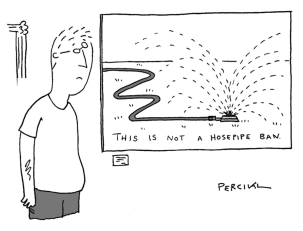
The weekend’s torrential Yorkshire rain amid a hosepipe ban offered a handy metaphor for the chaos that has befallen the privatised UK water industry. Sir Jon Cunliffe’s Independent Water Commission report – aiming for a ‘fundamental reset’ to restore public confidence, clean our waterways and ensure future supply – is welcome for the clarity of its central conclusion: that unfit-for-purpose Ofwat and a jumble of other regulators should be replaced by a single body with more teeth and comprehensive oversight of the sector.
So far, so good. Cunliffe – a veteran of the Treasury, the Bank of England and Brussels – can also be applauded for his bureaucratic cunning in tabling no fewer than 88 recommendations, in the hope that perhaps eight of them might actually be adopted. But one reform he was forbidden from contemplating was the renationalisation of water companies, whatever the alleged extent of their failures and dividend-gouging under foreign and private-equity ownership.
And that means future investment in leak-free pipes and reservoirs, supply to new housing and elimination of sewage slicks remains dependent on the willingness of private investors to put capital at risk – a mechanism widely misunderstood by consumers and campaigners who believe all shareholder rewards from water supply are somehow exploitative and wrong. Cunliffe’s report talks about creating a stable regime that reduces uncertainty and thereby attracts ‘low risk, low return’ long-term investors, rather than (though he doesn’t quite put it this way) the fast-buck financiers who gamed Ofwat so effectively in an era when successive governments were far less concerned with infrastructure improvement than the voter optics of lower water bills.
In the Commons, Environment Secretary Steve Reed gave grudging spin about ‘fair’ returns for shareholders who meet their obligations. I note his previous career in educational publishing and hope he has texts in praise of capitalism on his bookshelf, because having ruled out state ownership he must now embrace investors who will naturally be sceptical of Labour promises. At least Cunliffe has given him a blueprint.
Man of secrets
David Alliance, who has died aged 93, was a man of secrets. An Iranian immigrant trader who started buying up Lancashire cotton mills in the 1950s, he eventually controlled, in the Coats Viyella combine of the 1990s, most of what remained of the British textile industry. That he liked to hold his cards close to his chest made him a potent deal-maker but a difficult client for his ghostwriters, of whom for a year or so I was one – though my version of his memoirs remained unpublished, eventually to be overtaken by Ivan Fallon’s A Bazaar Life (2015).
‘You research it,’ Alliance would say with a hint of irritation when I tried to probe him about his takeover battles or his clandestine role in rescuing Falasha Jews from persecution in Ethiopia. So inscrutable was he that in the end I missed the core objective of my commission, which was a book saying that treacherous boardroom colleagues had thwarted his efforts to sustain Coats Viyella as a global competitor against cheap foreign rivals, before forcing his 1999 resignation.
I suspect neither a nine-digit fortune from his second business empire in mail-order, nor a Lib Dem peerage, nor his name on what is now the Alliance Manchester Business School, brought consolation to his rather lonely later life. He seemed to have few real friends and I was never one of them, but I salute him as a remarkable entrepreneur.
Sinking flagship
‘The knives are out for BP’s Norwegian chairman Helge Lund,’ I wrote in April. This followed the energy giant’s shareholder-driven U-turn, refocusing on fossil fuels and dumping the commitment to renewables for which Lund and his former chief executive Bernard Looney were largely responsible. Sure enough, Lund’s own plan to step down ‘most likely during 2026’ has been accelerated to this October. His successor, Albert Manifold, previously ran the Irish building materials group CRH whose product range, embracing concrete, aggregates and bitumen, demonstrates a relatively low level of ambition to approach net zero any time soon. Tellingly, its share price has more than doubled over the past three years while BP’s has stayed exactly where it was.
Underlying that difference is the fact that CRH also led the current fashion for seeking higher valuations elsewhere by shifting its primary listing to New York in 2023. As the activist BP shareholder Elliott Management shouts about a need for decisive leadership to counter chronic underperformance, watch whether this sinking flagship of the FTSE 100 follows CRH across the pond. In one dramatic move, I fear that would nullify most of Chancellor Rachel Reeves’s recent initiatives to inject new life into London’s capital market.
Storm warning
I set off for my summer sojourn in France with a nagging concern about relative values. The Financial Times reports that the global cryptocurrency market has reached $4 trillion (£3 trillion) and is likely to go higher as funds flood in following the passage of Donald Trump’s pro-crypto legislation. The market capitalisation of Nvidia, the Californian AI microchip giant, has also passed $4 trillion and here too pundits say there’s further to go. Both those markers easily surpass the combined market value of the FTSE 100 – the top one hundred London-listed companies – at £2.1 trillion, which itself reflects an all-time high for the index at 9000.
Yet economies flatline, inflation ticks up, government debt soars and geopolitics are in perpetual turmoil. Something surely has to give, maybe next month, maybe in the more traditional crash month of October. Ah well, fine French lunches should keep me sanguine – and, I hope, beguile you when I write about them.
Letters: Don’t blame Andrew Bailey
The Bank’s breakdown
Sir: Your cover story with its attack on Andrew Bailey (‘Broke Britain’, 19 July) tells only half of the grisly story. All the major central banks had a sort of collective nervous breakdown during the Covid crisis, but none of the others lost its mind quite like the Bank of England.
The banks printed money by buying in their country’s sovereign debt, at high prices. Most concentrated on short-dated stocks, where the potential capital loss from rising interest rates was smallest. The Bank bought in long-dated debt at prices which looked like madness to some of us at the time. These stocks are now being sold back into the market at a massive capital loss. One example: in May 2020 it bought gilts repayable in 2061 at a price of £101. It has recently been selling them back into the market at prices as low as £28.
Christopher Mahon of Columbia Threadneedle Investments has been shouting about this. By its own earlier calculations, the Bank estimated that total losses from this process would add up to a scarcely believable £115 billion. The sluggish fall in interest rates recently means that is almost certainly an underestimate. It amounts to incompetence and stupidity on a massive scale. No wonder the Bank is hoping nobody is listening.
Neil Collins
London SW10
Don’t blame Bailey
Sir: Michael Simmons is wrong to criticise Sajid Javid’s appointment of Andrew Bailey to the governorship of the Bank of England. After the tenure of the narcissistic and overtly political Mark Carney, a solid and boring functionary was what he thought the Bank needed in order for it to regain its place as an independent central bank. An event as huge and disruptive as Covid-19 – and the government’s reaction of promising enormous unfunded subsidies to all and sundry – could not be foreseen.
Global indebtedness following Covid was not created by the Bank of England. Bailey was under the influence of domestic politics on one hand and peer pressure from abroad on the other. True, he might not have been the best of choices, but to place so much of the blame on him and on the Old Lady is disingenuous and unhelpful.
Anthony D.M. Peters
Great Rollright, Oxon
The rest is slander
Sir: No one loves reading an outrageous claim in the pages of The Spectator more than I do, and so I commend you for employing Dominic Sandbrook to peddle an entire host of them (Historian’s notebook, 19 July). I don’t know which was more entertaining: his insistence that Britain should have stabbed our gallant Gallic ally in the back in 1914, or the braggadocio with which he boasted of being able to hold his own in an Irish pub. One calumny, however, cannot be allowed to pass: his suggestion that my regrettable inability to join him on his Dublin pub crawl was due to any lack of stamina on my part. I will not go into details, it being poor form for those engaged in top-secret charitable work to boast of their good deeds; suffice to say that – had circumstances only been different – I would have relished the chance to join Paul Rouse in drinking Dominic under the table.
Tom Holland
London SW2
Pas un saucisson
Sir: Even if we white male novelists make it into print (‘Who’ll publish my toxic book?’, 19 July), we struggle for space in the literary pages of national newspapers. My new novel NUNC! (a corker, by the way) was published by Little, Brown. The Tablet and Church Times raved about it. The Mail ran an enthusiastic paragraph. The Times seemed to like it. But from the rest: pas un saucisson. Literary editors are under pressure to commission clickbait arguments. That is easier with non-fiction. The country would be saner if it read more fiction, but madness is better for the bottom line.
Quentin Letts
How Caple, Herefordshire
Cobblers unite
Sir: Reading the Barometer piece about ‘grandly named trade unions’ (19 July) I was reminded that the first trade union I joined (in 1965, at the edge of 15, while working weekends at a slipper factory in Blackburn) was the ‘Rossendale Union of Boot, Shoe and Slipper Operatives’: RUBSSO. It only had about 3,000 members and later was merged into the even more grand National Union of Knitwear, Footwear and Apparel Trades (KFAT) – itself subsequently merged in the early 2000s into the boringly named ‘Community Union’.
James Kay
Birkenhead, Merseyside
Rhodes rage
Sir: A.N. Wilson, in his overheated review of The Colonialist: The Vision of Cecil Rhodes by W.K. Storey, makes at least one assertion that is factually wrong (Books, 19 July). Concentration camps were not, as Wilson states, ‘that British invention’. The term was first used by the Spanish army in 1868 during the Ten Years War in Cuba. Even earlier examples can be traced to the USA for the internment of the Cherokee.
What Wilson also seems to ignore is that Rhodes was a man of his time, not some uniquely evil colonialist.
Dr Brian Austin
West Kirby, Wirral
Restoring Bishop Auckland
Sir: Charles Moore describes the wonderful rejuvenation of the Bishop’s Palace and Castle at Bishop Auckland by Jonathan Ruffer (Notes, 19 July). During the visit of the Rectory Society last week, I too was able to see the buildings, the Zurbarans, the huge walled garden planted with vegetables and flowers. It is an amazing achievement by Ruffer and his wife Jane. Now he has an even bigger project, which is to rejuvenate the town centre, with its fine Market Square and many empty shops and cafés. I wish him every success.
Cessa Moore
Hereford
Our seven chickens are ruling the roost
Dante’s Beach, Ravenna
All seven chickens we recently acquired are now laying eggs – except the one called Giovanna, which is walking with a limp thanks to our youngest child Giuseppe, who is ten. The other day, Giuseppe somehow shut Giovanna’s right foot in the back door as he shooed her out of the house.
These chickens are proving portentous. I am convinced they are the catalyst, if not the reason, for why our middle daughter, Magdalena, 17, has just split up with her boyfriend Simone after three years together.
Simone, a truly brilliant pianist, is terrified of chickens, a fairly common phobia apparently, though that is not why we got them. For years we dared not do so for fear that our dog Rocco, who is a rusty-brown-coloured Vizsla – a species bred to hunt birds – would slaughter the lot on sight. But he is old now and so we bit the bullet. Their arrival, however, has set in motion a chain of events and, as with the assassination of the Archduke Franz Ferdinand in June 1914, who knows where it will all end?
We feared that even if we kept chickens locked up inside the stable, for example, it would make no difference. Rocco would just take up position outside and bark manically at them until they dropped dead from fright, as happened with two cockatiels we once had. In his desperation to kill anything with wings, I have seen him trying to behave like a cat and clamber up trees to get at birds he has spotted. Swallows dipping and diving to and from their nests in the barn would send him into a frenzy.
We used to have two more Vizslas and an ever so sweet-looking black retriever-like stray called Shiela, a present from Max the tramp, whose home was a cargo container in a nearby field. It soon became apparent why he wanted to be rid of her. Shiela was a ruthless killer. Vizslas are semi-aquatic, like otters, and the four dogs, with streetwise Shiela as pack leader, used to find ways to escape from our well-fenced land and go hunting. I once found the area outside the barn littered with the corpses of different types of duck that they must have brought back from a lake three miles away. They also managed – though it was never proven beyond reasonable doubt – to polish off a 30-strong flock of chickens belonging to a neighbour, a farmer called Dante, who thankfully did not make too much of a fuss. After all, it could have been foxes – or wolves.
Poor, poor dog. That his life should come to this: humiliated by chickens
The other dogs are all dead as a result of poisoning, probably from eating bits of meat laced with rat poison by local hunters, which my wife Carla is convinced they tossed over the fence on to our land in the dead of night. Certainly, it could not have been Dante, as we paid him for the chickens and I am pretty sure he is a benign presence.
Rocco has survived two poisonings, as we were able to get him to the vet in time for the vital vitamin K1 antidote jab. But he is now 13. When the chickens arrived we kept him on a lead just in case, but there was no need. Chickens are surprisingly aggressive eaters of anything, even each other, and these ones are so unfazed by Rocco that he is forced to gobble down his own food at breakneck speed as they huddle round him and peck his snout and try to steal it. Poor, poor dog. That his life should come to this: humiliated by chickens. He has started to follow me about and lie down on the floor near me in what is called my study. If I get up to go to another room, he comes too.
‘Rocco’s following me about like death,’ I announced to Carla and our six children at dinner. ‘Why me? Why not any of you?’
‘Beh, ovvio, no?’ replied Carla. ‘He senses that you and he are in the same boat.’
Samuel Johnson and Winston Churchill both suffered from periodic bouts of serious depression, which they used to call the black dog on their back. Well, in addition to that, I also have the brown dog by my side 24/7.
Magdalena and Simone met at the music school in Forlì, a 40-minute bus ride away, which they both attend. He looks like a cross between Roger Daltrey of the Who and Jim Morrison of the Doors. And, of course, away from school, he has a band in which he plays modern stuff on keyboards and dominates the situation as the leader. Here we go, I feared. Personally, I have always found rock and pop musicians insufferable. It is not simply my envy of their ability to play an instrument so well – and thus to pull women. They are a symptom of a diseased, narcissistic society. To start with, however, I was pleasantly surprised: here for once was a musician not sick with self-worship and who was even, I dared to believe, simpatico.
But in the end, the siren call of his music proved more powerful than the allure of his girlfriend and she had had enough. It was the chief chicken, Giulia, that made me see the writing was on the wall a couple of weeks ago. Magdalena and Simone were sitting at a table in the garden behind the house with two of her girlfriends, both musicians as well, when Giovanni Maria, our 14-year-old son, crept up behind Simone with Giulia in his arms. ‘Go on, stroke her!’ he demanded. Simone leapt away in fear. But he was also angry. Magdalena and the other girls were burst out laughing.
Magdalena does not seem troubled by the end of the first love story of her life. I’m not sure if that is good or bad. And she has changed her WhatsApp photo from the smiling young faces of her and her boyfriend to her on a sofa cradling in her lap Giovanna, the chicken with the limp. I wonder what these chickens have got in store for us next.
Lefties on a Plane: my real-life horror movie
Trapped in the middle seat next to a Dublin businessman in the window seat, I was subjected to a monologue on the ‘far right’.
‘It’s not Islamic extremism we need to be worried about,’ he said. I wanted very badly to say it absolutely is Islamic extremism we need to be worried about, but I kept my mouth shut. If it had kicked off between us, the pilot might have decided to turn around and do an emergency landing.
Snakes on a Plane was a silly movie, completely unrealistic. I have an idea for a much more convincing sequel about being trapped on an aircraft with a terrifying menace, and it’s called Lefties on a Plane. This has happened to me twice, both times on budget airlines where the narrowness of the seat made it all the more horrifying.
The Dublin businessman was a know-it-all who wanted to showcase his political knowledge. He leaned in and told me conspiratorially that the reason he knew so much was that he worked for the government. His firm did secret contracts to do with intelligence and security, he claimed. He ordered a drink and glugged it down. I let him blurt out everything he wanted to blurt, in case he turned out to be someone important, which I’m pretty sure he wasn’t.
I was so offended by what he was saying about ordinary working-class people that I wanted to ask the stewardess to change my seat, but the plane was packed. There was no threat from al Qaeda or Isis, he said. The threat was all from the far right, by which sweeping definition it turned out he simply meant people who were poor and ignored.
‘We’ve had our eye on this for a long time. We saw it coming. After Brexit it all took off…’ Here we go, I thought. It was a struggle for the next hour not to spark an incident and force the plane into an emergency landing.
Ever since being trapped next to him, I’ve paid extra to book the window seat on Ryanair on the basis that I can slump against the window and pretend to go to sleep. The other day, flying from Gatwick to Cork, I was in this window seat when an Irish lady took the middle seat and began to read her book, indicating she would be no trouble. But then an English lady arrived in a flutter of fuss to take the aisle seat.
She was puzzled about everything, I decided, because no conspiracy theory was getting through to her
She got settled in the way an upper-middle-class English person does on Ryanair, by making derisory comments about the unspeediness of the boarding and the lack of leg room, as though she had paid £500 for the ticket, not £50.
The plane had not even begun taxiing when she started. She introduced herself to the Irish lady, the Irish lady politely asked if she was going on holiday, clutching the open book she was hoping to read, and the English lady said she had a second home in Ireland. Oh, this will be good, I thought.
The Irish lady said that was nice, whereupon the English lady decided to talk at the poor Irish woman all the way to Cork. Donald Trump was awful, very volatile, always changing his mind. Who can the Democrats get in? The governor of Philadelphia, perhaps. People were destitute, living in tented communities. (Whether she meant in LA or Worthing was hard to tell.) She was appalled by the lack of action on debt and spending. Also, why didn’t the M25 work? I heard myself muttering: ‘Oh for goodness sake.’ I’d have taken a python making its way down the aisle any day over this.
As the trolley approached, I tried to order a drink by offering the refreshment credit I had been sent on my Ryanair app as we had been delayed. The stewardess apologised and said she didn’t know how to do that and I said fine, don’t worry. The stewardess went to move off, but the lady intervened. Speaking very loudly and slowly at me, she said: ‘You need to present that to a shop or restaurant in the terminal!’
Then she sat back and recommenced her monologue. ‘I do a lot of birding,’ she said. Please, I thought, can someone tell me what is wrong with the phrase ‘bird-watching’? Did I miss that memo? Is ‘watching’ too invasive an upset of a word to the dignity of the bird? Does it impinge on the tweetie’s civil rights? Birding. Oh please. If ever a word was invented by lefties in denial about reality, it’s birding.
She had plans all the way to Christmas and beyond. By the time she was detailing her social schedule for January I wanted to wrestle the emergency door off and jump out. I watched the Isle of Wight go past beneath me as she listed her opinions about every news item that day. Everything in the world was puzzling her. ‘What I don’t understand,’ she said, ‘is why does Trump look so good?’ The Irish woman could not enlighten her. So she moved on. ‘What I don’t understand is, don’t all these royals with cancer have the best private healthcare screening?’
She was puzzled about everything, I decided, because no conspiracy theory was getting through to her. She was so far from having a risqué Google of a wacky blog that she had no ideas, not even wacky ones, to explain all the crazy stuff that’s been happening. Once the obvious had been eliminated, she was stumped. The plane was wobbling down to land, but she didn’t draw breath as it thumped on to the tarmac. As passengers filled the aisles to get off, she harrumphed: ‘Nothing very speedy about this is there?’
No, there’s not meant to be. Speedy disembarkation isn’t a thing, not unless you count being told to climb out on to the wing in an emergency which, on Ryanair, can be arranged, but that was the sort of recent news story that would have left her confused. ‘What I don’t understand,’ she would have said, ‘is why Ryanair is allowed to evacuate planes like that…’
‘Well, we’ve sorted out the world,’ she said, as she took up her bag and bid her new friend farewell. ‘We could run things better than them. They should be asking us!’
It could have been worse, I decided. It could have been me in the middle seat.
The magic of Danish dream cake
I am, for the most part, a rule follower and a people pleaser. It’s one of the reasons I love baking, which essentially amounts to a set of instructions designed to make something to be shared and bring joy. But if someone recommends something to me, I can be resistant to it for ages.
The farcical element is that once I capitulate and try out the novel, TV show, restaurant or biscuit recipe, I inevitably discover that my tastes are extremely mainstream, and I love whatever it is. It took me years to listen to Taylor Swift before immediately accepting her greatness and becoming her no. 1 fan. There’s no good reason for this. It drives my husband and my best friend mad: their recommendations falling on wilfully resistant ears until suddenly one day I am newly evangelical about whatever they’ve been recommending for the past six months. I not infrequently recommend their recommendation back to them.
All this is why it’s taken me so long to understand the magic of drømmekage, or Danish dream cake. Danish dream cake is a vanilla sponge with a caramelised coconut layer on top. It sounds great, that’s not the problem. The name is the problem: it tells you how good it is. A dream cake, you say? Don’t threaten me with a good time. Anyway, eventually Danish dream cake came into my life. I’m so glad it did.
Unlike most classic dishes, where the origin is either shrouded in mystery, claimed by a dozen different places, or simply an outrageously implausible story, we know exactly where Danish dream cake came from. It originated in the 1960s in the village of Brovst in Jutland. Jytte Andersen, then a young girl, followed her grandmother’s special cake recipe and won a baking competition with the results. The recipe was printed in the town’s cookbook, and soon became a national favourite. Once you’ve tried it, it’s easy to see why.
It’s a two-part bake, with a simple vanilla sponge on the bottom and then, for the final ten minutes of cooking, a coconut-laden butterscotch spooned on top. This caramelises as it cooks in the oven and then, as the cake cools, the sweet buttery syrup sinks down and penetrates the top of the sponge, as the very top layer crisps. The texture is part flapjack, part syrup sponge, part plush, lush cake, with flavour echoes of treacle tart and Anzac cookies. But it’s also something all of its own. It’s a dream.
Despite the original recipe being committed to paper, there are still small variations found today. A generous amount of topping is essential, not just for the greed-ier and sweeter-toothed among us, but to ensure that it sinks into the sponge as it cools, rather than wicking away into a mere memory of caramel as it cooks. I like lots and lots of coconut in the topping, which gives a superior flavour and texture.
A simple vanilla sponge on the bottom with a coconut-laden butterscotch spooned on top
A judicious pinch of fine salt takes the edge off the sweetness in both the cake and the topping, and using buttermilk (rather than milk) makes for a tender sponge that is still robust enough to hold the topping halfway through baking. And once the topping is spooned on to the sponge, I favour a slightly longer, hotter bake than many, until the entire surface is bubbling, which ensures that the very top of the cake is completely crisp, almost crackly, once it has cooled.
The cake will keep well for several days, but the coconut topping will soften and mellow; to enjoy it at its absolute peak of crisp caramelisation, it’s best eaten on the day of baking. And I cannot possibly tell you how I know this, but if somehow there are still slices of this cake left in your house after a couple of days, and they’re starting to become a little tired or soggy, you can microwave them, drown them in thick cream, and enjoy one of the best puddings of your life – a sort of coconut-drenched steamed pudding. I imagine. I simply wouldn’t know.
Serves: 8
Hands-on time: 20 minutes
Cooks: 30 minutes
For the vanilla sponge
- 165g caster sugar
- 2 large eggs
- 1 tsp vanilla paste
- 165g plain flour
- 1 tsp baking powder
- ½ tsp fine salt
- 60g butter
- 100ml buttermilk
For the coconut topping
- 140g butter
- 140g dark brown sugar
- ½ tsp fine salt
- 80ml milk
- 120g shredded coconut
- Line a 20x20cm cake pan with greaseproof paper, and preheat the oven to 200°C/180°C fan.
- Melt the butter and set to one side to cool.
- Whisk together the eggs, caster sugar and vanilla in a large bowl till the mixture is pale and thick.
- Sift together the flour, baking powder and salt, then fold this through the egg mixture.
- Next combine the buttermilk and the butter, and fold this through the mixture too.
- Pour into the cake tin, and bake for 20 minutes, until the top is set and beginning to turn golden.
- Meanwhile, make the coconut topping: heat together the butter, sugar, salt and milk until the mixture comes to a simmer, then allow to bubble for 2-3 minutes more. Stir through the coconut.
- When the cake has baked, spoon the coconut topping on to it, easing it into a level layer. Return to the oven for another ten minutes, by which point the topping should be bubbling across the surface of the cake.
- Leave to cool for five minutes, then use a knife to edge the sticky topping away from the sides of the pan while it is still warm. Allow to cool completely, then remove from the pan.
Base instincts: unease on the garrisons housing Afghan refugees
Helping Afghan refugees escape Taliban retribution has not proved easy; ensuring their integration into their host countries more challenging still. In September 2021, a month after the United States completed its mass evacuation of refugees from Afghanistan, a serving female soldier was reportedly assaulted by a group of Afghan men at Fort Bliss in New Mexico. The incident caused a brief scandal but that was swiftly contained. Within six months, 76,000 Afghan evacuees had been processed and resettled into American communities.
The UK has taken a different approach. As part of the Afghan resettlement programme, around 39,000 refugees have been brought here since the fall of Kabul. Some 2,300 Afghans, many of them young men, are housed not in civilian accommodation, but on active Ministry of Defence property, including housing estates reserved outside military bases. This means they live alongside serving military personnel and their spouses and children. In some garrison towns, significant blocks of military housing have been effectively turned over to this purpose.
Soldiers and local government officials say that it is not always a harmonious arrangement. One soldier told me that groups of Afghan men stand outside family homes at all hours. Unregistered vehicles, he claimed, appear in the middle of the night, revving their engines. Women on the bases, the soldier added, have altered their dog-walking routes to avoid these groups, as some of the men react aggressively to dogs, even in some cases kicking them.
On Facebook groups for military personnel in the areas surrounding these barracks, similar complaints are made. One post from Alanbrooke barracks in North Yorkshire recently claimed Afghan teenagers were ganging up to fight local teenagers. Another post on a page about Durrington barracks in Wiltshire alleges an Afghan teenager stole flowers from a memorial on a bench outside a local Tesco. These are two isolated incidences, of course, but they illustrate unease among communities about the handling of Afghan resettlement.
Several soldiers I spoke to said that when concerns are raised and sent up the chain of command, they go unanswered. The assumption among personnel, whether or not it is correct, is that this intransigence is political, because senior members of the military establishment are unwilling to confront integration issues. Simon Diggins, a former colonel who served as defence attaché in Kabul between 2008 and 2010, told me that while successive governments worked hard ‘to get people into the country’, they did ‘not put time and money into integration’.
The country’s largest military base is Catterick in North Yorkshire. With a population of more than 14,000 and covering over 2,400 acres, since last September it has been home to around 64 settled Afghan families, housed mostly in MoD properties that were intended as service family accommodation.
The concerns expressed about recent Afghan arrivals is to do with the speed and scale of the change
Catterick is a town entirely shaped by the military and its history, and the names of the streets where many Afghan families find themselves reflect this. Amiens Crescent is named after the first world war battle where there were 22,000 British casualties; Aisne Road takes its name from the three battles where hundreds of thousands of Allied troops were killed or wounded. There were cans and crisp packets strewn outside the homes. Nearby Allenby Road – Viscount Allenby led the Egyptian Expeditionary Force against the Ottoman Empire – had become a fly-tipping site, with stained mattresses dumped on its grass verges.
The litter and tipping were unpleasant, but it was unclear who was responsible for the mess. While locals asserted that littering had increased recently, I could see no sign of groups of Afghan men standing around on the streets being intimidating, as some locals claimed.
One ex-serviceman in Catterick offered a more nuanced perspective on the Afghan resettlement. He told me the problem was not those who had served alongside the armed forces, but those who ‘bring their friends and family over’, as ‘this is how it starts’.
He was not the only soldier I spoke to who equivocated. Some military personnel felt the need to caveat their complaints about their new neighbours with assurances that they were not racist and that they valued their allies. Some spoke at length about their admiration for the Gurkhas and had positive things to say about other Commonwealth units and their families in the area (‘Commonwealth soldiers bring their families as well and nobody has an issue with that,’ one told me). The concerns expressed about recent Afghan arrivals is to do with the speed and scale of the change which military communities have faced.

Many soldiers have chosen to vote against these rapid changes with their feet. Serving and former personnel told me of colleagues who have quit the army in response to the Afghan resettlement – specifically for the safety of their families.
And now many of them are also planning to vote against what’s going on at the ballot box. One captain explained that when he was leading a training exercise during the 2024 election, almost every soldier under his command said they were planning to vote Reform. That was not just confined to the lower ranks. A local in Catterick said that of the five senior officers he knew, four intended to vote Reform at the next election.
Centrist politicians have long claimed that a vote for Reform is just a passing protest. But if those who have served in uniform see both main parties housing thousands of Afghans in homes which were designed for hard-pressed military families, this reaction is unsurprising.
The armed forces are the spine of the state – called upon when the NHS, the police, border force and prison services are stretched beyond capacity. If they feel their fears are going unaddressed, then their quiet quitting should concern us all.