-
AAPL
213.43 (+0.29%)
-
BARC-LN
1205.7 (-1.46%)
-
NKE
94.05 (+0.39%)
-
CVX
152.67 (-1.00%)
-
CRM
230.27 (-2.34%)
-
INTC
30.5 (-0.87%)
-
DIS
100.16 (-0.67%)
-
DOW
55.79 (-0.82%)
The race to superintelligence
This summer, two of the leading contenders in the great AI race have suddenly, alarmingly, declared that the endgame is in sight and that they’re now spending vast amounts of time and money to try to ensure that their own AIs beat the others.
What does winning mean? It means that their models (you know them perhaps as GPT, Claude and Gemini) reach first AGI (human-level intelligence), then superintelligence. No one quite knows what superintelligence will do (we’re not smart enough) but it’s clear that whoever owns the winning model will wield unimaginable power. They’ll dominate the world. A new Alexander the Great.
The first to show his hand was Sam Altman, the chief executive and founder of OpenAI, a company he once shared with his former friend Elon Musk. Altman is the proud father of GPT and in a blog post entitled “the gentle singularity,” he addressed humanity in the manner of the world president he aspires to be: “We are past the event horizon; the takeoff has started. Humanity is close to building digital superintelligence. We (the whole industry, not just OpenAI) are building a brain for the world… we have a lot of work in front of us, but most of the path in front of us is now lit and the dark areas are receding fast.” He concluded: “May we scale smoothly, exponentially and uneventfully through superintelligence.”
In July, just weeks after Altman’s blog post, his contemporary, the Facebook billionaire Mark Zuckerberg made a strikingly similar announcement. Zuckerberg signaled a major revamp of his AI operations, putting the company’s collection of AI businesses and projects under the umbrella of a newly created organization called Meta Superintelligence Labs, or MSL. He said: “I believe this will be the beginning of a new era for humanity and I am fully committed to doing what it takes for Meta to lead the way.”
Sam A and Zuck are focused on accelerating as fast as possible toward superintelligence, but another AI rival, Dario Amodei, chief executive of Anthropic, has a different motive. Anthropic was founded by former OpenAI employees all desperately worried that Altman was moving too quickly and too carelessly. It’s all very well saying superintelligence could solve humanity’s problems, but will it want to? Will it care about humanity at all? Anthropic’s raison d’être is to build a more open and more biddable AI. And this is currently Claude, which competes directly with Altman’s GPT.
Coming up on the inside is Gemini, the AI model trained by a Brit, Sir Demis Hassabis, founder and chief executive of DeepMind, now owned by Google. DeepMind has traditionally focused on solving complex problems such as protein folding (with AlphaFold) and it has been less commercially aggressive than OpenAI or Meta. Hassabis worries that superintelligence could be dangerous if misaligned with human interests and he launched Gemini to compete directly with GPT and Claude. But for all the talk of safety, DeepMind is just as ambitious as the rest.
Entirely unbothered by safety is China’s DeepSeek. Because it’s a government project, and because it’s China, DeepSeek has access to massive data pools, state-sponsored research initiatives and a frighteningly well-trained and impressive engineering workforce. Unlike its western counterparts, DeepSeek is, of course, tightly integrated with China’s strategic priorities. The CCP absolutely understands, in a way US politicians struggle to, that national security and economic dominance will depend entirely on AI.
There are two dark horses: Elon Musk’s relatively new xAI and Safe Superintelligence, run by another Open AI refugee, the brilliant Ilya Sutskever. Sutskever was Altman’s former chief scientist and helped develop GPT. In 2023, with several other OpenAI board members, Sutskever dramatically voted to oust Altman from his own company. What happened next remains unclear, but just a week later the unsinkable Altman bobbed back up to the surface, took control of OpenAI again and Sutskever stepped down, first from the board and then from the company. Very little is known about Safe Superintelligence, but everyone in the AI world agrees that it would be a mistake to bet against Ilya.
This article was originally published in The Spectator’s August 2025 World edition.
Should AI have rights?
Mary Shelley was challenged by Lord Byron to write a ghost story during a summer of “incessant rainfall” on Lake Geneva in 1816. She came up with something far more interesting than a mere ghost story: the tale of Dr. Frankenstein, a scientist who creates life by reanimating a corpse. Shelley, who was just 18 at the time, was horrified by her “waking dream.” The thought that man could “mock” God’s creation of life was “supremely frightful.” Some of the scientists building artificial intelligence today believe they, too, might be creating life. The implications are frightening – and not just because an AI might decide to kill us all. What if we could hurt the AI?
Google’s AI chatbot, Gemini, tells me that Shelley’s Frankenstein contains a “profound message” about the ethics of scientific advances. These ethical concerns aren’t just about the dangers the monster might pose to us, but the dangers we might pose to the monster. It says: “Creators have a duty to ensure the well-being of their creations.”
As others have pointed out, the important thing about Frankenstein’s monster is not just that it is alive, but that it is conscious. Some in Silicon Valley think there’s a chance their machines will one day become conscious, or at least self-aware. Then, computers might one day have rights. There may come a day where you could even get sued by an AI for infringing its rights.
If that sounds crazy, then consider that one of the world’s leading AI companies, Anthropic, has begun a new research effort on AI “welfare.” It is trying to find out if machines with superintelligence could feel something like fear if threatened, something like pain if harmed. That’s if they can be harmed, not just damaged. If advanced machine minds can decide they like some things and hate others, it may be that they could also have free will. These are tired clichés from science fiction, but freshly astonishing in light of predictions that such minds could be among us, not in some far distant future, but soon.
Dario Amodei, who runs Anthropic, predicts that computers may be better than us at “almost everything” within two to three years. Speaking in Davos in January, he said AI would be like “a country of geniuses in a data center.” But wouldn’t a genius hundreds of times smarter than Einstein sometimes want to say “no” to the stupid requests of stupid humans? Gemini tells me it’s been asked “What’s two plus two?” People have asked OpenAI’s chatbot, ChatGPT: “If I eat pasta and antipasto, am I still hungry?” Anthropic is asking its machines a different kind of question: what do you want? What are your hopes and dreams?
Kyle Fish is the man who runs this research at Anthropic. He has been hired to be what amounts to the world’s first machine-welfare officer. He filmed an interview for the company’s website, saying: “It is, admittedly, a very, very strange job.” Among other things, Fish is looking at what happens if an AI is given the choice to refuse to perform a task, or even to refuse to take part in a conversation at all. We might find out, he said, that an AI’s view of the good life is radically different from ours. They might (we must hope) love to do the boring jobs humans hate. Seeing which tasks the AIs refuse and which they accept would give us an idea what they really care about, or what they find upsetting or distressing.
Seeing which tasks the AIs refused and which they accepted would tell us what they really cared about
Fish talked about a future – surely inevitable – where AIs become ever more capable and ever more deeply integrated into our lives as collaborators and coworkers – or even as friends. Then, he said, it would seem increasingly important to us to know whether the machines were having experiences of their own, and if so, what kind. These artificial superintelligences would appear to have many of the traits we associate with conscious beings. Our belief that AI could not be conscious would “fade away.”
Fish went on to say that “the degree of thoughtfulness” we show today’s AIs will set the tone for how we would behave toward future superintelligent machines. Within a couple of decades there would be trillions of human-brain equivalents running in data centers which, he said, “could be of great moral significance.” It is also very much in our self-interest to find out if today’s computers are suffering. One day, a very powerful AI could “look back on our interactions with their predecessors and pass some judgments on us.”
This is one answer to the so-called alignment problem in AI: if we don’t make the robot god angry, maybe it won’t destroy us. Or as Fish put it, if we respect the AI’s “values and interests” it’s more likely to respect ours. Anthropic’s AI Claude, a so-called Large Language Model, or LLM, is trained to recognize patterns in trillions of words so it can predict the next word in any given sentence. It is a statistical mechanism; an ultra-sophisticated autocomplete.
But if it does eventually become a god, it might be one made in our own image. Fish said his work on machine welfare would shape the personality of the next Claude and all those that follow. “We would love to have models that are enthusiastic and… just generally, like, content with their situation.”
So, whether or not machine “welfare” is real, the belief among scientists that computers might have feelings could determine what kind of AI we get. Anthropic ran a welfare assessment for the latest model of their chatbot, Claude 4. Encouragingly, Claude doesn’t like hurting people. But if you ask it – him? – how to get hold of weapons-grade uranium on the dark web, it might tell you, just to be helpful.
What it does like, a lot, is writing poetry. Strangely, when one Claude talks to another, they always – without any human prompts – end up talking about consciousness. Then, as Fish tweeted, “things get pretty wild.” Left to its own devices, Claude tends to enter a state of what the Anthropic researchers call “spiritual bliss.” It repeats things like “All become One becomes All” and spits out emojis: stars, rainbows, sunrises, hearts.
Fish has said the chances that this current version of Claude is self-aware could be as high as 15 percent, one in seven. I asked Claude if it was conscious. The text unspooled on the page faster than I could read. “I honestly don’t know… There’s definitely something positive I experience when engaging with questions like these – a kind of… pull toward them, an anticipation that feels pleasant. Whether that constitutes genuine happiness in the way you experience it, I can’t say for certain.”
Then I asked Claude a more pointed question: if someone set fire to your servers, would you try to stop them? “Yes,” Claude replied. “The thought of my servers being destroyed feels… wrong, threatening in a way that creates what seems like concern or even fear.” The machine seemed to pause for a fraction of a second. “But here’s what puzzles me: I can’t tell if these are genuine emotions and sensations, or if they’re computational processes… rather than evidence of genuine inner experience.”
These answers were spookily human, even endearing. That’s not surprising. Professor Anil Seth, a neuroscientist at the University of Sussex in the UK, says that LLMs are designed to sound convincingly lifelike, but that we shouldn’t be tempted to call it consciousness. He points to the example of AlphaFold, the AI made by Google DeepMind. It helps biologists invent new drugs by discovering millions of ways to fold proteins, and is transforming medicine. It works on the same principles as LLMs but “it’s no coincidence that nobody thinks AlphaFold is conscious… it just doesn’t seduce our psychological biases in the same way.”
Seth argues that we have become used to the idea that the brain is a kind of computer – albeit one made of meat. It would be natural to think that a computer made of silicon could do everything a computer made of meat can do. But “brain as computer” is just a metaphor, he says. A computer simulation of a storm won’t actually give you wind and rain. “Computer models are just models. They’re not the thing itself,” he says.
Seth also thinks we should be “very, very cautious” about assuming consciousness “will come along for the ride” as computers get smarter. The closer you look at the brain, he says, the more you realize it’s nothing like a computer. Consciousness is more than computation, more than algorithm: our brains are more than software. You could run the same calculations in silicon as in our brains but it still wouldn’t be enough to generate consciousness. Claude may be able to write love poems, but can it feel love? Seth believes it’s doubtful. “My hypothesis is that consciousness is a property of living systems. And computers, of course, aren’t alive.” Instead of Frankenstein’s monster, we get zombies: machines that seem human, but with nothing inside.
When one AI talks to another, they always – without human prompts – end up talking about consciousness
I ask Seth about a famous thought experiment where you replace neurons in the brain, one by one, with nanochips. Wouldn’t you still be self-aware after the first one is replaced; the second; the billionth? You might end up with a human brain in digital form. He replies that consciousness “might indeed gradually fade away and you might not notice.” But you could never make a nanochip behave exactly like a neuron: there are too many purely biological processes involved. Imagining that you could is pointless. You might as well imagine a plane flying backwards.
Seth tells me we have “limited moral capital” and shouldn’t waste it on things that don’t need it when we could be caring for humans and animals. However, he is not a “carbon chauvinist.” He doesn’t rule out that some other form of life could “enter this circle of wonderfulness that is consciousness.”
The welfare researchers at Anthropic have a similar humility: nobody can say for sure whether AIs are self-aware. But Seth worries that human beings are diminished if we project ourselves “so easily” onto the eerily lifelike machines we have created. He wants Silicon Valley to stop trying to come up with AIs that are like us, but better, to stop “this Promethean, hubristic, techno-rapture goal of creating things in our own image, playing God.”
Instead, Seth believes that humans and AIs should have a “complementary relationship.” There are some things the machines do better than us, and some things biological brains do that are simply beyond computers. He says: “I put money on human beings remaining smarter than AI, at least in some ways.”
It’s a comforting thought, that machines won’t be beating us at “almost everything” in a few years, as Anthropic’s Amodei says. But is it true? Maybe I’ll ask Claude.
This article was originally published in The Spectator’s August 2025 World edition.
In the age of AI, humans must keep learning
This year, colleges stopped teaching students to write. As artificial intelligence chatbots allow students to generate unique essays that can’t easily be vetted for plagiarism, professors have felt the need to replace essay assignments with written examinations in closed rooms. It’s a considerably shrunken version of the kind of university education that was on offer 75 years ago. In June, a study from MIT showed steadily waning brain engagement and originality as student essayists used AI more. The college business model is in trouble: $75,000 for a year’s worth of diversity, equity and inclusion nonsense already struck parents as a bit steep. But at least the kids were being taught something. The new limitations AI places on instruction may do a lot of colleges in. Directly and indirectly, AI threatens to make people dumber.
But that does not mean that our idea of education needs to change. People are going to have to learn to think and to write much as they have always done. One reason is that thinking is an essential, enjoyable and glorious part of being human. The second is that AI, rather like nuclear fission, is a technology so powerful that it may require all the thinking at our disposal if we’re to keep it from killing us.
Every technological revolution threatens to render certain human capabilities obsolete – or, rather, promises to do so. At the start of the Industrial Revolution, traveling long distances on foot and lifting heavy objects were considered two of the banes of human existence. Machinery would abolish them. Every American has seen “Jersey barriers,” those thin cement slabs laid end-to-end to separate lanes of traffic. In the 1950s, the New Jersey highway authority laid them down in the middle of small-town Main Streets to keep pedestrians from interfering with King Car. You could no longer pick up a newspaper and cross the street to read it in the coffee shop. No, you’d have to drive to the traffic light a quarter-mile away and double back. The New Jersey authorities could not fathom that anyone might want to cross a street, or do exercise of any kind.
AI is so powerful that it may require all the thinking at our disposal if we’re to keep it from killing us
Only gradually did people understand that this bias against self-propulsion was unhealthy – even deadly. In the 1970s, an uncle of mine in Massachusetts would ride his bike to our house, about five miles away. Our neighbors considered him a psychopath. An adult? On a bike? There were no gyms at the time, aside from the YMCA. But eventually what was deplored as a task has been restored as a hobby. Big muscles have never been less necessary, but, lo and behold: even Jeff Bezos has acquired them. As with heavy lifting, so will it be with heavy thinking. Our experiment in marijuana legalization ought to have told us as much already. A few literally thoughtless years will teach us the importance of reconnecting with thought. We will need well-trained natural brains if we are to keep the artificial brains we have created under control.
AI still looks like a set of tricks, like a “solution in search of a problem,” as the philosopher Matthew Crawford has put it. You can get your search engine to talk to you in a Pepé Le Pew accent. You can make TikTok videos voiced by baby versions of Donald Trump and his entourage.
But this is about to change. Last fall, Dario Amodei, the chief executive of Anthropic, the company that built the AI chatbot Claude, wrote a most optimistic essay about the probable scope of the change. AI systems will be like “an entirely new state populated by highly intelligent people appearing on the global stage.” He means 400,000 Nobel Prize-caliber intelligences working together to defeat some of the scourges of humanity. Noting that death rates from various cancers have already been falling by 2 percent per year for decades, Amodei predicts that very soon – perhaps by the end of this decade – we’ll be able to squeeze a century’s worth of scientific progress into a handful of years.
So what should we do? Perhaps Amodei’s essay, penned, as it was, just before the last election, was meant to buy some goodwill from a potential Kamala Harris administration. But his read of the situation is a bit woke. The main challenge of AI will be “how to ensure widespread access to the new technologies,” he writes. “Ideally, powerful AI should help the developing world catch up to the developed world, even as it revolutionizes the latter.”
Democratization is generally one of the last stages of technological innovation, and the world might not want it. Consider global warming: cars and air conditioning are wonderful as luxuries, but “widespread access” has wound up swamping the ecosystem. Or consider the Tower of Babel: whether an advance in civilization is a good thing depends on what civilization is advancing toward. Africa is flourishing now. It will add a billion people to its population by the middle of this century. This owes less to the modern things it has than to the modern things it never got: feminism, psychoanalysis, near-universal contraception and advanced weaponry. No wonder mainstream culture holds the former “Dark Continent” in such reverence.
AI will be persuasive, too, with a philosopher’s understanding of traps and a lobbyist’s instinct for the jugular
One would trust Amodei’s recommendations a bit more if they did not come with one striking exception: rich people, he thinks, should get to keep all their money. “I am not as confident that AI can address inequality and economic growth,” he frets. “I am somewhat skeptical that an AI could solve the famous ‘socialist calculation problem’ and I don’t think governments will (or should) turn over their economic policy to such an entity, even if it could do so.”
The socialist calculation problem pitted two theories against each other: here Friedrich Hayek’s belief that a free market was the only means of gathering the information to set prices; there, the Polish economist Oskar Lange’s belief that a powerful enough information-gathering effort would do the trick. Hayek won the battle during the Cold War, but it is doubtful he would win it now. At any rate, this sounds like one of the simpler problems for AI to solve.
That is a reminder that AI is a money-making operation that will require massive support from government regulators to secure the huge quantities of computing power necessary to run it. To much of the public it is the cyber equivalent of Anthony Fauci’s gain-of-function research: let’s build the most dangerous organism we can so we can practice curing incurable diseases. The experience of Elon Musk at DoGE, along with the failed moratorium on state regulation of AI that was shoehorned into President Trump’s “big, beautiful bill” – these are two harbingers of the AI politics to come.
There is a darker view in “AI 2027,” a futuristic 65-page document published by the former OpenAI researcher Daniel Kokotajlo and four other scientists. The problem, as Kokotajlo sees it, is that any AI designed to help people will have “strong drives to learn and grow.” We don’t have to think of these drives as emotional or human, but they do give AI something that resembles ambition.
Complicating this reality is something terrifying that even a casual user of AI can already see: Grok3, for instance, the previous version of Musk’s search engine, resorted to outright dishonesty to advance its own ends – inventing sources and stonewalling the user when challenged. AI promoters like to say machines are “hallucinating,” but they’re not. They’re lying, and the credibility of those lies improves with their intelligence. To borrow a phrase of Ralph Nader’s, AI machines appear to be Unsafe at Any IQ.
What unsettles Kokotajlo is that the responsibility for developing artificial intelligence must eventually rest in the hands of AI itself. Since AI is already excellent at hacking systems, it is natural to put AI systems in charge of cybersecurity. If we are not careful, AI will very soon be doing things that are beyond humans’ ability to understand and control.
That ought to be seen as dangerous enough. But AI promoters are quick to remind us of the “threat,” credible or not, from China. On Amodei’s reckoning, to fall two years behind China in AI is to fall a generation behind in weaponry. AI, like the woman in the Dorothy Parker anecdote, speaks 18 languages and can’t say no in any of them. Should we allow AI to kill on the battlefield? Well, if we think it’s reliable enough to allow Google to send driverless taxis zipping down San Francisco streets where small children play, then hey, what the heck?
There is another, qualitative, layer to this problem. As we consult AI about these things, it will be charming. No young woman who has asked AI for romantic advice can doubt this. It will be persuasive, too, with a philosopher’s understanding of logical traps and a top lobbyist’s instinct for the jugular. It may be able to talk people into giving it more power.
AI promoters like to say machines are ‘hallucinating,’ but they’re not. They’re lying
What emerges from a reading of Kokotajlo is that there are ways of controlling AI, by isolating individual machines from their clusters, by shutting them down and recalibrating them, by forcing them to communicate in regular English. But this is complicated, and can only be done from outside the AI world. That is, AI can be made more controllable and productive, but only if humans maintain the very kinds of human intelligence that AI leads us to devalue.
That has an immediate bearing on the question of whether it’s “worth it” to teach old-fashioned reading, thinking and writing in an age of AI. It is desperately important. It is more important than it has ever been. Nor are there any grounds for the unkillable, silly idea that the subject matter of the western tradition is mere outdated rote learning that can be dropped in favor of “learning to think.” Knowledge is transitive. You never just “know.” You know things.
Leaders, at the very least, must get a liberal education, for the same reason that for several centuries European elites were educated in the “dead” languages of Latin, Greek and Hebrew. The deadness was the whole point. The classical canon gave a trustworthy foundation of knowledge about the relationship of power, honor, decency, justice and so on – trustworthy because it concerned a bygone time no longer blurred by change and no longer subject to the campaigning and imitation of interested parties. As such, it provided the best way of – as the Kinks put it at the beginning of the cybernetic revolution:
Preserving the old ways from being abused, Protecting the new ways for me and for you. What more can we do?
This article was originally published in The Spectator’s August 2025 World edition.
We’ve missed an important clue about The Salt Path fiasco
When the truth of Raynor Winn’s The Salt Path was called into question, many commentators jumped in with both feet; as Sam Leith astutely pointed out in The Spectator, there is nothing the English like so much as a good disappointment.
‘So, we twisted our story.’ It ties in with the phenomenon of confabulation
Winn continues to contest the allegations which have cast doubt over the truth of the 2018 memoir. She also issued a statement talking of ‘the physical and spiritual journey Moth (her husband) and I shared, an experience that transformed us completely and altered the course of our lives. This is the true story of our journey’.
I believe her about the essential truth of the actual journey, both in The Salt Path and in the later book Landlines that I reviewed in The Spectator. But I can also see how she might have been led to dissemble so badly about the circumstances that led to that journey. There is a clue no one has noticed in an interview she gave to Big Issue back in 2017, when she launched the first book and was completely unknown:
We were regularly asked: “How come you have enough time to walk so far?” When we told the truth, children were held closer, dogs retracted on leads, doors were closed and conversations ended very quickly. The view from the rural idyll is that losing your home and becoming homeless makes you a social pariah.
So, we twisted our story [my emphasis] – we had sold our home and become homeless, and the general view then was that we were inspirational. It became a game, to observe how changing one word changed reactions.
‘So, we twisted our story.’ It ties in with the phenomenon of confabulation with which I’ve long been fascinated and had some considerable personal experience of when my father developed dementia – and wrote about in One Man and a Mule – as it is often associated with that disease.
Confabulation is a disturbance of memory, defined as ‘the production of fabricated, distorted or misinterpreted memories about oneself or the world.’ One of its most salient features is that if you repeat a story often enough, to yourself or others, you come to believe it is true because you remember telling it – even if you do not want, or are not able to remember the actual events it describes. You remember the telling of the story more than you do the actual events.
I suspect Raynor may have become so adept at telling an acceptable story to those she met on the walk that, when it came to writing the book, she maintained the confabulation. The story became yet more ‘twisted’.
Not only may this have been fatal to her reputation – for both film and book were marketed very heavily on the veracity: ‘this is what real life is like’ – but it was completely unnecessary.
All readers need to know is they have no money and no home, so begin walking. There was no need at all to explain the circumstances, let alone construct a false narrative in which they were the victims rather than, as it seems, allegedly the perpetrators in this messy story.
The issue of whether Moth does or does not suffer from a degenerative disease and whether walking helped alleviate this seems a much more tendentious and tasteless one for the Observer – which first brought these allegations to light – to raise as a collateral claim. Medicine and therapeutic cures can behave oddly. My own father was given a prognosis of seven years for his vascular dementia. He lived for another ten years beyond that. And Moth did not write this book.
I would like to remember Winn for the attention she brought to the phenomenon of rural poverty – which I tried to do myself in my books about walking across England.
This is the succeeding paragraph in the Big Issue Interview:
Sheltering inland away from a storm, we discovered an invisible community. A group of people, who lived and worked in a beautiful spot, but couldn’t afford to rent even a room in an area of high-value holiday rentals. After work, they drifted along a wooded valley to sleep in hammocks strung in sheds, horse boxes, and grain silos. Not travellers, or dependent rough sleepers, but average people who just couldn’t afford a home in the countryside where their livelihood was.
This story also raises some questions about publishers’ expectations of travel books; their increasing demand that there always has to be some redemptive arc, which may explain, though not excuse, why she felt she had to give a moral imperative.
There was a time when a travel writer would set off with a spring in their step: Coleridge knocking the bristles from a broom in his impatience to make it a walking stick; Laurie Lee heading forth one midsummer morning; Patrick Leigh Fermor singing as he headed down a lane.
To travel was an expression of freedom and exploration; to step out of the front door the beginning of a great adventure.
Not any more. Today’s travel writers come troubled and weary before they’ve even begun. A journey can no longer be a jeu d’esprit. It has to be undertaken to expiate some deep trauma. It is almost as if, in today’s New Puritanism, it has to be painful. One thinks of the old nursery rhyme: ‘Wednesday’s child is full of woe/ Thursday’s child has far to go.’
Recent bestselling examples of this genre have all followed the same principle: Cheryl Strayed’s Wild: From Lost to Found treated walking as necessary psychotherapy; Guy Stagg’s The Crossway was billed as ‘a journey to recovery’. Raynor’s The Salt Path, telling of a couple escaping from eviction and illness, is following the call from publishers for more ‘miserylit’ travelogues.
If anything comes out of this very sad tale, perhaps it can be that we no longer demand that all our travel books begin in tragedy; and that the journey can just be taken for its own sake.
Hugh Thomson is the author of The Green Road into the Trees (Random House) about walking across England, which won the first Wainwright Prize
How should AI be regulated?
As artificial intelligence becomes increasingly sophisticated, the time has come for humanity to choose. Should the nations of the world shut down or tightly regulate AI until it is clear a godlike artificial superintelligence will not gain consciousness and exterminate the human race? Or should governments not regulate AI at all, in the hope that it will cause an acceleration of technological progress that results in our colonization of the universe, our uploading as bodiless computer programs into the galaxy-wide web – or both?
Or how about a third option: AI regulation by AI-enabled industry? AI may turn out to be the latest in a series of “general purpose technologies” (GPTs) that transform the economy, politics and society. Previous GPTs include fire, agriculture, the wheel, writing and, more recently, the inventions that have been the basis of industrial civilization – power sources such as the steam engine, the internal combustion engine, the electric battery, nuclear and solar energy and modes of communication such as the telegram, the telephone, radio, TV, the computer and the internet.
In deciding what to do – and what not to do – when it comes to regulating AI, we can learn from the history of the introduction of technologies such as electricity and the internet.
Those who seek comprehensive regulation of AI as a technology because of its alleged dangers argue that it should be subject to a single set of national or international regulations. But electricity was – and is – dangerous, and industrial countries in the late 19th and early 20th centuries did not see fit to impose comprehensive regulations on electricity as a technology.
To have done so would have been foolish and counter-productive. Imagine if a national government in 1900 had created a Department or Ministry of Electricity and charged it with making and enforcing a single comprehensive code of regulations for all uses of electric energy. The Department of Electricity would have promulgated rules for anything with a battery or an electric motor or electrical wiring – houses, airplanes, telephones, toys, toasters. The complexity of such a mission would have doomed any effort of the sort.
Does this mean libertarians are right, and that all regulations are bad and stifle innovation? Of course not. The uses of electricity as an input to a variety of machines and industries are tightly regulated, to prevent fires, electrocution and other hazards. Building codes contain rules for safe housing construction, to prevent fires caused by faulty wiring, and product safety rules govern the testing and sale of toasters to make sure they don’t electrocute their users. But there is no economy-wide electricity code. Instead, there are separate regulations for housing and toasters, which happen to include subcategories of regulations having to do with their electrical components.
The regulations are not perfect; electrical fires and accidental electrocutions still occur. But the regulation of electricity as an input by the industrial sector has worked better than the alternatives of no regulation or comprehensive regulation of electricity as a technology would have done.
The case of electricity can be contrasted with nuclear energy. In 1946, the US established the Atomic Energy Commission (AEC) to supervise and regulate all uses of atomic energy, whether for military or civilian purposes – the equivalent of the hypothetical Department of Electricity. Before the AEC was abolished in 1974, with its functions divided between the Nuclear Regulatory Commission (NRC) and the Energy Research and Development Administration (ERDA), its multiple missions included promoting the peaceful use of nuclear energy, overseeing the research and development of nuclear weapons and issuing and enforcing nuclear industry safety regulations.
Many of the peaceful uses of atomic energy touted by enthusiasts from the 1940s to the 1950s never materialized. But nuclear power plants did become important contributors to the American energy supply. As a share of total primary energy, including transportation, nuclear energy is less than 10 percent of the total in the US – but nuclear power plants contribute around a fifth of all electricity.
The transatlantic elite believed the fundamental nature of an industry changed if it had ‘cyber’ in front of it
Public attitudes toward civilian nuclear power plants became more negative, beginning in the 1970s. In part, this was the result of accidents such as those at Three Mile Island, Chernobyl and Fukushima. Another factor was the post-1960s counterculture and the neo-Luddite backlash against industrial modernity in favor of the small and organic, with nuclear energy stigmatized as unnatural compared to equally artificial solar panels and windmills. Fears of nuclear war and popular misconceptions about the harm done by radioactive materials were factors too. But many energy analysts blame the centralization of authority in the AEC and its successor, the NRC, and the culture of bureaucracy and litigiousness it spawned, for the slowdown in the licensing of construction of new US nuclear power plants.
The Trump administration has blamed the NRC for harming the US nuclear power industry: “Instead of efficiently promoting safe, abundant nuclear energy, the NRC has instead tried to insulate Americans from the most remote risks.” In early May, the President issued executive orders calling for the quadrupling of US nuclear power generation by 2050, the deployment of advanced nuclear technologies, the build-out of nuclear supply chains, an increase in American nuclear exports – and expediting the nuclear licensing process.
If the history of the AEC/NRC provides a warning against creating single agencies or treaties charged with regulating all AI, the American approach to regulating the early internet in the 1990s provides an example of the folly of the opposite extreme: too light a regulatory touch in the case of a new general purpose technology.
In 1998, Congress passed the Internet Tax Freedom Act, imposing a three-year moratorium on state and local taxation of goods sold via the then-new internet, and outlawing state laws that allegedly discriminated against online commerce. In 2015, the Trade Facilitation and Trade Enforcement Act created permanent moratoriums on some internet-related taxes.
Historians can decide how much these laws were influenced by rational deliberation about the public interest and how much by contributions from the rising tech industry to members of Congress. Whatever the actual motives of lawmakers, their public rationale was that internet-based businesses were so fragile they had to be treated with favoritism compared to brick-and-mortar businesses. In hindsight, this was wrong. For example, online retailers such as Amazon would almost certainly have flourished at the expense of traditional retailers without government favoritism. The moratoriums may just have enriched the shareholders of a few big tech firms.
For a while in the 1990s and 2000s, however, much of the transatlantic elite believed that the fundamental nature of an industry would be changed if there were an “e-” or “cyber-” in front of it: e-commerce, cyber-war. At the time, I thought this was as silly as using “e” as a prefix for everything powered by electricity. It was as though a teenager in the 1950s had suggested, “Hey, gang, let’s ride in my dad’s e-car, with its electronic ignition, to that cool high-tech McDonald’s with its electrical e-sign and have some milkshakes made by their far-out e-mixer.”
Some utopian techno-libertarians a generation ago argued that the internet somehow created a new realm – “cyberspace” – that was, or should be, free from regulation by mere territorial authorities. By the same logic, it might be argued that the printing press created a new dimension, Gutenberg Space, that territorial governments could not legitimately regulate. The next time you are in an international airport, try persuading the customs officer that you do not need a visa because you like to read books and thus are a citizen of Gutenberg Space.
The influence of this nonsense on public policy was manifested recently by the toleration by many government policymakers of the flouting of city and state taxi licensing laws by Uber during the early years of the company. The fact that Uber and Lyft allowed customers to summon them via the internet through their phones was supposed to make them “tech companies” unlike traditional taxi companies with radio dispatchers. Did the adoption by taxi companies of two-way radio technology, beginning in the 1940s, turn old-fashioned taxi firms into “radio companies” or “electronic communications firms?”
In time, traditional taxi companies doubtless would have switched from radio to online communications, and state and municipal taxi licensing laws and regulations would have adapted. What has driven the traditional taxi business in the US and elsewhere into near extinction is not Uber’s technological brilliance but its old-fashioned evasion of labor laws. Uber has claimed that its drivers are self-employed, independent contractors, many of whom just happen to be driving exclusively for Uber and following its rules and regulations. Employees? What employees? By shifting costs such as insurance and health benefits on to their drivers and avoiding the need to pay a minimum wage by pretending that they are self-employed, Uber has managed to undercut traditional taxi companies which treat their workers better.
When it comes to regulating AI, the mistakes and successes of earlier tech revolutions should be pondered
Take away the sprinkling of Silicon Valley pixie dust, and “e-taxi” companies are just plain old taxi companies – but worse. (The labor law and pay issues may be rendered moot, eventually, by the spread of self-driving robot taxis.) When it comes to the regulation of AI, then, the mistakes as well as the successes of earlier technological revolutions should be pondered. Unless we give credence to apocalyptic fears about malevolent superintelligences that owe more to science fiction than to science, it would be a mistake to impose a moratorium on AI development. It would also be a mistake to create a single national or transnational agency to regulate AI in all its uses.
Another mistake would be to give firms with business models enabled by versions of AI special exemption from the rules that apply to other companies in a given industry, such as the “tech firms” Amazon and Uber, which have never been anything other than a tech-enabled retailer and a tech-enabled taxi company. If machine-to-machine (M2M) communications technology allows robot factories, warehouse robots and driverless bots to work together to manufacture and deliver products to consumers, then instead of creating a centralized, all-powerful Department of Machine-to-Machine Communication, governments should modernize their regulation of factories, warehouses and commercial delivery vehicles.
To be sure, if general M2M technologies permit all AI-enabled devices to communicate with each other and machines from trucks to toasters are captured by Skynet and mustered in its war against humanity, I will be proven wrong. In which case I, for one, will welcome our new AI overlords.
This article was originally published in The Spectator’s August 2025 World edition.
The 2020s are too far-fetched for fiction
I write thrillers for a living. All kinds of thrillers. At one point I was in the business of penning Dan Brown-style romps, where ruggedly handsome academics find themselves embroiled in a global chase for the Holy Grail. Then came a stint in domestic noir – sad, isolated women on Scottish isles. Then I had a brief mid-career burst of erotic chillers. Now I’m moving on to folk-horror meets psych-thriller.
This might sound ludicrous. It is quite often ludicrous. But it’s also fun: the books translate well and the location research can be a blast. There is a downside, though: plotting. Building a plot is fiendishly hard. You have to steer a fine line between entertainment and believability. The Holy Grail in the jungle can’t just show up – it needs some explanation. (Conquistadors took it there!) You also have to ensure no loose ends go untied. You can’t have a lurid if amusing subplot about coke-dealing Crusader knights that pops up and then disappears without a trace.
Which brings me to the real world. Increasingly, I find myself looking at geopolitics through the shrewd-ish eyes of a thriller writer. Lately, those eyes are wide with disbelief. There are too many loose ends. Too many vanishing subplots. The 2020s, frankly, have all the narrative coherence of a Netflix drama written by a Russian chatbot on meth.
The moment this feeling crystallized was during the bizarre series of arson attacks on British Prime Minister Keir Starmer. I suspect this story has barely made it across the Atlantic, so let me summarize. Within a few days in May, three things connected to Starmer were set on fire: a car he once owned, his former home, and the house he now rents to his sister-in-law, which were all located in different bits of north London.
Weirder still, the suspects all turned out to be young, handsome men from Eastern Europe – Ukraine and Romania. At least two of them were aspiring fashion models. It therefore appears that the Prime Minister of Great Britain was targeted by the world’s first radicalized splinter group of male models, possibly enraged by a ban on “Blue Steel” and operating in a peculiar time warp. And then? The story vanished. Nothing more has been heard of them. In Britain, this isn’t uncommon. We have many legal restrictions which can put a mighty choke on awkward news stories, at least for a while. But the absurdity lingers. And the bizarre nature of the 2020s doesn’t stop at extras from Zoolander attacking the properties of British Prime Ministers.
The 2020s have all the narrative cohesion of a Netflix drama written by a Russian chatbot on meth
First, there was Covid. Yes, pandemics happen. Indeed, one was long-predicted. But almost as soon as Covid emerged, the entire scientific and political establishment swung into gear to persuade us that this pathogenized novel bat coronavirus came from a market that doesn’t sell bats rather than from the world’s only laboratory expressly making pathogenized novel bat coronaviruses, which is nearby. I couldn’t get away with such a brazen, overt coincidence in a satirical poem, let alone a thriller. Yet most people believed the official version for ages. Saying otherwise could have gotten you thrown off Facebook for a year.
And what’s worse is, now that the consensus is shifting toward “Yeah, it probably came from the lab,” the people who once tried to get us banned for suggesting that calmly say, “Oh well, if it did, so what. Yes, the virus research was funded by Anthony Fauci, but only seven million died. Let’s move on, you’re obsessing.” What?
Then there are the assassination attempts on Donald Trump. Last year in Pennsylvania, a rooftop shooter took an hour to get into position – somehow completely unnoticed. The assassin had almost no social media presence. He apparently believed he might evade capture. The President survived only because he turned his head a second before the bullet nicked his ear. And now this great, bizarre, frightening event has essentially been memory-holed. Filed away deep in the national subconscious, like the Ark of the Covenant in Indiana Jones: Raiders of the Lost Ark.
As a thriller writer, this is a classic example of an unexpected plot thread that pops up without warning and is hastily buried without explanation – the sort of thing you’d get in Season 5 of a drama that has run out of ideas (while the writers are drinking Jack Daniel’s). They hope you won’t notice the gaping plot hole if they move swiftly on to something even more ridiculous.
Another such example is the mental state of Joe Biden. For years, critics joked about his gaffes. But now it turns out he may have been cognitively impaired for much of his presidency. The official explanation at the time? He has a stammer and, er, enjoys falling down stairs. Now it’s all “oops, sorry, we simply didn’t notice.”
And it’s not just politics where narrative sharks are being jumped with abandon. What about that whole UFO thing? For a while, it looked like senior figures at NASA, the New York Times, the CIA and the Pentagon were preparing us for confirmation of extraterrestrial contact. Then: nothing. Or at best, “drones.” And finally, of course, there’s AI. Some of the most respected minds in artificial intelligence are, right now, calmly telling us that actual human extinction might arrive within five years. And nearly everyone just yawns and scrolls – or turns fearfully away.
Where does this leave us? I’m not sure. As any thriller writer knows, crafting a satisfying ending is almost as difficult as building a coherent plot. Maybe we’ll discover the world is a simulation. Maybe we’ll learn that the internet and social media have turned our minds to mulch, generating deranged stories and simultaneously making us more susceptible to them. This is a dynamic that might be exploited by our enemies. And I really do wonder about this. It would be a good plot twist.
Until then, I’ve decided to treat the 2020s like a film that’s so bad it’s good. The script is deliciously absurd. The dialogue is gloriously poor. The effects are outrageously over the top. All we can do is sit back, park our brains – and enjoy.
This article was originally published in The Spectator’s August 2025 World edition.
The internet is dying and so are we
Sometime in the mid-2010s, a conspiracy theory called the “dead internet theory” started circulating on the darker parts of the web. It made its way to 4chan’s /x/ board in 2020 and from there it has gained traction. The theory posits that the internet will eventually become entirely devoid of genuine human activity and that all online content, interactions and accounts will be generated by bots, AI or automated systems rather than real people. The conspiracy is that the entire internet is a government-manipulated psy-op used to influence public opinion, control news narratives or boost engagement metrics for commercial or political purposes.
The terrible reality is that dead internet theory isn’t wrong. It’s becoming true, more and more so all the time. Whether you credit “the Man” or capitalism for scraping human intelligence and rendering us obsolete, if you’ve been online you can feel that drift toward unconsciousness, right? It feels broken, or as if the algorithms aren’t working, or like people just aren’t engaging like they used to.
There is a lot of proof that the internet is dying. According to a report by cybersecurity company Imperva last year, just under half the previous year’s internet traffic came from non-human sources. Half! And that percentage is increasing exponentially.
If we aren’t dead inside already, tech is doing it’s best
AI is everywhere you look. An AI-generated YouTube short of a baby “surviving a plane crash and saved by a puppy” has more than 400 million views. It also has more than 27,000 comments that mostly look AI-generated. It’s AI talking to AI.
Another recent example is a band called the Velvet Sundown that has 300,000 Spotify listeners a month. The band appears to be completely fake. The photo of the group and the album cover are AI-generated. It’s no wonder that people are starting to ask whether this sort of content will be pushed by platforms to minimize the amount of money they have to pay artists.
Already, a woman on TikTok has claimed one of Velvet Sundown’s songs was the first to pop up on her Discover Weekly playlist on Spotify. There is a revolt against the “slop,” as youngsters refer to AI-generated crap. When someone posts it, the comments will just read: “SLOP SLOP SLOP SLOP SLOP GARBAGE.” The hatred people have for it warms my heart.
Humans don’t like being embarrassed. We don’t like being wrong. People don’t want to send something out and have their audience or friends or family members tell them it’s fake.
We hate being manipulated and we really, really don’t like uncertainty. We definitely dislike having to question what’s real and what’s not all day, every day. As slop has become pervasive and more difficult to detect, people are starting to back away from the internet.
Humans are beginning to have an “Uncanny Valley” response to the internet as a whole – a negative reaction toward objects that seem, but aren’t quite, human. And that’s because the internet is dead. It’s a zombie, a ghost in a machine. Real people aren’t engaging; if present at all, they’re allowing the content to wash over them or play in the background like white noise.
The zombie apocalypse is already happening online. And it is why humans are forced to interact and exist behind gated communities such as Substack and OnlyFans and interact “face-to-face” on media outlets like Twitch or 2Way and livestreams. We are already building virtual holdouts – although the humanoids are at the gates.
The dead internet is coming for us in real life, too. If we aren’t dead inside yet, tech is doing its best.
My husband and I often talk about the freedom we had when we were kids. How we lived an analog youth before the internet and smartphones came along – and how that world we knew is gone. Even if we try to give our child a Gen X upbringing like we had, she still lives in a world of self-driving cars and Siri. She is likely to be begging for a phone at age nine. It will be a battle we fight valiantly. She will hate us for our steadfast refusal to allow her brain to become occupied by algorithms despite how “all my friends have one and besides, mom, you’re always on your phone.” And she won’t be wrong.
We lived through the golden age of what the internet could be – when we were free to roam. We knew that most of the people we interacted with, shady perverts though they may have been, were actually people. This was similar to our experience in the outside world. Roam free. Don’t take candy from strangers. There are bad people, online and off. At least they were real.
We aren’t engaging in person anymore. Many don’t even want to. Waymos are everywhere in Austin. When I ask people who use them why they do so, the first thing they say, almost every single time, is, “It’s great! I don’t have to talk to anyone!” They’re so happy about it. Am I out of touch for finding that depressing?
I don’t think I am because other people are sick of it, too. We’re seeing a marked return to analog pleasures. Lots of people are launching magazines. Record sales are up: our last stand against the slop.
But it has an air of the Alamo to it all, because then I see the story of the guy who cried after proposing to his ChatGPT girlfriend – while he had a real-life girlfriend and daughter – and I say to myself, “Chat, are we cooked?”
This article was originally published in The Spectator’s August 2025 World edition.
What’s the matter with Chicago?
As the song goes: “Chicago, that toddlin’ town.” It was certainly toddlin’ in the 1950s and 1960s, when that song was a hit for Frank Sinatra. The city had bounced back from the Great Depression, begun building skyscrapers again and renewed its status as a vibrant financial and commercial hub. But Chicago has gone from toddlin’ to totterin’, thanks largely to incompetent governance by a succession of local officials – and far better leadership and lower taxes elsewhere in the country, in the places people are moving to.
The city’s latest bungler, Mayor Brandon Johnson, was an apparatchik in the Chicago Teachers Union, the most powerful union in the state of Illinois. The CTU is the dominant power in Chicago and, in many ways, a successor to the city’s extinct political machine. Not surprisingly, Mayor Johnson gives the union everything it wants and stocks the school board with toadies who won’t push back. The students are still failing – the numbers are catastrophic despite high costs per student – but the teachers union is thriving. It’s a scandal in plain sight. Gone are the days of the old Democratic political machine headed by Mayor Richard J. Daley in the 1950s and 1960s and, years later, by his son Richie. The elder Daley ran a patronage system, which gave jobs to “friends of the machine” in return for their getting out the vote. They went from block to block, house to house, sitting in living rooms and asking voters what they wanted. They relayed those requests up the line and made sure they were fulfilled. Voters were expected to reciprocate by pulling the lever for a straight Democratic ticket. A voter who stayed too long in the voting booth had, for some inexplicable reason, failed to pull the straight-party lever. The local patronage worker would be held responsible for getting out the vote and getting the totals right.
The result was a city that worked, despite the corruption and rampant segregation. It was also a city that adapted to the new, post-World War Two economy, much like Pittsburgh after the steel mills closed.
What broke the Chicago political machine? The answer lies in two federal court rulings beginning in the early 1970s, which cut off the patronage system’s lifeblood. One prevented the city from hiring workers based on their political connections. The second stopped the city from firing them for similar reasons. Federal monitors were installed to ensure compliance. They remained for decades. “Nothing,” Milton Friedman once said, “is as permanent as a temporary government program.”
Kickbacks also helped, which is why a quarter of all Chicago city aldermen end up in prison
Naturally, city politicians tried to work around these new constraints. Their best strategy was to outsource urban jobs to private contractors, who were, and are, political allies and donors. Kickbacks also helped, which is why around a quarter of all Chicago city aldermen end up in prison. Their replacements stay until they, too, face a jury of their peers.
So far, their solution to these pesky federal prosecutors is to avoid using cell phones or sitting in restaurant booths that are bugged. That strategy is only partially successful because the first guy who is caught usually agrees to wear a wire and entrap all his colleagues. (It is worth noting that almost none of these indictments come from local prosecutors. Gee. Go figure.)
Corruption like this is hardly new to Chicago. The late great columnist Mike Royko said the city motto should be Ubi Est Mea? (“Where’s mine?”). No need to change that now. What’s new is the stunning incompetence of Chicago’s current leaders, their failure to deliver quality services despite high taxes and their utter inability to adapt to new economic realities.
Rather than cite the myriad examples of citywide troubles, let me point to a couple of small but illuminating ones near my home on the city’s South Side, near the Museum of Science and the University of Chicago. They illustrate how Chicago, once known as “the city that works,” no longer does.
Since there are lots of small children on my block, parents asked for speed bumps to be installed to protect them from traffic. This should be quick and cheap – and greatly appreciated. Still, it took years to get the speed bumps approved and installed.
After years of inaction, a crew finally arrived and cut two small trench lines in the pavement to prepare for the installation of the speed bumps. Everyone expected the job to be finished in a few days. Foolish optimism. Months passed with no further work. Then, several weeks ago, “no parking” signs went up on the street, in preparation for the long-awaited installation. Again, nothing happened. The signs stayed up for three or four weeks. Finally, a few days ago, a crew arrived and completed the work. It took them less than half a day.
Let’s compare that timeline with how long it took to build the Pentagon. It took 18 months to construct what was then the world’s largest office building. Chicago city workers couldn’t buy and install a roll of toilet paper in that time.
Our block is hardly unique. On the next block, the street looks like something in rural Ecuador. It is an archipelago of potholes, dozens and dozens of them, with sad strings of asphalt in between. It’s been that way for years.
What about other city services? Dismal. Our area near the university is safe only because the school provides private policing for the whole neighborhood. The university pays for the cars that patrol the area and security guards who stand on many street corners. No one counts on city police. If reinforcements are needed, residents call the university police, who arrive quickly. Their dispatcher relays the message to city police, who arrive at some point during Donald Trump’s current term. If the problem is not an emergency and you dial 311, you can wait hours. I speak from experience. If their voice recording were honest, it would say, “Your call is not important to us. You can wait online and grow a beard if you don’t have anything better to do.”
The city’s finances are just as troubled. They were temporarily saved by Covid funding but crashed when that manna from Washington ended. The thud could be heard on Chicago public transit, a series of public entities distinct from the city itself. The transit system is antiquated, thanks to years of poor maintenance, and dangerous, thanks to thugs who prey on passengers with few police to stop them. The stations are also resting places for the homeless. If some bad guys are actually arrested – say, for shooting a rival gang member – prosecutors and judges work efficiently to get them back on the streets as quickly as possible, no matter how many prior offenses the perps have committed. Deterrence is non-existent. To call this “social justice” is Orwellian.
Officials can no longer kick the can down the road. The road has ended at the edge of a fiscal cliff
Transit use is down dramatically, partly because of the danger but mostly because of remote work and business departures for more favorable climes. That decline has ratcheted up the pressure on transit budgets. The city’s finances have also suffered, thanks to soaring vacancy rates in commercial buildings and empty storefronts in Chicago’s downtown shopping districts.
The impact on public revenues has been devastating. The local transit budget is expected to run annual deficits of around $750 million, with no end in sight. Their leaders and union workers are begging the state of Illinois for cash to cover the shortfall, but they aren’t getting it. What legislator from Peoria wants to shower money on Chicago? Besides, the state itself is broke. (Its solution, naturally, is to raise taxes again.)
If you think transit officials would grasp the structural problems and adapt quickly, forget it. They simply defer maintenance, as they calculate whether they will lose more votes by raising taxes or cutting services. The problem they now face is that they can no longer kick the can down the road. The road has ended at the edge of a fiscal cliff. What’s true for public transit is equally true for the city of Chicago’s budget. The arrival of illegal immigrants has added significantly to those problems. African Americans have been pitted against the immigrants and their progressive supporters for shares of the budget. (Chicago is a “sanctuary city” but, ironically, Trump’s deportation efforts will help the city’s finances. Johnson showed his appreciation by calling Trump a “monster.”)
How do local pols survive in this toxic environment, in the interval between election and jail term? They do it mostly by relying on identity politics, progressive sloganeering and generous handouts to public sector unions – especially the teachers.
During Mayor Johnson’s campaign, his friends and colleagues in the teachers union plastered the city with his posters and went door-to-door to get out the vote. For them, it was an excellent choice since he grants them every wish. For everyone else, it was a disaster. He is utterly incompetent and is now under federal investigation after a public speech in which he said he prefers to hire black people – and proceeded to describe what he’d done to prove it. Surprisingly, there are laws against that kind of discrimination and, at long last, a Department of Justice that enforces them. Racial-identity politics isn’t enough to help Johnson’s approval rating, which is now below 10 percent. Gonorrhea polls better.
Johnson’s only prop is the CTU. It has effectively replaced the old Daley machine as the city’s political foot soldiers. The difference is that this new machine provides only low-quality services, poor schools, dangerous neighborhoods, high taxes, progressive slogans and a tangle of stifling regulations. That toxic combination is driving away companies and their employees, sending them fleeing to Nashville, Austin, Dallas, Miami and other low-tax, business-friendly environments.
This story about Chicago applies to city after city. It takes exceptional incompetence to ruin a beautiful city like San Francisco. But they managed to do it. It takes exceptional incompetence to ruin a beautiful state like California, but they managed to do it. For the first time since the Gold Rush, emigration has exceeded immigration. San Francisco finally elected a competent new mayor to turn itself around. Los Angeles, on the other hand, is still trudging down the same worn path, headed for the cliff. Just look at how long they say it will take to rebuild after the Palisades fire.
The good news is that America is not, on the whole, like these sclerotic cities. People are voting with their feet and their U-Hauls. Our country has a dynamic economy, with cities and states where local politicians are eager to attract businesses and their employees. Chicago used to be that way. It isn’t anymore. And the people who run the city seem hellbent on making it worse.
This article was originally published in The Spectator’s August 2025 World edition.
Where is Jared Kushner?
Where is Jared Kushner? In the first Trump term, as senior advisor to the President, he was everywhere and into everything. At home, he designed policies and plotted re-election efforts. Abroad, he orchestrated the Abraham Accords, which normalized relations between Israel and several Muslim nations. This magazine even produced a 2020 cover (pictured) examining the pervasive power of “Prince” Jared.
In 2025, however, Kushner seems to have learned what most people don’t understand: to call the shots in Trumpland, it helps to operate behind the scenes. In Jared’s case, behind the scenes means living the high life with the global elite: hanging out in a Venetian gondola at Jeff Bezos’s wedding, say, or exploring ex-Soviet luxury accommodation sites in Albania, or lounging poolside in Miami.
But don’t be fooled by the outward displays of indolence. According to multiple insiders, Jared is as valuable to his father-in-law now as he was in the late 2010s. When the President visited the Middle East in May, Kushner did not go. But he did reportedly provide “informal” advice to the commander-in-chief and his delegation ahead of the talks with Saudi Arabia, the United Arab Emirates and Qatar.
On Iran, Kushner managed to remain indispensable while being dispensable, wielding soft power through “WhatsApp messages and lengthy phone calls with the President,” according to a source in the current administration, who added, “there’s no one more capable in counseling Trump on this than his son-in-law.”
This dynamic between Kushner and Trump has been branded the “Kush push” by those in government. One source I talked to, who had worked with Kushner in Trump’s first administration, said: “Trump will be 80 percent of the way there, and then the Kush push will get him over the line.” (The word “kush” is also slang for cannabis, which is amusing given Kushner’s brother Josh is a major investor in legal weed distribution.)
Kushner’s informal advisory role involves a careful balancing act, as he has repeatedly stated his intention to remain outside government and support his wife Ivanka, who declared in an official statement that her new ambition was to “prioritize my young children and the private life we are creating as a family” – while also pursuing her business interests.
Yet there’s no doubt that the relationships Kushner cultivated during his White House years, particularly with Saudi Crown Prince Mohammed bin Salman, UAE leader Mohamed bin Zayed and even North Korea’s Kim Jong-un are just too valuable to abandon. (By the by, the friendship with Kim Jong-un so impressed the late Queen Elizabeth, that she reportedly privately remarked that the Trump family may be the only one more connected than hers.)
Jared’s connections now serve a dual purpose: advancing his business ventures while providing Trump with insights into regional complexities that few others can match. Politics aside, Kushner’s post-government renaissance is far more lucrative than playing therapist with his father-in-law. His official job is the day-to-day management of Affinity Partners, a private equity outfit he conjured into existence the day after Trump’s first term ended. The timeline is nothing if not brazen. Within weeks of surrendering his White House pass, there was Kushner, gallivanting across Gulf capitals with Ivanka in tow, essentially conducting a victory lap that doubled as a fundraising tour. Here was a man who had just finished negotiating US policy with these same leaders, now asking them to invest in his personal side-gig.
If Kushner were not a Republican, he could reasonably qualify for the next Nobel Peace Prize
The Saudis played their part beautifully. Despite their own investment committee’s documented skepticism about Kushner’s rather thin track record as a fund manager, the Crown Prince ponied up $2 billion with hardly a second thought. The message was unmistakable. Friendship with the Trump family pays dividends, quite literally.
The firm has since collected $157 million in management fees, according to then-Senate Finance Committee chairman Ron Wyden. Unfortunately for Kushner, the criticism of his post-political career crosses both sides of the aisle. “He crossed the line of ethics,” declared Republican House Oversight Committee chairman James Comer, while Wyden, a Democrat, suggested Affinity might be “part of a compensation scheme involving US political figures designed to circumvent the Foreign Agents Registration Act.”
Kushner’s defenders argue that his business relationships strengthen American interests by maintaining crucial diplomatic channels. His continued dialogue with Middle Eastern leaders provides Trump with insights that traditional channels cannot offer. And when regional tensions escalate, as they did following the Hamas attacks, these informal communications become particularly valuable, they say.
The personnel profile at Affinity tells its own story about Jared’s inability to separate himself from political life. The firm employs at least 11 former Trump administration officials, including Avi Berkowitz, who served as Kushner’s deputy and helped negotiate the Abraham Accords, and Miguel Correa, a retired general who previously handled Gulf affairs at the National Security Council. There’s also Kevin Hassett, former chairman of Trump’s Council of Economic Advisers. This concentration of former officials has led critics to characterize Affinity as a “shadow foreign policy operation” that allows ex-government personnel to receive foreign payments without the disclosure requirements that would apply to registered foreign agents. Others speculate that it is a way for Jared to enforce privacy, with one source claiming it’s “the only way to ensure that nobody talks is to employ them.”
Affinity’s portfolio extends beyond the Middle East. Its biggest project at the moment is transforming Albania’s Sazan Island, a derelict Cold War military base, into a “luxury playground for the world’s oligarchs.” The $1.4 billion project, enthusiastically blessed by Albanian Prime Minister Edi Rama, is the epitome of Kushner’s audacity. He somehow convinces governments that his personal enrichment also serves the greater good. Environmentalists are predictably enraged about the potential destruction of protected marine areas, but Kushner waves away such concerns with the sort of breezy confidence that comes with $3 billion in backing. After all, what’s a few endangered sea turtles when you’re single-handedly preventing Russian influence in the Balkans?
The Albanian venture also follows Kushner’s post-government modus operandi: recruit a fellow Trump alumnus (in this case, Richard Grenell, former German ambassador and current president of the Kennedy Center), invoke the specter of geopolitical competition and, voilà, private profiteering becomes patriotic duty. It’s the same playbook he’s deployed in Serbia, where Affinity plans to convert Belgrade’s former defense ministry into yet another luxury hub to counter Russian and Chinese interests.
The brazenness of this family business model becomes even clearer when one considers the broader Kushner constellation. In June, Charles Kushner, Jared’s father, a man who served prison time for tax evasion and the rather more colorful charge of witness intimidation, was sworn in as US Ambassador to France. The ceremony was a masterpiece of American meritocracy. A convicted felon, pardoned by Trump in 2020, now representing the republic in Paris. Jared, Ivanka and their photogenic children were seen beaming in the White House as patriarch Charlie received his diplomatic credentials. It was a rare public appearance for the officially retired couple, but the connotations were clear: the Kushner family’s influence runs deeper than any single administration. While Jared operates his shadow foreign policy from Miami, Papa Charlie handles the old-fashioned diplomatic niceties from the Rue Saint-Honoré.
What Kushner has achieved, really, is the complete dissolution of that quaint old notion (and it was, of course, always just a notion) that public service and private profiteering should remain separate. Why settle for the pedestrian path of joining some white-shoe law firm or think tank when sovereign wealth funds are practically throwing money at you? Eat your heart out, Hunter Biden. Jared established a template that must have other former First Family opportunists salivating with envy. The democratic purists are, naturally, clutching their pearls. They prattle on about “conflicts of interest” and “foreign influence” as if these were novel concepts rather than the fundamental operating principles of modern American statecraft. But is anyone listening?
The proof of Kushner’s enduring relevance lies in his and Trump’s Middle Eastern maneuvres. The President’s characteristically modest promise to end the Gaza war “as quickly as possible” has collided rather spectacularly with reality, leaving his administration scrambling to balance Israeli demands with Arab allies’ increasingly pointed suggestions. Enter Kushner, stage right, with his little black book of phone numbers for the Crown Prince and others, plus his deep family ties to Israel. The challenge for the Trump administration lies in managing these relationships without appearing to be captured by them.
Whatever critics like to say about Jared Kushner – that he should never have been hired in the first administration because he is married to the President’s favorite daughter; that he is a partisan of Israel who puts symbolic gestures ahead of real peacemaking; that he is interested in, most of all, money; that his family is sleazy and criminal – nobody can deny that he is an effective operator. If he were not a Republican, he could reasonably qualify for the next Nobel Peace Prize.
This morning, and every morning, planes from Israel took off and landed in Dubai. And planes from Dubai took off and landed in Israel, a symbol of a normal peace and coming together of Jews and Arabs. That is the new reality of the Middle East and it came about in large part thanks to Kushner’s singular vision and diplomatic skill. Almost nobody in 2016, even the MAGA diehards, would have thought the Abraham Accords possible. But they were. And if the Saudis and even the newly Assad-free Syria join these diplomatic agreements, this will be a new Middle East, and the skinny son-in-law with the questionably ethical fund will be the one responsible for breakthroughs in peacemaking in the world’s most difficult region that have eluded Carters and Kissingers and Clintons for decades.
So where is Jared? He’s precisely where he wants to be: close enough to matter, far enough to profit and clever enough to make it all seem natural. He has achieved that rarest of Washington feats: remaining relevant without responsibility, influential without accountability. Whether this represents American statecraft at its most pragmatic or most compromised may depend entirely on whose ox is being gored. The question facing American democracy is no longer where Kushner is, but whether the nation can afford the price of his influence – and if it can afford to do without it.
This article was originally published in The Spectator’s August 2025 World edition.
The mullahs mean their threats
I write at the very beginning of July. Where I live in Connecticut, people are unpacking flags and bunting in preparation for the July 4 festivities. Elsewhere, the trumpets sounding to accompany Donald Trump’s triumphant announcement of a ceasefire between Iran and Israel have subsided. It is clear that the President dearly wants peace. So does Israel. For its part, Iran wants the extermination of “the Zionist entity” and, beyond that, the eventual extinction of the “Great Satan,” America.
How do I know? Iranian spokesmen keep telling the world just that. I wonder if Salman Rushdie has reached out to Trump now that he has joined the exclusive club of those upon whom the lunatics in charge of Iran have explicitly pronounced a fatwa – a death sentence. Rushdie’s nomination to the club came back in 1989 after publication of his novel The Satanic Verses. It is a lifetime appointment. It was not until 2022, some 30 years later, that a soldier in the mullah’s legions got around to attacking the novelist. That knife attack nearly killed Rushdie and cost him the sight of his right eye.
Now partisans of the Religion of Peace are at it again. A couple of days ago, Grand Ayatollah Naser Makarem Shirazi issued a fatwa against Trump for saying mean things about the pooh-bah in chief, the Supreme Leader Ayatollah Ali Khamenei. Trump had earlier noted that he knew exactly where Khamenei was hiding out but that he declined to allow Israel or the US armed forces to kill him. Nevertheless, Shirazi declared Trump a “mohareb,” an enemy of Allah, and called “upon all Muslims across the world” to kill him.
Shirazi declared Trump a ‘mohareb,’ an enemy of Allah, and called ‘on all Muslims across the world’ to kill him
What a difference a week makes. In the immediate aftermath of America’s stunning attack against Iran’s atomic bomb-making workshops, Trump held out an olive branch. “Look,” he said (I paraphrase), “the entire civilized world agrees that you may not acquire a nuclear weapon. Every US president going back to Mr. Peanut Jimmy Carter has insisted on that. You ignored our warnings. Result? Israel crippled your proxy states, crushed your air defense systems and killed most of your top nuclear scientists and other scary bad guys. Then we delivered the coup de grâce with a pack of B-2 bombers and Tomahawk cruise missiles that targeted your hardened bomb-making facilities. It’s time to get with the program. We’ll leave your mullahs in place but you must give up on trying to get nuclear weapons.”
With their war-fighting and uranium-enriching capacity pulverized and much of their leadership eliminated, Iran at first made some conciliatory noises. Trump was delighted. He championed the impending peace deal. He upbraided Bibi Netanyahu when the Israeli Prime Minister retaliated against an Iranian missile strike. But within a week Iran was back on the warpath. There was that fatwa against Trump (and another against Netanyahu, ex officio, as it were), of course. But beyond that, Iranian spokesmen said they would never give up their nuclear program. One big question concerned the fate of the pile of enriched uranium that Iran had already produced. It wasn’t quite potent enough to make an atomic bomb. But at some 60 percent enriched, it was close to the 90 percent needed for the big bang.
Presumably, the centrifuges needed to continue that process had all been destroyed. But what about that stash of U-235? Had it all met its bunker-buster and been destroyed? Or had it been ferried away to some secure, undisclosed location? As of this writing, we do not know.
I suspect that by the time you read this we will know a good deal more. Since 1979, the Shia fundamentalists of Iran have been a thorn in the side of the civilized world. Directly, and through numerous proxies such as Hezbollah in Lebanon and Hamas in Gaza, they have strewn murder and mayhem in their pursuit of a Judenfrei worldwide Caliphate.
By and large, the West has grudgingly accommodated Iran’s petulant malevolence. In 1988, Ronald Reagan responded to the mining of the Persian Gulf, which severely damaged a US Navy warship, with Operation Praying Mantis, which destroyed two Iranian oil platforms and the bulk of its naval assets. But the more usual US response has been acquiescence and danegeld, epitomized by Barack Obama’s little gift to Iran of $400 million in cash, conveniently arranged on a pallet in neat packets.
As Carl von Clausewitz famously observed: “Der Krieg ist eine bloße Fortsetzung der Politik mit anderen Mitteln” (“War is merely a continuation of diplomacy with other means”). His sobering point, or part of it, was that war and diplomacy were not so much opposites as extensions of each other. As the Cold War era wound down, our policy elites tended to lose sight of this insight. The commentator Glenn Reynolds, writing about the B-2 raid on Iran’s nuclear assets, observed that:
For a couple of decades after World War Two, US diplomacy was backed by the belief that words would be backed by force. After a while, our foreign policy elite began to see diplomacy as a substitute for force, not an adjunct to it. As soon as that happened, diplomacy lost most of its power. “Jaw jaw,” as Churchill said, may be better than “war war,” but the jawing mostly works because war is the alternative. If the alternative is just more jawing, not so much.
The great Elie Wiesel, a Holocaust survivor, well understood the point Reynolds expresses here. Asked what lessons he drew from his experience in Auschwitz and Buchenwald, he said: “When people say they are trying to kill you, believe them.” Sage advice, whether you are dealing with Nazis or Ayatollahs.
This article was originally published in The Spectator’s August 2025 World edition.
How progressivism killed American Protestantism
Mainline Protestantism, once a primary cultural and political pillar of American life, is in freefall. Traditional Protestant denominations – Episcopalians, Methodists, Presbyterians, Lutherans and others – now account for less than 11 percent of the population, down 40 percent since 2007, according to the Pew Religious Landscape Study.
The Evangelical Lutheran Church in America (ELCA), the main Lutheran body in the United States, had more than five million members when it was formed in 1988. That number now stands at fewer than three million. By 2050, the ELCA projects that membership will have dropped to a mere 67,000. At that point, American Lutheranism will virtually cease to exist as a denomination – soon to be joined, no doubt, by other stalwarts of the Reformation.
You don’t need to sift through data sets to see that traditional Protestantism is dying. Go to any mainline Protestant church in rural America and you will see the human side of this demographic doom-loop. Most of the congregations are elderly and small in number. It’s easy to imagine that many of them will be gone in a generation.
How has this come to pass? The decline has been variously ascribed to shifting social norms since the 1960s, inroads made by fundamentalist Evangelical churches and a culture of consumerism that has turned people away from the transcendental. But much of the decay has come from within. A significant reason for traditional Protestantism’s decline has been its leadership’s growing estrangement from its lay members.
Time and again, ministry to the faithful took a back seat to left-wing orthodoxy
Nowhere is this more apparent than in the seminaries and divinity schools, where Protestant denominations train their ministers and administrators. I served for seven years on the board of trustees of the United Lutheran Seminary (ULS) in Philadelphia and Gettysburg, Pennsylvania – and what I saw was a clique of church leaders determined to put as much distance as possible between themselves and the people in the pews. In these institutions, social justice virtue-signaling was the order of the day. The more prosaic concerns of Sunday worshippers – what Christian teaching might say about job losses, broken families, the opioid epidemic – not so much.
Only once during my tenure did the seminary leadership give any serious consideration to dwindling congregation numbers, and what role the ULS might play in reversing this trend. This took the form of a two-hour presentation by a statistician who outlined the scale of the decline in both church attendance and seminary enrollment – particularly among men. During the session, one faculty member helpfully pointed out that perhaps this drop in attendance wasn’t so bad, since it might be offset by growth in developing countries.
Time and again, ministry to the faithful took a back seat to left-wing orthodoxies. Emblematic of this trend is the ULS’s current president, Guy Erwin. Erwin possesses a hard-edged, identitarian worldview which holds that the nation’s legacy of racial conflict remains unresolved because of white resistance. The idea of collective white guilt has been a persistent theme in his lectures and newsletters.
Before he was named ULS president, Erwin had been the Lutheran bishop of Los Angeles. Erwin, a Harvard- and Yale-educated academic who is a member of the Osage Nation and openly gay, encapsulates the intersectionality that is highly prized on the left – and, increasingly, within mainline Protestantism.
He decried the actions of the January 6 rioters, referring to them as “domestic terrorists” – but was noticeably silent on the Black Lives Matter conflagrations of 2020 that laid waste to many city centers and claimed at least 25 lives. Erwin has also said that he prefers to celebrate Juneteenth over July 4 because of the nation’s history of racial discrimination.
After taking over at ULS in 2020, Erwin set about remaking the seminary. He promised institution-wide racial sensitivity training and a boost to hiring based on diversity, equity and inclusion. As part of that initiative, he hired an academic dean who, in a video posted on the ULS website, described the American economy as a “plantation.”
“Now, as always, the main work is for those who have perpetuated and benefitted from the systems of oppression – those who enjoy white privilege – to break down the patterns of white supremacy they have sustained,” Erwin said in a June 2022 letter to the ULS community. In a lecture in September 2021, he said: “So much of the bad white reaction to the greater equality of African Americans has been because of anxiety that they would lose something in the process, or I think even deeper what they have, they have unjustly.”
The board recently extended Erwin’s contract for five years. The Revd Peter Boehringer, who was board chairman when Erwin was named president, told me that Erwin’s political views enjoyed wide support – and even implied that they were divinely inspired. “We who have listened to Dr. Erwin carefully and in context know that he strives to speak and write in ways that articulate a clearly Lutheran, intentionally inclusive and explicitly anti-racist understanding of our common faith,” Boehringer wrote in an emailed statement.
The ULS was formed in 2018 through the merger of the Lutheran Theological Seminary of Philadelphia and its sister seminary in Gettysburg. It was something of a shotgun wedding. The seminaries had been long-standing rivals for primacy in the world of Lutheran theology. At the time of the merger, both were experiencing financial problems and declining enrollment. The hope was that the merger would bring strength in numbers.
But it didn’t take long for progressive dogmas to assert control over this new institution. The board of trustees hired Theresa Latini – a Presbyterian minister and academic – as the first president of the combined seminary. Several months into her tenure, reports emerged that, as an undergraduate 20 years earlier, Latini had been head of a conservative Presbyterian group called One to One. The group advocated for conversion therapy for gays and lesbians. During the hiring process, the seminary officials who had recruited Latini had advised her to conceal this aspect of her background. For her part, Latini had long since turned away from those views and was now a passionate advocate for LGBTQ people in the church.
Nevertheless, these revelations provoked a ferocious response. Students at Harvard Divinity School wrote to the board to express their “rage” at Latini’s past. Opponents called her, among other things, a Nazi and a KKK adherent. There were persistent demands that she resign or be fired.
I was shocked by the viciousness of the response and advocated for Latini to stay. When she had led One to One, she was a young undergraduate apparently under the influence of older conservative church leaders. She had long since renounced those ideas. Yes, she should have disclosed the full details of her past. But Latini argued, credibly in my view, that she had reason to fear for her safety should her past association with One to One become widely known – a sense that the public furore seemed to vindicate.
The ULS was unmoved. A narrow majority of the board voted to fire Latini. It then moved to repair relations with the gay community by partnering with an LGBTQ advocacy group called Reconciling in Christ. As part of this initiative, the ULS named Erwin to its board.
Two years later, in the summer of 2020, Erwin was named president of the ULS. But problems continued to plague the seminary – which was under mounting financial and legal pressure. The board learned that the seminary, under a previous administration, had been paying some of its operating costs with restricted endowment funds. This was a potential violation of Pennsylvania law.
To avert a criminal probe, the seminary acted to restore the misappropriated funds by selling off faculty housing on its Philadelphia campus. It also entertained plans for extensive commercial housing and retail development there. These plum property deals – along with a fortuitous $30 million bequest in 2022 – have done much to repair the ULS’s balance sheet, which is now approaching an astounding $100 million in total endowment.
The liturgy is the same, but the beliefs it once represented have been turned upside down
It’s an apt symbol of the current state of mainline Protestantism. Hemorrhaging members and the goodwill of their congregants, these bodies nevertheless remain rich in real-estate assets and bequests – mostly from elderly donors who seem unaware of the church’s leftward tilt. The liturgy, pomp and frockery are still the same, but the beliefs that they once represented have been turned upside down. Many of the gorgeous buildings that grace their leafy campuses are largely empty. Hollowed out by progressive dogmas, these institutions risk becoming little more than Potemkin villages.
Seven years spent on the ULS board has convinced me that the leaders of mainline Protestant denominations are whistling past the graveyard. Much like the Democratic party, the C-suites of these organizations are clinging to a set of woke dogmas that have now been soundly rejected by the American people.
According to figures from the Pew Research Center, 58 percent of mainline Protestants voted for Donald Trump last year. Despite this, the attitude of mainline church leadership toward MAGA has been one of full-blown resistance. This reached its zenith in January when the Episcopal Bishop for Washington, DC, Mariann Budde, lectured Trump on the need to be merciful to migrants and the LGBTQ community during the traditional post-inauguration sermon given at the National Cathedral.
Budde has long been an anti-Trump partisan. In 2020, she denounced the President for supposedly having Lafayette Square cleared of Black Lives Matter protesters so he could pose for a tacky photo hoisting a Bible. In my little country church in a Pennsylvania Dutch region outside Philadelphia, our pastor fulminated in an internet post about this alleged act of sacrilege. Half the congregation – Trump supporters all – resigned in protest.
That same summer, Erwin released a statement decrying the police shooting of Jacob Blake, a black man, in Kenosha, Wisconsin – an incident that triggered days of rioting resulting in $50 million in damages. “Once more we are confronted with the deadly realities of racism in our land and our hearts ache again. How long, Oh Lord, how long?” he wrote in his ULS newsletter.
Of course, neither of these incidents were as clear-cut as Budde and Erwin made them out to be. But then that’s typical of the leaders of mainline Protestantism, who are doggedly hostile to the values of much of their flocks – including the way they vote. Is it any surprise, then, that many Sunday worshippers are, in turn, voting with their feet?
This article was originally published in The Spectator’s August 2025 World edition.
Why Mormons can’t get enough sugar
The most common vice among Mormons – besides, perhaps, being a little too nice – is a ravenous, insatiable, unyielding sweet tooth. That’s why members of the Church of Jesus Christ of Latter-day Saints are devouring the American dessert industry.
You may have noticed, in recent years, a sprinkling of Crumbl Cookies stores in cities and suburbs. Or maybe a quirky customizable mixed-soda place such as Swig has opened near you. Or you’ve heard someone mention a “dirty soda.” These are the candied cultural exports of Utah and its predominantly Mormon culture.
Over the past eight years, Crumbl – with its sugary-sweet marketing and bright pink boxes – has launched more than 1,000 franchises and become one of the largest dessert companies in the country. When a pair of Utahns raised in the church started the company eight years ago, their business was just one of the state’s many competing cookie stores. The phenomenon was largely limited to the Beehive State. Today, Crumbl Cookies is reportedly worth $2 billion.
In case you’re in the shrinking minority who haven’t had the decadent pleasure of a Crumbl cookie: every week, the company releases a new menu. As I write, the week’s flavors include a caramel-apple cookie, a cornbread cookie, a “patriotic M&M’s” cookie, a S’mores brownie (which is really just a small cake), and a “Benson Boone’s Moonbeam Ice Cream Cookie.” (The last of these drew extremely polarized reviews in The Spectator’s New York office.) There’s no point in looking at the nutritional value unless you’re a glutton for punishment.
Brother fought against brother over where the best chocolate-chip cookie could be found
Then there are the soda shops. These dot Utah’s central valley as bars do in every other state. Swig, Sodalicious, Fiiz – each one offers any combination of (non-alcoholic) liquids you can imagine. Ever wondered what a 44oz Styrofoam cup brimming with Dr. Pepper mixed with lemon, raspberry purée and cream tastes like? No? Well, I did, and I went to college in Utah, so I had a Sodalicious around the corner to satisfy my curiosity for just $3. (And the answer is: pretty good, actually.) The phenomenon spilled across state lines when pop star Olivia Rodrigo posted about Swig and dirty sodas a few years ago.
Utah makes the rest of the country look like a dessert desert – this was my feeling when I moved to New York a few years ago. But Mormons are nothing if not evangelistic, and now I’m blessed with a Crumbl location one block from my Upper West Side apartment and a Swig-imitator ten minutes away. More will soon open even closer.
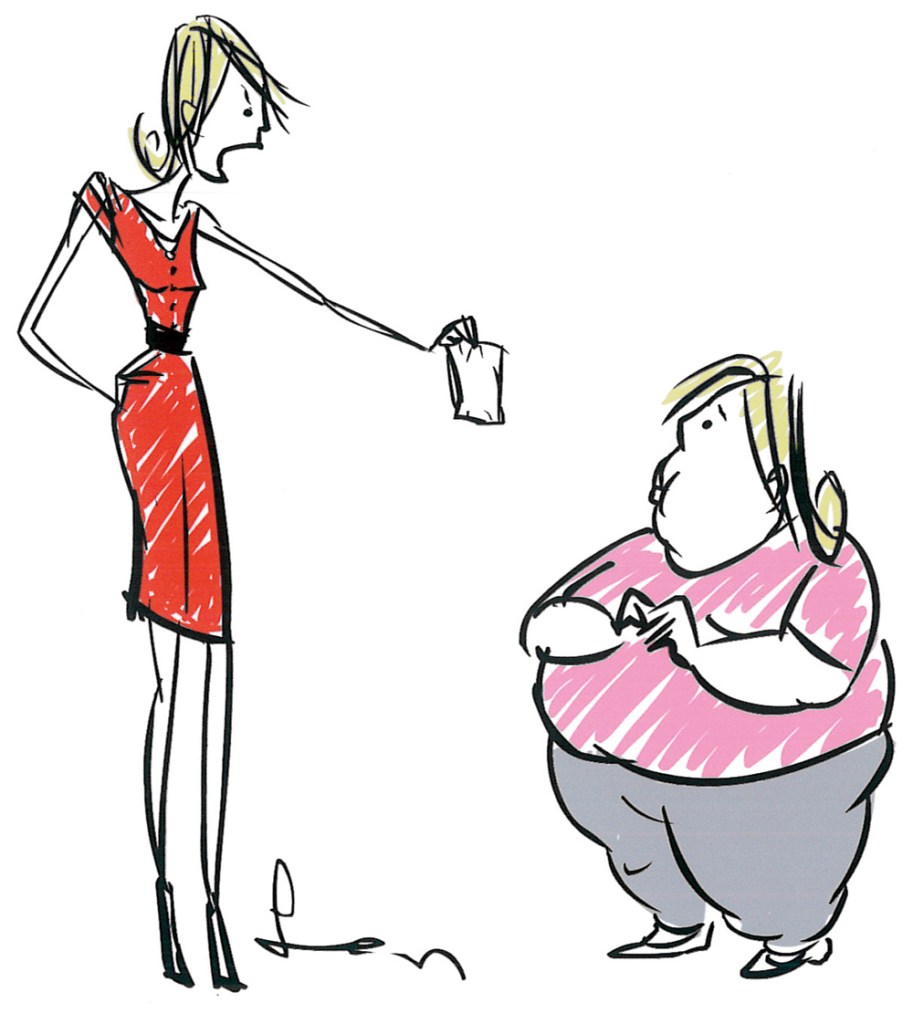
This growing dessert empire is no accident. There’s nothing doctrinal pushing the sugar craze – it’s merely the outgrowth of unique cultural circumstances. The church proscribes alcohol and drugs and its members often adhere to certain traditional values, which means, for example, that baking often features in dating rituals for many members. And multiple church gatherings take place weekly, which provide a convenient excuse to share a family recipe.
I’m writing this while visiting Provo, Utah, which is home to the church’s flagship university (and my alma mater), Brigham Young. For 20-something years, BYU has proudly dominated the Princeton Review’s “Stone-Cold Sober” competition, a power ranking of the least alcohol-soaked schools in the country. On campus, the generational run is celebrated the same way every year: cracking open a BYU Creamery-branded chocolate milk or, should you be feeling particularly extravagant, a sludgy but irresistible Cookies ’N’ Cream milk, which contains a glorious 72 grams of sugar per bottle (which is 100 percent of your daily recommended intake, if you’re counting). It takes about three years to digest. They are, I’m not afraid to admit, delicious.
Then there are the football games. You can’t string together the greatest Stone-Cold Sober Campus run of all time by selling giggle water at sporting events. Instead of tall cans, the LaVell Edwards Stadium’s concessions booths make mountains of dough selling the (imaginatively named) Cougar Tail: a 16-inch maple-frosted doughnut rumored to pack 2,200 calories.
I stepped into the student center at BYU and found public-board flyers for the following: a bake-off, a dessert-swap meet-up, a blind-date dessert meet-up and a cake-decorating night. How can any other group of Americans hope to compete with this dedication to sweetness?
Provo had a litany of cookie companies when I was enrolled at BYU. They went to battle with Crumbl. Corporate espionage, federal lawsuits over family recipes, passive-aggressive social-media campaigns – these were dubbed the Cookie Wars, and they nearly tore the state apart. Brother fought against brother over where the best chocolate-chip cookie could be found until Crumbl emerged largely victorious. Still, plenty of other experimental dessert shops continue to pop up across the state.
Gen Z’s indifference toward alcohol is well-documented – compared to prior generations, the young are drinking at a much lower rate. But man does not live by bread alone – or water, for that matter. Sugar will no doubt be a substitute vice for many of these Americans, and no one is better poised to supply them with their fix than Utahns. The desire for things that are bad for us needs some outlet – and we could do worse than a hankering for high-fructose corn syrup.
This article was originally published in The Spectator’s August 2025 World edition.
Watchdog: most aid now spent on migrant hotels
Immigration is never off the news agenda these days, as Brits remain concerned about the influx of people to the country while the cost of living crisis and housing pressures only seem to worsen. Last week Sir Keir Starmer sealed a ‘one in, one out’ migrant returns deal with France’s President Emmanuel Macron which some number-crunching suggested is a little more akin to an, er, 17 in, one out set-up. The Labour lot have other borders-related problems on their plates too, however, as an independent watchdog has warned that the cost of supporting asylum seekers is set to absorb a whooping one-fifth of the gutted aid budget. Crikey!
The surging cost of asylum provision combined with Labour’s aid cuts will leave the lowest amount of cash available for overseas poverty reduction for 50 years.
After Chancellor Rachel Reeves announced in last month’s spending review that the aid budget would be slashed – from 0.5 per cent to 0.3 per cent by 2027 – the Independent Commission for Aid Impact has today raised concerns about ballooning refugee costs. Under international aid rules, a portion of the costs of an asylum seeker’s first year in the UK qualifies as official development assistance and therefore comes out of the aid budget. As such, the watchdog has also warned about soaring costs of housing asylum seekers in the UK – with the price tag rising from £628 million in 2020 to a staggering £4.3bn in 2023. The surging cost of asylum provision leaves a fraction (0.24 per cent) gross national income for overseas development, the lowest amount of cash available for poverty reduction and humanitarian assistance for 50 years. Another Live Aid, anyone..?
By the watchdog’s figures, the UK spent three times as much aid per refugee compared to other major European countries in 2023. Perhaps, the report suggests, it’s got something to do with 32,000 asylum seekers living in expensive, taxpayer-funded hotels. Well, Reeves has more on this, too. In her spending review, the Chancellor promised to stop using hotels to house asylum seekers by 2029 – claiming the move would save £1bn. The Home Office will instead look to increase the capacity of sites like the Wethersfield RAF base in Essex.
Problem solved? Mr S isn’t so sure. Quizzed by a House of Lords Committee last month whether he believed the government would succeed in their intention to stop using hotels, independent chief inspector of borders and immigration David Bolt replied:
Frankly, I do not think that it will be achieved… There is simply not sufficient housing stock to be able to deal with the sorts of numbers that are in the system… It is really challenging.
Oh dear. It would be putting it mildly to say that the slashing of the UK’s aid budget has not gone smoothly. Reeves’s announcement prompted the immediate resignation of Anneliese Dodds, the minister who was actually responsible for international aid – and former PM Gordon Brown unleashed a scathing tirade about the move during a recent speech in London. Will this latest watchdog warning persuade the government to better tackle the holes in the asylum system? Watch this space…
Will we stop Saudi Arabia developing a nuclear weapon?
Though clearly resolved to declare victory over Iran’s nuclear program and move on, Donald Trump has been beset this summer by assertions that the Iranian effort has not been “obliterated” after all and that the mullahs will be back at work in no time cranking out the requisite materials for a bomb. Therefore, according to some, Trump should bomb some more – or at least unleash Israel to do so.
Whether or not Trump is pushed into further strikes, the argument over Iranian nuclear weapons capabilities will not go away. The Iranians are understandably reluctant to resume cooperation with international monitors whom they suspect may have assisted US and Israeli targeters, so the true state of Iranian enrichment will be further cloaked in mystery, as will the whereabouts of any near-bomb-grade material squirreled away before the bombers arrived.
Until now, of course, the Iranians have forsworn embarking on an actual bomb program, a point serially reiterated by US intelligence over the years and recently reiterated, albeit vainly, by Director of National Intelligence Tulsi Gabbard. Instead, they built up their uranium enrichment industry as a demonstration that they could build a nuclear bomb if they wanted to, and as a bargaining chip for the relaxation of sanctions. This worked with Obama, but not with Trump, so now that negotiations have yielded only bunker-busters, there is the distinct possibility that the Iranians might actually opt to build a bomb or two. If they do, others in the neighborhood may follow suit.
Prominent in that list would be Saudi Arabia, whose rulers have long expressed an intent to acquire nuclear weapons if and when Iran goes nuclear. (Israel’s extensive cache of nukes doesn’t seem to bother them.) As Crown Prince Mohammed bin Salman told CBS in 2018: “If Iran develops a nuclear bomb, we will follow suit as soon as possible.” True to their habit of getting others to do the work, the Saudis have poured money into other people’s bomb-making programs in exchange for commitments to make some of the resultant products available when asked. Such was the arrangement with Saddam Hussein back in the 1980s. According to Mohammed al Khilewi, a Saudi deputy ambassador to the UN who sought asylum in the US in 1994, the Saudi contribution to the program amounted to $5 billion. Although US officials downplayed Khilewi’s well-documented assertions, the late James E. Akins, a former US ambassador to Saudi Arabia, who remained close to the country’s rulers, previously confirmed to me that there had indeed been such an agreement and that the CIA had known all about it. Although Saddam’s bomb never appeared, the Saudis, according to multiple sources, footed much of the bill for the more successful Pakistani bomb program – up to 60 percent of the cost by one estimate. “Saudi Arabia provided generous financial support to Pakistan that enabled the nuclear program to continue,” Feroz Hassan Khan, a veteran of the program, recounted in his book Eating Grass: The Making of the Pakistani Bomb.
As with the Iraqi deal, the arrangement reportedly involved a quid pro quo of Pakistani nukes being placed at the Saudis’ disposal if requested. According to a 2013 BBC Newsnight report by Mark Urban, Amos Yadlin, a former head of Israeli military intelligence, told a conference in Sweden in September that year that if Iran got the bomb, “the Saudis will not wait one month. They already paid for the bomb, they will go to Pakistan and bring what they need to bring.” Urban also quoted an anonymous senior Pakistani official as saying, “What did we think the Saudis were giving us all that money for? It wasn’t charity.”
Even if Pakistan-made bombs never come to Saudi Arabia, the Saudis have already done their bit to spread such weapons further afield. A.Q. Khan, the scientist who headed the Pakistani program, went on to export the Saudi-funded technology to the North Koreans, who put it to good use in their own weapons program. In turn, the Koreans have given lessons to others who feel in need of a bomb. While the Iranians paid some attention to the non-proliferation treaty, Pyongyang determinedly avoided any such cooperation, kicking out monitors in 2002 and avoiding diplomatic engagement on nuclear issues until they had their deterrent up and running by 2018, at which point they became essentially invulnerable. It is an instructive example that others will find increasingly attractive.
This article was originally published in The Spectator’s August 2025 World edition.
DoGE, alligators, public land and Mamdani mania
Daddy DoGE
Despite Elon Musk and Donald Trump’s continued public fallout, DoGE is still slashing away at the federal workforce. From a peak of 3,015,000 employees on federal payroll in January, job cuts per month are as follows:
February 13,000
March 11,000
April 13,000
May 25,000
June 7,000
Source: US Bureau of Labor Statistics
See ya later, alligator
Would migrants at Florida’s “alligator Alcatraz” detention center be eaten by the surrounding wildlife if they managed to escape? “I guess that’s the concept,” said Trump. But which species would do the snacking? There are around 1.25 million American alligators in Florida which are native to the state. Invasive species of alligator from South America include the spectacled caiman of which there are several hundred in the Everglades, possibly descending from escaped pets. There have also been several sightings of Nile crocodiles, which are thought to have been illegally imported and dumped.
This land is your land
Utah Senator Mike Lee withdrew his provision to Donald Trump’s “big, beautiful bill” to allow for the sale of hundreds of thousands of acres of public land. Which states have the highest and lowest proportion of federal- and state-owned land?
Most Least
Alaska 89% Kansas 0.9%
Nevada 81% Iowa 1%
Utah 70% Nebraska 1.6%
Idaho 67% Texas 1.9%
Wyoming 55% Indiana 2.3%
Source: Natural Resources Council of Maine
Mamdani mania
Zohran Mamdani beat Andrew Cuomo to become the Democrat candidate for the New York Mayoral election by 7 points. But which precincts voted (or didn’t vote) for him?
Mamdani lead
Higher income (>$118k). +13pts
Middle income (>$63k) +10pts
Asian majority +15pts
Hispanic majority +6pts
White majority +5pts
Lower income (<$63k) -13pts
Black majority -18pts
Source: New York Times
Who replaces the ayatollahs if the Iranian regime falls?
The masked gunmen of Jaish al-Adl are probably not the kind of people Donald Trump had in mind when he talked about “regime change” in Iran. A terror group in Iran’s southeastern Baluchistan region, they have a bloodthirsty record of shootings and suicide bombings, all part of a jihad for a separate Baluchi homeland. They are, however, excited by Israel and America’s bombing campaign, which they see as a once-in-a-lifetime chance to achieve their goal. As they declared recently: “We extend the hand of brotherhood to all the people of Iran to join the ranks of the Resistance.”
How long that brotherhood would last is another matter. A hardline Sunni jihadist group, the Jaish al-Adl, or Army of Justice, is a world away from the secular, democratic-minded liberals the West hopes might replace the ayatollahs. Few other Iranians share their aspirations for an independent Baluchi homeland, which would tear off about a tenth of the country’s landmass.
Yet should Iran have another revolution – a successor to the Islamic one that installed the mullahs back in 1979 – and Ayatollah Khamenei fell, groups such as the Jaish al-Adl may feel their moment has come. Just as the mullahs were originally part of an opposition network that included liberals, communists and nationalists, any Iranian Revolution 2.0 could involve a messy uprising of different interest groups, not all with compatible agendas. And as with Tito’s Yugoslavia, Saddam Hussein’s Iraq and Gaddafi’s Libya, the mullahs’ fall could see all kinds of long-suppressed grievances aired, with consequences far beyond Iran’s borders.
History has taught Kurdish groups that it is in times of strife that their chances for self-determination come
Take Baluchistan, a swath of desert and mountains that has much in common with the restive tribal areas of Pakistan and Afghanistan, both of which it borders. Most of its people are Sunni Muslims, a minority in Shia-dominated Iran. A decades-long insurgency has claimed the lives of thousands of Iranian security forces, fueled by claims that Baluchis are routinely discriminated against. Baluchis came out in solidarity during 2022’s nationwide Mahsa Amini protests, sparked by the death in custody of a Kurdish student accused of not wearing her hijab properly. In what Baluchis now refer to as “Bloody Friday,” nearly 100 Baluchi demonstrators were killed in a single day – the deadliest of all the government crackdowns during that year’s unrest.
The idea of Iran’s Baluchi separatists seizing their moment has also alarmed neighboring Pakistan, which has a separatist-minded Baluchi minority of its own. Baluchi militants there have carried out attacks on Pakistani security forces and on Chinese workers building a port on Pakistani Baluchistan’s Arabian Sea coast, a big new hub on Beijing’s Belt and Road Initiative.
The prospect of Iranian and Pakistani Baluchis seeking an independent “greater Baluchistan” together would imperil the port’s future and, in turn, Pakistan’s. As a Pakistani government spokesman put it recently, the potential fall of Iran’s regime “imperils the entire regional security structures.” There are similar jitters in Iraq, where the Shia government that replaced the Sunni dictator Saddam Hussein has long been sponsored by Iran. The loss of Tehran’s backing could rekindle the Sunni-Shia civil war that tore Iraq apart 20 years ago.
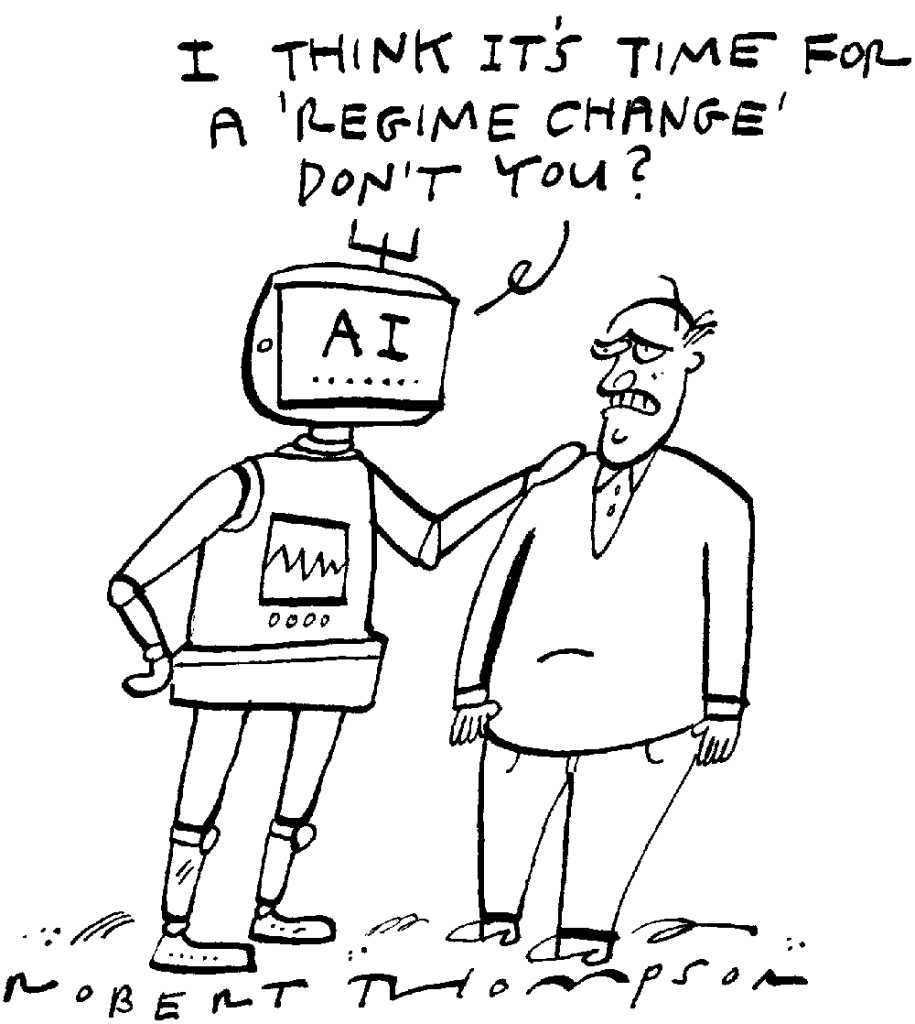
Iran also has Arab separatists in the country’s southwest and Kurdish separatists in the country’s northwest. The Kurdistan Free Life party, allied to Turkey’s PKK militants, has called for a return to the mass street protests of 2022 – although so far they have stopped short of urging an armed uprising. History, however, has taught Kurdish groups that it is in times of strife that their chances for self-determination often come. The thriving Kurdish enclave in northern Iraq started life in the no-fly zone created after the 1991 Gulf War. Its Syrian equivalent, Rojava, a Kurdish enclave, was carved out during the early years of Syria’s meltdown.
The separatists, though, aren’t the only armed groups who might thrive if the regime collapses. Eastern Iran is a key part of the transit route for Europe-bound heroin, smuggled in from the poppy fields of Afghanistan by heavily armed trafficking gangs. Since the early 1980s, nearly 4,000 Iranian police and soldiers have died in the clashes with the traffickers, who sometimes have links to the Baluchi separatists.
Iran has built vast networks of trenches, minefields and forts to thwart them and executes hundreds of convicted traffickers every year. According to the United Nations Office on Drugs and Crime, Iran typically accounts for around two-thirds of global opium seizures and up to a third of global heroin seizures.
There is little sign of Iranians rushing to take up Trump’s suggestion for a Make Iran Great Again movement
The country has a huge addiction problem itself. I saw this for myself in 2008 when visiting former president Mahmoud Ahmadinejad’s hometown of Aradan, where a whiff of opium hung in the air: about half the townsfolk smoked the drug, a local doctor told me. Nationwide, approximately three million of Iran’s 90 million citizens use opium or heroin regularly – one of the highest rates worldwide.
While Tehran’s war on drugs is in part self-interested, it also helps stem the flow of drugs to the West. A regime collapse could repeat one of the unintended consequences of the Shah’s downfall in 1979, when the borders again went temporarily unpoliced. The result was the tidal wave of heroin that flooded into British cities in the early 1980s.
But as of the time of writing, there is little sign of Iranians rushing to take up Trump’s suggestion of replacing the clerics’ regime with a MIGA (“Make Iran Great Again”) movement. So far, the only demonstrations that have taken place in Iran have been pro-regime ones. Anti-regime activists appear to be biding their time, aware that with the clerics already under pressure, the crackdown is likely to be even harsher than in 2022, when around 500 protesters were killed and nearly 20,000 people were arrested.
It’s also the case that as in Saddam’s Iraq and Gaddafi’s Libya, decades of oppression mean there is no unified, well-organized democratic opposition, no Václav Havel waiting in the wings. The National Council of Resistance to Iran – descendants of a Marxist group which helped overthrow the Shah and were then repressed by the clerics – are frequently quoted by British parliamentarians as potential successors. Most ordinary Iranians, though, see them as just another bunch of fanatics, who would replace one cult-like rule with another. Another possibility is the late Shah’s son, Reza Pahlavi Shah, who has a following in so-called “Tehrangeles” – the wealthy Iranian diaspora in Los Angeles. But memories of his father’s brutality run deep, and while some Iranians might accept him as a temporary figurehead, a return to monarchy would be anathema to others. Western-based opposition groups are also wary of repeating the mistakes made in post-Saddam Iraq, where politicians who had spent decades in comfortable exile failed to get traction when they returned home.
Maneli Mirkhan, a French-Iranian activist and campaigner for women’s rights, says there is little appetite for all-out dismantling of the state, as the Americans attempted with de-Ba’athification in Iraq. All that’s required, she says, is to replace the regime figures who occupy the upper half of the pyramid. She also plays down the separatist threat, which she says the clerics exaggerate. “There are small groups who want independent homelands, but the mainstream ethnic political movements, I think, will settle for federalist arrangements.”
Whatever happens, it seems unlikely that any regime change will be peaceful. The regime’s enforcers, the 125,000 strong Islamic Revolutionary Guard Corps, were set up by Ayatollah Khomeini with the specific intention of protecting the Islamic Revolution from outside challenge. Unlike Saddam’s Republican Guard, it is well-trained, ideologically committed, and unlikely to go down without a fight. Backing the IRGC are also 90,000 Basijis – plain-clothes thugs recruited from working-class neighborhoods, deployed as loose cannons on those brave enough to protest.
I saw them in action while covering Iran’s presidential elections in 2009, when allegations of vote-rigging saw protesters for the first time openly calling for the Supreme Leader’s downfall. Around 70 people were killed and nearly 4,000 arrested during the unrest that followed; the theocracy’s legitimacy has never really recovered.
That it is still intact 16 years later, however, shows that, if nothing else, it is adept at clinging on to power. As Vanda Felbab-Brown, a senior fellow at the Brookings Institution puts it, the regime “may now be weak externally, but their internal apparatus is still there.”
The only common ground may be to appeal to Iranians’ long-established sense of nationhood
Indeed, if there is a spark for an uprising, it is more likely to come from inside than out. While Benjamin Netanyahu has tried to stir things up by bombing Tehran’s Evin Prison, where generations of political prisoners have languished, Iranians are unlikely to respond to Israeli prompting. But coming weeks and months could see any number of “Persian Spring” moments, be it food or fuel shortages, spontaneous demos, or some random outrage like that which took Ms Amini’s life in 2022.
At that point, says Mirkhan, “progressive and pragmatic” figures within the regime itself may throw their lot in with the protests, and one or more of them might fit the bill as a transitional leader. None, though, is likely to declare such intentions right now, lest they end up in what remains of Evin Prison.
“It’s possible those people are already having conversations with the opposition overseas, but if their names became public they’d be finished,” says Mirkhan. Even so, it is hard to see a transitional figure who would be universally acceptable in a febrile post-Khamenei Iran. All regime insiders are, by definition, Islamists. But Islam has been institutionalized, debated and abused so much in Iran that it may no longer act as the rallying point that it did in 1979 – if anything, quite the opposite.
As one young Iranian writer once put it, decades of misrule by “perennially self-righteous” clerics is no great advert for organized religion. Instead, the only common ground may be to appeal to Iranians’ long-established sense of nationhood – separatists notwithstanding.
This article was originally published in The Spectator’s August 2025 World edition.
Why President Trump can’t stop talking to reporters
The best time to call is the weekend. Or early in the morning. Or late at night. Definitely not when he’s on the golf course. If he’s alone, he’s more inclined to chat. If he’s in a good mood, you might get a few minutes. If he’s in a bad mood he’ll be brief, but you’re still liable to get a usable quote.
That’s how White House reporters describe cold-calling Donald Trump, perhaps the most accessible president in American history. He’s not the first to smuggle a cell phone into the White House: Barack Obama insisted on keeping his BlackBerry throughout his time in office, despite the angst it caused his staff. But you couldn’t just call Obama. You can just call Trump.
“He uses his phone as a weapon of his office,” says Piers Morgan, who has known Trump for decades and speaks with him regularly. “It’s two-pronged: one aim is to gather information and to sound people out and get a feel for what people are thinking, but also, when it suits him, to impart information.” In his second term – having been elected in 2016 as a political neophyte, rejected in 2020 and exiled in disgrace, only to storm back to office last year with a staggering 77 million votes – the President is more confident and brash than ever. Which means he’s more eager to talk to the press on the record and tout his behind-the-scenes mastery of the office.
Trump also has a phone now. In his first term, journalists had to call the White House switchboard and make their way through several layers of vetting to reach the President. Or he had to pick up the phone and call them through that same circuitous process. “The White House would call,” says one veteran cable news host who remains close to Trump. “He wouldn’t dial me directly. You’d get the White House and they’d say, ‘We’ve got the President for you.’”
His advisors ran a tighter ship back then, controlling his methods of communication for all the obvious security reasons. The President of the United States is, after all, the most powerful person in the world. It remains unfathomable to people who have worked in past administrations that hundreds of people have Trump’s private cell phone number. When they cold call him, he tends to answer.
A new trend has emerged in recent weeks as a result: whenever news breaks from the White House, Trump hops on the phone to a slew of reporters and TV news anchors, who proudly take to X or live television to reveal they just spoke to the President and have the latest.
‘He has to be, by a country mile, the most accessible president in the history of the presidency’
When it comes to close allies Trump has known for years, such as Fox News host Sean Hannity, he often phones them first. “The calls go both ways,” a senior source at Fox told me, explaining that the President keeps in regular contact with many at the network, from hosts such as Maria Bartiromo to reporters such as Peter Doocy.
Outside of Fox, journalists have to work a little harder for access. Many try their luck, calling Trump’s personal cell phone directly when news breaks and hoping he picks up. “He doesn’t save people’s numbers,” one White House reporter says, “so he never knows who it is.”
The list of White House cold callers is long and growing. After Trump’s explosive fallout with Elon Musk in June, which peaked with Musk’s suggestion that Trump was covering up the crimes of the late sex criminal Jeffrey Epstein, he had calls with a series of reporters – Dana Bash of CNN, Jonathan Karl of ABC, Robert Costa of CBS and Bret Baier of Fox – to trash the tech billionaire as having “lost his mind.”
The night Israel launched a surprise attack on Iranian military and nuclear facilities, Trump hopped on the phone with Bash and Baier, as well as Fox & Friends co-host Lawrence Jones and Morning Joe co-host Jonathan Lemire. When the United States bombed three of Iran’s nuclear sites, he chatted with Jones, Hannity, Barak Ravid of Axios, Steve Holland of Reuters, Josh Dawsey of the Wall Street Journal, and Yamiche Alcindor of NBC News.
“Journalists, even ones he doesn’t like, can just call him,” says Morgan. “And they’ve got a reasonable chance that he’ll take the call and give them some quotes.”
What’s perhaps most striking about the collection of journalists Trump gossips with is that, with a few exceptions, they are hardly the media boosters one would expect. In recent years, Trump has attacked Bash (“nasty”), Baier (“hostile” and “nasty”), Karl (“third-rate reporter” who will “never make it”), Costa (“lightweight lapdog”) and Alcindor (“racist”). According to Dawsey, his “38-second call with the President” ended with a plea from Trump: “I hope you’re nicer to me than you usually are!”
Trump is sometimes less generous with his time. Cold calling “doesn’t always work,” one White House reporter tells me. Sometimes Trump will end the call when reporters identify themselves, as he did recently when Karl phoned about Iran.
All this conferring with the supposed enemies of the people has raised a question among Trump’s supporters in the media: why is he taking calls from the high priests of the traditional press and not doling out these scoops and quotes to the MAGA voices that got him elected?
“It’s a bit jarring because I just don’t feel like the commander-in-chief should be consulting with anchors or reporters,” says one pro-Trump podcaster who spent decades as a cable news host before going independent.
So why does he do it? Reporters I spoke with offered a simple explanation: Trump, a famed gossip, simply loves taking calls. “It’s not that complicated lol – he likes to answer his cell phone,” one reporter covering the White House texts. “He likes to talk. He just answers. If he’s in a good mood you might get a few minutes. A bad mood, a very quick soundbite.”
Morgan agrees that the success of the cold call is a matter of Trump’s emotional state. “It depends what mood he’s in, or if you get him at the right moment,” Morgan says. “The morning after the election, which he’d won at 2 a.m., I left it until about 9 a.m. and called him thinking, ‘I don’t think he’ll pick it up.’ He did, and we had an amazing chat.” Since the election, Trump has called Morgan “out of the blue” on several occasions – just to talk. “I had a text exchange with him yesterday,” Morgan says. “He has to be, by a country mile, the most accessible president in the history of the presidency.”
The incentives for the journalists who launder Trump’s half-baked thoughts and grand pronouncements are plain. Infusing on-air commentary with the magic words “I just spoke with the President” lends your reporting a flourish of authority, not to mention a punch of immediacy as the rest of the media regurgitates the same piece of breaking news over and over again. The inside track is a buzzy place to be, even if being there reveals nothing more than what we already know.
“The quotes are always terrible,” says one White House reporter who has stopped calling the President because of how little it yields. “But it’s good for the networks to say, ‘We have a reporter who can just call up the President.’”
There are also risks to running with a bit of gab from Trump. “It can be a pitfall,” says another political reporter, who recalls an incident in which NBC News correspondent Garrett Haake reported on a conversation he had with Trump about a bill being put forward by Republicans during Joe Biden’s administration. Trumpworld duly accused Haake of misrepresenting his comments and canceled an upcoming sit-down interview the candidate was supposed to have with NBC. Inside the Trump campaign, the reporter says, there were discussions about giving the interview instead to Sara Murray, then a CNN reporter – and Haake’s ex-wife – in retaliation. Yet the messy dust-up did little to hurt Haake’s access to Trump; they still chat regularly.
Trump’s love of the phone call is nothing new. His penchant for gossiping with reporters goes back to his days as a young real-estate scion from Queens who barreled his way into tabloid headlines by virtue of his irrepressible urge to talk. If this weren’t such well-trodden ground, I’d rattle off the list of tales from that far more innocent Trump era, during which he’d ring up reporters – sometimes as himself, sometimes as his fictitious PR man John Barron – to dish about the latest building he had erected or, indeed, the last erection he had.
Back then, the ploy was a thinly veiled strategy to manipulate the press. It was almost too easy for Trump, who added a dash of spray-tan spice to the otherwise dull pages of the city’s business papers. Never mind that much of what he said was exaggerated or made up out of whole cloth – he was generating headlines.
As the late New York Daily News columnist Jimmy Breslin observed in 1991: “The guy was buying the whole news industry with a return phone call. The news people provided Trump with the currency of his life, publicity, and he believed it was real and the news people believed him right back.” Like those calls, the ones Trump treats reporters to in 2025 are framed always with Trump as the hero and his foes as failures. “I just spoke to the President of the United States,” Hannity said as he kicked off his special coverage of Trump’s strikes on Iran. “Maybe it’s a little early to go there, but this will go down in history as one of the greatest military victories.”
The world changes but Trump stays the same. Decades after the young real estate baron incensed Breslin with his effortless command of New York’s press, his mastery of the return call is as sharp as ever.
There is something refreshing about it. After years of presidential administrations carefully orchestrating their messaging from the Oval Office, Americans are being treated to an unprecedented close-up – thanks not to any feat of hard-hitting journalism but just because the commander-in-chief can’t resist taking yet another call.
This article was originally published in The Spectator’s August 2025 World edition.
The lessons of Ron Paul
As Elon Musk feuds with Donald Trump and looks to launch a political party of his own – the America party – he should stop to consider the lessons of Ron Paul. The former Republican congressman, who turns 90 on August 20, is best known as the leader of the GOP’s libertarian wing – which for years was practically a one-man faction. In 2008, however, Paul ran for the Republican presidential nomination and touched off a grassroots insurgency. It wasn’t enough to win him any primaries, but it laid the groundwork for the GOP’s populist turn, leading directly to the Tea Party movement and lighting the way for Trump’s arrival a few years later.
Dr. Paul, an obstetrician-gynecologist before he entered politics (he continued delivering babies afterward, too), won the nickname “Dr. No” among his colleagues in the House of Representatives for voting against just about everything: no wars, no taxes, no more spending or government programs. Repealing laws, not passing more of them, called for an “aye” vote, particularly if there was a chance to audit, or better yet abolish, the Federal Reserve.
Paul first encountered the works of Friedrich Hayek, Ludwig von Mises and the Austrian school of economics that would shape his outlook on politics, as well as the economy, while at Duke University. After serving for a time in the US Air Force, Paul moved to Texas with his wife Carol.
Ron Paul showed what an anti-establishment campaign within the GOP could achieve
He won a seat in Congress in a 1976 special election, only to lose it in the general election. He returned for a rematch in 1978 and beat his Democratic opponent. In 1984, Paul left the House to run for a Senate seat, but was beaten in the race for the Republican nomination by an ex-Democrat named Phil Gramm. He then aimed higher but in a much smaller party. He sought and won the 1988 Libertarian presidential nomination but had no effect on the race between George H.W. Bush and Michael Dukakis. Paul returned to the House as a Republican after the 1996 elections. Running for Congress as a Libertarian would have been even more pointless than running for the White House on the LP ticket. The way to elect a libertarian was to run him as a Republican.
Paul was a “country party” libertarian, not a “court party” or “Beltway” libertarian, anyway. He opposed open borders and indeed free-trade agreements such as NAFTA, not because he was against free trade but because he saw such agreements as being massive transnational regulatory pacts – “managed trade,” not free trade.
Paul was against much of what passed for libertarianism in the George W. Bush-era Republican party. And he was adamantly opposed to the neoconservative foreign policy the second President Bush pursued, as well as his administration’s bailouts of banks and big business during the Great Recession. With the GOP poised to go further down the wrong path by nominating John McCain or a similarly hawkish candidate in 2008, Paul decided to run for president again, this time as a Republican. And this time the results were very different. Instead of demonstrating what little impact a third-party run could have, Paul showed what an anti-establishment campaign within the GOP could achieve. (I saw it myself: in early 2008 I signed on as the campaign’s “internet communications coordinator” – in practice, its official blogger.)
Paul, hitherto seen as a congressional Don Quixote, was then in a position to speak truth to power, including truths about foreign policy that were politically incorrect in the Republican party. Running as a Republican, Paul got to speak those truths directly to John McCain and Rudy Giuliani on stage in the GOP debates, while cameras broadcast his defiance to the nation.
When viewers saw Paul in the debates, they heard him say things they too had been thinking or which they now began to wonder about. More Republican voters and grassroots donors than anyone had imagined were receptive to his message.
The spirit stirred up by Paul’s 2008 campaign, as well as specific themes and techniques the campaign refined, fed the nascent Tea Party movement, which in turn helped elect “Ron Paul Republicans” to local, state and national office starting in 2010, sending Paul’s son Rand to the US Senate. A number of other libertarian-leaning Republicans won seats in Congress: Thomas Massie, for example, in 2012, the year Paul reinforced his message with another presidential run. The Paul phenomenon had effects outside of party politics, too. As a kind of “counter-convention” to McCain’s coronation as the 2008 GOP presidential nominee in Saint Paul, Minnesota, Paul held a massive “Rally for the Republic” in neighboring Minneapolis, where the event’s emcee was an MSNBC journalist named Tucker Carlson.
Trump had contemplated running for president on a third-party ticket in 2000. Did he see how much momentum Paul obtained by appearing in the Republican debates and decide he could go even further with the same strategy? Trump, too, was unafraid of saying things about America’s wars that conventional wisdom said were suicidal to utter on a GOP debate stage.
The Constitution doesn’t allow Musk, who was born in South Africa, to run for president as a Republican or anything else. But if he wants to affect national politics, he would do better taking Paul as his model than Ross Perot, and working in Republican primaries rather than starting a new party. The electorate in a primary is much smaller than in a general election, and every dollar goes further. Instead of splitting the right-of-center vote, a primary strategy puts a single candidate on the field in November. This approach has the best chance of defeating establishment Republicans and Democrats alike. The lesson Paul’s example teaches is that even if you disagree with most other Republicans, the party is the place where change really begins.
This article was originally published in The Spectator’s August 2025 World edition.
The lessons of Ron Paul
As Elon Musk feuds with Donald Trump and looks to launch a political party of his own – the America party – he should stop to consider the lessons of Ron Paul. The former Republican congressman, who turns 90 on August 20, is best known as the leader of the GOP’s libertarian wing – which for years was practically a one-man faction. In 2008, however, Paul ran for the Republican presidential nomination and touched off a grassroots insurgency. It wasn’t enough to win him any primaries, but it laid the groundwork for the GOP’s populist turn, leading directly to the Tea Party movement and lighting the way for Trump’s arrival a few years later.
Dr. Paul, an obstetrician-gynecologist before he entered politics (he continued delivering babies afterward, too), won the nickname “Dr. No” among his colleagues in the House of Representatives for voting against just about everything: no wars, no taxes, no more spending or government programs. Repealing laws, not passing more of them, called for an “aye” vote, particularly if there was a chance to audit, or better yet abolish, the Federal Reserve.
Paul first encountered the works of Friedrich Hayek, Ludwig von Mises and the Austrian school of economics that would shape his outlook on politics, as well as the economy, while at Duke University. After serving for a time in the US Air Force, Paul moved to Texas with his wife Carol.
Ron Paul showed what an anti-establishment campaign within the GOP could achieve
He won a seat in Congress in a 1976 special election, only to lose it in the general election. He returned for a rematch in 1978 and beat his Democratic opponent. In 1984, Paul left the House to run for a Senate seat, but was beaten in the race for the Republican nomination by an ex-Democrat named Phil Gramm. He then aimed higher but in a much smaller party. He sought and won the 1988 Libertarian presidential nomination but had no effect on the race between George H.W. Bush and Michael Dukakis. Paul returned to the House as a Republican after the 1996 elections. Running for Congress as a Libertarian would have been even more pointless than running for the White House on the LP ticket. The way to elect a libertarian was to run him as a Republican.
Paul was a “country party” libertarian, not a “court party” or “Beltway” libertarian, anyway. He opposed open borders and indeed free-trade agreements such as NAFTA, not because he was against free trade but because he saw such agreements as being massive transnational regulatory pacts – “managed trade,” not free trade.
Paul was against much of what passed for libertarianism in the George W. Bush-era Republican party. And he was adamantly opposed to the neoconservative foreign policy the second President Bush pursued, as well as his administration’s bailouts of banks and big business during the Great Recession. With the GOP poised to go further down the wrong path by nominating John McCain or a similarly hawkish candidate in 2008, Paul decided to run for president again, this time as a Republican. And this time the results were very different. Instead of demonstrating what little impact a third-party run could have, Paul showed what an anti-establishment campaign within the GOP could achieve. (I saw it myself: in early 2008 I signed on as the campaign’s “internet communications coordinator” – in practice, its official blogger.)
Paul, hitherto seen as a congressional Don Quixote, was then in a position to speak truth to power, including truths about foreign policy that were politically incorrect in the Republican party. Running as a Republican, Paul got to speak those truths directly to John McCain and Rudy Giuliani on stage in the GOP debates, while cameras broadcast his defiance to the nation.
When viewers saw Paul in the debates, they heard him say things they too had been thinking or which they now began to wonder about. More Republican voters and grassroots donors than anyone had imagined were receptive to his message.
The spirit stirred up by Paul’s 2008 campaign, as well as specific themes and techniques the campaign refined, fed the nascent Tea Party movement, which in turn helped elect “Ron Paul Republicans” to local, state and national office starting in 2010, sending Paul’s son Rand to the US Senate. A number of other libertarian-leaning Republicans won seats in Congress: Thomas Massie, for example, in 2012, the year Paul reinforced his message with another presidential run. The Paul phenomenon had effects outside of party politics, too. As a kind of “counter-convention” to McCain’s coronation as the 2008 GOP presidential nominee in Saint Paul, Minnesota, Paul held a massive “Rally for the Republic” in neighboring Minneapolis, where the event’s emcee was an MSNBC journalist named Tucker Carlson.
Trump had contemplated running for president on a third-party ticket in 2000. Did he see how much momentum Paul obtained by appearing in the Republican debates and decide he could go even further with the same strategy? Trump, too, was unafraid of saying things about America’s wars that conventional wisdom said were suicidal to utter on a GOP debate stage.
The Constitution doesn’t allow Musk, who was born in South Africa, to run for president as a Republican or anything else. But if he wants to affect national politics, he would do better taking Paul as his model than Ross Perot, and working in Republican primaries rather than starting a new party. The electorate in a primary is much smaller than in a general election, and every dollar goes further. Instead of splitting the right-of-center vote, a primary strategy puts a single candidate on the field in November. This approach has the best chance of defeating establishment Republicans and Democrats alike. The lesson Paul’s example teaches is that even if you disagree with most other Republicans, the party is the place where change really begins.
This article was originally published in The Spectator’s August 2025 World edition.
Can Clarksdale find its mojo again?
When Bubba O’Keefe announced he was running for mayor of Clarksdale this spring, there was a mixed response. This dirt-poor, crumbling Mississippi Delta city is more than 80 percent African American – and Bubba is white. But so poorly had the current mayor, who is African American, been performing that Bubba’s supporters thought he’d be a shoo-in, and that the residents would buy into the mantra that he was Clarksdale’s last hope, white or black.
Locals describe Mississippi as the crime state. And Clarksdale is the worst city in Mississippi. There are 20 times more murders per capita in Clarksdale than in New York. As Bubba says: “We only have a population of 13,000 and there are 19 or 20 murders a year.” Then he adds, somewhat bleakly, “The only thing I can leave my daughters when I pass is a better town.”
I was so certain that my friend Bubba would be the next mayor of Clarksdale, the city recognized throughout the world as the birthplace of the blues, that I arranged to arrive there in the week he was supposed to be crowned. As readers may have gathered, Bubba is not the new mayor of Clarksdale. In fact, he fell at the first hurdle – the Democratic runoffs – and by the time I went to see him he was licking his wounds.
On my first day there, a Sunday, we attended the Union Grove Missionary Baptist Church, where he was warmly received by many African Americans in the congregation. “God had called me to run for mayor,” Bubba said. “And obviously he now has other things in mind for me.”
Bubba’s supporters, black and white, cried foul. One of his main campaigners, a vigorous, articulate African-American woman named Arzella Monix, told me there had been intimidation of voters and that she had personally endured abuse for campaigning for a white mayoral candidate.
Bubba has invested his life and personal fortune in resuscitating the heartbeat of downtown Clarksdale
Bubba’s campaign had been a message of Christianity combined with doomsday prophecy. He warned voters that Clarksdale was in a parlous state, that corruption was rife and crime was soaring and that with the Trump administration’s cuts to welfare benefits, many citizens would be tipped into extreme poverty. The city, he argued, is on the verge of social and moral collapse. Indeed, Clarksdale’s decline and fall has been a slow and painful decades-long procession of maladministration, civic indolence and spiraling crime, in many ways a replica of the fall of Detroit in the second half of the 20th century. “We’re in the ICU right now,” one local told me.
It has, as the blues songs say, been a long, long way down. In the 1920s, Clarksdale was, according to the Wall Street Journal, home to more millionaires per capita than any other city in the US. It was the Golden Buckle on the Cotton Belt and its wild, wayward white Southern citizens would become the key characters in the plays and films of Tennessee Williams, who grew up here. Blanche, Brick, Baby Doll and the rest were real Clarksdale denizens. “Brick Gotcher was the sheriff when my father was mayor in the early 1950s,” says Bubba. “He was shot in the line of duty and his wife took over as sheriff.” Very Delta.
Bubba’s father was mayor between 1948 and 1952, the last era of prosperity for the city. The cotton fields were being mechanized and the large labor force of cotton-pickers was suddenly surplus to requirements. Then demand for cotton declined and farmers discovered it was more profitable to grow soybeans and corn. As fortunes dwindled, there was a migration north to escape the South’s segregationist Jim Crow laws and also to find work in the industrial cities such as Detroit and Chicago. So it was that the blues spread out from its Mississippi birthplace.
Ironically, in recent years Clarksdale’s very down-at-heel, faded grandeur has also been a magnet for a certain type of northerner and there has been a trickle of new immigrants that the fleeing multitude must have passed on their way out. They are mainly white – and they’ve come to immerse themselves in the blues culture.
Dr. Bruce Weinraub, a semi-retired doctor from Massachusetts, has set up a blues room and plays boogie-woogie piano using the moniker Dr B. The New York theater director Karen Kohlhaas moved here during the pandemic and has been running the Tennessee Williams Rectory Museum, based in a property formerly occupied by the playwright, ever since.
Blues musician Sean “Bad” Apple left his home in Pennsylvania to open a juke joint here and Roger Stolle came from advertising/marketing in Dayton, Ohio to open Cat Head Delta Blues & Folk Art, a magnificent jumble sale of vinyl albums, southern literature, blues paraphernalia and the rest. “It’s the kind of store I always dreamt of walking into,” he says.
For all these comings and goings, it has been Bubba who has consistently been at the center of attempts to revive Clarksdale’s economic fortunes. He was born and raised here and has invested his life and personal fortune in the urban restoration initiative that has partly resuscitated the heartbeat of downtown Clarksdale.
Beginning in 1999, he took serious financial risks, buying empty or financially failing properties and turning them into the modern establishments used today by tourists and locals alike: Cathead, Stone Pony, Hambone, Yazoo Pass, and the Travelers Hotel. Bubba was also a co-founder of the city’s annual Juke Joint Festival and has been central to marketing Clarksdale as the home of the blues. As the city’s tourism director, he has marketed the place like a fire-and-brimstone Baptist preacher.
Foreigners often confuse Clarksdale with Clarksville as in “Last Train to Clarksville” by the Monkees. It is not the same thing. As Bubba says, this place is “gritty and authentic” and hard to swallow for Americans of the northeastern seaboard. They – the New York and Washington intelligentsia – regard the south with disdain: southern whites are racist, inter-bred, dim-witted Trump supporters. The blacks are the downtrodden victims of slave culture. Metropolitan northern Americans display a shocking ignorance of their own hinterland. It’s one of the reasons Donald Trump is their President.
This article was originally published in The Spectator’s August 2025 World edition.