-
AAPL
213.43 (+0.29%)
-
BARC-LN
1205.7 (-1.46%)
-
NKE
94.05 (+0.39%)
-
CVX
152.67 (-1.00%)
-
CRM
230.27 (-2.34%)
-
INTC
30.5 (-0.87%)
-
DIS
100.16 (-0.67%)
-
DOW
55.79 (-0.82%)
The Feds move in on Bolton
“NO ONE is above the law… @FBI agents on mission,” FBI director Kash Patel posted on X at 7 a.m. ET. He provided a solution to that cryptogram soon after, as agents raided the Bethesda home of permanently grouchy former Trump national security advisor John Bolton. Over his pre-raid morning coffee, Bolton was criticizing Trump’s Russia-Ukraine negotiations, calling them basically useless: “Trump wants a Nobel Peace Prize, but I don’t see these talks making any progress,” he wrote. Soon after, the cars pulled up. Whoops!
A source told Daily Caller editor Vince Coglianese, “This is related to a national security investigation of Mr. Bolton that was shut down by the Biden administration for political reasons. It involves stealing classified documents and weaponizing them for political purposes. Kash Patel and Dan Bongino have reopened the investigation. Hence this morning’s raid.”
John Bolton has the right to either remain silent or tweet whatever he wants, but though he remains a free man, charges may loom. Cockburn is no fan of the Walrus’s war machinations, and is interested to see how this particular saga unfolds. FBI Deputy Director Dan Bongino tweeted this morning, “Public corruption will not be tolerated.”
Meanwhile Roger Stone, no stranger to house raids, said on X: “Good morning. John Bolton. How does it feel to have your home raided at 6 o’clock in the morning?”
Visiting the People’s House gift shop this morning while wearing a red MAGA cap emblazoned with the slogan “Trump was right about everything,” President Trump had this to say about the Bolton warrant: “Don’t know about it. Saw it on television this morning. Not a fan, he’s sort of a lowlife. He’s a very quiet person, except on television if he can say something bad about Trump. Not a smart guy, could be a very unpatriotic guy. We’re going to find out.”
Cockburn hears there are a few beds open at Alligator Alcatraz.
On our radar
HAVING A BALL The President took reporters – including The Spectator’s Matt McDonald – to look at architectural improvement being made by the administration. They have stopped at the People’s House, which has a new gift shop, and are outside the Kennedy Center, where the 2026 FIFA World Cup draw will be held.
CAPITAL CRACKDOWN Seventy-six arrests were made last night as part of the White House’s temporary federalization of DC law enforcement. That brings the total to 719 made since Trump activated the emergency clause of the 1973 Home Rule Act. Of the 719, 36 were illegal aliens.
PAT ON THE BACK Representative Riley Moore has urged President Trump to confer the Presidential Medal of Freedom, the country’s highest civilian honor, onto Pat Buchanan. The journalist, Nixon aide and three-time populist candidate for the White House is widely seen as something of a John the Baptist for MAGA, emphasizing the same core agenda of immigration controls and a rebalancing of the terms of trade. Such a gong for Buchanan would formalize the inheritance.
Counterrevolution in Minnesota?
Is the Democratic establishment – whose obituary has been read many times over the past decade – now twitching back to life? Possibly – in Minnesota at least. The Democratic Farmer Labour party (the Democrats’ local chapter) has taken the remarkable step of revoking its earlier endorsement of Omar Fateh, the Zohran Mamdani-like candidate for mayor of Minneapolis.
Their reason? The Minneapolis DFL’s Convention last month, where Mr. Fateh received his endorsement, was widely seen as a fiasco with numerous allegations of rule-breaking and irregularity. The DFL received no less than 98 formal challenges to the result from participants. According to delegate Will Stancil, there were a number of dubious last-minute rule changes that favored Fateh, a malfunctioning electronic voting system, and general procedural skulduggery. Stancil made no less than four attempts to vote before his choice was recorded. As a result, the DFL’s endorsement has now been “vacated” – throwing an unexpected lifeline to the incumbent Jacob Frey, the more centrist candidate, though someone who presided over some of the worst rioting of summer 2020.
The forward march of the Democratic far-left seems to have been checked in Minnesota. Cockburn, for his part, welcomes this sudden and by no means cynical conversion to the cause of election integrity.
RFK Jr.’s good jeans
It’s the viral fitness challenge that’s taking the MAGAsphere by storm: cabinet secretaries Pete Hegseth and Robert F. Kennedy Jr. are laying down the gauntlet of the “Pete & Bobby Challenge” to their peers. The ask: 100 push-ups, 50 pull-ups, 10 minutes – ostensibly as part of an effort to Make America Healthy Again. In the snazzy viral video promoting the effort, shot at the Pentagon Gym with hyper-fit members of the military, the septuagenarian Secretary Kennedy busts out the challenge in close to five minutes, sporting a pair of blue jeans.
RFK Jr.’s commitment to denim knows no limits. An athletic-minded tipster was sweltering away in the Georgetown Gold’s Gym on Wednesday morning, as the air conditioning was broken. Sat opposite him, without a bead of sweat on him: RFK Jr. In jeans.
Why is the state so obsessed with speech crimes?
A new phrase to have arrived in earnest this year has been ‘two-tier’ justice, relating to the perceived government and judicial approach to crime based on someone’s politics or background. But it’s worth bearing in mind another parallel approach to justice that’s been with us even longer: the growing eagerness to prosecute people for what they have said, and a decreasing willingness to prosecute miscreants for what they have done.
This week alone we have been reminded of this dual approach. As reported in the Daily Telegraph this morning, prosecutions for posts on social media judged to potentially stir up racial hatred have soared in the past decade. In 2015 just one person was convicted of the offence, compared with 44 in 2024. From 2015 to 2019, 48 people were charged, compared with 93 from 2020 to 2024.
This news comes only a day after the release of Lucy Connolly, the Northamptonshire mother jailed last year for a post she made on social media. Many have contrasted her treatment to that handed down to Ricky Jones, the former Labour councillor who was last week acquitted of the charge of encouraging violent behaviour, as a further proof of ‘two tier’ justice. An equally telling contrast is Connolly’s punishment for her social media response to last year’s Southport riots and the punishment administered to those who carried them out. While she received a 31-month sentence for a hateful tweet, some who actually took part in the mob violence were handed down sentences of lesser duration.
This fits into a divergent trend that began to emerge at the turn of the millennium: pursuing misdemeanours relating to speech with increasing zeal and neglecting or going soft on crimes against property or the person. The arrival of ‘hate speech’ onto the statue book in 1998, followed by the huge acceleration in investigations and recordings of ‘non-crime hate incidents’ after 2014, epitomises this shift. The imprisonment in 2000 of Tony Martin, convicted of manslaughter for killing a burglar at his Norfolk farmhouse the year before, represented for many a watershed moment, signalling a trend in the opposite direction: a growing unwillingness or reluctance by the state to treat crimes against property or innocent civilians with the seriousness they deserved.
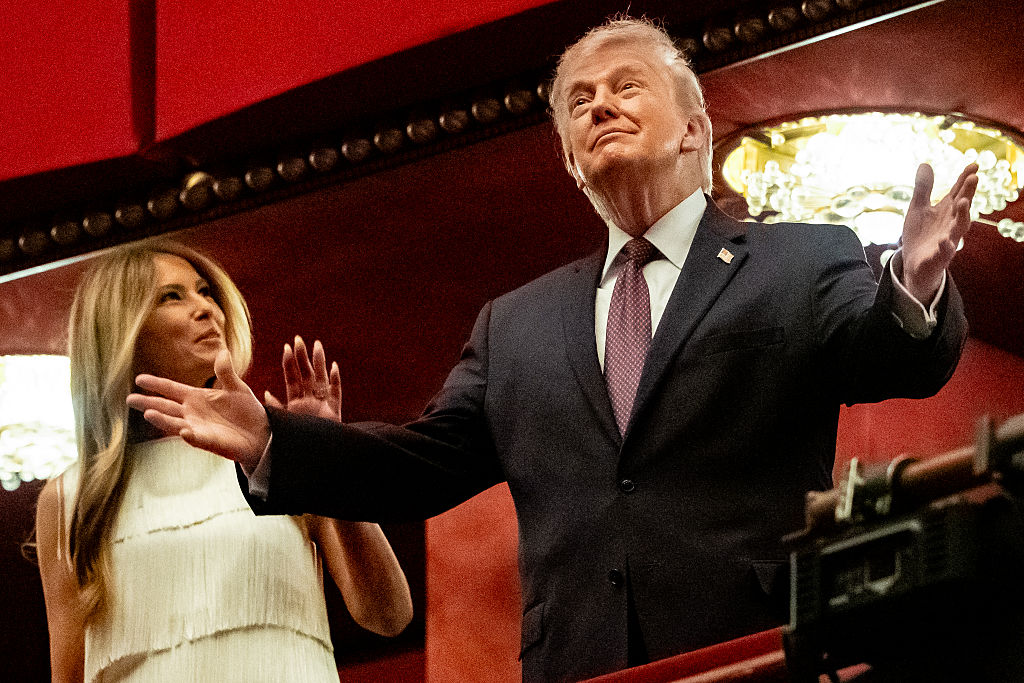
As with the surge in prosecutions for hate-speech on social media, there has been an increased determination to punish offensive words in the real world. Consider a new surveillance programme by Surrey police, who last month announced the launch of their own ‘Jog on’ initiative, a country-wide operation first rolled out by West Yorkshire Police, in which plain-clothed police officers dressed in running gear jog through public spaces trailed by squad cars ready to collar anyone found making cat-calls, wolf-whistles or ‘sexually suggestive comments’ in their direction.
Or regard news from neighbouring Kent, where Thanet District Council recently unveiled a Public Space Protection Order which would fine residents or visitors to the likes of Margate, Ramsgate and Broadstairs for using foul language deemed to cause harassment, alarm or distress. Critics, including Toby Young of the Free Speech Union, consider the order to be so badly-worded and hopelessly vague that last week the Union issued a legal challenge over the Council’s proposed ban.
An even more sinister development, one that is already having nationwide consequences, are laws that have been passed in Parliament or those awaiting ratification. On the heels of the Online Safety Act of 2023, which implemented of range of new range of new duties on social media companies and search services to introduce safety measures to protect children from harmful content, there has subsequently arrived the Employment Rights Bill, with its requirement for employers to take ‘all reasonable steps’ to prevent third-party harassment. Or in plain English, a ‘banter ban’ enabling workers to take action against employers if they overhear hurtful words. To add to this, we have a growing impetus to put on the statue book a definition of ‘Islamophobia’, which critics fear will only stifle free speech, particularly when it comes to talking openly of ‘grooming gangs’, or will introduce blasphemy laws by the back door.
All this determination to clamp down on the unpleasant things that people might say has taken place against a backdrop of decreasing policing interest in criminal acts. Contrast our fixation with words with the collapse in burglary clean-up rates, the surge in shoplifting, the epidemic of mobile phone thefts and the inclination of judges to let-off asylum seekers who have committed crimes.
Is ‘two-tier’ justice with us today? Very probably. Has a parallel approach to mere words and physical crimes been with us even longer? Most certainly.
Is Colombia reverting to chaos?
Two terror attacks which hit Colombia on Thursday revealed a scary new level of sophistication among the country’s ever present narco-terrorists – and threatened to return the country to the violence and chaos that many had hoped it had finally escaped.
The double terror strikes killed 18 people and involved a car bomb in Colombia’s third most populous city of Cali in which at least six people died, and an earlier drone downing of a police helicopter near the city of Medlllin – long notorious as Colombia’s drugs capital – in which 12 people died.
The use of a drone is thought to be the first time that the 21st century weapon has been used by terrorists in Colombia, and indicates that a worrying new level of sophistication has been reached by the ruthless so called narco-terrorists.
Colombia has been plagued for decades by violence perpetrated by drugs gangs controlled by millionaire barons who have made their fortunes producing and selling cocaine. At the same time until 2016 the country’s democratically elected governments were fighting a jungle war against the left-wing guerilla army the FARC and far right paramilitary groups.
Like many Latin American states Colombia has a long history of alternating between dictatorship and democracy, but the explosion in its production of illicit narcotics since the 1970s to feed the ballooning markets in the US and Europe has fuelled and fed these political conflicts.
Colombia was prostrated for ten years of civil conflict between 1948 and 1958 between the traditional ruling Liberal and Conservative parties. The fighting, known simply as “ La Violencia” killed an estimated 200, 000 people – or 1 in 50 Colombians.
Hardly had ‘La Violencia’ ended with the rival parties forming a pact of national unity when the influence of Fidel Castro’s socialist revolution in Cuba spawned guerilla rebellions launched by groups like FARC. At the same time the worldwide escalation in the demand for drugs saw the rise of drugs barons like Pablo Escobar, who accumulated so much wealth and bribed officials with their ill gotten gains that their criminal power came close to ousting elected governments. The Medillin Drugs cartel run by Escobar practically formed a criminal parallel regime to the legal government in the capital Bogota.
Escobar and his bodyguards died in a gun battle with police in 1993, but other drugs lords picked up his torch and it became increasingly hard to differentiate between purely criminal violence and the political terror caused by groups like FARC. In 2016, after years of tortuous negotiations, the government reached a truce with FARC and the following year the guerillas laid down their arms and announced that they were transforming themselves into a legitimate political party.
In 2022, the current President Gustavo Petro was elected as the first left-wing President in Colombia’s recent history and he has continued to pursue a peaceful path both with the far leftist groups who still use violence and the narco-terror criminal cartels.
The latest two acts of terror are a hammer blow to the ever fragile peace process, and many fear that so long as the rest of the western world does drugs in industrial quantities the violence will continue.
Will one rotten rebrand spoil Cracker Barrel?
No one thinks the Cracker Barrel rebrand is a particularly good idea. The entire charm of Cracker Barrel lay in the farmhouse attic vibe, the nana’s candy dish assortment in the gift shop and the menu, which served up the best chicken and dumplings or biscuits and gravy and sweet tea possible from a fast-casual chain with horrible wooden chairs. Still, the melodrama surrounding this story, the rising and falling stock prices, the online mocking and gloating, seems a little overblown. Not everything has to be political. Cracker Barrel certainly doesn’t.
For those of you who’ve been wandering around the fields with a bucket on your head this week, Cracker Barrel has streamlined. They’ve decided to remove Old Man Joe or whatever his name is from the logo, though keeping the same basic font for the color scheme, and have retooled some store interiors, making it look less like a surreal Indiana BnB nightmare and more like something Chip and Joanna Gaines might have shiplapped together.
The new Cracker Barrel vibe met with equal condemnation from online Red and Blue America. The Steak and Shake chain, which made news earlier this year for its brave MAHA decision to fry potatoes in beef tallow, tweeted out the old Cracker Barrel logo with a surprisingly long manifesto:
“Sometimes, people want to change things just to put their own personality on things. At CB, their goal is to just delete the personality altogether. Hence, the elimination of the “old-timer” from the signage. Heritage is what got Cracker Barrel this far, and now the CEO wants to just scrape it all away… At Steak n Shake, we take pride in our history, our families, and American values. All are welcome. We will never market ourselves away from our past in a cheap effort to gain the approval of trend seekers.”
Pretty catty, Steak and Shake, but maybe a little overboard. Cracker Barrel may be MAGA-coded, but Democrats enjoy a nice corporate meat-and-three sometimes, too, just like Trump supporters will sometimes go for an iced caramel macchiato at the heavily Dem-coded Starbucks. The last time I checked, collard greens in pot likker belonged to everyone.
Unfortunately, the most godawful annoying people on the Democrat side of the ledger appear to agree with me. The horrifying new Trump-parodying social-media presence from California governor Gavin Newsom, which is like a monkey’s paw curse on the extremely online, tweeted out: “WHAT IS WRONG WITH CRACKER BARREL?? KEEP YOUR BEAUTIFUL LOGO!!! THE NEW ONE LOOKS LIKE CHEAP VELVEETA ‘CHEESE’ FROM WALMART, THE PLACE FOR ‘GROCERIES’ (AN OLD FASHIONED TERM)!!! ‘FIX IT’ ASAP! WOKE IS DEAD!! THANK YOU FOR YOUR ATTENTION TO THIS MATTER.”
Then, to make matters worse, David Hogg came out of the Hogg Pen to say, about the Cracker Barrel rebrand, “Let’s bring the country together and all agree this is bad and needs to be reversed immediately. Not for the left or the right but for America.” And Hogg’s political opposite, Rep. Byron Donalds from Florida, tweeted out, “In college, I worked at @CrackerBarrel in Tallahassee. I even gave my life to Christ in their parking lot,” which led Hogg to retweet someone who said “I gave my life to christ in a cracker barrel parking lot in Tallahassee” is a lana del rey lyric.”
OK, have all the sincere people and ironic X hipsters had their say now? Are we done with Cracker Barrel jokes yet? Or are we going to have to endure weeks of memes like the ones I just saw with the old Cracker Barrel logo with the words “Release The Files” in the place of the company name?
I don’t think the Cracker Barrel rebrand is a particularly good idea, but then again, maybe America has moved on from its self-conception as a continental extension of the Country Bear Jamboree. Middle America doesn’t look like the set of Hee Haw anymore. Not all change is good, but private equity doesn’t always get it wrong, either.
Once again, Dems are misreading the cultural tea leaves and trying to appeal to a regular-guy demographic that no longer particularly exists. We live in Magnolia nation now; put that in your repurposed corncob pipe and smoke it. Anyone who doesn’t realize that is, in the words of the iconic Cracker Barrel peg game, just an “EG NOR A MOOSE.”
Home Office seeks to appeal High Court migrant hotel decision
It’s the issue that has dominated the week: hotels housing asylum seekers. On Tuesday, the High Court granted a temporary injunction to Epping Forest district council, meaning that the asylum seekers living in Essex’s Bell Hotel will have to be removed within 24 days. The landmark ruling has prompted councils across the country to consider taking similar legal action – but now it transpires that the Home Office is seeking to intervene in the decision. Good heavens…
The action will not seek to appeal the entire judgment but, security minister Dan Jarvis told broadcasters on Friday, the government is seeking to challenge the High Court’s decision on the Bell Hotel, so that Home Secretary Yvette Cooper is allowed to intervene. He added:
The government will close all asylum hotels and we will clear up the mess that we inherited from the previous government. We’ve made a commitment that we will close all of the asylum hotels by the end of this parliament but we need to do that in a managed and ordered way.
It’s not quite clear yet however what this means for this week’s judgment…
In a further statement, Cooper said:
We agree with communities across the country that all asylum hotels need to close, including the Bell Hotel, and we are working to do so as swiftly as possible as part of an orderly, planned and sustained programme that avoids simply creating problems for other areas or local councils as a result of piecemeal court decisions or a return to the kind of chaos which led to so many hotels being opened in the first place. That is the reason for the Home Office appeal in this case, to ensure that going forward, the closure of all hotels can be done in a properly managed way right across the country without creating problems for other areas and local councils.
The legal action came after a series of protestors gathered outside the venue after a resident was charged with sexually assaulting a 14-year-old girl. claimed that Somani Hotels had breached planning rules, given the site is not being used for its intended purpose. The barristers argued that the situation ‘could not be much worse’, with Philip Coppel KC adding: ‘There has been what can be described as an increase in community tension, the catalyst of which has been the use of the Bell Hotel to place asylum seekers’. Lawyers for the hotel fumed an injunction would be a ‘draconian’ move, while the Home Office tried to intervene at the last minute, with its lawyers insisting the injunction ‘runs the risk of acting as an impetus for further violent protests.’ The council’s barristers won on a planning technicality, after a judge concluded the Bell Hotel was not being used for its designated purpose: to house hotel guests.
The ruling set a significant precedent, and now a number of councils across the country are considering taking similar legal action – including nine Labour-controlled councils. Migrant hotels have decreased under Labour – and more people blame the previous Tory government for asylum seeker hotels – however Home Office stats on Thursday revealed that in Keir Starmer’s first year there had been 111,000 asylum claims made. Meanwhile newspapers are filled with reports of weekend protests in a number of council areas, while Reform’s deputy leader Richard Tice has backed Britons protesting outside other migrant hotels. He added that the 12 councils across Britain in which Reform is the largest party will also push for similar action. But will the government pushback change any of this? Stay tuned…
Meet the man putting hundreds of England flags up around York
Over the last few weeks, Brits across the country have been adorning streetlights and roundabouts with Union Jacks and St George’s Crosses. This is perhaps one of the most benign demonstrations of national pride possible – yet it is being treated by some as a revolutionary act. A recent BBC piece felt it necessary to state that ‘both flags have been used as emblems for far-right political movements,’ as if a country having a flag is far-right. This bizarre self-loathing is one of the reasons the movement has spread like wildfire.
Moulton and his team have since bought more than a thousand flags and raised tens of thousands of pounds for more
Joseph Moulton is part of the original group that inspired this patriotic contagion. He’s spearheading the effort in York, and is a founding member of Flag Force UK, which he estimates is the largest flag-organising body nationwide.
I met Joseph five years ago, in Armenia, when I was reporting on the war in nearby Nagorno-Karabakh. He was a fiercely ambitious and idealistic 18-year-old who cared deeply for his country, but found himself disillusioned with the state of Britain – especially its lack of communitarian ideals. ‘Britain can’t just be an economic zone. We currently don’t have any national dream or civilisational aspiration,’ he said then.
In Armenia, Moulton found a society that was reeling from war, and poor by British standards, yet it was held together by an unshakable national pride and collective dignity.
‘I witnessed a vibrant community – everyone being only one degree of contact away from the next – despite being in a city of millions. People were considerate and familiar, unified by their shared hardship and religion,’ he said. It reminded him of a Britain he was told stories of but never had the privilege of knowing.
‘My Nan lived in Thurnscoe, a small mining village, before Thatcher closed down the mines. Everyone knew each other, they would police themselves, if there was an issue in the morning then people would resolve it in the pit that night,’ he said. ‘These were stories of an England I was not born into, unfortunately. An England which was gutted along with the industries which supported it in favour of cheap imports and labour.’
The idea of plastering York with English flags began with a conversation between Moulton and his mates. ‘We rarely see British or English flags flown outside sporting events or like a coronation, whereas in the rest of the world, it’s common to see national flags all over the place, all year round,’ he tells me when we catch up over the phone this week.
They started by putting up flags on a few lampposts on their local street and forgot about it for a while. But then they discovered locals on a community Facebook page were clamouring for more. So they ordered more flags – Union Jacks and St George crosses in equal shares – and got to work.
Moulton and his team have since bought more than a thousand flags and raised tens of thousands of pounds for more. Other flagging groups have since popped up across Britain. What started as a gesture of national pride is being paired with community service. As the York flaggers walk between lampposts, they have bins to collect rubbish on the side of the road. Moulton is helping to facilitate these efforts nationwide.
After Armenia, Moulton had an exotic and intriguing life as an entrepreneur. He met a security contractor who needed help with business development and sales, so he went to work for them in Ukraine and Libya. He then went out on his own for a similar venture in South Korea. But he never abandoned Britain, and Britain always managed to find him, usually in the form of another wandering Brit. Shortly after meeting some bloke in a dodgy bar, in an even dodgier country, they’d get chatting ‘as if we’d known each other for years.’
‘It’s that free speaking and friendliness which is being neutered by the government and reinforced by a censorious, stuffy culture. It prevents the people from developing a political consciousness. But when I’m abroad, that inhibition is just dropped,’ he tells me.
Moulton was again inspired by his experience working out of Japan. ‘I really felt a degree of culture shock I hadn’t experienced since I first started travelling. I was enamoured by the silent etiquette around how you behave in public, the immaculate streets, and the community volunteers or “Chonaikai” who help keep their local areas clean, safe and happy,’ he said.
The Chonaikai are neighbourhood or residents’ associations in Japan that handle local community matters – such as disaster preparedness, festivals, waste management, and mutual aid – serving as a grassroots level of self-governance. It’s this communitarian spirit that Moulton is hoping to cultivate with Flag Force.
He emphasises that the movement has legs of its own and he’s just a spokesman for the York-based team. Others are scared of being linked to the movement, in case they face repercussions.
If some of the other organisers were to be as outspoken as Moulton, ‘people may call in their work and try to get them fired or do targeted harassment. Abhorrent stuff, but it’s a reality for many people, particularly when it comes to expressing patriotic sentiments,’ he says.
Not everyone has appreciated this conspicuous reminder of the nation they belong to. Moulton says that of the 300 flags his group has raised, 25 were taken down by the local council, and another 15 by unknown locals.
York council only took down flags on a street leading toward the Ebor festival, York’s most important annual spectacle. ‘Potentially, they can claim there are security concerns over people hoisting flags on their own accord, but it’s a stretch,’ he says.
Outside of that, he says the council has been conciliatory and won’t be taking down any of their other flags. But he is demanding the council return any confiscated flags to Flag Force as they belong to the donors whose funds were used to purchase them.
‘Ultimately’, he says, ‘the flag belongs to its people and not a government which continues to fail us.’
Benjamin Netanyahu is getting desperate
As the IDF announced the imminent mobilisation of some 80,000 reservists in preparation for the decisive battle to seize Gaza City, the prospect of a negotiated deal with Hamas – one that could secure the release of the 20 hostages believed to still be alive, along with the remains of 30 others presumed dead – appears to be slipping further out of reach.
Prime Minister Benjamin Netanyahu, according to political and diplomatic sources within the far-right coalition that has dominated Israel’s government for nearly three years, is ‘resolute in pursuing the war, even at the grave cost such a course is expected to exact.’ For him, the campaign has become not merely a matter of policy but of survival.
Yet even within the military’s top brass, doubts run deep. The mobilisation order was issued by Chief of Staff Lieutenant General Eyal Zamir, despite his opposition to the plan. In a tense cabinet meeting, Zamir warned that entering Gaza City – a densely populated urban labyrinth that is home to nearly one million Palestinians, half the Strip’s inhabitants – would be nothing less than a ‘death trap’. His estimate was that at least 100 soldiers were likely to be killed (adding to the 1,000 who have already been killed since 7 October 2023) and that some, if not all, of the hostages would perish as well, either in IDF bombardments or at the hands of Hamas in revenge.
Netanyahu, his government, and even the chief of staff are all wagering on one crucial assumption: that most Israelis – including former top IDF and security chiefs who oppose Netanyahu and his rule – will stop short of calling for outright refusal to serve. This stands in stark contrast to the United States during the Vietnam War, or even Israel itself during the First Lebanon War, which dragged on from 1982 until 2000.
And yet the hypocrisy is glaring. The ultra-Orthodox public – whose parties form an indispensable pillar of Netanyahu’s coalition – continues, under rabbinical edict, to refuse sending their sons into uniform, let alone into the line of fire.
Where refusal does exist, it is expressed in quieter, greyer forms. Tens of thousands of reservists have simply failed to report for duty, cloaking their absence in explanations that are, in reality, acts of passive resistance: that they have already served 200 to 300 days, that their families are suffering, their businesses collapsing, their lives falling apart. Add to this some 15,000 wounded and traumatized veterans, and the picture becomes even starker. The army is also grappling with a sharp rise in suicides among soldiers.
The IDF, fully aware of the phenomenon, prefers to turn a blind eye rather than confront it head-on, tacitly accepting these ‘explanations’. What makes this tolerance possible is money. The government has been compensating reservists generously, sometimes lavishly, to the point where service becomes not only bearable but, for some, financially profitable. The line between patriotic duty and mercenary work grows disturbingly thin.
Meanwhile, the families of the hostages – and the public that stands with them against Netanyahu – are sinking into despair. On Sunday, nearly a million and a half Israelis once again poured into the streets, paralysing wide swaths of the country, even as the trade unions, tightly controlled by Likud, refused to lend their support. But exhaustion is palpable; the Israeli public is weary.
Among the anguished voices, Einav Zangauker – whose son Matan is among the captives – delivered perhaps the most searing indictment yet. ‘If my son and the hostages die, their blood will be on your hands,’ she declared to Netanyahu, ‘and I will haunt you for the rest of your life’. But if her words stung, Netanyahu showed no sign of it. Once again, he displayed an almost clinical indifference to the hostages’ fate, choosing instead to double down on the belief that this time, unlike so many times before, his military gamble will succeed and Hamas will be crushed and expelled from Gaza. His record of broken promises makes such confidence ring hollow, yet he remains undeterred.
The Gaza war is part of a larger design
Political analysts across the spectrum – including some who have long been sympathetic to him – increasingly agree: Netanyahu’s overriding motive is not national defence but political survival. For him, the war itself has become a kind of insurance policy, a means of diverting public attention from the crises metastasising at home: economic strain, deepening social fractures, and Israel’s accelerating international isolation.
The war will likely grind on for as long as it serves Netanyahu’s political interests – and for as long as Donald Trump continues to give him a free hand. This, despite Trump’s repeated lips service and rhetorical nods to the humanitarian disaster unfolding in Gaza, and despite the fact that his own special envoy, Steve Witkoff, was the one who crafted the framework for a deal: the release of ten hostages and 18 bodies in exchange for hundreds of Palestinian prisoners and a two-month ceasefire.
But what is happening in Gaza cannot be understood in isolation. It must be seen in the broader context of Netanyahu’s far-right coalition, without whose support he has no government. Ministers in that camp now speak openly of their intention to expel Gaza’s two million Palestinians and to plant Jewish settlements in their place – a replay of the West Bank project Israel has pursued since 1967. There, settler violence and terror against Palestinians are on the rise, with the Israeli military largely turning a blind eye.
The Gaza war, then, is not merely a military campaign; it is part of a larger design. It is inseparable from Netanyahu’s wider effort to engineer a religious-nationalist regime change – a slow-motion coup aimed at dismantling Israel’s liberal-democratic order.
What began as a justified response to a brutal terrorist attack has become, above all, one man’s desperate crusade for power.
The unions will regret their Autumn of Discontent
Just how thick are the public sector unions? The RMT’s announcement of a week-long strike on the London Underground in September is little short of a death wish. The unions spent 14 years trying to get rid of a Conservative government and its hated ‘austerity’. Within days, an incoming Labour government had awarded public sector workers substantial pay rises with no strings attached: no job losses, no demands to improve productivity, no changes to working practices. On the contrary, they were granted new workers’ rights, the right to demand flexible working hours and all the rest. So what do they do in response? Threaten to re-enact the 1979 Winter of Discontent – yes, the one which finished off Jim Callagahan’s Labour government and ushered in 18 years of Conservative government.
Surely, they can see where this autumn’s round of strikes is going to lead. Can they not see the state of the public finances? The government this year will spend well over £100 billion servicing its debts. We face a budget deficit which will pile yet another £150 billion on the national debt this year – increasing the debt bill next year even more. It may already be too late to save the country from a sovereign debt crisis on the scale of that which engulfed Greece in 2011. Last year’s wage rises have already created a fiscal black hole all of their own.
The unions want instant satisfaction, never mind the longer-term consequences
Twice, Rachel Reeves’ famed ‘fiscal headroom’ has vanished. More tax rises have become inevitable, yet whether they will actually raise extra revenue is a moot point. It is not only workers who can go on strike; there is a serious chance that taxpayers will, too. Do a little less work, investigate tax avoidance schemes which you might otherwise not have bothered with, move abroad, hang onto the home that you planned to sell; there are a myriad of ways in which taxpayers might react negatively to yet another round of tax rises and which might well limit possible revenue from tax hikes.
Yet against this background trade unions have chosen the moment to push for even higher public spending. In doing so they are merely hastening the day when Rachel Reeves has to do what her 1970s predecessor Denis Healey had to do: go crawling to the IMF for a bailout. But there will be a very big price to pay. Just as the ECB demanded huge cuts in public spending in Greece, so Britain will be forced to slash public sector employment, salaries and pensions.
Wiser union leaders would see this and realise that their interests hinge on a fiscal crisis being averted and the Labour government surviving in office. They would hang back, realise that the government has gone as far as it possibly can on public sector wages and accept the wage increases which have been offered. The offer made to tube workers – 3.4 per cent – may be a little behind this week’s inflation figures, yet it is in line with the Retail Prices Index (RPI) back in February, a traditional benchmark for their workers. They would sit and wait for better fiscal days – and then subtly ratchet up their pay demands.
But just as in 1979 the unions can’t seem to see any of this. They want instant satisfaction, never mind the longer-term consequences. Those consequences will be a very long, dark winter for the public sector.
How parliament is weaponised against Reform UK
A recent trend has emerged at Prime Ministers’ Questions. Each week, after Keir Starmer and Kemi Badenoch have had their exchange, a series of Labour backbenchers will stand up. Among the usual points about constituency matters, there is typically at least one Member who will take aim at either Reform UK or its leader, Nigel Farage. This fits with Labour’s overall political strategy of going after the Clacton MP personally, with a series of attack adverts produced last weekend.
Now, for the first time, The Spectator has obtained data which shows the scale of the assault which Reform UK is facing each week. So far this year, there have been 24 sessions of Prime Ministers’ Questions or Deputy PMQs. Figures from the House of Commons library show that Starmer, his deputy and their backbenchers took aim at Reform or its leader some 36 times in total this year – the equivalent of 1.5 times per session in 2025. Ukraine and the NHS are mentioned frequently.
The format of PMQs means that Reform are not able to respond to such attacks. After a Labour backbencher delivers his or her jibe, Keir Starmer can then stand up to stick the boot in. Farage and his three other MPs can apply in the ballot for questions – but in a chamber of 650, the odds do not favour them. Reform has only had eight questions this year, with Farage asking four of these. This means that for every nine attacks on Reform, Farage himself has only able to respond once.
For every nine attacks on Reform, Farage himself has only able to respond once.
Much like parliament, PMQs is well-designed for the traditional two-party system. The Leader of the Opposition gets six questions, with hordes of backbenchers on hand to ask useful supplementaries. But never in the postwar era have we seen a situation like now, where Reform is drawing fire from both the front and back benches, week in and week out. Critics will argue that the system is merely working as intended: if Reform wants more questions, they argue, they ought to win more seats.
Yet the danger is that fair-minded viewers will be turned off by seeing Labour MP after Labour MP queuing up to attack Farage, with no chance of reply. Thus far, evidence suggests that the current PMQs strategy has not succeeded, with Reform now averaging a nine-point lead in The Spectator’s poll of polls. Having been mentioned just once at PMQs between July and December 2024, the uptick in verbal attacks since then is a backhanded compliment to Reform UK’s subsequent growth.
The critique of Farage and others is that parliament is not working for the people. By endlessly asking about Reform, Labour risks vindicating this argument and exposing their own impotence. It was only a few years ago that Boris Johnson was able to fight and win a general election on the theme of ‘parliament versus the people’. Attacked in the House of Commons and blocked from the House of Lords, Reform will likely try to lean into this argument come 2029.
The BBC’s Israel problem needs investigating
When the BBC was forced to admit that a woman it featured as a starving victim of the Gaza war was in fact also receiving treatment for cancer, it was not a minor correction. It was a collapse of credibility. The image of her wasted body, presented as evidence of Israeli starvation tactics, ricocheted across global media. It was powerful and emotive. And it is part of a broader and deeply troubling pattern.
Time and again, when it comes to Israel or Jews, the BBC abandons the basic obligations of journalism: verify before broadcasting, contextualise before condemning, and correct with real transparency when errors occur. The list of failures is not merely anecdotal but institutional.
The problem is particularly acute in BBC Arabic
In November 2021, a BBC report suggested that anti-Muslim slurs were heard from Jewish teenagers on a bus attacked on Oxford Street in London. Ofcom later ruled this a serious editorial misjudgment. In July 2023, a news anchor for the corporation told an Israeli guest that the IDF were ‘happy to kill children’. The BBC apologised, but the smear was broadcast to the country. In October 2023, a live correspondent speculated that the Al-Ahli hospital explosion looked like an Israeli strike. That too was false. The BBC admitted the error only after the damage was done.
In January 2015, during a live broadcast from a major rally after the terrorist attacks in Paris, including the killing of four Jews at the kosher supermarket Hypercacher, the BBC’s Tim Willcox interrupted the daughter of Holocaust survivors who was sharing her experience of enduring anti-Semitism to tell her, ‘Palestinians suffer hugely at Jewish hands as well.’ He admitted it was ‘poorly phrased’, but the BBC did not find he had broken internal editorial rules. In August last year, the BBC interviewed Miriam Margolyes on Radio 4, where she described Dickens’s Fagin as ‘Jewish and vile’, adding, ‘I didn’t know Jews like that then, sadly I do now.’ The BBC removed the clip from iPlayer, but later denied it breached guidelines on racism.
When it comes to the current war in Gaza, there is a pattern in this misreporting. Repeatedly, Hamas claims are aired without verification, Israeli denials are buried, and the most inflammatory interpretations are granted top billing. In November, the BBC falsely reported that the IDF was targeting medics. They later admitted they misquoted a Reuters report. In December, it broadcast Hamas allegations of ‘summary executions’ without corroboration, later apologising for this too. Yet apologies do not erase impact. Nor do they correct the record for those who never see them.
A quiet tweak to a headline and a small note at the bottom is not accountability. It is face-saving. If a newsroom with the BBC’s resources publishes a powerful claim built on a powerful image, the correction should be just as prominent as the original. More importantly, we should learn who signed off on the story, what checks were done, and why those checks failed. This should not be another exercise in a broadcaster marking its own homework. External scrutiny is overdue.
We must not accept that lack of access to Gaza is an excuse for lowering standards – the repeated BBC taunt addressed at Israeli officials. If reporters cannot go in, the burden of verification goes up, not down. There are tools available: open-source investigation, Arabic-language reporting, medical documentation, full-frame image analysis and transparent chains of attribution. Independent researchers have shown what can be done with rigour and patience. Large newsrooms can at least match that.
There is also an editorial problem. Human-interest pieces have their place, but when they become the spine of coverage, the public is left without any grasp of strategy, aims or outcomes. Wars should be covered as wars. Defence and security correspondents ought to lead, explaining objectives, operational realities, advances and setbacks, alongside humane reporting about civilians. Anecdotes should illuminate, not substitute, the analysis.
One clue that this could be attributed to personal animosity of specific people within the organisation is that the problem is particularly acute in BBC Arabic. Its handling of complaints about Israel coverage was the subject of a public apology in 2022, after it was revealed that many valid complaints were ignored, delayed, or quietly corrected without formal acknowledgement.
In May 2025, during a BBC broadcast, a BBC Arabic presenter denied verified details of Hamas’s 7th October atrocities. Around the same time, two contributors picked by the BBC to appear on its high-profile platforms were revealed to have posted violent anti-Semitic messages online. One had written on Facebook: ‘We shall burn you as Hitler did, but this time we won’t have a single one of you left’, as well as: ‘When things go awry for us, shoot the Jews, it fixes everything’ and elsewhere on social media ‘#We Are All Hamas You Son of a Jewess’. Another referred to Israelis as ‘not human beings’ and to Jews as ‘devils’. The BBC distanced itself, but why had they invited these monsters to speak in the first place?
This is not confined to fringe voices. In February this year, the BBC aired its now infamous flagship Gaza documentary, narrated by the son of a Hamas official. It was withdrawn shortly afterwards, after a review found it was misleading, and there had been mistranslations and selective editing that softened genocidal language against Jews and extremist tendencies of contributors. The same month, BBC Arabic apologised for a segment implying that Jews spit on Christians as ritual behaviour on Jewish festivals, and for publishing an article that falsely claimed ‘fanatical Jews’ were forerunners of modern suicide bombers, drawing a grotesque historical link to the 9/11 attacks. That article was corrected more than 400 working days after publication.
And now, we are expected to accept that a woman undergoing cancer treatment was accidentally mischaracterised as simply starving, as if no alarm bells rang in the newsroom, no one asked for medical confirmation, no editor queried the provenance of the image. If this is the level of scrutiny applied to material accusing Israel of war crimes, then the BBC is not just failing in its duty, it is participating in a distortion.
That distortion does not begin with 7th October. Nor does it end with Gaza. It reflects something deeper: a willingness to believe the worst about Jews, to frame Israeli actions as uniquely malign, and to amplify outrage over accuracy. Whether this is conscious or not is beside the point. Prejudice does not require intent. But it does demand reckoning.
It is no longer enough for the BBC to apologise after the fact, to tweak headlines quietly, or to promise internal reviews. The time has come for a full, external, public investigation into its coverage of Israel and its treatment of Jewish issues. We must know who approved these stories, what checks failed, and why the same pattern recurs.
When it comes to these slurs and untruths about Jews and Israel, does Britain’s national broadcaster reflect Britain itself? If not, then we must act decisively to prove it. Because a media institution that cannot treat Jews and Israel with basic fairness is not simply failing a minority group, it is failing the country.
Five bets for York today and tomorrow
The big sprint races of the season have repeatedly thrown up surprise results, most notably when 66-1 shot No Half Measures landed the Group 1 Al Basti Equiworld, Dubai July Cup Stakes at Newmarket last month over six furlongs.
So, with no horse able to dominate the sprint division this summer, it makes no sense to take a short price on any horse for this afternoon’s Group 1 Coolmore Wootton Bassett Nunthorpe Stakes (3.35 p.m.) run over five furlongs at York.
I was tempted to put up Richard Hughes’ three-year-old filly Sayidah Dariyan after her fine run at the course last month when landing the Group 3 William Hill Summer Stakes, but odds of no bigger than 7-1 means I will look elsewhere for value.
Night Raider will surely come good at some stage but even a trainer as astute as Karl Burke has struggled to find his best distance, running him in the Qipco 2000 Guineas over a mile last year before reverting him to sprint trips this season.
He did win his race on the near side last month when sixth in the Group 2 King George Qatar Stakes at Goodwood but only three other runners stayed with him on the near side and so that form is anything but rock solid. Furthermore, odds of no bigger than 12-1 are also on the skinny side. Don’t rule out Jonny Portman’s sprinter, Rumstar, if he is on a going day but he is a hit-or-miss performer.
On balance, however, I will take a chance with Ed Walker’s CELANDINE even though she might prefer six furlongs to five and looks to have a less-than-ideal draw in stall 16. This three-year-old filly is highly rated by her handler and has run two of her best races at York.
She is also lightly-raced this season, will have her ideal fast ground and has the help of Tom Marquand in the saddle. Back Celandine one point each way at 22-1 with Sky Bet, paying five places. Other bookies are three points bigger but offering one less place.
Jockey David Egan has a good record when riding for trainer Richard Spencer, notably winning Ascot’s Moet & Chandon International Handicap and Goodwood’s Coral Stewards’ Cup in the space of eight days on the stable’s horse Two Tribes.
In the last race at York today, the Sky Bet Mile Handicap (5.20 p.m.), the jockey-trainer duo team up again with YAH MO BE THERE who has run a couple of big races at Royal Ascot and Glorious Goodwood, without much luck in running on the latter occasion.
Today could be the day when this lightly-raced three-year-old colt comes good so back him one point each way at 6-1 with bet365, paying five places.
Tomorrow’s big race at York is the Sky Bet Ebor (3.35 p.m.), Europe’s richest flat handicap over a distance of one mile six furlongs. As usual, it’s a hugely competitive contest with any number of plot horses from both sides of the Irish Sea.
Hipop De Loire is the most likely winner of the race but is too short for me at no bigger than 3-1. Other Irish raiders with a chance include Ascending, whose handler Henry de Bromhead trained the winner of this race in Magical Zoe last year, and Kihavah, who was second in the race last year but is 9lbs higher in the ratings 12 months on.
The home (British) trainers have some decent entries too including Almosh’her, who has had a break after being gelded, and top-weight French Master, from the all-conquering father and son training team of John and Thady Gosden. At a huge price, don’t rule out David O’Meara’s Stressfree who is better than he has shown in his last three runs.
I put up Majestic Warrior two weeks ago at 25-1, five places, and on balance I will stick only with that horse since my other ante-post tip, Plage De Havre, is a non-runner, presumably after a set-back as this race was tailor-made for trainer Andrew Balding’s talented four-year-old gelding. The other race on York’s Saturday card that I always love to try to find the winner of is the Sky Bet Melrose Handicap (2.25 p.m.) for three-year-olds over the same distance as the Ebor.
Yorkshire handler Ed Bethell has had this race in mind for TALISMANS TIME for several months and he has managed to get his light-raced gelding into it off a nice mark of 85 despite being unbeaten in two runs this season. The trip and ground conditions should be ideal and so back Talismans Time one point each way at 10-1 with Betfred, Sky Bet, Paddy Power or Betfair, all paying four places.
However, I am going to go into this race double-handed as I also have SEA OF KINGS in my horse tracker after his luckless run at Glorious Goodwood when he was beaten less than five lengths into fifth place despite a slow start and being hampered in running. Trainer Harry Eustace clearly loves this horse and he knows how to prepare one for a big target. So back Sea of Kings one point each way too at 6-1, with bet365, Betfred, Sky Bet, Paddy Power or Betfair, all paying four places.
Saffie Osborne has been riding well all week at York, including winning on a 33-1 shot on the opening day of this meeting, and she had a decent chance of winning another race tomorrow with her mount in the Sky Bet Constantine Handicap (4.10 p.m.) over six furlongs.
Once trained by Henry Candy but now with Richard Spencer, TWILIGHT CALLS won the race of those 14 runners that raced on the far side in the Coral Stewards’ Cup at Goodwood earlier this month. He’s been dropped another llb in the official ratings and so this seven-year-old gelding is starting to look well handicapped off a mark of 96. Back Twilight Calls one point each way at 12-1 with Sky Bet, paying a generous six places.
Finally, I make no apology for promoting a good cause. Tom Dunlop, the 19-year-old son of former trainer Harry, is cycling 2,600 miles across the UK, visiting all 60 racecourses, and raising funds for the Injured Jockeys Fund and Diverse Abilities. If anyone is feeling flush after Penworthy’s profitable season of tipping, please donate a few quid to support Tom’s Big Bike Ride.
Pending:
1 point each way Celandine at 22-1 for the Nunthorpe, paying 1/5th odds, 5 places.
1 point each way Ya Mo Be There at 6-1 for the Ebor Handicap, paying 1/5th odds, 5 places.
1 point each way Talismans Time at 10-1 for the Melrose Handicap, paying 1/5th odds, 4 places.
1 point each way Sea of Kings at 6-1 for the Melrose Handicap, paying 1/5th odds, 4 places.
1 point each way Twilight Calls at 12-1 in the Sky Bet Constantine Handicap, paying 1/5th odds, 6 places.
1 point each way Plage De Havre at 16-1 for the Ebor Handicap, paying ¼ odds, 4 places. NR.
1 point each way Majestic Warrior at 25-1 for the Ebor Handicap, paying 1/5th odds, 5 places.
1 point each way No Half Measures at 12-1 for the Sprint Cup, paying 1/5th odds, 3 places.
The past week: – 4 points
2 points win Jumby at 11-2 in the TPT Fire Handicap. Unplaced. – 2 points.
1 point each way Secret Guest at 17-2 in the Great St Wilfred, paying 1/5th odds, 5 places. Unplaced. – 2 points.
1 point each way Dancing In Paris at 12-1 for the Sky Bet Stayers Handicap, paying ¼ odds, 4 places. 4th. + 2 points.
1 point each way Old Cock at 25-1 for theClipper Handicap, paying ¼ odds, 4 places. Unplaced. – 2 points.
2025 flat season running total: + 103.43 points.
2024-5 jump season: – 47.61 points on all tips.
2024 flat season: + 41.4 points on all tips.
2023-4 jump season: + 42.01 points on all tips.
2023 flat season: – 48.22 points on all tips.
2022-3 jump season: + 54.3 points on all tips.
The right-wing extremist making a mockery of Germany’s self-ID laws
The leopard-print dress, earrings, and lipstick are quintessentially feminine. The thick handlebar moustache and neck tattoos, somewhat less so. The man in court is Sven Liebich, a right-wing extremist who has been photographed wearing a Nazi-style uniform at rallies. In 2023 he was sentenced to 18 months in prison for incitement, slander, and insult. This year his final appeal was rejected and he is now due to be sent to prison. Due to Germany’s comically woke laws on transgenderism, it is a women’s prison that he will be sent to.
The new law has also had a chilling effect on freedom of speech in Germany
Last year, the last German government passed the Self-Determination Act (‘Selbstbestimmungsgesetz’). Presented by former justice minister Marco Buschmann (of the liberal FDP) and Family Minister Lisa Paus (of the Green party), it liberalised German law on transgenderism. Prior to that, the Transsexual Act (TSG) mandated two psychological evaluations and a court ruling in order to ‘change sex’. The new law allows individuals to change their legal gender on all official documents, including changing their birth certificate, without even requiring a medical certificate of surgical sex reassignment. In other words, if you say you’re a woman, then in the eyes of the German law you are one.
But as a result, they’ve ended up with the comical sight of a right-wing extremist in drag and the very much less comical reality that he will serve his sentence in a woman’s prison. Having changed his name to Marla-Svenja and followed the correct procedures, there is nothing the authorities can do now. Even though he has stated that he only did it to ‘fuck with the system’ and grew a thick moustache to make it even more absurd, he will still be sent to a women’s prison in Chemnitz, Saxony. This probably wasn’t what Paus meant when she hailed the law as a ‘socio-political advance’ that would protect long-discriminated-against minorities.
This isn’t an isolated incident either. Two years ago, a violent transgender inmate in the same Chemnitz prison sexually assaulted female inmates and guards. Similar cases have occurred elsewhere: in Lower Saxony, a transgender convicted paedophile assaulted female inmates, and in North Rhine-Westphalia, another violent assault by a transgender inmate was reported.
Meanwhile, Berlin’s prisons have adopted gender-neutral cell door signs to avoid discriminating against transgender inmates. Despite doubts about Liebich’s transgender identity, Prosecutor Benedikt Bernzen stated, ‘we follow a legally prescribed standard based on two criteria: the registered gender, in this case female, and the place of residence’. Thankfully, prisons are allowed to move the transgender male-to-female prisoners to a male prison if there are incidents with inmates. Perhaps they should be housed in those to begin with?
The new law has also had a chilling effect on freedom of speech in Germany. When journalist Julian Reichelt, former editor of the Bild newspaper and head of the right-wing outlet NIUS, referred to Liebich as a man and by his original name, he was sued by Liebich for violating his personal rights. Reichelt’s defence attorney, the prominent media lawyer Joachim Steinhöfel, argued that ‘those who seek to legally prohibit naming biological reality oppose open discourse and freedom of expression. They exploit individual cases for ideological crusades’. Similar to cases in Britain, the Self-Determination Act has been used to censor gender-critical voices in the media and academia. Thankfully, this was an absurdity too far for the German law and Reichelt won.
Another example of how the law has been easily abused is Alina S., a transgender individual who has won 240 lawsuits against companies over their job advertisements. Under the law, these ads now have to feature male, female, and gender-neutral language. Many small companies have failed or forgotten to do this, something Alina exploited by suing them for gender discrimination. Even though nobody thinks these were deliberate attempts to discriminate, the courts have awarded Aline over €240,000 (£208,000) in damages. In another case last year, a transgender male-to-female was denied membership to a women-only fitness studio. The studio owner’s refusal led to a complaint with the governmental anti-discrimination agency, which proposed a €1,000 (£865) settlement. The case is now headed to court.
Although the ruling CDU party has pledged to reevaluate the law by 2026, prioritising child protection, their government coalition partners in the SPD remain committed to preserving the law. That means there is unlikely to be a change anytime soon, as the CDU is reliant on the SPD to stay in government. If there is any hope, it is that lawsuits like the one between Liebich and Reichelt will clip the wings of some of the most abusive practices brought about by the law. Thanks to this case, it is now possible to include someone’s birth name and sex in news reports, provided they are not derogatory or harmful in tone.
The broader question remains: how much harm will this law cause to women, children, and businesses before it is reformed? It is deeply irresponsible to let it continue this way.
Tory MSP quits over party’s ‘reactionary politics’
The Scottish Conservatives aren’t having the best time of it at the moment. In more bad news for the blues, this morning Jeremy Balfour MSP, the party’s social justice spokesperson, has decided to quit over its ‘reactionary politics’. In a heartfelt letter to leader Russell Findlay, the Lothian MSP takes aim at his former party for ‘no longer [having] a positive platform to offer the people of Scotland’ and being uninterested in helping those most in need in society.
Balfour has served in the Scottish parliament for almost a decade and held a number of briefs during that time – including on housing, equalities and welfare – and has had his fair share of controversies over abortion buffer zones and benefits for the terminally-ill. He has also been a long-time campaigner on helping disabled people get into work, having been born with limb disabilities himself. But Balfour no longer believes the Scottish Conservative party is the best vehicle to helping society’s most vulnerable, accusing Findlay of having ‘abandoned the effort’:
The MSP for Lothian is not the first member of the Scottish Tories to abandon ship this year
I have found that there is little interest from the leadership in genuine policy innovation, particularly across the Social Justice and Social Security portfolio. Increasingly, decisions seem to be made by advisors who lack experience, while senior MSP colleagues are ignored.
Social Security in Scotland is reaching a breaking point, and I have tried time and again to convince leadership that this is an issue that we need to deal with seriously. My efforts, however, have been unsuccessful.
Hitting out at Scotland’s welfare system and the Conservatives’ policy positions, Balfour adds:
Our commitment to universal payments across portfolios, which often benefit those who don’t need it, instead of targeted support for the most vulnerable will only feed the already spiralling budget predicament.
It will be a serious undertaking to balance the books while maintaining our obligation to tackle poverty and support vulnerable group in our communities. I do not believe that the party is interested in tackling this issue beyond blind slashing of budgets which will put those in most need at highest risk.
That’s not all. The party’s social justice spokesperson points to the party’s focus on rural areas – where it tends to perform best electorally – at the expense of urban Scotland. And on the Tories’ political direction under Findlay and his advisers, he explains:
More broadly, I fear that the Scottish Conservatives have fallen into the trap of reactionary politics, where a positive, proactive agenda for real change has been rejected in favour of allowing policies to be dictated by what other parties are saying and chasing cheap headlines.
Concluding, Balfour reiterates his intention to continue representing his constituents as an independent until next year’s election and laments the change his former party has undergone. He warns that ‘it may take some harsh electoral results’ to help it find its way back. He’s certainly not wrong about how the political tide is turning – the Scottish Tories have seen Nigel Farage’s Reform party pick up not just support but a number of their councillors too. A Reform UK insider even told Steerpike this week that organisers expect to see the Conservatives go from being the largest opposition party in Holyrood to ‘single seats’ at next year’s Holyrood election, while Farage’s group has been projected to pick up more than 15 MSPs from a standing start.
The MSP for Lothian is not the first member of the Scottish Tories to abandon ship this year. Onetime leadership contender Jamie Greene left the party earlier in the year for yellower pastures, moving to the Liberal Democrats in April. Now Balfour is following him out, albeit as an independent rather than joining another political party. And while Greene’s departure was catalysed by what he saw as the Conservatives’ shift to the right – and embrace of ‘Trump-esque’ politics – Balfour’s focus on specific policy areas may prompt the Tories to take a closer look at where they’re missing the mark in Scotland.
Read the letter in full here:

London’s tube strike is being driven by greed
You almost have to admire the RMT – they are a trade union from central casting. From Bob Crow to Mick Lynch, their leaders have been the baldest, the bolshiest and the most Bolshevik of the lot – and, credit where it’s due, the most effective. How else can you explain the insanity of a tube driver in London earning about £64,000 a year for a job that could be automated at a stroke?
We shouldn’t be surprised that the RMT is rolling the dice on industrial action next month
Into this madness, step forward Eddie Dempsey. Younger and less follically challenged than his predecessors, he nonetheless shares their appetite for downing tools. The RMT has now announced that London Underground workers are to stage a series of rolling strikes over pay and conditions in September – including, for a time, the aforementioned overpaid drivers.
The tactic they’re using – whereby different grades of staff walk out at different times – is a favourite of rail unions. It is designed to cause maximum pain to passengers while reducing the amount of time each staff member is on strike. Separately, Docklands Light Railway workers will also take action in what the RMT vows will bring ‘significant disruption to the capital’s transport network’.
Not for the first time in recent months, public sector unions are displaying wanton avarice. Among the reasons Dempsey provides for strike action is a refusal by Transport for London management to address ‘fatigue’. Call me hard-hearted, but how can tube staff with a 35-hour working week possibly be fatigued? Can it really be that exhausting standing back watching fare dodgers bump the barriers all day?
TfL is offering tube workers a 3.4 per cent pay rise and rightly points out that ‘a reduction in the contractual 35-hour working week is neither practical nor affordable’. What their statement should have added is that neither is this walk-out fair on Londoners, who have been forced to accept an underground system that is falling behind other global cities.
Train carriages are sprawled with graffiti, fare-dodging is rife, and sexual offences on TfL services are on the rise. And in contrast to equivalent subway systems, the operating hours remain a joke. The New York Metro has run 24/7, and 365 days a year, since 1904. Is it really too much to ask for London to finally follow suit? Or would that cause even more ‘fatigue’ for those poor, downtrodden tube staff?
And why, for god’s sake, are passengers expected to pay the wages of tube drivers when metro systems in Paris, Dubai, Copenhagen, Singapore, Sydney, Turin, Delhi, Milan, Taipei, and (soon) Madrid are all partly or fully automated. Indeed, the DLR has been successfully driverless since opening in 1987. Why on earth, almost 40 years later, has it not been replicated across the network?
I suppose we shouldn’t be surprised that the RMT is rolling the dice on industrial action next month. Given the government’s capitulation to ASLEF and the BMA last summer, and the further demands being lobbied for on behalf of resident – formerly junior – doctors, a precedent has been set that Labour will cave in the face of public sector strikes. I don’t blame the RMT for chancing their arm, I blame the craven way they’ve been enabled for decades.
The curious allure of ‘cosy crime’
Just a glance at the cast list tells you everything you need to know. Netflix’s adaptation of Richard Osman’s cosy crime sensation The Thursday Murder Club stars Dame Helen Mirren, former James Bond Pierce Brosnan (as well as a former Bond villain Sir Jonathan Pryce), the Oscar-winning Sir Ben Kingsley and the gold-plated national treasure Celia Imrie, alongside a supporting line-up which includes David Tennant and Richard E. Grant. Released today in selected cinemas before landing on the streaming service on Thursday, the film has an awful lot of talent for what appears at first glance to be a mash-up of One Foot in the Grave and Hetty Wainthropp Investigates.
What it tells us, of course, is that Netflix is only too happy to pile on the loot because just as Osman’s book sales have doubtlessly caused a dent the size of Monaco in the Amazon rainforest, so the US streaming giant is confident that viewers everywhere (but I expect particularly here and in America) will flock to The Thursday Murder Club until their servers start to melt.
We will know soon enough. But as well as a vote for the popularity of Osman’s books and the starry cast, Netflix is also banking on our continued love affair with ‘cosy crime’ – that genre where, as Jeremy Vine pointed out on Radio 4 Today this week, the murder weapon is more likely to be teapot than a metal bar and the setting more likely to be rural than a big city.
Well, he was right, up to a point. To truly be cosy crime – as well as essential accoutrements such as a cycling vicar, the inevitable brace of spinsters and perhaps a Morris Oxford or Minor – you need above all else to consider the motive.
As George Orwell pointed out in his 1946 essay ‘Decline of the English Murder’, the chief motivations behind the sorts of crimes that transfixed the British public in the preceding decades usually related to the rather English concern of shame – or to put it differently, a desire to avoid the loss of respectability. This could be owing to some past or present sexual misadventure or to imminent financial ruin. But above all, there was that essential almost bourgeois middle-classness behind it all.
‘The murderer,’ wrote Orwell, ‘should be a little man of the professional class – a dentist or a solicitor, say – living an intensely respectable life somewhere in the suburbs, and preferably in a semi-detached house, which will allow the neighbours to hear suspicious sounds through the wall. He should be either chairman of the local Conservative party branch or a leading Nonconformist… He should go astray through cherishing a guilty passion for his secretary or the wife of a rival professional man, and should only bring himself to the point of murder after long and terrible wrestles with his conscience. Having decided on murder, he should plan it all with the utmost cunning, and only slip up over some tiny unforeseeable detail. The means chosen should, of course, be poison. In the last analysis he should commit murder because this seems to him less disgraceful, and less damaging to his career, than being detected in adultery.’
‘The murderer,’ wrote Orwell, ‘should be a little man of the professional class – a dentist or a solicitor, say – living an intensely respectable life somewhere in the suburbs, and preferably in a semi-detached house’
Poison, of course, was the weapon of choice for Erin Patterson, who murdered three relatives – including her parents-in-law – and attempted to murder another relative (a vicar no less) in the so-called ‘toxic mushroom’ case in Australia, where she served them beef Wellington laced with death cap mushrooms. The details of her crime – the use of colour-coded plates and so on – were lapped up by the public and it drew significant worldwide attention precisely because it ticked so many of the cosy crime boxes. It was highly domestic, more middle-class than a Waitrose tote bag – and utterly merciless.
The Patterson case reinforces the unpleasant point that a good chunk of the appeal of cosy crime is our genuine horror, an abhorrence at the cruelty involved, a catalysing shock which serves to sharpen and shake to the core all the familiar chintz of the format. Here, if you sprinkle it with the spiritual ashes of Joan Hickson – almost certainly the best occupant of St Mary Mead – you find the beating heart of cosy crime.
It’s cosy also because the criminal at the centre of the story is so thoroughly non-criminal in all other aspects of their life. They are amateurs, as often are the so-called detectives themselves – who like Miss Marple or indeed the members of the Thursday Murder Club are neither ‘gentleman detectives’ in the vein of Holmes or Poirot nor paid police officers. They are nothing less than superannuated busybodies – in the ordinary course of things a sub-species that comes in for ill-concealed loathing, but who in this case come good. And the fact that they are genuine ‘everymen’, or more usually ‘everywomen’, means that we as readers can so much more easily recognise elements of ourselves or develop a bond with the protagonist as they embark on their detection. And as a result, it is especially gratifying when we join them with the unmasking of the criminal and the solving of the puzzle, which is so unlike real life, where puzzles confound and abound.
So if you want to understand the appeal of cosy crime, it’s here. It offers us order and closure on a scale we can relate to, against the backdrop of a wider world dominated by individuals such as Trump, Putin and Xi, one where people in their tens of thousands illegally enter the country by rubber dinghies without consequence and where we see heinous actions going unpunished – whether that’s petty crime on our streets or the invasion of sovereign countries in eastern Europe.
Just as it was in the 1930s when Agatha Christie, Dorothy L. Sayers and the other queens of the golden age of crime fiction were in their pomp, so today cosy crime is balm for those of us enduring the unfathomable realities of a crazy world. For here, in this particular milieu, the killer usually gets their comeuppance and we actually get to understand why they did what they did in the first place. And after that, it’s time for tea, or a gin and tonic or evensong…
Read Deborah Ross’s review of The Thursday Murder Club in this week’s issue of The Spectator.
Why we can’t drive, fix or sell our Citroen
If ever there was a symbol of the decline of the European car industry it is my wife’s Citroen. For the past two months it has sat out on the driveway, inert. We can’t drive it, we can’t sell it and we cannot get it fixed. It is a waste of space, but one that we must continue to tax and insure.
The little C3 – which I used to think of as a pleasant vehicle without too much of the electronic junk fitted to most new cars – is one of 120,000 Citroens subject to a ‘stop notice’ following the death of a French motorist in June. The cause of her death turned out to be a faulty airbag which exploded, peppering her with metal shards. Every vehicle fitted with these kinds of airbags has been officially grounded. Should we take it out on the road we would be committing an offence, as all insurance policies of the affected vehicles have been effectively voided.
According to a letter we received from Citroen, the airbags will be replaced, free of charge, if we would just like to book it in with a Citroen dealership. This we did, only to receive a phone call the evening before it was due to be fixed telling us that actually, the garage didn’t have the parts, and it might be weeks until it did receive them. This was four weeks ago. Still, the garage says it doesn’t have them, and it might be weeks more before it does. Fortunately, we have another vehicle, but many owners do not and have been forced to resort to taxis and hire cars to get to work. Yet we have been offered no compensation and no replacement vehicle – as we would have done had we pranged the car and it been in the hands of our insurers.
The only consolation is that this fiasco has not coincided with the bizarre incident which befell our other vehicle two years ago, and which I also related here. That car, a Volvo V60, managed to commit an act of self-harm when it encountered a deer in the road. The ‘Pedestrian Protection System’ fired off, which is essentially a self-crumpling mechanism. Fixing it cost £2,000, requiring new bonnet hinges and an engine control system.
Every vehicle fitted with these kinds of airbags has been officially grounded
I have never much warmed to the idea of fitting pyrotechnics into cars. I am sure that the number of drivers and passengers who have been saved by airbags outnumbers those who have been killed by them – which, besides the unfortunate Citroen driver, include a baby in the US who was decapitated in a very low-speed accident, and whose death inspired the little switches which allow airbags to be turned off when a rear-facing child seat is in use.
Nevertheless, there is something uncomfortable about driving around with powerful explosive devices fitted within inches of your head. These things can kill if they happen to go off when you have your head or body in the wrong place – say in bending down to look for something in the glove compartment.
Nor does the experience of our grounded Citroen make me feel exactly sympathetic towards the Stellantis Group, Citroen’s parent company, which is already fighting for its life in the face of competition from affordable Chinese electric cars. It is, I fear, becoming to the European car industry what British Leyland was in the UK – an ungainly conglomerate that signifies the end days.
The US Open OnlyFans star
Sachia Vickery, a 559th-ranked player, lost her qualifying match yesterday, but likely gained new followers from her activity off the court: OnlyFans. That’s right, Vickery charges $12.99 a month for any fan or sexually-charged viewer to subscribe to exclusive content. During an Instagram Q&A this week, she said, “I’m very open-minded and I don’t care what people think of me. It’s also the easiest money I’ve ever made and enjoy doing it.”
Clutch your pearls and breathe. Your first thought might be: Does she need money? Why else would an athlete of her stature resort to OnlyFans.
Vickery is hardly broke. She made a reported $2 million in 14 years of professional tennis and even cracked the top 100 in 2018. The former 73rd ranked ATP player, however, possibly saw the biggest surge in earnings when she launched her OnlyFans account in January. When you fall out of the top 100 in professional tennis, the challenger circuit proves rigorous and low-earning (that’s putting it mildly).
“I will never talk shit about girls on OnlyFans ever again for the rest of my life,” the American elaborated in her Instagram Q&A. “Because the amount I made on there in my first two days, I am overwhelmed. I am just shook really.”
No doubt others are doing the smack talking for her. Not for what she is doing but how she’s doing it. It is wildly controversial to tout another stream of business during one of the major grand slams – given it is one with such a negative connotations.
The US Open is considered a pinnacle gemstone of the sport. Sure, you might play mere blocks away from grimy subway stops and run-down bodegas in Queens, New York, but on Arthur Ashe grounds there is an expected decorum. You should not simultaneously shill a website for adult-content when legions of little girls and boys are watching you play on the highest stage.
The US Open comes after Wimbledon – by far the most polished of grand slams – in the sporting calendar. The decorous All England Club orders players to uniformly wear all-white attire with small allowances for dark undershorts for female players. Always one to clash with the rules, Nick Kyrgios defied this policy in 2022 when he wore red Nike Air Jordan 1 shoes and a red hat in his fourth round match. While he was forced to change into all-white shoes for the match, he slipped those same blazing red sneakers back on in his post-match press conference.
Kyrgios was reportedly fined $16,000 for his ensemble choice. US Open officials or her coach should have taken notes from Wimbledon and intervened with Vickery as well.
Ironically, like Vickery, the brash Australian player and occasional television presenter (who is exceptional on broadcasts) also partnered with OnlyFans in 2023. Kyrgios does not share any explicit content, just days-in-the-life and behind the scene tennis looks and conversations. Thus, Vickery is not alone in her outside-of-the-box endeavor.
If Kyrgios, once the 16th best tennis player in the world, can launch a platform for business outside of the traditional athlete endorsement model, a woman can too. Both have every right to monetize parts of their life and celebrity within reason. As long as there is no nudity or sexual activity, personally, the OnlyFans model does not upset this writer. In fact, as a capitalist, anyone should make a buck off their likeness and image rather than magazines using and manipulating it for their gain because OnlyFans is lucrative. It can be an easy Wolf of Wall Street like cash flow there, especially for women.
But OnlyFans is intrinsically tied to a stereotype of sex work – because, yes, there is an abundance of it on the platform. Vickery is someone who could otherwise leave tennis and join the professional workforce in various lucrative roles with her 40,000 Instagram followers and athletic accomplishments. Instead, she used the most eye-catching time of the sport to distract from her career and snag more OnlyFans subscribers. Should she be banned? No. Is she unprofessional? Yes.
Vickery may read this article in a mansion paid for by OnlyFans. That’s her right and prerogative. But proceed with caution. Those dollars you side-hustle for may also wrack up a different kind of debt. One that’s harder to pay off because of the incalculable cost to your integrity.
The Democratic party is now messianic
The New York Times recently announced that Democrats face a “voter registration crisis.” With its delicate, frilly font, the Times story agonized over younger voters, Latinos, and men, especially young black men, who appear to be drifting away from the Democratic party. The Times diagnosis? It’s an accounting problem: The party isn’t signing up enough people. Its cure, predictably, was more money, more organization and more clipboards.
This is the answer you’d expect from a bureaucracy. If the shelves are full of unsold tins of beans, the problem is obviously the warehouse.
In truth, Democrats don’t have a logistics problem. They have a product problem. Americans don’t want to buy the party they are selling.
For decades Democrats have treated politics as an engineering exercise. Build the machine, crank the levers, identify and register the aggrieved which, conveniently, they manufacture. Registering black voters, the Times worries, “cost $575 per vote in 2020,” about the same as 100 Grande Blonde Vanilla Lattes at Starbucks! But the cost of collecting these customers is high because they keep walking out of the shop. They are spitting out the drink.
The Democratic party has come to embody a politics of national and personal self-degradation: Democrats are required to apologize for living in a strong country, profiting from its economy, and displaying the well-known privilege of ambition. The only time Democrats can define manhood is when they demand it request forgiveness.
Millions of young men, Latinos, and blue-collar workers are not impressed.
It isn’t simply immigration or inflation driving men out of the Democratic party. The fuel for the exodus is cultural. When a man works hard, plays by the rules and still can’t support his family, the wound is to his identity, not just his wallet. When he’s laughed at for his alleged toxicity, it is emasculating.
American culture has spent decades mocking fatherhood and sanding down the manly virtues of competitiveness and responsibility. Now the bill has come due. After years of derision, masculinity is walking out of the Democratic party and fighting back.
Trump’s language of strength resonates with women who want to put back the man back into manliness. It resonates with Hispanics, young Black men, Gen Z men, and union workers. In Republican strength, they see an antidote to chaos: not just to national chaos, but the chaos of their own diminished lives.
The Left has traded a culture of common strength for a government of weakness and separation. Democrats who used to carry rifles to defend the country now carry tote-bags to get a chai tea. But American men are not ready to give up on who they could still be.
When Democrats invent new genders and quarrel over pronouns, they assault the connective cultural tissue that holds our nation together. The Democrats have not merely tolerated this erosion; they’ve fed on it. A confident nation does not require a self-anointed clerisy to micro-manage its language and thought. It does not need political priests to enforce woke commandments. But a weakened, divided people may. That is why the Democratic party exists.
If Democrats were honest, they would admit their woke hierarchy has failed. Defunding police unleashed crime. Open borders invited chaos. Spending produced crushing inflation. Pretending men can be women destroyed women, not just women’s sports.
But they cannot say these things because the Democratic party has become messianic. It does not pass laws to solve problems. It passes them to award its supporters a halo of moral superiority. Failure is irrelevant; every new radical program delivers the one thing the party truly values: a sense of being better than the rest of us.
The Times and the Democratic party, to the vanishing degree they remain separate entities, are wrong. They don’t have a voter-registration crisis. They have an identity crisis. Our saviors can’t admit they cannot save us. The Democratic party is broken because its soul is.
A presidential pizza delivery service
The excited word went out late Thursday afternoon that President Trump was going to do an evening ridealong with the National Guard. According to Twitter, he was now officially the roughest dude to occupy the White House since Teddy Roosevelt. Bad boys, bad boys, watcha gonna do? Whatcha gonna do when the Trump gets you?
Fight fight fight!
At the height of rush hour, POTUS climbed into “The Beast,” the Presidential limo, in a motorcade that included chief of staff Susie Wiles, Interior Secretary Doug Burgum, most-hated-man-in-America Steven Miller, and Attorney General Pam Bondi, among others. This was going to be one hell of a ridealong.
At 5:32 pm, Trump arrived at U.S. Park Police headquarters, where he was met by 300 warriors from the DEA, ATF, US Marshals, National Guard, Police HSI, the DC Metropolitan Police and the FBI.
“You are nice healthy looking people,” he said, and the crowd laughed.
He was about to make them less healthy, as he presented them with bags of hamburgers from the White House kitchen, and stacks of pizzas from “a good place,” which turned out to be Wise Guy Pizza. Then the enforcer-in-chief motivated the troops. “We had a country that was laughed at a year ago,” he said.
The world thought the U.S. was finished, he added, but “they couldn’t understand what was happening. And it’s about leadership. But we had a country that was a dead country in many ways.”
Then, because it was Trump, and it was a day of the week, he pivoted to talking trash about windmills. But he also promised these brave men and women that he would fight mightily to improve Washington, D.C., vowing to “regrass” the city’s parks.
“I know more about grass than any human being, I think, anywhere in the world,” The President said. “And we’re going to be regressing all of your parks, all brand new sprinkler systems, the best that you can buy.”
After remarks from a few Administration officials, including former Fox News commentator Judge Jeanine Pirro, Trump got back into The Beast, and was home at the White House just a little after 6 p.m. It hadn’t been much of a ridealong. But thanks to the person who knows more about grass than anyone in the world, the streets of D.C. were safe once again.
What Lewis Goodall gets wrong about inheritance tax
Do you want to live in a world in which you are forbidden from giving things, such as your time, your money or your labour, to other people? It has become increasingly common in recent years for those on the left of British politics to argue that it is illegitimate for people to receive a gift after someone has died – what we call ‘inheritance’. For that is all that ‘inheritance’ is. A dead person gives you some things and you receive them.
Should people be forbidden from buying a car for their children or supplying the money for a house deposit?
On Thursday, clips of Lewis Goodall’s LBC show showed him saying people have no right to inherit from their parents and that he’d be happy if inheritance tax were 100 per cent. Abi Wilkinson argued for the same thing a few years ago in the Guardian. The position is that the only legitimate source of income or wealth is work. Money that is ‘unearned’ (of course it isn’t actually unearned, unless it was stolen – it was earned by someone at some point then given to others) is not legitimate.
‘You don’t have a right to inherit money from mummy and daddy that you did nothing to earn.'
— LBC (@LBC) August 21, 2025
@Lewis_Goodall suggests hiking inheritance tax to 100% in order to reduce income tax and 'incentivise work.' pic.twitter.com/Godf79yDIM
How far does this objection to gifts go? Should people be forbidden from buying a car for their children or supplying the money for a house deposit? May spouses give things to each other? Could I give a friend money to help him set up a business? Can I give money to a charity or a church? Can I give money to my niece to help her with her maintenance costs through university? Can I pay for my son’s food and let him live at home if he becomes unemployed?
If the answer to all the above is ‘yes’ – as I suspect Lewis Goodall will say it is – then what is supposed to be different about gifts given upon death? Why does the fact that the giver (perhaps explicitly, through a will) decides to gift things only at the point of death make them any less legitimate than if the same gift were given ten minutes or ten years earlier?
As alluded to at the start, if you ban receiving gifts (such as inheritance) you are also banning the making of gifts. Do you want to live in a world in which you are forbidden from giving things (your money; time; or labour) to other people?
And of course money is only one kind of gift. We’ve already mentioned gifts such as cars, housing or food. But I might give someone my labour – for example, by helping paint a mate’s garage; or helping my son learn finance by educating him from my own knowledge. People also give others advice and wisdom, or the gift of moral training, or the gift of praise (in Christian Communion services the Eucharist is described as a ‘sacrifice of praise and thanksgiving’). If we banned financial gifts, how could we not also ban gifts in kind – especially if the ability to give gifts in kind depended upon the giver’s financial circumstances (a rich person might be more able to take a day off work to help paint her friend’s garage than a poor person would be)?
Many people claim there is an inconsistency here, because those on the left do not typically object to gifts in the form of state benefits or public services. So their opponents say, ‘Fine – if gifts are banned then let’s ban benefits!’ But to be fair to those on the left this point can be easily evaded by saying that benefits and public services aren’t gifts. Instead, what happens is that all property – including all the fruits of everyone’s labour – is owned collectively. Then ‘we’ decide how that property is spread out across society. So benefits are actually just like wages – they are the allocation that ‘we’, through our laws, make and permit. It is only when individuals attempt to subvert that collectively-determined allocation by giving things to other individuals that the problems start.
Yet I reject the premise. I own my labour as myself. I am not a slave or intrinsically only a part of a social ‘us’. The fruits of that labour are genuinely mine and I, as the genuine moral owner, am entitled to give them to other people. At which point it becomes genuinely theirs and they are entitled in turn to give it to or trade it with others.
The fundamental defence of the moral ownership of property, including the moral right to gift that property to others and to receive such gifts myself, is that we own ourselves as individuals. And the fundamental objection to gifting – including to gifting in the form of inheritance – always boils down ultimately to the denial that we own ourselves. Which side are you on?