-
AAPL
213.43 (+0.29%)
-
BARC-LN
1205.7 (-1.46%)
-
NKE
94.05 (+0.39%)
-
CVX
152.67 (-1.00%)
-
CRM
230.27 (-2.34%)
-
INTC
30.5 (-0.87%)
-
DIS
100.16 (-0.67%)
-
DOW
55.79 (-0.82%)
What’s so fresh about ‘fresh hell?’
“What fresh hell can this be?” Dorothy Parker would ask if the doorbell rang. Now fresh hell has been freshly added to the Oxford English Dictionary. But was Parker the onlie begetter of the phrase?
The hunt has been on to find earlier examples. The OED quotes a ghostly story within The Pickwick Papers (1837) for a parallel: “He started on the entrance of the stranger, and rose feebly to his feet. ‘What now, what now?’ said the old man – “What fresh misery is this? What do you want here?’”
I’ve been doing what counts, for me, as research. In The Pickwick Papers, Charles Dickens uses fresh twice as frequently as he does in Great Expectations 24 years later. In Pickwick, fresh is used three to one in the sense of “new” – a fresh bottle of wine or a fresh pipe of tobacco. To use new would have been less unambiguous, for the wine was not new and nor was the pipe; it was another helping of the same thing.
In Great Expectations, fresh is used predominantly in the “fresh air” sense, with the exception of fresh bandages and with the terror fresh upon me (where it is an adverb). But the old man in Pickwick didn’t think of fresh misery as a set phrase. Nor did the author of a sentence in an American newspaper in 1873 when he wrote: “Such a course in Rapides will simply organize a fresh hell here.”
The dictionary rightly expresses caution when considering early uses of gold star, for example, in the sense of a thing “awarded as a prize or in recognition of an achievement, especially good work or behavior by a young schoolchild.” This it finds from 1886, but it discounts a citation from 1661, “a snowy Mantle which gold Stars did deck,” because that does not represent a fixed collocation.
I’m not convinced that the OED needed a new entry for fresh hell. It may most often be used now as an echo of Parker, but a dictionary of English is not a dictionary of quotations.
This article was originally published in The Spectator’s December 8, 2025 World edition.
Why are hotel breakfasts so bad?
Where else would you see anyone wandering around with a plate heaped with such incongruous ingredients as bacon, olives, blueberry waffles and a side order of yoghurt and prunes? Nowhere but at a hotel breakfast, of course. More often than not, the food is inedible, and nothing works properly. The coffee machines always seem to be faulty, although even this is preferable to being served from a silver coffee jug filled with tepid, muddy brown, tasteless water that leaves you hankering after service-station machine coffee.
Then there is the room: inevitably, it is dark and windowless, usually in a basement that smells vaguely of damp underneath the stench of cheap cooking oil. Beware the hotel that serves dinner and then drags out the leftovers for breakfast. I’ve seen the lot: chicken chow mein, schnitzels, even moussaka, on the breakfast buffet. It’s just not right.
The staff are invariably overworked and understandably bad-tempered. And there is something off-putting about having to queue at the various sections, clutching your plate as you stand behind strangers wearing complimentary slippers, their bed hair indicating that they have not yet showered.
That said, I recently had a wonderful breakfast experience in Cadiz, Spain. The room overlooked the ocean and breakfast was served until 11.30 a.m., due to the Spanish habit of eating dinner so late.
The bread was delicious, and there was an abject failure to comply with the first rule of Hotel Breakfast Club – which is that the bread either has to endure the toaster at least three times before it starts turning brown, or it pretty much catches fire the first time around. In addition to the glorious little jars of tomato pulp that allowed me to make my own pan con tomate, there was olive oil on each table and an actual coffee machine that ground the beans (rather than those awful pod things). Also in evidence were heaving plates of Iberico ham, an omelette station, fresh fruit that actually tasted of fruit, real yoghurt, proper honey (complete with honeycomb) and freshly squeezed orange juice. I was in heaven. I sat for an hour just grazing on delightful morsels, and it was a perfect start to the day.
However, when I was in the middle of nowhere in Perthshire recently, it was the usual horror story. Breakfast was included in the cost of the room, so it would’ve been rude not to at least give it a go. It was an expensive hotel, and my breakfast expectations were high; I was hoping for something a bit special. But sadly, it turned out to be the same old same old. Eggs hardening under heat lamps, bacon half raw on one side and burnt on the other, sloppy baked beans and cardboard hash browns. The croissants were cheap and freshly defrosted, and everything looked sad – including me at the end of the meal.
The croissants were cheap and freshly defrosted, and everything looked sad – including me at the end of the meal
My absolute worst-ever breakfast experience was in Nigeria, where hot plates were piled high with gristly beef stew on the bone, hard, sweet loaves of bread and green bananas. Don’t even ask about the coffee. The best was in Mumbai. I was in town working on a grim piece of research, but my start to the day stood me in good stead. There were potato and cauliflower-stuffed parathas, fluffy bhatura (deep-fried flatbread) with a spicy chickpea curry, and an assortment of homemade pickles, chutneys and yoghurt. Then there were crispy dosas served with sambar (lentil stew) and coconut chutney.
Back in Blighty, I recently had the pleasure of breakfast at the Ritz Hotel, Mayfair. It was perfect. I was meeting an overseas visitor who was lucky enough to be staying there. When he invited me to join him for breakfast, I jumped at the chance. The coffee was perfect, the pastries fresh out of the oven and delicious, and the bacon top quality. Cumberland sausage, vine tomatoes and field mushrooms were cooked exactly as they should be – clearly they were all strangers to the heat lamp. Of course this breakfast costs an absolute fortune – but as I wasn’t paying, I simply sat back and watched the rich and famous going about their business. If only every breakfast could be as perfect as that one.
The horror of the festive period
I was driving my daughter to school recently when we tuned into Heart Breakfast. A caller was attempting to answer five Christmas-related questions that, if successful, would mean that the countdown to the big day could ‘officially begin’. They weren’t hard but when the questions were answered correctly, there was pandemonium in the Heart studios. Everyone gushed with excitement and wished each other a Merry Christmas, co-host Amanda Holden cried, and the first of very many broadcasts of Mariah Carey’s ‘All I Want for Christmas’ began. It was 10 November – more than six weeks before Christmas Day. It was so unseasonably warm that people were still in shorts. The mind boggles.
As I’ve aged, I’ve grown more curmudgeonly about Christmas. The run-up starts slowly: Xmas decs appear in the shops, and retailers seem to say, ‘Yeah, we know people are still having barbecues, but we’ve got to make a living, right?’ But once Halloween and Guy Fawkes are out of the way, any irony disappears, and the juggernaut becomes unstoppable. We have entered the inoffensive period known to commercial types as ‘the festive period’.
Working in retail at this time of year is spirit-sapping. I was once a sales assistant in a department store. You see the worst of humanity from behind a till: harassed people frantically buying overpriced stuff that most recipients neither need nor want. Cheque books were still in use then and a gorilla in a suit nearly lifted me over the counter when I suggested the signatures on his cheque and bank card didn’t exactly match. It’s also a kind of sensory torture: harsh lighting, overcrowding, heat, airlessness – and the god-awful Christmas music on a continuous loop. Even now, listening to Slade’s ‘Merry Xmas Everybody’ or Wizzard’s ‘I Wish It Could Be Christmas Every Day’ triggers a kind of shell shock.
It’s also the season for office parties. I was in the pub with a couple of old school friends recently who are fortunate enough to have retired early, and they cited the work Christmas bash as one of the things they’d miss least. Events that were once bacchanalian – people dancing on tables with their trousers on their head, photocopying their backsides, or locked in an embrace with someone they’d been hankering after all year – have become sedate affairs where alcohol, if drunk at all, is consumed in moderation.
There’s usually a meal with substandard food and polite conversation, perhaps preceded by a wholesome group activity like an escape room. The chances of anyone being bundled paralytic into a cab at 3 a.m., or telling colleagues what they really think of them, are now close to zero. Having to spend an evening – or, if you’re really unlucky, an entire day – with people you’d much rather avoid is frankly purgatory. And the stats suggest I’m not alone. In a recent survey, only 10.6 per cent of respondents said they wanted a Christmas party. Some 53.8 per cent said they’d rather have a cash bonus. Hear, hear.
Christmas jumper day and Secret Santa have also become staples of the workplace. I grudgingly join in so as not to be seen as a complete killjoy. Still, when I open my gift – wearing an ill-fitting, uncomfortable and frankly ludicrous sweater with reindeer on the front – and see how little thought went into it, I can’t help feeling insulted. Even with a budget as low as five quid, you can find something that looks like you’ve vaguely thought about it. But many people seem not to worry about how their offering will be perceived. One year, my wife received a bottle of Aldi’s ‘Luxury room spray’. It smelled all right, but the message was unmistakable: ‘I couldn’t really be bothered to look for anything better.’
There are parts of Christmas that still move me profoundly
One of the best things about Christmas Day used to be sitting down with the family in the evening to watch telly, turkey sandwich in hand. With so few channels, the likes of Morecambe and Wise, The Two Ronnies, Blackadder and Only Fools and Horses were much anticipated. Now, unlimited choice – not to mention the kids’ multi-screening – means the chances of watching terrestrial television together are remote. Besides, the quality is variable to say the least, and we haven’t even got Gavin and Stacey to look forward to this year.
As Bah Humbug as I’ve become, my heart isn’t completely glacial. There are parts of Christmas that still move me profoundly. Although not especially religious, I’m touched by some of the music – Handel’s Messiah and Bach’s sublime Christmas Oratorio in particular. And some carols get me every time. When ‘O Little Town of Bethlehem’ reaches: ‘Yet in thy dark streets shineth the everlasting light’, I start welling up.
The day itself, marked by excess and simmering family tensions, has its moments of light relief – often when an elderly relative says something spectacularly un-PC. But the magic for me now lies in suspending disbelief, letting go of minor irritations and giving myself over to the mystery of it all (while any remains).
I really don’t wish it could be Christmas every day. I can tolerate it once a year, although it comes round far too quickly for my liking and yet the run-up feels interminable. Even as an agnostic, I yearn for the Christian approach to Advent, a season traditionally for fasting and penitence. However, I don’t imagine I’ll ever experience an epiphany, given all the sugary pop music and comedy jumpers. How different this time before Christmas now feels.
2025 has been a fantastic year for music
Norman Lebrecht, who attends concerts as frequently as falcons swoop over St John’s Wood, has declared 2025 to be a terrible year for music. We are at the mercy of political activists, he thinks, and he has a point. Zealots, particularly those who pursue pro-Palestinian causes, are relentless troublemakers for whom an undefended concert hall or opera house offers an easy target for protest.
But for this concert-goer, 2025 was a wonderful year, in terms of quality and variety. So far the inventory reads 43 concerts and nine operas. Not the grandest of totals, and nowhere near a personal best, but a decent tally – with power to add, too. December is full of plums, including a first-ever Messiah. Yes, pop-pickers, it is the only acknowledged masterpiece that has resisted capture in five decades of regular attendance.
In every egg a bird. January brought Jenufa at Covent Garden, conducted by Jakub Hrůša, the Royal Opera’s new music director. One of the great operas, Jenufa, and Hrůša is uncommonly gifted. The month also gave us a Benny Goodman tribute at Cadogan Hall, when a spirited band of British jazzers recreated the clarinettist’s famous 1938 Carnegie Hall concert.
David Briggs, organist and artist-in-residence at St John the Divine in Manhattan, banished the February fog at my old school chapel, improvising a 90-minute accompaniment to the silent-movie classic Dr Jekyll and Mr Hyde. Cree-py! Paul Lewis, performing Schubert in Liverpool, and Andrew Manze conducting the Hallé in Vaughan Williams, topped and tailed the gloomiest of months. Lucky Mancunians. The Hallé are playing better than ever.
March was a corker. On successive days it was possible to catch Bach’s St John Passion at St Paul’s Knightsbridge, the Sitkovetsky Trio in Ravel and Shostakovich at Wigmore Hall, and the Sex Pistols at the Albert Hall. If you put a few bob on that trifecta, you’d never need to work again.
In April Ed Gardner conducted the London Philharmonic in Ravel’s Daphnis et Chloé, as dancers cavorted across the stage of the Festival Hall – unnecessary and distracting. Daphnis requires no ‘enhancement’. Berlin in May meant the Berliner Philharmoniker in Mahler: Das Lied von der Erde, conducted by Sakari Oramo, and the Ninth Symphony, directed by Kirill Petrenko. It was my 31st Mahler 9, disturbed by a solitary boo – a horrible sound anywhere and not far off a hanging offence in the Philharmonie. At Chipping Campden, which holds one of England’s most handsome annual festivals, Steven Isserlis played the Dvořák cello concerto.
It was back to Wigmore in June for the Belcea Quartet in late Beethoven. The Belceas used to be cheeky new bugs. Now they’re veterans. Up to Ilkley in July for a flamenco evening. Samuel Moore, an English student of Juan Martín, the Spanish master, supplied a viva on Iberian culture between strums.
The Proms occupied August and September. All hail the glorious Budapest Festival Orchestra and their founder Iván Fischer, who brought Beethoven and Bartók – Bluebeard’s Castle, no less. Mark Elder conducted an odd work, A Mass of Life, by Delius, which gets an outing when the moon is blue.
December is full of plums, including a first-ever Messiah
Berlin once more in October for a Ring Cycle at the Staatsoper, superbly played and sung. Daniel Barenboim, desperately ill, conducted Schubert and Beethoven. Music is keeping him alive. Back in London, at Wigmore, Mitsuko Uchida played Beethoven’s last three sonatas and everyone present felt a little bit closer to God.
Trick or treat in November. Simon Rattle brought the mighty Bavarian Radio Symphony Orchestra to the Phil, the hall where, in 1970, the 15-year-old Rattle heard them with Rafael Kubelík and vowed: ‘That is what I want to do with my life.’ What a life it has been, and he has finally reached the best part.
Now we approach the final furlong, with a visit to the Barbican of Arcadi Volodos, one of those formidable Russian pianists we hear but seldom, as well as that first Messiah.
Concert of the year: the Takács Quartet and Adrian Brendel in Schubert’s C major Quintet at – where else? – Wigmore. The greatest ensemble playing the greatest work. Discovery: Shostakovich’s Second Piano Trio. Rediscovery: Kind of Blue, a record acquired 40 years ago and now understood. Its recreation by those jazz stalwarts provided another happy evening at Cadogan Hall. Unexpected highlight: Paul Cook – ‘Cookie’ from Shepherd’s Bush – joining his mates for the Sex Pistols’ ‘frolic in the dorm’. The crowd was older than the one at Glyndebourne for Parsifal. The drummer is my pal, and friendship trumps even music. Naturally, I donned the Garrick tie for the occasion. So, as Sinatra used to sing as he wound down, ‘it was a very good year’. To get the most out of music, though, you really have to leave the house.
Mamdani hires author of defund the police bible
Mayor-elect Zohran Mamdani has debuted the transition team intended to prepare New York City Hall for its 111th mayor. The team is filled with the types of leftie loonies expected from Mamdani: a trans, anti-zionist rabbi from Brooklyn as well as a gun-control advocate dubiously associated with Nation of Islam-founder Louis Farrakhan. And then there’s Alex Vitale – a professor of sociology at Brooklyn College whose views on policing are not only disproven, they’re downright dangerous.
Vitale is one of a handful of transition team members tasked with overseeing community safety issues. Public safety, policing and crime reduction have become flashpoints for the new Mayor, who established his political career promising to end law enforcement as we know it. Time after time, Mamdani has committed to “abolishing the police” – a phrase that gained nationwide traction following the death of Eric Garner and the #BlackLivesMatter-led race-reckoning back in 2020.
In June, Mamdani walked back much of his “defund” rhetoric following a mass office shooting in Midtown Manhattan. “I am not defunding the police; I am not running to defund the police,” Mamdani told reporters at the time. “I’ve been very clear about my view of public safety and the critical role that the police have in creating that public safety.”
Enter Professor Vitale.
If there is any doubt Mayor-elect Mamdani remains committed to defunding the police it’s his choice of Vitale for his transition team’s 26-member Committee on Community Safety. Vitale literally wrote the book on the topic, The End of Policing, back in 2017. “The bestselling bible of the movement to defund the police, in an updated edition,” is how Vitale’s publisher describes the book on its homepage. “The problem is policing itself,” writes Vitale in the book itself.
Mamdani-watchers had been hopeful that his previous anti-law enforcement policies would be blunted by his decision to retain high-profile, tough-on-crime Police Commissioner Jessica Tisch. But the selection of Vitale this week suggests that New York may be picking up, where “defund” disasters in other big cities left off. And the New Yorkers Mamdani campaigned as most championing – the poor, and black and brown – will be hit hardest if the Mamdani-administration embraces the anti-law and order policies he’s espoused for years.
Look no further than Minneapolis, where Garner was killed by police in June 2020, to witness the failure of defund-the-police firsthand. Even before Garner’s death, progressive city activists had been working hard to reduce law enforcement. As the New York Times reported, activists confronted Minneapolis Mayor Jacob Frey at his home during the height of the post-Garner riots and demanded “We don’t want people with guns toting around in our community.”
But people “toting guns” is what Minneapolis got as city officials became mired in appeasing the local activist class. Shooting victims surged by 90 percent in the year following Floyd’s death, as arrests dropped by a third. The following year, shootings rose by 101 percent – with some 83 percent of the victims (and 89 percent of the shooters) African-American, according to City of Minneapolis data.
Similar stats were tallied in other “pro-defund” cities including Chicago, Philadelphia, San Francisco and Portland, according to a 2002 report by the Heritage Foundation.
This vision of the future has already arrived in New York City – and Mamdani has yet to take office. Like in Minneapolis, the vast majority of violent crime in New York is committed by ethnic minorities against ethnic minorities in just a handful of crime-ridden neighborhoods. In 2022, for instance, black New Yorkers constituted 74 percent of all NYC shooting victims, despite comprising just 24 percent of the city’s population. By 2023, black New Yorkers were 18 times more likely to die from gun violence than their white counterparts, according to data from the Johns Hopkins Bloomberg School of Public Health.
Although violent crime rates have declined to record levels under current Mayor Eric Adams and Commissioner Tisch, minority communities remain outliers. Last year blacks and Hispanics comprised nearly 90 percent of shooting victims citywide, with virtually all of the shooters black and Hispanic. Meanwhile, the NYPD — which is nearly 65 percent non-white — has lost over 15,000 police officers over the past five years, and hundreds more continue to depart monthly.
What’s most telling about the “defund” debate has been the number of minority community leaders vocally opposed to it. As early as August 2020 – just two months after BLM protests clogged city streets – high-profile black and Latino officials were blasting plans to cut $1 billion in NYPD funding. Same in Minneapolis and Philadelphia and most big cities decimated by gun violence. Most crucially, the majority of big city residents never wanted their police departments defunded, either. In fact, one year after Garner’s death, the percentage of Americans seeking an increase in police funding actually rose by 16 percent.
With the Mamdani inauguration still more than a month away, it’s too soon to gauge whether he will fulfill his long-held belief in trading seasoned police officers for a new-fangled “Department of Community Safety” filled with social workers to tackle many public safety issues. But either way, the appointment of Vitale to his transition team suggests Mamdani has yet to fully step-back from his long-held anti-policing views. Should he not, violent crime and gun deaths will be the inevitable consequences – with white New Yorkers like Professor Vitale mostly insulated from the carnage.
The day net zero died
Quietly this afternoon, the government’s last remaining hope of achieving net zero by 2050 drained away. BP has abandoned its project to develop a ‘blue’ hydrogen plant on Teesside which was supposed to produce the gas at a rate of 1.2 GW. It is not just a defeat for net zero ambitions but for Ed Miliband personally, given that he had fought hard in cabinet to advance the project while Keir Starmer and business secretary Peter Kyle had favoured using the site for a rival data centre. The data centre is now likely to proceed – an energy-hungry project in place of a green energy one.
It is not just a defeat for net zero ambitions but for Ed Miliband personally, given that he had fought hard in cabinet to advance the project
You can build all the wind turbines and solar panels you like, but the world is never going to reach net zero unless it also deals with the process emissions from steel-making, cement and fertiliser manufacture. These are emissions produced not from the source of energy but from the chemical processes involved. They are far from minimal. Steel-making currently accounts for around 7 per cent of global emissions, cement 6 per cent and fertiliser 5 per cent. Hydrogen offers a possible route for decarbonising steel and fertiliser. Moreover, hydrogen is a potential solution for large and heavy vehicles which are not suitable for electrification. JCB has already engineered a range of hydrogen-powered diggers which can deliver the punch which electric machines would struggle to replicate. Hydrogen also offers a possible drop-in solution for replacing gas boilers in homes which are not suitable for heat pumps.
The only trouble is that almost all the world’s hydrogen production currently is produced from fossil fuels, and itself emits large quantities of carbon dioxide as a by-product. If you want to decarbonise all the above you need to use either ‘green’ hydrogen, produced via electrolysis of water, or ‘blue’ hydrogen (as at Teesside) produced using natural gas but with carbon capture and storage (CCS) to remove the carbon dioxide from the waste gases.
That is why the previous Conservative government launched a ‘hydrogen strategy’ in 2021 proposing that the country develop 5 GW of low-carbon hydrogen production capacity by 2030 – of which Teesside was supposed to be to single largest and important part. BP has not so far given a reason why it has withdrawn from the project – whether it is political or economic – but, in common with other oil companies, BP has steadily been retreating on green projects in recent months as it tries to rebuild its profitability. It has, however, said that it will proceed with another carbon capture project nearby – this one attached to a gas-fired power station. Gas backed up with CCS is just about Miliband’s only hope of achieving his dream of decarbonising the grid – although virtually no one now believes he could achieve it by 2030.
Green hydrogen, by the way, is struggling, too. Stegra, a demonstration plant in Sweden which was supposed to produce green steel with the aid of green hydrogen produced on site, had to be bailed out with a grant from the Swedish government last week after failing to raise enough capital to proceed with the project. It still needs further funding.
Someone who will be pleased with BP’s withdrawal from the blue hydrogen plant is Conservative mayor for the Tees Valley, Ben Houchen, who has also championed the AI data centre. The only trouble now is where is the energy going to come from to power that and all the other data centres which will be needed to achieve the government’s AI ambitions? Britain’s data centres are already consuming around 2.5 per cent of all energy consumed in Britain. But years of building wind and solar while decommissioning fossil fuel and nuclear power stations has given us energy infrastructure which is not capable of satisfying domestic demand for energy, even before further investment in data centres.
Even on a windy afternoon like today’s, Britain has been importing 14 per cent of its energy from the continent via subsea connectors. Britain’s hydrogen strategy may now be in tatters, but so too is our native electricity supply.
Prisoners playing video games with their guards is no bad thing
Another week. Another video from within a prison. More words of outrage. This time it’s a video showing a prison officer inside a crowded cell, playing Fifa with a prisoner. Is this a problem? Is prison more of a holiday camp than a punishment? Is this another example of prison officer misconduct, just like the cases of female staff having sex with inmates?
Having been in jail I would say not. Prisons are strange environments. They function – or don’t – depending on whether staff and prisoners work together. Every prison in the country relies on inmates to cook and distribute food, laundry, property and post. For this to happen, there have to be good, appropriate and boundaried relationships between prisoners and staff. Those good relationships can also be a source of helpful intelligence. The Ministry of Justice has said that:
Inmates who amuse themselves by playing video games are very much choosing the least bad option
Prison officers can participate in video games with prisoners under some circumstances as it helps to build positive relationships and trust between staff and prisoners, which ultimately helps to tackle violence in prisons.
Based on my own experience as an inmate, I agree. When I was a prisoner at HMP Wandsworth we had an issues with a man on the wing. He was behaving erratically and aggressively. On one occasion the man came to my cell during ‘association’ and told me he would kill me if I walked near him again. I stood, stared him down and told him that I had my own business to deal with and wasn’t bothered about him. After a long moment, he left.
I conferred with friends on the wing. He’d been threatening other inmates at random, and had even pushed an old man over in the exercise yard. We had a quiet word with a good officer who we trusted, and the dangerous man was moved. As a result he didn’t assault any of us. This is just one example of how good relationships between staff and prisoners help jails function.
It’s important to understand the officer playing Fifa in this context. An officer taking a few moments to play a video game with prisoners is absolutely nothing like having a sexual relationship with an inmate. Building a healthy, professional relationship via kicking a ball about, even virtually, is an absolutely appropriate way for a prison officer to behave.
Should prisoners be playing video games? A properly functioning, rehabilitative prison system would have them doing purposeful activity all day. We don’t offer that. Most inmates spend 22 hours a day in their cells. It shouldn’t be like this. The reality is that most people, if they were locked in a box the size of a parking space all day, would need a distraction. Many prisoners turn to drugs, drink, self-harm or violence against others. In that context, inmates who amuse themselves by playing on old models of consoles, only available at high cost via the ‘catalogue’ within jails, are very much choosing the least bad option.
I experienced this myself. I was jailed during the Covid lockdown, meaning that for many months I spent 23 or even 24 hours a day in my cell. What kept me sane was reading, writing, and a 20-year old Xbox console, along with a copy of Skyrim, the immersive, open world roleplaying game. The sensation of being able to explore a vast, open wilderness was particularly helpful to my sanity during those months of confinement.
Many people might say ‘so what?’ and insist that prisoners should suffer during their sentences. But the purpose of jail should not be to do harm. Breaking people so that they leave jail with worse mental health, and often with new addictions, makes them more likely to commit further crime and us all less safe.
The purpose of prison should be to reduce crime, and ideally this should involve making every inmate get out of their cell all day to work or study. But if we are going to lock prisoners in their cells all day, then allowing those men to play a video game is a perfectly reasonable pastime. It’s also very sensible that prison officers are using it as an opportunity to build appropriate relationships. It’s nothing like the appalling breach of the law and ethics seen in cases where officers have had sexual relationships with inmates or smuggled contraband into jails.
The real issue here, of course, is that this particular event was surreptitiously filmed by a prisoner using a contraband phone. That man has done something very wrong and has demonstrated yet again that our jails are utterly insecure. Don’t be distracted by the footage. The real problem is that British prisons are awash with contraband – phones, drugs and even weapons. In that context, some staff and inmates playing Fifa is a total distraction from the real issues.
Richard Hughes quits as OBR chairman
They think it’s all OBR – it is now. Political journalists should always be wary of that word ‘inevitable’. But from the moment it was revealed on Wednesday that the Office for Budget Responsibility (OBR) had accidentally leaked details of the Budget, it always seemed likely that this story only had one ending. Richard Hughes, the watchdog’s chairman, has tonight fallen on his sword and accepted responsibility for the data leak. It came two hours after a damning report was published into last week’s data breach, calling the incident the ‘worst failure in the 15-year history of the OBR’.
In a pithy letter of resignation, Hughes defended the OBR’s work but said that in order to allow ‘the organisation that I have loved leading for the past five years to quickly move on’, he has decided to quit and take ‘full responsibility to the shortcomings identified in the report’. A rapid investigation by Ciaran Martin, the former chief executive of the National Cyber Security Centre, found that the OBR routinely uploads its forecasts before publication time to allow ‘immediate and widespread access’ to the documents. The watchdog had – wrongly – assumed that it had configured its website, which it managed using WordPress, to prevent early access.
In taking the honourable course, Hughes has cast Reeves in an even more unfavourable light
Hughes’s resignation comes after five days of mounting pressure from within key sections of the government. Keir Starmer was only willing to say the barest words of praise at his press conference this morning – but the Prime Minister’s anger was palpable over the ‘serious error’ of leaking ‘market sensitive information’. His next-door neighbour is even more infuriated. Rachel Reeves has spent recent days trading blows with the OBR about the agency’s public letter on Friday, which set out the timeline around her much-contested pre-Budget ‘black hole’.
There will be some satisfaction within corners of the Labour party at Hughes’s departure, given mounting frustration with the watchdog in recent months. His resignation buys Reeves a temporary respite as he will no longer be appearing at the Treasury Select Committee tomorrow morning. That means there will be no chance for Hughes to be grilled on whether Reeves misled the public on the scale of financial pressures before the Budget.
But it would be a mistake to think that Hughes’s exit will alleviate, rather than increase, pressure on the beleaguered Chancellor. In taking the honourable course, he has cast Reeves in an even more unfavourable light. Already the Tories are claiming that he served as a ‘human shield’ for the Chancellor’s failures. With even the cabinet now complaining that she misled her fellow ministers, Reeves’s future is far from assured.
Lane Kiffin did the right thing
Sports media can’t stop complaining about Louisiana State University’s new head football coach, Lane Kiffin. A cliché tells us what’s really going on here: they hate him cause they ain’t him.
Kiffin spent the last five years resurrecting Ole Miss’s once-mediocre football program. The Rebels are currently 11-1, ranked sixth in the AP poll and have almost certainly secured a playoff spot. But that didn’t stop Kiffin this morning from getting on a plane bound for the swampy fields of Baton Rouge, home of the most attractive coaching vacancy in a year filled with big openings.
“After a lot of prayer and time spent with family, I made the difficult decision to accept the head coaching position at LSU,” Kiffin said in a statement. “I was hoping to complete a historic six-season run with this year’s team by leading Ole Miss through the playoffs, capitalizing on the team’s incredible success and their commitment to finish strong, and investing everything into a playoff run with guardrails in place to protect the program in any areas of concern.”
That request to coach through the end of the season, according to Kiffin, was turned down by Ole Miss. Kiffin maintains that players wanted him to stay on as well, which means that the only real losers in this business transaction are, unfortunately, the student athletes. Congratulations, Ole Miss athletic director Keith Carter, you played yourself.
But social media and sports-media talking heads can’t stop talking about how much of a “villain” Kiffin is. That’s what the lead article on ESPN’s website this morning called him. He’s going down “Victim Lane” and is a “problem child,” we’re told. Really?
What about the exorbitantly wealthy NCAA system that makes it so easy to skirt contracts and to buyout a coach when he has an off year? Never mind the absurd recruiting rules that basically forced Lane to make a decision this week so that next year’s players would know who their head coach is going to be.
Should Kiffin have stayed at an otherwise-shabby program that valued him less than LSU? Why shouldn’t he try to live up to his college-football potential by going to a bigger program that clearly sees him as worth more money? Why is everyone pretending like they would nobly turn down a $100 million contract in favor of less money and baked goods from happy boosters?
Throughout his career, 50-year-old Kiffin has never been the media darling. Polarizing, scandal-plagued, and a bit hot-headed: that’s Lane Kiffin. LSU knows this and still decided to hire him based on talent and his wins on the field across multiple organizations. There were puff pieces galore when the man was the shiny beacon of success in Mississippi this season. The week he makes his big decisions? On a podcast earlier this week, well before Kiffin had made his announcement, Ole Miss reporter Ben Garrett had eloquent words to describe the coach: “You can’t turn a hoe into a housewife. Hoes don’t act right.” Setting aside the outright misogyny – gee, I wonder why the man might want to leave.
There’s a valuable lesson here: success won’t shield you from the shrillest scolds. No matter how many wins you have, no matter how brilliant you are, the less successful people in the world will chirp away. So good for Lane Kiffin for going with what’s best for his family. Who knows – in a few seasons, we may well see him dancing in the White House, talking up the benefits of hot yoga, as he’s wont to do. In the meantime, pay attention to which voices are screaming the loudest about how evil he is; they might be revealing more about their own character than Kiffin’s.
Dog Man Vs. Antifa and other kids’ books to ‘own the libs’ with
Liberals are in a tizzy as usual over Pete Hegseth, our slick-haired Secretary of War. And in particular over his nonchalant attitude toward blowing Venezuelan drug boats out of the water, acting like the US is attacking the Old Man and the Sea or some bachelorette party boat instead of some highly organized narcotraficantes. That said, Hegseth did issue a bizarrely immature meme yesterday, tweeting out a fake cover of the children’s book character Franklin the Turtle called “Franklin Targets Narco Terrorists.” In it, Franklin, wearing a helmet and a gunbelt in addition to his usual protective carapace, fires an RPG and blows up a drug boat near some sort of tropical shore.
You could ask what Franklin, usually depicted running off to school or going to the pharmacy with grandpa, has to do with the War on Drugs. But we now live in an era where you can be a cabinet secretary and also a shitposter, so let’s just roll with it. Like Pete Hegseth, I also enjoy using AI to make children’s book parody memes. Here are some other suggestions for Republicans who want to lightly troll their opponents.
Amelia Bedelia Rides The Bus For Free In New York City

Everyone’s favorite ditzy housekeeper learns to navigate the realities of Zohran Mamdani’s New York.
The Unfortunate Case of the Sinister Six
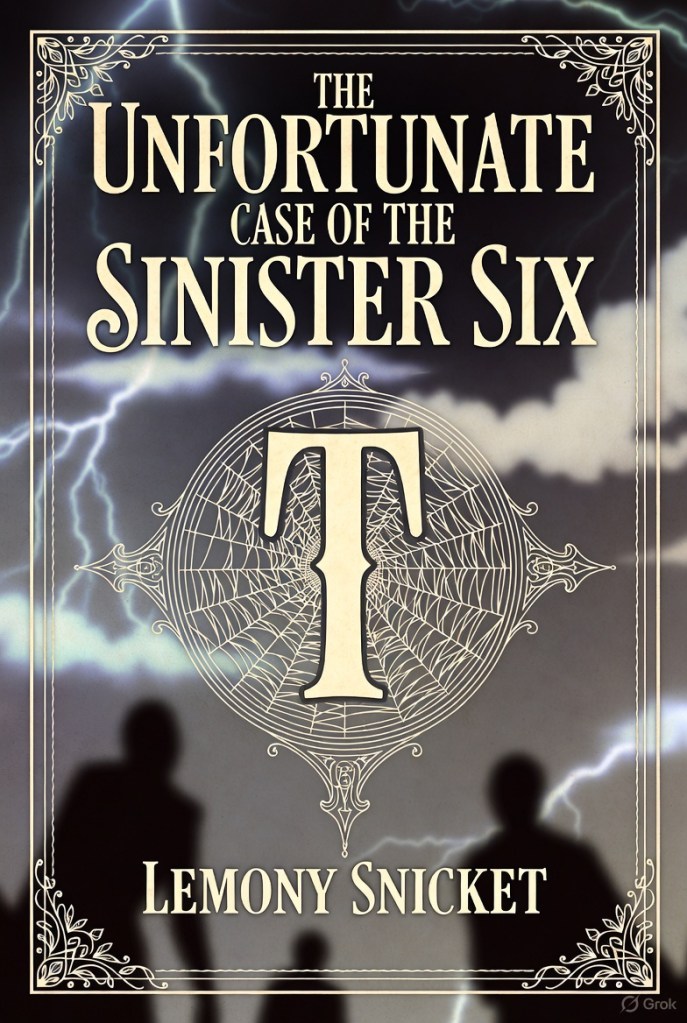
We’ll call them the “Sinister Six” instead of the “Seditious Six” because, well, frankly, I mistyped it into ChatGPT. But it definitely sounds like a Lemony Snicket book. Mark Kelly is a Count Orloff type for sure.
Nancy Drew: The Mystery of the Stolen Social Security Numbers

The teen girl sleuth – and her chums – investigate the shadowy world of immigration fraud.
Choose Your Own Adventure: You Are a Somali Warlord In Minnesota
Speaking of immigration fraud, don’t think Tim Walz is getting out of this meme-free. I’ve chosen my favorite 1980s childhood book series for this story. Will you save the princess? Or will the Yeti eat you?
Dog Man Vs. Antifa
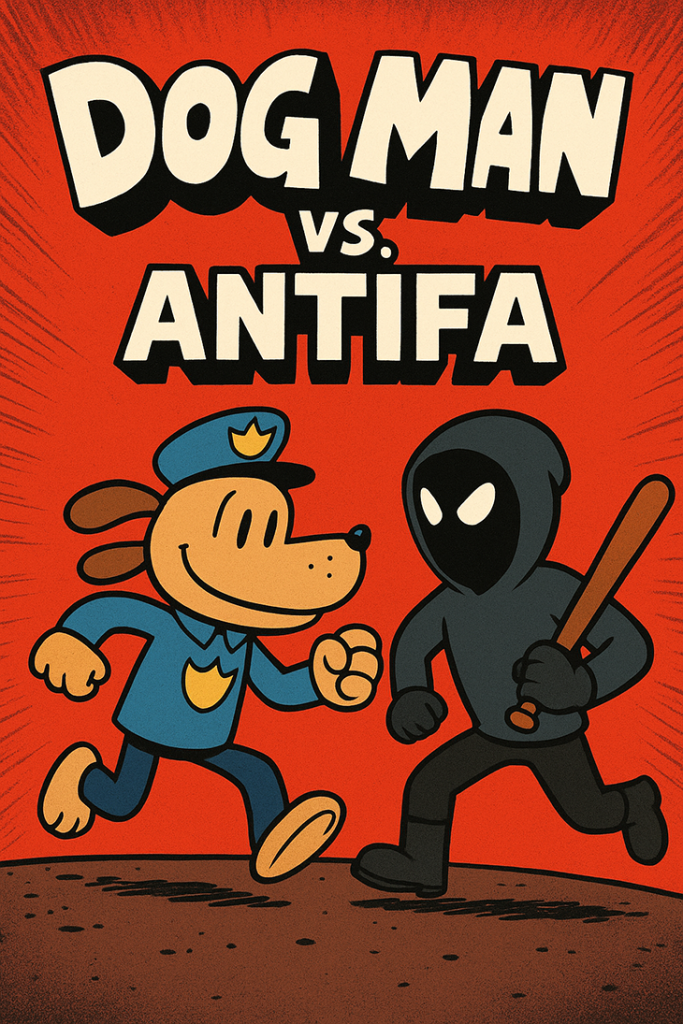
Let’s not forget our favorite domestic terrorist organization. Maybe Kash Patel or Kristi Noem can tweet out this Dav Pilkey-style book cover.
This doesn’t have to be limited to Republicans. Maybe someone from Gavin Newsom’s savvy social-media team can join in on the fun and give Pete Hegseth a taste of his own medicine with Where’s Waldo In The Pentagon?

Really, why does this have to be partisan at all? Let’s close this magical journey back to childhood with a book riffing on the Olivia Nuzzi/RFK Jr. relationship, which people of all ideological stripes love to hate.
It’s Olivia and the Bear In Central Park.

This American Canto will bring us all together.
Ireland should venerate Chaim Herzog
The Irish are in many ways the ideal neighbours. They’re quiet, industrious, peaceful, send their best talents to London, and turn out poets and playwrights we can pass off as English to gullible Americans. There are, unfortunately, one or two character flaws. They never tire of reminding you that your forefathers shot their forefathers, a reasonable complaint somewhat undermined by their fondness for ditties about their forefathers bombing your forefathers.
Then there’s the, well, you know… the J-E-W thing. It’s raised its head again in a proposal before Dublin City Council to rename Herzog Park, which in 1995 was dedicated in honour of Chaim Herzog, who was born in Belfast but raised in Dublin. He made aliyah to Eretz Yisrael in 1935 and, after a career in law, then diplomacy, then Labour-Zionist politics, became the sixth president of Israel in 1983. His son, Isaac, is the Jewish state’s eleventh and current president.
The report on scrubbing Herzog’s name has been withdrawn on procedural grounds, the procedure in question being Micheál Martin putting out a statement on X last night urging the council to drop the plans which ‘will without any doubt be seen as anti-Semitic’. Anti-Semitism does come with that unfortunate side effect. The Taoiseach’s words echo those of other elected officials, a rare example of Ireland’s political class collectively agreeing to tone down the old Jew-baiting just this once.
Palestine is the only occupation the Irish left shows an interest in anymore
Ireland ought to venerate Herzog as a favourite son. Born before partition, his Irish life encompassed both the north and the south, moving between them when his father, Yitzhak HaLevi Herzog, was appointed the first chief rabbi of Ireland. As Israeli president, he returned to honour the country’s Jewish community. And, sure, he might have gone off to make a life for himself in Jerusalem, but he could hardly be accused of abandoning his Dublin roots: upon settling in Palestine, he swiftly joined a paramilitary organisation, the Haganah. (Unfortunately for his standing among Irish elites then and now, Herzog, like other brave and conscienced Irishmen, rejected neutrality in the face of Nazism and signed up for the British Army. He quit his legal career in 1942 to enlist at Sandhurst, served as an intelligence officer with the Guards Armoured Division, and suffered permanent hearing damage during a German artillery attack at Bremen.)
But he was an Israeli and the Irish establishment reacts to the I-word like Regan MacNeil to holy water. The last time the Anti-Defamation League polled Irish attitudes in 2014, it recorded a majority for the proposition that Jews are more loyal to Israel than to their birth country and one in five declaring that Jews control the global media. A 2024 study of Irish Christians found ‘disturbing’ and ‘mediaeval’ levels of anti-Semitism, with half saying ‘Jews are more loyal to Israel than this country’ and one third saying they ‘still talk too much about what happened to them in the Holocaust’.
Now-former Irish president Michael Higgins used a Holocaust Memorial Day speech in January to talk about Gaza, prompting Jews in the audience to silently stand up and turn their backs on him. This led to grim scenes of the peaceful protestors being dragged out of the event. In May, former defence minister Alan Shatter told the Jewish Chronicle that Ireland had become ‘not merely the most anti-Israel country in the European Union’ but was seeing ‘narratives being used on a regular basis that replicate the narratives in Nazi Germany in the 1930s’. The ‘only difference’, he said, was that today ‘the word Zionist is substituted for “Jew”.’ Israel has simply given up and closed its embassy in Dublin.
Ireland is a case study in the futility of trying to distinguish anti-Zionism from anti-Semitism. Discussions about Israel aren’t marked by criticism of the contemptible Netanyahu government nor philosophical dispute with the moral claims of Zionism. It’s unhinged fixation, righteous fury, and an invincible credulity towards even the most dubious accusations, provided the finger is being pointed Zionwards. Some of the discourse wouldn’t be out of place at Friday prayers in Tehran.
It’s wild. They’ve thrown off every yoke of state Catholicism except the keen interest in perfidis Judaeis. Israel is the ultimate malefactor of the Irish imagination, the bogeyman of Dublin politics and Dublin media, and a national myth posits the republic as a modern-day David taking on Goliath, when most Israelis would struggle to locate Ireland on a map and the rest think it’s still part of Britain. Mind you, the tendency of its activists and ideologues to declare themselves ‘Paddystinians’ makes sense. Palestine is the only occupation the Irish left shows an interest in anymore.
The thing is, though, there are about three Jews in all of Ireland. (Okay, two to three thousand.) It’s like being obsessed with the scourge of ninjas, dedicating your life to documenting the crimes of ninjas, convinced that ninjas control the world, organising boycotts of ninja-owned businesses, but you live in Sweden and there are no ninja-owned shops and not enough ninjas to fill a Volvo hatchback, let alone form a local chapter of the international ninja conspiracy.
Should Britain stage an intervention? Take Ireland out for a pint and subtly work anti-Semitism into the conversation? We’re not making any accusations, mate; we’re just wondering if everything’s okay at home. Wife all right? Kids doing well at school? You still handing out those Protocols of the Elders of Zion pamphlets down Grafton Street every Saturday? You know, maybe it’s time to move on because the Jews don’t actually run the world, the Mossad isn’t monitoring you, there’s no genocide in Gaza, and I’m almost certain the profits from Medjool dates don’t go directly to AIPAC.
Oh, and drop the Chaim Herzog thing. People are starting to talk. The fella was an Irish Jew who made history. A park is the least we can do.
OBR probe reveals leak had happened before
Well, well, well. The official review of the leaked Budget documents that circulated last Wednesday ahead of Rachel Reeves’s fiscal statement has been published – and its findings are significant. It transpires that the ‘inadvertent’ error that led to the OBR report going live ahead of time was a result of IT weaknesses. But more than that it has emerged that the ‘worst failure’ in the organisation’s 15-year history had, er, happened before: back in March, with the release of their economic forecasts for Rachel Reeves’s Spring Statement. Good heavens…
As the Chancellor was preparing to deliver her Budget, eagle-eyed observers spotted that the online PDF version of the OBR report was reachable by swapping out ‘March’ in the URL for the Spring Statement with ‘November’. The slip-up was first reported by Reuters, with the review into the leak showing that the document was downloaded by someone an hour before Reeves was due to speak in parliament – on their 33rd attempt. Talk about persistence, eh?
The error arose thanks to two configuration errors in the OBR’s website, with a WordPress plug-in creating a public link to the report which bypassed the website host’s ‘hidden until publication’ protection. Eleven minutes after Reuters first reported the mistake, the Treasury alerted the OBR – but thanks to high website traffic, neither staff nor the web developer were able to remove the document at first, or pull the entire site. Eventually the PDF was renamed and then removed at 12.08pm. Astoundingly, this wasn’t the first time something of this nature had happened – with the review finding that someone had accessed the Spring Statement early too. Crikey!
The review, conducted by ex-spook Professor Ciaran Martin, concluded that the entire publication process depended on one external web developer, with the OBR relying on a WordPress site meant for use by a small organisation. There had been no real focus on the website’s security and, as has now been made clear, no one had checked whether the pre-publication protections actually worked. As such the probe has recommended that the OBR site should be moved onto a more secure government platform, alongside a ‘deeper forensic examination’ of past economic forecasts. And, rather damningly, the investigation notes that the budget watchdog’s mistake had ‘inflated heavy damage’ on its reputation – for which its leadership should be held responsible. Expect heads to roll…
Keir Starmer’s Budget defence has surely doomed Rachel Reeves
You can always tell someone is in trouble when the Prime Minister calls an emergency press conference. A combined force of black cats and magpies arriving at your front door, bursting in and putting new shoes on your table while opening umbrellas inside would be less of a bad omen than Keir Starmer setting up a conference to say how proud he was of you.
The best you can say of the PM was that he looked slightly more comfortable fibbing to camera than his Chancellor did on the Sunday shows
This was exactly what he did this morning, summoning the press pack to a London nursery to discuss last week’s bin-fire Budget. Most of it was his standard fluff; ‘people worrying about the bills’, wanting to end ‘cycles of worklessness and dependency’, (obviously, it included an anecdote about how he knew what all of this was like because he’d been a child in the 1970s) when a Labour government was once again making all these issues worse by raising taxes, chucking money at welfare and making it more expensive to hire people. Even his attempts to exude positivity fell flat. ‘We’ve walked through the narrowest part of the tunnel’, he droned, as if discussing roadworks on the M25.
Again and again, he reiterated how proud he was of Rachel Reeves and the Budget – sometimes to a quite absurd degree. For instance, he claimed that when he told them about last week’s announcements, a group of nurses had ‘broken out in a clap’. Most unfortunate, there are tablets for that.
Sir Keir has a sort of dead behind the eyes delivery style that really comes to the fore when he’s doing one of these press conferences. Deprived of a woman asking what he considers impertinent questions, he just goes into a cycle of blinking incoherence, punctuated by pauses which he mistakenly believes are meaningful. The general vibe is as if one of the Midwich Cuckoos grew up to become a chartered accountant. The best you can say of the PM was that he looked slightly more comfortable fibbing to camera than his Chancellor did on the Sunday shows.
Christopher Hope of GB News asked how his viewers could trust the government’s promises, given Reeves and her colleagues had explicitly lied to the public. Sir Keir blinked, reddened and clucked his disapproval before moving hastily on to talking about ‘free’ breakfast clubs. Asked why the OBR had contradicted the Treasury’s claims, the PM produced some genuinely unimprovable Starmerite bilge. The Budget, he said, was an ‘iterative process’. Even in our parliament of JCR goons and LinkedIn monkeys it is not often one hears such manifest drivel.
Elsewhere there were other signs of the Budget unravelling. Darren Jones, dispatched to set matters straight on the morning media round, complained that the Conservatives had bequeathed them headroom of ‘just £10 billion’. This inadvertently torpedoed last year’s ‘£22 billion black hole’, before you even get to more recent fabrications. Details are emerging of an expletive laden rant in the Budget’s planning stages courtesy of the eternally charming Torsten Bell. End of the line for No.11? It certainly isn’t getting any better and the starting point was hardly a bed of roses.
For all Sir Keir’s attempts to make this an exercise in poverty porn, talking about latter-day Tiny Tims and fictitious cheering nurses, the legacy of the Budget and the political survival of its promulgators both depend on the extent to which their promises can stack up against provable realities. The headlines reflect this; How big is Rachel’s black hole? Can anyone fill it? Did Darren lie about the size of the hole? It’s a real pleasure to live in an age when these are headlines in the FT and not the Sunday Sport.
February 2026 marks the centenary of the birth of Kenneth Williams. It’s good to see the government marking his legacy by treating us to a series of innuendo-laden newspaper covers. Still, if they’re going to inflict the economy of the 1970s on us, we might as well have a return to the humour of the 1970s as well.
Should the police use facial recognition on children?
Should cops spy on kids? The revelation that police are including surveillance of young people in their expanding use of live facial recognition (LFR) systems to detect criminals and deter crime has upset the civil liberties lobby and a few MPs. Should we take these concerns seriously?
LFR was introduced in south Wales in 2016 and was rolled out nationwide in England and Wales from 2020 onwards. The operating principles have evolved during pilot schemes but are now built around cameras in liveried vans passively scanning crowds and comparing the faces of citizens against a database. Artificial intelligence scans the biometric details, alerting the operator to ‘hits’ against a curated ‘watchlist’. That database includes people wanted by the police, people subject to bail or probation conditions and those at risk of harm. It is likely that children comprise a significant number of the latter category. In 2023/24, 65 per cent of all missing persons incidents were children under 18. Many of these children abscond from care homes and are at acute risk from sexual and criminal exploitation.
Prevention is best but control is important too
Most of the arguments against the deployment of LFR are rooted in protecting the rights of the citizen of any age against unwarranted intrusion by the state. These are laudable objections, especially in the age of Starmerism, where desperation for a populist inch means an authoritarian mile. But rights for citizens also include being able to go about one’s business without being made a victim of the criminal impunity that poisons many of our public spaces. Earlier this year, the Metropolitan Police revealed that it had made over 1,000 arrests using LFR in just over 12 months, including paedophiles, rapists and violent muggers. In one example, it picked out and led directly to the arrest and conviction of 73-year-old David Cheneler, a registered sex offender in Denmark Hill, south-east London, who was with a six-year-old girl, in breach of a sexual offences protection order.
Moreover, police clear-up rates for many offences hover around 5 to 10 per cent nationally, with even lower figures for volume crimes like theft and burglary. This leaves millions of victims without justice and erodes public confidence in policing. Many of these crimes have suspects attached to them who have not been apprehended by police because law enforcement simply does not have the resources to pursue individual offenders. Court delays mean many suspects are bailed indefinitely. With an estimated 6.6 million crimes in England and Wales in the year to March, traditional methods of policing simply cannot cope with the volume.
Many of the concerns of those claiming to object to LFR have been allayed by improvements to the technology and safeguards imposed unilaterally by police constabularies. Research by the National Physical Laboratory in 2023 ruled out allegations of racial bias in facial recognition systems, provided they were calibrated at a level of detail scanning that is now the benchmark of all forces using it. The images of those not wanted by the police are instantly deleted and newer technology instantly blurs the faces of the innocent within camera range. False positives are almost non-existent.
While LFR can make young people safer in their communities by detecting and deterring predators in their midst, it is worth remembering that young people are also offenders and capable of inflicting extreme harm. There were 53,000 knife-enabled offences recorded in the year ending in March, with juveniles as offenders (and frequent victims) in 18 per cent of cases.
In this sense, the systems should make no discrimination in terms of age. Young people involved in antisocial behaviour have turned some town centres into no-go zones for the law-abiding and torture shop owners – already barely existing on slim margins – with theft, intimidation and vandalism. Many of these kids have lower-order penalties against them from youth courts forbidding them from entering certain areas at certain times.
When you add to this the huge bulge of offenders now ‘supervised’ in the community thanks to Labour’s emergency mass prison release schemes and the ending of short prison sentences, the police need all the technical assistance they can muster to protect the rest of us. Exposure to violence is 2.5 times higher in deprived areas. Prevention is best but control is important too. Just ask any bereaved parent.
But the police have form for overreach where democratic control is weak and operational common sense is overridden by fashionable distractions. While the expansion of these surveillance systems is necessary, the safeguards for their use are insufficient. New bespoke legislation is probably required with national standards and parliamentary scrutiny built in to ensure LFR is strictly confined to combatting criminality on intelligence and facts, not forecasts. Some forces are now combining LFR with fixed CCTV cameras already in place. While this is logical and efficient, it is a departure from clearly labelled vans with officers in them available to explain what’s happening, how and why. If Big Brother is watching your kids, we need to be sure someone is watching Big Brother.
Tulip Siddiq handed two-year sentence in Bangladesh
All is not well in Labour party at present. Prime Minister Keir Starmer has spent the morning defending his Chancellor Rachel Reeves and her autumn Budget, cabinet ministers are complaining to journalists that they were kept in the dark over the state of the nation’s finances and a group of Scottish Labour MPs are plotting to oust Starmer. But the PM’s top team aren’t the only people under fire today: Labour MP Tulip Siddiq has been sentenced to two years in jail in Bangladesh over corruption claims linked to her aunt Sheikh Hasina. Crikey!
The niece of Bangladesh’s onetime authoritarian premier was tried in abstentia and found guilty of corruption charges. It comes after Siddiq had an arrest warrant issued against her in Bangladesh in April. In one of at least three investigations against the Hampstead politician, Bangladesh’s Anti-Corruption Commission (ACC) has accused Siddiq of putting pressure on her aunt to give plots of land in a Dhaka residential development to three of the parliamentarian’s family members. For her part, the Hampstead and Highgate MP has denied all wrongdoing, remarking:
The whole process has been flawed and farcical from the beginning to the end. The outcome of this kangaroo court is as predictable as it is unjustified. I hope this so-called ‘verdict’ will be treated with the contempt it deserves. My focus has always been my constituents in Hampstead and Highgate and I refuse to be distracted by the dirty politics of Bangladesh.
The sentencing of Siddiq follows that of Hasina, who was tried for crimes against humanity in abstentia last month. The former Bangladeshi leader was ousted from the top job in August last year after a brutal crackdown on student demonstrations saw 1,400 protestors killed by security forces. Hasina has been sentenced to death but is currently living in exile in India. Meanwhile Siddiq was forced to resign as the Labour government’s ‘anti-corruption’ minister after an official probe found her links to Hasina exposed Starmer’s lot to ‘reputational risks’. The Labour MP has described herself as ‘collateral damage’ in a ‘feud between Muhammad Yunus [Bangladesh’s chief adviser] and my aunt’.
The Labour party remarked after the sentencing that:
As has been reported, highly regarded senior legal professionals have highlighted that Tulip Siddiq has not had access to a fair legal process in this case and has never been informed of the details of the charges against her despite repeated requests made to the Bangladeshi authorities through her legal team. Anyone facing any charge should always be afforded the right to make legal representations when allegations are made against them. Given that has not happened in this case, we cannot recognise this judgment.
Starmer defends Rachel Reeves over Budget ‘lies’
Much of Rachel Reeves’s Budget was unprecedented: the leaking, the speculation and the OBR accidentally uploading its details an hour early. This morning, Keir Starmer added another entry on that list. The Prime Minister assembled the nation’s journalists to lecture them about the many wonderful things contained in his neighbour’s Budget – something Reeves surely ought to have done in her own speech last Wednesday.
Starmer rattled off a list of policies announced last week: frozen rail fares, prescription charges and fuel duty, childcare costs slashed and £150 off energy bills. But, naturally, all the waiting hacks wanted to ask him about was the central question which dominated the weekend broadcast rounds. Did Rachel Reeves lie about the size of the black hole in the run-up to the Budget? No, claimed Starmer. ‘There was no misleading – I simply don’t accept it. And I was receiving the numbers.’ Instead, the Prime Minister insisted, the blame for the confusion lies elsewhere – with the OBR.
Reeves’s future has been the subject of great press speculation over the weekend
He criticised the watchdog for failing to publish the productivity review, which wiped £16 billion off the headroom available to Reeves. Starmer argued it would have been better if that had been carried out at the end of the last parliament, suggesting he is now stuck with ‘picking up the tab for the last government’s failure’. Asked specifically about the leak which occurred on Wednesday, Starmer called it a ‘serious error’ of ‘market-sensitive information’ – a remark which does not bode well for the OBR when it publishes the findings of its investigation at 2:30 p.m. today.
The other subject of interest from today’s speech was Starmer’s remarks on welfare reform. The Prime Minister insisted that this is his ‘moral mission’, declaring that his government ‘can’t leave the best part of a million young people not learning or earning’. Yet that seems remarkably incongruous, given Reeves just greenlit welfare spending rising by an additional £12 billion by the fiscal year 2029-30. When pressed by journalists, Starmer refused to commit to welfare spending being reduced by the next election.
Reeves’s future has been the subject of great press speculation over the weekend. But the fact that the Prime Minister is so willing to go out and publicly defend his Chancellor suggests that he believes that the pair’s fate is bound together. With Reeves set to endure a difficult Treasury select committee hearing tomorrow, Starmer is giving no public indication that the Chancellor is going anywhere anytime soon.
Why is it taking so long to strip away Andrew’s last title?
As Andrew Mountbatten-Windsor contemplates the wreckage of his public life and career, it would be easy to say that his disgrace is complete. In fact, there is a qualifier: his disgrace is almost complete. Despite no longer being a royal prince, the Duke of York or holder of the Order of the Garter, Andrew still retains the title of vice-admiral in the Royal Navy.
This was an honorific bestowed upon him as a 55th birthday present in 2015, with his mother’s enthusiastic approval. He was due to be upgraded to the title of full admiral in 2020 for his 60th, again something in the late queen’s gift, but events, dear boy, intruded and so he was stuck with the lesser honour. And now that is to be stripped from him, too.
Most would wonder why on earth Andrew is still clinging on to this final title of vice-admiral if he is no longer considered fit to be a prince, but there is a banal reason for it. It is the government, rather than the royal family, who must strip it from him. Those of us who were impressed at the speed – and the brutality – with which the King acted to remove Andrew’s other honours might be similarly unimpressed at the heel-dragging that has accompanied this last step in the former prince’s public humiliation. Andrew’s few supporters, on the other hand, may consider that this is yet another unfair and unjust privation visited upon someone who should be regarded as innocent until proven guilty, in circumstances where Andrew continues to deny all wrongdoing.
The government and the MoD should just get on with it
In any case, as with so much that the government is responsible for, the intent is there, but the means of execution is lacking. The Ministry of Defence (MoD) has commented, somewhat haplessly, that the department ‘continues to act in line with His Majesty’s intent regarding the process to remove the style, titles and honours of Andrew Mountbatten-Windsor’. John Healey, the Defence Secretary, suggested in early November that the vice-admiral title would soon be removed, saying to the BBC that ‘this is a move that’s right. It’s a move the King has indicated we should take, and we’re working on that at the moment.’ However, even if Charles wishes that his troublesome brother give up any vestige of his public standing, all the MoD can say of the process of the removal is that it is ‘ongoing’, without providing any more details.
Most would consider this perplexing. None other than the former first sea lord Admiral Lord West – a man who earnt his title rather than being handed it by his mother – told the Times that ‘it seems extraordinary that it is taking so long and I cannot see why it is that difficult to remove it’. He added, ‘We recently swiftly removed the first sea lord from his position and he had the rank of admiral, so it cannot be that difficult. They should just get on with it.’ But ‘getting on with it’ seems to be the hardest thing for the government, who are mired in uncertainty and impotence alike when it comes to the troublesome former prince.
Last month, we learned that Andrew had also reportedly been stripped of his honorary life membership of the private members’ club The Savage. As Andrew’s retreat into private life sees even the few trinkets of distinction that he had accrued taken from him, he might be forgiven for wondering which further humiliations await him. Congress is still very keen to hear his testimony as regards his friendship with Epstein, and when the so-called ‘Epstein files’ are released into the public domain, it seems highly likely, if previous releases are to go by, that Andrew’s name will be found in them repeatedly, to inevitably embarrassing effect.
With all the concomitant opportunities for dung to be heaped upon Andrew’s once-princely head, being stripped of a vice position may seem small beer in comparison. The government and the MoD should just get on with it and draw a line under this tawdry saga.
Why the prospect of peace in Ukraine is troubling Macron
Emmanuel Macron welcomed Ukraine’s president Volodymyr Zelensky to Paris this morning to discuss ‘the conditions for a just and lasting peace’. But is the French leader nervous about what peace in Ukraine might mean for Europe – and for France?
There may be another reason why Macron is concerned at what peace in Ukraine might bring. It is an anxiety shared by others in Europe
In an interview with a Sunday newspaper, France’s foreign minister, Jean-Noël Barrot, declared that ‘peace is within reach, if Vladimir Putin abandons his delusional hope of reconstituting the Soviet Empire by first subjugating Ukraine’.
Macron showed little enthusiasm initially for the 28-point peace plan put forward by the USA and Russia, warning that Putin was not a man to be trusted. The plan has since been modified. And Macron appears more ready to accept a peace deal, particularly in light of the corruption scandal that has engulfed Ukraine in recent days.
Critics on the left and the right in France have accused Macron of exploiting the war in Ukraine for his own ends; first for electoral advantage in 2022 and 2024. And more recently to keep himself relevant. Since his centrist party was beaten into third place in last year’s parliamentary elections, Macron has scant domestic authority. Last week, a prominent conservative commentator labelled the president a ‘warmonger’.
There may be another reason why Macron is concerned at what peace in Ukraine might bring. It is an anxiety shared by others in Europe. In June 2022, four months after Russia had invaded Ukraine, Interpol Secretary General Jurgen Stock expressed his fear about the weapons being sent by Western governments to aid Ukraine’s defence. ‘The high availability of weapons during the current conflict will result in the proliferation in illicit arms in the post-conflict phase,’ said Stock.
Stock urged countries to scrutinise arms-tracking databases and ensure they wouldn’t end up in the wrong hands. ‘This will come, I have no doubts,’ said Stock. ‘Criminals are already now, here as we speak, focussing on that.’
The French, in particular, are fearful of a repeat of what happened after the war in the former Yugoslavia in the early 1990s. Towards the end of that decade, armed robbers in France began using Kalashnikovs, the assault rifle better known as the AK47.
Within a few years, they were the weapon of choice of the drug cartels, so prolific in western Europe that were exchanging hands for a few hundred euros. The weapons remain a threat: thirty of the 49 people shot dead in Marseille’s drug war in 2023 were killed by AK47s.
The Kalashnikov was also used by the Al-Qaeda cell which murdered the staff of Charlie Hebdo and four shoppers in a Jewish store in Paris in January 2015. The killers were also equipped with a rocket-launcher, which they didn’t use. The men who murdered 130 Parisians in November 2015 in the name of the Islamic State did so using Kalashnikov. A wounded survivor of that evening explained how ‘Kalashnikov bullets are very specific…they explode inside the body, which makes physical repair difficult and poses a real surgical challenge.’
France is more aware of the dangers now of black market weapons than it was 30 years ago. It is why the government lobbied hard to have their man elected as the new head of Interpol last week.
Lucas Philippe, a Frenchman with vast international experience in combatting anti-terrorism and drug trafficking, beat off challenges from Turkish and Ethiopian candidates to become the new chief. ‘Our enemy is organised crime and terrorism,’ declared the 53-year-old Philippe on winning the vote.
It hasn’t been an auspicious few years for Interpol. Philippe’s predecessor was an Emirati, Major General Ahmed Nasser Al-Raisi, who was accused of human rights abuses during his time as the UAE’s inspector general of the interior ministry. Raisi rejects the allegations against him. Responding to Al-Raisi’s election win in 2021, US senator Roger Wicker said Interpol had ‘become a tool in the hands of despots and crooks who seek to punish dissidents and political opponents’.
The man elected Interpol chief in 2016 was the Chinese, Meng Hongwei. But two years into his appointment, he was arrested by Beijing and charged with bribery. In 2020, Hongwei was sentenced to 13-and-a-half years in prison.
Philippe is the first European to lead Interpol since his compatriot, Mireille Ballestrazzi (who was the first woman in the post) headed up the organisation between 2012 and 2016.
Shortly before he was appointed Interpol chief, Philippe said that in the event he won the vote he would ‘strengthen operational coordination between the 196 member countries’. He also promised to enhance Interpol’s ‘capacity for anticipation’.
Anticipating what will happen to the military hardware currently in Ukraine post-conflict will be part of that challenge. But that will also require cooperation and determination from Brussels and European governments. The omens aren’t good. If Europe can’t defend its borders from people traffickers, then what chance have they got in defending them from arms traffickers?
Violence is being normalised against the National Rally
Jordan Bardella has been physically attacked twice over the past five days. Flour was thrown over him at an agricultural fair in Burgundy, then this weekend an egg was crushed on his head at a book signing in Moissac in the Tarn-et-Garonne. He walked away unharmed, but the incidents could easily have been more serious. They come at a moment when Bardella leads the polls to become France’s next president, with Marine Le Pen increasingly sidelined after she was barred from running by the courts. Right-wing officials and politicians are facing a steady rise in insults, threats and physical aggression.
France is edging towards a hierarchy of victims in which the acceptability of violence depends on the political alignment of the target
The National Rally is directly targeted by this violence. During last year’s campaign in Saint-Étienne, Hervé Breuil, a National Rally candidate, was assaulted by masked extremists and taken to hospital with a suspected stroke. And in April in Albi, ten hooded militants set upon Clément Cabrolier, the son of a National Rally councillor, beating him in the street until he managed to take refuge in a hotel.
A climate has taken hold in which assaults of National Rally politicians are increasingly treated not as political violence but as a form of resistance. Each new attack is condemned by the left – and then followed by the insinuation that the victim somehow brought it upon himself. The idea has settled on the left that the National Rally lies outside the democratic norm and can therefore be handled outside it, a shift with consequences that reach far beyond a few handfuls of flour.
A journalist on the left-leaning BFMTV commented after this weekend’s attack that while she condemned what happened, Bardella remained a target of political violence due to what she described as his violent and Islamophobic arguments. It was a familiar formula: the effect is not to excuse the assault outright, but to place it in a moral hierarchy where the real offence is the politics of the victim rather than the act committed against him.
The journalist’s comments were seized upon by the National Rally as another attempt to normalise intimidation. The party has filed a complaint with the media regulator, arguing that this style of commentary creates a permissive atmosphere in which attacks are framed as reactions rather than the attacks that they are. There’s a current of opinion that regards the National Rally not as a democratic adversary, but as a threat to be confronted by exceptional means.
This logic is not uniquely French. It mirrors a pattern long established in the US, where so-called progressive commentators have perfected the art of treating conservative speech as a form of violence while recasting actual violence against conservatives as a regrettable but somehow understandable response. Charlie Kirk was accused of creating a climate in which extremism flourished. MPs and candidates in the UK also report a rise in threats, harassment and street-level aggression.
National Rally politicians in France have been told that their positions on immigration, security or Islam amount to provocation. By the time an egg or a fist lands, the attacker is framed not as an aggressor but as someone pushed to the end of their tether by the rhetoric of the far right. It’s a convenient fiction that allows France’s establishment to maintain its claim to non-violence while tolerating a steady escalation of intimidation against its political opponents.
This posture has been encouraged by a wider ecosystem of activists and political figures who suggest that the National Rally is a force so dangerous that ordinary democratic norms do not apply. La France Insoumise has been particularly energetic in this respect, denouncing the National Rally as a fascist threat with a frequency that borders on ritual. They suggest that the National Rally doesn’t simply hold objectionable views, it represents an existential menace to the Republic itself. Left wing MPs refuse to acknowledge National Rally colleagues, let alone shake their hands. Once that idea takes hold, the boundary between confrontation and intimidation begins to blur. The dehumanisation process begins.
France is edging towards a hierarchy of victims in which the acceptability of violence depends on the political alignment of the target. The attacks in recent days on Bardella may seem trivial compared with the assaults suffered by some of his candidates, yet they mark the point at which a normalised hostility towards one party produces a steady stream of minor humiliations and occasional blows. The left insists that it’s defending democracy against the ‘far right’, yet its approach will undoubtedly lead to more serious attacks.
Presenting violence against the National Rally as a form of civic virtue is a dangerous step. It grants moral cover to intimidation and ensures that each boundary crossed becomes the starting point for the next one. Once violence is recast as virtue, the slide towards more serious attacks is not a risk but an expectation. Bardella’s two attackers were amateurs. The climate that encouraged them will produce worse.
Inside the mind of Putin’s real hatchet man
As Moscow and Washington prepare for talks on the latest version of Donald Trump’s peace plan, leaked recordings of a conversation with US envoy Steve Witkoff have thrown a spotlight on to senior diplomat Yuri Ushakov. It seems he, not Foreign Minister Sergei Lavrov, is the prime mover behind Russia’s negotiating position.
The stature of Lavrov, once a legend in the diplomatic community, has steadily diminished since 2014, when he wasn’t even consulted before Vladimir Putin decided to annex Crimea. Every year since then, the now-75-year-old minister has petitioned Putin to be allowed to retire; every year this is denied. Instead, Lavrov remains confined to a role of repeating threadbare talking points to audiences who frequently and openly disbelieve him. Even the crucial security cooperation relationships with China, North Korea, India and Iran are handled these days by Sergei Shoigu, the former defense minister and now secretary of Russia’s security council, who is already sometimes being called “Russia’s other foreign minister.”
This puts into context the overheated tales that Lavrov, who disappeared from public view for a couple of weeks, was being punished after a proposed Putin-Trump summit in Budapest was called off last month. Allegedly this was because Lavrov was too inflexible when talking to his US counterpart, Marco Rubio.
Yet, Lavrov doesn’t freelance these days. The steadily-grumpier minister simply speaks the lines he is given and, tellingly, he is now back in circulation. When asked about the claims during a state visit to Kyrgyzstan, President Putin denied his minister had fallen into disgrace: “He reported to me, told me what he would be doing and when. That’s exactly what he’s doing.” Most likely, Lavrov was simply ill. With power increasingly in the hands of septuagenarians, the Kremlin seems to try to suppress news of any incapacities, presumably to avoid drawing attention to the potential fate of the 73-year-old President (who, despite lurid rumors to the contrary, appears still in good health).
In any case, Lavrov’s position is arguably irrelevant and certainly had no effect on Russia’s negotiating position. This reflects Ushakov’s growing centrality in both the process and helping shape Putin’s own ideas, with once-influential figures such as Lavrov and former security council secretary (and hawk’s hawk) Nikolai Patrushev becoming marginalized. The 78-year-old Ushakov is another foreign ministry veteran: after a year as deputy foreign minister under Boris Yeltsin in the late Nineties, he then spent almost a decade as ambassador to Washington, before becoming deputy head of the presidential administration and then presidential aide for foreign policy in 2012. The position of presidential aide in the Russian system is an ambiguous one. It can be little more than an honorific sinecure but, if Putin chooses, it can also be one of his right-hand and hatchet men. Ushakov is decidedly of the latter kind.
He has for a long time been something of a fixture of high-level meetings between Putin and US presidents, a silent figure in the background, sometimes meeting the media afterwards to give the Kremlin’s spin. Yet, while he may lack Lavrov’s abrasive charisma, Ushakov has proven not only to be a survivor – his own trajectory from advocate of the US-Russia détente to hawk has both mirrored and influenced Putin’s.
As ambassador, he was keen to promote Russo-American business ties, and this persists in warped form in his support for Kirill Dmitriev, CEO of the Russian Direct Investment Fund, in trying to seduce a commercially-minded White House with dreams of lucrative deals. After returning to Moscow, though, Ushakov became increasingly more skeptical about the US and, especially, European intentions. Between 1986 and 1992, he was minister-counselor at the Soviet and then Russian embassy to Denmark. A diplomatic colleague from then, who has kept in occasional touch with him since, noted: “He didn’t just change to reflect Putin’s views, he genuinely came to feel – especially after the Revolution of Dignity [in Ukraine] – that the West had turned against Russia.”
Ushakov hardly needed coaching from Witkoff on how Trump should be handled, being an experienced America hand. Then again, letting Witkoff feel he could school the wily Russian may have been intended to woo the amateur diplomat. Such double-think is a key part of Ushakov’s playbook: his approach tends to be less overtly confrontational than Lavrov’s, but no less ruthless.
For all that, Ushakov is a pragmatist. While there are some in Putin’s circle taking a more ideological (or downright greedy) position, urging the President to string the Americans on while imposing Russia’s terms on Ukraine by force, Ushakov appears to be advocating for the exploration of a deal that could allow Russia to declare a triumph. As a British diplomat put it: “Ushakov doesn’t seem committed to a deal at any price, but nor is he totally opposed to one. To be honest, that is about the best we can hope for in the current situation.”