-
AAPL
213.43 (+0.29%)
-
BARC-LN
1205.7 (-1.46%)
-
NKE
94.05 (+0.39%)
-
CVX
152.67 (-1.00%)
-
CRM
230.27 (-2.34%)
-
INTC
30.5 (-0.87%)
-
DIS
100.16 (-0.67%)
-
DOW
55.79 (-0.82%)
Have Scottish politicians read the Cass Review?
The Cass Review may prove to be a tipping point in radical gender ideology’s march through mainstream politics, institutions and civil society. It certainly appears to spell the end of routinely sending children who express confusion about their bodies or their identities down the transition path. The political responses to the report, especially from those who were until recently fully signed on to this ideology, suggest that under what remains of this government and the next Labour government there will be a more cautious approach.
Few who enabled this barbarism – we are talking, after all, about chemically coshing adolescents to suppress puberty – will pay any kind of price for their actions, least of all those in political or public life who were as eager to participate in this outrage as they were to decry those who spoke out against it. Too many people in positions of power have a case to answer and so it will generally be agreed that moving on is best all round.
We are nowhere near that point in Scotland. The Cass review only covers NHS England. NHS Scotland, which is fully devolved to the Scottish parliament, has its own policies and protocols. It is undergoing its own review of gender health services, both adult and child, and a report is expected before summer. While NHS England recently announced an end to prescribing puberty blockers to children as a matter of routine clinical practice, there is no similar policy in place in NHS Scotland. The Sandyford Clinic, Scotland’s only gender clinic for children, has a waiting list of 1,100.
This creates an obvious tension. An expert report says that gender medicine is ‘built on shaky foundations’, ‘an area of remarkably weak evidence’, and that there is ‘no evidence that puberty blockers buy time to think’ and ‘concern that they may change the trajectory of psychosexual and gender identity development’. If there is insufficient evidence for these treatments in England, the same must be true north of the border. Do we suppose that children’s bodies respond differently to hormone drugs once they cross the Tweed? Or that NHS Scotland’s policies are informed by a treasure trove of evidence unavailable to Cass and everyone else?
The Scottish government says it will review Cass’s findings. The difficulty is politics. The only ethical way forward, medically and as a matter of public policy, is to implement the review’s recommendations and follow NHS England’s new rules on puberty blockers. First do no harm. But where the UK government has long been weak and cowardly on these matters, either sharing elite contempt for ‘culture war’ issues or simply fearing the prospect of having to take a stand on something, the Scottish government is much further down the gender rabbit hole.
Under Nicola Sturgeon and now Humza Yousaf, the Scottish Government fully embraced gender identity ideology. Its Gender Recognition Reform Bill, blocked by the UK government, would have allowed anyone aged 16 or older to change their legal sex by assertion and without the involvement of medical experts. It issued guidance for its Gender Representation on Public Boards Act allowing men who identify as women to count as women for equal representation purposes.
Its Hate Crime Act created an offence of ‘stirring up hatred’ against ‘transgender identity’, which it defines to include men who cross-dress as women. (It remains legal to stir up hatred against actual women.) Sturgeon’s final weeks in office were dominated by the initial placement in a women’s prison of a double rapist who called himself Isla Bryson.
Not only has the leadership of the SNP tethered itself to gender ideology, its coalition partners in the Scottish Greens seem to consider it their philosophical lodestar. The Greens have already said they will ‘oppose any moves to increase the age of accessing gender affirming care to 25’, an apparent reference to Cass’s recommendation of ‘a follow-through service’ for 17-to-25-year-olds.
Some of the party’s MSPs have gone further, with Ross Greer reposting a post on X that described the report as ‘a straight up transphobic and conservative document’. As an indication of how deeply the Scottish Greens are invested in gender ideology, their equalities spokeswoman Maggie Chapman told an interviewer last year that it was worth ‘exploring’ whether 8-year-olds should be allowed to change their legal gender.

This leaves the Scottish government in an invidious position. With the growth in children and adolescents reporting gender dysphoria, there are more and more young people at risk of coming into contact with NHS Scotland’s poorly evidenced and potentially harmful policies. The Cass Review will prompt at least some parents in Scotland to rethink the ‘gender-affirming’ path relentlessly urged upon them. These parents are going to have concerns and they’re going to want answers. The question is whether NHS Scotland can back away from ideologically-informed gender medicine without incurring the wrath of the ideologues. Humza Yousaf will be under pressure to hold the line not only from within his own party but from the Green MSPs who give his government its majority at Holyrood.
It should be a case of following the evidence but with any postmodernist ideology following the evidence is politically suspect. Until the Scottish government finds a way to square evidence, medical ethics and clinical good practice with political doctrine, confused children and young people in Scotland are going to be less protected than their counterparts south of the border.
Pop musicians, be proud of your middle-class upbringings
Tracey Thorn’s was ‘by no means luxurious.’ Brett Anderson had a ‘small, very small’ one. Miki Berenyi’s was ‘shabby and dirty.’
The unwritten rule that the best rock music comes from the street can create a challenge for edgy post-punk musicians writing their memoirs. What if you grew up in comfortable circumstances or had a boring childhood? Downplaying the state of the house you lived in is one approach – but others are available.
Take Brett Anderson’s Coal Black Mornings (2018). Anderson can reasonably claim to have come from a social position below the rest of his band, Suede. His parents were arty but they did, undeniably, live in a council house. It is also the case, however, that he was raised in a pretty village just outside Hayward’s Heath, was a popular child and did well at school, earning a place at UCL where he studied architecture. Nil by Mouth it wasn’t.
But from the opening sentence, Anderson is at pains to stress his humble origins. This, we are told, is a tale of ‘poverty’ and ‘failure’. His three-bedroom house was not just small but ‘tiny’, ‘poky’, ‘claustrophobic’, ‘dank’, ‘threadbare’, ‘scruffy’, ‘cheap’, and ‘almost toy-like in scale’. His family were ‘dirt poor’ and lived ‘in penury’. Even their car was ‘tatty’, ‘decrepit’, and ‘rotten’.
While this may well have all been true, Anderson’s description of his wider environment definitely seems rather far-fetched. Discovering the Sex Pistols, he heard ‘an expression of the world around me’. It was a world of ‘lino and pregnancy tests’, ‘regular vicious gang beatings’, and ‘white dog shit on the pavements, vandalised piss-stained phone boxes, and the miasma of threat and fear’. Anyone familiar with this pleasant corner of Sussex will agree that punk certainly stimulated Anderson’s teenage imagination!
In Another Planet (2019), Tracey Thorn of Everything but the Girl never denies her bourgeois status but deploys the same strategy of presenting suburbia as an alienating place to grow up in. Brookmans Park in Hertfordshire was ‘a contingent, liminal border territory’ that was dangerous, too, with ‘endless fights between rival tribes, skinheads and other thugs who beat up everyone I knew at some point or other’.
Thorn also emphasises the modesty of her domestic circumstances. Boasting only ‘two and a half bedrooms’, her non-luxurious house had no central heating and the Thorn family would take a paraffin heater into the bathroom. She does admit that when she was five, they had an extension built which added two more bedrooms (and presumably radiators) but, for Thorn, it wasn’t just about size anyway.
‘There was a divide in the village,’ she writes, ‘an actual hill to be climbed. We lived at the bottom of that hill.’ This divide even manifested itself in the plants in the Thorns’ front garden: their flowers were somehow ‘all wrong’. She felt keenly the difference between herself and ‘the local alpha girls with their ponytails and pristine whites.’
The bare facts about Lush singer Miki Berenyi’s life, as recounted in Fingers Crossed (2022), are that her mother was a successful actress and her father a sports journalist. She was a boarder at Queen’s College and enjoyed regular trips to LA, Hungary and Japan. At sixteen, she moved into a flat paid for by her parents.
However, Berenyi claims that she was considered ‘a bit rough’ at her private school. When the other girls boasted about their exotic holidays, she would exaggerate her own ‘to give the impression of parity’. She even resorted to shoplifting to keep up with them.
But once again, it’s property that does most of the signalling. As well as being shabby, her father’s four-bedroom house in leafy north London was so ‘catastrophically fucked’ he couldn’t find any lodgers. The flat she rented in her mid-teens looked out on a ‘cell-sized basement yard’ and ‘judging by the cornicing, must have once been a single room’. It was on a street that contained ‘several’ brothels.
At 19, she moved into a ‘shabbily executed’ conversion. Her bedroom had ‘no windows at all, just a tarred-over leaky skylight’. After that, it was a house share ‘five minutes’ walk from the Broadwater Farm Estate, and then a ‘tiny’ flat in Camberwell.
Even when fame came in the shape of a large record company advance and she was able to afford a place in trendy west London, this wasn’t the ‘chi-chi paradise it would later become’. The band were ‘hardly living like millionaires’ and wouldn’t be ‘driving around in sports cars anytime soon.’
It’s a relief, then, to read Helen O’Hara’s memoir, What’s She Like (2022). Refreshingly, the Dexys Midnight Runners’ violinist remembers her childhood as idyllic. Growing up on the Gower Peninsula, she spent long summer days at the beach. At home, her strict but caring parents were quick to recognise her musical talent and nurtured it by paying for private lessons. The book – which includes a frank account of her relationship with mercurial singer Kevin Rowland – is a more gripping read than the others. And that’s despite the fact that she had a ‘huge’ one.
The irresponsibility of ‘two years to save the planet’
Hurrah, we can all relax. We have been granted an extra two years to save the planet. So suggested Simon Stiell, executive secretary of the United Nations Framework Convention on Climate Change in a speech at Chatham House yesterday. Some people might say that calling a speech ‘two years to save the planet’ might be a bit melodramatic, he added. But not at all. It is nice to have the luxury of all that extra time, given that I thought we were supposed to have had it already. That, at any rate, was the logic behind warnings such as that by the WWF in 2007 that we then had five years to save the planet. By my maths that means we became doomed a dozen years ago, so I was resigned to sitting back and waiting calmly for the end, like the elderly couple who sat in deckchairs on the Titanic holding hands as the ship went down.
The UN, and all the other NGOs who regularly pump out this sort of hyperbole, might think they are helping to spur the world into action against climate change. But there is a hefty price to pay for this sort of scaremongering by the world’s great and good. Those of us who are old enough and wise enough to have heard it all before can shrug it off as a load of old nonsense, but it is a very different story with impressionable youth.
An international survey of 10,000 people aged between 16 and 25 by the University of Bath in 2021 showed just how damaging this kind of language is. It found that 45 per cent of people in this age group were so worried about climate change that it was affecting their day to day life, while 56 per cent said that they thought humanity was doomed and 40 per cent said they were hesitant to have children because they would be bringing them up in an uninhabitable world. No reasoned interpretation of the evidence would say that humanity is doomed by a changing climate, even if some climatic trends are inconvenient for human societies. But for some reason it has become acceptable for public officials and world leaders to spin narratives of doom.
It is easy to condemn young climate protesters for their incoherent ramblings. Yet they have been traumatised by UN officials and the like who have lost all objectivity on the subject of climate and have become engaged in a battle to outdo each other for the apocalyptic language. In constantly setting false deadlines, they are not only making themselves look ridiculous – they are causing serious harm to impressionable people.
Watch: Tetchy Starmer wriggles over Rayner’s tax affairs
Angela Rayner appears unable to shake off questions about her tax affairs — literally. And now in an interview with ITV Granada, even Sir Keir Starmer’s confidence in his deputy doesn’t seem to be watertight. The media attention on his second-in-command continues after weeks of speculation about whether Rayner avoided capital gains tax on her council house and broke electoral law. The deputy Labour leader has refused to make her tax details public and Starmer hasn’t even seen the legal advice she received on the matter himself. So much for due diligence…
When asked by interviewer Andrew Misra if he was ‘100 per cent confident Angela Rayner’s done nothing wrong’, the Labour leader gave a clipped response, becoming rather tetchy in the process…
KS: I’m very confident…
AM: 100 per cent confident?
KS: I’m very confident that…
AM: That’s different from 100 per cent confident.
KS: Look, don’t try and play a game on this. I’ve been absolutely clear, Angela’s answered all those questions. I have full confidence in her. I’ve expressed that over and over again, but I really think that that you should be asking questions about the state of the NHS.
Not the most subtle deflection Mr S has seen in his time…
Watch the clip here:
Don’t be scared of Iran
Why are people so scared of ‘escalation’? The escalation paradigm is the outstanding relic of the Cold War. There is no situation where it cannot be applied. No foreign policy cause – from arming Ukraine, to antagonising Iran, to engaging diplomatically with Taiwan – can be discussed without fearing ‘escalation’. It sits among the other dud words beloved by foreign policy wonks: deterrence, compellence, persuasion, dissuasion. It is lazy, and leads to unthinking punditry. Worse still, our enemies use the escalation word-trap against us.
On 1 April, an Israeli airstrike on the Iranian consulate in Damascus killed seven Iranian officers. Everyone is on the edge of their seats. Will Iran escalate? Will Hezbollah? This is the wrong question, not least because it is what they want us to ask. A better question is: how does Iran stand to gain from the current state of affairs?
Many still wonder whether Iran is preparing to open the gates of hell.
Iran’s interests are clear: isolate Israel, keep Hezbollah intact, ensure Hamas survives. A major attack on Israel serves none of these ends. On the contrary, Iran is on track to achieving each of these goals. Any major attack on Israel would imperil those plans. It would restore Israel’s waning political capital and would threaten the infrastructure that Iran has built over the last twenty years in Lebanon and Syria. It would also put the Iranian homeland in Israel’s sights. ‘Will Iran escalate?’ immediately conjures up the worst-case scenario. ‘What might Iran do?’ forces a more thoughtful analysis.
Over the last ten years, Israel has killed over a dozen senior Iranian officers in Syria. Iran has not once responded by directly attacking Israel. In March 2022, Iran responded to the killing of two colonels in Damascus with ballistic missile strikes on a purported Israeli ‘strategic centre’ in Iraqi Kurdistan. Last December, Israel killed two Iranian brigadier generals. In early January, Israel killed the head of IRGC intelligence in Syria along with four other officers. Iran responded by bombing Erbil again as well as Idlib in Syria. The escalation paradigm elides historical detail and, in our case, has induced short-term amnesia. Once we forget how Iran tends to respond or why it would act differently this time, we become vulnerable to manipulation. The Soviets had a term for that: ‘reflexive control’.
Does anyone remember Russia’s threats to use nuclear weapons in Ukraine? This is a textbook example of ‘reflexive control’, a form of psychological warfare that uses disinformation and provocation to induce an enemy to make choices against their own interests. Its elements include ‘overload’ (large volumes of contradictory information), ‘distraction’ (a real or imaginary threat)’, and ‘splitting (convincing the enemy to act against allies’ interests)’. It is unsurprising, then, that semi-official Iranian sources would suggest that Tehran would forgo revenge if Israel unilaterally withdrew from Gaza.
The threat of ‘escalation’ is a useful tool to preserve Hamas as a viable fighting force in Gaza. International pressure on Israel is already extremely high. Despite its conservative track record, many still wonder whether Iran is preparing to open the gates of hell. Neither Hamas nor Iran can win on the battlefield. By hitting American political and material support, the pair can press for a permanent ceasefire, which serves their interests and undermines Israel’s. Over the last six months, Iran and its allies have used all manner of methods to lessen American support for Israel: targeting US bases in Iraq and Syria – to link US security to Israeli interests – and attacking international shipping – to create economic linkage – to name just two. Floating a possible war in an American election year is another part of the gambit.
For our rivals, the threat of escalation is a means. For us, de-escalation is an end in itself. Herein lies the problem. Regrettably, in an increasingly-unstable world, the most predictable thing is our lack of nerve. The escalation paradigm is a handicap on policy and thought. It ignores history and nuance. It makes us vulnerable to manipulation. And it leads us ignore thinking about the things that really matter: our interests, our leverage, and the future of an international order that we are conceding into erosion.
In his brilliant book On Strategy, Harry Summers reported a dialogue between an American and a Vietnamese colonel after the end of the Vietnam War. The American charged, ‘You know you never defeated us on the battlefield’. The North Vietnamese colonel paused before replying, ‘That may be so, but it is also irrelevant’. The threat of unwanted escalation is a form of leverage. The escalation paradigm does more harm than good.
Has Iran saved Israel’s relationship with the US?
Only a few days ago, President Biden was framing remarks about Israel in tones which were astoundingly critical for an American leader. For decades it has been axiomatic that there is barely a cigarette paper between Washington and Jerusalem, but Israel’s prosecution of the war in Gaza has threatened to push them apart. Biden condemned the ‘indiscriminate’ bombing, and last week made his views unmistakable clear: ‘Israel has not done enough to protect civilians.’
Suddenly, though, without meaning to, it looks like the Islamic Republic of Iran may have saved Israel’s most important bilateral relationship. Last week, an Israeli air strike on Iran’s consulate in Damascus killed 16 people, including Brigadier General Mohammad Reza Zahedi, head of the Islamic Revolutionary guard corps’s Quds force in Syria. Hamas had credited Zahedi with a ‘prominent role’ in the atrocities of 7 October, so he must have been a satisfying target for the Israeli Defence Forces.
Fist-shaking from the clerics in Tehran has reminded the United States of the broader context
Iran responded with self-righteous fury. The supreme leader, Ayatollah Ali Khamenei, promised that ‘the evil Zionist regime will be punished by the hands of our brave men’. Iran also notified the United Nations security council that it ‘reserves its legitimate and inherent right’ to ‘respond decisively’.
The echo of America’s assassination of Qasem Soleimani in 2020 is obvious and has stung Tehran. This week, Khamenei increased the tension in a television address, equating the airstrike on the consulate with a direct action against Iran. ‘When they attacked our consulate area, it was like they attacked our territory. The evil regime must be punished, and it will be punished.’
This is starting to look like a misjudgement, because America’s tone towards Israel has suddenly changed markedly. President Biden promised Israel ‘ironclad’ support against aggression from Iran, and pledged ‘to do all we can to protect Israel’s security’. As a reminder of the close relationship, General Michael Kurilla, head of United States central command, which covers the Middle East and central Asia, has travelled to Israel to co-ordinate military preparedness with the defence minister, Yoav Gallant, and the IDF chief of staff, General Herzi Halevi.
The principal threat is an Iranian attack with ballistic missiles, cruise missiles or drones, or a combination of all three. Ideally the United States would want to dissuade Iran from taking such a drastic step. But, if the worst happens, it will support Israel’s defensive measures such as the vaunted Iron Dome anti-missile system, which, although designed by the defence technology company Rafael in Israel, has largely been funded by the US.
Some commentators have doubted that Iran will react in such a direct and provocative way. An alternative would be to act through one of its proxies, most likely Hezbollah in southern Lebanon. It is not clear that Iran really has the strength in depth for a full-scale confrontation with Israel, and may stay its hand in order to focus on its main priority of developing a nuclear capability. But its reactions so far have already had an effect.
Families, however fractious or dysfunctional, will rally and remember the depth of their connections when faced with a crisis or external threat. Israel cannot expect the United States to now grant it complete licence for its campaign in Gaza. If prime minister Benjamin Netanyahu presses on with a planned military assault on the southern Gazan city of Rafah, he can expect stern criticism from the US.
Nevertheless, Iran’s dire threats have come at an ideal time for Israel. Rarely in its history has the country been so isolated diplomatically, and the strain on its relationship with America must cause it real concern. But fist-shaking from the clerics in Tehran has reminded the United States of the broader context: Israel remains the Middle East’s only real liberal democracy, an important economic actor and bound to America by countless ties of history and past experience. Sometimes a shock to the system can leave everyone seeing matters with renewed clarity, and that seems to be exactly what Iran has accidentally achieved.
Reform apologises for not realising candidate had died
Uh oh. Reform UK has not had an easy ride with its general election candidates, to put it mildly. Richard Tice’s party has already had to drop ten prospective candidates for posting inappropriate comments on social media, including one who identified as a ‘pastafarian’ while another called for documentary maker David Attenborough to be ‘killed off’. It has now come to light that over 50 others were ditched for ‘complete inactivity’ — including York Central’s Tommy Cawkwell, whose lack of campaigning was down to the fact that he was, um, deceased.
A party spokesperson said today that Reform was ‘mortified’ for not knowing the RNLI volunteer had died, adding: ‘I can only apologise profusely for my mistake.’
The rueful party rep went on:
I was unaware that he had died and I made an assumption based on the knowledge I possessed. I am mortified that my lack of care has caused his family pain… I do not know how to get hold of the family. If I did, I would apologise in person.
Oh dear. They won’t make that mistake again in a hurry…
The party has seen its support rising in polls carried out both north and south of the border, with one survey showing Tice’s party only five points behind the Conservatives. The former Tory deputy chairman Lee Anderson defected to Reform last month and the Nigel Farage-founded party is looking to stand a candidate against every Tory MP at the election. In that case, Reform had better hope it doesn’t need to drop anyone else before then…
Why no one is celebrating a small fall in NHS waiting lists
The NHS England waiting list has fallen for a fifth month in a row: to 7.54 million in February, down from 7.58 million in January. Since September last year, the overall waiting list has fallen by nearly 200,000 treatments, the ‘biggest five-month fall…in over ten years outside of the pandemic’ according to the Department of Health. So why is no one celebrating?
The problem for the government is not the trajectory of the waitlist, but the total number of appointments on it. While the NHS waitlist appears to have peaked last autumn, there are still hundreds of thousands more appointments on the list compared to when Rishi Sunak promised, at the start of 2023, to make the waitlist one of his five key priorities.
In January 2023, the Prime Minister announced that the NHS waitlist ‘will fall and people will get the care they need more quickly’. At the time, the NHS waitlist stood at 7.2 million appointments. This was an unprecedented figure, which had surged by several million after the pandemic rules – and ‘stay at home’ messaging’ – were lifted in 2021. After Sunak made his pledge, the NHS waitlist continued to rise for a variety of reasons – including repeated strikes by medical staff, as well as more patients presenting with ailments post-pandemic – which saw the waitlist peak in September at 7.77 million. So while the government can boast about a falling total figure now, the waitlist has roughly 300,000 more appointments on it than when Sunak first promised to get that number falling (which was supposed to happen by the end of last year).
There seems to be growing appreciation for how these two factors have contributed to creating a record-high wait list. NHS England reports the ‘busiest ever year for A&E services, with figures showing 26.2 million patients coming through the hospital front door (April to March), up 5.7 per cent on 24.8 million pre-pandemic.’ In February, the number of treatments delivered were up by 9 per cent compared to the same month in 2019. Still, the number of patients waiting on these treatments – 6.29 million – remains unchanged from January this year, as strikes counteracted some of these gains. Public support ‘slipped’ for the junior doctor strikes at the start of 2024, as YouGov unveiled a ‘nine-point decline’ in support: 50 per cent of the public remained supportive of the strikes, compared to 43 per cent opposed. Just this month NHS consultants finally agreed to a new pay deal, despite their strikes struggling more to get public support.
But none of this has absolved ministers of the role the public feel they have (or haven’t) played to reduce the waiting list faster. This was acknowledged by the new Health Secretary Victoria Atkins this morning, even before the new set of numbers was announced. Asked on BBC Radio 4’s Today programme about the Prime Minister’s failure to make good on last year’s pledge, Atkins acknowledged it has not been achieved, noting that ‘of course we know… they’re waiting, they’re in pain, in anguish. We absolutely understand that.’
One of the political difficulties around healthcare is that, even if the data is telling a slightly more positive story, people tend to believe what they experience personally. With a near-record high number of appointments still outstanding, it makes it difficult to accept the narrative that the situation is improving. It also makes good faith harder: this morning in the data update, it was noted that ‘changes were made to the way community paediatric waits were reported this month, moving them to the community health services dataset, removing around 36,000 pathways from the total waiting list.’ This means that patients who are being treated by community services are no longer counted on the waitlist – but that doesn’t mean they weren’t still waiting in February, potentially for months on end.
Why Biden and Trump risk upsetting ‘the base’
The Arizona Supreme Court ruling that upheld an abortion ban from 1864 had Democratic campaign managers practically breaking out their tap shoes.
In between the breathless rants about how “women will die” because of the ruling (that Arizona’s attorney general immediately announced she would not enforce), the opportunists of the left couldn’t hide their true ambition.
John Heilemann told the nodding eggheads at Morning Joe that the “political effect” of the ruling “could not be better for Joe Biden.”
And there it is: Democrats are far less concerned with an archaic abortion ban and far more concerned with changing the political winds for their floundering incumbent.
Can you blame them? Biden hasn’t had much traction as of late — even with his new rubber-soled sneakers.
The White House immediately released a statement declaring that the ruling was a result of “the extreme agenda of Republican-elected officials.”
Even the Associated Press admitted to the politicization game with their piece, “Democrats pounce on Arizona abortion ruling and say it could help them in November’s election.” There was I thinking only Republicans who could pounce. The more you know!
There is no question that the Democrats believes abortion “rights” could be politically useful in 2024. After all, the overturning of Roe v. Wade did wonders for their midterm outcomes in 2022. However given Trump’s statement on the issue this week, their approach might need some recalibrating.
The former president announced Monday that he believes abortion laws should be left to the states. That stance is not just far from radical; it’s far more in line with the moderate independents in this country than the fear-mongering talking heads on MSNBC would ever admit.
Make no mistake though: in politics everything comes with a price. Shortly after Trump’s statement, there was panic about how the former president’s latest pivot on abortion could turn his pro-life supporters against him. The president of Susan B. Anthony Pro-Life America, Marjorie Dannenfelser, released a statement saying the organization was “deeply disappointed in President Trump’s position.”
The pro-life activists might be disappointed in Trump’s reversal, but it seems that they aren’t wiling to throw the baby out with the bathwater. At the end of her statement, Dannenfelser reiterated that the organization would “work tirelessly to defeat President Biden and extreme congressional Democrats.”
Trump’s detractors might salivate over the thought of pro-lifers leaving him in the lurch, but they are being unrealistic. After all, Trump doesn’t have to be the most pro-life candidate ever; he just needs to be less pro-abortion than devout Catholic Joe Biden. Much like outrunning a bear, you don’t need to be faster than the bear; you just need to be faster than your friend. In most cases, it isn’t hard to out-run Joe.
And the current president is also walking a tightrope with his base. Biden is desperate to placate the cafeteria-storming radicals who have been demanding a ceasefire in Gaza since October 8. At the same time, he doesn’t want to lose moderate Democrats and independents who expect the sitting US president to at the very least advocate on behalf of Israeli and American hostages being held captive by Hamas.
The anti-Israel activists skew young and Biden desperately needs the youth vote. That’s why he keeps trying to cancel student loan debt, laws be damned, and why his administration created a TikTok account. Alas, the massive bribes and cringeworthy pandering don’t seem to be doing the trick.
In the Michigan primary the uncommitted movement garnered support from over 100,000 voters. It was a warning shot from the swaths of angry progressives to Biden: we are willing to leave you in the dust.
A lot of politics comes down to calculating the risks versus the rewards, trying to figure out how much you can afford to piss off one group of people without losing their votes in order to hopefully woo another block of voters. The math is dicey, but it can pay off come November.
Both of the 2024 candidates are angering their activist bases and placing their bets. Whoever can push their door-knockers to the edge without sending them off the cliff might end up as the last man standing.
JK Rowling won’t forgive Harry Potter actors for trans stance
All is not well in the Harry Potter universe. Author of the hit wizarding novels and prominent women’s rights campaigner JK Rowling has revealed that, even if they apologise, she will not go easy on the lead actors of the Potter films for their stance on the trans debate. Less, er, expecto forgiveness and more expelliarmus…
Rowling’s comments come in the wake of the published report by top paediatrician Dr Hilary Cass, which found that ‘remarkably weak evidence’ and a ‘lack of high-quality research’ had allowed young people in the UK to change their gender. In a series of tweets, the acclaimed writer blasted supporters of gender-altering treatment in children and said they should apologise to ‘traumatised detransitioners and vulnerable women’. The writer continued: ‘Today’s not a triumph, it’s the laying bare of a tragedy.’
One social media user wrote that Daniel Radcliffe, who in the films played Potter, and Emma Watson, who played his best friend Hermione Granger, owe Rowling ‘a very public apology, safe in the knowledge that you will forgive them’. Rowling simply replied: ‘Not safe, I’m afraid.’ Ouch.
Radcliffe has previously called adults ‘condescending’ for expressing doubts about young people transitioning and said that there are ‘some people in the world who are not trying to engage in this conversation in any kind of good faith’. In a reference to Rowling’s own stance on the issue, the Potter star has also spoken out about his views because he wanted to let the LGBT community know that ‘not everyone in the franchise felt that way’.
Meanwhile, Watson has been vocal about where she stands, previously writing that:
Trans people are who they say they are and deserve to live their lives without being constantly questioned or told they aren’t who they say they are. I want my trans followers to know that I and so many other people around the world see you, respect you and love you for who you are.
And Rupert Grint, who played Ron Weasley, the third of the main trio in the films, has said that while he is ‘hugely grateful for everything [Rowling] has done’, he thinks ‘you can have huge respect for someone and still disagree with things like that.’ Ultimately, that doesn’t seem to quite cut it for Rowling on an issue like this…
The EU’s migrant pact is worthless
It has been a bloody April in France. Last week a 13-year-old girl of Algerian origin was beaten unconscious, allegedly by her classmates, for dressing ‘like a European’.
Two days later a 15-year-old boy, Shamseddine, was beaten to death by a group of youths in what the police believe was an ‘honour killing’. The victim and a girl in his class had reportedly exchanged text messages; these messages came to the attention of the girl’s elder brothers, who allegedly attacked Shamseddine to salvage the family’s ‘reputation’.
The objective of the Pact is to better manage migrants once they have reached Europe
On Wednesday evening a man was stabbed to death and another seriously wounded in Bordeaux. According to reports this morning, the victims and attacker were of North African origin, with the attacker, dressed in a djellaba, reportedly enraged by the sight of two his compatriots drinking alcohol to celebrate the end of Ramadan.
Politically, no one is benefiting more from the violence sweeping France than Jordan Bardella, president of the National Rally, and the party’s principal candidate in June’s European Elections. The latest opinion poll has Bardella on 32 per cent, 13 points more than Valerie Hayer, the candidate for Emmanuel Macron’s Renaissance party. Third are the Socialists, currently polling at 11 per cent.
Jérôme Fourquet, France’s top political pollster, described Bardella’s score as remarkable, saying that it was very rare to break the 30 per cent threshold. Not since Simone Veil polled over 40 per cent in the 1984 election has a French politician dominated the opposition in this way.
Three issues explain the popularity of the 28-year-old Bardella and his party: the cost of living crisis, immigration and insecurity.
Immigration and insecurity are closely linked, not just in France but throughout Europe. They explain the rise of right-wing parties in recent years, from Sweden to Portugal and from Holland to Greece.
Consequently, the EU itself is under threat in June’s elections. Its two main groups, the European People’s Party (EPP) and the Progressive Alliance of Socialists and Democrats, fear that their centrist dominance will be challenged by the rise of the right-wing Identity and Democracy, a group which includes the National Rally, Matteo Salvini’s Lega, Geert Wilders’ Party for Freedom, Germany’s AfD, Austria’s Freedom Party and Chega, the new force in Portuguese politics.
The EPP, to which Ursula von der Leyen, the president of the European Commission belongs, claims to be centre-right but, like the Tories, they are really progressives disguised as conservatives. Under their rule, Europe has experienced wave after wave of immigration from Africa and the Middle East.
Despite repeated promises to stem the arrivals – which last year numbered more than 380,000 irregular crossings, a seven-year high – migrants continue to land on European soil. Last weekend a fleet of small boats containing 1,500 migrants arrived on the Italian island of Lampedusa.
In an attempt to address the issue, the EU formulated last December what it called the New Pact on Migration and Asylum. Yesterday the European Parliament endorsed the pact by 322 votes to 266. Von der Leyen hailed the vote as a triumph for the EU, saying it will deliver ‘more secure borders. Faster, more efficient procedures. And more solidarity with Member States at external borders.’
The 266 MEPs who voted against the Pact did so for vastly different reasons. Left-wing politicians regard the pact as too regressive while those on the right consider it too lax. In the latter’s view there is only one solution to mass immigration: stop the boats reaching Europe.
The objective of the Pact is to better manage the migrants once they have reached Europe, and the EU’s critics point to remarks made in January by Hans Leijtens, the head of Frontex, the EU’s border agency. ‘This talk of “stopping people” and “closing borders” cannot be our narrative all the time,’ he said. ‘Nothing can stop people from crossing a border, not a wall, not a fence, not a sea, not a river.’ For that reason, explained the Dutchman, the job of Frontex was to ‘strike a balance between effective border management and respect for fundamental rights.’
Leijtens’ predecessor at Frontex was Frenchman Fabrice Leggeri. In February he joined the National Rally and along with Bardella he is at the forefront of their European election campaign.
Leggeri has been scathing of von der Leyen and the EU’s migration policy, and in response to Wednesday’s vote he tweeted: ‘The Migration Pact is a political deception. It allows the illegal arrival of people on our soil and strips States of their sovereignty. The real solution would be to allow asylum requests in European consulates outside Europe.’
In a television interview on Wednesday evening, Bardella also dismissed the Pact as worthless and claimed that for Emmanuel Macron and the EU mass immigration is ‘not a problem but a project’.
Bardella’s party and other right-wing parties in Europe believe that European civilisation is under threat from mass immigration. In their view unless it is drastically reduced honour killings and modesty beating will become the norm in the decades ahead.
The real reason French spies aren’t caught in honeytraps
French spies are impossible to blackmail in honeytraps because their wives already know they’re having affairs. And if you believe this, I have a tower in Paris to sell you.
The source for this story is wafer thin yet nevertheless it has attracted prurient attention worldwide. It was ‘revealed’ on Tuesday night in a documentary screened on France 2 and has subsequently been repeated on news platforms worldwide. ‘Ooh la la! Those saucy Frenchies!’ That’s the general line, improbable as it may seem.
An agent, ‘Nicolas’, who appeared anonymously on the show, said that Soviet defectors talked of the ‘French paradox’ – that if you tell a Frenchman with a mistress ‘“we’ve caught you red-handed with a 22-year-old called Tatyana, work for us or we’ll tell your wife,” it didn’t work.’
Perhaps this claim is entirely invented or perhaps it merely reflects the sexual conceit of those employed by the Directorate-General for External Security (DGSE), whose 7,200 agents work ‘in the shadows to identify and anticipate threats of all kinds,’ according to the agency’s website.
There is a third possibility, that Russian spies don’t bother suborning French spooks because the French spies are mostly hopeless, don’t know very much and probably tell the Russians everything anyway.
France has never been trusted with the most valuable ‘Five Eyes’ intelligence collected by the United States, the UK, Canada, Australia and New Zealand. If French intelligence is not a wholly-owned subsidiary of the Russians, it certainly spends plenty of time spying on the Americans. Senior Americans used to routinely be warned that every seat on the French Concorde was bugged.
Espionage is of course a French word, and spy might as well be one, but the notion of French intelligence competence is contestable. There are at least six and arguably ten different intelligence services in the country, all falling over one another and arguably missing what is happening under their noses.
While les spooks were supposedly bed hopping, they also entirely failed to notice the imminent Russian invasion of Ukraine, which provoked Macron to sack the head of military intelligence and to replace the head of the DGSE with Nicolas Lerner, 45, the former boss of France’s domestic intelligence agency and, like Macron, a graduate of the École National d’Administration. He is now the French ‘C.’
He’s badly needed. The vaunted French spies were blindsided by the Aukus submarine deal when the perfidious Australians tore up a deal to buy French submarines. Cue tantrum from Macron. They were then caught off guard by the military coup in Mali in 2021. Cue another tantrum.
A dozen DGSE officers were forced to leave Ouagadougou in Burkina Faso in December after four of their colleagues were detained. This is part of the general collapse of French networks in Africa that has occurred in parallel with failed French military intervention against Islamists across the Sahel.
The DGSE is to double in size by 2030 and move to an immense new headquarters in the Paris suburb of Vincennes. A relaunch long overdue. It is apparent that not only are its current spies hopeless, but the agency is far behind in recruiting new spies with the ability to master digital tools. Recently the agency has been opening up recruitment to younger officers who lack the social connections but have the know-how to hack into the Russian electricity grid.
The DGSE is the most renowned of the French special services, and has had a reputation for attracting officers from the higher social strata. We shall see what the new management makes of this.
Consider Gérard Royal, brother of Ségolène Royal, the socialist minister and ex-wife of François Hollande, a quintessential member of the Paris elite. Gérard was a DGSE officer, and accused of being in the team that bombed the Greenpeace vessel Rainbow Warrior in New Zealand, at the certain behest of François Mitterrand. Everything about this affair is hyper murky. A Greenpeace photographer died. Two officers, not including Gérard, were accused and sentenced to a brief Pacific exile.
Gérard’s brother Antoine subsequently told Le Parisien that Gérard had admitted planting the bombs which killed Fernando Pereira. Royal has refused to confirm or deny that, but made a statement complaining of ‘harassment by the media’. He has refused to discuss the operation and has denied wrongdoing.
The French seem to have become more discreet in their wet work subsequently, at least refraining from setting off bombs in the ports of supposed allies.
I know a guy who I suspect is a French spy. All the tells are there. Particule (‘de’) in front of his surname. Former major in the army. ‘Public relations adviser’ to a stinking rich African kleptocrat. Always chartering private jets. And a horrible husband who walked out on his family. I guess he might be hard to blackmail. But for what end? He seems to have been put out to pasture.
I know another person who was definitely a French counterintelligence officer and subsequently a deputy in the National Assembly. He was so astute he’s been charged with embezzlement of public funds after supposedly being bewitched by a ventriloquist fortune teller.
The truth about French spooks seems much closer to the OSS 117 films, which follow the exploits of Hubert Bonisseur de La Bath, a colossally clueless French secret agent with the competence of Inspector Clouseau and the libido of Casanova. The French find this stupendously hilarious – but perhaps it’s funny because it’s true.
Boris lashes out at Rishi’s ‘mad’ smoking ban
Oh dear. Having his leadership questioned is becoming an almost-daily occurrence for Prime Minister Rishi Sunak. When he announced he was going to introduce a smoking ban at the Conservative party conference in October, there were people in his own party rather aghast at the proposal, with more recent talk of a rebellion on the issue. And now Sunak’s predecessor Boris Johnson has sided with the PM’s rivals…
Sunak wants to phase out smoking by raising the legal age for the purchase of tobacco by one year, every year, from 2027 onwards. But the health-focused PM is facing a backlash from his own politicians. One group of parliamentarians is urging the Department for Health to save their cigars — prompting concerns from smoking groups that this would create a two-tier approach to tobacco that would unfairly target the working class.
During a talk at the Canada Strong and Free Network conference in Ottawa, Johnson didn’t quite manage to sing the praises of the man who cut short his time in Downing Street. The former PM told his audience that he hoped the Tories were able to ‘turn things around in the next few months’ — but was quick to criticise the ‘absolutely nuts’ proposals being put forward ‘in the name of conservatism’.
Always the charmer, Johnson showed off to the French speakers in the room, adding: ‘The party of Winston Churchill wants to ban [cigars]… “Donnez-moi un break,” as they say in Quebec — it’s just mad.’ Quite.
Prize money doesn’t belong at the Olympics
Lord Coe, the president of World Athletics, has come up with the daft and damaging idea that athletes should be paid for winning gold at the Olympic Games. In doing so, the track and field governing sports body would become the first to offer prize money in the history of the Olympics. The idea of rewarding competitors with pots of cash runs counter to the spirit of everything the Olympics supposedly stands for – which is why the International Olympic Committee has never awarded money for participating or winning a medal at the games. Competing should be glory and reward enough.
The idea of rewarding competitors with pots of cash runs counter to the spirit of everything the Olympics supposedly stands for
What is World Athletics proposing? Starting with the Paris Olympics this summer, track and field athletes who win gold in each of the 48 events will receive £39,360 ($50,000). World Athletics has also promised to extend cash prizes to Olympic silver and bronze medal winners at the LA 2028 Games. The awarding of prize money will be subject to ratification, which will include medal-winning athletes undergoing and clearing the usual anti-doping checks. Lord Coe says it is only right that his federation passes on the money it gets from the IOC every four years to reward athletes. Yes, but is this really the best and most sensible way of doing so? Why not funnel financial support to athletes in other ways rather than breaking with Olympic tradition in paying competitors for winning medals? His argument also ignores the fact that many medallists receive payments from their countries’ governments and from sponsors.
Coe himself acknowledges that it is ‘impossible to put a marketable value on winning an Olympic medal’, while going on to do precisely that. How long before someone points out that the prize money is not commensurate with the huge effort and commitment involved? After all, a championship-level footballer would easily earn more than £39,000 in just one week. The pressure would inevitably build for even more prize money to be offered to winners. The very essence of the Olympics – a competition in which amateurs compete for glory – would be left in tatters.
Coe has described the idea of Olympic prize money as a ‘pivotal moment’ for the sport as a whole. He is right but it raises the question of why World Athletics did not talk to the IOC in detail beforehand. Surely such a big change to existing competition formats merits wider discussion and agreement? Instead, Coe offered up the feeble idea that the IOC will ‘share in the principle’ of track and field gold medal winners earning prize money. Why would the organisers of the Olympics break with a 128-year tradition of offering no cash prizes to indulge the agenda of World Athletics?
It is no great surprise that the move has gone down well with some athletes. Greg Rutherford, who won gold in the long jump at the 2012 London games, described it as a ‘brilliant step in the right direction.’ No one can begrudge individual athletes for being in favour. The financial rewards for athletes tend to be negligible except for the lucky few, such as Usain Bolt, who became an international star with all the accompanying millions in sponsorship and advertising deals. No one is disputing the sacrifices of individual athletes but isn’t that the whole point of Olympic competition? To go that extra mile, not for money, but for the glory of the thing itself. Must everything in sport come down to money? Coe, who won gold in the 1,500 metres at the 1980 and 1984 games, is right to point out that the world has changed from his own days as an athlete on ‘the 75-pence meal voucher and second class rail fare’, going from one international race competition to another. It is also certainly the case that it is within the rights of international federations like World Athletics to make decisions based on the interests of those they represent. Yet there are bigger ideals and principles at stake. The Olympic Games already has problems aplenty, with fewer and fewer cities willing or able to spend the millions required to host the competition. The last thing it needs right now is an idea that undermines its very raison d’etre. Prize money for medals has no place at the Olympics.
Watch: Canadian MPs sing God Save the King after constitutional motion defeat
Well, well, well. In a turn of events that is good news for Canada’s monarchists, a motion that would have amended the country’s Constitution Act — and made the oath to Canada’s monarch optional for MPs — was, on Wednesday, defeated. 113 voted for the motion while 197 voted against it.
A cross-party group of parliamentarians, including those from Prime Minister Justin Trudeau’s cabinet, killed the bill. This means that the Canadian Constitution will remain as is, with every new MP required to swear they will be ‘faithful and bear true allegiance’ to the current monarch before they can legally assume their seat. Meanwhile, Quebec-based parties were keen to see changes that would have allowed politicians to swear an ‘oath of office’. This would state that they must act ‘in the best interest of Canada while upholding its Constitution’. Doesn’t quite have the same ring to it…
And the Canadian royalists were not going to celebrate their victory quietly. In a joyous outburst, they met the result with an impromptu rendition of ‘God Save the King’, reverberating proudly through the Chamber. ‘Order!’ harrumphed Speaker Greg Fergus — but the chorus continued. Splendid scenes.
Watch the clip here:
Britain’s farms are facing disaster
Could it be that this year, for the first time since the second world war, some UK farms will not produce a harvest? Not even a grain? It may sound like hyperbole, but as an agronomist friend of mine told me recently: these are the worst growing conditions in living memory. The only thing being sown right now is panic.
There are farms with sheds full of seed that will never go in the ground
The problem is the sheer amount of rain that has fallen recently. Farmers can’t plant seeds in rain. And on average, a crop – once drilled – can only be submerged in water for up to 21 days and still produce a viable harvest. After that the game is usually up.
One farm I know of has an average rainfall of 850mm. We’re now only a third of the year in and it has already had 650mm. Not far from where I live in Wiltshire there is an arable field that has been permanently underwater for four months. The only thing it is good for is ducks.
The problem is actually cumulative, with roots stretching back to last Autumn. Then rainfall was so high that some winter crops were lost altogether, with seeds rotting in sodden earth. Many cereal farmers, assuming that the worm would eventually turn, opted to sit it out and wait for the spring before planting. Except that the spring has been even wetter.
There are farms with sheds full of seed that will never go in the ground. As a rule of thumb, if spring barley or wheat isn’t drilled by the end of April, there is no point, in terms of yield, in doing so at all. I was told today about one farmer who still needs ten clear days to drill his fields. Anyone who has dodged showers recently will know the portents for him are not promising. The chances of uninterrupted fine weather between now and the end of the month are slimmer than Jeremy Clarkson getting planning permission for a new farm shop. Expect to see tractors going through the night, just to get crops established.
As ever, the picture varies nationally. Areas with heavy claggy clay soils are suffering most. Where I live, close to Salisbury Plain, the chalk is relatively free draining. But everywhere, soil seemingly dried by recent strong winds, flatters to deceive. The water table remains high and not far below the surface it turns to mud, which is lethal to crops.
Meteorology is not the only menace. Slugs thrive in the damp. And agriculture’s love-affair with increasingly heavy mega-tractors also means more soil compaction: a tragedy for regenerative farmers hoping to breathe life into exhausted soils. Many of them have planted hedges, cover crops and buffer strips – in the hope of reducing water run-off and soil erosion. But when this much rain falls, over such a protracted period, even the most environmentally-sensitive farm plan is tested to destruction.
If that all sounds abstract, do not be fooled. The real-world impact is coming. Wheat yields are predicted to fall by 15 per cent, winter barley by more than a fifth. These are the biggest drops since the 1980s and likely to result in domestic shortages. How chronic? It’s too early to tell.
There have been wet growing seasons before, not least 2019-20. But if this year’s harvest is as bad as predicted, contending as it is with the wettest 18 months on record and no fewer than 11 named storms, then we may be in uncharted territory.
The National Farmers’ Union says this season’s potential wipe-out is a reminder that food security has been taken for granted for too long. Certainly, the crisis – if that is what it becomes later this year – will strengthen the arguments of groups which have recently mounted protests against plans to pay farmers to take land out of food production. Newly-planted and heavily-subsidised trees may ultimately be good for the climate, but they do not fill bellies.
On Twitter, the farmer and author Jamie Blackett is a persistent critic of what he sees as the government’s mixed messages on food security. In his book Red Rag to a Bull Blackett describes our island nation’s particular vulnerability to food shocks, pointing out that a drone swarm strike against no more than two of our major ports would leave us three meals away from anarchy. He makes a persuasive case. But in reality, it may be that when it comes to keeping the supermarket shelves stocked this year, the only hostile power we have to worry about right now is the weather.
Israel is running out of options
There are many misunderstandings about Israel in the international media, but one of the most bewildering is the suggestion that if it weren’t for the presence of Benjamin Netanyahu the war would end. It is one of those mistakes that at best mixes up hope with analysis, and at worst displays a dumbfounding ignorance.
Let me give you an example. In recent months I think I’ve interviewed everybody in Israeli politics who might some day replace Netanyahu. It doesn’t matter if they’re from the right or the left of the political spectrum, not one would be doing anything different from what he is doing now.
No one, left or right, would be doing anything different from what Netanyahu is doing now
You might ask why. The answer is obvious. If you had 1,200 of your citizens slaughtered in the most barbaric ways, what would you do? If hundreds of your citizens had been taken hostage and more than a hundred were still being held in a densely populated civilian area, what would you do? Add in a few other factors. Imagine if all this had been done by a terrorist group who do not wear uniforms that distinguish them from the general population, that the terrorists want to maximise civilian casualties on their own side, that much of the civilian population are actually complicit in hiding hostages, storing weapons in their houses or hosting entrances to the terrorists’ huge underground tunnel networks then, again, what would you do?
The geniuses in the armchair class tend to say things like ‘There should be peace’, as though this has never occurred to the Israelis. Or they say: ‘There must be an end to the fighting.’ Again, as though this were some fantastically original insight. But all these things are wanted in Jerusalem. Who wants to have to fight a war in the same place for 18 years?
Still, in Washington, Paris and London the mistaken idea continues that what is happening in Gaza might stop if there were only a change in Israel’s leadership.
I can say with a considerable degree of certainty that this war would be going almost exactly the same way whoever the prime minister of Israel was. No leader, from the left, centre or right, would have been able to sit back and allow Hamas to get away with its massacre on 7 October. No Israeli leader would have been able to allow Hamas to rape, torture and brutalise Israeli hostages without doing everything they could to get them back.
One of those suggested as a possible Israeli PM is Benny Gantz, a minister in the war cabinet and long-time rival of Netanyahu. Last month he went on a trip to the US which was highly controversial in Israel – seen as it was by some as an opportunity for Gantz to present himself as a more acceptable face in Washington.
What Gantz said on the visit might have surprised some of those at the top of the US government and the leadership of the Democratic party. Then, as now, the whole world’s attention was focused on the south Gazan city of Rafah – the last hiding place for the remaining leadership of Hamas and the suspected holding place of the surviving Israeli hostages. Rafah is also home to a large population of Gazan civilians, which makes the operation infinitely tougher for the Israelis, though very helpful for Hamas, who forever boast about (and demonstrate) how much they love death.
The intense global focus on that operation alone is noteworthy. I was in Ukraine the year before Gaza and at no stage was there any comparable concern about the operations or tactics of the Ukrainian army. Nor was there then – or since – any special concern that the Ukrainians might be harming too many Russian or Ukrainian civilians in their effort to win the war. One explanation is that much of the world still sees Israelis as the aggressors and Hamas as the victims, even in a war which was demonstrably, provably, bloodily started by Hamas. But picking apart that particular pathology might be a job for another day.
What was interesting about Gantz’s appearance in Washington was that he said, clearly, that ‘ending the war without clearing out Rafah is like sending a firefighter to extinguish 80 per cent of the fire’.
Indeed it is. Just as there is no point in putting out 80 per cent of a fire, so there is no point in destroying 80 per cent of Hamas and not getting all the hostages back. Calls from people like our own Foreign Secretary, Lord Cameron, to stop the war ignore the fact that what they are doing is asking the Israelis not to win.
One of the other contenders for the top job in Israel told me a few months ago that he had the chance to destroy Hamas in 2009 when there was another round of the war, that time caused by the terror group launching rockets into Israel. He could have done it then, he said, but an international outcry caused domestic political pressure, and so he was pulled back from finishing the job. All that the people back then (who thought they had done such a wonderful service) had actually done was to cause every conflict that has occurred since, including the one that Hamas and Israel are currently engaged in.
Everyone who stands any chance of leading Israel knows that the only way to stop the ‘cycle of violence’ is for Israel to win.
Some people will of course resile at that statement. Some who do so want a Hamas victory. Others believe that their calls are simply aimed at avoiding any more Palestinian casualties. They could not be more wrong. Anyone who wants to stop the endless rounds of violence should notice who started the fire and who is the firefighter. They should want Hamas to lose, for Israel to win, and for some non-Hamas Palestinian leadership to emerge out of Hamas’s defeat.
Will it happen? Who knows. At present the world is trying to force Israel to another draw. What they are in fact doing is setting the groundwork for ceaseless war.
The truth about ‘boardroom diversity’
We all know that increasing the diversity of your boardroom increases the success of your company because politicians, business leaders and academics keep telling us so. No one has ever got into trouble for making this assertion and, in any case, we have the scientific evidence to prove it – in the form of four studies pumped out by management consultants McKinsey & Company over the past decade.
The first of these, Why Diversity Matters (2015), claimed, for example, that companies in the top quartile for gender diversity were 15 per cent more likely to outperform the median company in their industry, and companies in the top quartile for racial/ethnic diversity were 35 per cent more likely to outperform the median.
The idea seems to have bubbled up from nowhere to become a received wisdom
But what if diversity doesn’t really make a difference to a company’s performance? To date, McKinsey’s work has gone largely unchallenged, but a couple of economists, Jeremiah Green of Texas A&M University and John R.M. Hand of the University of North Carolina, have recently attempted to reproduce the management consultants’ claim – and say they have failed.
McKinsey didn’t publish a list of the companies whose performance was used in their studies – the 2015 version states that it used 366: 186 based in the US and Canada; 107 in Britain; 73 in Latin America. Green and Hand say the firm would not divulge those companies’ names. So what they did instead, in a study published in the online journal Econ Journal Watch, was to repeat McKinsey’s experiment on all 500 companies in the S&P 500 share index.
The difference in results was stark. McKinsey said it found that 58 per cent of companies in the top quartile for ethnic diversity outperformed the median company in their industry, compared with only 43 per cent in the bottom quartile. Taking just the US firms in the study, the power of diversity seemed even stronger – 61 per cent of those in the top quartile for diversity outperformed the median, compared with just 41 per cent in the bottom quartile.
When Green and Hand made the same calculations for the S&P 500 businesses, by contrast, they found that 54 per cent of companies in the top quartile for diversity outperformed the median, as did 51.2 per cent in the bottom quartile – a difference that is not statistically significant. In other words, they couldn’t detect any measurable effect on company performance of having diverse executives. This was true however they judged a firm’s success. They used six different criteria, such as revenue growth and return on equity, all with the same result: there was no statistical advantage in having an ethnically diverse board.
When it comes to explaining why increased diversity helps performance, McKinsey resorts to assertion. A more diverse board, it says, ‘increases employees’ satisfaction’ and ‘reduces conflicts between groups’. It ‘fosters innovation and creativity through a greater variety of problem-solving approaches, perspectives and ideas’ and ‘enhances company image’.
There is a potential risk, though, from having a recruitment policy focused on diversity. If you are going to promote the widest possible representation in terms of ethnicity, gender and so on, are you going to start blinding yourself to applicants’ other qualities, such as their ability to do the job? McKinsey does not appear to see the need to consider this fairly obvious problem.
It is a comforting idea that a diverse board will bring lots of different ideas to the boardroom table, but it rather depends on what is meant by diversity. The McKinsey study seems to define it purely in terms of an individual’s appearance. It classifies company executives into eight ethnic groups on a subjective assessment of photographs and names on corporate websites.
But does that really guarantee a variety of problem-solving approaches? You could, for instance, put together a theoretical cabinet made up of Rishi Sunak, Liz Truss, Rachel Reeves, Yvette Cooper, Lord Mandelson, Lord Heseltine, Angela Eagle, Baroness Vadera (the first woman to head a major British bank), Guardian writer Afua Hirsch, Labour MP Rushanara Ali and former Pakistan PM and international cricketer Imran Khan. That would look wonderfully diverse from an ethnic, gender and sexual orientation perspective – as well as having a wide political balance – but you would have recruited a body of people who all read philosophy, politics and economics at Oxford. There would be no representation whatsoever from the approximate 99.96 per cent of the UK adult population that does not have an Oxford degree in PPE.
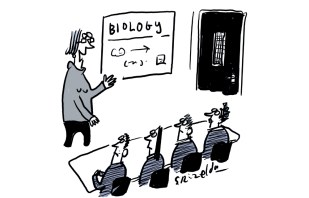
McKinsey & Company has a pretty similar lack of educational diversity. Glance through the 31 members of its ‘shareholders council’, as it calls its board, and it resembles that 1980s pop video of ever-so-diverse pop stars singing ‘We Are the World’. Look a little closer at their biographies and you see that almost all of them have an MBA from a small pool of US and international universities. They are of a kind, schooled in the same ideas – one of which is a belief in the fundamental good of diversity.
If McKinsey wanted genuine diversity, it would dump a few of its MBAs and replace them with, say, a Texan redneck, an aborigine elder and a Mongolian goat-herder. That really would make for a variety of perspectives – and possibly result in considerably more interesting output than the usual platitudes pumped out by management consultants.
The idea that diversity improves a company’s performance seems to have bubbled up from nowhere to become a received wisdom in such circles – but without, it appears, much in the way of evidence to support it.
The event of the year
Every time I type out Candidates Tournament, I want to adorn it with an apostrophe, as with Parents’ Evening or Residents’ Association. Hear me out: Women’s Tournament sounds natural whereas Women Tournament sounds clumsy; the word is possessive rather than attributive. Be that as it may, the prevailing wind has swept the apostrophe away.
Anyway, the greatest chess event of the year has begun in Toronto, and in an important sense it does belong to the players. Its legitimacy depends on the fact that qualifying spots are awarded not by invitation, but fiercely contested in elite events throughout the previous year.
In the Candidates Tournament, the favourites are Ian Nepomniachtchi (who has won the previous two events), Fabiano Caruana and Hikaru Nakamura, the world no. 2 and 3 respectively. Alireza Firouzja’s recent form has been patchy, but at his best he is undoubtedly capable of winning it. The remaining four players are making their debut at this elite event, and three of them are from India: Santosh Gujrathi Vidit and the brilliant teenagers Dommaraju Gukesh and Rameshbabu Praggnanandhaa. The rank outsider is Nijat Abasov from Azerbaijan.
For the first time this year, the Women’s Candidates Tournament is being held directly alongside and there it is even harder to rank the favourites. Both finalists from the 2022/2023 event – a knockout – are present: Lei Tingjie and Tan Zhongyi, the latter being the early leader. On paper, the top seed is Aleksandra Goryachkina, but Kateryna Lagno, Humpy Koneru and Anna Muzychuk are all plausible winners as well. The outsiders are Nurgyul Salimova and Rameshbabu Vaishali; the latter is Praggnanandhaa’s older sister.
We go to press around the halfway mark, but the event runs for 14 rounds. As ever, there are commentary streams to suit all tastes. Viswanathan Anand and Irina Krush provide the official Fide commentary, while the major chess platforms (including chess.com and lichess.org) offer their own coverage.
The winner of each tournament earns the right to challenge the world champion in a match. China’s reigning women’s world champion Ju Wenjun has defended her title on several occasions. By contrast, since beating Ian Nepomniachtchi in their match last year, the world champion Ding Liren was largely absent from elite events, apparently suffering from health problems. Alas, he has seemed a shadow of himself in recent events, finishing in the bottom half at the Tata Steel Masters in January, and then again at the Grenke Chess Classic, held in late March. That included a lucky escape in an endgame which contained some surprising nuances.
Black’s splendid knight on c5 means Keymer is the player pressing for the win. His next move cripples the White kingside pawns.
Ding Liren-Vincent Keymer
Grenke Chess Classic, March 2024
35… h5! 36 gxh5 Ke7 Marking time, so the bishop must make a move. 37 Bc6 e4! Making way for the king. 38 fxe4 Kd6 39 Bd5 Ke5 40 Bc6 Nxe4 41 Bxe4 Kxe4 42 Kb3 Kxf5 43 c5 bxc5 44 Kc4 Ke4 This natural move throws away the win. 44…Kg4! 45 Kxc5 f5 46 Kb6 f4 47 c4 f3 48 c5 f2 49 c6 f1=Q 50 c7 Qc4 51 Kb7 Kxh5 etc. The g7-pawn will win the game. 45 Kxc5 f5 46 c4 f4 47 Kb6 f3 48 c5 f2 49 c6 f1=Q 50 c7 Qf5 51 Kb7 Remarkably, despite the extra queen Black has no way to win. Qd7 52 Kb8 Qd6 53 Kb7 Qd7 54 Kb8 Qxa4 55 c8=Q Qd4 56 Qg4+ Kd5 57 Qd7+ Ke4 58 Qg4+ Kd5 59 Qd7+ Ke4 Draw agreed
No.796
Black to play. Abdusattorov-Praggnanandhaa, Prague Masters, March 2024. White has a rook for a knight. Which move allowed Black to turn the tables and gain a decisive advantage? Email answers to chess@spectator.co.uk by Monday 15 April. There is a prize of £20 for the first correct answer out of a hat. Please include a postal address and allow six weeks for prize delivery.
Last week’s solution 1 Rd7! Qxd7 2 Qxh5 gxh5 3 Bh7#. But 1 Qxh5? runs into a countershot: 1…Qxh2+ 2 Qxh2 Nxh2 3 Kxh2 Bxg5
Last week’s winner Michael Owen, Manchester