Life

The Dr. Strangelove taxonomy of DC types

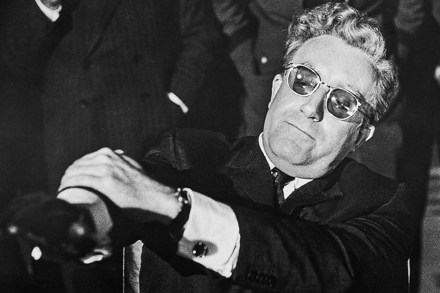
I tweeted the other day that my social life in Trump’s DC is just getting dinner or drinks with a different Dr. Strangelove character every week. It sounds like an exaggeration, but it’s not. Not really. Every week brings its own apocalypse – and the cast of characters responds accordingly. Find here a taxonomy of DC types: Dr. Strangelove (The theorist) The end of the world approaches and only the strong will survive it. Hands trembling slightly from too much caffeine and suppressed grandeur, he (it’s always a he) declares his grand theory of the world in so many words. Women, of course, will be spared. Perhaps you, too, will be counted among the lucky ones. Oh, you’re over 30? If you just read a little more Spengler. Learned a little more about semiconductors.

dr strangelove

How Trader Joe’s became a way of life

A young woman recently approached me as I stood outside Trader Joe’s on the corner of 93rd Street and Columbus Avenue in Manhattan. “Excuse me,” she said, “I’m visiting from the UK and I’m just wondering if there’s anything worth seeing around here.” This is not an unusual occurrence. It’s always tourist season in New York. People come for the cherry blossoms in Central Park, for the magic of the Rockefeller Center Christmas tree and for the vague hope of running into Timothée Chalamet at a downtown brunch place. They even come in the sweltering heat of summer when I, personally, would rather be anywhere else – ideally somewhere without the pungent smell of hot garbage and misplaced ambition.

trader joe's

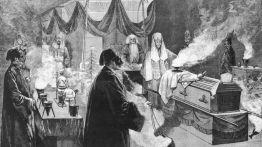
The anti-Masonic roots of the Republican party

I suppose the big anniversary event of the coming new year is the semi-quincentennial of the American Revolution. I’m all for celebrating revolution and secession but spare a good thought for the bicentennial we’ll be celebrating hereabouts in 2026: that of the Morgan Affair, featuring betrayal, a possible murder, an enduring mystery and a political eruption whose ejecta would one day help form the Republican party. I’m writing this while sitting on the polished granite bench in the Batavia Cemetery dedicated to my late friend and swimming teacher Catherine Roth, grande dame, who waged a righteously “wrothful” battle against the urban renewers who razed and ruined so much of downtown Batavia, New York, in the 1960s and 1970s. (Greatest Generation my ass!

anti-masonic

Will members of the intellectual class let AI rot their brains?

An adage dating at least from my adolescence: “You either use it or lose it.” This bit of folk wisdom, which refers principally – or so I understand – to the male procreative organ, has always been considered so obvious as to hardly need stating. Thus the recent discovery that the same principle goes for another human organ – the brain – should not surprise anyone.

labor

The cruel, cold intellect of DC and San Francisco

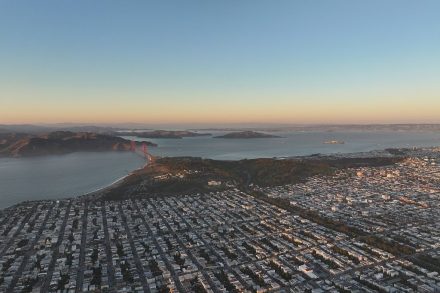
New York vs Los Angeles is done to death. Those cities have already captured the American heart on stage and screen. The next great rivalry (or is it an alliance?) is unfolding between the bastions of the nerds: Washington, DC, and San Francisco. Each prizes a different facet of intellect – DC the operator, San Francisco the inventor, functioning as co-architects of a new American order. We tell ourselves SF and DC represent different values: disruption and order, innovation and stability. And yet the cities are locked in a symbiotic embrace. San Francisco builds new worlds in the image of its algorithms; Washington manages those worlds through policy and process. But this is a cold comfort. While both claim to act in the public interest, each sees the human as a problem to be solved.

san francisco

Where can I get some meth?

I was born in Santa Monica, California. So were four of my children. When I was little, Santa Monica was still a sleepy backwater with mom-and-pop stores, a quiet local beach that was never crowded and virtually zero crime. A place where murder or mayhem or even robbery were unthinkable. Then, sometime in the 1990s, Santa Monica was discovered by the rest of the city as a “really nice place to live” and was targeted for destruction. In Los Angeles you are not allowed to have nice things. Every Christmas, Ocean Avenue along the coast was lined with 13 historic, life-size scenes depicting the complete life of Jesus. These famous and beloved displays started in 1953, but in 2015 the city banned them after atheist groups complained.

meth

In Cuba, a revolution is over

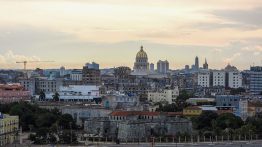
If you’ve ever thought of visiting the crocodile-shaped island of Cuba, or run into someone recently returned from sultry nights in the country’s salsa halls, there’s a good chance you’ll have heard the phrase “See it before it changes.” And I don’t mean because of Hurricane Melissa. The idea is that the centrally planned communist state, one of the last on Earth, will soon morph into America and a balmy Brigadoon full of people unencumbered by money, modern cars or Alexa will evaporate. I think most people, if they knew what Cubans have endured, wouldn’t use that phrase, which is up there in its lack of tact with “they’re poor but they’re happy.

cuba havana

Has Los Angeles killed America’s imagination?

The magnificent Griffith Park Observatory turned 90 this year and, as fans of nonagenarians, my wife and I hiked up the south slope of Mount Hollywood – well, our rental car did the hard work – to pay our respects. The city of Los Angeles sprawled out before us; the Hollywood sign loomed ominously above us. I suppose I should hate this city, the Typhoid Mary of cultural imperialism, infecting and deadening imaginations from Bangor to Bend. As Morrissey crooned: “We look to Los Angeles for the language we use/ London is dead.” But I dunno: it’s my wife’s hometown, I love her Armenian relatives and I’ve always been a sucker for the movies, at least in their pre-CGI, pre-Marvel, pre-woke, pre-franchise age.

los angeles

A Neil Young concert in the waning days of summer

By the time we got to Woodstock… actually, we never got to Woodstock. Bethel, the town in which the fabled festival of mud and myth took place, is about 50 miles as the crow flies from the famous musical happening’s eponym, and it was at the Bethel Woods Center for the Arts that we saw and heard Neil Young in the waning days of summer, when melancholy always spices the air. It boggles the mind that half a million kids – the youngest of whom are now hoary-headed septuagenarians – flooded Sullivan County on a rain-soaked weekend in August 1969, but it is almost as remarkable that despite the drugs and unhygienic conditions, only three concertgoers died.

Young
education

The tyranny of the mass-intellectual

In the classical world the question of whether virtue can be taught, or is rather acquired by interior inclination and moral development, was the subject of intense debate by the best Grecian and Roman philosophers. None ever succeeded, however, in agreeing an answer. Progressive education along narrow lines is, for liberals, the source of all legitimate moral authority Since the second half of the 20th century, academics and intellectuals have seemed to believe that they have answered the question definitively and to their own satisfaction. Virtue, they have decided, can indeed be taught, and liberal democratic education is doing it, in public and private schools and universities alike throughout the western world.

The devil over Washington

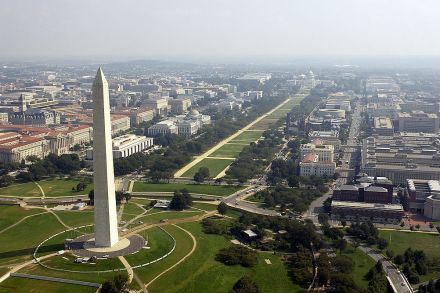
It is difficult to romanticize the political theater of Washington, DC, when you live so close to it. The absurdity feels routine after a while. You grow desensitized to the Machiavellian scheming, the name-calling, the ceremonial outrage. News outlets blast cinematic plot twists to the American public while quieter forces go unnoticed. With September growing late and the humdrum heat and headlines of Washington refusing to break, I turned to film in an attempt to re-enchant myself with the city in which I live. I rewatched two movies which capture its deeper moods. In spite of their tonal differences, both struck me in their portrayal of life just apart from the curtain – Washington not as the center of power, but as a place shadowed by it.

Washington
Emmys

The Emmys are a waste of time

On NPR, they were busy ignoring the Charlie Kirk assassination story by focusing on what really matters: this year’s Emmy Awards, which took place in Beverly Hills. I realized I didn’t recognize a single show – or actor. Then I remembered that I haven’t watched an actual television series in years. What is there to watch? At its core, the reason is because everyone in Hollywood hates you The Emmys are a celebration of TV stars I’ve never heard of, shows I don’t watch and a never-ending succession of narcissists delivering the same woke diatribes into the microphone. You hate Trump, too? That’s one we’ve never heard before, how original. The nation is eager to hear from the best supporting actress winner about how the right must atone for causing Kirk’s death.

talk

Polite society is a thing of the past

In 1908, the iconoclast writer Lytton Strachey – the bad boy of the Bloomsbury set – pointed a long finger at a stain on artist Vanessa Bell’s dress and asked, “Semen?” Later, Bell’s sister Virginia Woolf wrote: “With that one word all barriers of reticence and reserve went down… It was, I think, a great advance in civilization.” Americans tend to think that the English are sexually repressed and too refined and cultured for such talk I was recently in a bar in Bloomsbury – one that actually serves a “Virginia Woolf hamburger” – when talk among the young women at my table turned to men they knew who were, how should I put this, well-endowed. Of course, I’ve heard such talk before, but not in a long time and not in such anatomical detail.

The pace is quickening in DC

September in DC is the real new year. The heat hasn’t broken, but the air feels heavier. Congress regroups, summer travelers return to the city and the Hill drones descend on the cafés in their blazers and button-ups, sweating through 80-degree weather. A distinct tension hangs in the air, a carryover from late summer. Donald Trump’s declaration of a crime emergency last month transferred control of the local police to federal authorities, and now, as I make my way down 14th Street, I regularly shoulder past protesters and pass clusters of National Guard soldiers milling beside the wine bars and coffee shops where my friends and I still meet. Couples walk past without breaking stride, avoiding eye contact. I, too, avert my gaze.

DC
moving

Thoughts on moving houses

“A house for sale is not a home,” says Wendell Berry, which is perhaps why we have delayed putting our home up for sale as we slowly move, box by box, the five short – long? – miles down the road to the house my grandfather built in 1938. We are moving from Chapel Street to Bank Street, which I trust does not indicate a moral demotion from my lofty spiritual perch to the world of grubby materialism. I know for certain it does not augur riches. We are holding off on selling our Chapel Street home till we’ve cleared it out and are fully moved into Bank, though I nurture a ridiculous hope that before then I might unearth a rusted coffee can filled with 19th-century gold pieces that will enable us to keep both.

party

How the Democratic party became the party of the aggrieved

A well-known writer in the 1930s – I think John Dos Passos – compared Southern California to the lower-left corner of a board that has been tipped in that direction and into which everything in the rest of the country that is not nailed down slides. In the 21st century the mental, cultural and ideological equivalent of that geographic locality is a venerable and once mighty institution, the national Democratic party, whose name is synonymous with it. Throughout the 20th century, the party maintained a strong and consistent identity which accurately and effectively represented its constituency – an alliance that included the working classes, the labor unions, the small farmers, black people, the public educational establishment, colleges and universities, the arts and bohemia.

It’s a frustrating time to be a college football fan

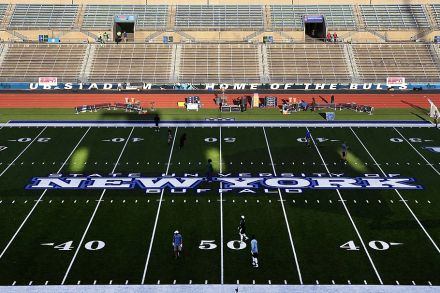
Another pigskin season kicks off, and despite the multitudinous sins committed against the game and its culture by ESPN, university presidents, major conference commissioners, take-the-money-and-run athletes and other votaries of Mammon, I’m once again giving it the old college try. Which is why I picked up my copy of Lindy’s College Football Preview the other day. (Lindy’s ranks my local team, the University of Buffalo Bulls, 85th in nation –we’re movin’ on up!) It’s a frustrating time to be a college football fan. Tradition is sacked by the almighty buck, as it typically is in the land of the dollar bill, and healthy sentiments and institutional affections are warped, processed and sold back to us in tawdry and expensive packages.

football
middle

The problem of the progressive middle class

A month or two ago, Rod Liddle had the audacity to write in The Spectator that the besetting problem of modern civilization is the middle class, while implying that something ought to done about it. Reading the article, I was reminded of an entry made by Harold Nicolson in his diary early in 1939 where he observes, à propos the homogenization of the modern world, “Even revolution is becoming bourgeois.

Who’s buying up Palm Beach?

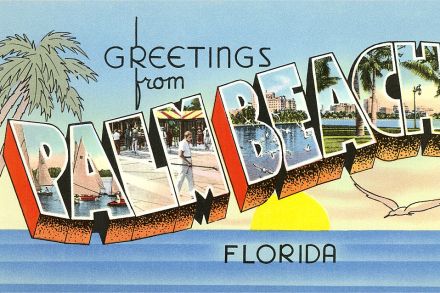
Donald Trump continues to make news in his hometown. This is what you would expect, but it’s not all plain sailing. For a start, since he won the election, and the local police started declaring his Mar-a-Lago Club a security zone – which stretches for seven blocks, north to south, and from the Atlantic Ocean to the Intracoastal Waterway – no fewer than seven properties in the zone have changed hands. And the big question is: are these people moving in, or moving out? It is impossible to be certain, of course, but we do know that the latest property sold for $16.99 million, down from an asking price of $24 million when it first came on the market.

Palm
California

California is doomed

Why is anyone even remotely interested in regime-changing a nasty, far-away foreign country that hates America when there is a nasty country much, much closer that hates us, too? OK, technically California is not a country, but it’s about the same size as Japan and Sweden. Its GDP – $4.1 trillion – is the fourth-highest in the world, behind the other 49 combined United States, China and Germany. It has as many residents as Canada. More people live here than in Spain or Saudi Arabia (and more than in our 22 smallest states combined). California is a monster in every way. That used to be a good thing: its powerful allure and economic might attracted the best and brightest from all over. Einstein taught in Pasadena, at Caltech.