Life

My barn dog is a Chow Chow

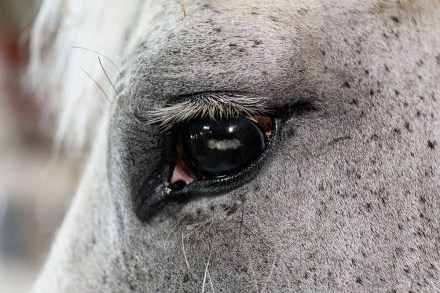
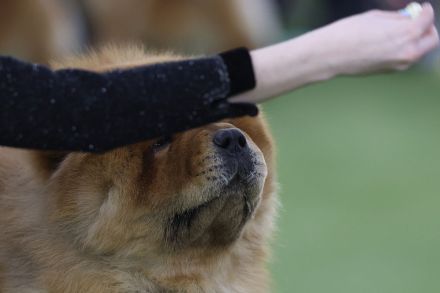
Even if you’re not a dog expert, you probably know enough to laugh at the breed of my resident barn dog. Chow Chows are not exactly cooperative, and while they are bred as territorial guard dogs, their cat-like laziness makes them, at best, capriciously protective of their owner. These little balls of fur are, however, pretty damn cute. My three-year-old, Winnie, embodies all of these traits – or at least she did as a puppy, with the occasional tendency to regress. But growing up around horses on an unfenced property shaped her more than any innate breed characteristics. Having owned pretty much all the conventional breeds, I can safely say she’s now more or less exactly what you look for in a farm dog.
Robots are ruining baseball

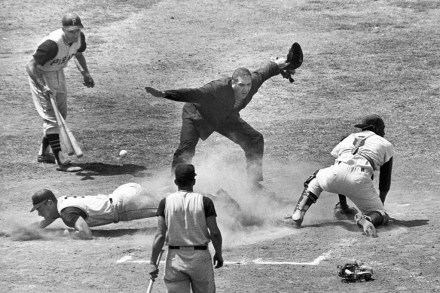
FanDuel and DraftKings ads spice the early spring airwaves, robots deliver their unimpeachable verdicts on human actions and a family of four shells out 500 bucks for parking and tickets to attend a game. Major League Baseball has returned! At least this year MLB scheduled its Opening Day game – a March 25 interleague (yech!) contest between the New York Yankees and San Francisco Giants – to be played stateside. Mixing America Last-ism with corporate-culture imperialism, six previous Opening Day games have been played on foreign soil. That other countries might have sports of their own annoys the panjandrums of professional baseball and football, who seek to impose spectatorial homogeneity on a diverse planet.

Do I have what it takes to be a magistrate?

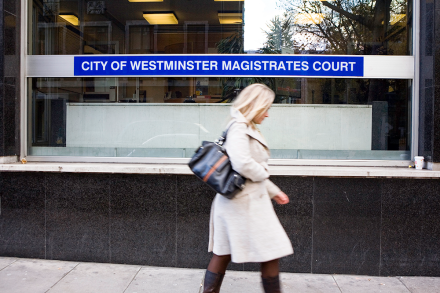
I’m thinking of becoming a magistrate. Before applying, I was advised to attend a few sessions and find out how it all works. My first case was a bag theft from a London pub. The accused, an Algerian football ace, pleaded guilty through an interpreter. The court heard that his glittering football career had been cut short by “an accident” and he was currently living in London “with the support of friends.” The magistrate, a kindly, soft-spoken redhead, fined him £60 and made a note of his “good character.” She reduced his fine by £20 as a reward for pleading guilty. The defendant lounged against the rail of the dock looking irritable and impatient as his sentence was pronounced. Outside the court, he spoke to his lawyer without a translator.

Life under blockade in Havana

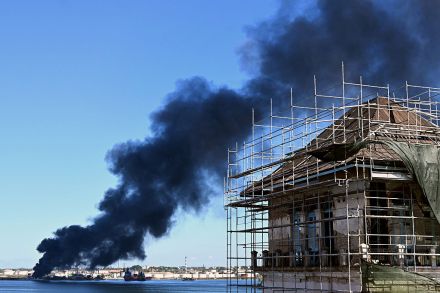
Now, I’m here to write about life in Havana, about daiquiris, fishing and salsa. But it’s fair to say life in Cuba has been getting a bit intense. Not as tense as it is elsewhere, but we’re very definitely on the list of countries where the US wants regime change. Washington has cranked up its 64-year trade embargo on the island into an all-out oil blockade. Donald Trump said he is hoping to conduct a “friendly takeover” of the island. The Habanos cigar festival, which I had been planning to write about, has been “postponed.” So I find myself pushing aside my notes on the ever-higher prices of Behikes, instead scribbling the word, “siege” on my page. It all seems a little medieval.

havana oil blockade

An ambassador is the American version of a nobleman

America is, famously and proudly, a republic. Everyone is equal before the law. No earls or dukes or even knights of the realm. And a good thing, too. Er… not so fast. As one of the magazines devoted to Palm Beach life recently pointed out, there is one honor available to citizens of the United States that is much coveted because, as with princes, dukes and earls, the honorific comes before the recipient’s full name – and, like nobility (but not in Andrew Mountbatten-Windsor’s case), it is conferred for life. That title is “ambassador.

February in New York: where dreams come to die

I probably sound naive, but February always struck me as a month that should be full of hope – brimming with the type of optimism that comes from new beginnings. At least here in New York, though, it was grim. Everything feels more expensive. Everyone’s temper seems as short as the blink-and-you’ll-miss-them daylight hours. And then there’s the weather. The streets are flanked like an Arctic military checkpoint by car-sized mounds of calcified brown snow. The kind of snow that has visible layers, like a geological cross-section of urban neglect. The kind that has already gobbled up who knows how many small dogs. The wind is so ferocious, it makes that chemical skin peel you’ve been targeted for on Instagram look pleasant. New York does sleep. And thank goodness it does.

My mother has become a hostile stranger

‘Do you know who I am?’ said the voice belonging to the lady who used to be my mother, crossly, at the end of the phone line. The truthful answer is no. Since the dementia took hold, a hostile stranger who doesn’t think much of me inhabits my mother’s mind and body. A hostile stranger who doesn’t think much of me inhabits my mother’s mind and body No matter what I do, no matter how many times I ring or visit her, this person who used to be my mother is always cross and disappointed. ‘Oh, you’re alive are you!’ the strange voice barks, before asking me what I’m up to, with a sarcastic edge. Whatever I tell her I’m doing, even if I say I’m lying down with a headache, she snaps back: ‘That’s nice for you. You enjoy!

My wild house parties with Rose Wylie

Dante’s Beach, Ravenna I rang up my old best friend, Luke-John, for a chat a few days ago and to ask him about his mum, Rose Wylie. She is 91 and has just become the first ever female painter to be given a solo show at the Royal Academy. When I was in my late teens and early twenties, her house in the village of Newnham, near Faversham, became a safe haven for me, and I used to stay there a lot. Rose and her husband Roy, who was also an artist and died in 2014, were just so dead cool. Neither was well-known, and they had little money, but they were seriously intellectual, seriously stylish and seriously good-looking. He had been to Goldsmiths and then been a student of David Bomberg’s at the Borough Polytechnic, and was doing a PhD on him at the Royal College of Art.

The life of Karl Zinsmeister

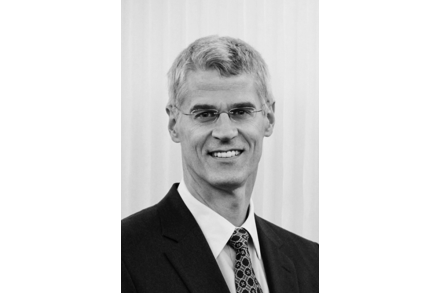
It’s strange interviewing a friend who is dying, but Karl Zinsmeister is at peace. I met Karl in Washington, DC, in the spring of 1981, when we two Upstate New York hicks were new to the staff of Senator Pat Moynihan. The first thing I learned about him was that he and his girlfriend (and later wife) Ann, while on some do-gooder mission in Africa, had wandered into Tanzania and been held on suspicion of being spies. (They weren’t.) Karl threw himself into both intellectual and manual labor with fierce enthusiasm, doggedness, even hard-headedness. Over the past 45 years he has edited magazines, renovated ruined tenements, been embedded in Iraq, raised three kids, lived with Ann on a houseboat, served as White House chief of domestic policy and produced more than 20 books.

karl zinsmeister

Missing Cowboy, our great farm manager

Life in the country is unforgiving. Animals die, labor is unceasing and nature fights back at every turn. We say losing a beloved horse or a loyal farm dog is like losing a member of the family. But while the pain is real, it’s certainly not the same as losing a dear friend. Our long-time farm hand died late last year. He was not an old man by any means and he had the vigor of a younger man still. By the grace of God, he passed away peacefully at home in the small cottage just down the road from the farm. I’ll call him Cowboy, because in truth, that’s what we called him most of the time. He didn’t like his real name. And he certainly lived up to the moniker. Cowboy could solve any issue, big or small.

The sorry plight of Palm Beach’s iguanas

The old saying, “It’s an ill wind that blows nobody good,” has received strong reinforcement during the recent unprecedented cold spell in the Palm Beaches. The rest of the world almost certainly thinks we lead a sybaritic life down here with the perennial sunshine taking the edge off the normal hardships that everyone else has to contend with. But one unusual side effect of the recent cold spell (and though it wasn’t cold by, say, Canadian standards, it was the coldest spell we’ve had here in 27 years) was the carnage it wrought on the iguana population. We have a love/hate relationship with iguanas here. When they first arrived in the early 1980s they were regarded as cute, but a decade later the mood changed.

America’s future looks vulgar

The latest Super Bowl offers the most recent opportunity to reflect on the terminal state of our national culture, held together chiefly by a distractive and unhealthy mania for commercial sports and perfectly exemplified by the infantile yet aggressively transgressive nihilism of a brainless showoff calling himself Bad Bunny and dressed all in white, suggestive perhaps of an anti-Easter Bunny. Why, one wonders, has no political theorist from Hobbes forward posited the ideal human community as one which would combine political democracy with cultural and intellectual aristocracy – as, indeed, America at the time of her founding and for several generations thereafter did? Such an arrangement might satisfy critics of democratic society on the anti-egalitarian right, such as T.S.

Roaches: the spirit animal of New York City

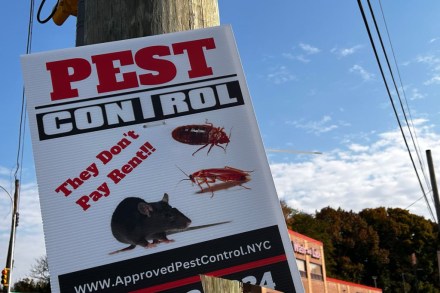
Over the past few years, I’ve written regularly for this magazine about my devotion to New York City. I love the cultish exercise classes that test your psychological mettle and the cryptic linguistic idiosyncrasies of the people you meet here. I love the know-it-all doormen – the actual kings of Gotham – and that any day, a celebrity might move in next door. I love that this is home to the world’s most audacious rats and, yes, I love Staten Island – proof that my affection extends beyond accepted social norms. Only here would someone say ‘I named a roach after you’ and consider it a heartfelt gesture of affection When a recent email landed in my inbox, though, it ignited a whole new appreciation for this brazen metropolis.

roaches

Americans will believe in anything

The US has not known social and domestic peace since the start of the present decade, and it is unlikely that it will know it again for the foreseeable future. This is because it has ceased to be a country at all, assuming that nationhood implies fundamental unity, which America no longer has. When novelist John Dos Passos wrote in the late 1930s, “All right, we are two countries,” the boundary he had in mind was economic, separating the rich from the poor. Today the obvious divide is political, between left and right. But what seems obvious is not always true, as in this case.

America’s immigration officers are among the most welcoming (except ICE)

A frisson of fear tends to run through non-Americans when they face immigration in the United States. For years, young Brits have been warned prior to their first trip: “When you meet the immigration officer, don’t make jokes!” To boys cultivated to be insouciant in Britain’s posher schools, this usually means approaching the booth nervously repeating, “Don’t say bomb, don’t say bomb” – hopefully under their breath. However, I’d say the officers guarding America’s borders are among the most welcoming, and sometimes even funny, I’ve met – I’m excluding ICE, who sound awful. It’s often a surprise given I’m usually arriving from a country firmly on America’s State Sponsors of Terrorism list: Cuba.

How many private jets are registered at Palm Beach International Airport?

Does every billionaire have a private jet? Are they standard toys for these very special people? Intrigued by this uniquely modern possibility, I inquired of Palm Beach International Airport (PBIA) how many private jets are registered here. The answer: 172. Some of them are no doubt owned by corporations, but that number compares well with the 67 billionaires thought to have homes in the area – perhaps some have two; that wouldn’t be unthinkable. But, of course, owning your own Gulfstream involves more than just turning up at a private airfield with no worries as to how much your bags weigh. Maybe some very rich folk don’t want the hassle of employing year-round pilots (at least two) or the bother of constant maintenance needed to keep these toys in the air.

An Englishwoman in New York

For this trip, I’ve had to divulge my social-media handles, blood group, shoe size etc, and have therefore assumed the brace position for being "processed" into the US, not least because I was once, under Joe Biden, incarcerated in a side room at JFK for having an apple in my hand luggage. The border protection officers show not the slightest interest in my sarky tweet about neocon Liz Truss Though, I might add, it was even worse under Bill Clinton. My baby boy was placed in a detention center on arrival at Dulles when we relocated to Washington, .C. Oliver, aged six months, was traveling separately from us with a British nanny who’d over-stayed on a visa a decade before, and we didn’t know where he was for 24 hours.

new york

The pros and cons of losing my hearing

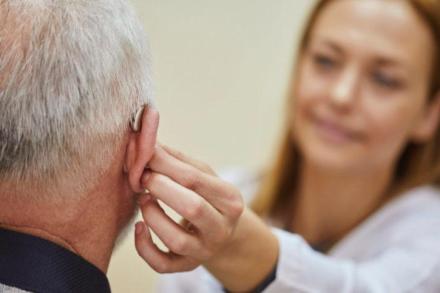
Ah, the indignities of age. Over the past year I’ve suffered significant hearing loss. “Huh?” has become my favorite word and I’ve developed a strange new respect for the loonies who hear voices. Aspiring to stoicism, I informed Lucine, my wife, “When I hit 60 I figured that I was entering a stage in which the physical setbacks, some quite unexpected, would mount. So I told myself that I could either whine about it or I could accept all this with grace and good humor.” Lucine didn’t miss a beat. “Then why have you chosen to whine?” Thanks, dear! I mean no disrespect to the late Freddie Mercury when I say ‘We Will Rock You’ sounds better muffled I confess to the occasional maudlin moment.

The chaotic thrill of a horse auction

The story of Harry deLeyer and his horse Snowman reads like a Disney classic. DeLeyer was a Dutch immigrant farmer who bought Snowman at auction with his last $80 in the 1950s . Snowman was an unpedigreed plowhorse, already old by competitive riding standards, and likely headed for the glue factory when deLeyer saw promise in his strength and spirit. They went on to become one of the most successful pairings in the history of showriding, taking home the Triple Crown of national titles in 1958. The horse world has changed a lot since then. Both training and breeding are highly scientific across all pursuits, from showriding to racing.

The subway deserves some respect

A few weeks before the end of the year, I was invited to a house party at which I had the misfortune of becoming embroiled in a conversation with a man I’ll call Joe, because his name was Joe and I don’t feel inclined to offer him the dignity of a pseudonym. There’s a theory I’ve corroborated since moving to New York in 2020. Every conversation at a party in this city eventually gravitates toward one of five subjects: traffic, the weather, real estate, sex or the mayor. The ultra-rich are among the subway’s most devoted riders Joe told me he works in finance (which he pronounced “fin-ants”) and it seemed he wasn’t bothered about the weather. He wasn’t a tax-optimizing Connecticut commuter, so had no unsolicited opinions to share about traffic.