Features

Rupert Murdoch goes west

Each year I return to my native Montana, my English husband and our two small children in tow. We try to explore new parts of the state; this summer we decided to check out Beaverhead County. This happens to be where Rupert Murdoch recently bought a 340,000-acre ranch in the biggest land sale in Montana’s history. On our way south to Beaverhead County we inadvertently took the same route as William Clark on his return journey from the Pacific in 1806. It’s hard not to: there are few options for crossing the Bitterroot Mountains. Lost Trail Pass reaches a height of over 7,000 feet and we stop here to eat our ham sandwiches and Cheez-Its.

montana

Andrew Yang’s doomed revolution

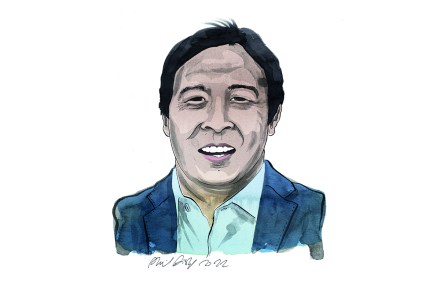
In 1958, the federal government surveyed the vast plains of the United States for the site that would launch the future of humanity and settled on... Greenbelt, Maryland, which had the advantage of a quick commute from the capital. On weekdays 7,000 people travel to NASA’s Goddard Space Center to work on those telescopes that go viral every few months with their high-definition photos of space. They were off for Labor Day weekend, so only a couple of hundred people were on hand to see the dawn of a political revolution.

forward

Biden’s border blues

When hundreds of thousands of migrants surged to the southern border soon after Joe Biden took office, administration officials urged patience. Donald Trump had “dismantled” the system, homeland security secretary Alejandro Mayorkas insisted when asked about chaotic scenes at the border last March. “It takes time to rebuild it virtually from scratch,” he said. Well, the Biden administration has now had plenty of time — and there is no end to the border crisis in sight. Eighteen months on from Mayorkas’s assurances, the numbers are no less staggering. In June alone, Customs and Border Protection reported more than 200,000 apprehensions. So far this year, law enforcement has encountered more than 1.5 million migrants in attempted border crossings.

border

A hazy afternoon with Bill Maher

It’s a beautiful Saturday afternoon in Beverly Hills and Bill Maher — stand-up comedian, late-night television host, prophet of the great American silent majority — is ruminating on what the hell has gone wrong with the left: “It all comes, I think, from two terrible sources: bad parenting and insane universities. That’s where the craziness is coming from.” Maher is sitting with me in “Club Random,” the neon-light-festooned, decked-out bungalow he converted into a television studio in 2020, after social distancing requirements forced his weekly HBO show, Real Time with Bill Maher, to shoot remotely.

Shane Gillis is going places

It is a hot summer night at the truck warehouse that is home to Magooby’s Joke House, and 2014’s Baltimore New Comedian of the Year is in need of another cold Bud Light. Shane Gillis, the Pennsylvania man who was nowhere close to a household name until he had the misfortune to be fired by Saturday Night Live in 2019, and then the follow-on great fortune to become famous for being incredibly funny, does not love the impression he gives as the apex predator of beer-drinking. But he is a week removed from leaving fellow comic Ari Shaffir, no lightweight himself, passed out in intense liver pain on the studio floor of The Joe Rogan Experience because he dared come at the T. rex. “So who is your trainer? Your trainer has to be incredible.” “My dad. He’s an alcoholic.

gillis

Why I’ll never make it in stand-up

I’m an idiot. Because only an idiot decides to seriously pursue stand-up comedy at thirty, which is when I began. Stand-up is something dumb you start doing in your twenties, like drugs or believing you can change the world. It’s for when you’re full of youthful idealism, energy and collagen. It’s not something you begin when you’re approaching midlife crisis, feeling insecure about your poor life choices and uncomfortable with your aging body in an industry that worships youth. Stand-up is undoubtedly the hardest, most unforgiving performance medium on the planet. Although I grew up memorizing comedy albums, it seemed like something only geniuses and lunatics such as Eddie Murphy, Chris Rock and Robin Williams got to do.

stand-up
DeSantis

DeSantis is a Republican establishment win-win

What’s left of the Bush-Cheney wing of the Republican Party doesn’t like Ron DeSantis. But it’s eager to see him run for president anyway. For if DeSantis challenges Trump for the 2024 GOP nomination, the old establishment stands to gain no matter who ultimately gets the nod. The Florida governor certainly seems to be ideologically closer to Trump-style populism than to the neoconservatism that prevailed among elite Republicans from the end of the Reagan era to the defeat of Mitt Romney in 2012. Why, then, would those who pine for the likes of Bush and Romney want to see a choice between Trump and DeSantis, both right-wing populists, two years from now?

gay

Is the right about to backslide on gay rights?

In a speech to August’s CPAC gathering in Dallas, Hungarian president Viktor Orbán said a good many admirable things about the importance of liberty and the tyranny of the globalist left, and the audience was gratifyingly receptive. But the biggest cheers and the most prolonged applause came in response to Orbán’s citation of a line from the Hungarian constitution: “Hungary shall protect the institution of marriage as the union of one man and one woman.” Not so long ago, that enthusiasm might have raised eyebrows. To be sure, the 2015 Obergefell v.

war

Ukraine is the first streaming service war

Russia has invaded Ukraine, and the images are all over the news. CNN has gone to round-the-clock coverage of bombs falling near Kyiv, refugees pouring into Hungary, Putin’s war machine rolling down a misty highway. We’re outraged by this, roused to action, as we righteously hang a blue-and-yellow Ukrainian flag off the porch and learn to spell the names of places like Kherson and Mariupol. The West, listless and fractured, seems suddenly united again as opposition to Russian imperialism grows and... ...and it’s summer. The weather is warm and a gentle breeze is tinkling through the chimes. The kids are off from school, horsing around the kitchen, and the lawn isn’t going to mow itself.

New York

My New York nightmare

Throughout the Covid shutdowns, I felt like Wendy Kroy in The Last Seduction. If you’ve never seen the movie, the only thing you need to know is that a running theme is that the protagonist, hiding out upstate after stealing a lot of money, has got to get back to New York. Even the alias she uses is “New York” spelled backwards (sort of). For nearly two years, every morning I’d wake up thinking, I’ve got to get back to New York. Well, I’m back, and this isn’t what I meant at all. I wanted to be in the city that never sleeps, where I could walk around carefree, even at night, take the subway, and live within a few blocks of every possible convenience. Instead, this happened.

global health

The strange effort to ‘decolonize’ global health

"Global health” has emerged in the last decade or so as one of the growth areas in the medical and quasi-medical world. The CDC has a Center for Global Health which “works to protect Americans from dangerous and costly public health threats, including Covid-19, vaccine-preventable diseases, HIV, TB and malaria — responding when and where health threats arise.” Global Health “is a collaborative effort by technologists and researchers from leading international institutions to build a trusted, detailed and accurate resource of real-time infectious disease data.” The Global Health Corps is “a diverse community of health equity leaders.

jessica yaniv tavistock

The trouble with Tavistock

"In July, Britain’s National Health Service announced a major revamp of its gender identity services for young people. The famed Tavistock clinic — officially named the Gender Identity Development Service, operated by the Tavistock and Portman Trust and a flashpoint for the country’s debate about gender, trans issues and hormone treatments — would be shuttered. As the New York Times reported, it would be replaced by “a more distributed and comprehensive network of medical care for adolescents seeking hormones and other gender treatments.” This outcome was strongly hinted at in the interim report of the Cass Review, an ongoing investigation into gender identity services for children, headed by the accomplished pediatrics expert Hilary Cass.

barber

The scissor sisters

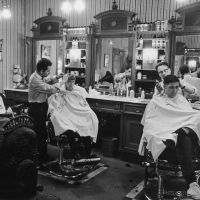
I needed a quick cut and shave, my usual guy was closed, and the shop down the road was a tinge more masculine, or so I thought, than the other joints nearby. It was still one of those Brooklyn neo-barbers, complete with tatted-up staff, dark walls, steel accents with live edge countertops, trailing golden pothos and old-timey photographs of men sporting dramatic mustaches. On the Brooklyn scale of pretension, it ranked low compared to the rest, where you’ll find a bundle of demure waifs stationed in leather aprons as they balance brass clippers with outstretched pinkies, like martini glasses, delivering fades with delicate upward flicks of the wrist — that’ll be $150. “She’s running a little late,” the owner said of the barber to whom I’d been assigned. She?

Lorenz

Taylor Lorenz is a crybully

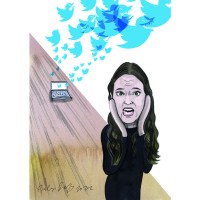
The Washington Post is one of America’s most revered news organizations. Once led by Katharine Graham, an era-defining media CEO, and edited by news legend Ben Bradlee, the Post is famous for the Watergate-era journalism of Bob Woodward and Carl Bernstein, which made it the nation’s political paper of record. Today, one of the Post’s most high-profile employees is an internet-culture reporter named Taylor Lorenz. Her involvement in numerous scandals involving reporting errors, frequent falsehoods, violations of journalistic norms and troubling online interactions call into question whether outlets like the Post can continue to function effectively as the Fourth Estate in the age of online clout-chasing and click-based news.

raid

The real motivation for the FBI raid

I write a day after the FBI, without warning, raided Mar-a-Lago, Donald Trump’s home in Palm Beach. According to Trump, agents even broke into his safe and made off with who-knows-what documents. They also rifled through Melania Trump’s wardrobe. Maybe they were looking for classified lingerie. Who knows? As many commentators pointed out immediately, this assault on a former president of the United States by what amounts to the Democratic Party’s secret police was unprecedented. Never before in our history has a former president been subject to the mafia-busting, terrorist-crushing might of state police power directed by the opposing party. That’s just in our history, though. Elsewhere the story is not so cheery.

fracking

The revenge of the analog economy

The last few decades have seen the emergence of two rival economies: an older analog one built on the actual production of goods, and another that profits from financial transactions, images and customer surveillance. The contest between the two has been rather one-sided, with the “laptop economy” the big winner, particularly during the pandemic. But while lockdowns made this one-sidedness clear, recent developments have been an unwelcome reminder that the pain suffered in the analog economy still matters. Whether through inflation, energy shortages or supply chain issues, we are getting an uncomfortable lesson in the enduring relevance of the material world. Sadly, the needs of the analog economy aren’t taken seriously enough in Washington.

Why ESG is sinister

In contemporary finance, a bank’s “head of responsible investing” is meant to be an apostle of woke capitalism: a very modern kind of money man who tours the world touting all the good their employer is doing. So you might have expected a speech on climate change and finance by Stuart Kirk, the man with that job title at HSBC Asset Management, to be a bromide-filled snoozefest about the win-win nature of the transition to the green economy. But Mr. Kirk’s address at a recent conference on “Moral Money” was nothing of the sort. Instead, he delivered a broadside against the fashionable idea that climate change is a risk that no financial institution can afford to ignore.

esg
conversion

The ‘conversion therapy’ canard

In 2016, the Obama-Biden administration concluded that “the quality and strength of evidence” for medicalized gender transition was “low” and insufficient “to determine whether gender reassignment surgery improves health outcomes for Medicare beneficiaries with gender dysphoria.” Six years on, such skepticism has evaporated. In June, the Biden-Harris administration issued an executive order directing the departments of health and education to “promote expanded access to gender-affirming care.” What changed? Not the evidence, only the politics. At a special Pride Month ceremony for LGBT activists at the White House, the president promised to use the “full force of the federal government” in implementing their policy agenda, from education to healthcare.