Features

Big Pickleball is coming for your tennis court

One morning this past summer I played tennis with two friends at the John J. Carty tennis courts in Bay Ridge, Brooklyn. About halfway through our session, dozens of senior citizens flooded onto what looked like four child-sized tennis courts next to ours. Wielding rectangular paddles, the seniors formed doubles teams and thwacked plastic wiffleballs back and forth across the nets, producing a bracingly loud pop-pop-pop sound. They were playing pickleball, a sport with origins as a 1960s backyard pastime that has become a craze in the United States over the past few years. Given the small courts and slow ball, the players didn’t have to move very far in any direction to keep a good rally going. They looked like they were having a lot of fun.

Pickleball

The outrage fever over Critical Race Theory

On October 10 Mississippi Today ran an article that nicely captures how America’s debate over Critical Race Theory has been marked by far more hyper-politicized nonsense than policy substance. As the author, Bobby Harrison, points out, GOP officials in Mississippi have been taking a victory lap over their supposed banning of CRT. “Here in Mississippi we are leading the way and we are driving the conservative movement,” Governor Tate Reeves said at a country fair. “We have banned Critical Race Theory — and we have banned vaccine mandates.” But the CRT bill, Harrison notes, does no such thing.

crt

How Politico’s Playbook went from must-read to spam

Imagine one day you walk into your local watering hole and find out that all of your favorite bartenders have been hired away. In their place are new “cocktail specialists,” who are too busy flirting with one another to actually help customers. When they finally pour you a drink, they are awfully stingy with the booze. You briefly grieve over an overpriced vodka soda and then vow to never go back to that awful place. That’s more or less how I feel about Politico’s Playbook, the newsletter that was once the go-to morning read for Washingtonians. Reporters, lobbyists, government employees and politicians used to consume the daily newsletter before their first cup of coffee.

playbook

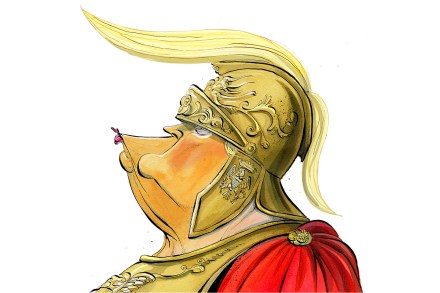
The Republican march on Rome

Perhaps the greatest defeat the Roman Republic ever suffered was at the hands of Hannibal at the Battle of Cannae in 216 BC. Livy estimates that some 50,000 Romans were slaughtered and nearly 20,000 captured. Hannibal lost fewer than 6,000 men. It was a brilliant tactical victory for the Carthaginian general. The sun and wind were at his back. He had deployed his men in a convex semicircle with his weakest troops in front. When the armies assembled for battle, Hannibal ordered his men to shuffle their feet to stir up the dust. The Romans, half-blinded by the dust and the sun, plunged headlong against the protruding bulge of Hannibal’s line, easily pushing it in upon itself. Yet too late did they realize that only the tip of Hannibal’s line was falling back.

republicans
teeth

At war with my pearly whites

I am a dental basket case. When I was a child, my orthodontist used to joke that he could drive a Mack truck between my two front teeth. I didn’t have braces so much as fight a losing battle against the evil telekinetic forces at work in my mouth, which seemed to shift my molars and incisors around at will. This was back in the 1990s when orthodontics was a matter of steel torture devices glued to your teeth — and I had all of them. There was the expander, a kind of bear trap in the roof of my mouth, which every night my mother would tighten by inserting and twisting a key. There was the headgear, the wires that circumnavigated half my head, which my orthodontist was delusional enough to think I was going to wear to school.

F1 formula one

How Formula One took America by storm

Even for Texas the scale of the Austin Grand Prix is overwhelming. The Circuit of the Americas, as the track is known, is simply massive: it is state-fair sized, though the goings-on are of a far more sophisticated flavor. Walking into the Paddock Club, techno blaring and pretty people flitting about like accented Abercrombie and Fitch models with cocktails in tiny Patrón bottles, one friend looked at me and said, “This ain’t NASCAR.” And indeed it is not. Formula One racing, one of the world’s most popular sports, has begun to get a foothold in the United States, owing in part to the Netflix series Drive to Survive.

ron desantis

My travels in DeSantisland

Long before he became a darling of the right and the left’s second favorite villain, Ronald Dion DeSantis was just a Florida kid they called “D” who played baseball, worked at a grocery store and dreamed of becoming president of the United States. Florida’s audacious forty-four-year-old governor earned legions of fans — and plenty of enemies — for keeping his state open during the pandemic. And he’s become a national figure since – a reinvented Florida Man – by playing offense on issues ranging from parental rights in education to illegal immigration to Critical Race Theory to fighting woke corporations.

The lesson of 2022: energy is our lifeblood

This has, so far, been a year of hard lessons. Spiraling inflation has given households an expensive economic refresher course. A land war in Europe has offered an unwelcome reminder of old geopolitical and military truths. But arguably the most important lesson of 2022 concerns the point at which these economic, military and geopolitical considerations converge: energy. On this vital issue, the West has suffered from an epidemic of amnesia in recent years. Too often energy security has either been taken for granted by policymakers and voters, for whom the last energy crisis had become a distant memory, or actively disparaged by an environmental movement whose hardline hostility to fossil fuels has become received wisdom in polite circles.

A nation of quitters

America’s post-pandemic employment picture is an unsettling paradox. On the one hand, job totals are finally back above pre-pandemic highs — and unemployment rates skirt fifty-year lows. But at the same time, overall work rates are lower than they have been since the 1980s — and millions of workers who dropped out of the labor force during the Covid-19 lockdowns have yet to return. A peacetime labor shortage has erupted, yet vast numbers of men and women are still sitting on the sidelines of the economy. America is renowned for its work ethic — and rightly so. The average worker in the United States clocks more hours each year than those in Canada, Australia, Western Europe and now even Japan. But those are the work patterns of US men and women holding down a job.

work

Where in the world is Greta Thunberg?

When the United Nations General Assembly convened in New York in September, climate-watchers may have noticed a pesky, pigtailed vacuum. Greta Thunberg, who spent the summer of 2019 stalking the East Coast after taking a prince of Monaco’s yacht across the Atlantic, reached her zenith that September — the last time this body met in person — at the Climate Action Summit where she delivered her creepy, memed-into-oblivion “how dare you” speech. But the chilling little entity straight out of Kubrick was notably absent at this year’s assembly, at a time when the Biden administration is pushing climate hysteria more fervently than ever.

thunberg

She was the Queen of the West

For much of my life, I confess I didn’t pay much attention to Queen Elizabeth II. My Muslim upbringing in Somalia, Ethiopia, Kenya and Saudi Arabia meant that the idea of a female figurehead was utterly foreign to me. How could a woman be the head of a church or the leader or embodiment of a nation? This was not what my god taught. Allah, for me, was the ultimate patriarchal ruler. He would certainly not countenance a figure like the Queen. But once I left Islam and became a convert to the ideals of the West, I came to appreciate her. The massive crowds following her coffin as it wound its way down from Balmoral, through Edinburgh, to London and finally to Windsor show that I am far from alone. The Queen was beloved.

queen
nuclear

Welcome to the age of nuclear blackmail

Vladimir Putin’s recent announcement that he was not bluffing about using nuclear weapons against the West in his war on Ukraine is one of the strongest indications yet of the risks the liberal world now faces in opposing authoritarian aggression. In the face of Russian aggression, or in committing the United States to defending Taiwan, as President Joe Biden did yet again recently, Washington and its partners face the possibility of direct confrontation with the world’s most powerful, nuclear-armed militaries. For the first time in a generation, Western powers risk being checked by adversaries willing to threaten massive conventional and nuclear warfare. The era of cost-free intervention to uphold the liberal world order is over.

charles

What kind of king will Charles III be?

In 1988, Prince Charles asked the late Peregrine Worsthorne, then editor of the Sunday Telegraph, what he should do in public life. Perry told Charles he should restrict himself to public duties and never ever air his private thoughts. The prince buried his head in his hands, moaning, “But then I’m just a cipher.” And that, indeed, is what he has just become, as King Charles III. At the end of September, his cipher — the symbol of his reign — was unveiled. The elegant combination of a C, an R (for Rex) and the Roman numeral III come together to symbolize King Charles III. In time, the cipher will appear on government buildings, state documents and new postboxes. Perry Worsthorne was right all those years ago.

pollsters

How the midterm polls became Democratic fan fiction

Psephologists of the world unite: you have nothing to lose but your fibs! I write toward the end of September, when many pollsters are still treating their prognostications as a form of fan fiction. For example, one poll has star trooper Mark Kelly ahead of Blake Masters by 6.2 points in the Arizona race for US Senate. That, ladies and gentlemen of the jury, is ridiculous. Punditry isn’t prophecy, but mark my words: Blake Masters, absent some intervening catastrophe, is going to win that race and win convincingly. I am going to stick my neck out and say the same about John Fetterman and Mehmet Oz in the Senate race in Pennsylvania. “The polls” have Fetterman ahead by 4.5 points.

crimea

What price must the West pay for Crimea?

For centuries before Vladimir Putin arrived on the scene, Russian foreign policy has been shaped by the country’s need for warm-water ports. To be a great power in Europe and the Near East, Russia must have access to the Mediterranean. Commercial as well as military considerations dictate this. In the eighteenth century Russia conquered the khanate of Crimea and acquired a splendid location for a new Black Sea port — what is now the city of Sevastopol. The Crimean peninsula had been a gateway from Asia to the Mediterranean since the days of the ancient Greeks, who built some of their northernmost colonies there. Russia made Sevastopol the permanent home of its Black Sea Fleet.

birth

The radical alternative to a hospital birth

Giving birth hurts. A lot. Like any other major physical feat, it’s risky, but it’s not the inherently dangerous medical event some have come to believe. Plenty of women know this. Many are skeptical of the need to give birth in a hospital. But some are taking things further, deciding to forgo medical care entirely and give birth at home totally unassisted. Free birth, or unassisted birth as it’s called by most birth workers, is an intentionally unassisted birth: no professional, no midwife, no nurse, no doctor. For hardcore freebirthers, even having a doula present for your birth means you’re not doing it properly. Thanks to Instagram and one very compelling podcast called The Free Birth Society, the movement is growing.

christian

The Christian nationalism boogeyman

Which of the zillion prophesied crises will engulf America next? At the moment, the most chattered-about is a “second civil war,” though some also worry that the United States could lapse more peacefully into autocracy. The left, of course, is consumed by fears of climate change drowning New York, while some on the nationalist right foresee a Camp of the Saints-style immigrant invasion overwhelming public services. Yet amid all the wandering imaginations and doomsday scenarios, there’s one contingency that has absolutely zero chance of happening: America as a Christian theocracy. With all due respect to Sohrab Ahmari and the Handmaid LARPers, there are greater odds of Beto O’Rourke being appointed god-emperor than of any kind of merger between church and state.

parallel

It’s the parallel economy, stupid!

There’s a lot of rumbling about American polarization these days. Sometimes it takes the form of people advocating for a national divorce or dire warnings of a forthcoming civil war. A national divorce seems impractical and America is too fat for a civil war. Better evidence that the country is already fracturing is the talk of the “parallel economy.” We’ve come a long way from the 2016 moment of self-awareness about needing to get out of our echo chambers. By 2020 it seemed everyone wanted their own. Now we’re redecorating the walls of the echo chambers. Adding some throw pillows.