Features

Germany’s folly: Berlin has miscalculated on Russia and China

The notion that closer trade connections with the West will necessarily set less enlightened nations on a course toward prosperity and liberty is nonsense, but convenient nonsense. Germans have a phrase for it — Wandel durch Handel, change through trade — often given as a justification for their business dealings with Russia and China. Unfortunately, the change they triggered was in Germany. In one case it has been for the worse; in the other it appears to be headed that way. To start with Russia, it’s true that Germany’s ultimately disastrous dependency on natural gas from the east has its origins in the Ostpolitik years: by 1989 the Soviets were supplying West Germany with around a third of its gas.

germany

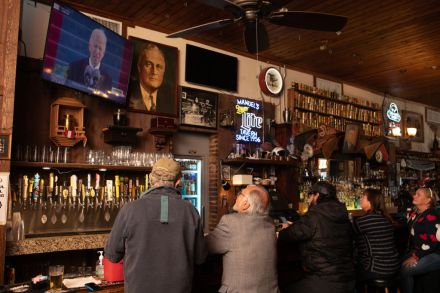
The unraveling of Joe Biden: a retrospective

Looking back on the classified docudrama that brought down the Biden administration, it is still not easy to identify the exact moment when the official narrative began to unravel and the political establishment understood that Biden had to go. With the wisdom of hindsight, we can see that the New York Post breaking the story about Hunter Biden’s laptop was an important alarm bell. That happened only weeks before the 2020 election, so it was a serious breach. At first, it seemed as if the threat had been contained. Elite squadrons of the regime’s damage-control department swung into action. They instantly de-platformed the Post, the nation’s oldest newspaper, shutting down its social media accounts for weeks.

biden

The trouble with ‘white privilege’

This article is an excerpt from Kenan Malik's new book, Not So Black and White: A History of Race from White Supremacy to Identity Politics. In 1935, while writing his masterpiece Black Reconstruction in America, W.E.B. Du Bois pondered the question of why, in the wake of the Civil War, there had not developed working-class solidarity across racial lines. “The South, after the war,” he observed, “presented the greatest opportunity for a real national labor movement which the nation ever saw or is likely to see for many decades.” Yet, he lamented, “the labor movement, with but few exceptions, never realized the situation.

white privilege

America has too many state secrets

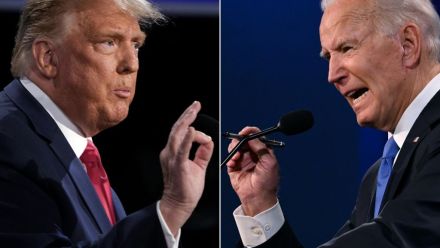
Last September, when 60 Minutes asked Joe Biden what he thought of the August raid at Mar-a-Lago where the FBI found folders of classified documents mixed in with Donald Trump’s personal effects and papers, the president said he was shocked. Biden wanted to know how “anyone could be that irresponsible.” He worried about what sources and methods might have been compromised by his predecessor’s carelessness. Were there agent lists among those purloined records? That bit of political point-scoring has become a petard with which the president has hoist himself. Two months later, Biden’s lawyers found classified documents in his Wilmington home and garage and in his personal office at the Penn Biden Center in Washington.

secrets
philadelphia

Can anyone save Philadelphia?

Americans may never before have felt their country was farther from its finest hour. And yet, on the Fourth of July last year, residents gathered in the heart of its birthplace for an ever-rarer expression of patriotic sentiment. It was to be a brief display. Blood spilled before the clock struck ten. Though no one saw a gunman or heard gunfire, two police officers were struck by stray bullets on the famous steps of the Philadelphia Art Museum. Word spread quickly, and suddenly no one could be sure whether they were hearing fireworks or gunshots. On the Benjamin Franklin Parkway, patriotism turned to terror, then shrieks gave way to silence.

weight

The new war on weight

We’re getting fatter. We even have a whole day dedicated to it now, World Obesity Day. We are reminded about our expanding waistbands and inflated cheeks every time we walk down the street, or look at an XXL model stuck onto a magazine cover to make the rest of us chubsters feel empowered. I don’t feel empowered at all. I feel alarmed — and confused. In a time when such advanced medicine is at our fingertips, the obesity problem is worse than ever. In America, one person dies from cardiovascular disease every thirty-four seconds, making it the biggest killer in the country. Globally, the World Health Organization estimates that obesity is responsible for 2.8 million deaths each year. But what if there were a simple way to stop us from eating ourselves to death?

con

The new age of the con man

In the precarious world economy of 2023, everyone is selling you something — and much of that something doesn’t amount to anything. Companies, of course, sell you products and services; much of their junk amounts to solutions for problems that didn’t previously exist, though at least there’s still some sort of deliverable. Meanwhile, in worlds as essential to human flourishing as personal finance and bodily fitness, an ever-expanding class of so-called “influencers” are selling a whole lot of nothing dressed up as something. Their underlying success, ostensibly tied to their ability to help people become richer or fitter, depends in actuality on their ability to sell advice or investment opportunities that are likely only to enrich themselves. How did this happen?

The United States of paranoia

Half a decade ago, with America’s elites trying to make sense of the rise of Donald Trump, an essay from the Sixties made a surprising comeback. Richard Hofstadter’s “The Paranoid Style in American Politics” became part of the conversation over fifty years after it was first published in Harper’s. It was less something concerned citizens actually read, more something they mentioned at dinner parties to sound smart. Writing with Barry Goldwater’s 1964 presidential bid in the background, Hofstadter described in pseudo-psychological terms what he saw as the right’s tendency towards the paranoid style, a phrasing he chose “simply because no other word adequately evokes the sense of heated exaggeration, suspiciousness and conspiratorial fantasy that I have in mind.

cults

Thirty years from Waco: what the fatal siege wrought

On a windy morning thirty years ago, the FBI staged a surprise attack on the Branch Davidian compound near Waco, Texas. The Branch Davidians were a splinter group of Seventh-day Adventists who followed the apocalyptic preaching of their self-styled prophet, David Koresh. They had been holed up in their ramshackle retreat for fifty-one days. Finally, at 6:02 a.m. on April 19, 1993, tanks broke through the compound’s flimsy walls, firing tear gas at the people inside. The gas was meant to end the standoff by flushing the Davidians out, but Koresh had handed out Army-surplus gas masks. Some of the Davidians took shelter. Others shot at the tanks and federal agents outside. Hours later, fire leveled the compound. Several Davidians burned to death.

Waco

In defense of paranoia

Maybe it’s because I grew up during the “stranger danger” milk carton kid era (for those too young to know what I’m talking about, milk cartons were the original Amber Alert) or because of the burgeoning twenty-four-hour news cycle — or maybe I was just born neurotic — but I became convinced as a child that I was going to end up getting murdered by my bus driver in a schoolbus lot on the outskirts of town. Every morning, I’d ask my mom no fewer than a hundred times if she was going to be there when I got off the bus. My fear seemed irrational for a seven-year-old, but I was obsessed.

paranoia

Going native: is ancestral eating the answer to our dietary woes?

The question of what to eat has plagued Americans since the first conquistadors hit the shores and started rounding up and eliminating the only people who actually knew what was meant to grow and be eaten here. Historical accounts show the first colonists living in abject terror of the foreign foods of Native Americans, believing that if they began eating the strange corn, squash and beans around them then they would literally turn into Indians. As a result, many of them starved trying to grow their old-world crops in America. Now, hundreds of years later, the colonizers’ descendants are looking to the past in search of a solution to the countless health problems that plague consumers of American food. They’re calling it the ancestral diet.

ancestral
TikTok

Has time finally run out for TikTok?

To see the catastrophic effect TikTok has on the brains of our young, you don’t have to look very far. Earlier this year a young family member ended up in the emergency room with a cup vacuum-stuck to her lips. After a few tugs and half a jar of Vaseline, it turned out that the bright idea stemmed from the #KylieJennerChallenge on TikTok. A few thick lips aside, there is something sinister going on with the Chinese-run platform. With every iteration of social media, the corresponding brood of teens has become lonelier, more miserable and even more anxious. This process has reached its purest form in TikTok. The difference is that this time it might have been by design.

fbi

Stepping out into freedom

Given the fire-hose disgorgement of revelations about the behavior of the FBI, the CIA and their infiltration of the mainstream media, there is ample justification for believing that we are living in some dystopian, distinctly unfunny version of The Truman Show. In the movie, the gormless Truman Burbank grows up thinking he is living a normal, happy life in a normal, happy town. Only gradually does he realize that something is amiss. Slowly, piece by piece, the awful truth dawns on him: his entire social world is a fabrication, a gigantic product-placement concession with him as the unwitting MacGuffin. The deception is played for laughs, mostly.

Gallagher china ccp confucius institutes china

Mike Gallagher’s China challenge

Twenty-five years ago, bipartisan American consensus about China was built on hope, spin and money. Despite the trauma of Tiananmen Square and caution about China’s true economic intentions, many believed in the potential of capitalist principles to move the Chinese Communist Party into a more open, less aggressive posture. Henry Kissinger wrote books about it; pundits and think-tank scholars gave speeches about it; Republicans and Democrats alike parroted the line well into the twenty-first century. Tom Friedman even dreamed ambitiously of what the United States could accomplish if only it were willing to be “China for a day.” What followed? As Harold Macmillan put it, “Events, dear boy, events.

When the moon brought America together

The Artemis rocket is back from the moon. Within a couple of years, if all goes to plan, it will bring men to the moon’s surface. It is a great loss that a bigger deal hasn’t been made of this expedition. I was only three when John F. Kennedy died, and his famous 1962 pronouncement that we would go to the moon not because it was easy but because it was hard was already history. The picture books I got on birthdays always included him in the history of space exploration. Those books made sure every kid knew how “we” were going to get to the moon. They changed us, and with us, America. We started with Mercury, baby steps mostly proving we could launch men into space. Then Gemini, a long proof-of-concept program to try out the technology of docking.

tip

Save American tipping culture

Recently, I ordered a pizza. Since the establishment was only a few blocks away, I decided to pick it up myself. Manning the cash register was a slouching paragon of the zoomer generation. “Can I help you?” he asked in some patois that mixed English and bovine. I said hi and told him I was picking up a pizza. He tossed his bangs almost imperceptibly; a tsunami raced across the Pacific. Another employee then brought my pie, upon which my man seemed to slip into a persistent vegetative state, staring at some fixed point on the horizon while I swiped my credit card through the reader. The check printed. On it was a line for a tip. Before we go any further, I want to make clear that most service employees are nothing like my catatonic cashier.

Why after Covid does everyone drive like maniacs?

I’m cruising on an uncongested stretch of Interstate 80 when I see an eighteen-wheeler plodding up the hill ahead. I tap my turn signal, glance at my blind spot and coast smoothly into the passing lane. I’m gearing up my vocals for the “got runned over by a damned old trainnnn!” line of David Allan Coe’s song, playing on the radio, when I’m spooked out of my aria by a mid-size SUV barreling down on my bumper like a furious Pamplona bull. “Cop!” is my first thought, as my pursuer appeared out of nowhere. I let off the gas and check my speed: seventy-nine in a seventy. Too late to tap my brakes. Besides, he’s likely to smash into me if I try that. I rush to merge back into the other lane and await the flashing blue lights. Except the blue lights never come.

polgár

The queen of chess makes her next move

When a young male friend offered to teach me chess last summer, I thought it sounded an exotic thing to learn at forty — and a feminist itch made me want to prove I could hold my own against the dorky boys. Perhaps one day — for the moment I am still pretty hopeless. Radical gender imbalance continues to characterize the chess landscape. Gender ratios are slowly shifting among children as old beliefs about cognitive preference and ability are proved wrong, but top-level chess is still heavily male-dominated. At the very top, it is all male: there is only one woman in the top 120, Hou Yifan of China, ranked 115th.