Features

Liz Truss’s American book tour

National Harbor, Maryland I’ve been visiting the United States for many years, but 2024 was my first time at the Conservative Political Action Conference in Maryland, where I spoke on the main stage, complete with American-style big hair. Compared to political events in the United Kingdom, people at CPAC take things to a whole new level: where else could you have a debate about the Constitution with a woman in a Statue of Liberty costume? Or meet a family of five in matching sweaters that each bear a letter to spell out “TRUMP?” The enthusiasm for the cause was infectious. And few speakers were more dazzling than the newly installed Argentinean president Javier Milei. I confess to bagging a front-row seat for his address.

CPAC

The rise of reverse gaslighting

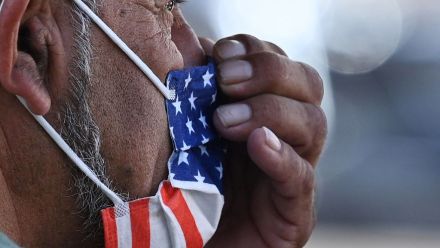
We live now in an age of reverse gaslighting. Ordinary gaslighting — the term was popularized by the 1944 movie Gaslight — describes a process of psychological manipulation whose goal is to make ordinary people question their sanity. Reverse gaslighting, by contrast, aims to convince us that insane realities are perfectly normal. Imagine: practically the entire population quarantines itself because a couple of government bureaucrats tell them to. Everyone starts wearing little paper masks as patents of their capitulation and, secondarily, as badges of their virtue.

gaslighting

How ‘woke’ hierarchy created an upper-class underclass

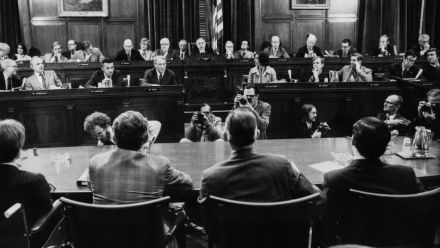
It was an uprising of “retards.” That’s what they called themselves, anyway. When followers of the Reddit forum r/wallstreetbets organized en masse to buy shares of the video-game chain store GameStop, they did so in the self-deprecating spirit of very online weirdos. Since digital downloads had taken over the gaming market, billionaire hedge funders had “shorted” GameStop, meaning they’d bet on its brick-and-mortar model to fail. The company’s sudden windfall caused such panic among the good and the great that the ensuing furor ended in a congressional hearing. Impressive for a bunch of dorks who gleefully referred to themselves in meme-laden pep talks as “apes” and “autists.” In January 2021 this was a marquee event.

class

The fight to curtail TikTok’s US influence

One hundred and twenty minutes. That’s how much time more than 40 percent of American children spent on TikTok every day last year. The app, owned by the Chinese company ByteDance, worms its way into the minds of young people to an extraordinary degree, dwarfing their use of Instagram, Facebook, Twitter/X and Snapchat. And when word went out that the House of Representatives was seriously considering forcing a sale to peel the app away from the power of the Chinese Communist Party, TikTok fired back by weaponizing the same children against Congress — driving a deluge of confused phone calls to Capitol Hill, including some where teens threatened to commit suicide if the vote went forward.

TikTok
kids

PSA: have kids young!

"Why do I feel like I got hit by a bus?” I ask my husband first thing upon opening my eyes. “Because we have a two-year-old — and we’re eighty,” he says. “I was told kids keep you young,” I say to no one. My husband is already gone, making coffee. We aren’t eighty, but there are days that it feels like it. In 2022, for the first time ever, the median age of a first-time mother in the United States hit the ripe old age of thirty. I was forty-three when I had my daughter and, let me tell you, there is a reason we are biologically wired to have kids in our youth. Having kids is a young person’s game. You’re made aware of this the minute you get pregnant if you’re over the age of thirty-five.

yoga

Reflections on two decades of yoga

Recently it occurred to me that I’ve been doing yoga for twenty years. This happened while I was doing yoga, which makes a lot of sense. My Buddha-worthy insight reminded me of a time when I’d only been doing yoga for three years and still gazed around at my surroundings wonderingly, like a toddler, which, in a yoga sense, I was. I’d traveled to San Francisco for a Yoga Journal conference, the vogue back in the Aughts. All the famous yoga teachers, and their willing dues-paying acolytes, gathered in the Brutalist basement of the downtown Hilton, not a particularly beautiful or Zen location. I took workshops all day, including a lousy, pretentious harmonium-soaked one from an emaciated master who looked like a yoga version of Iggy Pop, but with worse taste in music.

Pittsburgh

Reflecting on Trumpism in Pittsburgh

Pittsburgh  Over the past few decades, Pittsburgh has become the poster boy for industrial transformation, going from Steel City to shiny hi-tech hub. Butone thing that has not changed is the local argot. “I have landed among the Yinzers,” my friend Damir Marusic, who is an op-ed editor at the Washington Post, proudly texted me when he arrived in Pittsburgh. Marusic is a fast learner. “Yinzer” remains the endonym of preference in Pittsburgh, where it was derived more than a century ago from the second-person plural pronoun by Ulster immigrants and shared with the later blue-collar workers from Central and Eastern Europe who labored in the hulking mills along the Monongahela.

Israel

Israel and the making of nations

A little more than five years ago the Israeli intellectual Yoram Hazony published The Virtue of Nationalism. Its final chapter was particularly poignant. After World War Two and the Holocaust, Hazony explained, two opposing views arose as to how such evils could be prevented from happening again. One side pointed toward the creation of the European Union and held that nationalism must be repudiated and condemned. The other endorsed the creation of Israel as a nation-state for the Jewish people, with a nationalism of its own. Israel is a test case for the survival of nationalism everywhere. That may sound like an exaggeration — surely nationalism has demonstrated ample staying power.

Jerusalem israel

Inside the real Israel

Tel Aviv Like most people, and most Jews, I’ve been experiencing the war in Israel and Gaza from thousands of miles away. I spent the weeks after October 7 with my face glued to my phone, rather than hiding in a shelter as rockets flew above. I experienced every wave of despair, every GoPro atrocity, every moment, hours away in another world; one that wasn’t directly affected by the chaos but was still consumed by it anyway. When the kibbutzim were being destroyed by gleeful Hamas militants, I was at a wedding in Barcelona. When Israel started to fight back, I was safely at my desk doing my work emails, ensconced in the security of distance.

Why do neoliberals get let off the Iraq War hook?

Given the worldwide climate of political intolerance, I often try to deflect hostility by prefacing my comments with the old saw that “reasonable people can disagree.” As a strong believer in intellectual freedom and Socratic dialogue, I do in fact feel duty-bound to listen to the other side, or sides, of an argument. Yet there’s one subject about which I’m as close-minded as the wokest opponent of liberal debate — a topic about which I won’t brook any disagreement because there simply isn’t any reasonable form it can take: that is, George W. Bush’s and British prime minister Tony Blair’s disastrous decision to invade Iraq in 2003 and its deadly, still hugely malignant consequences in the Middle East.

invasion

Modern-day slavery in Mauritania

In April 1864, the US Senate passed a bill that set in motion what would become the Thirteenth Amendment to the Constitution. Slavery was to be abolished. Seven months later, Union forces would burn Atlanta to the ground, a year after Lincoln’s address at Gettysburg marked the battle that began the South’s collapse and the April 1865 surrender of General Robert E. Lee and his Confederate army. The Civil War remains the bloodiest and most divisive conflict in American history with at least a million dead, including soldiers and civilians from both sides. You might think that given American history, if slavery had an in-your-face visibility anywhere on the planet, Congress would call for intervention by the UN, perhaps threaten to send in the Marines. Think again.

Mauritania

In praise of Yuengling

When I was a college student in Texas, I told someone at a bar that I was from Pennsylvania. The guy’s eyes lit up. “Pennsylvania?!” the man exclaimed. “That means you get to drink Yuengling whenever you want!” Yes, I mused, with a shrug and a swig of my Shiner Bock. So what? The barfly informed me he was such a big fan of America’s Oldest Brewery — established 1829 — that he and his family would haul cases of the traditional lager, Smokey and the Bandit style, back to the Lone Star State any time they traveled east of the Mississippi. Fast-forward (just!) a few years, and Yuengling is now available in twenty-six states. Texas, my old friend would be tickled to know, was the first western state to get a taste of Yuengling back in 2021.

Yuengling

X and the return of the social-media sandbox

Elon Musk’s X, the social media site once known as Twitter, is a wasteland. It consists of uncontrolled pornography, crypto spambots, broken “mentions,” unpaid invoices for subscriptions, a useless search algorithm and unverified accounts spreading baseless conspiracy theories and being financially rewarded for juicing controversial or untrue content. It has become practically unusable as a functioning social media platform. But old Twitter, after what it had become, had to be absolutely and unequivocally destroyed for the sake of the future of open online discourse. The Jack Dorsey-Parag Agrawal iteration of Twitter had become part of an intelligence and corporate media censorship apparatus, which would spring into action against any user it viewed as an ideological opponent.

X

What happened to America’s capital?

Muriel Bowser is a woman with a plan. In late February the mayor of the District of Columbia unveiled a $400 million, five-year economic development strategy to revitalize the capital’s downtown. It involves converting empty office space into residential units and rebranding parts of the neighborhood. Soon, visitors to Washington will be able to watch homeless addicts shoot up in “Historic Green Triangle” and get their phones stolen by moped-riding teenagers in the “Penn West Equity, Innovation & University District.” Bowser has drafted these desperate measures in a belated response to the desperate times.

DC
crime

Why was last year DC’s most violent in decades?

As a rule, people don’t like to commit crimes when others are watching. That’s why most violent crime occurs at night, and why erecting street lights in high-crime areas causes murders, carjackings and robberies to plummet. Essentially, if you want to stop crime, you have to let wannabe criminals know you can see them. By that standard, Washington, DC should be crimeless. The eyes of the world are constantly trained on our nation’s capital. And thanks to the residents of a certain public housing project on Pennsylvania Avenue, Secret Service motorcades and Marine helicopters seem perpetually on patrol. You would think that, for all these reasons, it would be hard to commit crime inside the Beltway.

Navy Yard

Navy Yard is a failing experiment in gentrification

I break up my working day by going on a three-mile jog around the Navy Yard neighborhood of Washington, DC, where I’ve lived for just over a year. I leave my building, one of many newish luxury developments which has recently found itself a prime target for vehicle thefts; I pass by the barber’s whose windows were shot out on Friday and the doggie day care where on the same day an employee hit a pet that later died. As I cross N Street I glance down the block where, in October 2022, a man my age was killed in a drive-by shooting. I head south beyond the baseball stadium, where the July 2021 shooting of three people outside caused a sixth-inning suspension of play. I turn onto the waterfront path where someone was spotted with an automatic weapon this weekend.

Dallas

How Dallas curbed violent crime

"He’s smoking meth,” I heard on the police radio. Lieutenant Jordan Colunga promised to take me to the action, but maintained his leisurely pace. He chuckled as the undercover officers dictated their observations from a gas station. The pipe fiend, having wisely decided he had had his fill, unwisely began wandering the pumps to sell his surplus to passersby. Undercover cops don’t blow their cover for spontaneous drug dealers, so the observers passed along the information to a nearby squad car. The suspect was back in his vehicle by the time the beat cops arrived on scene. “He’s getting out of the car, he’s getting out of the car,” an officer said apprehensively on the radio before yelling, “He’s reaching, he’s reaching!” The laughter stopped. Colunga hit the gas.

texas

My first year in Texas: the good, the bad and the surprising

I’m reflecting on the good, the bad and the surprising of my first year in Texas. I took a huge risk moving my business and my family away from California. How has it gone? I had a tough entry into my new life. Moving is insanely stressful. So much so that when I arrived in Texas after a cross-country move with a tot, something was wrong with my stomach. I’d never had debilitating stomach pain before and I figured it would just resolve itself. When it didn’t after about a week, my husband suggested calling a Teledoc, who advised me to get to the ER immediately after hearing my symptoms. After fifteen years in Los Angeles, and thanks to a family member who worked in healthcare, I used to have access to some of the best doctors in the world.