Books and Arts

Race to the finish

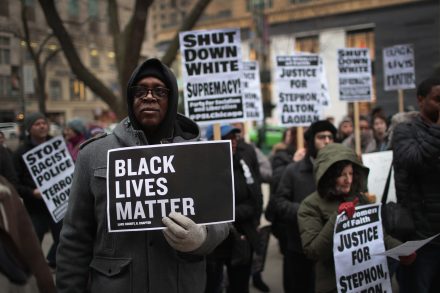
This article is in The Spectator’s October 2019 US edition. Subscribe here. ‘I have observed,’ Joseph Addison wrote in 1711 in the first article in the first issue of the first version of The Spectator, ‘that a Reader seldom peruses a Book with Pleasure, ’till he knows whether the Writer of it be a black or a fair Man, of a mild or cholerick Disposition, Married or a Batchelor, with other Particulars of the like nature, that conduce very much to the right understanding of an Author.’ Thomas Chatterton Williams has earned a reputation as a tough, thoughtful and genuinely interesting commentator on race.
chatterton

A great time in the Faddisphere

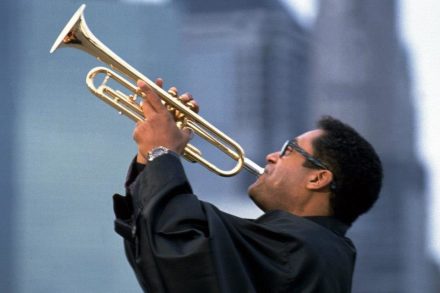
This article is in The Spectator’s inaugural US edition. Subscribe here to get yours. It’s easy enough to write an elegy for the jazz world, a tale of decline and fall, from towering heights to epigones plying their trade in the shadows of the giants. But like most such stories, lachrymose in spirit if not intent, it obscures as much as it reveals. No doubt many of the great clubs that existed in the Fifties and Sixties have faded away, but since the Eighties there has been a distinct revival of more traditional forms of jazz.

faddisphere jon faddis

Who killed the American arts?

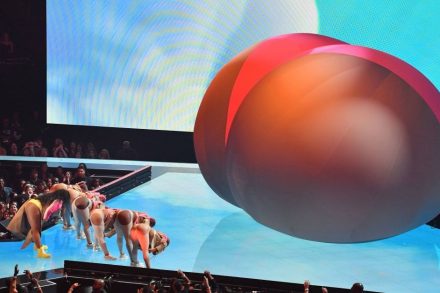
This article is in The Spectator’s inaugural US edition. Subscribe here to get yours. The arts in America are dying. In the 20th century, Americans defined the world’s popular culture, but the 21st century world has no need of America’s arts. Through technology transfer, the world entertains itself with knock offs like Bollywood and K-Pop. In the 20th century, Americans created a new art form in jazz and its derivatives, and turned Hollywood into the world’s dream factory. In the 21st century, African American music has collapsed into monotone misogyny, and digital sex (see Julie Bindel) is America’s real movie business. Americans are in the gutter, looking up at porn stars.

lizzo arts

Is Peaky Blinders past its peak?

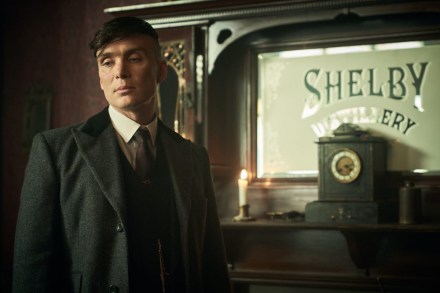
This article is in The Spectator’s inaugural US edition. Subscribe here to get yours. Peaky Blinders would have you believe it’s the best of British: sharp suits and vests, the workingman’s flat cap and the gangster’s slo-mo swagger, the chug of Anglo alternative rock, and a smörgåsbord of regional accents, Academy Award-nominated guest stars and oh-look-I-remember-him cameos from historical figures. These are the ingredients of Britain’s answer to the American sagas that set new standards for television: The Sopranos, The Wire, Breaking Bad. Yet there’s always been the whiff of style over substance to Peaky Blinders, a sense of looking back without seeing anything new.

peaky

Blondie ambition

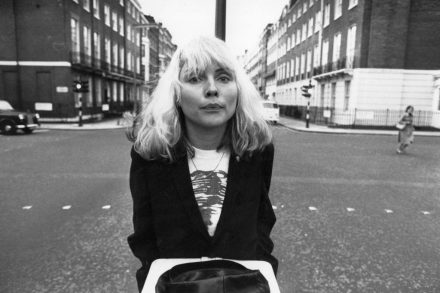
This article is in The Spectator’s inaugural US edition. Subscribe here to get yours. Once upon a time in the Seventies, rock ’n’ roll was a man’s game. Then Blondie happened –– or ‘Blondie’ herself, Debbie Harry, platinum bombshell and queen of punk. Actually, before Blondie there was the Runaways, an exploitation act from which the singer, Joan Jett, ran away. There was Patti Smith, who moved to New York City, fell in love with Robert Mapplethorpe and wrote poetry. There was Chrissie Hynde, who moved to London, passed through the rehearsals that generated the Sex Pistols and the Clash, and then, after Blondie had charted in Britain, formed the Pretenders.

debbie harry blondie

Louise Linton: why I don’t like being ‘the wife of…’

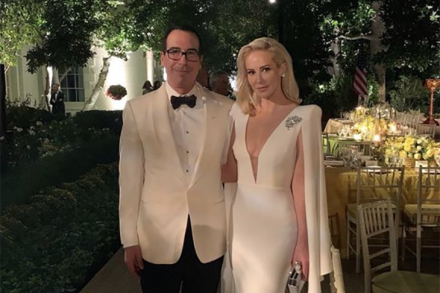
This article is in The Spectator’s inaugural US edition. Subscribe here to get yours. It’s a muggy afternoon in Los Angeles as I sit down to write this — in my bathroom; the AC’s broken everywhere else. My vanity is dusty, cluttered with books, storyboards, shot lists and Post-It notes scrawled in ALL CAPS with a frenzied thick black Sharpie: ‘LOCK PICTURE!!’ ‘BEAR!’, ‘BORN FREE!’, ‘DOG’, ‘STATE DINNER’, ‘DOCUMENTARY!’, ‘GRATITUDE’. It’s a bizarre medley, as is my life in general. I’m married to a Republican politician but I’m extremely liberal. I cannot say that I’m a Democrat either. These terms are binary and weaponized.

louise linton

Not in front of the servants

This article is in The Spectator’s inaugural US edition. Subscribe here to get yours. Tina Turner believed that she and Ike were the reincarnation of god-kings from ancient Egypt. That, she reasoned, was why they’d been reincarnated in Memphis, Tenn.; their souls would feel at home in a city that, like Memphis in ancient Egypt, was sited on a big river and noted for its artisanry. In a perversion of Buddhism by celebrity culture, people select past lives that are more interesting than their present ones. Plenty of people believe they used to be Napoleon Bonaparte, but when was the last time you met someone who boasts of having been an illiterate Corsican goat-herder who married his cousin?

downton abbey britain u country