The Spectator's Notes

Does Andy Burnham really want an ‘honest discussion’ about free movement?

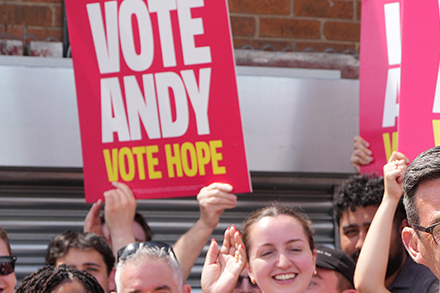
Andy Burnham says in a couple of interviews that he wants an “honest conversation” about free movement, and then Downing Street indicates that perhaps he doesn’t. Many interpret this as poor “message discipline.” I don’t think so. The key to Mr. Burnham’s behavior is to remember two things. The first is that, even after 100 days in office, he still wants to be as different as possible from Sir Keir Starmer. That means he must be seen at all times to welcome open discussion, talking like a human being not a robot. The second is that he wants to keep open the possibility of calling a general election next year. The “breathing space” he says the country needs is really what his party needs.
andy burnham

How long has Ranulph Fiennes been under some sort of control?

It is repeatedly pointed out – I have probably written it myself – that the triple lock on the state pension is ruinous. There is a genuine difficulty, though, political and moral, about getting rid of it. No one likes to lose a benefit they already possess. The abolition will annoy 99 percent of its recipients, of whom there are 13.2 million. Besides, we pensioners have retained a traditional skill almost entirely lost to younger generations, called voting. We know how to go to a polling station and put a cross on a ballot paper. We therefore have the power to slay any party we think is making us poorer. The Tories invented the triple lock.

ranulph fiennes

Where are my reparations?

The natural coalition of rural people which was forged 25 years ago, before the hunting ban, is forming once more. In Westminster, we recently gathered under the Countryside Alliance banner to hear David Blunkett, David Cameron and others set out the issues. Poor Andy Burnham had inadvertently stoked our feelings by joking feebly about how he hardly ever visits farms and considers DEFRA the least important government department (would it were so!). There are strong current individual issues – the proposed trail-hunting ban being the most egregious and the inheritance taxes for farms the most economically damaging – but the sheer number of government-inspired rural harms is astonishing. The Alliance counts 27 of them.

reparations

Why is there so little protest about Russia’s brutality toward Ukraine?

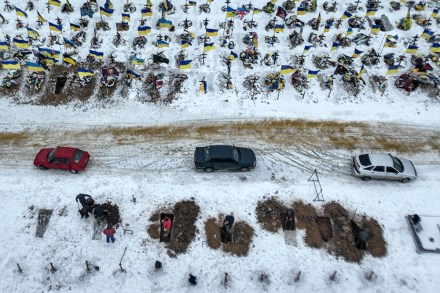
Reporting of the war in Ukraine suffers from the tendency of journalism to exaggerate a trend. The most recent one has been Ukraine’s success in drone attacks on key energy and strategic sites deep inside Russia. These are indeed innovative and prodigious. The Russian summer offensive has also failed to break through. This leaves too little room, however, to cover fully the dramatically worsening plight of Ukrainian civilians. Olga Rudenko, editor-in-chief of the Kyiv Independent, said this week: “Even if you think you’re used to everything, you are not.” Russia has switched tactics from big, one-off aerial bombardments to almost continuous drones. In Kyiv one day last week, the air-raid sirens signaled 13 different attacks.

ukraine

The questions Cambridge still has to answer about Jason Arday

If poor Jason Arday killed himself, it will be necessary to work out why. To do so, it will help to know why he resigned his professorship. It seems highly unlikely he resigned if Cambridge University did not want him to. It had defended him in public throughout, after all. Yet if he had been confident of Cambridge’s continuing support, why did he sacrifice the benefit of its protection? If Cambridge suggested to him that its protection would, for whatever reason, shortly cease, what caused its change of mind? What a terrible shock for him if the institution which had raised him so high was now ready to cast him out. Is the institutional attack on the press over this matter a deflection from the truth?

cambridge jason arday

Burnham’s solutions must not lie in the 1970s

Andy Burnham is right. The cost of living is foremost in people’s minds just now. Naturally his electricity bill VAT holiday and freeze of bus fares find agreement in television news vox pops and focus groups. But he offers no explanation for the causes and concentrates only on the symptoms. Obviously, the removal of the 5 percent VAT will be nice for consumers. But underlying inflation today relates to government debauchery of money and disruptions of supply caused by Donald Trump’s tariffs and his short war, by Vladimir Putin’s long war and Ed Miliband’s net-zero trap, which makes us pay expensive green levies and bans new domestic fossil-fuel production. The remedy does not lie in the 1970s-style pretense that things can be made cheaper by fiat.

Even Andy Burnham doesn’t know what Andy Burnham stands for

The British constitution is an admirably flexible thing, so I would not claim that Andy Burnham’s leadership campaign, and the coverage thereof, is unconstitutional, but it is certainly unseemly. Why did a BBC helicopter follow his train from Manchester to London (which arrived, of course, late) as if he were Lenin heading for the Finland Station? And why was he allowed to preempt his result with a mass selfie with about 200 of his supporting MPs in Westminster Hall? He is merely a new Member of Parliament, until he isn’t. Turning the place into his stage set is a way of intimidating possible challengers. If he is challenged, he will surely still become leader, but the point of a challenge is to force him to say what he means to do.

andy burnham

The £10 pint explains the rise of Reform

I bought my first pint of bitter, in a pub in Slough, in 1972. It cost 12 pence. The Bank of England inflation calculator tells me that is the equivalent of £1.45 today. Yet a pint now sells for £10 in London. What went wrong? Many factors, of which the first was Britain’s entry into the EEC on January 1, 1973. We were eventually made to "harmonize" our alcohol duties with our partners, leading to a drop in the duty on wine and a rise in that on beer, to reflect French cultural preferences. The most recent shock has been Rachel Reeves’s attack on small businesses with employer NI rises, punitive workers’ rights, ever-higher minimum wage etc. In the 1970s, the price of a pint, like the cost of a packet of cigarettes, was a major issue of concern in each year’s Budget.

pint

Keir Starmer is downplaying the Islamist threat to Jews

At the anti-Semitism “summit” in Downing Street, Sir Keir Starmer achieved a personal first. He used the word “Islamists.” But in order to utter a word he had previously avoided in relation to the subject, Sir Keir had to approach it crabwise. Instead of identifying Islamists as the main ideological and physical threat to British Jews, he said: “We’re clear-eyed about the fact that anti-Semitism does not have one source alone: Islamists, far-left, far-right extremism, all target Jewish communities.” Islamists were thus inserted into the conversation but also downplayed. It is obsolete not to recognize that the far right in Britain – for the moment at least – more or less leaves Jews alone.

islamist

Olly Robbins’s next move

This session of parliament is due to end between April 29 and May 6. Now the government is desperate for an Order in Council to kill it off by 9 a.m. on the 29th to avoid another painful Prime Minister’s Questions. The parliament that reassembles for the King’s Speech on May 13 could hardly, in theory, look more like what Sir Keir Starmer wants. His party has the largest overall majority since 2001. He will have jettisoned all hereditary peers.

olly robbins

The only ‘civilization’ Trump will destroy is his own

If, as Donald Trump had threatened, “a whole civilization” had died earlier this month, the whole civilization concerned would have been that of the United States, not of Iran. If an American president had deliberately ordered the death of a civilization – whether or not such a thing is achievable – America’s claim to world leadership would have collapsed. Like, I suspect, many, however, I did not go to bed that night thinking that Trump would carry out his threat. I remember my parents telling me that, during the Cuban missile crisis, people truly believed there might be nuclear conflagration at any moment. It did not feel like that this time. It felt as if Trump had said something frightening and horrible to claim mastery over whatever was going to happen next.

civilization

Does it matter if Prince William believes in God?

The Prince of Wales seeks to assure us that, as a friend puts into his mouth, “I might not be at church every day, but I believe in it.” That formulation does not necessarily mean he believes in God or the doctrines of the Church of England. All it means is that he believes in the efficacy of the C of E and will dutifully fulfill his future role as its Supreme Governor. Actually, that is all we need to know. His great Tudor predecessor said she did not want to “make windows into men’s souls”; even kings are only men. The important thing, from a constitutional as opposed to a spiritual point of view, is that he acts the part with good grace, which he surely will. Whether he does so by divine grace poured into his heart is a question above all our pay grades.

prince william

Will books soon become extinct?

I am glad that BBC Radio 4 is producing a series called How Reading Made Us, presented by the subtle, super-literate Times of London columnist James Marriott. I must declare an interest. Roughly 98 percent of my earnings over 45 years have depended on the fact that plenty of people like reading. Now we are thinking harder, however, about the fact that form affects substance. The idea of an encyclopedia, for example, as developed (from classical roots) in the 18th century, was that all needful knowledge on a particular subject could be assembled and consulted in a book or series of books. With AI, there is little need for this form. The form of a book, which often seemed so compendious, can now seem cumbersome. Fiction, too, is affected by form.

books

Am I a Zionist?

The death of Quentin Deranque is strangely under-reported here. He was a 23-year-old beaten up in Lyon on February 12 by supporters of the main party of the left, Jean-Luc Mélenchon’s France Insoumise (FI). He had been part of a group escorting what the BBC website calls "far-right feminists," helping them protest against the visit to a university by a far-left politician. There was a fracas in the street with masked opponents connected with the Young Guard, a leftist FI-related group declared illegal last year. Deranque died of his injuries two days later. One of those arrested is a special adviser to an FI deputy.