Cinema

Ali G isn’t satire

The two main problems with Ali G are, one, that it’s old hat (or old durag if you wish), and, two, that it somehow took hold that the programme was satire. Fair enough, he first appeared on a ‘satirical’ TV show but the joke was always incongruence, the juxtaposition of an expert – or Donald Trump – with a complete idiot. And a very good joke it was. But if it were satire, it must have had a target. Hence the tedious debate about whether Ali G was satirising black people, or white people who think they’re black, or white people who aspire to be black. (The film includes clips from commentators condemning the character for this cultural appropriation – the only one I recognised was Rachel Dolezal.) Ali G: Who Iz I?
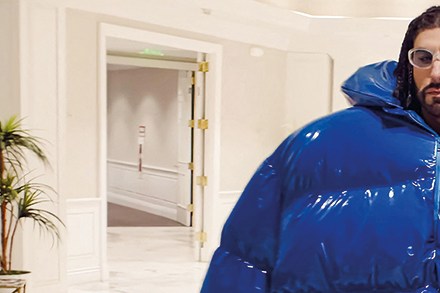

The Social Reckoning is deeply boring

Has anyone in human history inspired more visceral disgust than Mark Zuckerberg? Hard to imagine. I know I used to get a shudder down my spine every time I saw him on TV, being upbraided by some kind of congressional subcommittee. Look at this uncanny demon, white as death, covered in a thin liquid sheen, with his big watery eyes like an uncomprehending animal, his blank inhuman face, his halting and inarticulate speech, and his sinister, gangly form, which didn’t seem to stand up on its own feet so much as it drooped down from the neck, as if he were being hung up on invisible hooks. This is not a human being but an ungainly meat puppet, a shell for some slithering being. Which made sense, really.

The new Sense and Sensibility is not a patch on the old one

Georgia Oakley’s Sense and Sensibility, which advertises itself as ‘a fresh take for a fresh generation’, has its work cut out. Not only is the Jane Austen novel beloved but there’s also the shadow of Emma Thompson’s sublimely deft 1995 version directed by Ang Lee (with its unforgettably magnificent ugly-cry scene). This one has no such grip on the book, and is considerably drearier and less affecting, but it’s not bad  bad. It’s not Carrie Cracknell’s Persuasion, after which we decided she should never be allowed near Austen again. On this occasion the ‘old take for the old generation’ cannot be surpassed – although well done, fresh generation, for having a go. Top marks. One doesn’t wish to be discouraging.

Queen at Sea is a shattering watch

‘Old age’, Bette Davis once reportedly remarked, ‘ain’t no place for sissies’ and neither is Queen at Sea. It’s a film that unflinchingly explores dementia, intimacy, consent, which is basically everything your average sissy wants to run a mile from. (I’m your average sissy and wanted to run a mile from just the synopsis.) But while it’s a tough watch, and a shattering watch, it’s also tender and affecting and the cast – Tom Courtenay, Anna Calder-Marshall, Juliette Binoche – are outstanding. It’s one of those films to file under: ‘Glad I’ve seen – never again.’ It’s directed by Lance Hammer, whose Ballast (2008) was an indie phenomenon but who then stayed quiet for 16 years.

I much preferred it when the Gallaghers hated each other

Oasis: Don’t Look Back in Anger is a music documentary covering the band’s live tour last year. Fans were ecstatic when Liam and Noel Gallagher finally called time on their 15-year feud, but speaking for those who have always enjoyed their insults – Noel on Liam: ‘He’s like a man with a fork in a world of soup’ – it felt like the end of an era. Would this new-found brotherliness last? I had hoped not. Remember when Liam would post photos of Noel with the single-word caption: ‘POTATO!’? Those were the days.

Late Fame is exquisite

Late Fame stars Willem Dafoe as a postal worker whose single book of poetry – published nearly 50 years earlier – is rediscovered by a coterie of young fans who declare him ‘a genius’. It’s a tragicomedy – a satire on literary self-regard – that also manages to be exquisitely tender, delicate and a deeply layered character study. Dafoe is wonderful and, for once, is centre stage, playing a regular guy rather than some supporting-character weirdo. You can read everything on Dafoe’s face – a face that seems to have more bones than is needed in a face. It’s a face that renders the script hardly necessary.

Ridley Scott’s latest is a ‘hang on, what?’ movie

Ridley Scott’s post-apocalyptic The Dog Stars is his third film in four years after Napoleon (disjointedly strange) and Gladiator II (not very goodus). On this occasion he’s made what I call a ‘hang on, what?’ film. Hang on, what? Who are these American Indians on horseback? Hang on, what? Why is Allison Janney suddenly cosplaying a 1950s air stewardess? The storytelling is so rushed it’s hard to follow. Scott is now 88, so perhaps he’s thinking there’s no time to muck around. One interesting feature of post-apocalyptic movies is that guns survive but no one has a toaster The film is based on a novel by Peter Heller and takes place sometime after a flu epidemic has all but wiped out mankind and civilisation has been reduced to a succession of film sets.

Stars can’t rescue this snooze-fest

The film & Sons, in which a patriarch summons his estranged sons to let them in on a secret, has a stellar cast: Bill Nighy, Imelda Staunton, Dominic West (briefly), Johnny Flynn, George MacKay, Noah Jupe. It can’t possibly fail, you might reasonably think. But when I heard my companion snoring at around the midway mark, I can’t say I didn’t feel a little jealous. This is not a family you’d wish to spend any time with. If they ever ask you for Christmas, say you’re away. It sounds juicy on paper, as you’ll see. Nighy is Andrew Dyer, a famous literary novelist who, J.D. Salinger-style, is now a recluse and hasn’t written anything for 20 years.

The wisdom of Anthony Bourdain

Tony is a biopic of Anthony Bourdain, the late, great chef who, in fact, considered himself a writer first – his memoir Kitchen Confidential has sold in its millions – and a ‘skilled cook’ second. It’s not a Wikipedia entry, filmed. And it’s not hagiographic. It focuses on 1975 and the formative summer he spent washing dishes in Provincetown. He was 19 and the film opens with his own description of himself at that age: ‘I was – to be frank – a spoiled, miserable, narcissistic, self-destructive, thoughtless young lout who needed a good ass-kicking.’ I would say Nigella is also a writer first, skilled cook second, but perhaps any similarity ends there. Though the film feels authentic, it isn’t true true. In fact, you may sometimes wonder: did that actually happen?

What cinema gets wrong about nuns

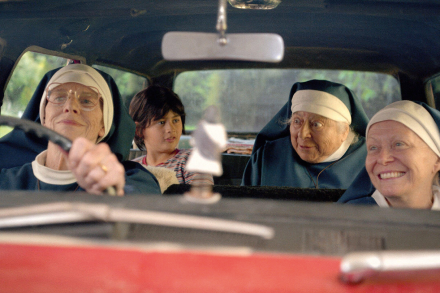
Why are filmmakers so interested in nuns? They’ve been exploring the subject for more than a century, which might seem odd, given that real-life dramas in convents are mostly confined to quarrels about the washing-up. But celluloid nuns are a different matter. As early as 1922, in the Swedish silent movie Häxen, a nun reaches for a spiked leather belt before leading her sisters in a demonic dance. That’s the beginning of one stereotype, the nun as sadomasochistic hysteric, which reached its apogee in Ken Russell’s The Devils (1971).

The new Spider-Man is a triumph of Hollywood professionalism

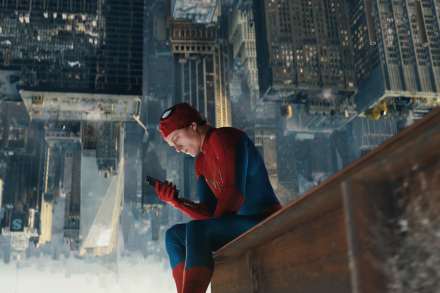
Remember Peter Parker? By the end of the last instalment of the Spider-Man movies, No Way Home, we were the only ones who could. Following a characteristically complicated but deft collision of multiverses, young Peter (Tom Holland) had realised that the only way to save the world (again) was by getting Doctor Strange to cast a spell that made everybody – including his best friend Ned (Jacob Batalon) and girlfriend MJ (Zendaya) – forget that he’d ever been Spider-Man. He therefore began his Brand New Day alone in his apartment with only a highly evolved piece of AI for company. Sure, he’d returned to his roots of capturing local crooks by the dozen. But while this restored the hero status that J.

The Odyssey is shallow and tiring

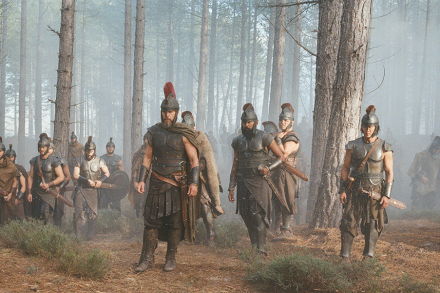
The Odyssey is Christopher Nolan’s relentless, deafening three-hour take on Homer’s epic poem, and while it is technically impressive filmmaking – Imax cameras; massive mechanical puppets, minimally pimped up by CGI; thousands of extras – it is set piece after set piece which becomes rather tiring. Even if weariness is part of the point of the Odyssey, it’s no excuse for the film being tiring. Even if weariness is part of the point of the Odyssey, it’s no excuse for the film being tiring What we get is an action blockbuster, without significant depth, although there is some heft to the final act – everybody’s favourite act, surely. Who doesn’t love it when Odysseus finally makes it back to Ithaca disguised as a beggar and no one recognises him?

Nothing can save Rosebush Pruning 

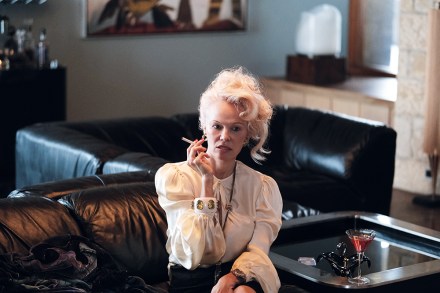
Rosebush Pruning is one of those films where you’ll say to yourself at the end: what the hell have I just seen? And not in a good way. It’s about a wealthy family who are into fratricide, parricide, incest and blood. No quiet evenings playing Trivial Pursuit or charades for this lot. Mercifully, it is only 90 minutes long but, on the other hand, there are images you won’t be able to scrub from your mind for a lifetime. Swings and roundabouts, my friends, swings and roundabouts. When it comes to the eat-the-rich genre, this does make Saltburn look like child’s play Inexplicably, it has a knockout cast: Callum Turner, Jamie Bell, Tracy Letts, Pamela Anderson, Riley Keough, Elle Fanning, Lukas Gage. (You will want to pull each aside to ask: ‘Why? Did you piss off your agent?

Funny, savvy, starry: The Invite reviewed

The Invite is a dramedy from the dinner-party-gone-awry genre about a marriage and whether a sex party might save it – or will it make it go boom? It’s extremely savvy, very funny and packs an emotional punch. It stars Seth Rogen, Olivia Wilde, Penelope Cruz and Edward Norton – and if there is more pleasure to be had than watching great actors behaving badly, I would genuinely wish to know about it. If there is more pleasure to be had than watching great actors behaving badly, I would wish to know about it It opens with a quote from Oscar Wilde: ‘One should always be in love. That is the reason one should never marry.’ (Wilde obviously didn’t know about the tax advantages.) Joe and Angela’s marriage is hanging by a thread.

Thank god for Jodie Foster

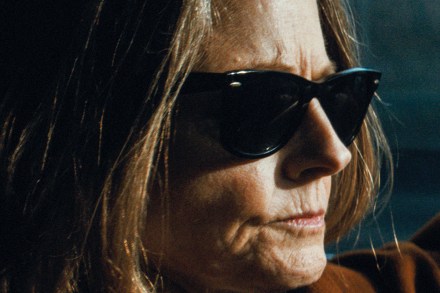
A Private Life is a French film starring Jodie Foster as a psychoanalyst navigating what might be a murder mystery. It’s a psychological thriller (kind of), and a complex character study, and while it is très, très French, with elements that feel like a fever dream, Foster’s presence will keep you glued. She has a face you could watch for ever. It moves. It’s expressive. It captivates. She hasn’t meddled with it. ‘I don’t want to be some Botoxed weirdo,’ she has said. It makes such a refreshing change to see a 63-year-old woman who looks like a 63-year-old woman rather than a haunted doll. In fact, if it weren’t for her and Frances McDormand, it would probably be game over.

Toy Story 5 contains delicious touches

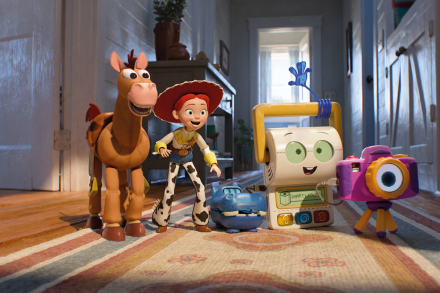
Toy Story 5 – do we need it? One worries for the narrative integrity of characters when an IP is thrashed to death like this. The latest ​instalment, however, does address one of the most pressing dilemmas of modern childhood (screen time) and whether it will be the end of toys. (‘Extinction… Not again!’ cries Rex, the dinosaur.) It is timely, with some delicious touches – Woody now has a bald spot So it is timely, with some delicious touches – Woody now has a bald spot. And while it isn’t as entertaining as the first three and stumbles at the finishing line, it may be better than the fourth, with its horrible doll Gabby Gabby.

Spielberg fumbles his final sci-fi

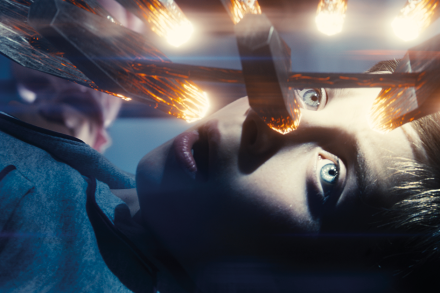
Steven Spielberg has said his latest film, Disclosure Day, is ‘the summation of my life in science fiction’, which began with Close Encounters of the Third Kind and ends here. (He is now 79.) I adored Close Encounters when it first came out in 1977 and still do – that final scene must be one of the greatest final scenes in cinema, greater even than The Terminator. But Disclosure Day is not its match, not nearly. What we have here instead is a forgettable action film with the bones of your average conspiracy thriller. There may or may not be life on other planets, but this poor Earthling felt the life drain from her at around ten minutes in.

What a rabbit hole this film takes you down

Madfabulous is a biopic of Henry Paget, the fifth Marquess of Anglesey, who was probably mad and definitely fabulous. His prodigalities in jewels and clothing were enormous. He perfumed his automobile so it belched violets. He was partial to wearing women’s clothing. He set up his own theatre company to showcase his ‘butterfly dance’. Needless to say, he burned through his family’s fortune in a few short years. How could all this not be wonderful on screen? Who doesn’t wish for an automobile belching violets? Alas, the film leans towards the pedestrian but, still, it will send you down a most satisfying rabbit hole. Look him up. The spit of Frank Zappa, right? And this is the late 1800s we are talking about. Respect.

Thoroughly entertaining: Tuner reviewed

I can’t see why anyone wouldn’t enjoy Tuner. It’s a heist caper as well as a romance and while it hits some familiar beats it hits them in new ways. Set in the piano-tuning world – which may be a first – it’s sound-driven (jazz, classical and more) and has something to say about music, identity, artistic envy. In addition it stars Dustin Hoffman and Leo Woodall, who have cracking chemistry. You will not have realised that bird song can hurt It’s a first feature film from Daniel Roher (otherwise an Oscar-winning documentary maker), who proves here that he has equal talent for fiction. Hoffman plays Harry, a New York piano tuner who once played jazz with Herbie Hancock and the like – although maybe he didn’t. (He seems to be slipping into dementia.

What have they done to Tom & Jerry?

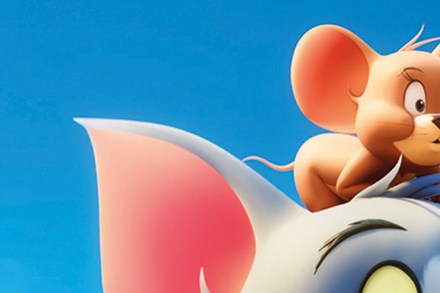
Time was you knew where you were with Tom and Jerry. He chases the mouse; catches the mouse; the mouse gets away; Tom is flattened, gets up dazed but determined; and then it’s back to the chase. The tone changed over time – Tom was originally more scary than he became later – but essentially the fun was in the rivalry that would never cease; the plot’s piquancy was that of David and Goliath, the little mouse always getting the better of the big cat. I can only hope the Chinese audience buys it because I couldn’t But the old Hanna-Barbera scenario that began in 1940 has evolved and the franchise has passed into new hands.