Books & Arts

Books and Arts

Look east, old man

A deadly viral pandemic, viciously infectious, inflicting rapid death without fear or favor: gosh, where on earth did the makers of To the Lake get that idea? Not from the Chinese coronavirus, obviously. For one thing, this Russian series was made last year, when COVID-19 was still but an evil glint in Anthony Fauci’s eye. And for another, look around: do you see people dropping dead in the streets, as they should be, if this thing were living up to its inflated reputation as our Spanish flu? All that aside, the timing could scarcely be more perfect for this hugely exciting, gripping and involving series about a disparate group of family and friends struggling to survive in lawless, brutal, post-outbreak Russia.

to the lake
baltimore

Night at the museum

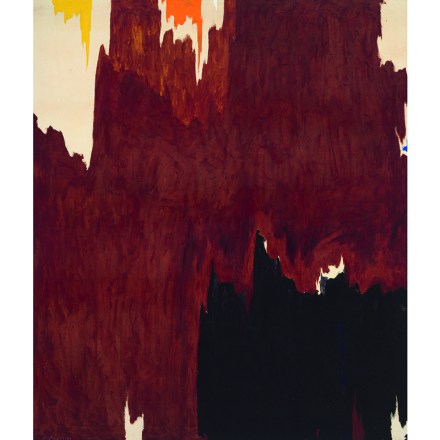
In the summer of 1961, Clyfford Still packed his family into a car and began driving south from New York City in search of a new home. In the Forties, Still had shocked audiences with monumental canvases covered in stormy walls of thick, dark, pigment: some of the first totally abstract paintings shown in New York. Subsequently Still had risen with the Abstract Expressionists to unprecedented heights of institutional and commercial success. But despite wielding profound influence as a founding dean of this New York School, torch-bearing wasn’t really Still’s thing.

A tinpot Caesar

In 1919, an obscure political agitator called Benito Mussolini assembled a ragbag of Blackshirt diehards in the Lombard capital of Milan and launched the movement that was to become, two years later, the National Fascist party. The party took its name from the classical Roman symbol of authority — an ax bound in rods, or fasces. Once in power, Mussolini introduced the stiff armed Roman salute after the handshake was deemed fey and unhygienic. At times he wore a richly tasseled fez and thrust out his chin pugnaciously for the cameras. For all his posturing and demagoguery, Mussolini was widely admired in pre-war Britain, where Lord Rothermere’s Daily Mail routinely carried flattering portraits of him.

mussolini
ryan gattis lynwood

The Ryan Gattis guide to Lynwood

In 2015, after a 10-year hiatus that followed his debut, the novelist Ryan Gattis published a masterpiece. All Involved is a compulsive, symphonic novel set during the Los Angeles riots of 1992, telling the stories of gang members, a firefighter, a nurse and a graffiti artist, among others, as they try to navigate six notorious, brutal days in LA. This month, Gattis returns to this milieu with The System. Much of the novel is set in troubled, entrepreneurial Lynwood, South Central Los Angeles, where Gattis has spent many hundreds of hours on painstaking research.

Mostly ghostly: Henry James haunts Bly Manor

Halloween wasn’t quite the same this year: no trick-or-treating or bobbing for apples, no packed parties, not even a socially distanced haunted house. As a lover of all things horror, I had to rely on television to put the spooky in the season. Netflix’s new series The Haunting of Bly Manor is the sister show to last year’s wildly popular The Haunting of Hill House, created by Doctor Sleep’s Mike Flanagan. (Flanagan is also behind Hush, one of the smartest horror movies I’ve seen in a few years and definitely worth watching.

bly manor
books of the year 2020

The Spectator’s Books of the Year 2020

Our turkeys were stuffed and now we are too. Reclining helplessly in the recovery position, our thoughts turn to feasts future. What better way to show your friends and family that you love them, and also that you have impeccable taste, than sending them a book? In The Spectator’s stocking-stuffing December issue our staff, writers and friends make their seasonal suggestions for Books of the Year: stack upon stack of the most riotous reads, bibliographical beauties and pandemical page-turners. P.J. O’Rourke The Decline and Fall of the Roman Empire, Volume I, by Gibbon, because in this year of scourge and collapsing polity it seemed apposite. And only Volume I, due to reader fatigue after 582 pages and the shift in Volume II to the history of Byzantium.

The great lost Beatles album

The Beatles never had a proper Christmas number one, only seasonal number ones with unseasonal bangers: ‘I Want To Hold Your Hand’, ‘I Feel Fine’, ‘We Can Work It Out’/‘Day Tripper’ (1963-65) and ‘Hello Goodbye’ (1967). Though they never made a traditional Christmas record, the Fabs loved Yule — and you know you should be glad. Between 1963 and 1969, they recorded an album-worth of charming Christmas nonsense. Welcome to the semi-secret hinterland between the legal and bootleg worlds: the Beatles’ Fan Club Christmas flexi discs. The flexis have only had one official release since their private circulation to the ravenous Brit-Beatle fan club.

beatles
christmas past

It’s good for your elf

Ever since I found out Santa Claus wasn’t real a year ago, the idea of him began to give me the creeps. Who is this immortal jolly elf, and what does his business of breaking and entering once a year even have to do with Jesus’s birthday, or even St Nicholas? Christmas is a season of traditions, both personal and religious. Each year, its celebrants decorate their gingerbread houses, wrap their presents, decorate their fir trees, drink their eggnog and see Santa Claus at the mall. Some people even go to church.

Mrs Badgery

Wilkie Collins’s ‘Mrs Badgery’, rarely seen since its first publication in Dickens’s Household Words magazine in September 1857, is an enchanting little chip off the block. Like a lot of British short stories, it is absurd, very funny, and in uproarious bad taste. British writers have often enjoyed stories of making a home, and also the theatrical trappings of grief. (George Bernard Shaw commented on the national enthusiasm for requiems.) Here they collide, with richly enjoyable results. The narrator is clearly stuck with Mrs Badgery forever. In time, he might even regard her as a picturesque addition to his home, like an indoor and rather saline water feature.

mrs badgery
charles brown

Charles Brown’s Christmas

When a young singer and pianist named Charles Brown was hired in 1944 to play at Ivie’s Chicken Shack, the legendary jazz singer Ivie Anderson’s nightclub in Los Angeles, he was instructed to play ‘nothing degrading like the blues’. It wasn’t an admonition that he heeded very long. The blues didn’t degrade him. He elevated them. After Brown died in 1999, Bonnie Raitt, who toured with him starting in 1987, deemed him ‘the most extraordinary piano player I’ve ever heard’, noting that he ‘led the West Coast blues explosion’. Indeed he did.