Features

Features

Will the opioid enablers ever pay?

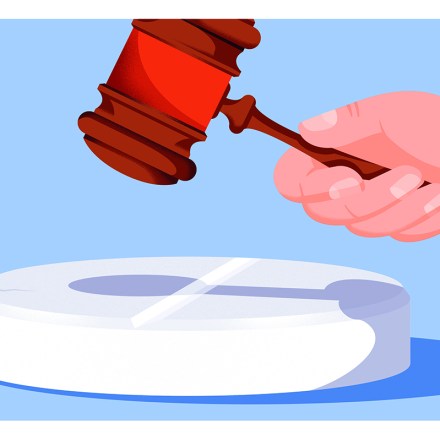
More than two decades into America’s catastrophic opioid epidemic, the demographics of this unprecedented tragedy are clear. By far, the brunt of the harm has been borne by America’s poor and working classes. Multiple studies show a strong correlation between lack of employment, economic distress and overdose fatalities. Indeed, a 2021 study by the National Academy of Sciences concluded most of the decline in life expectancy beginning in the mid-1990s among working-age men and women was attributable to drug poisonings of people with a high school education or less. Standing in sharp relief to portraits of its primary victims are its perpetrators. Those most responsible for this epidemic are part of America’s best educated and economically privileged classes.
opioid
federal

The deep sleep state

America may be falling behind in manufacturing everything from household goods to textiles and semiconductors, but there is one sector of innovation where these United States will never be surpassed: defrauding the federal government. Sure, Beijing’s Machiavellian overlords may steal some missile or naval tech here or there — more often than not here and there — but they couldn’t come up with deploying fake concrete in public works projects or, say, building the Middle East’s largest women’s studies department in the name of defeating terrorism. We Americans cannot be topped in our capacity to fleece the taxpayer. I witnessed one such act on summer vacation and marveled at its creativity and simplicity.

Pat Buchanan and thirty years of culture wars

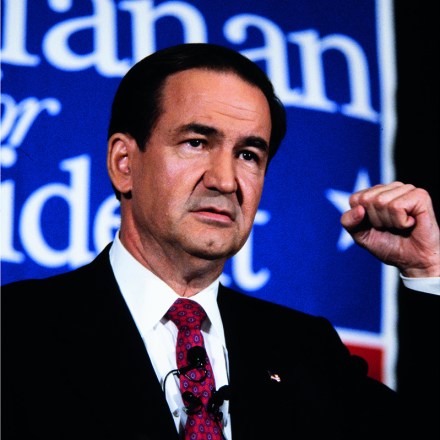
It was a relatively cool 85 degrees in Houston on the August evening thirty years ago when Republicans gathered at the Astrodome to renominate George H.W. Bush for the 1992 presidential election. The opening session’s speakers included Senator John McCain, Stanford professor Condoleezza Rice, and re-election campaign co-chairman Ken Lay, later to gain fame as a major figure in the Enron scandals. But the speech that would be the most memorable by far was delivered by a television commentator, syndicated columnist and former Richard Nixon hatchet man — the fifty-four-year-old Irish Catholic Pat Buchanan, who delivered what came to be known as “The Culture War Speech.

culture
gay

Have we finally reached Peak Pride?

Have we reached Peak Pride? As a gay man, I suppose I should feel gratified by the fervor with which seemingly every entity across the Western world declares its solidarity with the LGBTQIAA+ community every June. But this year, the omnipresence of the rainbow flag — the latest iteration of which resembles a testing of the Emergency Broadcast System on acid — has gone a tad too far. Lounging poolside at a Las Vegas resort for my younger brother’s bachelor party, I casually reveal to the bikini-clad young woman lying next to me that I am gay. “Happy Pride!” she enthuses, in a way that a gentile wishes me a “Happy Chanukah” upon discovering, at Christmastime, that I’m Jewish.

It’s the parallel economy, stupid!

There’s a lot of rumbling about American polarization these days. Sometimes it takes the form of people advocating for a national divorce or dire warnings of a forthcoming civil war. A national divorce seems impractical and America is too fat for a civil war. Better evidence that the country is already fracturing is the talk of the “parallel economy.” We’ve come a long way from the 2016 moment of self-awareness about needing to get out of our echo chambers. By 2020 it seemed everyone wanted their own. Now we’re redecorating the walls of the echo chambers. Adding some throw pillows.

parallel
christian

The Christian nationalism boogeyman

Which of the zillion prophesied crises will engulf America next? At the moment, the most chattered-about is a “second civil war,” though some also worry that the United States could lapse more peacefully into autocracy. The left, of course, is consumed by fears of climate change drowning New York, while some on the nationalist right foresee a Camp of the Saints-style immigrant invasion overwhelming public services. Yet amid all the wandering imaginations and doomsday scenarios, there’s one contingency that has absolutely zero chance of happening: America as a Christian theocracy. With all due respect to Sohrab Ahmari and the Handmaid LARPers, there are greater odds of Beto O’Rourke being appointed god-emperor than of any kind of merger between church and state.

The radical alternative to a hospital birth

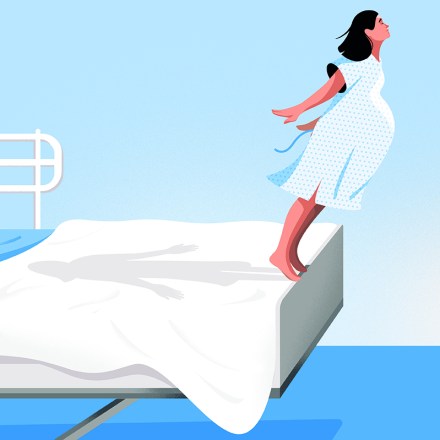
Giving birth hurts. A lot. Like any other major physical feat, it’s risky, but it’s not the inherently dangerous medical event some have come to believe. Plenty of women know this. Many are skeptical of the need to give birth in a hospital. But some are taking things further, deciding to forgo medical care entirely and give birth at home totally unassisted. Free birth, or unassisted birth as it’s called by most birth workers, is an intentionally unassisted birth: no professional, no midwife, no nurse, no doctor. For hardcore freebirthers, even having a doula present for your birth means you’re not doing it properly. Thanks to Instagram and one very compelling podcast called The Free Birth Society, the movement is growing.

birth
crimea

What price must the West pay for Crimea?

For centuries before Vladimir Putin arrived on the scene, Russian foreign policy has been shaped by the country’s need for warm-water ports. To be a great power in Europe and the Near East, Russia must have access to the Mediterranean. Commercial as well as military considerations dictate this. In the eighteenth century Russia conquered the khanate of Crimea and acquired a splendid location for a new Black Sea port — what is now the city of Sevastopol. The Crimean peninsula had been a gateway from Asia to the Mediterranean since the days of the ancient Greeks, who built some of their northernmost colonies there. Russia made Sevastopol the permanent home of its Black Sea Fleet.

How the midterm polls became Democratic fan fiction

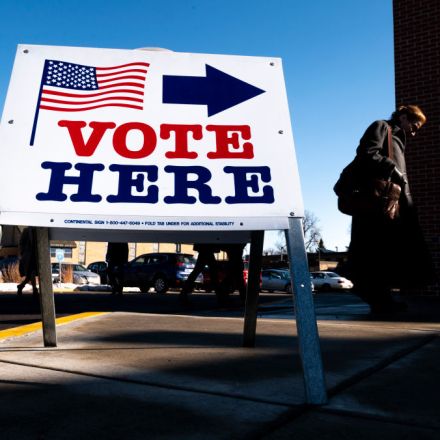
Psephologists of the world unite: you have nothing to lose but your fibs! I write toward the end of September, when many pollsters are still treating their prognostications as a form of fan fiction. For example, one poll has star trooper Mark Kelly ahead of Blake Masters by 6.2 points in the Arizona race for US Senate. That, ladies and gentlemen of the jury, is ridiculous. Punditry isn’t prophecy, but mark my words: Blake Masters, absent some intervening catastrophe, is going to win that race and win convincingly. I am going to stick my neck out and say the same about John Fetterman and Mehmet Oz in the Senate race in Pennsylvania. “The polls” have Fetterman ahead by 4.5 points.

pollsters
charles

What kind of king will Charles III be?

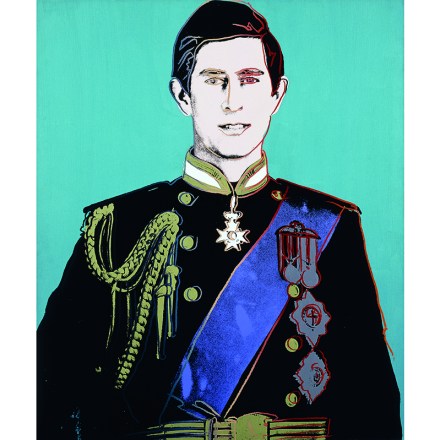
In 1988, Prince Charles asked the late Peregrine Worsthorne, then editor of the Sunday Telegraph, what he should do in public life. Perry told Charles he should restrict himself to public duties and never ever air his private thoughts. The prince buried his head in his hands, moaning, “But then I’m just a cipher.” And that, indeed, is what he has just become, as King Charles III. At the end of September, his cipher — the symbol of his reign — was unveiled. The elegant combination of a C, an R (for Rex) and the Roman numeral III come together to symbolize King Charles III. In time, the cipher will appear on government buildings, state documents and new postboxes. Perry Worsthorne was right all those years ago.

Welcome to the age of nuclear blackmail

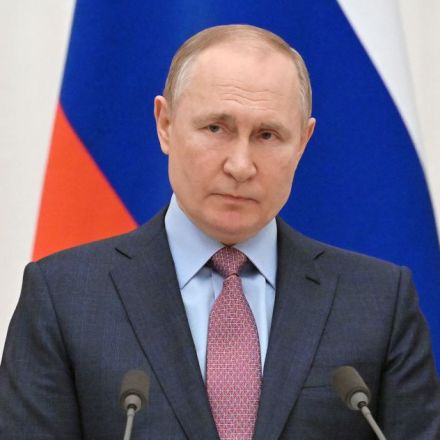
Vladimir Putin’s recent announcement that he was not bluffing about using nuclear weapons against the West in his war on Ukraine is one of the strongest indications yet of the risks the liberal world now faces in opposing authoritarian aggression. In the face of Russian aggression, or in committing the United States to defending Taiwan, as President Joe Biden did yet again recently, Washington and its partners face the possibility of direct confrontation with the world’s most powerful, nuclear-armed militaries. For the first time in a generation, Western powers risk being checked by adversaries willing to threaten massive conventional and nuclear warfare. The era of cost-free intervention to uphold the liberal world order is over.

nuclear
birkin

The fall of the Birkin bag

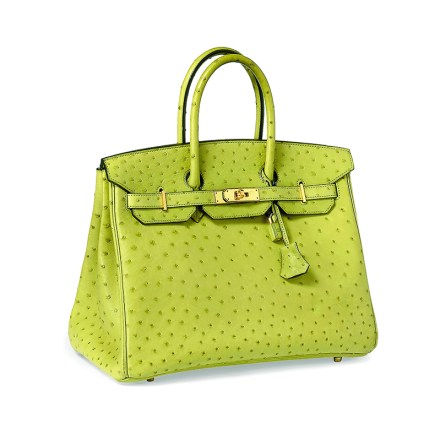
If you had a spare $100,000, what would you spend it on? The deposit on a decent home, perhaps. Maybe a boat or a luxury car. For her twenty-fifth birthday, Kylie Jenner was given a bag worth that princely sum. The three-toned Birkin was one of just three made. By her own account, Jenner had “never even seen anything like this before.” Kate Moss famously used one as a diaper bag, Kim Kardashian, a gym bag. The Hermès Birkin bag was birthed in 1984, after Jane Birkin, the British-French actress and singer, sat next to Hermès chairman Jean-Louis Dumas on an Air France flight to London. The contents of her bag spilled out onto the floor, prompting Dumas to remark that she needed one with pockets.

She was the Queen of the West

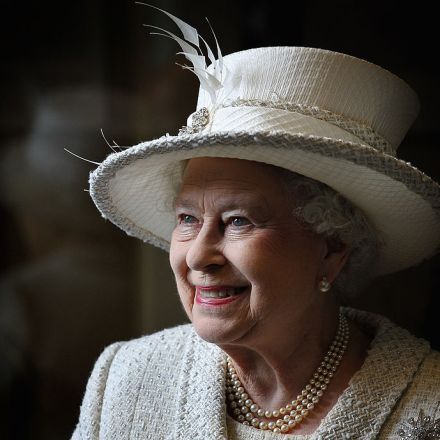
For much of my life, I confess I didn’t pay much attention to Queen Elizabeth II. My Muslim upbringing in Somalia, Ethiopia, Kenya and Saudi Arabia meant that the idea of a female figurehead was utterly foreign to me. How could a woman be the head of a church or the leader or embodiment of a nation? This was not what my god taught. Allah, for me, was the ultimate patriarchal ruler. He would certainly not countenance a figure like the Queen. But once I left Islam and became a convert to the ideals of the West, I came to appreciate her. The massive crowds following her coffin as it wound its way down from Balmoral, through Edinburgh, to London and finally to Windsor show that I am far from alone. The Queen was beloved.

queen
thunberg

Where in the world is Greta Thunberg?

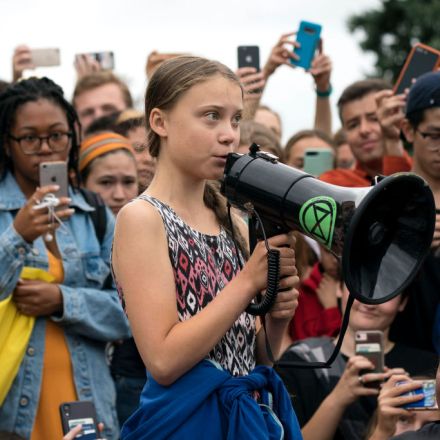
When the United Nations General Assembly convened in New York in September, climate-watchers may have noticed a pesky, pigtailed vacuum. Greta Thunberg, who spent the summer of 2019 stalking the East Coast after taking a prince of Monaco’s yacht across the Atlantic, reached her zenith that September — the last time this body met in person — at the Climate Action Summit where she delivered her creepy, memed-into-oblivion “how dare you” speech. But the chilling little entity straight out of Kubrick was notably absent at this year’s assembly, at a time when the Biden administration is pushing climate hysteria more fervently than ever.

A nation of quitters

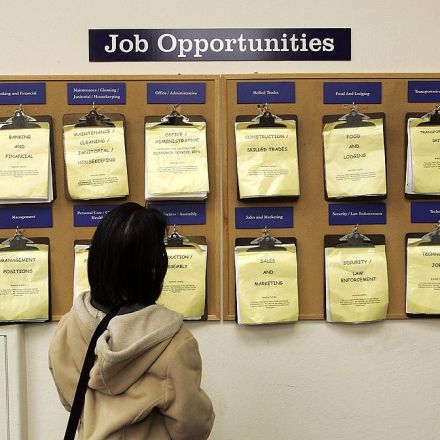
America’s post-pandemic employment picture is an unsettling paradox. On the one hand, job totals are finally back above pre-pandemic highs — and unemployment rates skirt fifty-year lows. But at the same time, overall work rates are lower than they have been since the 1980s — and millions of workers who dropped out of the labor force during the Covid-19 lockdowns have yet to return. A peacetime labor shortage has erupted, yet vast numbers of men and women are still sitting on the sidelines of the economy. America is renowned for its work ethic — and rightly so. The average worker in the United States clocks more hours each year than those in Canada, Australia, Western Europe and now even Japan. But those are the work patterns of US men and women holding down a job.

work

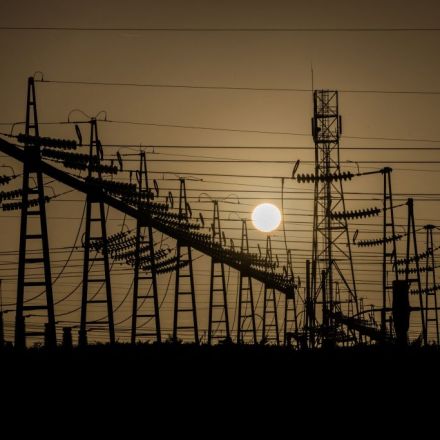
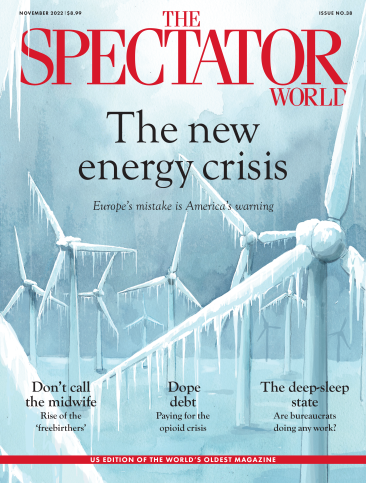
The lesson of 2022: energy is our lifeblood

This has, so far, been a year of hard lessons. Spiraling inflation has given households an expensive economic refresher course. A land war in Europe has offered an unwelcome reminder of old geopolitical and military truths. But arguably the most important lesson of 2022 concerns the point at which these economic, military and geopolitical considerations converge: energy. On this vital issue, the West has suffered from an epidemic of amnesia in recent years. Too often energy security has either been taken for granted by policymakers and voters, for whom the last energy crisis had become a distant memory, or actively disparaged by an environmental movement whose hardline hostility to fossil fuels has become received wisdom in polite circles.