Features

Features

Maine’s lobstermen are a dying breed

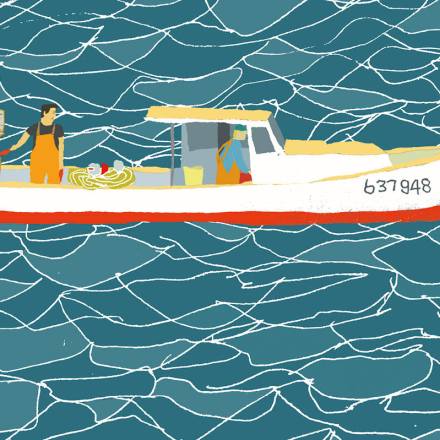
It’s 5 a.m. in early May in Harpswell, Maine — “a working waterfront” community. I’m sipping coffee on the deck of Mark and Judy Sgantas’s charming home. The Sgantases are distressed about the government overreach and so-called “green energy” initiatives their neighbors have told them are apt to destroy the New England maritime economy and communities. We keep our voices soft so as not to disturb sleepy Casco Bay and the peach-and-plum masterpiece gradually unveiling itself in the sky and reflecting on the still water.
lobster maine lobstermen
news

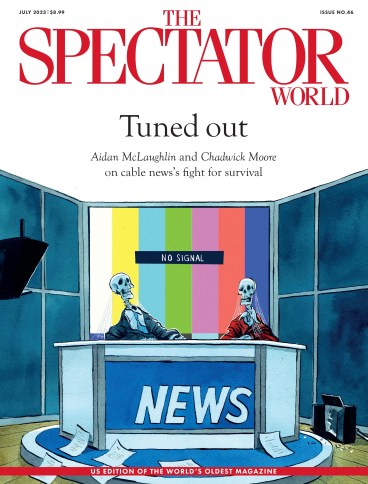
How will the decline of cable news affect politics?

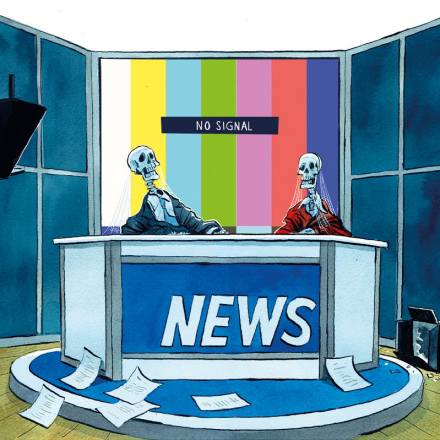
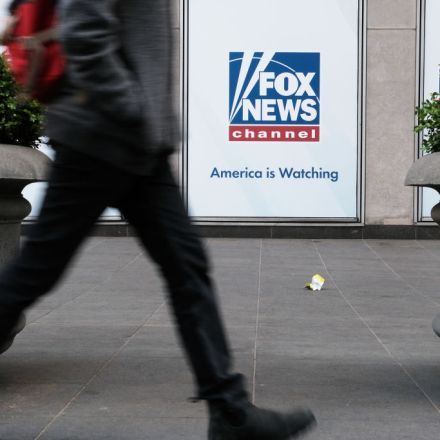
The internet has transformed presidential campaigns. Barack Obama micro-targeted his way to victory in 2008. Donald Trump tweeted his way into the conversation in 2016. In 2020, Joe Biden Zoomed his way to the White House. And yet, for all the ways in which communications technology has upended how we do politics, some things haven’t changed all that much. The race for the White House remains a made-for-TV affair: from debates to campaign stops, events are planned with the television viewer in mind. Even in the digital age, the power of television has endured. But as the country gears up for 2024, could that be about to change? News channel ratings have plummeted, households are ditching cable packages and viewers’ trust in the networks is at rock bottom.

Reminders of the Cold War in Vienna and Budapest

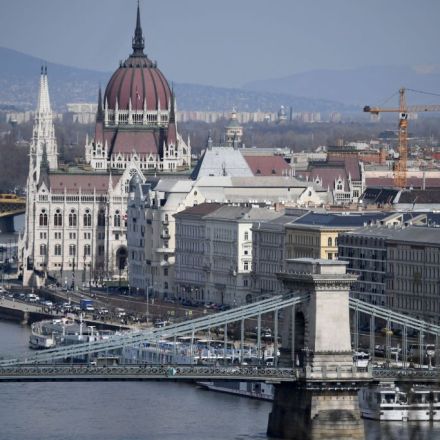
Apparently an acquaintance has dubbed me the “Kremlinologist of the right.” Redolent as it is of the Cold War-era drama surrounding the Kremlin, when the West was desperately trying to suss out what Winston Churchill called a riddle wrapped in a mystery inside an enigma, I could hardly object to this quip upon learning of it. Indeed, I recently traveled to two hot spots of the Cold War, Vienna and Budapest. I went full immersion in Vienna, where I attended a screening of Orson Welles’s The Third Man, a humdinger of a movie if there ever was one. Graham Greene set it in postwar Vienna, which was divided between the four occupying powers, France, Great Britain, America and the Soviet Union.

Cold War
cable news

Can the 2024 election save cable news?

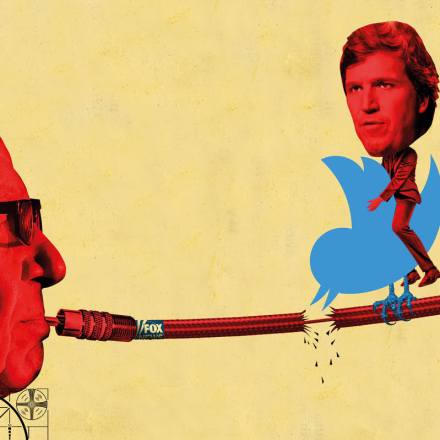
No doubt Rupert Murdoch breathed a sigh of relief when Florida governor Ron DeSantis’s decision to launch his presidential campaign on Twitter proved disastrous. The announcement, hosted by Elon Musk, was derailed by technical glitches, leading to twenty minutes of awkward silences interrupted by occasional hot-mic moments of frustration. Even after Musk and his team at Twitter got things going, the highly anticipated event drew a meager audience of just 300,000 live listeners. The second stop of the DeSantis campaign, immediately afterward, was at Fox News, for an interview watched by an average of 2 million viewers.

Tucker Carlson can live without Fox News. Can they live without him?

Tucker Carlson’s six years on Fox News seem to have artificially extended the life, and relevance, of cable news itself. While he was there, the top-rated host in the medium brought in an entirely new audience: young people, especially young men. He not only drew the largest number of viewers in the coveted 25-54 demographic, he took in the top rank for Democrats in that age group too. But even Carlson knew cable news was a dying model, one that had lasted longer than anyone expected, as he told me when I spoke to him for my upcoming book, Tucker. “I really do think the cable news business has a limited future,” Carlson said, two weeks after his show was abruptly pulled off the air. “It’s too obviously controlled.

Carlson
ukraine

How the Ukraine war remade our world

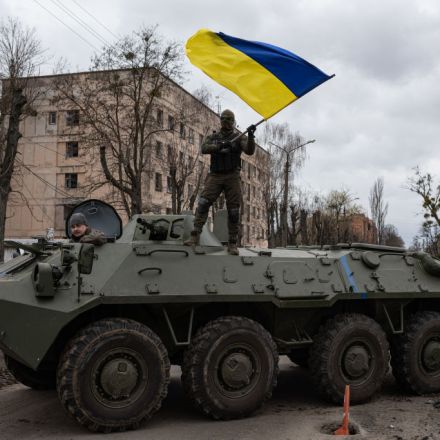
War has a stronger appetite than any of the countries that wage it. Aggressors, defenders, small states and superpowers are all on the menu. Take the war in Ukraine, for example. The war really started in 2014 when Russia annexed Crimea and fomented secession in the Donbas. America slapped Moscow back with sanctions. This was virtue-signaling. Sanctions might sting Vladimir Putin and his cronies, but how could they change Russia’s interest in Crimea? The peninsula is Russia’s gateway to the Mediterranean. Sanctions can’t alter geography. Ukraine had a friend in Vice President Joe Biden, and it had his son Hunter on a Ukrainian oil company’s payroll. Then disaster struck — the Bidens were gone and Donald Trump became president.

Je suis Karen

As I creep into my mid-twenties something is changing. I’m not quite young enough to be carefree, I pay my bills and taxes on time and worry about the noise pollution level in the area I’m looking to move to. I’ve swapped my six-inch heels for practical sneakers, and I tut at teenagers causing a commotion on the subway. All of which led a friend to accuse me of becoming “something of a Karen.” The charge is a serious one these days. You see, Karen is no longer a playful term used to describe your entitled aunt who complains about slow service in a restaurant, flipping her asymmetrical bob in irritation. To call someone a Karen in 2023 is to wade waist-deep into the culture wars. At some point over the last few years, the word became more than a tongue-in-cheek jibe.

karen
mullin

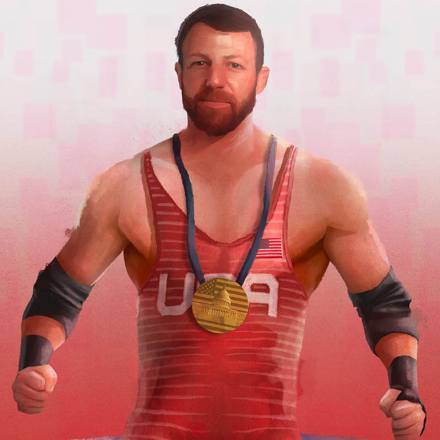
Markwayne Mullin: the Senate’s stoic brawler

Stilwell, Oklahoma Out of the ancient belly of the earth and through the pitch-black night, the giant wigwam rises, gold-tinged and glorious, the glint of rare winnings and the sound of 2,000-plus slot machines rolling toward despair rollicking through the dark in east Oklahoma. Inside, the electric-fused honkytonk band blares Del Shannon’s “Runaway” — “And I wonder, I wa- wa- wa- wa- wonder” — from a starlight backlit stage above the sea of penny slots, the bald lead singer strumming a skull-festooned full bass as he sweats through his camo shirt. Outside, there is a distinct noise coming from beneath a neon-yellow Maserati where a timber rattlesnake has found a warm asphalt home.

Why conservative boycotts should terrify corporations

Nike. Ulta. Bud Light. Anthropologie. Target. My boycott list is growing larger by the day. For the record, I’m pretty darn good at shopping according to my values. I haven’t purchased a single Nike product since the company pulled a planned shoe line featuring the Betsy Ross American flag because anthem-kneeler Colin Kaepernick convinced them it was racist. I quickly pivoted to purchasing Adidas products instead. Well, that is until Adidas started advertising women’s swimsuits using male models. Sigh. This boycotting business can be tough, especially when it means forgoing otherwise quality products or paying a higher price for alternatives.

boycotts
test scores

Why civics test scores are falling in American schools

Twenty years ago, one of the most popular bits on late-night television was “Jaywalking,” where Tonight Show host Jay Leno quizzed passersby on world events, geography, history and more. He would ask random people on the street about literature, who the vice president was, or who we fought in World War Two. The clips that made the cut inevitably involved embarrassingly ignorant answers. Today, America is a nation of Jaywalking Allstars; whereas it was once a punchline for someone to be that ignorant, ignorance is now the norm. In early May, news emerged about record low scores for history and civics for eighth grade students nationwide.

You can never escape the suburbs

Had you told me when I quit drinking that one decade into sobriety I’d be a suburban Texas mom, I probably would have kept drinking. A friend and I were recently talking and I said, “I don’t know, a part of me feels like I’m giving up, moving to the suburbs.” She laughed and said, “That’s what the suburbs are — surrender.” The suburbs in all their sameness and picket-fenced perfection represented a life I never wanted — with their Live, Laugh, Love Etsy signs and swingers. They weren’t for eccentric artists or messed-up comedians. They were for sorority girls and women who loved game nights and crafts and the Bible and botox parties.

suburbs
QAnon

What happened to QAnon?

"There’s a storm coming,” popular historian turned esoteric political commentator Neil Oliver posted on Twitter in May, “Maybe not today. Maybe not tomorrow. But there’s a storm coming.” As Mr. Oliver is a Scotsman who calls himself “the Coast Guy,” some of his followers might have thought he was referring to the weather. Others more acquainted with the tropes of modern conspiratorial thought, though, will see the reference to a “storm” as a reference to a time of social and political crisis. It comes — whether Mr. Oliver knows it or not — from the fevered discourse of QAnon. QAnon! The term almost makes you feel nostalgic.

What did the Habsburgs ever do for us?

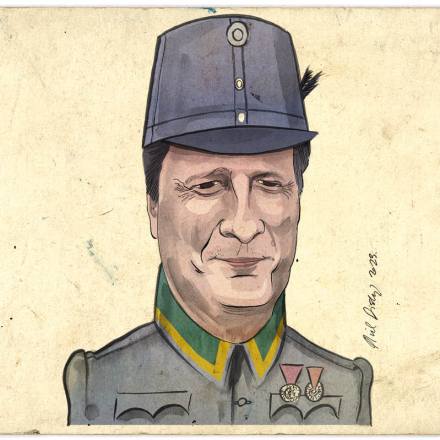
Do you have a favorite Habsburg? Mine is Maximilian I, the first and last ruler of the Second Mexican Empire. Americans may be vaguely aware of him because a defeat of his French allies is commemorated annually on Cinco de Mayo. His struggles echo the experience of many unlucky rulers supported by fickle foreign patrons: Abandoned by the French and besieged by belligerent locals, the ill-fated emperor stubbornly refused to abandon a throne he hadn’t much wanted in the first place. His last words to the firing squad were, “Aim well, muchachos.

habsburgs
knowledge

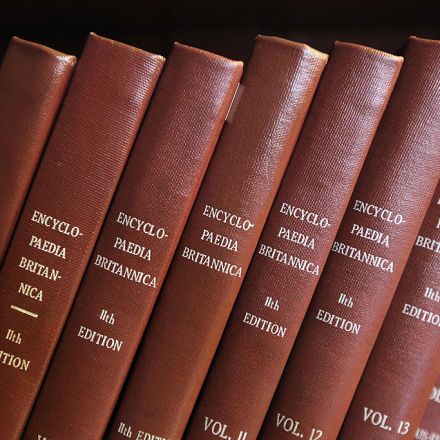
In praise of encyclopedias

Simon Winchester recalls the time — he was not yet three — when, stepping into his rubber boot, he was stung by a wasp. He rates this penetrating moment as his first “acquisition of knowledge.” Readers of his many books may thank that wasp for starting Winchester on his ever-widening path to further knowledge. His new book, Knowing What We Know: The Transmission of Knowledge, from Ancient Wisdom to Modern Magic (KWWK for short), is what that wasp hath wrought. It follows close on the heel of Simon Garfield’s entertaining study, All the Knowledge in the World: The Extraordinary History of the Encyclopedia (AKW for short). Despite the title, Garfield’s ambitions are more cabined than Winchester’s.

The known unknowns of 2024

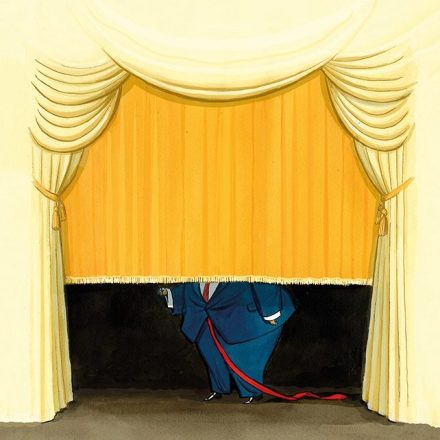
I think it was the once-renowned critic Clement Greenberg who gratefully acknowledged that his job as a cultural commentator allowed him to conduct his education in public. I suppose we all do it, more or less furtively, though what prompts me to mention it now is the realization that I do not know the answer to any of the questions that have motivated this column. I write in the immediate aftermath of Ron DeSantis’s official announcement that, yes, he is running for the presidency of the United States in 2024. The announcement itself was no surprise — everyone has known DeSantis was running for months.

trump second term colorado

The known unknowns of 2024

I think it was the once-renowned critic Clement Greenberg who gratefully acknowledged that his job as a cultural commentator allowed him to conduct his education in public. I suppose we all do it, more or less furtively, though what prompts me to mention it now is the realization that I do not know the answer to any of the questions that have motivated this column. I write in the immediate aftermath of Ron DeSantis’s official announcement that, yes, he is running for the presidency of the United States in 2024. The announcement itself was no surprise — everyone has known DeSantis was running for months.

The Polish miracle

Poland’s Third Republic entered the world in 1989, after a dark period of occupation and oppression at the hands first of the Nazis and then the Soviets. As democracy was taking its first tentative steps in Warsaw, the USSR still had two years left to live and Germany was not yet unified. Yet somehow, over the next thirty-four years, Poland went from a poor post-communist state to a rapidly rising economic powerhouse and serious geopolitical force. Nothing about this rise was inevitable. Human agency, unforeseen events and providence play into every historical development — and Poland’s remarkable progress is no exception. It took leadership, will and luck. A central desire of the Polish people since long before 1989 has been to become a part of the West’s vision of Europe.

poland