Features

Features

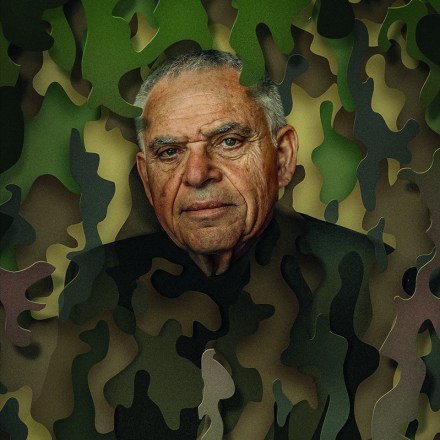
Edward Luttwak, the uncontained strategist

“Christ, Edward! No!” Edward Luttwak has just lunged at me with a knife in the study of the house he shares with his wife in a suburb of obdurate anonymity near Washington, DC. He is giving an unsolicited demonstration of how to most effectively stab someone. “Let your hand go limp, then feint a punch with your non-knife hand,” he says with gusto, his left fist fluttering around my face, “then stab into the diaphragm upwards. The air will go out of them like a balloon and they’ll drop to the floor. They may live another twenty years, but they’ll certainly be out of action for the next twenty minutes.” The demonstration has come after a brief typology of knives for my benefit — also unsolicited.
Luttwak
poker

The Lone Star State’s new poker boom

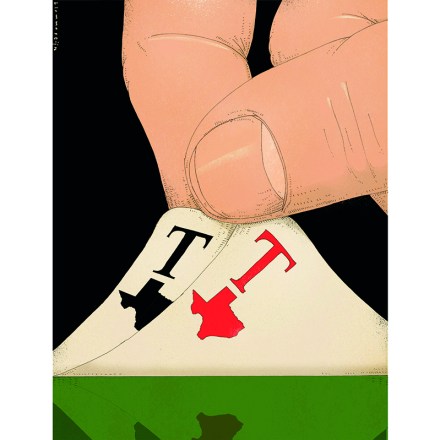
Late on a Sunday night in May of 2022, I found myself playing heads-up poker with a hoodie-wearing small-town Texas high-school basketball coach for $70,000, plus a trophy. Well, technically, we were playing for $10,000, since the final five players in the tournament had agreed to a chopped pot an hour earlier, guaranteeing us each $45,000. Regardless, it was a lot of money, and somehow, I was in the mix. This was the “Monthly Monster” at the Lodge, a club in Round Rock, just northwest of Austin. The spot is the epicenter of the Texas poker boom and I’d staggered into this situation more or less by accident. The $600 buy-in was a lot more than I usually spent; I’d never paid more than $200 for a tournament before.

Speaking truth to antisemitism

It’s impossible to sugarcoat what Ye, The Artist Formerly Known as Kanye West, said that got him in hot water late in 2022. You can’t announce you are going to “go death con 3 ON JEWISH PEOPLE” and then act surprised when your conduct sparks a firestorm. After getting kicked off Twitter (though Elon Musk would later reinstate him), Ye was subsequently suspended from Instagram for posting an image of a message he sent to Russell Simmons in which he said, “I gotta get the Jewish business people to make the contracts fair.” Given the magnitude of Ye’s superstardom and his history of erratic behavior, this would have been a globe-spanning media event in any case.

Jews
smoking

An ode to smoking

Studies show that fewer than half of Americans keep their New Year’s resolutions. The other half, I assume, are bald-faced liars. Losing weight, giving up drinking, cutting back spending and learning an instrument. Apparently it’s mainly the Western world that dresses up the idea of setting yourself wholly unrealistic goals as fun — no shock there. Other countries clearly have better things to do than ask themselves things like “How can we make our lives more miserable this year?” or “What is the one thing I enjoy too much?” The year before last, when I found myself spending weekends doing things like consolidating pension funds, I decided I was old enough to choose which social norms I would conform to.

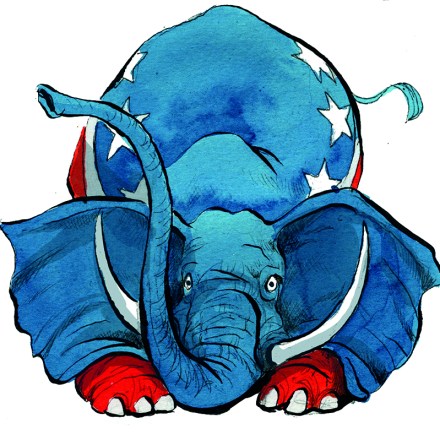
Will Republicans learn from the midterms?

The 2022 midterm elections consumed more than 16.5 billion real American dollars. They featured thousands of candidates and the most expensive Senate race in history, resulting in the election of Democrat John Fetterman from Pennsylvania. Millions of viewers across the country tuned in to watch election-night returns in anticipation of a promised red wave that never came. The 2022 midterms were the political equivalent of the Red Queen’s race — a massive effort, all to end up pretty much back where you started. Post-election recriminations were complicated by how well Republicans actually did. They massively increased their turnout and won the House of Representatives. They saw wide margins of victory by incumbent governors in Florida, Georgia, Ohio and Texas.

republicans
Weingarten

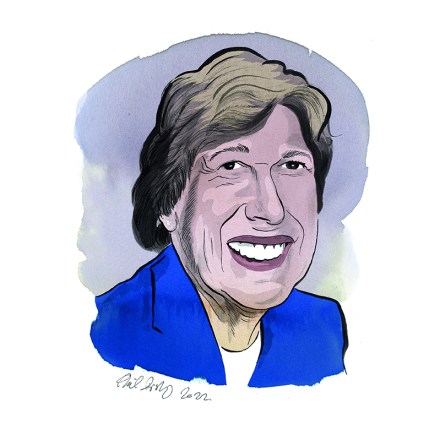
Randi Weingarten isn’t going anywhere

It was eerily warm in New York the day before the midterm elections, and the president of the American Federation of Teachers, Randi Weingarten — one of America’s most powerful union leaders and arguably the Democratic Party’s most influential non-elected power broker — was bracing for a confrontation that threatened to push the atmosphere past boiling point. We were standing in front of Public School 169, in Bay Terrace, a majority-white, upper-middle-class neighborhood in Queens, where Weingarten was attending a rally for three Democratic candidates for the House of Representatives. “You probably heard that the anti-vaxxers are going to show up,” she told me with a hint of exaggerated amusement.

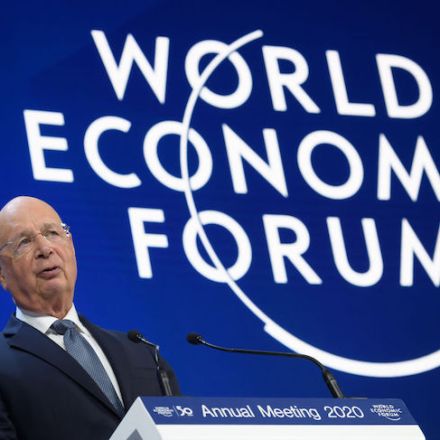
Why globalism is the enemy of freedom

I was recently asked to say a few words about “Globalism and Freedom” at a conference sponsored by Hillsdale College in Boise. Globalism, I said, is the enemy of freedom. Why? Because globalism systematically attacks and undermines the moral and political filiations that make genuine freedom possible. In order to understand why this should be so, we must begin by pondering the word “globalism” and its adjectival personification “globalist.” Neither occurs in my thirteen-volume edition of the Oxford English Dictionary, which dates from the early 1960s. What does that tell us? For one thing, it tells us that the term “globalism” and its cognates are neologisms. Neologisms come into being for a couple of different reasons.

globalism
Adams

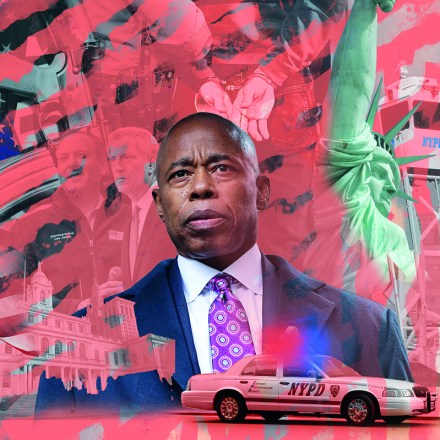
Why Eric Adams has failed to control crime

New York City mayor Eric Adams’s first day in office started with a call to the NYPD. Waiting for the J train to take him from Brooklyn to City Hall, Adams spied three men beginning to tussle. When punches began flying, he dialed 911. He didn’t offer a name until the end of the call: “Adams, Mayor Adams.” The moment, so perfect as to seem choreographed, epitomized Adams’s agenda. Predecessor Bill de Blasio destroyed his credibility with the police department over his eight years in office. Adams, by contrast, was a former NYPD captain who had run on his pedigree, rejected his opponents’ calls to defund the police and promised to revive the plainclothes anti-gun unit disbanded by de Blasio amid the George Floyd protests. The message worked.

A junkie’s pride

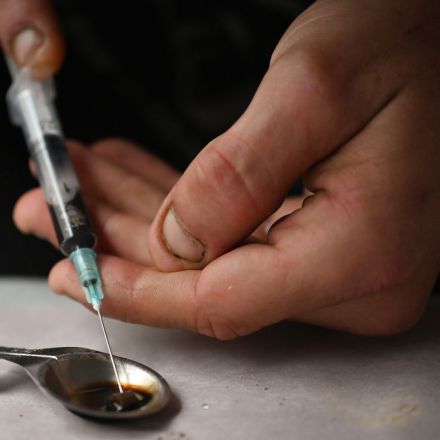
I first quit a substance at the tender age of nineteen, when heroin addiction brought me to my knees within a year. It was my freshman year of college and I’d started using it with my boyfriend. Our primary method of using was “chasing the dragon”: a process that involved putting some black tar on a piece of tinfoil and “chasing” the vapors from the heated tar using a tube — usually just a plastic Bic pen with the ink tube removed. It didn’t take long for me to lose everything. It was the first time I was ever fired from a job. My parents had to pack up the apartment I was living in and withdraw me from college. When I checked into the hospital, I weighed eighty-nine pounds and had bronchitis that had gone untreated for months.

liberal-conservative

The liberal-conservative tug of war for the GOP

For the last thirty years, the Republican Party has been a battleground between two competing ideologies. One of these is fundamentally liberal, although it is packaged and sold under a variety of brand names: “compassionate conservatism,” neoconservatism, classical liberalism, and — most misleadingly — Reagan conservatism. The other ideology is a rejection of modern liberalism and the post-Cold War elite consensus in American politics. It is skeptical of free trade, large-scale immigration and US involvement in foreign conflicts. Pat Buchanan and Donald Trump are the primary representatives of this view, which is often called populist or nationalist. The two sides are not evenly matched.

How parents are learning to fight for their children’s education

It’s just after ten o’clock and about a dozen activists are gathered in a hotel meeting room near Dulles airport. Christopher Stio, an educator with Americans for Prosperity, reminds the group for about the third time, “We are not normal!” He has a point. After all, who in their right minds would spend Saturday in a five-hour grassroots training session at a DoubleTree? The attendees here, though, have an important and timely motivator: improving their local school systems. Education policy became a top issue in 2021’s gubernatorial race in Virginia. Parents were fired up about the breakdown of public schools, from extended school closures during the pandemic to contentious left-wing doctrine being inserted into official curricula.

parents
esg woke

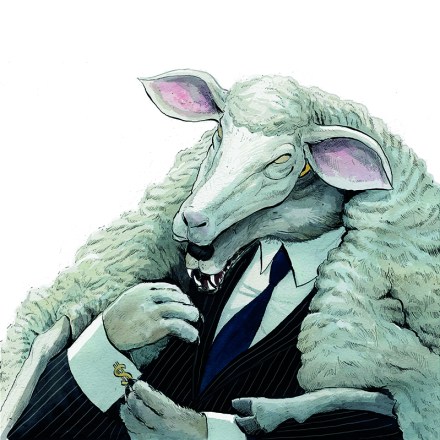
The great anti-ESG backlash

For more than thirty years, Scott Adams has captured the absurdity and humor of office life in his popular syndicated newspaper cartoon strip “Dilbert.” The title character, an oblong-headed, cubicle-dwelling everyman, is one of the most familiar cartoon characters in America, but last September he vanished from more than seventy newspapers. Shortly before Dilbert’s partial disappearance, his opinionated creator had set his sights on ESG. Adams’s views on the vogue for “Ethical, Social and Corporate Governance” investment strategies weren’t exactly difficult to discern. In one strip, for example, Dilbert asks, “What is this ‘ESG’ thing I keep hearing about?

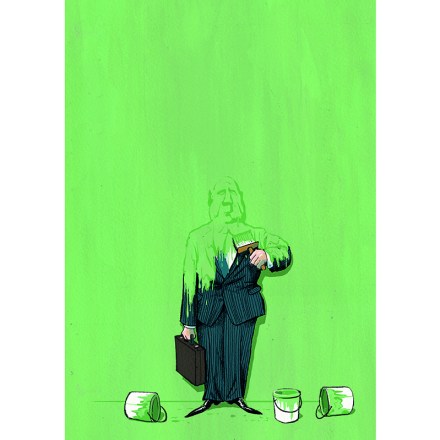
How Big Philanthropy became Big Grift

In 1889, Andrew Carnegie, one of the most ruthless industrialists in American history, wrote an essay entitled “The Gospel of Wealth,” which became the moral playbook for the oligarchs of his time on what to do with their fortunes. Carnegie was determined to overcome his reputation as a “robber baron” by becoming one of the greatest philanthropists who ever lived. The “man of wealth,” Carnegie wrote, should “consider all surplus revenues which come to him simply as trust funds, which he is called upon to administer... in the manner which, in his judgment, is best calculated to produce the most beneficial results for the community.

philanthropy
crypto

After the cryptocrash

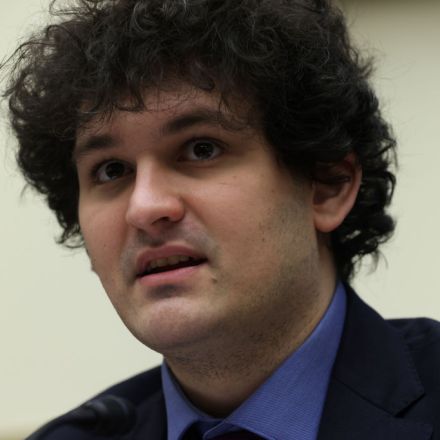
Spare a thought for Miami nightclub owners. In recent years, they rode the cryptocurrency wave, raking it in by catering to the fragile egos of geeky crypto bros eager to flaunt their newfound wealth. Now, in the midst of the cryptocrash, business has slowed dramatically. “Out of the blue, all these kids from crypto started coming down and spending a lot of money — like, an insane amount of money,” one of the city’s nightlife impresarios told the Financial Times recently. Now, he said, they have “completely disappeared.” If empty nightclub tables in South Beach are an amusing but indirect indicator of the crypto slowdown, a more immediate warning sign was the spectacular implosion of FTX, the world’s largest cryptocurrency exchange, late last year.