Latest from Coffee House

Latest from Coffee House

All the latest analysis of the day's news and stories

How will the Lib Dems respond?

From our UK edition

The key thing to watch for during Francis Maude’s statement is the Lib Dem reaction. At the moment, the Tories can rebut Labour’s criticisms of them by pointing to both union funding and the Ecclestone affair. But if their coalition partners start turning up the volume on this story, then the Tories are in a far more difficult position. What will drive the Lib Dems is their desire to get a deal on party funding. The Lib Dems are very keen to reduce the advantages that the Torties and Labour have on this front and this scandal presents the perfect opportunity to press for a restrictive cap on donations and more state funding for political parties.
Cameron u-turns on donor secrecy — but what now?

From our UK edition

One distinct feature of the ‘cash for access’ row is that we've seen it all before. And not just the glutinous mix of politics and money, but also the debate over what should be done to fix it. Last November, Sir Christopher Kelly, chair of the Committee on Standards in Public Life, released a report into the funding of political parties that featured many of the options we're hearing today. It landed on 24 recommendations, of which one stood out: ‘the only safe way to remove big money from party funding is to put a cap on donations, set at £10,000’. But to prevent a subsequent shortfall in parties' funds, it also proposed that state funding be increased to the tune of an extra £23 million.

The problem for Cameron is his proximity to the problem

From our UK edition

The happiest news for David Cameron this morning is that the ‘cash for access’ story hasn't quite made it onto every front page. But that's it, really, so far as the glad tidings are concerned. All the rest is poison for No.10. The Prime Minister is now fighting off calls — including from his own MPs — to release the names of those donors who enjoyed dinner at his Downing Street flat. Labour are, of course, pressing for him to go further than an internal party inquiry, and launch an independent investigation instead. Today's furore is not going to simmer down after a few days, or even after a few weeks. In several respects, all this is trickier for Cameron than, say, the expenses scandal.

Why access Cameron? The Lib Dems would be an easier target…

From our UK edition

Why would anyone pay £250,000 to change Tory policy when the Liberal Democrats would do it for £2.50 and a hug? The brilliant Sunday Times investigation today makes you wonder whether businessmen don't actually realise that out that, in this coalition, it doesn't matter what you persuade David Cameron of. Policy is decided by horsetrading with the Lib Dems, who wield disproportionate power (for good or for ill). For example, Osborne was personally inclined to bring the top rate of tax down to 40p, but the Lib Dems told him they'd only allow this in exchange for their mansion tax. Cameron refused to do the deal, so 45p it was. The rise in capital gains tax was a Lib Dem demand, and would only be changed by Lib Dem agreement.

The ‘next big scandal’ detonates under Cameron

From our UK edition

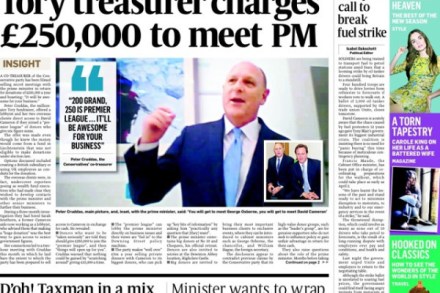
‘It will be awesome for your business.’ So said Peter Cruddas, co-treasurer of the Tory party, as he tried to peddle access to David Cameron for £250,000 a shot. Only he wasn't talking to businessmen this time; he was talking to a couple of investigative reporters from the Sunday Times (£), who were armed with dictaphones and video cameras. And, as the resulting footage shows, he blustered himself over the edge. A ‘premier league’ of donors was spoken of, whose ideas are ‘fed in’ to Downing Street's policy process. There was a claim that the biggest donors can be invited for dinner at Cameron's private flat in No.10, where they can ask him ‘practically any question [they] want’.

Rumble in the Commons

From our UK edition

From the Sun: ‘A LABOUR MP was arrested late last night for assault after allegedly headbutting a Tory rival in a House of Commons bar. Witnesses allege Eric Joyce, 51, launched an unprovoked attack on Stuart Andrew, 40. It is claimed Joyce, MP for Falkirk, had to be held back by several Labour colleagues. A source said: “Stuart was given a Glasgow kiss.”’ Read the full report here. UPDATE: Joyce has been suspended by the Labour Party. The Standard's Joe Murphy has a particularly detailed account of it all here.

Breaking the silence | 14 December 2011

From our UK edition

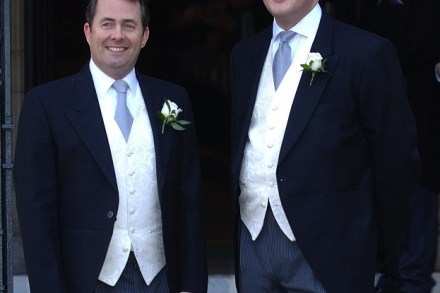
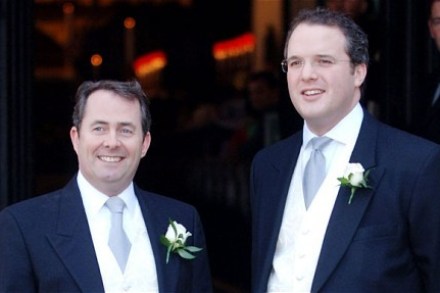
There's a great selection of writers named of the cover of our Christmas issue. But one name, however, may stand out: Adam Werritty, who has written an article giving his take on the scandal that brought down Liam Fox earlier this year. We thought CoffeeHousers might care to read the whole thing (naturally, before buying a copy of the issue here), so here it is: When you hire a morning suit for a wedding, you count on being photographed a few times on the day — for photos that will be quickly buried in wedding albums. But by now, half the country will probably have seen pictures of me as Liam Fox’s best man at his wedding, six years ago. Had I known, I’d perhaps have hired a suit that fitted a little better.

Lobbying for a lobbyists’ register

From our UK edition

“I certainly think it’s a serious problem and I described it when we last discussed this as a canker on the body politic and I would stay with that,” said Jesse Norman on the World at One earlier today. The Bureau of Investigative Journalism’s sting, splashed by this morning’s Independent, of executives from lobbying/PR firm Bell Pottinger boasting of their influence over the prime minister has renewed the debate about regulating the lobbying industry, with calls for a public register to be established. Downing Street has outright denied the allegations, which do sound rather far-fetched. Bravado is, of course, the currency of thin-air merchants. The objection is not to the bragging (how else can one tout ‘influence’?

From the archives: The Great Communicator stumbles

From our UK edition

It's been 25 years since the Iran-Contra affair – the scandal about the US government selling arms to Iran and using the proceeds to fund the Nicaraguan rebels. It saw Ronald Reagan's approval rating drop from 67 per cent to 46 per cent, and fourteen memebers of his staff were indicted. In a piece that appeared in The Spectator exactly a quarter of a century ago, Christopher Hitchens explains how the Reagan administration was unable to contain the story. The end of the line, Christopher Hitchens, 29 November 1986 If you wish to understand the fire that has broken out in the Washington zoo, and penetrate beyond the mere lowing and baying of the trapped and wounded beasts, you must master three key concepts in the capital’s vernacular.

Clark rounds on May

From our UK edition

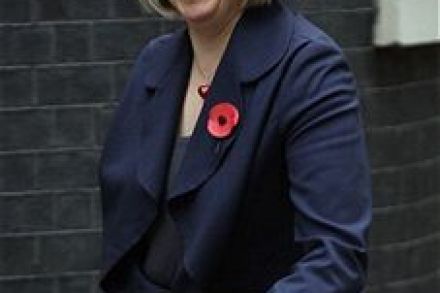
Has anyone used the “Mayday” gag yet? Perhaps it's too cheap and obvious, but it's certainly applicable today. Not only are Theresa May's troubles still splayed across the newspapers — sure to come up in PMQs later — but they have also been aggravated by the man who just quit as head of the UK Border Agency's border force. So far as the bookies are concerned, the Home Secretary is now second-favourite (behind Chris Huhne) to be the Cabinet's next ejectee. As for how the former head of the UK Border Agency's border force, Brodie Clark, has made things difficult for May, I'd suggest you read his resignation statement here. In effect, he accuses May of misleading the Commons about his role in reducing border queues.

Were the police hacking phones too?

From our UK edition

"As an American who spent many years in this underground industry, I can tell you that the British phone hacking scandal has exposed only a tiny part of a vast criminal network." So Frank Ahearn wrote in The Spectator a few weeks ago: he spent his life as a "skip-tracer" (as they're called in America), dealing in the black market for information. There are many clients, he says, and journalists are just one part of it. The people he worked for included husbands investigating wives, insurance companies trying to expose dodgy claims and – yes – even the police, using "skip-tracers" to solve cases. Finally, this aspect of the British hacking industry is beginning to be made public.

Cain accused

From our UK edition

We've been following Herman Cain since the start of the Republican nomination race, and seen him rise to prominence in the process. But now there's an extra obstacle between him and a shot at the presidency — and it could be a biggie. Politico reports that at least two women accused Cain of sexual harassment when he was CEO of the National Restaurant Association in the 90s: "The women complained of sexually suggestive behavior by Cain that made them angry and uncomfortable, the sources said, and they signed agreements with the restaurant group that gave them financial payouts to leave the association. The agreements also included language that bars the women from talking about their departures.

Fox unlikely to cause trouble for Cameron

From our UK edition

As soon as the news about G3's funding of Adam Werritty emerged, it became clear that Liam Fox was going to have to go. Downing Street had no desire to be seen to be pushing this Thatcherite out of the Cabinet, but its test has always been that Werritty could not have been receiving money from companies with any interest in defence. Once that line was crossed, Fox was always going to have to go. I suspect that the former Defence Secretary will not be a problem for Cameron on the backbenches. Fox values loyalty highly and his friends appreciate how the Prime Minister didn't push Fox at the first opportunity. Also, Fox's standing as a politician has been severely diminished by the events of the past ten days.

Fox resigns, Cameron responds

From our UK edition

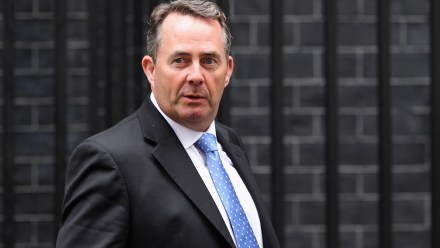
Liam Fox has just resigned as Defence Secretary. Here is his resignation letter to the Prime Minister in full: Dear David, As you know, I have always placed a great deal of importance on accountability and responsibility. As I said in the House of Commons on Monday, I mistakenly allowed the distinction between my personal interest and my Government activities to become blurred. The consequences of this have become clearer in recent days. I am very sorry for this. I have also repeatedly said that the national interest must always come before personal interest. I now have to hold myself to my own standard.

Few think Fox can survive

From our UK edition

I understand, from a Cabinet Office source, that Sue Grey, the civil servant who interviewed Adam Werritty on Tuesday, was completely baffled by Werritty's explanation of how his funding arrangements work. This is yet another sign that events are beginning to move rapidly against Liam Fox. The Times' front page story this morning has led to a significant fall away in support for Fox among Tory MPs. There is also considerable nervousness in Tory circles about what tomorrow's papers are expected to bring. All this makes it increasingly hard to find people who expect the Defence Secretary to survive. Indeed, several people who have been defending Fox in the media say that they feel that they can no longer do so.

The pathology of the politician | 14 October 2011

From our UK edition

With ministers behaving particularly oddly, we thought CoffeeHousers would enjoy Matthew Parris' Spectator column from May, in which he explains the weirdness that afflicts politicians. Politicians are not normal people. They are weird. It isn’t politics that has made them weird: it’s their weirdness that has impelled them into politics. Whenever another high-profile minister teeters or falls, the mistake everyone makes is to ask what it is about the nature of their job, the environment they work in and the hours they work, that has made them take such stupid risks. This is the wrong question. We should ask a different one: what is it about these men and women that has attracted them to politics?

Ministers behaving oddly

From our UK edition

It’s a rum deal being a Global Networker. This morning’s Times reports (£) that Adam Werritty has received nearly £200,000 in donations from clients who appear to have employed Werritty to lobby Liam Fox on ideological issues such as Israel, the Special Relationship and Euroscepticism; although why anyone thought it necessary to lobby Fox, who is a resolute neo-Conservative and Atlanticist, on these matters is something of a mystery. Meanwhile, the Telegraph reveals that Fox and Werritty enjoyed a $500-a-head dinner with American military figures in Washington, which the Ministry of Defence has not disclosed (perhaps because no British official attended the dinner).

Ministers need their Werrittys

From our UK edition

I've never met Adam Werritty and hadn't even heard of him before a few weeks ago. I'm also of the belief that financial wrongdoing should not be the only test used to judge Liam Fox's suitability for ministerial office. And I don't think the fact that a previous government changed ministers too often is a reason to overlook inappropriate ministerial behaviour. Whether the Defence Secretary, in fact, behaved inappropriately remains to be seen. But the signs are not, at this stage, good – even if the airwaves are now dominated by "Foxies": the Defence Secretary's friend and allies. That said, I think the self-styled advisor is getting an unfair wrap, at least based on the information available to the public.

Werritty’s no Walter Mitty

From our UK edition

Those "friends" of Liam Fox who are trashing Adam Werritty to journalists (see here, here and here) are doing the Defence Secretary no favours. The idea that Werritty somehow imposed himself on Fox is simply risible. Fox was under no obligation to invite Werritty to dinner with an American general or to go on skiing holidays with him. Crucially, Fox didn't move to cut Werritty off even after he found out about the infamous business cards that described Werritty as an adviser to him. On Monday, Fox told the House that he dealt with this issue in June. But this doesn't seem to have led to any change in Fox's attitude towards his friend.

Werritty’s donors

From our UK edition

So, who paid for Adam Werritty's air miles? This is the question going around Westminster this afternoon. James blogged yesterday that No10 has set two tests: was Werritty being paid by defence companies, and did Fox know about it?   From what I understand, the answers to both are "no". Werritty was not paid by any defence company — or, indeed, any company at all. His funds were provided by individual donors, who do not have even a tangential interest in the defence industry. His job was to network and provide updates about politics in general. His donors are interested in affairs in the Gulf and the Middle East, about energy security and other such issues — so this involved going to a lot of conferences, and a lot of travel.

Fox defies the hounds

From our UK edition

To the joy of the Tory benches, Liam Fox has just come out swinging in the House of Commons. In his initial statement, Fox apologised to the House for allowing the lines between his personal and professional life to become blurred out of “personal loyalty to a friend.” He then conceded that Werritty had travelled on 18 overseas visits with him since May 2010 and visited the Ministry of Defence 22 times. The presence of George Osborne and Michael Gove on the front bench showed how determined the Cameroons are to indicate support for the defence secretary despite the political differences between him and them. Jim Murphy missed the target in his reply. He was overly theatrical and failed to make clear what he actually wanted answers to.

How Number 10 will judge Fox

From our UK edition

Downing Street is busy stressing that the David Cameron doesn't want to lose Liam Fox from the Cabinet. There is lots of talk of how the Prime Minister doesn't want to pull the rug out from under anyone. I understand that to Number 10's mind the crucial questions are whether Adam Werritty has made any money out of defence since May 2010 and if so, did Fox know about it? If the answer to both of these questions is yes, then the Defence Secretary is probably done for. But if it is no then Fox will have suffered some embarrassment but nothing more.

In defence of Liam Fox

From our UK edition

The feeding frenzy over Liam Fox tells us a great deal more about what is wrong with the Conservative Party than it does about Dr. Fox. The Defence Secretary has been an ass. He admits that he allowed “distinctions to be blurred” between his “professional responsibilities and [his] personal loyalties to a friend”. But if someone has known you and counselled you and worked for you over the years it is all but impossible to maintain such distinctions when you are in power. You just have to cut them off, brutally. Fox’s biggest weakness, and one which was well known before this, is that he is too kind. You might say he is too human. It made him a good doctor. But in the higher echelons of politics or business it is a fault.

Crunch time for Fox

From our UK edition

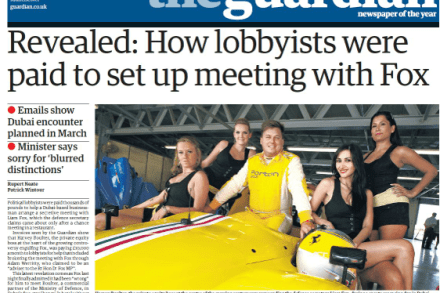
"I don't believe that wrongdoing did occur", said Liam Fox in his apology yesterday. With today's front pages dripping with accusations, Fox has some work to do to substatiate that claim. The Guardian reveals that "Political lobbyists were paid thousands of pounds to help a Dubai-based businessman arrange a secretive meeting with Liam Fox": "an invoice, seen by the Guardian, shows that Boulter enlisted the services of a lobbying firm to help him skip layers of bureaucracy and meet Fox for an urgent meeting on the 41st floor of the hotel. The invoice shows Boulter paid Tetra Strategy £10,000 for "project fees". It is understood that the fees covered fixing up media interviews and political lobbying.

Boulter vs Fox

From our UK edition

The Liam Fox imbroglio has just started to make more sense. The original story was broken by The Guardian (of whom more later) and the main source appears to have been one Harvey Boulter, an American mogul whom Fox fatally agreed to meet in June at the suggestion of his friend Adam Werrity. It was the kind of meeting that a civil servant would never have arranged. Boulter was, to use a political term, toxic. He was being sued for blackmail by 3M, in a court case being fought in London, and after landing this meeting with the UK Defence Secretary he tried to use it as ammo.

Fox would lead anti-coalition Tories

From our UK edition

So far, the Prime Minister seems to be playing down any potential fallout from the crisis dogging Liam Fox. No 10 seems to be saying "if the Defence Secretary goes, it won’t be such a big issue". Much remains to be seen about the Defence Secretary’s career – and he may survive the crisis that is currently engulfing him. But it looks increasingly hard for him. Evidence is emerging daily that Adam Werritty was somehow a member of the Defence Secretary’s team, closer to Fox even than junior ministers. And there may be more trips to be uncovered and more meetings that he joined. He was, for example, spotted at the Tory conference last week. To survive the next 48 hours, Fox will need to show enormous contrition at the despatch box.

Fox under pressure

From our UK edition

https://www.youtube.com/watch?v=zTOskAPgL9c The Westminster Fox-hounds think they have picked up the scent this morning. Enemies of the Defence Secretary, of whom there are many, are convinced that they'll be able to bring him to ground over his links to Adam Werrity. Werrity was Fox's best man and is a good friend of the Defence Secretary. But the problems stem from the fact that Werrity, who holds no official position, was dishing out cards saying he was an "adviser" to Fox, arranging meetings for him and attending diplomatically important events with the Defence Secretary. Fox has tried to kill off this story by asking the permanent secretary to investigate whether he has breached the ministerial code.

The phone hacking saga bursts back to life

From our UK edition

The phone hacking saga has burst back to life this afternoon, with the publication of a letter by Clive Goodman that contradicts much of the evidence given by News International Executives to the Culture, Media and Sport Committee. Goodman’s letter (which you can read here) , apparently written on 2 March 2007, states that phone hacking was widely discussed in editorial meetings at the News of the World and that senior executives were informed of the practice, contrary to their protestations that Goodman was a lone rogue reporter. Goodman alleges that Andy Coulson banned references to phone hacking in meetings and then offered to save Goodman's job if the disgraced reporter did not implicate the paper during his trial.

The scramble away from cosiness

From our UK edition

Aside from Boris's exhortations to George Osborne, one of the most ear-catching lines of the day has been uttered by Jeremy Hunt. "I think the relationships between politicians and the media got too cosy," said the culture secretary on Radio 5 this morning. He's certainly not the first to make the point, but he is one of the most prominent Conservatives to do so. The words, I suspect, were chosen to cool the heat rising from yesterday's lists of meetings between ministers and media organisations. Hunt himself, it was revealed, has met seven times with News Corp types since the general election. Hunt's admission also opens the prospect of a fevered struggle between the Tories and the Lib Dems to appear less cosy with the media establishment.

More questions for Murdoch?

From our UK edition

Much though most readers probably want it to, the phone hacking saga just won’t do the decent thing and die. Today brings fresh revelations. Colin Myler and Tom Crone, respectively former editor and head of legal affairs at the News of the World, have said that they sent an email to James Murdoch that supposedly undermines Murdoch’s testimony to the Culture, Media and Sport Committee. The Guardian reports that the email, “known as ‘for Neville’, because of its link to the paper's former chief reporter Neville Thurlbeck, is thought to have been critical in News International's decision to pay out around £700,000 to Taylor in an out-of-court settlement after he threatened to sue the paper.

Llewellyn is more than a friend to Cameron

From our UK edition

Edward Llewellyn has been making headlines and there was speculation about his future. Many a right-wing MP rubbed their hands with glee, seeing Llewellyn as a ‘wet’ impediment to a tougher European policy. But, Number 10 came out strongly in support of the PM’s aide. Some people huffed, whispering that loyalty to friends like Llewellyn means more to Cameron than the health of the party. But this is a blinkered reading. First of all, John Yates himself said he thought Llewellyn had acted properly.

Cameron passes test

From our UK edition

The questions following David Cameron’s statement to the House of Commons have just finished. As Cameron answered 136 questions, it became increasingly clear that the immediate moment of political danger appears to have passed for the Prime Minister. By the end of the session, Cameron was even joking about inviting Mrs Bone to Chequers for the weekend. In his opening statement, Cameron placed far more distance between himself and Andy Coulson than he had before. For the first time, he expressed regret about the appointment. He told the House that, ‘With 20:20 hindsight – and all that has followed – I would not have offered him the job’.