Food & Drink

The heady reds of Avignon

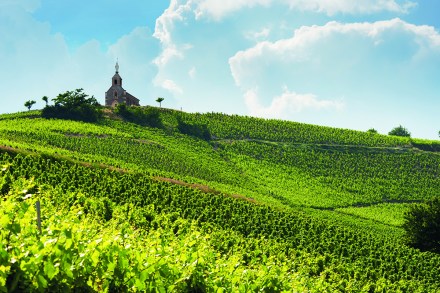
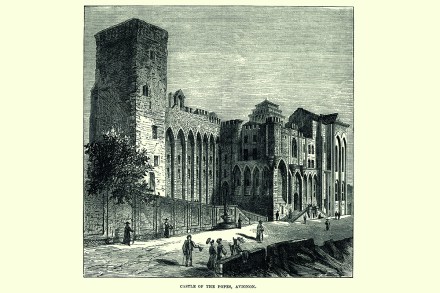
To you and me, “Châteauneuf-du-Pape” means the bold, dark, spicy red wine from the Rhône region of southeastern France, a bit north of the town of Avignon, with bottles usually featuring a glass-embossed representation of the keys of St. Peter. If you were Jacques Duèze, known to history as Pope John XXII, second and longest reigning (1316-34) of the Avignon popes, Châteauneuf-du-Pape meant first of all that “new castle of the pope” he built on the hill overlooking the town. After the popes left, it fell into desuetude and was raided for stone by local builders. During the Revolution, all the buildings except the great tower or donjon were sold off. During World War Two, the Germans attempted to dynamite the structure but succeeded in destroying only the northern half.

Châteauneuf-du-Pape

Why Old Crow is America’s bourbon

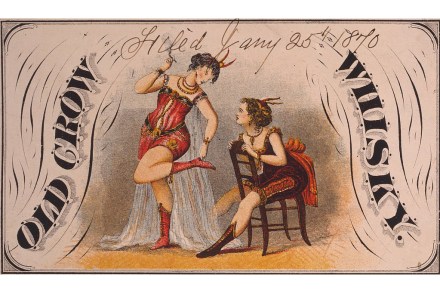
Donald Trump has nicknamed Mitch McConnell “Old Crow,” and the Senate minority leader is proudly embracing the epithet. As he should. “It’s my favorite bourbon,” Mitch told the Washington Examiner. Old Crow whiskey is produced by the parent company of Jim Beam in Kentucky, McConnell’s home state. It has a long and storied past, including among its accolades, as McConnell pointed out, having been a favorite of fellow Kentuckian Henry “The Great Compromiser” Clay. Trump is a notorious non-drinker who apparently never had the varnish of his teeth singed off by bottom-shelf bourbon during a rowdy frat party.

old crow bourbon

Delicious wines from the Omicron Open

Some people think that it is the job of a wine critic to discover great bargains in the world of bottles and impart the news in hushed but excited tones to the madding crowds. Maybe that’s part of the remit. I incline, however, to this piece of wisdom from George Saintsbury, prosodist to the stars and incomparable, if quirky, cicerone to the fructum vitis et operis manuum hominum, which is to say: wine. “There is no money,” Saintsbury wrote, of the expenditure of which I am less ashamed, or which has given me better value in return, than the price of the liquids chronicled in Notes on a Cellar-Book. When they were good they pleased my senses, cheered my spirits, improved my moral and intellectual powers, besides enabling me to confer the same benefits on other people.

wine

Tastings from an energy drink connoisseur

A common avenue for conservative commentators seeking an escape from politics is wine criticism. One thinks of Roger Scruton, Kingsley Amis, Roger Kimball and other such sophisticated, cultured men for whom even refreshment is a serious business. Millions of words have been spilled on wine criticism, though, and in the service of a drink a normal man only enjoys when he has finished work and has no need to drive. Who speaks for, say, the chilled caffeinated drink? “Wine is one of the most civilized things in the world,” said Hemingway. The same could not be said of energy drinks, perhaps, but then the same could not have been said of Hemingway. Our moveable feast is a varied one, and each element deserves attention.

energy
Herodotus

Travels with Herodotus

I am part of an informal reading group with a few friends and colleagues. At the moment, we are reading Herodotus’s Histories (or “Inquiries,” as he might have said had he been writing in English). It’s lots of fun, in part because it is also an excuse to conduct a little wine appreciation class, but also because that old denizen of Halicarnassus — Herodotus lived from around 484 to 425 bc — was possessed of such high-octane and companionable curiosity about the world: what happened when and to whom and with what result. He wanted to know; moreover, he wanted you to know. Herodotus is most famously a major source of our knowledge of the Persian Wars and such signal moments as the Battle of Marathon (490 bc), Thermopylae (480) and Salamis (also 480).

Cockburn’s fairytale of New York

Almost every right-of-center writer claims to be leaving New York. So Cockburn headed up to see what's left of the Big Apple — and take in a couple of festive ragers while he had the chance. The book party for Miranda Devine’s Laptop From Hell unfolded at the Beach Café, recently dubbed "the Upper East Side’s Republican Cheers" by New York magazine. After checking his coat and having his vaccine card closely inspected, Cockburn rubbed shoulders with Devine, several of her past and present New York Post comrades and dozens of NYC GOP staples. Cockburn shared a cocktail with Republican fixer Roger Stone, who teased his strategy ahead of his summit with the January 6 Committee next week and reminisced about the stolen election of 1960.

encounter

Cockburn cruises the DC Christmas party scene

Cockburn entered the Christmas party fray with two ironclad rules in mind: don’t mix drinks and make sure you eat something. He managed to break both on Tuesday night as he stumbled across the nation’s capital. His first port of call was the Breitbart Christmas drinks at Blackfinn. Guests including various GOP Hill staffers took advantage of a free bar towards the back of the venue and were treated to a brief appearance from petite former Trump press secretary Sean Spicer. The talk of the event was the forthcoming DC newsletter Breitbart are set to launch in the coming weeks.

christmas

Let Cockburn debase himself at your Christmas party

It is, as Andy Williams memorably put it, the most wonderful time of the year. Christmas party season has hit the Swamp — and naturally Cockburn is in his element. He has dusted off his dowdiest Clark Griswold cardigan and Santa hat. He has stocked up on milk thistle and Brita filters to abate the inevitable daily hangovers. His social calendar is quickly filling up with invites from think tanks, embassies and slightly grubbier magazines than this one — but it could be fuller still. Email your party invitations to cockburn@thespectator.

christmas party

The finest festive fizz

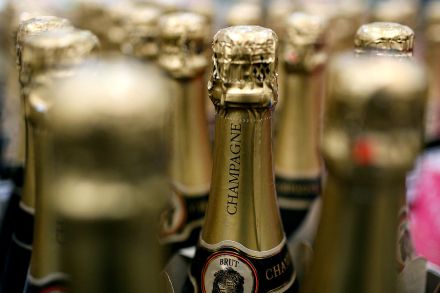
A dinner party without good conversation is like flat Champagne: pretty pointless. It’s like that not-so-funny joke about the inscription on an atheist’s tombstone: “All dressed up and nowhere to go.” Of course at a miserable dinner party you and your glad-rags have reached a destination of sorts, but (as for the late atheists) it’s not the one you were expecting. How to avoid such an infernal disappointment? Jean-Paul Sartre famously felt that hell was other people; all I can say is, that’s no attitude to bring to the table.

champagne
chambertin

Silky, sumptuous wines for Christmas dinner

I have had occasion to mention George Saintsbury’s classic, if quirky, Notes on a Wine-Cellar (1920) in this column before. Back then, it was to sample and swish about the mouth Saintsbury’s fondness — which I took to be a broader public fondness — for fortified wines like port, sherry, and Madeira. I suspect that most of my readers, except when listening to Flanders and Swann, rarely give Madeira a second thought. And although afternoons were made for sherry, they were made for other things too. As for vintage port, we are wheeling into the season — Thanksgiving through New Year’s — when it comes into its own and gladdens the hearts of many. I am certainly counting on it to gladden the hearts of the serious thinkers chez Kimball at Thanksgiving and Christmas this year.

Drinking with James Bond

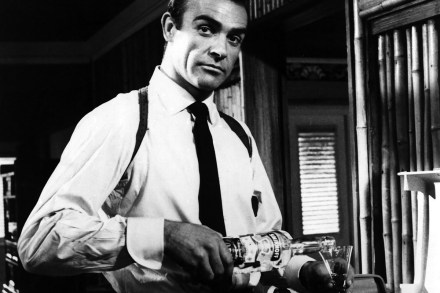
James Bond’s most impressive talent is not his prowess as a spy or his skills of seduction. It’s his ability to always get exactly what he wants at the bar. In the 1954 novel Live and Let Die he orders a round of Old Fashioneds while on a train to meet Felix Leiter, his CIA opposite number. Not only does the buffet car make them for Bond, they even have his preferred brand of bourbon, Old Grand-Dad. You try pulling that sort of thing on the Acela from Penn Station to DC. ‘Sorry Solitaire, they wouldn’t do us a cocktail, but I’ve got a cup of Lipton’s and a bag of pretzels.’ We’d all like to drink like Bond but, lacking his miraculous powers, we need to be in the right sort of bar to do it.

bond
wines

Two modest but delightful wines

According to Tennyson, ‘in the spring, a young man’s fancy lightly turns to thoughts of love’. Be that as it trochee, in the autumn a man of any legal age abandons rosé and moves on to Cabernet. If he is broadminded, he also makes a spot in his heart for Chablis, which I’ll come to in a moment. First, some anthropological, or perhaps I mean ethological, news. A friend recently passed along a slender but improving book called Wine: the Source of Civilization. Written by John J. Mahoney, a ‘certified wine educator’, it is full of edifying revelations. Right at the beginning, we have this bulletin: ‘Man did not settle from nomadic travels to build cities and civilization, and then develop wine.

The Washingtonian’s dreary, woke ‘best of’ list

Cockburn was waiting to get his beard trimmed at the barber recently and found himself flicking through the latest issue of the Washingtonian, an outlet where fangirling over the Biden administration passes as journalism and a love of America’s dreary capital substitutes for a personality. The issue in question featured Washingtonian’s annual best of list. This is supposed to be a list of bars, restaurants, people and other stuff that makes DC such a great place to live. But this year’s offering had Cockburn browsing Zillow for homes in Ketchum, Idaho, faster than you can say 'Fauci Pouchy'. It’s been years since Cockburn relied on the Washingtonian for advice on having a good time in the imperial city, but the 2021 offering is especially unappetizing.

washingtonian

One of Washington’s best bars returns

Cockburn has rarely met a pub he didn't like, though plenty of pubs haven't taken a liking to Cockburn. Fortunately, occasional dissolute behavior was never a problem at Post Pub, the old neighborhood watering hole on L Street in Washington. So you can imagine Cockburn's dismay when he learned last spring that Post Pub would be closing after 43 years. The cause wasn't so much the pandemic as it was a tragic outbreak of public health. The Washington Post reports that 'back in the era of hard-drinking lunches, bartenders at the Post Pub used to stir up three-gallon batches of gin and vodka martinis and a two-gallon batch of Manhattans to prepare for the daily crush. And that was just for Mondays.’ What happened?

post pub

Condiments and conservatives

Years ago, an entrepreneurial friend had the idea of marketing ketchup with a catch, a jaunty political declaration. I say ‘many years ago’, and to give you a sense of just how ancient this ancient history is, contemplate that the ketchup was called ‘W’ and the ‘W’ stood for the personage that the followers of William Jefferson Clinton mean to disparage when they removed that letter from the computer keyboards in White House and other government offices just before the W in question — George W. Bush — took office.

people

Thoughts on dearly departed vintages

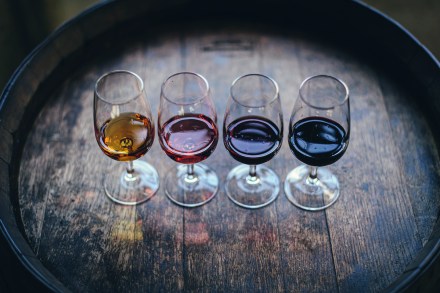
Some people, out at a nice restaurant, are shy about sending a bottle of wine back when there is something wrong with it. They shouldn’t be. Wine, as the vintners like to tell you when everything is going as it should, is a living thing. Like all living things, it is subject to a variety of unfortunate vicissitudes. We’ve probably all encountered ‘corked’ wine at one point or another — that taint caused by a smidgen of 2,4,6-trichloroanisole (TCA) or 2,4,6-tribromoanisole (TBA), which can be transferred from or through a cork. But wine is susceptible to other liabilities as well. One is the same liability that, sooner or later, affects us all: age.

wines

A taste of heresy

The weight of history — a seemingly infinite vista of incident — hangs heavy in the Languedoc in the South of France. The region (also called Occitania) is the place where people said ‘oc’ rather than ‘oui’ for ‘yes’ — langue d’oc instead of langue d’oïl. Gauls, Romans, Visigoths, Franks, Moors, Cathars: one by one they came, they pillaged or prayed, slaughtered or were slaughtered. A plaque in the Carcassonne cathedral reminds us that only yesterday St Dominic (1170-1221) preached there during Lent. A lot of nasty things have happened in Languedoc over the centuries. Perhaps that is one reason the people are so cheerful now. The area is also the biggest wine-producing region in France, which also contributes to the quota of cheerfulness.

languedoc

The need for mead

I used to be terrified of homemade alcoholic drinks. Someone would bring out the elderflower champagne at a picnic, and I’d wave it away: ‘I’d love to. But I’m driving...’ Bottles of homemade cabernet would be pressed on me with irrepressible warmth at Christmas time; I’d accept them with a lying smile on my lips and an inward resolution to boil the contents for seven hours with sugar, oranges and cinnamon sticks and fob it off on guests as mulled wine. And for my narrow-minded ways I now repent. As I must, because with maturity comes the realization that, as Solzhenitsyn said, there is no us and them. The line dividing good from evil, the poised socialite from the homemade-liquor inflictor, cuts through the heart of every man.

mead

The dark side of energy drinks

I’m trying to cut down on energy drinks. I know, that’s a rather pathetic undertaking compared to going sober or quitting smoking. But it is hard. I wade through mental fog, yawning yawns that rival a buffalo’s bellow. Switch to coffee? Yes, I could. But hot drinks are not the same. I like the cold, refreshing quality — and the ring pull’s crack. Perhaps I will give up giving up and just embrace addiction. It’s a small one anyway. That is my defense, but also my confession. We can understand, if not excuse, people endangering their health for the sake of alcohol or cigarettes — but for a caffeinated soft drink? Or perhaps there are darker forces at play here.

energy

The green, green wines of Portugal

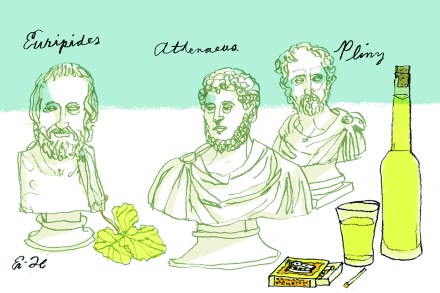
If I am going to talk about summer wines, I am going to have to introduce you to Gaius Plinius Secundus, known to us as Pliny the Elder. Pliny was a busy chap. Army commander and admiral in the Roman navy. Gourmand. Pal of the emperor Vespasian. Pliny did not have writer’s block. He published the first 10 books of his sprawling Historia Naturalis in 77 AD. Despite its title, the book is about a lot more than natural history. Really, it is a sort of proto-encyclopedia. Pliny hadn’t finished revising the rest when he went to investigate the strange things that were happening down at Mount Vesuvius in 79. He died in the conflagration. The chap we know as Pliny the Younger — the elder Pliny’s nephew and heir — was with him.

vinho verde green