Arts Reviews

The good, bad and ugly in arts and exhbitions

Meet the Mozarts

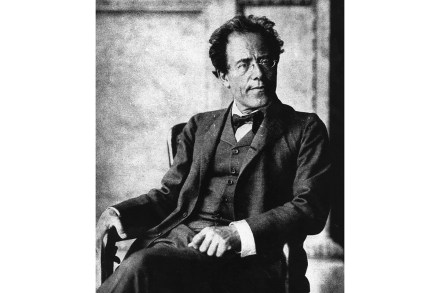
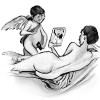
It’s 1771, you’re in Milan, and your 14-year-old genius son has just premiered his new opera. How do you reward him? What would be a fun family excursion in an era before multiplexes or theme parks? Leopold Mozart knew just the ticket. ‘I saw four rascals hanged here on the Piazza del Duomo,’ wrote young Wolfgang back to his sister Maria Anna (‘Nannerl’), excitedly. ‘They hang them just as they do in Lyons.’ He was already something of a connoisseur of public executions. The Mozarts had spent four weeks in Lyons in 1766, and, as the music historian Stanley Sadie points out, Leopold had clearly taken his son (10) and daughter (15) along to a hanging ‘for a jolly treat one free afternoon’.

mozart

Purple podcasters

You’re familiar, no doubt, with the term ‘red pill’, the Matrix-inspired metaphor that’s become a catch-all for the type of right-wing thinking that thrives in the dark corners of the internet. Now the journalist Katie Herzog, in an admittedly tongue-in-cheek comment, might well have given us a new term: the purple pill. To take the purple pill, inferring from Herzog’s outlook, is to oppose the dangerous excesses of identity politics, but also the reactionary extremes of the red-pillers. This is, simply, a compromise — or the kind of terminally sensible position that shouldn’t need corny movie metaphors in the first place. But you see her point.

purple pill katie herzog

Statues and limitations

Statues do more than monumentalize individual achievement. They embody the self-image of those who raise, cherish and preserve them. It is this common self-conception that is being upended by the wave of iconoclasm that is sweeping through American cities. The race to raze structures that have stood untouched for decades or centuries disturbs because, instead of reassessing the past, it attacks it to reorder the present. Wherever you stand on this, the ‘debate’ is limited by Western visual traditions and stunted by patchy education. In Wisconsin, the abolitionist Hans Christian Heg was yanked down. In San Francisco, Ulysses S. Grant, a president who set the US Army on the Klan, was deposed. In Washington, DC, Gandhi, once praised by W.E.B.

statues

Perry Mason jars

Unpopular opinion: film noir is dull, self-indulgent and grossly overrated. I recognize it has given us some great performances — Bogart, Peter Lorre and Sydney Greenstreet in The Maltese Falcon, say — as well as chiaroscuro lighting, laconic dialogue, cynical hard-bittenness and cancerously heroic quantities of smoking. But that’s exactly the problem. Film noir is so in love with its look and style, the plotting comes a very poor sixth. What, though, does any of this have to do with Perry Mason, the suave, brilliant, clean-cut lawyer played by Raymond Burr in the long-running Fifties and Sixties courtroom drama series? Well, bizarrely, HBO has decided to revive him for another of those dark and grimy origin stories that Joker made so fashionable.

perry mason

If only Kanye’s run were serious

It was June 2015. Bill Maher was holding court with assorted journalists to discuss the 2016 race. The Republican field back then was attracting all kinds of ridiculous monikers — it was apparently the most plausible, most qualified field in history. Maher asked Ann Coulter who had the best chance in the general election. She didn’t say John Kasich. She didn’t fancy Jeb’s chances. Three days earlier, Donald Trump had announced his candidacy in Manhattan, cutting the ribbon on a festival of media bafflement, disgust, and ridicule. Coulter made her prediction: 'Of the declared ones, right now, Donald Trump.' The studio audience hooted. The other panelists did a good impression of being horrified.

kanye

Halle Berry and the death of acting

Quick bit of movie trivia: what do actors Felicity Huffman, Eddie Redmayne, Hillary Swank, Phillip Seymour Hoffman, Glenn Close, Jeffrey Tambor and Jared Leto all have in common? All have won or have been nominated for major industry awards of their portrayal of transexual characters. Swank won the Best Actress Oscar for her portrayal of real life murder victim Brandon Tina in Boys Don’t Cry. Leto was awarded the Academy Award for his role in Dallas Buyer’s Club. Felicity Huffman was nominated for the Oscar but settled for the Golden Globe for her performance in Trans-America (the best of these of roles). Redmayne was nominated for his historical role as Lilli Elbe. Close was nominated for the Oscar in 2011 for Albert Nobbs.

halle berry

Uncle Tom shows another side of the African American story

Although it finished production months before George Floyd was killed, the documentary Uncle Tom, produced by Larry Elder, has been released bang in the middle of the Black Lives Matter protest explosion. But in the face of this unrest, Uncle Tom — which bills itself as 'an oral history of the American black conservative' — shows a side of the African-American community that is often overlooked by the media. The title is part tongue-in-cheek. As an epithet, 'Uncle Tom' is often used to pejoratively describe black Americans who diverge from the political left, which has long been seen as the natural home for the African American vote.

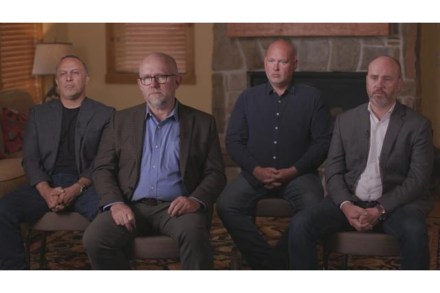
Larry Elder appears in Uncle Tom trailer
uncancelables

Kanye West and the uncancelables

For better or worse, the rapper, producer and sneaker salesman Kanye West is almost certainly not running for president, as he has claimed. He is instead sidling into the mainstream consciousness just before he drops his latest album. Kanye has had an odd few years. He's come out in support of Donald Trump, made an impassioned religious album, and failed to build a complex of Star Wars-inspired domes for the homeless. A presidential run, then, feels like a natural next move. Ultimately, though, he does not seem to have even filed the necessary paperwork. This has not prevented progressives from being outraged by what they believe is an attempt to split the liberal vote and hand Trump another victory.

Moral dictatorships and double standards

Jimmy Kimmel knows what it’s all about. Now that old skits have resurfaced of him wearing blackface to impersonate NBA player Karl Malone and other black celebrities, the talk-show host has issued the inevitable learning-and-listening apology. But the line that sticks out is this: ‘It is frustrating that these thoughtless moments have become a weapon used by some to diminish my criticisms of social and other injustices’. This is why Kimmel will not lose his show or his sponsors, even with a recording of him rapping the N-word in 1996. He is reminding the mob that he is one of them, or at least can be of use. Don’t cancel me, bro.   Jimmy Fallon won’t be canceled either.

cancel immunity
patriot

Revolution then: The Patriot stands alone

You’re the director of one of the biggest blockbusters in recent memory. Your latest project premiers Fourth of July weekend: an American Revolution epic, headlined by one of Hollywood’s most bankable stars. What could go wrong? In 2000, Roland Emmerich did everything right with The Patriot. Robert Rodat, a veteran of Saving Private Ryan, wrote the script. The Smithsonian Institute consulted on historical accuracy. Mel Gibson, who had led the charge in Braveheart, was the star. He was also People’s ‘Sexiest Man Alive’. ‘The problem I have is people love me so much, they never criticize me,’ Gibson lamented in a cameo on The Simpsons in 1999. ‘It’s hell being Mel.’ Cinematic hell is where The Patriot remains.

Louis C.K. pulls it off

‘You are so lucky that I don’t know your thing. Do you understand how lucky you are?’ comic Louis C.K. tells his comeback show audience. ‘Everybody knows my fucking thing, now. Obama knows my thing. Do you understand how that feels? To know that Obama was like “Good Lord!”’ It’s a good point well made. Everyone who knows anything about the world of comedy does indeed know Louis C.K.’s thing. In 2017, when #MeToo exploded, C.K. was ranked by Rolling Stone number four among the 50 best stand-up comics of all time. His sexual proclivity was publicly exposed, he lost numerous television deals and movie contracts and he suddenly found himself cast into outer darkness. All in all, it cost him an estimated $35 million in lost income.

louis c.k.

Tori rebel

In her new book, the singer-songwriter Tori Amos advises aspiring artists to be wary of those who would lead them astray. ‘Most people cannot raise their hand and say, “Your expression, your piece, your song, your art, is not to my taste; in fact I have an aversion to it, but I think it’s brilliant.” And that means that... some people judge something to be good or not good by what they personally like. Beware of this, I say to all artists.’ The simple sentiment encapsulates why so much creative potential is stifled before it can flourish. An artist whose principal goal is to please an imagined audience, or to adapt his or her work to critical trends, is no kind of artist at all.

tori amos

The Oscars and the triumph of Social Justice Realism

Today, politics is show business and show business is politics. Last week the Academy of Motion Picture Arts and Sciences announced new efforts to improve inclusion institutionally and for the Oscars themselves. A task force has been created to come up with new inclusion standards for Oscar eligibility by the end of July. The Academy’s president Dawn Hudson said: ‘The need to address this issue is urgent. To that end, we will amend — and continue to examine — our rules and procedures to ensure that all voices are heard and celebrated.’We have traveled a long way from 2003. Then, when Michael Moore made an overtly political acceptance speech about George W. Bush, he was forced off the stage as a result.

bong joon-ho oscars

Cotton, slaves and arrogance: the message of Gone with the Wind

In an op-ed in the Los Angeles Times last week, filmmaker John Ridley urged HBO Max to remove Gone with the Wind from its platform. HBO Max capitulated right away, temporarily withdrawing the film until it can ‘return with a discussion of its historical context and a denouncement of [its racist] depictions’. As HBO weighs how to address what Ridley and others have described as the film’s romanticizing of slavery, I would encourage them to use the message of the movie itself as their guide.Gone with the Wind is about the perils of romanticizing. The movie begins with young men romanticizing the impending Civil War. ‘War! Isn’t it exciting, Scarlett?’ exclaims one of the Tarleton twins.

gone with the wind

I hate the Nineties

I’m a Nineties kid. You know what that means: Tamagotchis, Super Mario, Sega, primitive cell phones, slap bracelets, skateboarding, The Simpsons, Seinfeld, David Koresh, scooters, Britney Spears, the Backstreet Boys, the Spice Girls, the first bombing of the World Trade Center, the Nato bombing of Sarajevo, Pokémon!, Blink-182, Bill Clinton, Friends and the friends of Bill Clinton. What a decade! Only Nineties kids will understand it. And as even Nineties kids grow up, Nineties nostalgia is now big business. Everyone from the Spice Girls to Smashing Pumpkins has launched comeback tours on a rising tide of misty-eyed affection. McDonald’s brought back Tamagotchis and Furbys and other veteran Happy Meal toys. Friends is set to make a highly profitable return.

nineties

Why has Nickelodeon outed SpongeBob Squarepants?

On the eve of the 10-year anniversary of the suicide of Tyler Clementi, an 18-year-old Rutgers University student who killed himself after being outed as gay by a roommate, children’s television network Nickelodeon dragged a cartoon sponge out of the closet in a tweet posted Saturday. In doing so, Nickelodeon set a dangerous precedent for LGBT youth everywhere. ‘Celebrating #Pride with the LGBTQ+ community and their allies this month and every month’, the network posted on Twitter above an image of SpongeBob Squarepants bathed in a rainbow glow. https://twitter.com/Nickelodeon/status/1271795092391682048?s=20 Fans have long speculated the beloved cartoon character might be homosexual.

spongebob squarepants

Don’t defund PAW Patrol

First they came for the patriarchy, and I didn’t speak up, because I wasn’t a man. Then they came for the police force, and I didn’t speak up, because I wasn’t a cop. Then they came for PAW Patrol, and I didn’t speak up, because I wasn’t a three-year-old. Then they came for me, and there was no one to speak for me, because the men were away having their protective instincts surgically removed at re-education camp and the cops had been defunded. I didn’t even have a dog on my side, since PAW Patrol had been canceled and none of the canines out there wanted to be branded as class traitors.

paw patrol

Count my blessings

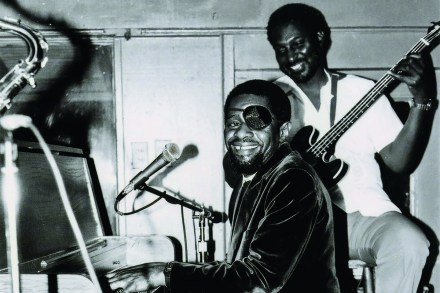
I have to laugh when I read about my Baby Boom cohort’s memories of savoring rock ’n’ roll behind the backs of disapproving elders. I had no such problem. I wasn’t especially taken with the new sounds of the Fifties: I was six years old when Elvis Presley debuted on the Ed Sullivan Show. I thought he was vaguely comical. In any case, my parents had resolutely high-minded middlebrow taste in such things, wavering somewhere between Dvorak, Lawrence Welk and Mozart. Rock ’n’ roll was simply out of the question. Everything else heard in the household — country and folk music, in particular, which my elder siblings’ favored — was tolerated to some degree, but my own secret musical vice was not.

count basie

We need black conservatism

We are living through an update of radical chic. Elite white liberals are apologizing for and even applauding the worst riots in a generation, if not two. They are now joined by people who used to pretend at least that they were Republicans — former President George W. Bush and former nominee Mitt Romney have both been talking about systemic racism and how black lives matter, as if they had hitherto spent their careers asking racists for votes. This is all rather ugly. It overlooks the black people who are victims of the riots or who simply disapprove.

Christo’s art of self-promotion

The death of the artist Christo last week in New York at 84 has been the occasion for an outpouring of misty-eyed adulation. I thought I would temper that wave of sentimentality by reprising a column I wrote about him back in 2005 on the occasion of ‘The Gates’, his huge project in Central Park in Manhattan: Andy Warhol once remarked that ‘art is what you can get away with’. And how. Just ask Christo, the Bulgarian-born entrepreneur who wraps things in cloth, calls it Art and sits back while the money pours into his bank account. It is nice work if you can get it. In 2004, Christo and his wife Jeanne-Claude (they work together, like Lady Bracknell and the Duchess of Bolton) took in about $15.1 million. And for what?

christo