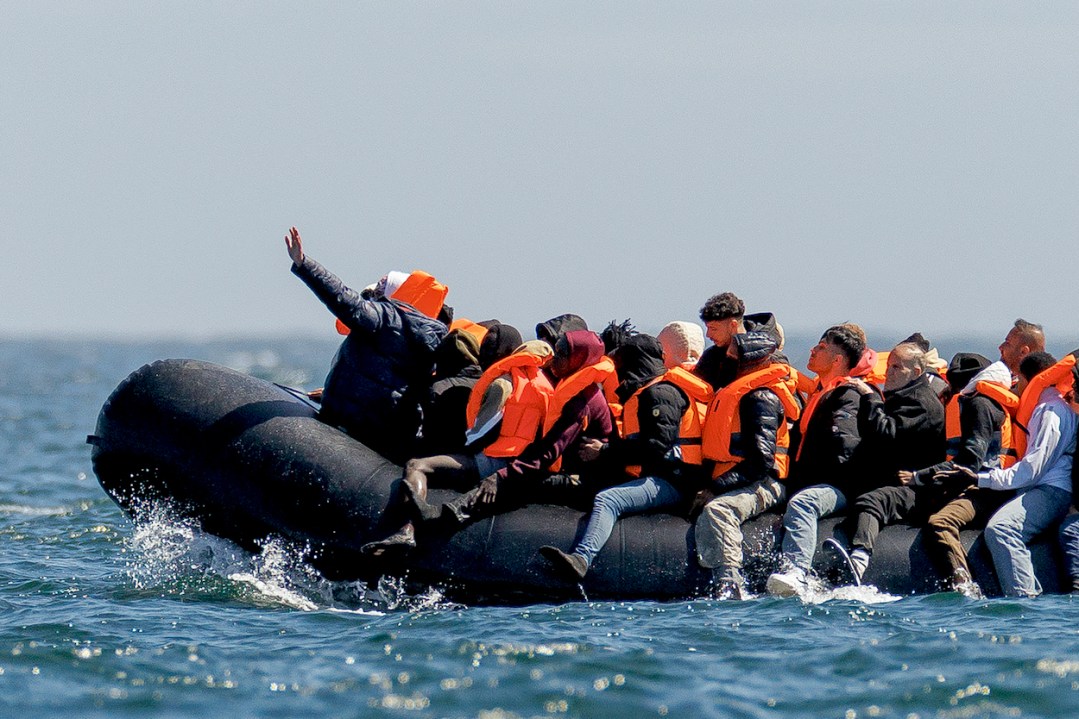
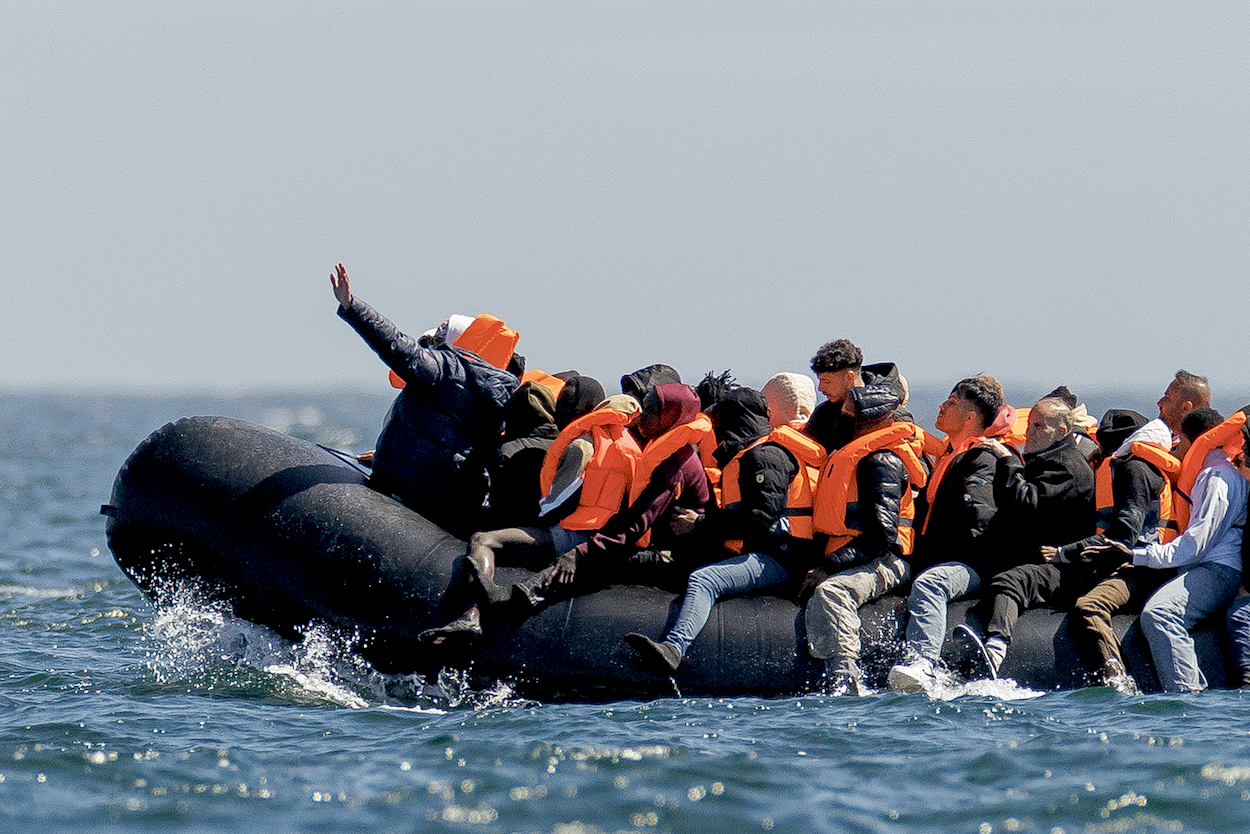
How can you tell when an asylum seeker professing to be child is lying? Often, it’s because he has crow’s feet, a receding hair-line and a beard. In other words, it’s sometimes obvious. That’s what makes so risible those stories we habitually read of men who are patently not children being granted asylum on the pretence that they are. We sigh in exasperation because we know why they have been let in: they have been granted entry by a system manned or manipulated by credulous do-gooders.

Human beings are good at intuition, at assessing each other non-rationally through mental processes we don’t fully understand, of spotting fakes and fraudsters by their mien, gait and ostensibly innocuous facial gestures. Thus the notion that we could simply employ AI to gauge the truthfulness of human beings is highly suspect. How can we create technology to mimic the workings of the human subconscious when we don’t entirely comprehend how it works ourselves?
Yet that is the prospect now facing us. As reported today, the Home Office has announced it has awarded a software company a contract to develop technology to detect the age of adult migrants posing as children, technology to be deployed at the UK’s borders next year. This will involve estimating a person’s age by analysing photographs of them taken at the border. After the Home Office said initial testing indicated ‘promising performance and accuracy’, it has vowed that the technology will make it easier to identify adult migrants ‘attempting to game the system’.
A better way to prevent chancers gaming the system would be to reform and make the system more stringent to begin with, first of all by erring on the side of caution, and assuming that young men making their way to this country on their own are not adults fleeing persecution – especially when these ‘refugees’ have for decades been coming to Britain from non-war-torn France. Or better still, scrap the current system altogether, one which obliges us to accept, house and cater for anyone deemed a refugee by the outdated United Nations 1951 Refugee Convention.
Either option would of course incur the righteous indignation of no-border progressives and Labour back-benchers, provoking accusations of ‘cruelty’, or that current new favourite, ‘being un-British’. In response to this new Home Office proposal, Human Rights Watch has already urged the government to shelve the scheme, describing it as ‘unproven technology’ that will undermine the protections vulnerable children are entitled to.
Nobody wants to face such a shaming. Nobody wants to be seen as heartless and uncompassionate. Which is precisely the attraction of handing over responsibility to AI in the first place. Offloading decision-making to a third-party agent – especially one which isn’t human – and reneging on your obligation to make hard choices which carry moral implications, means never having to justify or apologise for them. That is the principal attraction of AI. Any accusation of inhumanity can be rebutted with the answer ‘computer said so’. It’s the 21st century equivalent of ‘only obeying orders.’
We live in a time in which wars are increasingly fought by drones which know not what they do and are thus not culpable for acts of killing. Soon nobody will be responsible for traffic accidents, because with no-one behind the wheel, there will nobody to blame. Once upon a time ‘the death of the author’ was a fanciful philosophical conjecture, but now it’s literally becoming true. In the near future no-one will be held responsible for writing potboiler trash or turgid literary fiction because no person will have written it.
Offloading decision-making to a third-party agent means never having to justify your choices
The ascendency of AI is not only making institutions and people lazy in the prosaic sense of the word – with supermarkets preferring self-service tills in place of people serving you at checkouts, banks closing high-street branches in the hope of never having to deal with savers face-to-face again, and with people not even reading books, let alone writing them. New technology is also making us morally idle. We are not merely outsourcing our brains to the machines, we are surrendering a fundamental trait of our species: the ability and necessity to make choices.
Choice is what’s makes us human, because it involves putting into practice another unique aspect of our humanity: free will. Choice is indeed agonising – as we age we continue to accumulate regrets regarding decisions we both made and didn’t make – but it can never be shirked, avoided or overcome. We are condemned to be free. This is what makes algorithms fundamentally inhuman: they deprive us of this ability and necessity.
Artificial technologies can never feel regret, remorse or social opprobrium for decisions they make because they aren’t moral beings. To surrender our decision making is not only an act of cowardice and laziness, it is a disavowal of who we are.



Comments