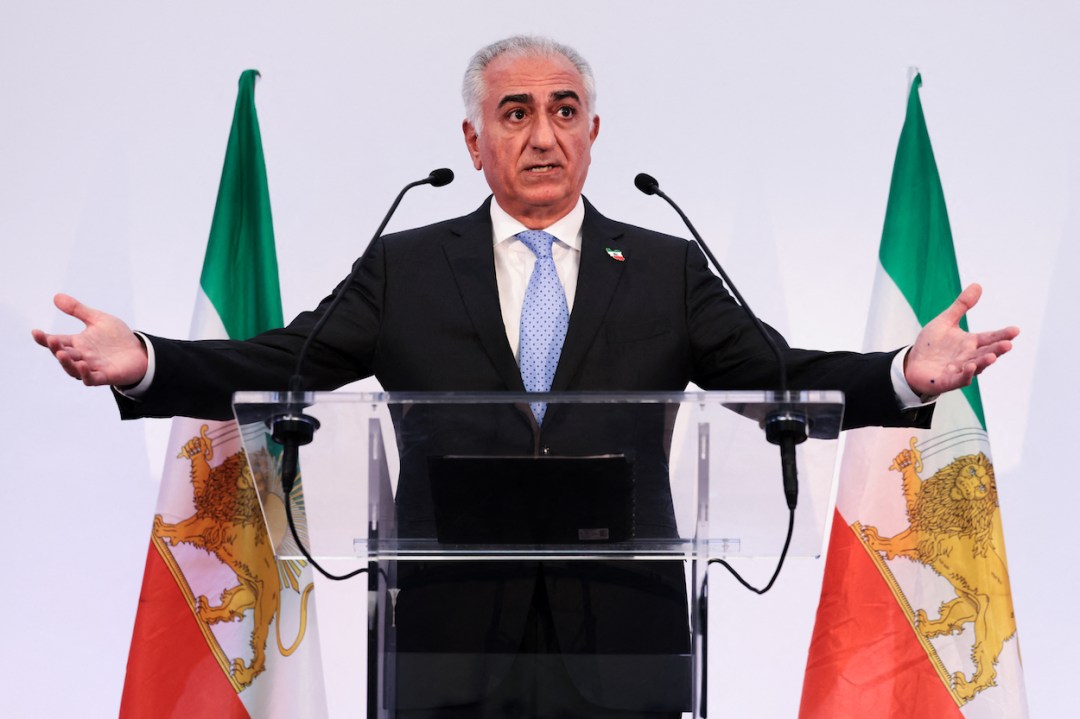
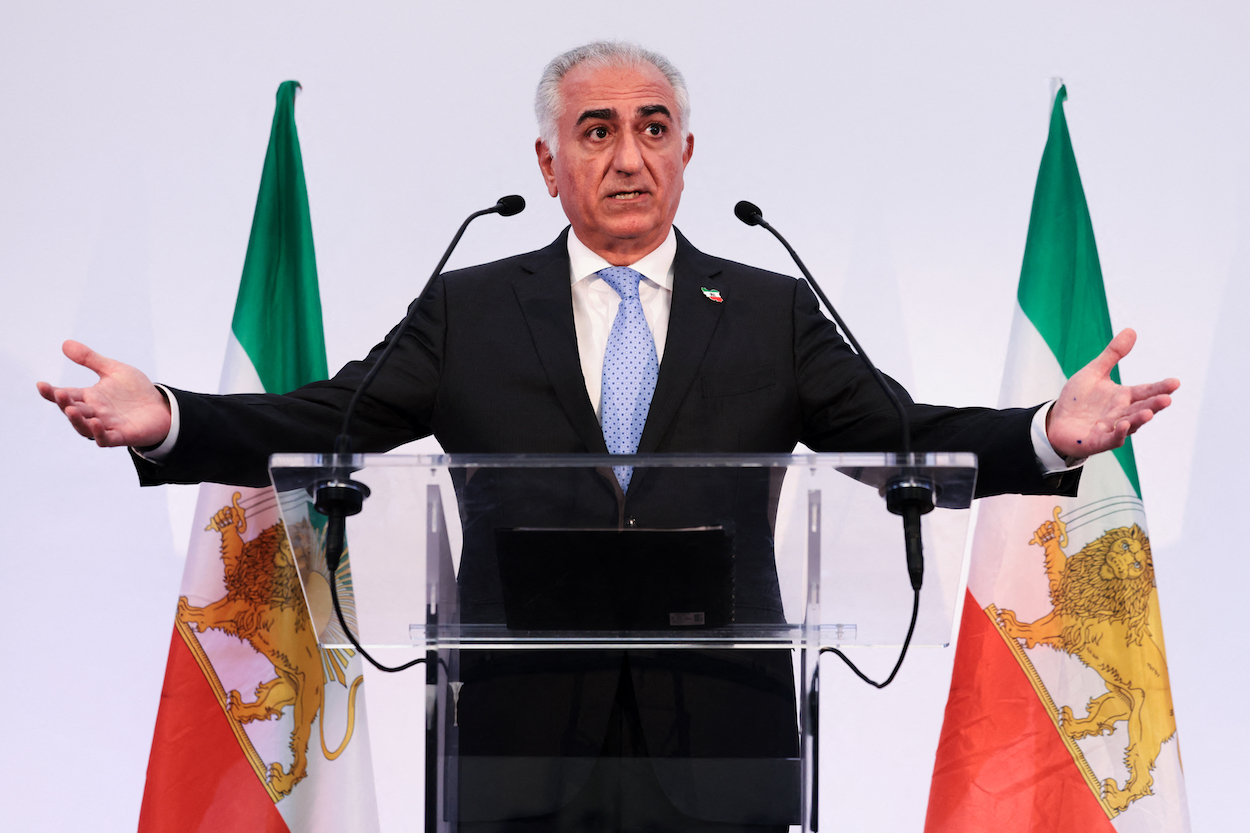
There are many reasons why Reza Pahlavi should not be a future leader of Iran. He left as a teenager in 1978 to fly jets in Texas, and has not been back since. He lived a very sheltered life back then and he knows little of how Iranians live now. There is no suggestion he knows how to unite them. Since the revolution, he has spent too much time in the cushioned and sycophantic world of royalist exiles. That is no preparation for what may come in Iran: demands for retribution for nearly five decades of daily abuse and violence; a collapsing economy veined through with corruption; a potential split if ethnic grievances are not addressed.
Most popular
Spectator Editorial
The Iran war has exacerbated the failure of European energy policies

He lacks networks in the country. He may have support there but few people there know enough about him to make a serious judgment. He’s a man without much of a record: this is not a former political prisoner or a guerrilla leader swapping fatigues for the dark suit. Last week, he was pranked by two Russians, one of them dressed as Hitler, posing as advisors to Chancellor Friedrich Merz. He told them he would be happy if Germany joined in war in Iran. That will not win support for those under the bombs, even if most of them long for the Islamic government to fall.
Pahlavi may fall short but there is one argument that should not be made against him: his father, Shah Mohammad Reza. To this day, people trot out uninformed lines about his brutality and corruption. Violence by his secret police, known by its acronym Savak, was said to have pushed the country to revolution but this was always overstated by unreliable witnesses from Ruhollah Khomeini to the Polish fabulist Ryszard Kapuscinski. A study commissioned by the Islamic government itself found that fewer than 3,000 people died in the fight against the Shah, a figure 20 times lower than the 60,000 killed and 100,000 injured claimed in the preamble to the Iranian constitution. Iranian historians have put the total death toll in state violence during the entire 54 years of the Pahlavi dynasty, including violence against armed groups, at a realistic figure of around 5,000 and a very high estimate of around 10,000. That higher figure probably equals the number killed by the Islamic government in just one day in January 2026.
Any number of illegal killings by the state is too many, but there is a fundamental misrepresentation of the history of the Pahlavi years that clouds too many minds even now. In 1979, Senator Ted Kennedy criticised Jimmy Carter for allowing Mohammad Reza into the United States for medical treatment. The Shah, Kennedy said, ‘had the reins of power and ran one of the most violent regimes in the history of mankind – in the form of terrorism and the basic and fundamental violations of human rights in the most cruel circumstances.’
Just to refresh memories, in the 1970s the Khmers Rouges in Cambodia killed perhaps as many as two million. The sinister Derg committee that ruled Ethiopia was heading towards that figure. Pakistan had killed maybe a million Bangladeshis. China’s death toll in the Cultural Revolution also exceeded a million. Uganda, Indonesia, Vietnam and Laos were all mired in conflict and state violence. Regimes in Latin America threw dissidents from planes. Around 3,000 died in Iran.
We all must recognise that Khomeini almost never told the truth, and his lies should not be the basis for anyone’s thinking today. This was a man who, like Donald Trump, lied as easily as he breathed. He had no education outside of the narrow confines of religion and some who knew him commented on his deep ignorance of the world. But he was a skilled populist, repeating his simple, dishonest messages about the evils of Jews and the West over the hi-tech channels of the day: cassette tapes and mimeostats. Purple sheets of nonsense cranked out from Roneo Vickers machines stirred the revolution.
He left because he did not want to kill tens of thousands of his people
Khomeini’s populist messages were simple: The Shah must go. Only I can rule. And your businesses will be safe under the new regime. His understanding of economics can be summed up in one of his statements: ‘Islam differs sharply from communism,’ he wrote. ‘Whereas the former respects private property, the latter supports the sharing of all things, including wives and homosexuals.’
This is the man who relentlessly pushed the idea of the Shah’s supposedly unique brutality when the reality is that not only did Iran develop faster under the Pahlavis than at any other time, but it was less violent. There were many mistakes: the Shah moved too fast in too many directions; land reform devastated the countryside while a failure to provide housing left many living in urban squalor. The Shah never effectively told Iranians why they should follow him and him alone. He never controlled the narrative, being too remote, too shy and towards the end, depressed and sick with cancer. An over-centralised government mismanaged the economy: the Shah lost support in every quarter from traders to the unemployed, from the timid and third rate officer corps to the middle class who wanted more say in their lives. Ultimately, he left because he did not want to kill tens of thousands of his people. Khamanei never felt so constrained.
Robert Templer is the author of The Shah’s Party, published by Hurst on 19 March 2026.


Comments