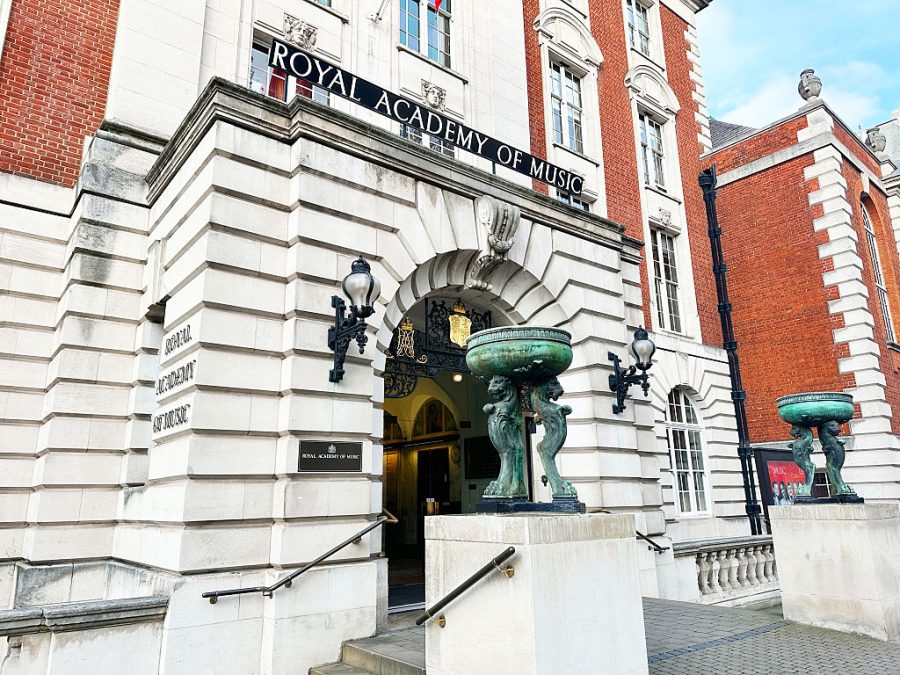
It’s always the newspeak that lacerates. The Royal Academy of Music (RAM) has, admirably, set up a new foundation year for ‘talented young musicians who have previously faced significant obstacles’, specifically the decline in music education in so many secondary schools – and indeed, the total absence in some.
The foundation course will start in July with five students. They will also get accommodation in University of London halls of residence, financial assistance to buy an instrument and a bursary to cover living costs. It’s an excellent plan, in theory, to try to ensure that one of our best conservatoires doesn’t miss out on untapped young talent and, perhaps even more so, vice versa.
But here’s the newspeak. How do you think the RAM is going about what it calls its plan for ‘widening participation’ (which is of itself a wonderful idea)? Here’s how: by actually restricting the pool of ‘talented young musicians’ who can apply for the course. Seriously.
The RAM presumably thinks it is on the side of the angels
The RAM has decided that the best way for it to widen participation in its world-leading music education is to impose a completely arbitrary ban on an entire cohort of children. That cohort is – you will likely have guessed by now – private school pupils. If you have attended a private school, the RAM has only two words to say to you if you are poor, haven’t been offered the chance to develop your music talent and are interested in its new foundation course. The first begins with an ‘F’ and the second is ‘Off’.
The RAM presumably thinks it is on the side of the angels. That’s the problem with all such DEI (Diversity, Equity, and Inclusion) programmes. They start from a decent premise but end up – always, everywhere – imposing their own barricades through their own warped interpretation of reality.
It’s easy to see what’s gone on here. To the mindset that is capable of banning people because of their schooling, life is a series of binary divides. The RAM’s is ‘private school bad, state good’. It’s a variation on the DEI industry’s usual ‘if you’re not an active anti-racist, you’re a racist’ – with the definition of an active anti-racist being restricted to the DEI industry’s own deeply politicised interpretation.
It’s not that it won’t have occurred to the RAM that there are many private school pupils from poor backgrounds who are there only because of a bursary, or whose parents forego all luxuries to find a way to pay for their son or daughter’s school fees. Some of these are no more than £10,000 or so a year – a sum many people spend on a couple of holidays a year.
Similarly, the RAM must be aware of the obvious fact that there are many state school parents who earn and have fortunes. Their children want for nothing, including the music lessons that so many state schools (and some private schools) have scrapped.
But decision-making at the RAM is demonstrably not based on actually widening participation, which would involve looking at the individual circumstances of each applicant for the foundation course. It is based, rather, on the mantra of DEI, which allows no nuance and punishes those it excludes.
Responding to the anger the RAM has generated, a spokesman for the Royal Academy of Music said: ‘Students at independent schools are more likely to have had access to music training through their school.’ Well, yes. That’s a statement of the obvious because many more state schools have stopped music education either for GCSE or with instrumental lessons. But it doesn’t in any way answer the criticism that the RAM has restricted, not widened, participation in its foundation year. Because that’s what it has done.
The other conservatoires – it’s a competitive affair – must be grinning with glee at the way the RAM has now made clear what it really thinks of private school pupils.






Comments