
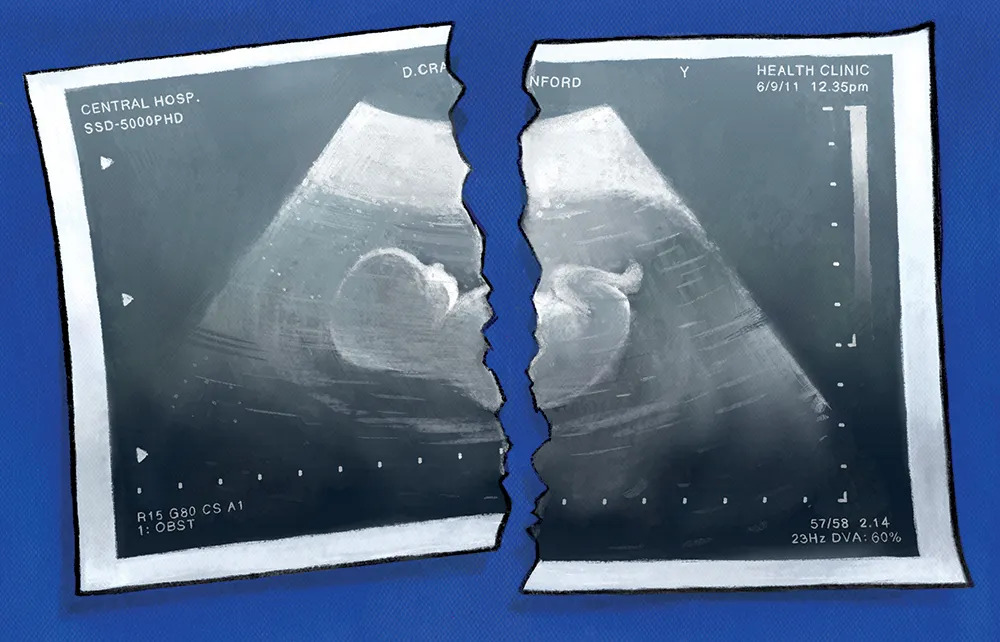
Consider this: at a time when we’re agonising about the demographic winter and the unwillingness of Gen Z to procreate, something else is going on… There were nearly 300,000 abortions in the UK in 2023, according to the latest figures published by the Department of Health. So, whatever else the problem of insufficient babies is to do with, it’s not about a fertility crisis. Nor, does it seem, is it entirely about people not having sex. It’s rather a problem of women not wanting the natural result of sexual intercourse, pregnancy. If those pregnancies had or were to go to term, that is, if the babies in question had been born, we might have something near a million extra Brits in three years.
The spin on the figures in the papers today is that it’s a response to the economic condition of the country, that people struggling to pay the mortgage or the rent are having abortions rather than coping with a mite to feed and educate. The unthinkable option, it seems, is to have a baby and then offer it for adoption to a couple who are desperate for one.
Whatever way you look at it – and in my view, it’s pre-natal homicide – these figures are huge and, of course, an increase over every other year. The Department of Health estimates that 278,740 abortions took place in England and Wales, 18,242 in Scotland and the 2,632 in Northern Ireland. The figures make nonsense of the terms of the Abortion Act, whereby a pregnancy can be terminated if two doctors agree in good faith that continuing it poses a greater risk to the pregnant person’s physical or mental health (or existing children’s) than termination, or if termination is needed to prevent grave permanent injury to health of the mother. Originally, the act specified ‘in approved premises’, but now that abortion prescriptions are available by post, that no longer holds.
These provisions about risk to life or mental health simply cannot apply to the vast majority of those near 300,000 abortions. The number of pregnancies nowadays that genuinely pose a risk to the health of the mother are vanishingly rare; all the rest can be counted as simply not wanted. Quite a number of women share the Lily Allen view of abortion. As she put it last year: ‘I don’t want a f***ing baby right now.’
While most of the abortions take place early in gestation, which is obviously better than the alternative, there are a disturbing number that most normal people would regard as infanticide, that is, which take place after six months’ gestation. There were 300 late-term abortions for babies with disabilities at 24 weeks and over in England and Wales alone. That simply doesn’t bear thinking about.
There were 735 foetuses with Down’s syndrome who were aborted in 2023, 10 of whom were over six months’ gestation. In England and Wales there were 40 abortions where the baby had a cleft lip or cleft palate. We’re not talking about that euphemism, ‘fatal foetal abnormalities’, whereby a hydrocephalous foetus simply couldn’t survive after birth. We’re talking about unborn human beings who could have had full, fulfilled lives, but who wouldn’t do the parents any favours on Instagram in their first months of life. I’m betting that some of those parents might have been influenced by the way the situation was put to them by their obstetrician.
The proper response to these figures is nausea. It should be moral repugnance at a law that was sold to the British public, as the Irish abortion law was, as a solution for women in desperate, emergency situations but is now normalised. Abortion has been reframed by the ghouls in the Royal College of Obstetricians and Gynaecologists as ‘abortion care’. Which it may be, before you realise there are two individuals in the equation.



Comments