
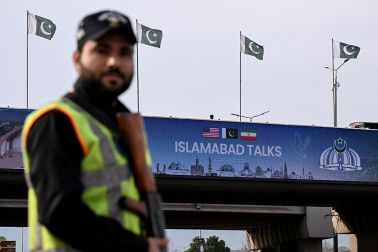
The eyes of the world are on Pakistan’s capital Islamabad as it plays host to this weekend’s make or break negotiations between the United States and Iran. The Pakistanis, whose mediation efforts pushed the two warring countries to agree a fragile two-week ceasefire, are taking no chances. Security has been stepped up, with thousands of police officers and security forces patrolling the streets of the capital. Hope and trepidation are the order of the day when it comes to ending a Middle East war that has already cost thousands of lives and plunged the world into economic crisis.
Any peace agreement will require a degree of conciliation and compromise – alien concepts to the hardliners of Tehran
The American delegation is being led by J.D. Vance, the US vice-president. He is joined by US special envoy Steve Witkoff and President Trump’s son-in-law Jared Kushner, both of whom took part in indirect talks with Iranian negotiators in Oman before the US and Israel launched the war against Iran at the end of February.
Vance has been given an unprecedented foreign policy role in this conflict. This is both high-risk and high reward for the Vice President, who has his eyes on a run for the presidency in 2028. He is a known sceptic when it comes to US involvement in foreign wars but has managed to keep a relatively low profile during this conflict. Now comes his big chance on the world stage: if Vance succeeds in pulling off a peace deal, he will gain deserved plaudits – should he fail, he will pay a political cost that could sink his hopes of winning the presidency.
The Iranian delegation is led by the country’s foreign minister, Abbas Araghchi, and the parliament speaker, Mohammad Bagher Ghalibaf. Araghchi is seen as the more seasoned operator but Ghalibaf has been mentioned by Donald Trump as someone he can do business with. The Iranian lead negotiators represent a careful balancing act of the different ruling forces in power in Tehran that must sanction any final deal.
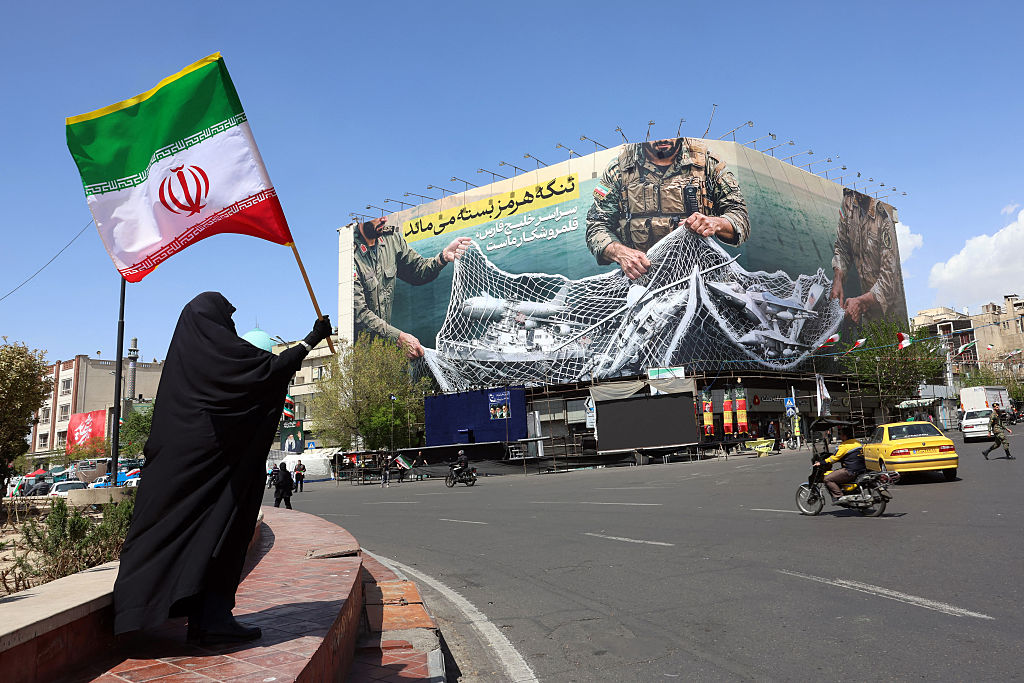
The last time US negotiators met for talks with their Iranian counterparts it was merely the threat of war that loomed. The supreme leader, Ayatollah Ali Khamenei, was still alive, and treading carefully in his usual calculating manner. Now, across the table in Islamabad, the Americans will encounter a much more emboldened Iran. The regime has withstood a major bombing campaign conducted by the United States and Israel and remains in control of the Strait of Hormuz, one of the world’s key oil trade routes. A war that was meant to push the regime over the edge and usher in a people’s revolution has actually led to the promotion of a new and more hardline revolutionary leadership, at the head of the same political system.
Central to the negotiations between the two sides will be the question of trust, which is in short supply. Any peace agreement will require a degree of conciliation and compromise – alien concepts to the hardliners of Tehran.
The Iranians have always proven a tough bunch when it comes to negotiations, with the default position of always making maximalist demands as a starting point for discussions. Iran is certainly trying it on with its plan to levy tolls on tankers that pass through the Strait of Hormuz, for which there is no legal basis. This is a negotiating bluff that disguises Iran’s primary objective – the easing of sanctions that have crippled the country. It may be prepared to cede ground on the issue of the Strait if it secures sanctions relief.
Much trickier to negotiate away is the nuclear issue. Tehran will have to show some willingness to downgrade its ‘right’ to enrich uranium, or alternatively allow international inspectors back into the country. How far the Iranians are prepared to compromise on this issue is critical. Just as significant for any lasting peace is Israel’s position, even though the Israelis are not at the table. Israel has made clear its scepticism about any arrangement that leaves Iran’s nuclear and missile capabilities intact. The Israelis will be watching closely.
What about the other interested parties to this conflict, forced to watch from the sidelines? The Gulf states are far from happy. Iran, with its repeated missile and drone attacks against its neighbours, is now seen as public enemy number one throughout the region. Its neighbours will now be looking to rethink their security arrangements in the wake of this war. Saudi Arabia has the resources to recover quickly from the attacks on its infrastructure but will not be pleased by the prospect of a newly emboldened Tehran continuing to pose a military threat. Nor will the Saudis be prepared to countenance the possibility that Iran continues to exercise overall control of the Strait of Hormuz through which much of their oil and trade flows. Such an outcome would give Iran a stranglehold on the economies of the entire region. There is much talk of new strategic partnerships in the wake of this war, with the idea of being less reliant on the United States in the longer term. Turkey has been mentioned as one potential partner. Pakistan too may play a bigger and more influential role in the region after its successes as a mediator in the war.
All in all, whatever happens in Islamabad, this is far from the end of the wider crisis in the Middle East. There is much more at stake in the peace talks than US-Iranian priorities. The warring sides may end up striking a deal that brings peace in the short term, yet leave the broader region vulnerable to further conflict and instability. Any kind of peace is better than the alternative of further escalation – but this may be no more than a sticking plaster in the long run.


Comments