
I’ve got a new thriller out this week, under my pen name of S.K. Tremayne. I am pleased with the book, and I believe it’s entertaining. I am also aware that, in a tough and competitive market, that may not be enough for it to succeed. I am even more aware that readers might decide the book is dreck. They might give me one star reviews, and no sales. Then the book will crater, my publishers will probably abandon me, and my nice career will drift to an end.
In short, the building is appalling, and it’s not going to get better over time
And that, of course, is how it should be. No one in any career is entitled to a free ride. That especially applies to people who get to do a desirable, creative job such as novel writing. Whether you’re a writer, actor, director, sculptor or musician – if you want that enviably fun creative profession, you live and die by public approval; and if you are bad, goodbye.
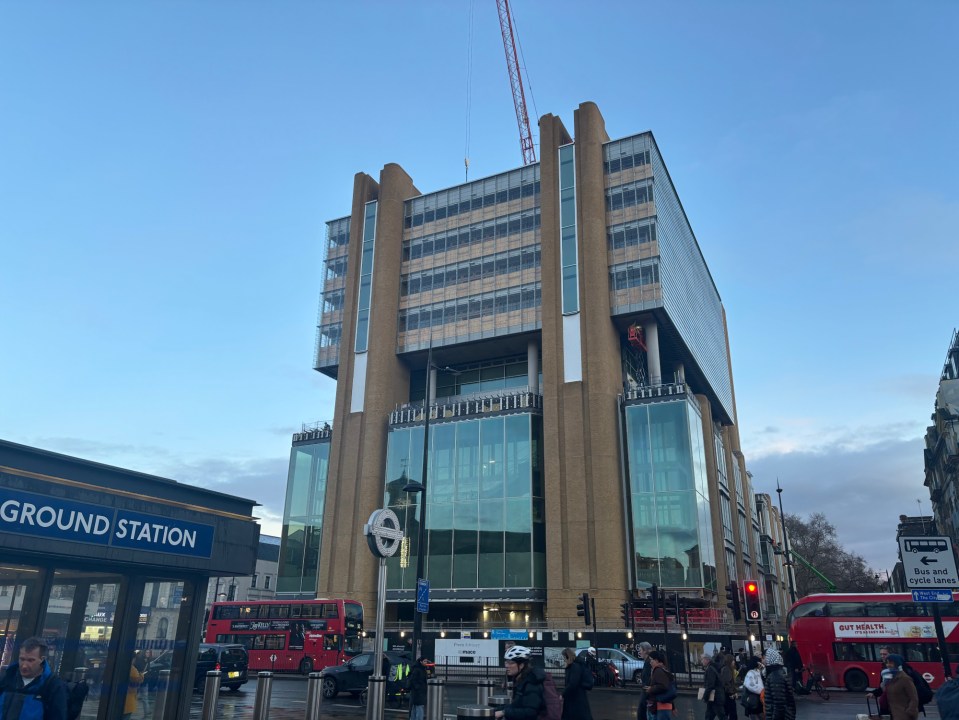
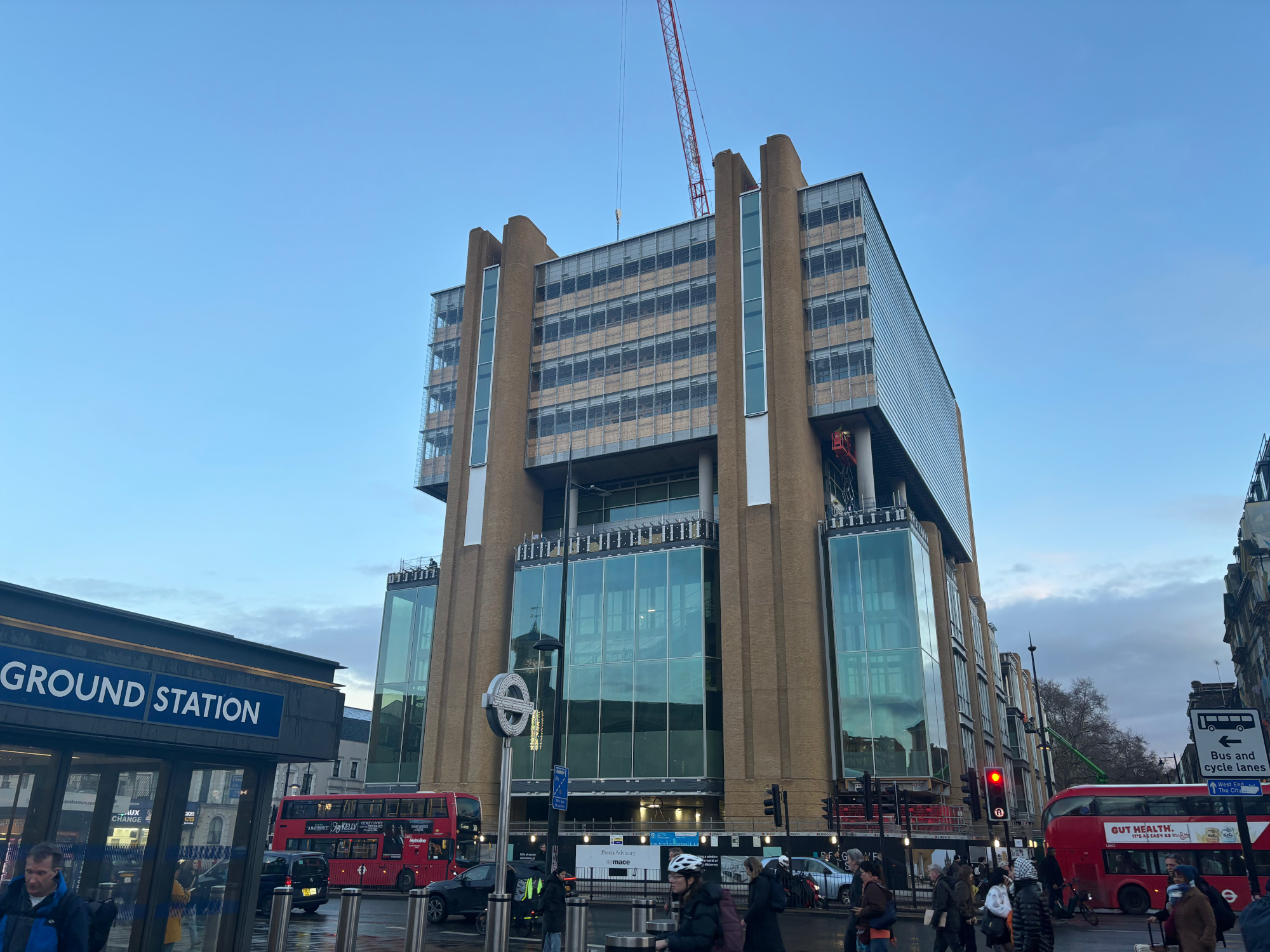
Unless, of course, you are an architect. I was reminded of this peculiar anomaly by last week’s furore over the latest architectural wart to attach itself to London’s battered face: the already notorious ‘Belgrove House’, that now dominates a prime corner of Euston Road, where it sits right next to King’s Cross and St Pancras. I presume it has been situated in London after the original design was rejected by a horrified Uzbek government, as being too ugly for Tashkent.
If you have not seen it yet, the best way to get a sense is to look at photos like the one here. Briefly. The second best way is for me to describe it, but that is actually quite hard. Because it’s difficult to verbally capture this weird, stupid and meaningless collision of styles, materials, dimensions. The closest visual analogy, to my mind, is one of those plates piled high at a hotel buffet by an idiot: with a splodge of curry, some sauerkraut, five potatoes, some lemon pie, a lamb cutlet, smoked herring, and several cheesy crackers, and everything banal and tasteless even before you smush them together.

In short, the building is appalling, and it’s not going to get better over time. It is a dud. A turkey. A calamitous flop. It is the Millennium Dome. It is Fyre Festival. It is Triangle, the BBC soap opera set on a North Sea ferry route. It is Raise the Titanic. It is Harry Hill’s I Can’t Sing. It is Keir Starmer’s prime ministerial career, rendered in concrete and plastic. It is my first novel, Absent Fathers, which got a cheque for zero pounds zero pence, as a computer could not believe an author could sell so few copies, so sent a cheque anyway. Finally, it is the architectural equivalent of Via Galactica (1972), a space-themed musical with actors on trampolines, which lasted seven performances.
But here’s the thing. For all the creative disasters listed above, someone responsible paid a price. Even the lavishly coddled Millennium Dome project damaged careers. And yet, if you design and erect a hideous building, equivalent to these aesthetic catastrophes, you pay no price at all. And this despite the fact that, unlike a rubbish novel, you can’t chuck a bad building in a bin. No, the building squats there, for decades, blighting the lives of everyone who must look at it. And given that this particular building is situated in one of the most conspicuous sites in the capital, opposite two of its grandest railway stations, that is going to be a lot of people.
Worse, there’s a decent chance the architects of this carbuncle will get an award. Because that’s what they do in architecture world. They have hideous ideas, then they force them on the rest of us, and then they give each other prizes. Until, about 40 years down the line, everyone accepts the obvious truth, and the pile of ugliness is finally demolished.
If you need proof, just look at the lists. Salford’s laughable Centenary Building, Britain’s very first Stirling Prize winner (in 1996), was set to be knocked down just 30 years later, to much applause. The Tricorn Centre Portsmouth won the Civic Trust award in 1967 and yet was demolished in 2004. Pimlico Comprehensive School collected a RIBA prize, then it was flattened in despair. Gateshead’s Trinity Square car park was recognised as a ‘most outstanding modernist building’ by the 20th century society after it was blasted to hell. Add to this, our own Belgrove House: yes it won a World Architecture Festival Award in 2023. Yes, they’ve already given it an award. Perhaps they got excited by the potential ugliness. In any other art form, failure is failure. In architecture, terrible failure makes for a garlanded career.
Clearly, what is needed is some kind of disincentive for architects. A way to punish them for the pain they inflict. Or they will keep inflicting this pain on us. We need the equivalent of West End reviews so bad they close a dismal show, thereby bankrupting producers.
So who are the Guilty People responsible for Belgrove House? Who should we hold to account? It’s invidious to name names, but the names are Simon Allford, Jonathan Hall, Paul Monaghan and Peter Morris, and they are the leading partners of AHMM Ltd. But for the rest of us AHMM will be the company responsible for ruining the views of St Pancras and King’s Cross. That’s the company responsible for ruining the views of St Pancras and King’s Cross.
Unsurprisingly, AHMM disagree. Simon Allford told The Spectator: ‘Belgrove House is a 21st century landmark building sitting confidently opposite its Grade I listed 19th century predecessor. Like Lewis Cubitt’s King’s Cross station, Belgrove House is an innovative, engineered building.’ He also dismissed criticism of the building as ‘fast fading social media outrage, in this case sparked by clickbait from an arts critic turned TV personality. History will be the better judge.’
But how should AHMM be judged? It’s amusing to think they might be put in some 21st century version of the stocks, pelted with virtual dung. Or they could be sent to Rockall, to design toilets that never happen. But maybe best of all would be to rent them a cheap flat, where they have to live together for the rest of their lives. A flat with magnificent views, from every room, of Belgrove House.




Comments