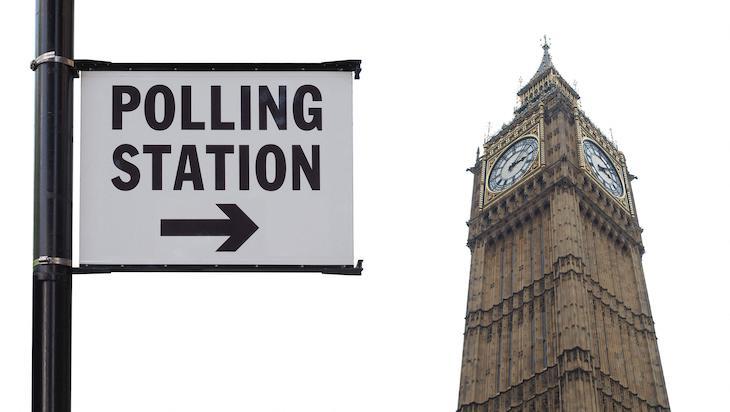
Four years ago, the unthinkable, for many Westminster residents, happened. Control of the council was won for the first time ever, and convincingly, by Labour. As a Westminster voter for more than 20 years, I had expected that the council would in time flip to Labour; the leftward trend was clear – but not so soon, more likely at the next elections in 2026. In the event, Westminster was caught up in the great shift that swept Labour to power in its general election landslide in 2024. Helped along by some boundary changes, the result was a council made up of 31 Labour to 23 Conservatives.
Westminster used to be a byword for clean streets. That it no longer is may be down as much to a decline in public behaviour as council failure
Four years on, the Conservatives – many of whom had been shaken by the scale of their 2022 loss – could be on the verge of a sweet revenge, as they seek to reclaim the low-tax, high-performance council many see as their crown jewels. A week before this year’s elections, the polls offer a mirror image of the previous result, with 31 seats for the Conservatives, to Labour’s 16; seven for the Greens, and one Lib Dem.
There are many reasons why this turnaround may be happening. One is that, while the Labour council has focused on the priorities it set – chief among them improving the housing stock, and prioritising housing and other social services – changes here have been visible largely to those in the social housing sector, who were already Labour voters. To anyone else, myself included, the deterioration in what might be called the public realm has been marked.
Westminster used to be a byword for clean streets. That it no longer is may be down as much to a decline in public behaviour as council failure, but the streets are not as pristine as they were and public bins routinely overflow.

Rough sleeping has multiplied. Victoria and other mainline stations were always a magnet, and the presence of enabling charities providing food, and even tents, hardly helps. But the number of encampments has increased significantly. The – largely Roma – camp on the central reservation at the northern end of Park Lane, has been a particular bugbear: partly because of the prominence of the site in prime tourist territory, and partly because of the seemingly half-hearted and failed efforts to remove it. A social media post last week even showed a rough sleeper in the immediate environs of the Home Office. Really? That is surely a security as well as a social matter. But the sleeper, of course, was left undisturbed.
What police regard as low-level anti-social behaviour has been an issue, too, despite Labour saying it would increase local policing. While we’re told there are more police, that is mostly not evident to residents, who have seen open drug dealing, phone-thieving and youth violence spread into hitherto largely unaffected areas. Westminster is a particularly stark example of a London borough where great affluence sits cheek by jowl with great deprivation. Murder and serious assault rates may have fallen, as per the London mayor and the Metropolitan Police, but far more people are affected by smaller-scale threats and nuisance, which generate a wider sense of insecurity, which Labour is seen as having failed to tackle.
A specific high-profile issue is the imminent pedestrianisation of a part of Oxford Street, with a view to reviving it as the capital’s premier shopping district. This has been the subject of something akin to what resembles a quiet compact between the Labour mayor of London, Sadiq Khan, and Westminster’s Labour council, which has seemed to have rolled over and let it happen, despite many local misgivings. It is now seen as a fait accompli. But there remain serious questions about where the displaced public transport and delivery vehicles will go, how pedestrian-friendly it will really be if bikes and scooters are allowed, and ease of access for disabled and less mobile people.
Westminster is a particularly stark example of a London borough where great affluence sits cheek by jowl with great deprivation
The business lobby is also strong in Westminster, for obvious reasons, and the rises in employers’ costs, especially in hospitality, have mobilised fierce opposition. Another particularly unpopular national policy is the proposed “mansion tax” on homes worth over £2 million. This could affect as many as one in four in the Westminster council area, the highest proportion of any council area in the country.
Further, less conspicuous, reasons why the Conservatives may be on the threshold of a famous comeback include how hard the out-of-power Conservatives have worked to keep themselves in the public eye. There is also what seems to me quite a significant element of self-image: the extent to which people feel that the natural order is for Westminster to be Conservative and not Labour.
The role of the national mood should not be underestimated either. The unpopularity of Sir Keir Starmer’s Labour government and the widespread disappointment of one-time supporters who feel that it has failed to honour its election promises is bound to colour a lot of the local voting on 7 May. A mid-term revolt might be more of a US phenomenon, but it can be discerned this time around in the UK, too – and nowhere more than in Westminster, where the presence of the Houses of Parliament makes national politics seem closer than it might seem elsewhere.
If the forecasts suggest that the Conservatives will be back in control of Westminster council, their victory might not be as certain or plain-sailing as it looks. One reason is, as in much of the country, the party political changes especially in England over the past two years, that have brought Reform and Zack Polanski’s brand of Greens into the equation. Labour and the Conservatives are rather treating the Westminster Council elections as an old-style Lab-Con scrap, and they may be right. But they may not be. The overall landscape has changed considerably since 2022.
It is hard to judge, for instance, how many disaffected Labour voters, in particular, ethnic minorities, might plump for the Greens; or how many once loyal to the Conservatives might now take a punt on the further right, Reform. On Westminster council, Reform has benefited by two defections from the Conservatives in the past year, while the Conservatives gained two seats in by-elections from Labour. The habitual low turnout in council elections – only a little over 30 per cent in Westminster in 2022 – makes predicting the result an even shakier proposition.
What is beyond doubt is that, if the Conservatives take back what they see as their rightful place at the helm of Westminster Council, the rejoicing will not just echo around City Hall, but extend the half-mile or so down the road to Conservative Campaign Headquarters, too. Along with other near-certain changes of power in other London boroughs, it could also help turn London back into a bit more of a political patchwork and fractionally less of a Labour/Sadiq fiefdom.




Comments