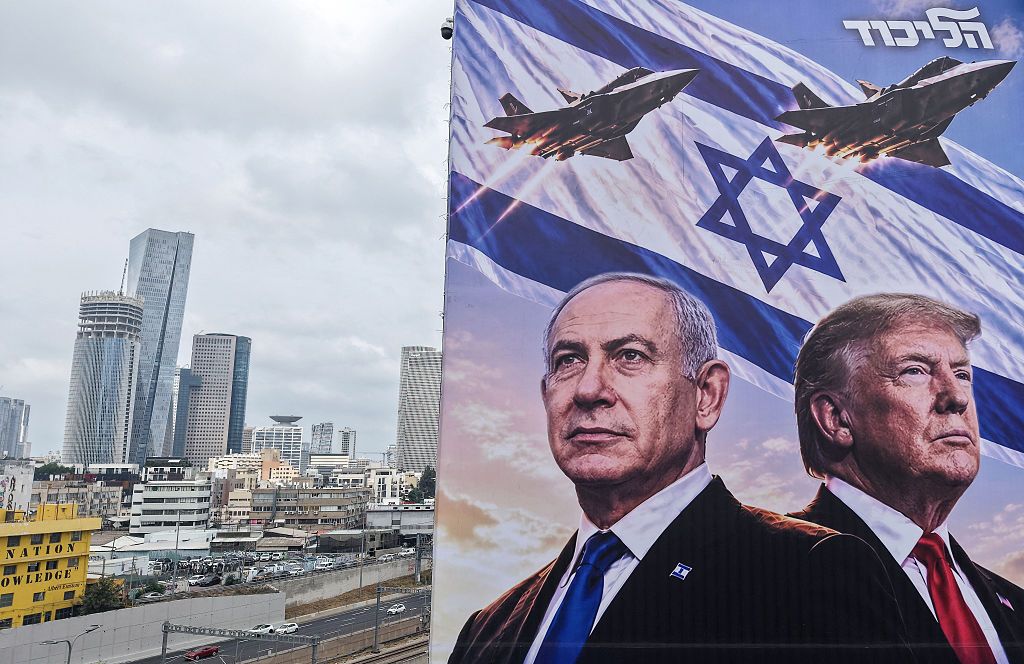
A week after inconclusive election results that saw neither side win a large enough majority to form a government, Israel woke on Wednesday to two more major problems. President Trump announced in an interview with Fox News that the United States will stop military aid to Israel by the end of the year. Meanwhile in Michigan Abdul El-Sayed, America’s first Muslim senator and vociferous critic of the Jewish state, swept to victory, spearheading the rise of the Democrats’ progressive left.
Even if Israel can adapt to the ending of American military aid, the steady erosion in its political support will be harder to manage
President Trump claimed that the terms of a supposed deal had been finalised months ago with Benjamin Netanyahu, the Israeli prime minister. ‘We’ve already agreed that by the end of this year we won’t be paying Israel.’ In fact the current ten-year Memorandum of Understanding to provide $3.8 billion a year in military aid ends at the end of 2028. Although the funds are described as ‘aid’ they are a de-facto subsidy to the American arms industry as most of the money is spent on US-made weapons, military goods and joint defence programmes. In addition, the US military benefits from Israel expertise and battle-testing of American weapons.
President Trump’s announcement caused confusion and anger in Israel. Gadi Eisenkot, the leader of the main opposition bloc, criticised the prime minister for failing to discuss such changes with the military leadership and the public. ‘The fact that Israel’s defence establishment is learning of a shift in our strategic relationship through the media, at the same time as the Israeli public, shows how dangerous Benjamin Netanyahu’s conduct is.’ Eisenkot’s ally, Yair Golan, said the move was a ‘severe blow’ to Israel’s security, coming as the country is fighting a war on multiple fronts.
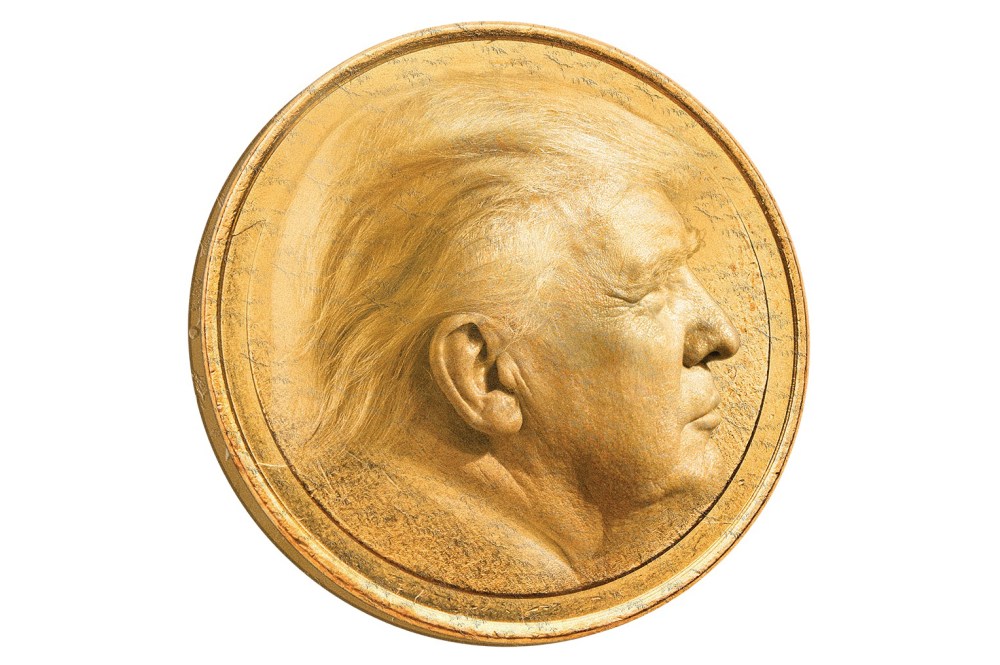
It has been clear for some time that the next military agreement will be different to the ten year one signed in 2016, said Amnon Reshef, a retired major-general who served in the 1973 Yom Kippur war. ‘We knew that the amounts will be different and the nature of the military cooperation between Israel and the United States would change, focusing more on mutual development of military equipment. But nearly $8 billion dollars is a significant sum to lose from the military budget. The spending is planned five to ten years in advance. Contracts will have been signed with US suppliers. They have to be honoured and there is no other source to cover this amount, not to mention the cost of three years of war.’
Netanyahu told the Economist in January that he was in favour of tapering off American military aid over ten years, said Anshel Pfeffer, the newspaper’s veteran Jerusalem correspondent and author of a biography of the Israeli prime minister. ‘Suddenly Trump comes along and says it’s all agreed. Netanyahu’s proxies are trying to make it sound like this was his idea all along. But if it was, then treasury and military officials would know about the negotiations and they would not be so surprised. Netanyahu has not been seen in public since election night. This is not on his list of priorities. His only priority is to stay in office.’
Others were more sanguine, arguing that the move had long been discussed. ‘Both parties already agreed during the war to reframe the relationship from aid into partnership. Israel is not a recipient of aid like Egypt or Saudi Arabia or other developing countries. We are a major ally of the United States, a guarantor of regional order,’ said Or Yissachar, of the IDSF Institute, a Jerusalem think-tank. ‘The whole conversation around American military aid is being politicised. If $4 billion does not arrive it is not a catastrophe. Israel can borrow more or increase the military budget. This is a sign that the relationship is maturing and turning into a partnership’.
Even if Israel can adapt to the ending of American military aid, the steady erosion in its political support will be harder to manage. For all of Netanyahu’s much-vaunted perfect English, his supposedly close relationship with President Trump and his understanding of the United States, his term in office has witnessed a sea change in attitudes there to Israel, on sections of both the left and right. Part of this is due to the Gaza, Iran and Lebanon wars and their successful political weaponisation by the growing anti-Israel lobby. Part of this is due to societal changes – the rise of the progressive left and the growing confidence of the Arab and Muslim communities – embodied in Dr El-Sayed’s victory.
The victorious senator, who has vociferously opposed American military aid to Israel, welcomed the announcement that it would soon end. In his victory speech he taunted President Trump, who had repeatedly attacked him over his Muslim faith. Dr El-Sayed declared that he had used the Arabic phrase ‘Inshallah’, meaning God willing, before the election, but could now, after his victory, say ‘Alhamdulillah’, meaning God is praised. His triumph comes as three progressive candidates and allies of New York mayor Zohran Mamdani also won seats in Congress. At the same time, several pro-Israel traditional centre-left democrats kept their seats. The struggle for control of the Democrat party has entered a new, and for Israel, more hazardous phase.
Adam LeBor is currently writing The Promised Land: The Modern History of Israel.



Comments