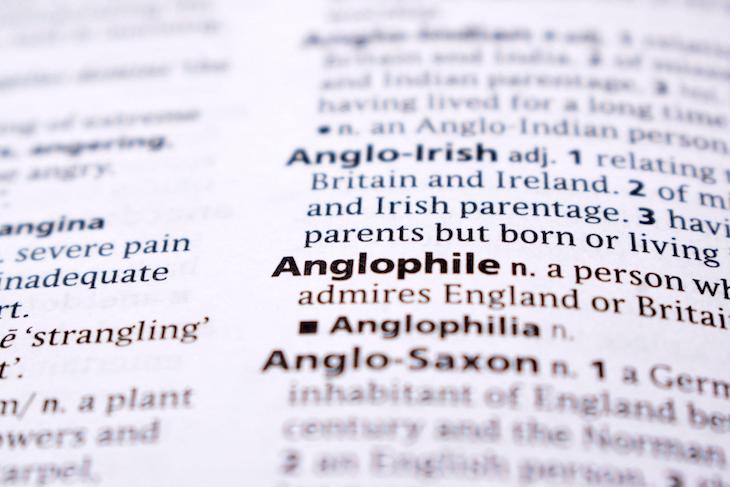
In the midst of a quiet afternoon tidying my home library – that noble pursuit which always begins with ambition and ends in nostalgia – I unearthed what must surely be the most British book I own: How Not to Say What You Mean: A Dictionary of Euphemisms, published 30 years ago by Oxford University Press. This delightful book contains hundreds of euphemisms for avoiding the truth in every area of life, including work, sex, death, politics, money, and the human body. This is not a dry book; it is a peaceful treatise on the art of implication, a cheerful guide to avoiding the truth with wit and tact.
Britain has long prided itself on its understatement as a national characteristic
Britain has long prided itself on its understatement as a national characteristic. While others blurt their way through life’s awkward situations, the British prefer a gentle sidestep. These euphemisms are dutifully recorded in How Not to Say What You Mean with the same meticulous attention one would expect of a botanist: ‘tired and emotional’ for drunk, ‘between jobs’ for unemployed, ‘economical with the truth’ for lying. Some of the more colourful euphemisms in the book include ‘surgical strike’ for bombing, ‘full-figured’ for overweight, and ‘cold feet’ for getting nervous before a commitment.
Some of the euphemisms in the book are historically interesting: ‘uncover nakedness’ for copulation in the Bible, ‘leaping house’ for brothel in the 16th century, ‘nightingale’ for prostitute in medieval England, ‘pushing up the daisies’ or ‘meeting the Grim Reaper’ for death itself, ‘letting someone go’ for sacking a person at work, ‘playing away’ or ‘extramarital activity’ for infidelity. Euphemisms are said to be derived from ‘hypocrisy, prudery, evasion, and deceit.’ What makes this book quintessentially British is the celebration of understatement. Euphemisms are not simply the avoidance of certain words; they are a way of being.

The unsaid is said with the greatest weight, directness being suspect, like an overripe piece of Camembert cheese. In Britain, good manners can be more important than accuracy, harmony over confrontation. I posted a short reflection about this book on LinkedIn, expecting a few polite acknowledgements from fellow diplomats, academics, and friends. Instead, it became my personal best, generating over 130,000 impressions and nearly 2,000 interactions in two weeks
Why this popularity? It was a post that struck a chord of affectionate self-analysis in a time of polarised rants. It was a light-hearted tribute to understatement, a welcome escape from the seriousness of current events. It was a chance to laugh at ourselves, to share our own favourite euphemisms. It was a source of bonding among fellow expats and foreigners like myself who live with these subtleties every day.
The comments were equally understated, equally revealing. One professor joked that an Irish edition would be twice as long, a dig at Celtic circumlocution. Another commenter offered a list of favourites: “Not bad” for good; “a bit nippy” when it’s raining horizontally; “I might pop off soon” when you’re polite enough to leave; “I’ll bear it in mind” when you’ve forgotten something; “That’s… interesting” when you’re mistaken beyond all reason.
Cross-cultural observations followed: a Polish reader from Devon recognised her husband’s edition and reflected on Japanese origins and indirectness; a Dutch commentator contrasted ja maar (a blunt “no”) with French double-speak; an American lamented lives lived “behind curtains”, while another suggested that the most British book in his library is Three Men in a Boat (To Say Nothing of the Dog), by Jerome K. Jerome: “brilliant, and very British.” All of these highlighted the mirror of character reflected within the book’s pages.
There are darker side-effects of euphemism
In my role as Poland’s ambassador in London, I was surrounded by British euphemism every day: ‘frank exchange of views’ equated to argument, ‘interesting proposal’ equated to preposterous, and ‘challenges ahead’ equated to impending disaster. Polish style demands directness, sometimes drama, and those of Polish descent living in Britain have to be translators, navigating a world of hints and fog, sometimes with intent unclear.
However, there are darker side-effects of euphemism: politics buries catastrophe under ‘challenges’, business buries job losses under ‘rationalisation’, and media buries lies under ‘alternative facts’. Holder’s book lists ‘human sacrifice’ as a euphemism for being fired, and ‘coffee-housing’ as a way of cheating nicely. Brexit was full of them: ‘taking back control’, ‘managed divergence’. They may have been used to ease differences, but they delayed understanding.
In the world of social media, perhaps they ease tensions, avoiding arguments. Euphemisms have long been a reflection of society’s taboos: Victorian prudishness hid sex and death, and today’s sensitivities result in ‘vertically challenged’, ‘differently abled’. Too many, however, result in clichés, and their effectiveness is lost. But Britain’s favourite pastime is a reflection of national pride: harmony and wit over blunt honesty.
Many parallels exist within literature: Jane Austen’s use of irony conceals contempt behind ‘slight acquaintance’, PG Wodehouse’s Jeeves uses tact, and Shakespeare’s ‘beast with two backs’ refers to intercourse. Holder’s book is an addition to this tradition, mocking hypocrisies.
In the end, How Not to Say What You Mean is a reflection of Britain’s soul: polite, witty, and evasive, and language is a shield and a sword. For a forthright Pole, it’s a cultural curio, and, as faint praise, it’s the ultimate compliment. Maybe Poland needs How to Say Exactly What You Mean – With Extra Drama, but until that day, Holder’s treasure trove remains a quiet tribute to the unsaid and its power.




Comments