Though I hadn’t lived there since 1998, when I was 16 and Bill Clinton was in power, I’d always defended America. Sure, it had flaws. Big ones. It had gun problems, drug problems, healthcare problems, race problems, problems winning wars. But, by Jove, it was still the end of the rainbow. It still had the highest concentration of good of any country on earth.
Then Donald Trump inaugurated a new era in which the US went weird, and not in a good way. Not only did the problems with opioids, guns, wars and healthcare only get worse, new catastrophic fault lines opened. The bizarre reign of Joe Biden and Kamala Harris was hardly a comforting interlude.
And now, word on the foreign street has coalesced around the idea that America is no longer a good place to go. People have cancelled holidays. An air of misery has attached itself to the long-standing air of chaos and uncertainty, and even tragedy. Tourism rates are way down.
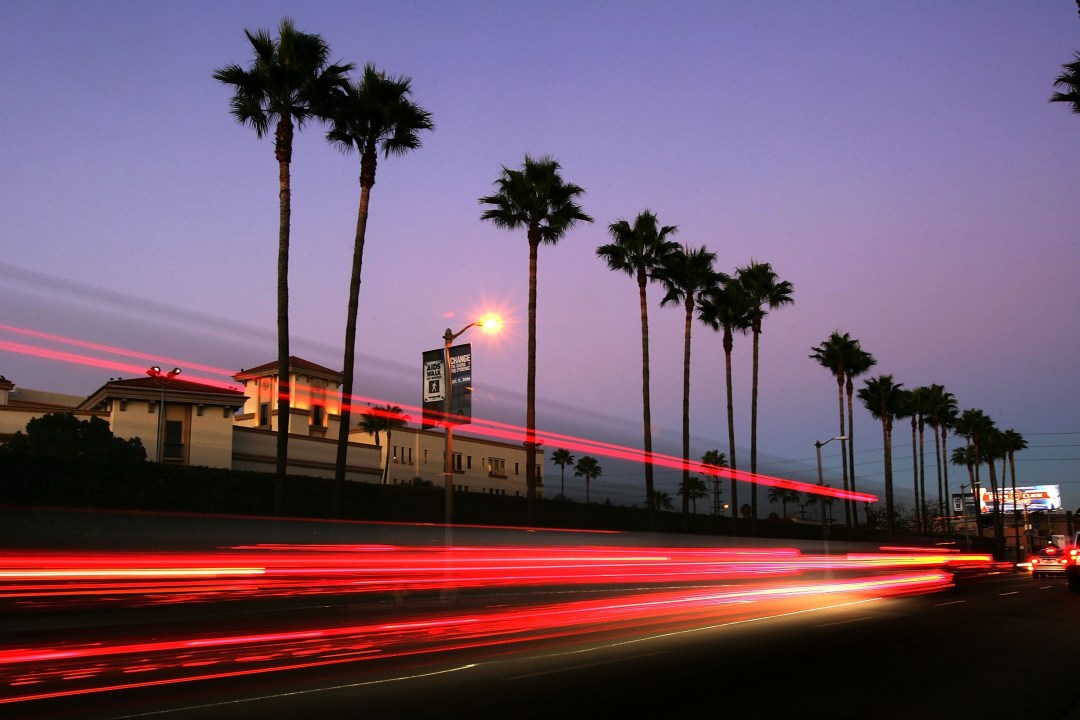
And yet, and yet. The American idyll still exists, and it is just where it always was: California. Despite the homelessness, the addiction, the death and strife and fury and poverty, it turns out it is still possible to swan in on a £300 return flight and feel the pulse of that great cradle of ambition and optimism: the thrum of commerce, vanity, and all nice things.
Last month, I went to Los Angeles to poke around the Ground Zero of ‘wellness culture’. In LA, they are obsessed with biohacking and ‘extreme optimisation’, in that nakedly honest, American way. While technology is roped in in surprising ways to help people trump the forces of tiredness, bloating, inflammation, poor health and mortality, Californians also manage to press the pedal flat down on the tranquil, ascetic methodologies of Eastern medicine, adding a futurist frenzy to ayurveda and traditional Chinese medicine.
All this is mad and expensive but the culture it represents and shapes smacks of the old promised land, the land that persists outside flood, fire and the ravages of the last presidential decade, of ‘optimisation’ under blue skies and palm trees. Talk of a new wealth tax on billionaires in California has been linked to the exits of Mark Zuckerberg, who has recently bought Miami’s most expensive house at $170 million, and Steven Spielberg, who has moved to Manhattan. California, which has, post Arnie, trended left, can’t help itself: it must at least try to eat the rich.
Figures show a particularly sharp decline in tourism to LA in 2025-2026, with people scared by tariffs, fires, political turmoil and the incursions of ICE. Visitors last summer to Hollywood dropped by 50 per cent, according to some reports. Tourist boards are worried.
And yet something of the old place is still intact. I felt the stirrings of the old awe as I boarded the plane for Los Angeles. The plane was heaving, especially business class (which I had to walk through to get to the back). There were rows and rows of exuberantly coiffed Brits settling in with the insouciant smugness of rare-breed cats.
It is still possible to swan in on a £300 return flight and feel the pulse of that great cradle of ambition and optimism
I stayed in Santa Monica and felt a curious sense of peace and happiness poking its way through my extreme jetlag. I remembered how jolly it is being in a place that isn’t constantly, snarkily arrayed against both human pernicketiness and the hunger for success. Instead, it operates on the assumption that we all want the absolute best for ourselves, all the time.
The results are flamboyant. While New York’s hijab-celebrating ‘socialist’ mayor Mamdani makes inroads into all that is good about ‘the greatest city on earth’, LA is now where you have to go for the ever-diminishing sliver of the American idyll. Except instead of the simple picturesque peace of the rural and pastoral that Henry David Thoreau established as a key American imaginary, the LA idyll imposes simplicity on economic and social upheaval with pleasant sensory experiences and permission to want to live forever. The LA idyll is a place where work is not exiled but fused with inescapable mountain views, a raging Pacific and a kid-in-candy-shop terrain of wellness ‘experiences’ for those whose work remunerates them sufficiently to enjoy them.
Certainly, my zoom through the idyll did more for me than a boring retreat at Walden Pond would (I’ve been to Walden, having grown up nearby, it is dull) – largely as it felt good, looked good and was fun. To wit: a consultation and two-hour four-handed massage with Martha Soffer, LA’s celebrity ayurvedist, who told me on no account to eat nightshades. Soffer’s ministrations, she told me, resulted in Kourtney Kardashian getting pregnant after a gruelling attempt at IVF. I went to a ‘functional workout’ where I jumped around a tic-tac-toe-esque mat following the perfect movements of a beautiful, peppy young woman who looked like she’d just emerged from a Lululemon-branded chrysalis.
When I returned to London a few days later, I felt the horizon recede and morph into something more jagged, ill-defined, flat. Even as Hollywood loses its primacy, California will always be the end of some kind of rainbow. It’s not the only one I understand to be still on offer in America – places like Austin, Phoenix, Miami, Charlotte and New Orleans are offering their own cocoons of bleeding-edge consumerism and ease under warm skies. At any rate, America may not be what it once was, but it’s not dead yet.


Comments