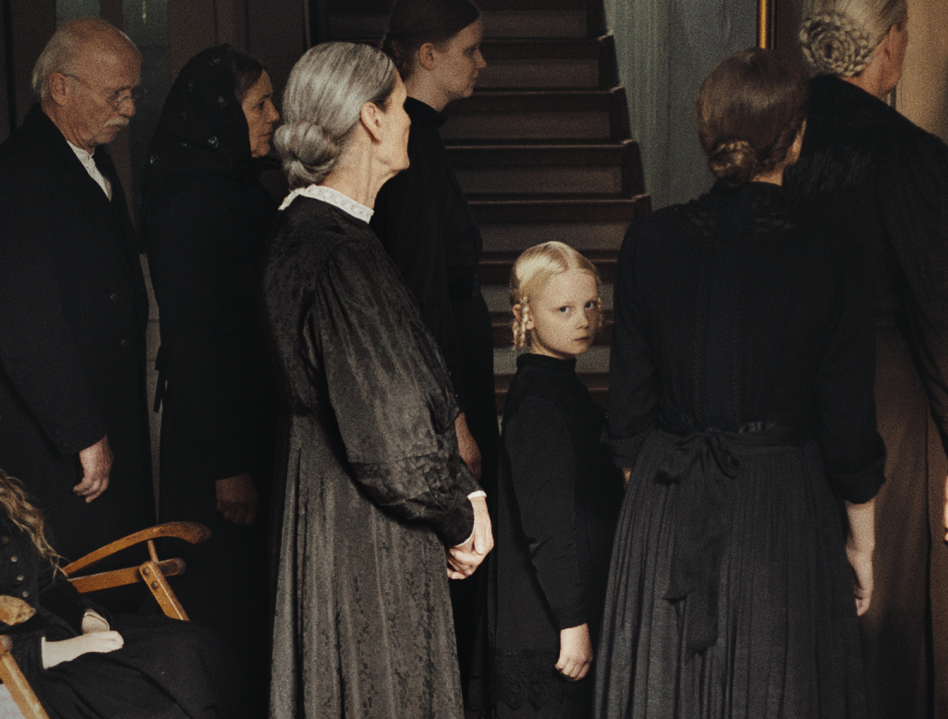
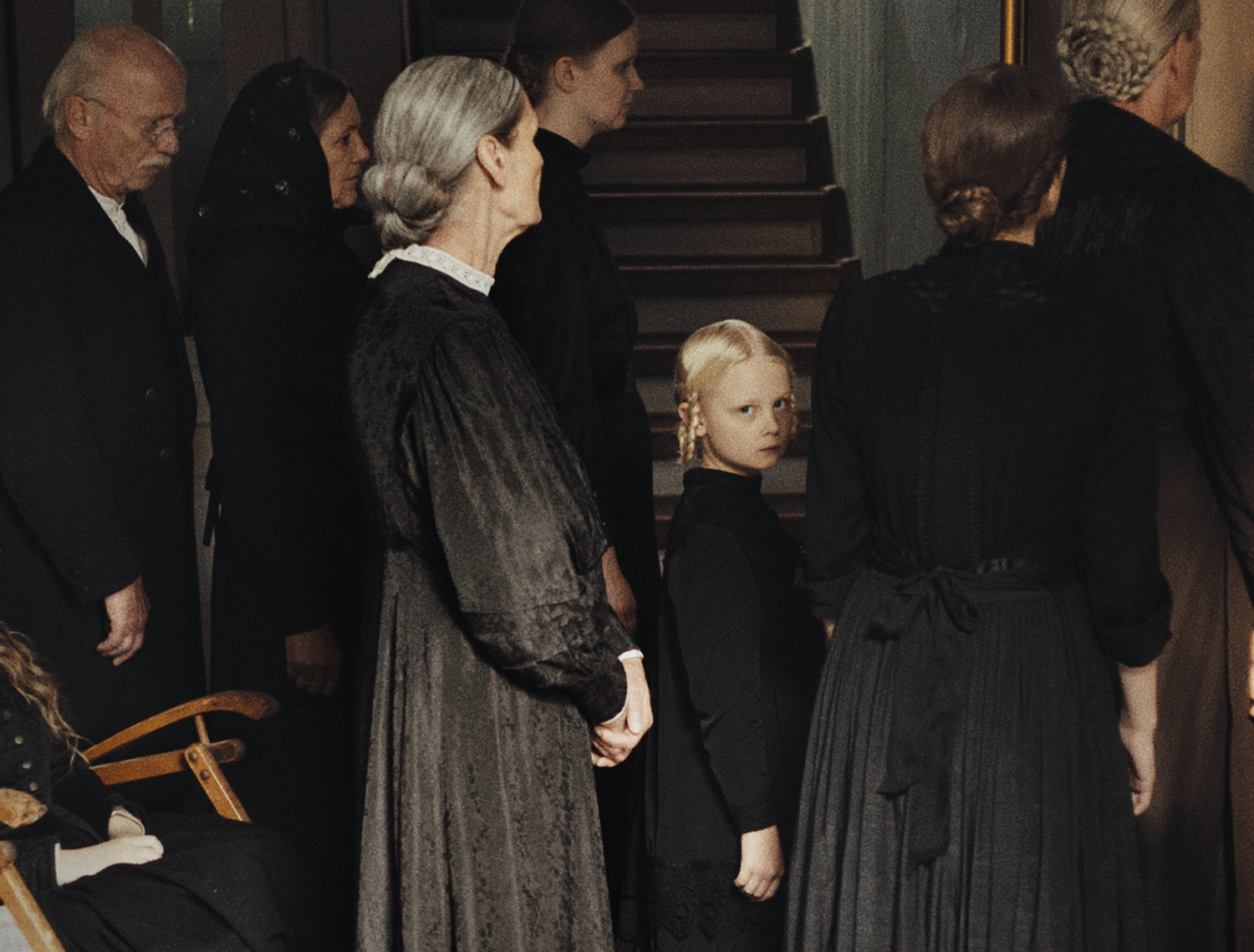
Mascha Schilinski’s Sound of Falling, which won the Jury prize at Cannes, explores the lives of four generations of women growing up in the same rural farmhouse in Germany over the course of a century. It’s non-chronological, impressionistic, profoundly art-house and even though I am a fervent fan of linear storytelling – what can I tell you? I just love a beginning, middle and end – this is compelling and mesmerises even when it confounds. I think it’s saying that the past inhabits us all, which isn’t stunningly original, but the film itself is.
It’s candles and kerosene lamps one moment, electricity and iPhones the next
I did wish it had come with a family tree, like you sometimes find at the beginning of multi-generational novels, as Schilinski is not in the business of spoon-feeding an audience or holding your hand. You are left to work out who might be related to whom and it will take a while to get there, if you ever do. I will list the four principal characters chronologically, as that suits my brain, beginning with Alma (1910s, played by Hanna Heckt). She’s an arresting, morbidly curious seven-year-old girl with white-blonde hair plaited into pretzels who is navigating a family life that often features death. Then there is Erika (1940s, Lea Drinda) who is 17 and has become fascinated with bedridden Uncle Fritz (Filip Schnack), an amputee. (Fritz is Alma’s brother and we see what happened to him in her story.) We also have Angelika (1980s; Lena Urzendowksy), a flirty 16-year-old in communist East Germany who invites the attention of men while fighting off unwanted sexual advances from elsewhere. Lastly, it’s Lenka (Laeni Geiseler), a 12-year-old whose parents are renovating the now abandoned farm.

The film doesn’t want you to plant your feet in any timeline. It constantly cuts between them, sometimes abruptly, even for just the one take. Clothing may suddenly modernise, then, just as suddenly, de-modernise. It’s candles and kerosene lamps one moment, electricity and iPhones the next. Each girl faces danger in some way and narrates from her point of view with the stories segueing dreamily and sometimes fading away like the negative of a photograph. The farmhouse, meanwhile, serves both as a collective unconscious and a physical reminder of what has gone before. It is marked in that way. The hole at the bottom of the threshing-barn door? Wherever we are in time, you will always think of what happened to Fritz in that barn and will remember that we must say it was a ‘work accident’. There are also recurring images: flies, slippery eels, the river.
All the girls are exceptionally watchful so, through them, we are also delivered the stories of maids (poor Trudi), siblings (poor Lia), the intense teenager who lives on a neighbouring farm (Lenka is obsessed with her). There is trauma, abuse and cruelty but also moments of levity. A very good joke is played on Angelika’s mother, Irm (Claudia Geisler-Bading), even if she doesn’t get it, but then she never does get the joke. (Irm is, I think, Erika’s sister and given what became of Erika, perhaps Irm is not humour-minded.) ‘It’s strange that something that hurt can no longer be here,’ remarks one character. The past, in other words, leaks into us, moulds us, establishes patterns, whether we like it or not.
Cinematically, it is stunning, with cinematography that takes you through keyholes – Alma particularly likes to spy – or through the lush goldenness of hay fields. You will have the sense of a camera constantly searching for ways to frame a scene unformulaically. The sound design, meanwhile, is claustrophobic, or it’s crackling white noise, or it’s a primordial whoosh that does indeed sound like falling. (Falling through the generations?) ‘I’d rather people feel a film before understanding it,’ Robert Bresson once said, and you will feel it. But, still, I wouldn’t have minded a family tree.



Comments