When you have children, it’s incumbent upon you to develop a variety of new skills – paramount amongst which is the ability to ignore unsolicited advice. From the moment you share a grainy black ultrasound with the world, it rolls in. Birth, breastfeeding, sleep, diet, teething, clothing, tantrums… everyone’s got ideas about how to do it right. If your choices diverge from their wisdom, you immediately become tenants of different camps. The only sensible approach is to put your hands over your ears and go ‘La la la la’ until your children are emotionally well-regulated, financially independent adults with a 2.1 from a Russell Group university. At this point, you can put a rubber stamp of success on all your choices and start handing out advice to new parents, thus continuing the eternal cycle.

I know all of this. So why, then, did I find myself – like a lot of other parents – frothing at the mouth over the new government ‘advice’ around screen time? Screen time is The Issue of my parenting cohort. The great divider.
There are numerous issues with the government’s advice – not least that they’ve been unforgivably unclear about their methodology. Maybe they think we’re too riddled with baby brain to care about peer-reviewed research but they’re wrong about that. The kind of parent who cares about screen time is the kind of parent who does their reading, the kind of parent who deserves to understand how these mandates get handed down. What’s the logic? What’s the science? How did you arrive at zero minutes before the age of two, and 60 minutes before the age of five? Does this adjust for prematurity? Does it count if I’ve got The Secret Lives of Mormon Wives on in the background while I’m breastfeeding? Does breastfeeding offset the screen time?
But the most frustrating part of the one-hour rule is that it doesn’t acknowledge that not all screen time is created equal. Anyone who has children can tell you that putting an episode of Winnie the Pooh on a television is not the same as letting a child use headphones to play an hour of brightly coloured games on an iPad inches from their face. And yet under this guidance, those things are regarded as being entirely equal.
I have never given my children an iPad, for two reasons. Firstly, because I am a snob. I don’t like how it looks when children are plugged into an iPad, or possibly worse, watching TV on an iPhone in their pram. But alongside being tight and snobby there is something slightly more altruistic to my stance. I don’t give my daughters tablets because I’ve seen what it does to children. Having a tablet in the house reminds me of some of my friends when they discover that there’s cocaine going around at a wedding. Suddenly that’s all they can think about. They’ll pester, even nag, for cocaine in a debasing way. A previously enjoyable social occasion is now entirely focused on getting hold of the elusive coke. This is also what happens, in my experience, when there’s an iPad to be had.
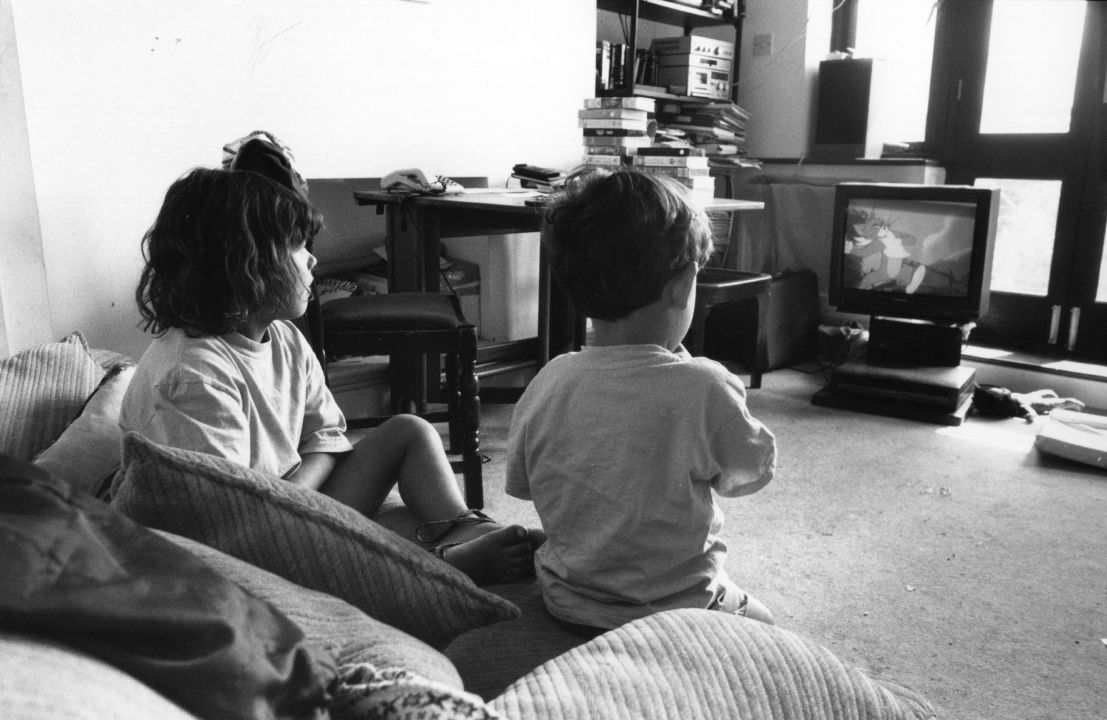
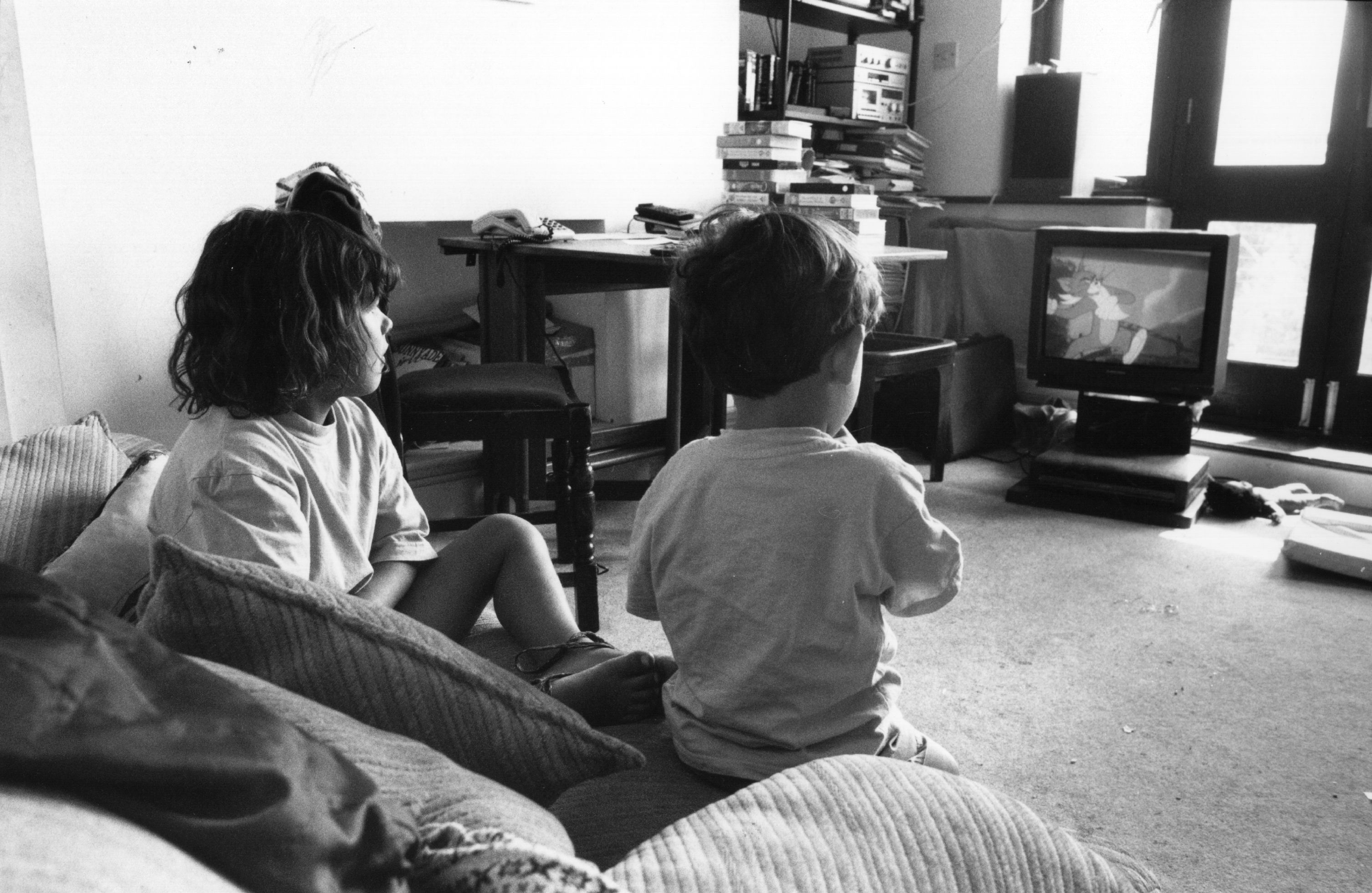
Despite my anti-tablet stance I am absolutely pro-screen time, especially at about seven o’clock on a Saturday morning. Most weekends my four-year-old will watch a full-length Disney film on both Saturday and Sunday, meaning that she’s having double the recommended governmental hour each day; I absolutely refuse to believe there is anything wrong with that. I actually feel quite celebratory about it. Lying on the sofa with my daughter, watching Pocahontas or Mulan is an absolute joy. It’s restorative, and it teaches her about narrative and empathy, inviting her to enjoy a world outside of her own experience. My four-year-old is perfectly capable of watching a whole film, and that requires a concentration span which many phone checking adults couldn’t muster.
Having a tablet in the house reminds me of some of my friends when they discover that there’s cocaine going around at a wedding
Of course, even within television there’s plenty of good and bad. Research into kids’ television generally comes to the consensus that watching an animated film from the 1950s -when frame rates were limited by how quickly the army of illustrators could knock out pictures of a talking owl – is a very different ball game from hyper stimulating slop like CoComelon, which uses bright colours and animatronic faces to put your child into a blissed-out state. One of the only lies I’ve ever told my daughter is that Sophia the First, a hyper-realistic Disney princess with a talking bunny best friend, doesn’t work on our television – when she did work, turning her off caused withdrawal symptoms.
Again, these rules around screens aren’t because I’m a good parent, they’re because I want an easy life. Children who watch a lot of high-stimulation television are harder to parent day-to-day, and I want an easy life. Sometimes I lean too hard on Ariel, Belle and co and I notice it in my child’s behaviour. My long-term goal is to get a television with a VHS player, put it in my kids’ playroom, and let them learn the horrors of having to rewind a video before you can watch it.




Comments