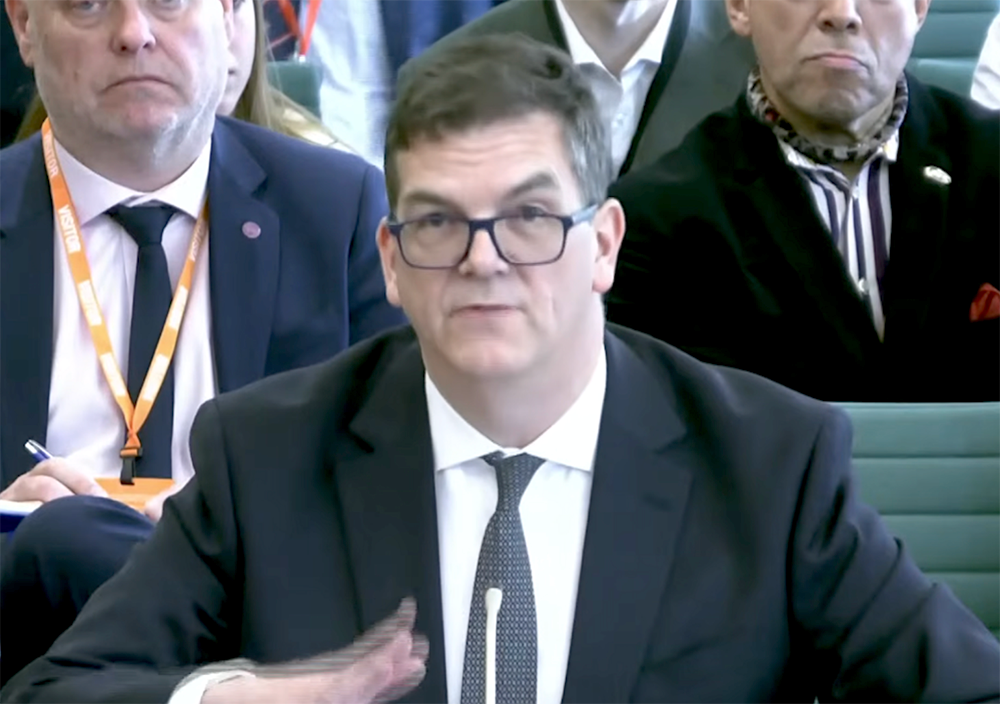
This session of parliament is due to end between April 29 and May 6. Now the government is desperate for an Order in Council to kill it off by 9 a.m. on the 29th to avoid another painful Prime Minister’s Questions. The parliament that reassembles for the King’s Speech on May 13 could hardly, in theory, look more like what Sir Keir Starmer wants. His party has the largest overall majority since 2001. He will have jettisoned all hereditary peers. He has created 65 new Labour peers, thus dramatically altering the party balance in the Lords in favor of himself (although four of them have already, after creation, left the Labour party, including Lord Doyle, the pedophile-adjacent one for whom Downing Street seemed, according to Olly Robbins, to have sought the modern equivalent of “Go out and govern New South Wales”). Yet to little avail. His weakness is quite an achievement, with the situation made decisively worse by his assault on Sir Olly. If this were an old-fashioned boys’ adventure book, it would say: “With one bound, Keir was all tangled up.”
Sir Olly will have endeared himself to many Spectator readers with his claim that the two books he knows back to front are the Civil Service Code and the Book of Common Prayer. Before I became a Catholic, thus disqualifying myself, I was on the committee of the Prayer Book Society. Now that Sir Olly has more time on his hands, I seriously suggest that he should be made the society’s chairman. He would demonstrate its continuing relevance. Sir Olly will remember one of the prayers for the Burial of the Dead, which begins: “Thou knowest, Lord, the secrets of our hearts.” He did well to insist to the select committee that such secrets, even if known to UK Security Vetting as well as to the Almighty, should not be more widely shared.

Although one can understand why Sir Keir was angry that he was not told about some of these secrets in relation to what the Prayer Book calls “the Prince of this World” (normally referred to as Lord, now Mr. Mandelson), it remains deeply mysterious what he thought he would gain by sacking him. “I don’t fully understand the reason why I have been put in the position I am in,” said Sir Olly. Nor does anyone else. He has lost Sir Keir’s confidence, said Sir Keir, but why, exactly?
BBC’s Panorama on April 20 gave a straightforward and well-sourced account of the growth of anti-Semitism in this country. It interviewed key people such as Jonathan Hall, the independent reviewer of terrorism legislation, and Daniel Walker, the rabbi of the Heaton Park synagogue in Manchester where two congregants died. It was a decent piece of work. But it had one remarkable omission. Except in the case of Heaton Park, where the killer is dead and it did mention that he had been a fan of the Islamic State group, the program made no mention, even implied, of the religion of the chief attackers of Jews. It went into some detail about two plots – one, which was foiled by an undercover agent, to attack an anti-anti-Semitism march in Manchester; the other, a strange case in which a Jewish musician was lured to a cottage in Wales with the promise of career advancement to be beaten up and unsuccessfully kidnapped by three men. In both cases, the criminals were Muslim and their hatred of Jews was motivated by their interpretation of Islam. Is there any other form of crime in which a relevant ideological motivation is not explained and reported? There is endless anxiety about hate crime but, in the case of Muslim assailants, the origin of their hate is not officially spoken and is therefore unacknowledged.
On the centenary of Elizabeth II’s birth, I took part in an amiable Today program debate about the future of the monarchy. As talk turned to the former Prince Andrew, I found myself reflecting on a twist of history. For many years, argument raged within the royal family about what its surname was. Emboldened by the marriage of Lieutenant Philip Mountbatten to the future Queen, her tirelessly self-promoting cousin, Lord Mountbatten of Burma, tried to make sure that the family would be called Mountbatten-Windsor. Only now, after the fall of Prince Andrew, has that name been highlighted by the invention of a private citizen called Andrew Mountbatten-Windsor. So the name of Mountbatten will be forever associated with disgrace.
Lyse Doucet is reporting from Tehran. It is always explained on air that she does so “on condition that none of her material is used on the BBC Persian Service.” The BBC does not explain why this is an acceptable condition: it is giving in to Iranian government pressure in return for what, in media terms, is a bogus advantage. The objective effect of Lyse Doucet’s presence in Iran is to bolster the regime. What she sees and hears there will be almost wholly controlled by it, so her words will sanitize propaganda, whether or not she wishes to do so. And since she uses her platform to attack Donald Trump rather than Iran (where her job is really to attack neither, but simply to inform), she is doing the IRGC’s work even if she does not intend to. She has conveyed no new facts about the state of Iran, and just repeats the line – beloved of the Foreign Office for nearly half a century – that western toughness is empowering the “hardliners.”
For some reason, my computer, uninvited, proposes stylistic changes, as well as usually welcome spelling or grammatical ones. Last week, I wrote of the “odd squib” about something or other. AI offered “occasional jab” instead. Why? A squib and a jab are different things. These large language models are surprisingly small-minded about what language can do.




Comments