When I was four, the progressive teachers at my primary school thought it would be wise to teach us how to type on a keyboard. When it was my turn to key out the phrase ‘Biff and Chip’ on the computer, they discovered, to their horror, that I was already capable of effortless touch typing.
I have been using computers, and by extension the internet, since before my earliest memories were formed. Not only did I grow up online, I did so during the early 2000s when there were virtually no safeguards or restrictions on what children could access. I pirated my first film, Star Wars: Episode III – Revenge of the Sith, at the age of seven and bought my first (sadly wasted) bitcoin at 13. Such was my use of the predominantly American internet that at secondary school I had to make a conscious effort to unlearn US phrasings such as ‘trash’ for rubbish and ‘pants’ for trousers. To this day I double-check the spelling of ‘defence’ and ‘colour’.

In the worldview of people who watch BBC shows about incels, I should be a gibbering freak who cannot look the opposite sex in the eye, and who spends every waking moment in my bedroom with my trousers round my ankles, getting angry at AI videos of migrant crimes. And yet I see only a sprinkling of myself in this crude characterisation of people who have spent too much time on the internet.
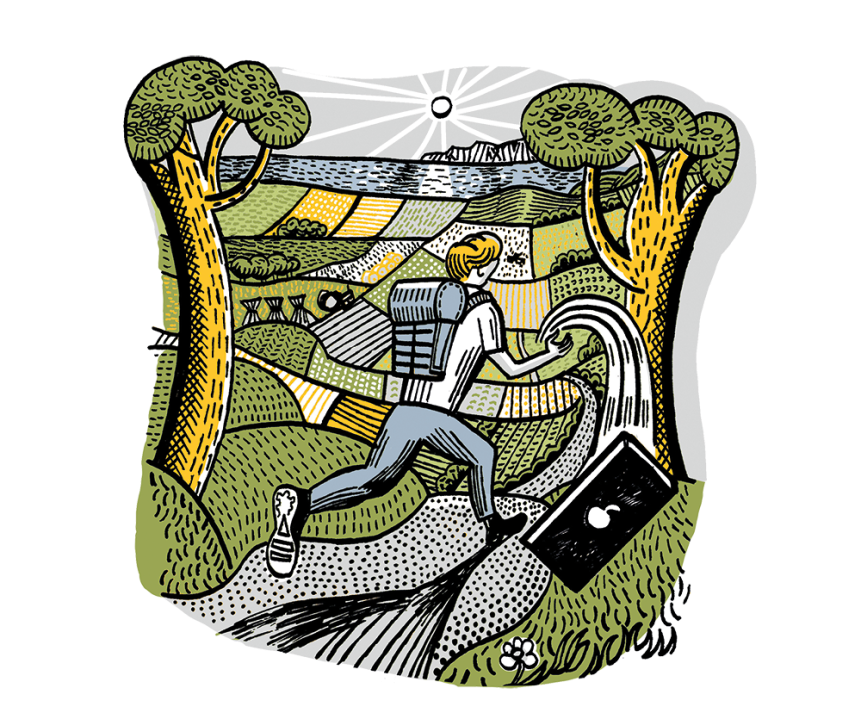
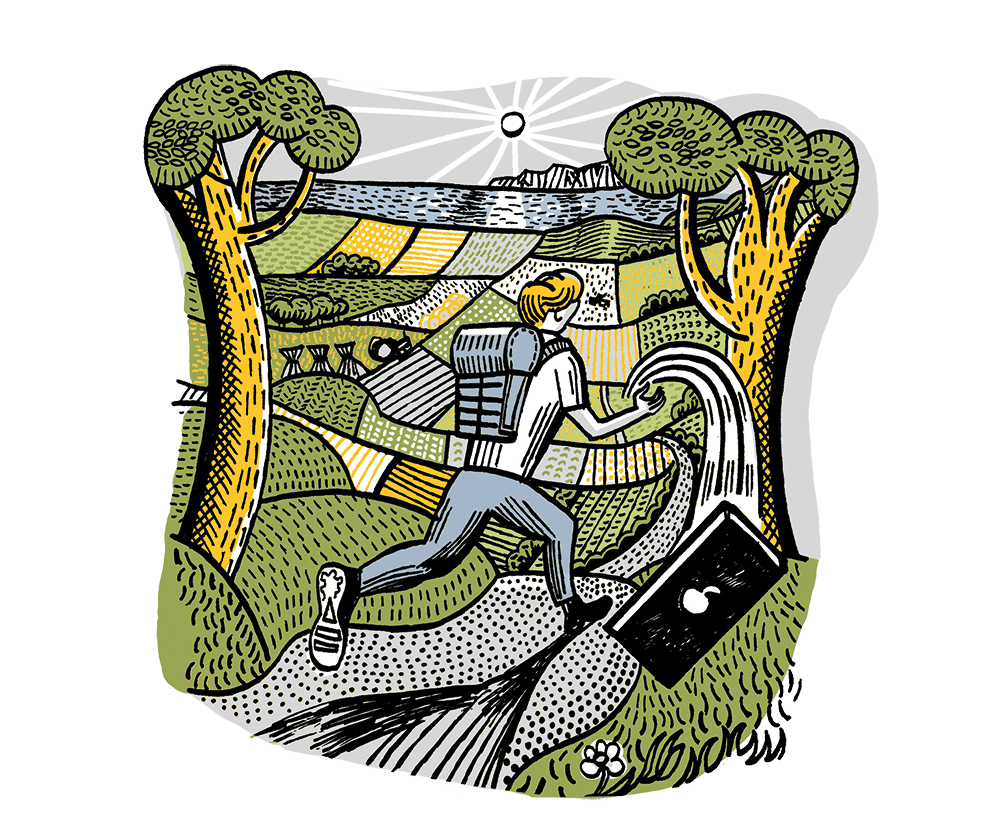
Declaring yourself to be normal is a bit like calling yourself a lady: if you have to say it, it probably isn’t true. Nonetheless, I have managed to enter adulthood in a relatively stable condition, plodding through the usual milestones of a driving licence, first job and marriage. This happy accident is, I think, in no small part the result of my parents’ liberal attitude towards my access to the internet being extended to other aspects of life. When I think of my teenage years, I don’t remember the hours spent on the laptop; I think of the walking trips across Europe that my friends and I enjoyed.
The Westweg, a hiking trail which runs through the Black Forest in southern Germany down to Basel on the northern border of Switzerland, saw many firsts. My first time setting up a hammock. My first time in a sleeping bag. My first time having that bag nibbled by rats. My first time using loo roll outside. My first thirst-induced panic attack.
More magically, somewhere in and among those smoky glades and pine needles, there’s a small alcove where I had my first cigar at dusk. And in some village full of chummy Teutons, the Kneipe where I first enjoyed a Bavarian pilsner. It was two weeks of spontaneous fun and risk-taking which would not have been possible on an organised school-trip. And I did it at 16, the age at which the British government believes children should first be given permission to use social media.
Then there was Italy, where I first felt Protestant revulsion. It was on the Via Francigena, an ancient pilgrimage route from Canterbury to Rome. Along this path many monasteries and nunneries open their doors to passing travellers in the spirit of Christian charity. At one abbey in Tuscany, we were asked to pay €15 each on the door. Inside we were invited to dine with a gaggle of impious monks, all of them overweight. Watching them stuff the venison into their mouths, washing it down with wine that we had paid for, I felt as Luther must have felt when he made his own pilgrimage to the Eternal City – the ‘cesspit of sin’ he would later describe while railing against indulgences.
Epiphanies notwithstanding, I’m glad my parents entrusted me to make these journeys without adult supervision. It concerns me that, if I’d been born much later, this riot of freedom would not have been possible; that I’d have been stuck with the phone, and nothing but the phone. Or worse, thanks to the constant stream of anti-technology propaganda pumped out by the BBC and endorsed by supposedly neutral institutions such as the monarchy, I’d have been stuck indoors with neither the European continent nor the digital frontier to explore.
There’s more to life than watching divorced men rant about skirt lengths between adverts on crypto
With the approach of the summer, an opportunity beckons for the parents of teenage boys to ensure that their charges don’t become just another statistic, another scrolling finger trapped in a childhood bedroom by the algorithm. The King Charles III England Coastal Path, which has been in the works since 2009, has just opened. It winds from the Northumberland coast down to the White Cliffs of Dover and across to Lulworth Cove and the Jurassic Coast in Dorset. It’s the longest coastal path in the world. When combined with the Welsh Coast Path it’s possible to walk unimpeded for 3,400 miles, with freshly painted signposts to keep you on track, and essentially no risk of being hit by traffic or robbed at knifepoint.
Plenty of time, space and fresh air, then, for a young mind to distract itself from whatever dreck Andrew Tate has been feeding it about women or Jewish people. There’s more to life than watching 40-year-old divorced men rant about skirt lengths between adverts for their paid courses on acquiring crypto wealth. Knowing about the joys of being outside is wisdom that only real life can impart; not parents and not Louis Theroux.
So here’s my message to the parents of teenage boys. Don’t just fret about the manosphere. Don’t obsess over what they’re watching on their screens. Instead, give them the freedom to discover the world outside the internet. Let them loose on the English countryside.



Comments