
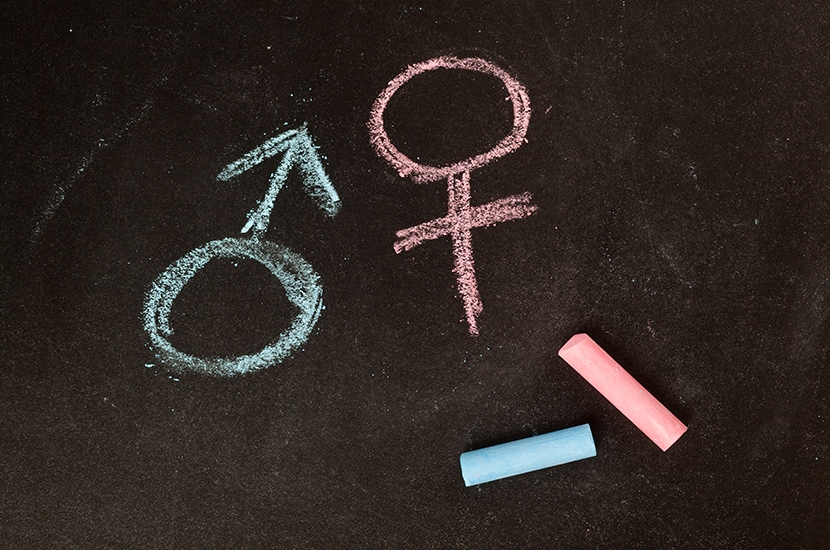
According to some of this morning’s headlines, from next September children will be allowed to change their gender at school and use different pronouns. No doubt some adults will be horrified by this, while others will be outraged by the restrictions placed on these so-called trans kids.
While it is easy to criticise this guidance as ‘choose your gender, choose your pronouns’, that’s not what the draft document says
The truth is that a small number of children have been changing their gender – and requesting that other people refer to them by different pronouns – for more than ten years. Schools have been left to manage but, in the absence of clear guidance from government, school leaders have been left to seek advice from the likes of Stonewall or make it up as best they can.
Bridget Phillipson has now launched a consultation on the proposed changes to the document ‘Keeping children safe in education’. This is the safeguarding bible for schools. As statutory guidance, it sets out what schools must do rather than suggesting what they merely ought to do.
In a press release, the Education Secretary explained that ‘This is about pragmatic support for teachers, reassurance for parents, and above all, the safety and wellbeing of children and young people.’ Her proposals have the blessing of Hilary Cass – author of the Cass Review – and various leaders from the world of education.
All seems well, therefore, but the devil is usually in the detail. The draft guidance regarding ‘children who are questioning their gender’ takes up 31 paragraphs. Here are my initial takes.
First, schools will not be able to initiate any action to socially transition children. Individual members of staff must not take it on themselves to make changes unless a decision has been made by a school in consultation with parents or carers.
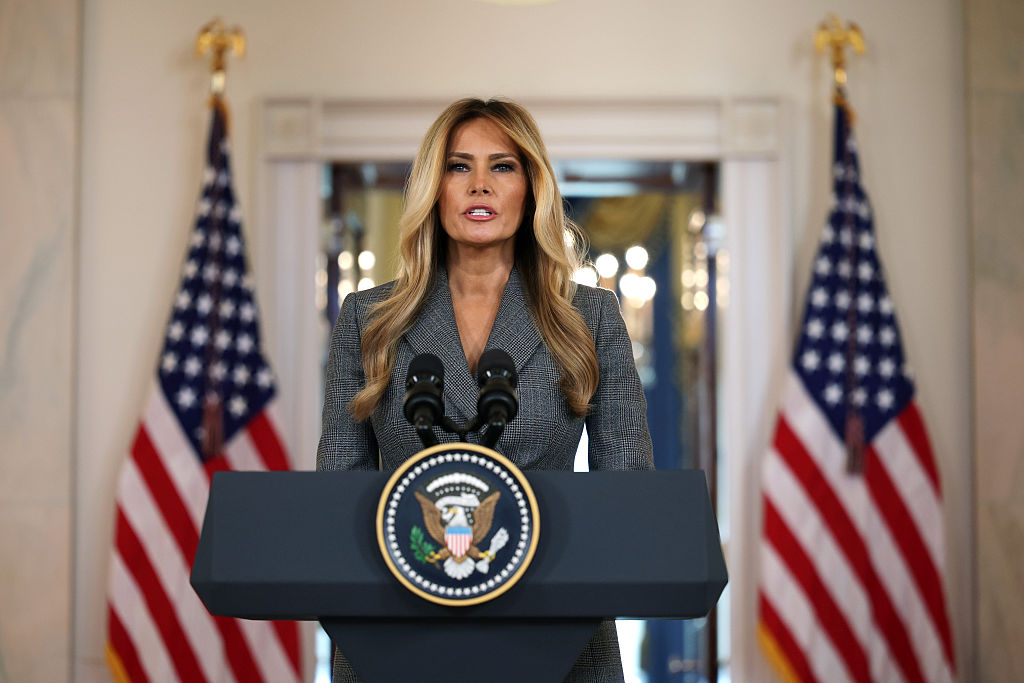
The guidance says transition should not be viewed as a neutral act: ‘social transition should be viewed as an active intervention that may have significant effects on the child or young person in terms of their psychological functioning and longer-term outcomes. Primary schools should exercise particular caution, and we would expect support for full social transition to be agreed very rarely.’
Where sex-segregated facilities are concerned, sex is biology. There would be no wriggle room: ‘schools must not allow pupils into toilets, changing rooms, or boarding or residential accommodation designated for the opposite sex, with no exceptions [my emphasis].’ Similar rules are proposed for sex-segregated sport.
In an ideal world – or at least one that reacted more quickly when parents started transitioning their children – none of this would need to be said. Children would have been protected from unwise decisions that have had a deleterious impact on their psychological functioning, and kept well away from doctors keen to experiment on them.
Paediatric transition would never have become the thing that it has and the guidance for gender questioning children could simply mirror the single paragraph in KCSIE allocated to children who are lesbian, gay or bisexual. In brief, the message there is that schools should be alert to bullying of children perceived to be different from their peers.
Unfortunately, that is not how it has been in western societies over the past couple of decades. Transgender identities have been promoted to children. Social media influencers have spun their narratives, while parents were blissfully unaware of the content their sons and daughters were consuming.
The legacy media is also complicit. Programmes such as I am Leo, and First Day – both aired by the BBC – painted a rather one-sided story. Trans children were special and other children had to accommodate them. What’s not to like about that, especially if you are a young person struggling with the thought of growing up. Shockingly, the BBC website still refers to Leo as a 13-year old boy who ‘was born with a girl’s body’.
Schools work in that real world. The world in which children – and some of their parents – have bought into the idea that children can be born in the wrong body. Youngsters turn up at the school gate already socially transitioned. Telling them to ‘go home and get changed’ is probably not going to work. Likely, they will just not come back.
There is a specific note in the guidance about children living in stealth, i.e., when their friends and classmates might be genuinely unaware of their biological sex. For them the prospect of puberty – and the development of secondary sex characteristics – could be genuinely terrifying. Unfortunately, the advice from government is limited to involving the designated safeguarding lead in the school.
But, realistically, what can schools do beyond trying to reconcile the child with the reality of their body? Children know the difference between boys and girls from a very early age and it’s likely to come out at some point.
While it is easy to criticise this guidance as ‘choose your gender; choose your pronouns’, that’s not what the draft document says. Indeed, the word ‘pronoun’ only appears once and that is in the context of helping teachers navigate difficult situations by avoiding pronouns and using names instead. Nobody’s speech should be compelled, and my view is that pronouns should be chosen by the person who articulates them. But, at the same time, I wouldn’t want to cause unnecessary upset.
The word transgender doesn’t appear at all. Wisely, in my view, the government has avoided the concept of a transgender child and focused on children questioning their gender. We can argue whether transgender children even exist, but we cannot deny that some children question whether they are boys or girls.
Hopefully in not too many years’ time, we will look back and wonder why 31 paragraphs were devoted to an issue that came and went: a fad that gripped children for a while, until they moved on to something else. As a teacher myself, I sense that it is already on the wane, certainly among teenagers. But in the meantime, schools need to deal with the situation in front of them. Phillipson’s guidance will not be to everyone’s taste – she might even succeed in satisfying nobody who has an existing opinion – but it is probably as good as we are going to get, and it is certainly better than the vacuum that it replaces.



Comments