
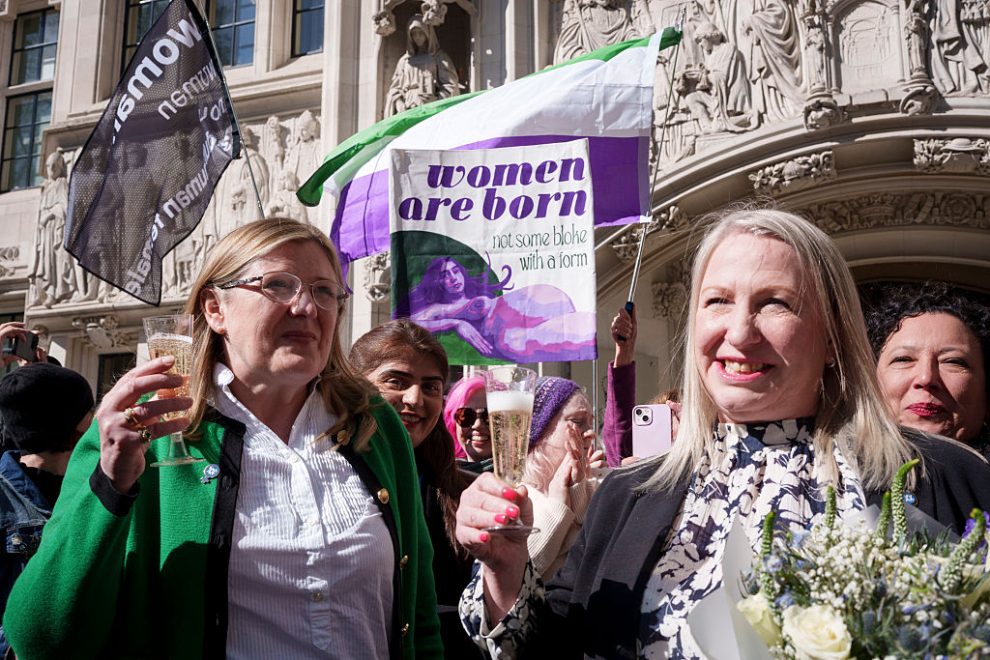
More than a year after the Supreme Court ruled that a woman is defined by biological sex, Labour has finally published its long-awaited trans guidance. The 342 page policy document pushes organisations towards providing male toilets, female toilets and an additional mixed-sex or private option where possible. Where there is no gender-neutral option, biology takes precedence. The guidance says trans people should not be allowed to enter single-sex sports that do not match their biology. Domestic abuse service providers must also maintain single-sex spaces.
Despite the insistence from the Education Secretary’s team that her motivations in taking it slow were entirely well-meaning, others will argue they were more political
All the above seems like common sense and will leave many scratching their heads as to how it took more than 12 months for civil servants to give it the rubber stamp. Today, allies of Bridget Phillipson launched into defence mode as the Education Secretary – who also serves as equalities minister – was heavily criticised for taking so long to produce the guidance.
A source close to Phillipson justified the lengthy process as necessary to guarantee a bulletproof document that would survive an onslaught of legal challenges from the trans lobby and its charity accomplices. They insisted that while ‘the ruling was simple, the application has been anything but’. Phillipson’s allies argue that the government is responsible for a vast array of services, from women’s refuges to hospitals, and that there is a huge breadth of businesses and other organisations to which the guidance will apply. As such, they claim, it could not have been produced any faster.
Allies of Phillipson have also taken the extraordinary step of accusing Baroness Kishwer Falkner, former head of the Equality and Human Rights Commission, of ‘grandstanding’ on the trans issue. A source close to the Education Secretary said: ‘Bridget’s approach throughout has driven solely by the need for this guidance to be clear and practical, respecting the judgment of the Supreme Court and supporting services to run lawful provision while protecting the dignity of trans people. Bridget believes firmly in the importance of protecting single sex spaces for women, but this can be done in a way that ensures dignity for trans people too: it is not an either or.’
Falkner, who stood down from the EHRC in December last year, has been hailed by women’s rights activists for her bravery and persistence in pushing to protect single-sex spaces, despite vicious threats of social cancellation and a campaign of bullying and harassment by trans extremists. She has been outspoken in wanting the guidance to be written and published for businesses, public services and organisations as promptly as possible. Phillipson’s team training their guns on Falkner is unlikely to be accepted by those who have followed the matter.
Despite the insistence from the Education Secretary’s team that her motivations in taking it slow were entirely well-meaning, others will argue they were more political. The swathes of feminist campaigners and politicians across the ideological spectrum begging for an end to institutional capitulation to the trans lobby will argue that Phillipson feared aggravating groups of left-wing voters and her party’s base. They will say the guidance was delayed for reasons including Phillipson’s failed run for deputy Labour leader late last year.
The guidance is hefty, the small print still requires thorough examination, and there is no doubt further debate to come. But despite the document finally getting over the line, today can hardly be deemed a coup for Phillipson or the Labour party.






Comments