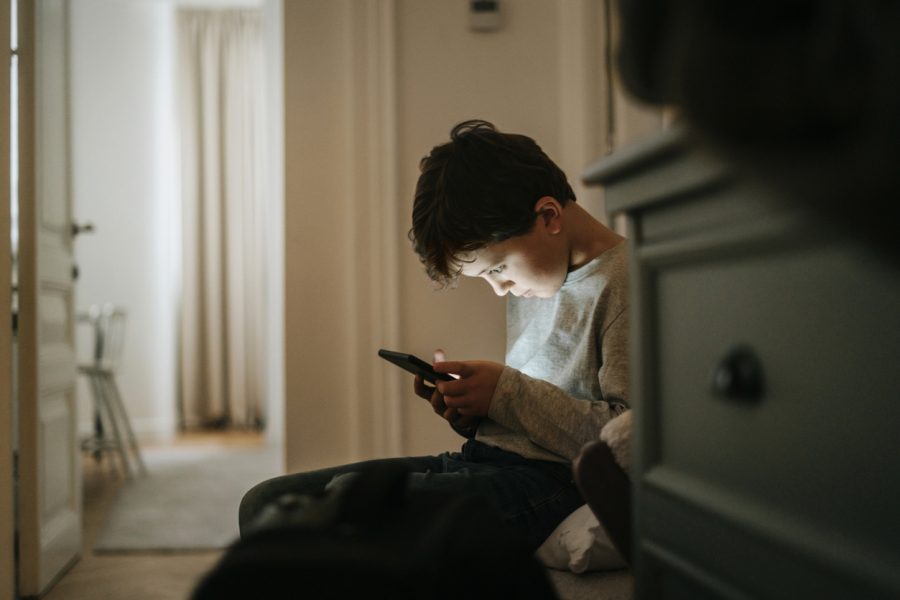
If a child found Mr. Kipling cakes particularly addictive and began overindulging to the point of becoming overweight or unwell, would we be right to sue the baker? Or would it make more sense to ask whether the parent had enabled the behaviour by leaving the packets within easy reach, refusing to set limits or using them as a convenient babysitter?
A Los Angeles jury has just delivered a landmark verdict against Meta and Google, finding both companies negligent for designing addictive platforms that harmed the mental health of a young user, known as Kaley. The £4.5 million awarded in damages, with Meta shouldering the lion’s share, has been hailed as social media’s ‘Big Tobacco moment’. Tech firms, it’s argued, acted recklessly in knowingly hooking children with infinite scrolls, auto-play and algorithmic dopamine hits, and so they are therefore fully responsible for the depression and anxiety that ensued.
It is a seductive narrative. It’s also a comforting one, because it shifts responsibility away from the place it is most uncomfortable and most necessary to look at: the home.
When parents treat screens as electronic babysitters from infancy, they are not victims of Big Tech
As a foster carer who has spent two decades watching the rise of screen addiction surpassing other forms of neglect, I question whether the tech companies are solely responsible. I think of 11-year-old Frankie (not his real name), who came to stay with me after a violent altercation with his mother. He was used to spending most of his waking hours, when he wasn’t at school, glued to his phone or Xbox and fully expected the same routine to continue under my roof. Mindful of the upheaval of being removed from home, I took my time before breaking the news that I had other plans.
A few days in, once we’d shared some banter and got a bit of a connection going, I suggested a modest limit – no phones at the table. He flew off the handle. ‘Get off my case!’ he screamed, squaring up to me. Only when my grown-up son Jamie walked in and eyed him coolly did Frankie shrink back. Young lads often develop a bit of hero-worship for older teens, and Frankie, flushing a deep scarlet, slid his phone into his pocket and took his seat.

As is often the case, social services had neglected to fill me in on the most pertinent details of Frankie’s past. It was only when I met his pastoral lead at school, after he had assaulted a fellow pupil, that the full picture emerged. ‘He’s been groomed online,’ she told me. ‘For years, on Roblox and then on other gaming platforms.’ Where most parents tuck toddlers up with a bedtime story and a soft toy, Frankie’s mother had sent him to bed with an iPad, always capitulating when he refused to sleep or eat without it. Soon it was propped in front of him in the pram, and then it replaced the playground, the sandpit and Play-Doh. The internet’s wild west inevitably took over, and by seven years old, Frankie was set on a trajectory that would eventually bring him to my door.
He practised what he’d learned from watching graphic videos of real life murders, suicides, and footage from warzones on our little dog Mungo – dangling him from his lead and even swinging him around. Horrified by the sight of Mungo half-choking, I began taking the pup everywhere with me, even to the bathroom, because I was afraid to leave him alone. Also worried about my young adopted daughter, who’d borne the brunt of a few of Frankie’s outbursts, I took to sleeping in the hallway each night, to keep everyone safe. A few nights in, I realised it was unsustainable and told Frankie’s social worker that I couldn’t continue with the placement.
Predictably, no other carer wanted to take on the risk and there were no residential places available. Frankie was so distressed at the thought of moving on that he agreed to follow my rules and his social worker, usually keen to follow a child-led, therapeutic regime, also sanctioned my plan to remove all devices. A few hours in, with Frankie despairing and shadowing me round the house with a mournful expression, I began to wonder if I could stay the course. But it is surprising how quickly even the most hardened little addict begins to notice his surroundings once he finally looks up from the glow.
Boredom drove him into the kitchen, and to his surprise he discovered he enjoyed cooking. Board games followed, Yahtzee and Monopoly Deal becoming his new obsession. ‘Best of three!’ he would declare after a loss. Long walks by the river with Mungo at his heels came next. A year on, he was a different child – fitter, calmer, even winning the 100 metres at school. He was returned home, it was felt, with enough emotional regulation to avoid the violent rows that had first brought him into care.
Within months the old habits had re-emerged. A few months after that, he was in residential care.
So who was responsible? Roblox? Xbox? Or the mother who had propped an iPad in front of her toddler and never said no? Absurdly, she could now sue the very companies that ‘enabled’ her son’s grooming and quite possibly walk away with a handsome payout after years of her own neglect.
Screens are not evil. But when parents treat them as electronic babysitters from infancy, when they cave at every tantrum, when they fail to model balance or set the simplest of boundaries, they are not victims of Big Tech. They are participants in the harm that ensues.
It may be unfashionable to discuss personal and parental responsibility these days, but surely it remains the one thing no algorithm can replace? Big tech may be powerful. But not more powerful than a parent who says no.




Comments