
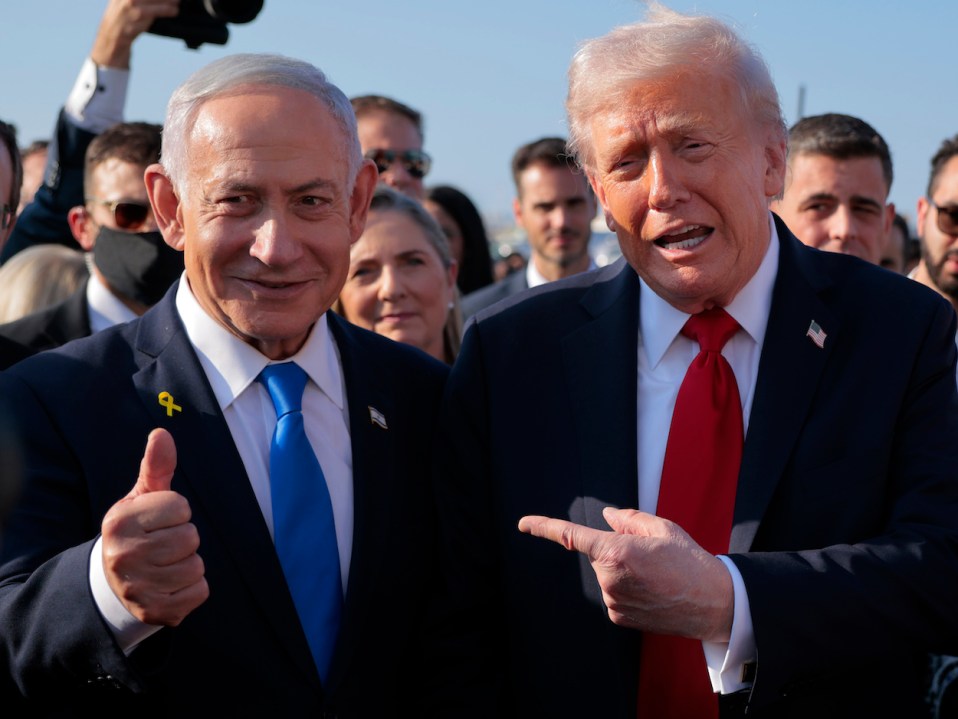

When Benjamin Netanyahu arrives in Florida at Donald Trump’s Mar-a-Lago estate in a few days’ time, near the top of his agenda will be a sober accounting of Iranian military activity and what it may yet presage. He will brief the President on a sustained sequence of Iranian ballistic-missile drills conducted across multiple regions, the visible movement of missile units, launchers and support infrastructure by the Islamic Revolutionary Guard Corps, and Israel’s assessment that these actions serve a dual purpose. They resemble routine exercises in form, yet replicate with unnerving fidelity the preparations that would precede an actual strike. At the same time, they reflect a discernible Iranian shift toward conventional missile warfare as the principal instrument of pressure against Israel, at least for now, following damage to its nuclear programme and the partial degradation of its regional proxy network.
This moment belongs to a confrontation that has already spanned decades and shows no tendency toward conclusion. It is sustained less by events than by ideology, less by escalation than by adaptation. What gives this phase its urgency is that it demonstrates the nature of the regime driving it: an ideologically sealed system whose fixation on destroying Israel and eroding American power is so blinkered and compulsive that it persists even in the face of economic ruin, domestic collapse and the absence of any obligation felt toward the safety of its own population.
That fixation is institutionalised: in October 2025 the IRGC’s academic arm, Imam Hossein University, hosted its third international conference titled ‘The Decline of America: The New Global Era,’ presenting the erosion of US power and the elimination of Israel as an inevitable, divinely ordered project to be pursued over generations.
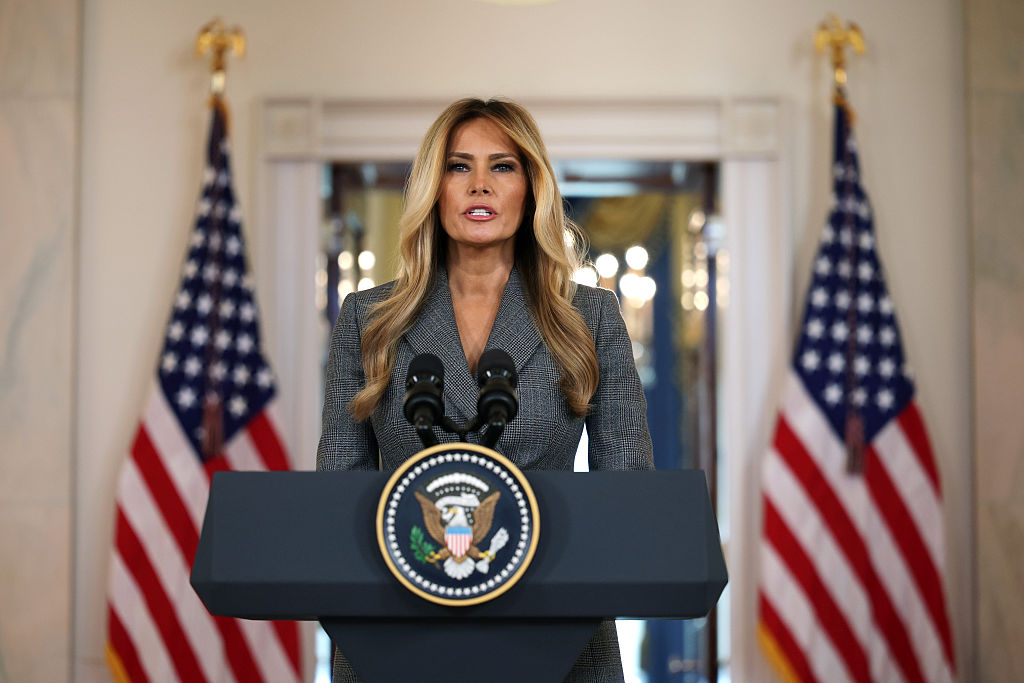
Iran’s nuclear project and proxy network may be in ruin, but its motivations remain intact. Its posture toward the new and old Middle East alike remains fixed. Its plans toward Israel remain undiluted. The most consequential public signal came not from Tehran but from Jerusalem. Standing beside the leaders of Greece and Cyprus at a trilateral summit in Jerusalem on 22 December, Netanyahu said two things with deliberate clarity: Israel is watching closely, and any action against it will meet a severe response. The statement carried weight because it was measured, and because it was delivered without theatrics.
Strip away the diplomatic phrasing and the assessment underneath is more direct. Israel cannot be certain that the current activity is merely demonstrative. It assesses that Iran may intend to strike, and that the distinction between rehearsal and execution has narrowed. After October 7th, strategic tolerance for surprise has evaporated.
I was in Israel during the 12-day war. Iranian ballistic missiles were physical facts. Sirens tore through the nights. Days were organised around proximity to shelter. We repeatedly gathered underground in an undeniable act of understanding that survival depended on preparation rather than reassurance. Those missiles were aimed deliberately at civilian centres. That experience has hardened how signals are read.
This Iranian strategy is built on attrition rather than climax. The organising assumption is that Israel is more vulnerable to sustained conventional pressure than to any single, decisive act. Massed missile fire, repeated strikes over time, and persistent strain on civilian life are treated as the primary instruments, applied patiently and at scale, with the aim of eroding defences, resilience and economic stability rather than seeking a singular moment of destruction.
The refinement now underway points toward scale. More missiles. Greater mass of steep-trajectory fire. A deliberate effort to reduce the effectiveness of Israeli defence systems, which are formidable but not hermetic. An expansion of infrastructural and civilian damage, following the sober realisation that even Israel’s advanced civilian protection has limits when confronted with heavy missile impacts. From there, the objective is attrition: economic strain, demoralisation, and sustained pressure, reinforced by a global campaign of delegitimisation and anti-Semitism presented as moral critique. Iran is active in that sphere as well.
To generate that volume of fire, Iran retains options it has long cultivated. It can attempt the kind of genuine multi-theatre escalation embedded in the strategic framework Soleimani helped institutionalise, but which has yet to be realised in full. The Iranian axis has been weakened, not dismantled. Forces in Lebanon, Iraq, and Yemen remain armed, present, and capable of joining a retaliatory move, complicating Israel’s response and challenging its recent practice of addressing distinct arenas separately and in sequence.
All of this forms the backdrop to Netanyahu’s meeting with Trump. The Prime Minister has no shortage of urgent topics, yet this may be the most consequential, preceding Gaza and Hezbollah. It may also be the arena in which an American president eager for regional calm allows Israel greater latitude than he finds possible elsewhere. Gaza collides with visions of reconstruction and grand plans. Hezbollah collides with ambitions to preserve Lebanese statehood. Iran sits differently. Of three theatres, perhaps only one yields room for decisive action.
Iran’s conduct strips away any illusion about priorities. Even amid water shortages, electricity failures and economic contraction, the regime has channelled vast resources into instruments of attack. Mohammad Javad Zarif’s recent acknowledgement on Al Jazeera that roughly $500 billion was spent on the nuclear programme was striking precisely because it carried no regret. The expenditure was framed as ideological defiance. The moral judgement, drawn by others, contrasts that figure with empty reservoirs and decaying infrastructure. The choice was deliberate.
In Tehran’s Palestine Square, a digital clock counts down to the envisioned destruction of the State of Israel. The symbol is grotesque, yet clarifying. While Israel has invested relentlessly in shelters, early warning systems and civilian resilience, Iran has provided its population with little protection from the wars it seeks. Iranian friends of mine abroad speak quietly of families without shelters, without warning systems, without any sense of personal safety.
The world should observe this regime with the same clarity Israel is forced to apply
Israel harbours no reciprocal obsession. During the war, it possessed the capacity to push further, to pursue regime change directly. It chose restraint. Its focus remains survival and protection rather than ideological conquest. Even under fire, its economy functioned. Its society absorbed shock without collapse. That resilience frustrates Tehran, which speaks openly of breaking morale and dismantling prosperity. The effort has failed, so far.
The wider world should observe this regime with the same clarity Israel is forced to apply. Iran’s leadership is so consumed by the project of destroying Israel that it accepts, even embraces, the sacrifice of its own people as collateral. Chronic water shortages, failing infrastructure, economic exhaustion and the absence of basic civilian protection are not unintended consequences but tolerated costs. The clock in Palestine Square, counting down to 2040, makes this plain. It is not a threat of imminence but a declaration of endurance, a statement that the campaign is generational rather than tactical.
That obsession does not stop at Israel’s borders. Across Europe, including in the United Kingdom, Iranian regime institutions, networks and operatives continue to function openly or semi-openly, engaged in intimidation, subversion and preparation. From European capitals to Latin America, including Venezuela, the Islamic Republic has built a lattice of influence dedicated to disruption, coercion and violence abroad. Israel stands on the front line of this project, but it is not its final destination.
The clock continues to tick. One can only hope that the regime which built its future around such a promise is gone long before it reaches zero.

Comments