In Ian Fleming’s short story Risico, Bond scans the bar of the Excelsior in Rome for his contact Kristatos. He has been told to look for a mustachioed man drinking an Alexandra cocktail. Amused by the ingenuity of the signal, he spots the concoction of cream and vodka sitting on a corner table: ‘The creamy, feminine drink was so much cleverer than the folded newspaper, the flower in the buttonhole, the yellow gloves that were the hoary, slipshod call-signs between agents.’

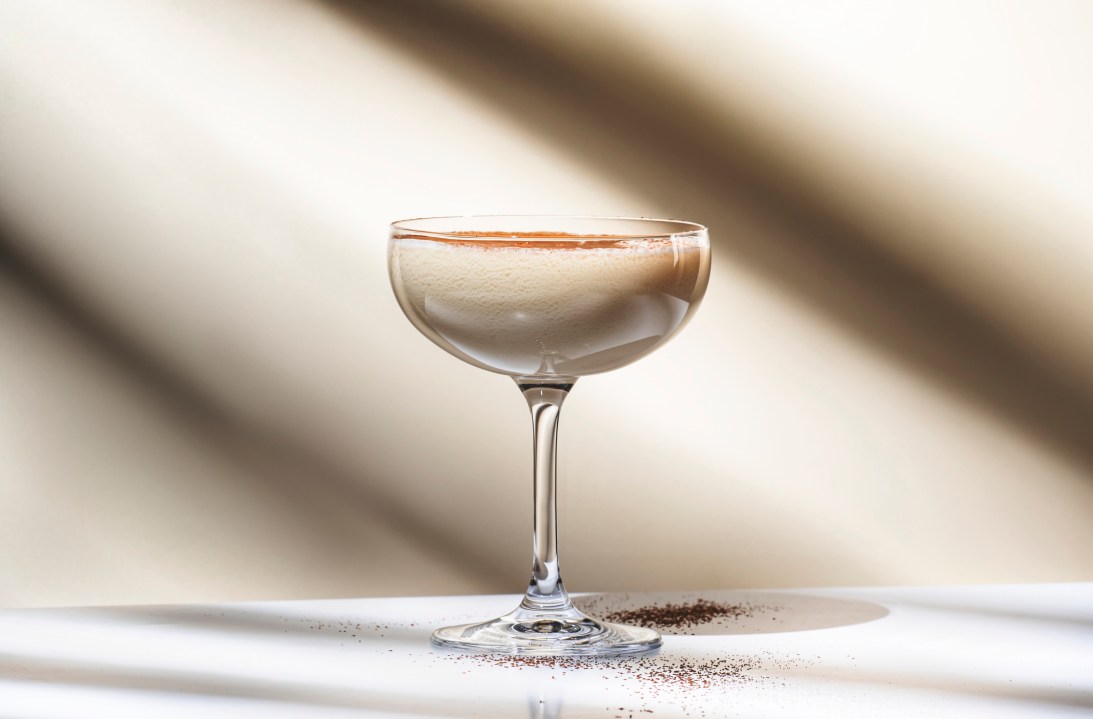
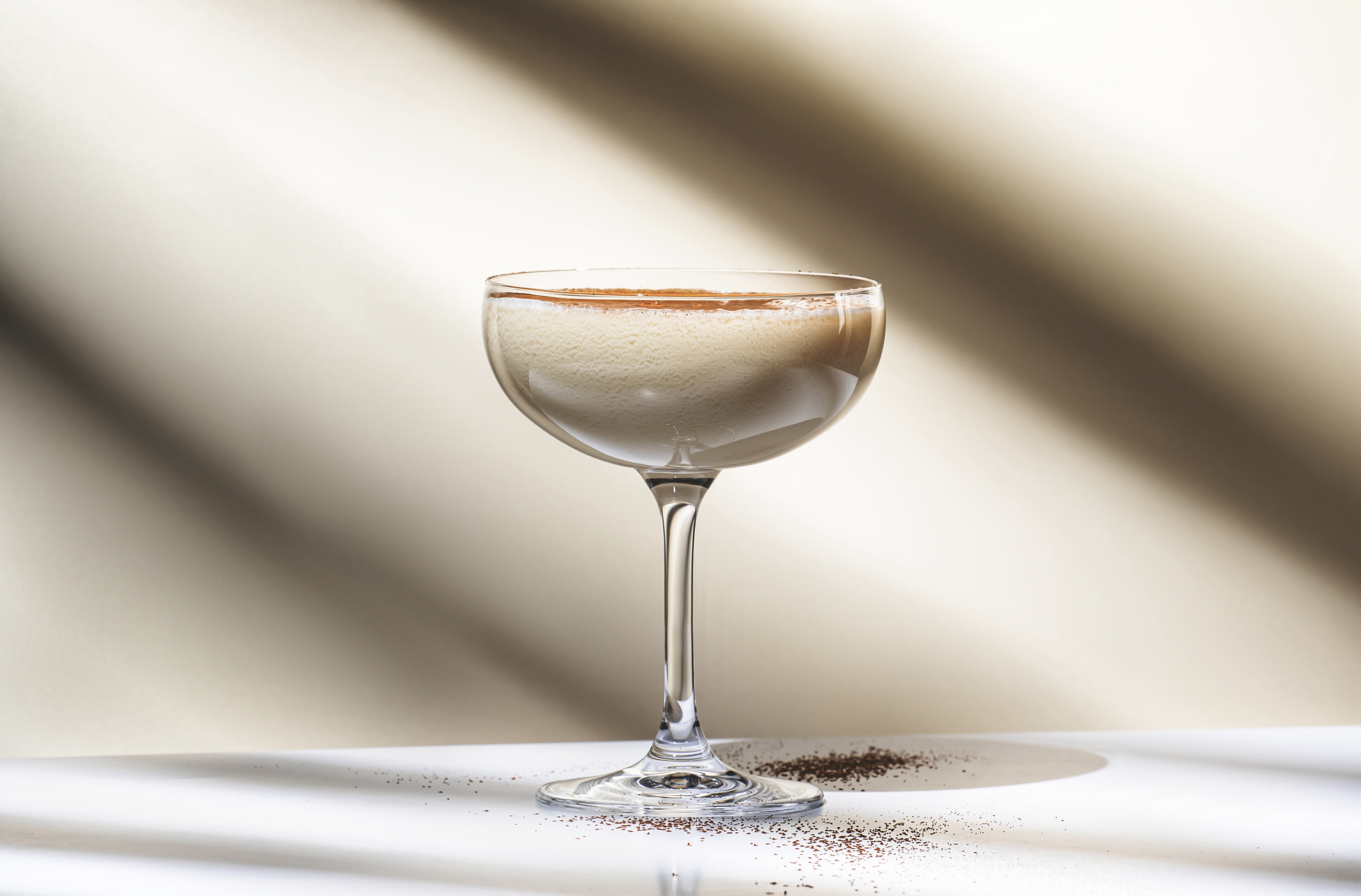
While Kristatos went with vodka, the Brandy Alexander (derived from the gin-based Alexander) has long been the standard version of the cocktail. The recipe is simple. Grab 50ml of brandy, 25ml of crème de cacao and 25ml of cream. Shake with ice and strain, then dust with nutmeg. I’m of the firm opinion that the Brandy Alexander – sweet, creamy and delicious yet neglected and maligned – deserves to be resurrected and found on many more cocktail menus.
Why did this once-hip cocktail, with its roots in the early 20th century, go out of fashion? Perhaps, as the extract from Fleming indicates, because this is a drink of dubious repute. It is thought there is something rather childish about enjoying a cocktail that seems like an alcoholic dessert. Those who drink it in films and novels tend to be portrayed as impressionable young women or effeminate men.
In the 1962 film Days of Wine and Roses, the Brandy Alexander is the catalyst for teetotaller secretary Kirsten descending into alcoholism. Kurt Vonnegut’s novel Mother Night references ‘a pansy full of Brandy Alexanders’. This unfortunate view of the cocktail wasn’t helped by the memorable scene in the glorious 1981 television adaptation of Evelyn Waugh’s Brideshead Revisited in which the stammering Anthony Blanche (played superbly by Nickolas Grace) downs four Brandy Alexanders in flamboyant fashion.
It was through Waugh’s novel that I first came across the Alexander. Charles Ryder is taken for an apéritif by Blanche and is embarrassed at his foppish behaviour:
“I expect you would prefer sherry, but, my dear Charles, you are not going to have sherry. Isn’t this a delicious concoction? You don’t like it? Then I will drink it for you. One, two, three, four, down the red lane they go. How the students stare!” And he led me out to the waiting motor-car.’
Of course, when I first read that amusing passage as an Edinburgh undergraduate my first instinct was to rush out to try the drink in question (I had to wait for a master’s degree to imbibe in Waugh’s ‘city of aquatint’). Yet it is the conflation of Blanche and Brandy Alexander that has solidified the silly idea that the drink is only for effeminate young fogeys. I’m not going to argue that drinking one is the epitome of manliness – but it is still damn delicious.
Another reason for the downturn in the Brandy Alexander’s fortunes is uncertainty around exactly how to categorise it. John Lennon thought of it as a ‘milkshake’. When he tried it for the first time one night in 1974 at the Troubadour in Los Angeles, he ended up being thrown out after heckling the band and apparently assaulting a member of staff.
Is it a dessert cocktail or something else? On the cocktail menu at Rules on Maiden Lane, the Brandy Alexander is placed in both the ‘after and late’ and ‘dessert cocktail’ categories. My uninformed take is that while the Brandy Alexander works swimmingly as a dessert cocktail or nightcap, it can be enjoyed at any time of the evening (or even earlier in the day).
The Alexander’s origins are unclear. One story is that a fellow with the surname of Alexander who worked at Rector’s restaurant in New York came up with it for an event hosted by the Lackawanna railroad. He was, so the tale goes, inspired by the fictional figure of Phoebe Snow – a woman dressed in a white gown who was used in railroad advertising – to make a white cocktail for the festivities.
The question of how brandy entered the picture to create the Brandy Alexander is shrouded in mystery. There are those who claim that it happened at the 1922 wedding of the Princess Mary (daughter of King George V and aunt of Queen Elizabeth II) and Viscount Lascelles. Then again, it’s also said that it was named in honour of Tsar Alexander II.
It’s all well and good musing on the origins and history of the Brandy Alexander, and lamenting its non-appearance on menus, but this risks going down a rabbit hole. For the uninitiated, forget the potential connections to royalty and the figure of Anthony Blanche. The best thing to do is to rustle one up, sit back and enjoy its sweet delights.





Comments