It is a long haul until the midterm elections in November. Many threats and deadlines will have been issued to Iran in that time, many cycles of optimism and pessimism will have been completed. The war may be over, or Donald Trump may be bogged down in an intractable conflict which he privately wishes he had never started.
Regardless, his administration must start preparing for what looks to be an increasing certainty: that the Republicans will suffer a heavy electoral reversal. That was looking likely even before Iran and its effect on oil prices. The President’s tariff wars have protected some, but the overall effect on blue- collar jobs has been negative. Moreover, at 3.3 percent, consumer inflation is back at the sort of levels which helped stop Kamala Harris from winning.
It is voters who are left to suffer the fallout from Trump’s dramatic conversion to military interventionism
The political wind in America is blowing away from a culture war between liberals and conservatives and back toward plain economics. Despite the stock market highs, low-income voters who thought Trump was on their side are struggling to see any positive effect on their living standards.
Even if Trump stages a remarkable political comeback over the summer – and this magazine never discounts his ability to pull off astounding electoral feats – it will not take much to loosen his party’s grip on Congress. Suffer a net loss of three of the 35 seats being contested in the Senate and the Republicans’ majority will be gone. In the House, where all 435 seats are up for grabs, it will take only two seats to change hands.
There is nothing unusual about a President limping on for the last two years of his term without majorities, but Trump’s second presidency risks not just being a lame-duck presidency. It will be more of a duck hunt.
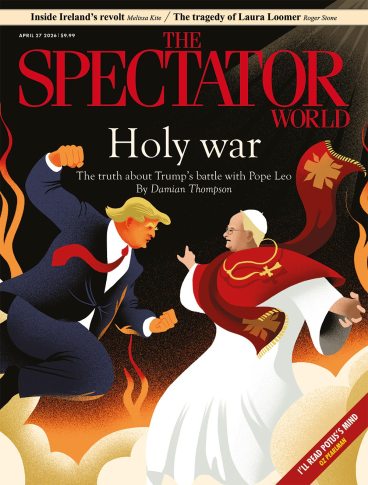
At times, Trump’s unparalleled ability to lose friends and alienate people has been a political asset. But he always plays with too much fire. And the problem is not just his incendiary tirades on social media or his fight-picking with the Pope. There is growing evidence that corruption is proving a far more potent issue with voters during Trump’s second term than it did during his first. The blatant profiteering by the President’s political allies and family members is turning ordinary people against him, and is certain to be a major talking point for Democratic spokesmen in the coming months.
A Democratic revival, however, will not mean healthier politics. Quite the opposite: the party has more than enough of its own sleaze. Take the recent example of Eric Swalwell, who resigned from Congress amid multiple allegations of sexual assault.
The Democratic party is increasingly beholden to its radical left wing, which is pushing policies that are deeply unpopular with most American voters. New York Mayor Zohran Mamdani, for instance, has taken to wishing his followers “happy tax day” as he wages class warfare against the rich. His rhetoric might appeal to increasing numbers of young voters who feel impoverished and disenfranchised. But celebrating taxation is not a recipe for electoral success on the national stage.
While Mamdani confidently whacks non-New York residents with a “pied-à-terre” tax on homes worth more than $5 million, an attempt to emulate his tax-and-spend policies is not working out for the new Virginia Governor, Abigail Spanberger. Just three months into her term, her approval rating has fallen below 50 percent, the lowest recorded at this stage of a governorship in more than three decades. Proposals for a slew of new taxes are a large part of the reason for this rapid reversal, along with her refusal to cooperate with Immigration and Customs Enforcement (ICE) officials. While that might go down well in urbanized areas, it is unlikely to impress in, say, Fairfax County, where data shows that the majority of murders are committed by illegal migrants.
By taking a sharp leftward turn, Democrats risk repeating the error of the Biden years: disturbing voters with politically correct madness while resorting to high levels of federal and state interference. If Democratic senators and governors want to model themselves on European social democrats, they will swiftly realize that America is not a European country.
Voters are turning against Trump, not because they have suddenly become anti-capitalist, but because they thought they were voting for an end to foreign wars as well as a draining of the Washington “swamp,” and now they feel cheated. It is voters who are left to suffer the fallout from Trump’s dramatic conversion to military interventionism in terms of surging inflation.
The majority of Americans, then, find themselves caught between two parties which promise the world but provide yet more sleaze, war and economic dissatisfaction. It’s possible that J.D. Vance, as a devout man who is understood to have tried to stop his boss launching a full-scale assault on Iran, could emerge after the midterms as a serious statesman who offers Trumpism with less chaos. But the Vice President is currently struggling on the world stage, flying to Pakistan to conduct near-impossible peace talks only to return to America to be heckled by voters as he, a Catholic, tells an American Pope to “be careful when he talks about theology.” If he still wants to run in two years’ time, he’ll have to pull off an extraordinary political juggling act. His best hope will be that two years of Democratic majority in Congress will be enough to remind Americans why they supported a Trump-Vance ticket in the first place.

Comments