Until around a decade back, most of us either watched the Eurovision Song Contest because it was extremely camp, or for what passed for the ‘politics’ – Greece and Turkey not voting for each other over Cyprus, and that exquisitely rebuking nul points the UK invariably got from Germany and France, for being an uppity little island nation which was still celebrating winning Second World War.
The campness is still there, but it now sits uncomfortably with real politics – that of the culture wars. ‘Trans’ and Israel are the flashpoints, with the supporters of the first and the opponents of the latter overlapping in a vicious Venn diagram. This was summed up in 2024’s Irish entrant, one Bambie Thug, who offered ‘I’m queer!’ in lieu of being able to sing, and who said that she cried when she heard that Israel (represented by Eden Golan, who was enthusiastically booed by Hamas groupies, the strict anti-music Islamists who would happily string Eurovision fans up from the nearest lamp-post) had made it to the final. The poor diddums was probably cross that Israel was first with the whole trans thing when Dana International won the 1998 Eurovision with ‘Diva’.
The rise of ‘queerness’ – gayness without style or humour – has had a dreadful effect on Eurovision. Gayness never thought it was enough by itself when it came to the lively arts and neither does heterosexuality. Gay people in pop, particularly, really put in the effort, were often quite over-the-top – gave it the ‘extra’ to use a modern term – from Dusty to Morrissey, and were all the better for it. But those who identify as ‘queer’ seem to think that this is enough; you can imagine them at school, handing in rubbish homework. ‘Will this do?’ is their default setting, and sure enough in 2024 Olly Alexander slithered around half-naked in a ‘locker room’ surrounded by men in a similar state of undress, as if ‘YMCA’ had never happened, to the most forgettable of songs.
Gareth Roberts, no less, confessed to finding it ‘boring and embarrassing … it’s meant to be enlightening and empowering, but it’s depressing … brainwashed by LGBTQ+ Central.’ It seemed that Mr Roberts was not alone in his disdain, as the song came in at 18th place, with only 46 votes from the jury and literally zero from public voting. Amusingly, if predictably, the Guardian blamed this on Brexit. Last year’s entry appeared to be a repudiation of queer daftness, with a trio of women calling themselves Remember Monday singing an upbeat song called ‘What The Hell Just Happened?’ Sadly, the title turned out to be something of a self-fulfilling prophecy, as they also picked up nul points from the public, putting them one place below Alexander.
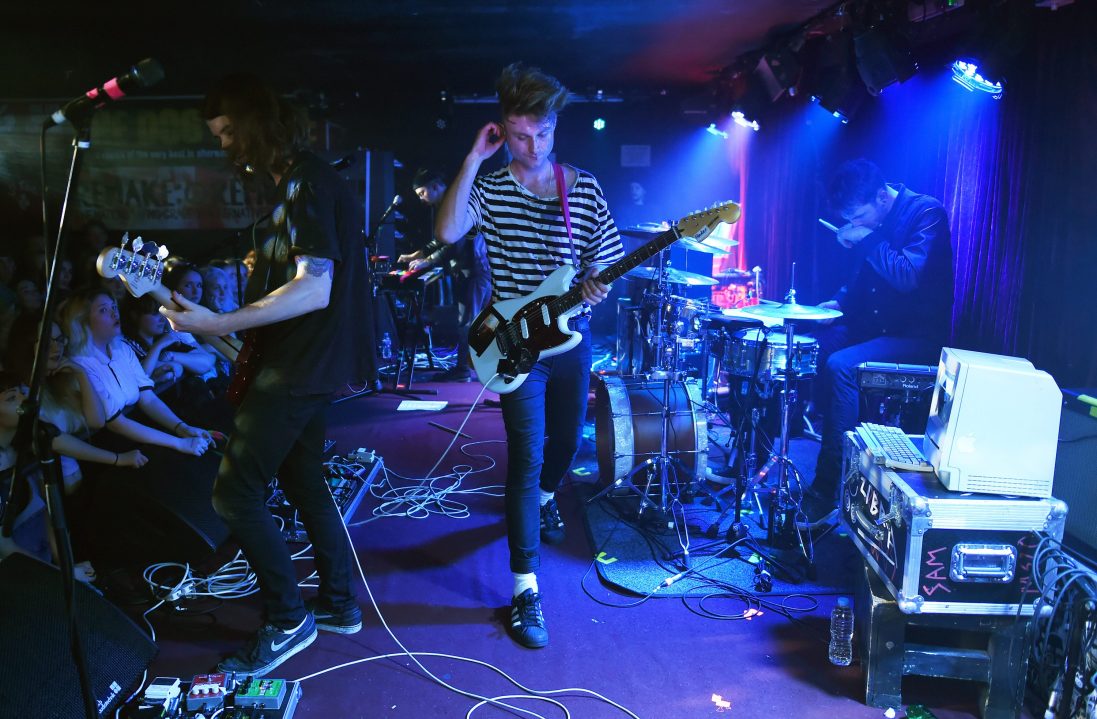
This year we’re being represented in Vienna in May by a fresh-faced 37-year-old called Sam Battle – performing under the professional name Look Mum No Computer – who launched his YouTube channel in 2016 and has garnered himself 1.4 million subscribers and followers. He is a self-professed fan of the contest, saying ‘I find it completely bonkers to be jumping on this wonderful and wild journey. I have always been a massive Eurovision fan, and I love the magical joy it brings to millions of people every year, so getting to join that legacy and fly the flag for the UK is an absolute honour that I am taking very seriously.’ It’s like Depeche Mode never existed.
The title of the song Battle will perform is yet to be announced, which gives me a foreboding feeling of ‘midnight oil’ being burned, as does the word ‘bonkers’ in any context. Never mind, at least he’ll be doing his thing with unusual musical instruments like organs fashioned from Furbies and flame-throwing keyboards; there may also be a ‘Star Wars droid orchestra’ involved at some point.
If this CBeebies extravaganza doesn’t make you feel dour enough, then Kalpna Patel-Knight – the BBC head of entertainment – will. Last week Patel-Knight enthused thus: ‘We are absolutely thrilled to have Look Mum No Computer representing the UK at Eurovision in Vienna in 2026. His bold vision, unique sound and electric performance style make him a truly unforgettable artist. Look Mum No Computer embodies everything the UK wants to celebrate on the Eurovision stage – creativity, ambition and a distinctly British wit. I am sure he will make us all proud on the international stage in May.’
And I’m going to win the Olympic sprint.
It’s verging on the surreal to think of the time when successful British chart artists entered the Eurovision to represent us; no Brit of any reputation would do it now. It’s telling that Olly Alexander did it as a solo project, not when he was with his hit-making trio Years And Years (I bet they’d have laughed him out of the locker room) in case they didn’t win, whereas in other countries the chart artists aren’t stuck up, and have a bash anyway.
Though I wish Sam Battle well, it would be funny if we slipped down the scoreboard by just one place each year – o, exquisite agony! – until we got to the very bottom, with literally no points, as has indeed happened a whopping 36 times to other nations. It might be funny – definitely the campest thing, in true Eurovision style – simply to have an epic hissy fit and flounce out for good, proclaiming correctly that we invented pop music in Europe and that France, for example, was still flogging Johnny Hallyday as the epitome of pop cool until well into the 1980s. I think we should somehow persuade the incomparable Morrissey to enter with a song called something like ‘Do One, Europe!’ and leave it there. What a swan song that would be!
Comments