
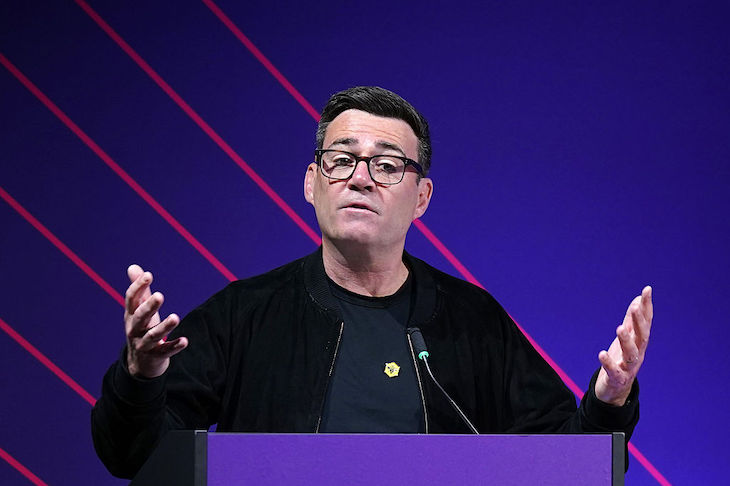
It’s refreshing that social care has become a topic over which the putative Labour leadership contenders are prepared to scrap, given how neglected it has been for decades now. Both Andy. Burnham and Wes Streeting want to argue that they would be the leader who would take the radical step of legislating for a National Care Service – something Burnham first proposed back in 2009, just to give you an idea of how long it is taking for anyone to do anything meaningful on this matter. The babies born in the year Burnham unveiled his green paper on adult social care can now drive cars, but they still have no prospect of their grandparents, or indeed parents, being able to access a care system that actually works and is funded properly.
It’s an example of politicians scrapping over just how much they personally care about a problem, without producing much evidence that they’ll be the ones to solve it
Anyway, the latest round of fighting is over whether the government has quietly scrapped plans for a standalone National Care Service body. Documents leaked to the Times suggest that under Streeting’s watch as Health Secretary, officials ruled out this new arms-length body on the basis that Labour is trying to stop the kind of proliferation of quangos that ends up blooming under every government. Streeting doesn’t think he would have signed off on this decision, but wasn’t wedded to it necessarily being in a quango anyway. Logically, given he abolished NHS England as an independent body, it wouldn’t necessarily make sense for him to then set up the NCS as a quango.
What Streeting’s critics are trying to argue, though, is that he either didn’t notice that officials had ruled the separate body out, or that he’s not as committed to social care reform as Burnham is. Either way, the yawning hole in social care over the past few decades has not actually been caused by the absence of a quango, but the refusal of politicians to front up and deal with the funding situation.
Keir Starmer quickly delayed that discussion until his second term because he didn’t want to cheese off the electorate by talking about which trade-off he was going to go for in order to ensure that the sector is properly funded. The Prime Minister knows full well that many voters assume that social care is in fact already part of the NHS and is free at the point of access, and that as soon as politicians start talking about the sums of money involved in any reform, those voters tend to react very badly.
Theresa May knows that even better, as she at least took the brave step of trying to propose meaningful reform in her 2017 election campaign, though we shouldn’t give her too much credit for that, given she failed to square those plans with her own cabinet at the time, and ended up flip-flopping into her ‘nothing has changed’ speech where she dropped some of the most contentious proposals.
So a fight over a quango, as well as being pretty esoteric, is just a means of avoiding the real issue with social care. Once again, it’s an example of politicians scrapping over just how much they personally care about a problem, without producing much evidence that they’ll be the ones to solve it.




Comments