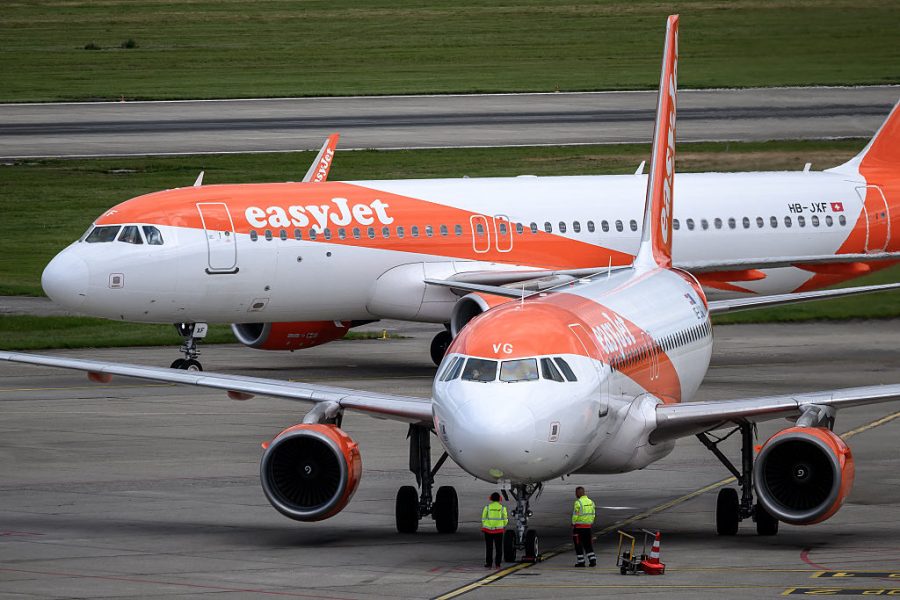
With its garish bright orange livery and the ferocity with which its algorithm squeezes a few extra pounds out of you for every flight, easyJet is not a company for which anyone holds any huge affection. It doesn’t have the cachet of British Airways or one of the luxury Gulf carriers. Nor does it have quite the rough’n’ready, dirt-cheap vibes of Ryanair or one of the other ultra-budget airlines. And yet, with the American private equity giant Castlelake looking to take over the airline, one thing has become very obvious. Britain cannot afford to lose one of its most successful companies.
EasyJet may not operate as an independent company much longer. The board has already rejected four offers from Castlerock, including one from the private equity firm today that was valued at £4.93 billion. Still, it has at least agreed to open discussions about a deal. Its shares have already risen by 50 per cent since the takeover offers were first revealed, rising to 573p. If Castlelake offers £7 a share, the view in the City is that it will be a done deal. easyJet will be sold.
Of course, Britain remains an open market, and companies get taken over all the time. In the last few months, Tate & Lyle, one of the oldest companies on the stock market, has been sold off to its American rival Ingredion, and the bookmaker William Hill has been swallowed up by a Greek casino operator.
Over the last few years, investors have been far too quick to sell out British companies
But would easyJet be one sale too far? After all, this is one of the most successful British companies of the last 30 years. It has built one of the best route networks in Europe, with a strong brand, and is well positioned in one of the continent’s fastest-growing industries. With 90 million passengers a year, it is already the fifth largest airline in Europe, just behind Air France-KLM and slightly ahead of Turkish Airlines. It has an unblemished safety record. And perhaps most importantly, it has carefully positioned itself in the middle of the market.
EasyJet is a lot cheaper than the traditional national carriers, but it is also a slightly gentler experience than most of the budget airlines. It has none of the in-your-face-that-will-be-twenty-pounds-for-sneezing aggressiveness of Ryanair. In most industries, the middle market is a pretty good place to be over the long run, and there is no reason to think flying will be any different.
Over the last few years, investors have been far too quick to sell out British companies. Sure, it has been easy to understand why. A stagnant economy has made Britain a very hard place to make money, while a moribund, over-regulated stock market means many basically good businesses can be snapped up very cheaply by global standards.
EasyJet is not exactly a national treasure, at least not yet. But it is a decent business with a solid future. This airline should remain independent.



Comments