Nations are built from eating habits as well as masterpieces. In Britain, there’s one that is both: Bovril. This thick, salty meat extract paste may not be as wise as George Eliot’s Middlemarch, as beguiling as Rossetti’s ‘Proserpine’, or as symbolic of greatness as the Palace of Westminster – and yet it has a clear place among our nation’s intangible cultural assets. As both a spread and a drink, Bovril may be just a wartime ration, a tonic for invalids or a companion on football terraces but it still marks a serious, if ordinary, contribution to our common life.

That contribution, however, may now be under threat. With the nation’s beloved Cadbury sold to US food giant Kraft in 2010, it was only a matter of time before Bovril – owned by Anglo-Dutch giant Unilever – was itself sold. Last week we learned that Bovril, along with Marmite and Hellmann’s, had gone to American food giant McCormick as part of a £50 billion merger. Immediately, the internet reacted with horror. ‘Shall stock up with a few years’ worth… and then look [for] something else to go on my morning toast,’ wrote one commenter. Others called for Britain to buy Dr Pepper and other US ‘delicacies’ in revenge. A bizarre backlash? Not if – like me – you consider the unique place it has had in Britain’s pantries for the past 155 years.
Bovril belongs to a strange late Victorian world of health fads, imperial strength and dubious advertising claims. Much like its distant cousin Cadbury’s cocoa powder, it was an early attempt to take the flavour and nourishment of a popular food – and make it cheap, portable and available at scale.
Bovril’s origins were not in the kitchen of a great chef or the dining room of a court. War was the mother and the father was Napoleon the Third. He tasked a Scottish butcher John Lawson Johnston with supplying his army with a million cans of beef during the Franco-Prussian War in the 1870s. Johnston’s solution was to reduce beef to a dense essence that would travel. The result, ‘Fluid Beef’, was said to retain the ‘albuminous constituents’ of the whole cow. It was less recipe than chemistry – and when it reached Britain it caught on at once.
It is not hard to see why. It was convenient and gave ordinary people a taste of beef they many otherwise would have struggled to afford. It was also one of those rare foods that seems to have stayed with the people who first embraced it. Yes, it was sold in Fortnum & Mason and Queen Mary of Teck supposedly took a passing interest during the first world war. But none of that altered its social character. Bovril offered a democratic version of beef to a country that thought beef was the reason their country was so great.
Bovril’s advertising was as innovative as the product – and occasionally unhinged. In 1910, its gaudy sign was the first to bathe Piccadilly Circus in neon lights. One popular print advert showed a bull crying over a bottle of the brown gold, saying ‘alas my poor brother’. Even Pope Leo XIII was happy to lend his name and image to the product – with Bovril’s adverts hailing this partnership of ‘two infallible powers’ – along with Vin Mariani, a wine infused with coca leaves. He clearly had a taste for convenient, energy-giving tonics – even if we might now categorise one as a Class A drug.
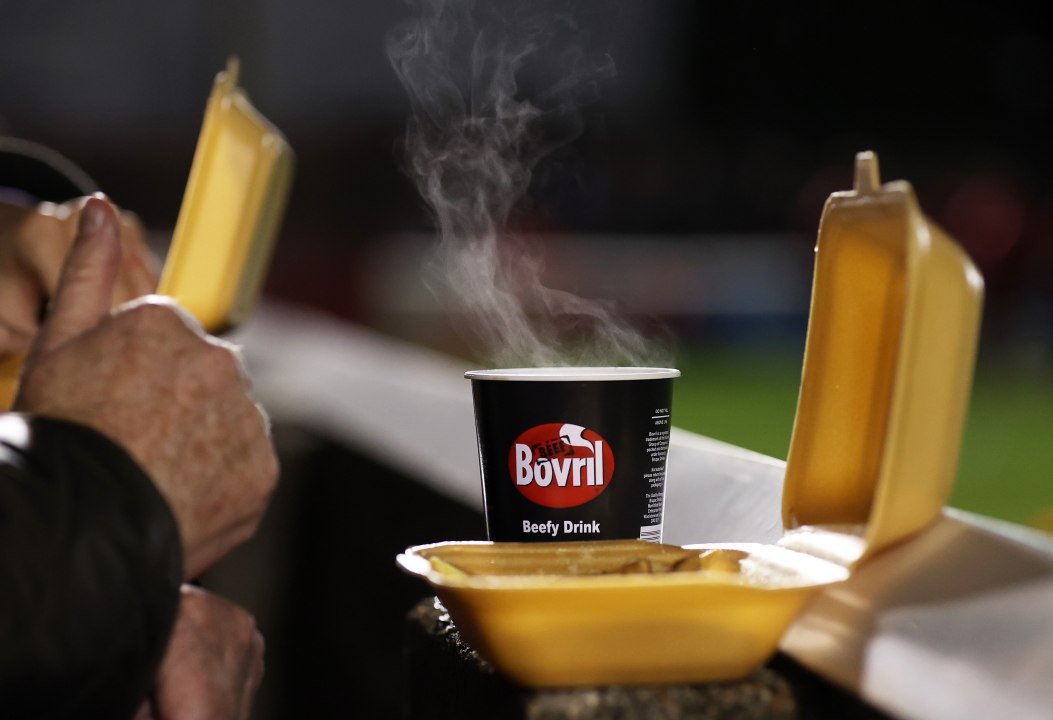
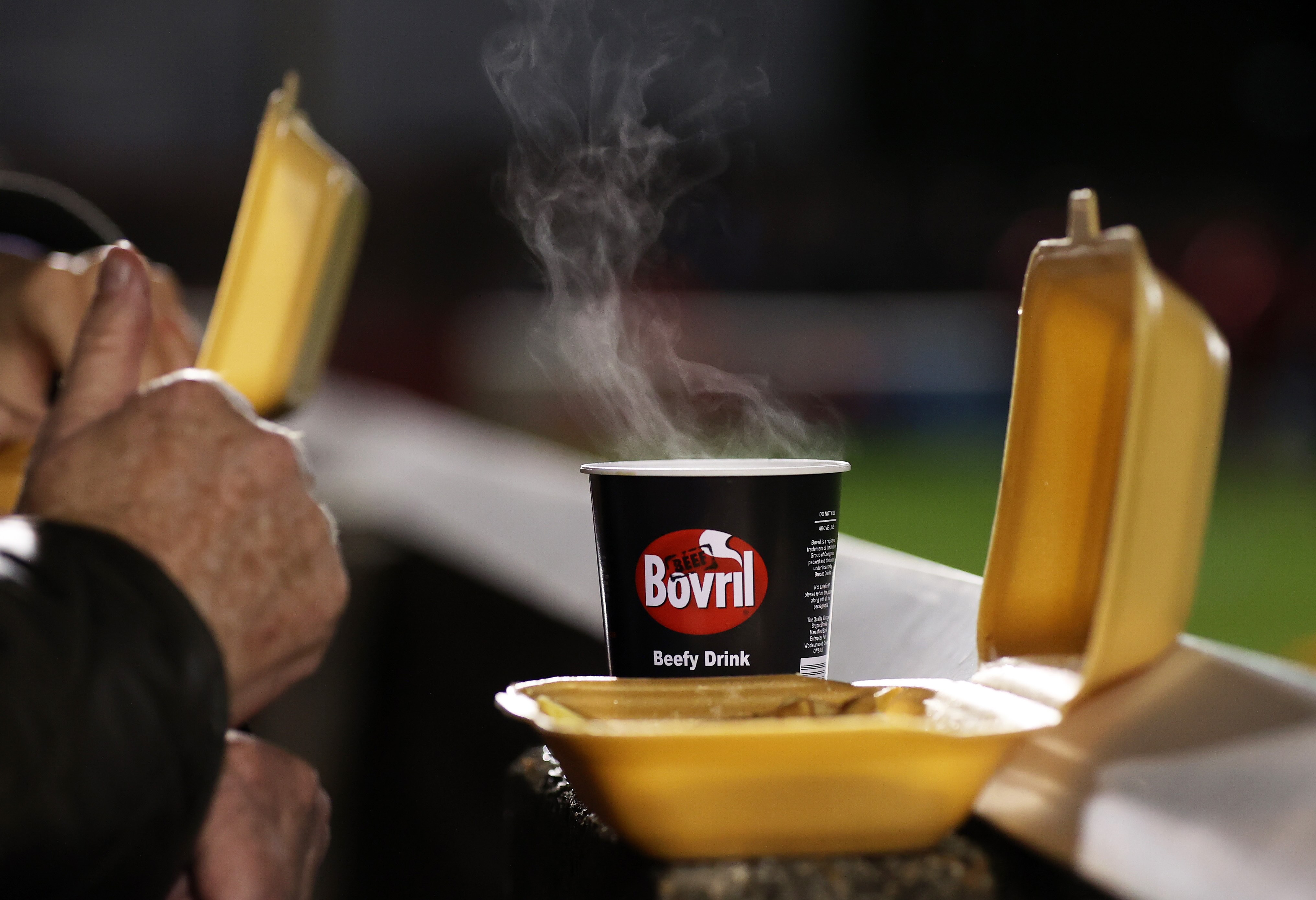
Other adverts claimed it fortified the body against influenza. The temperance movement took a fancy to it too and, as historian Lesley Steinitz puts it, it was ‘a drink that was alcohol-free but not namby-pamby. It has a dark, macho look and a meaty, macho smell’. Which may also explain its long life on the football terrace – where a pie and a Bovril still sounds, to some, like the only authentic experience available.
Bovril offered a democratic version of beef to a country that thought beef was the very reason their country was great
For all its health-giving warmth and marketing swagger, it has survived in smaller, homelier ways. I eat it spread with Flora on plain white toast. For some this is about as appealing as Sardinian cheese with maggots in it, judging by the horrified comments it provokes from people who simply cannot believe the British are weird enough to like it. But if we were to declare it beef consommé or pâté, we would miss the point. It is in my larder because there are days when I want something quick, easy and reminiscent of childhood. Dear family friends used to stock up on it when we were going to stay, despite owning a beef farm and having their own Highland cows butchered. Now that is true hospitality.
Britain has sold off more impressive concerns than Bovril in recent decades – steelworks, carmakers, oil, defence, computing, and much else besides. Yet few have been quite so concentrated, if you will forgive the pun. One little jar holds not just a surprising amount of British history, but a whole means of enduring cold, hunger, illness and winter gloom. Intangible assets are not only organ music or stately homes. Sometimes they are the ordinary things that get people through the dark months. On that note, I think I’ll have a mug.




Comments